
Riders feel the service through information
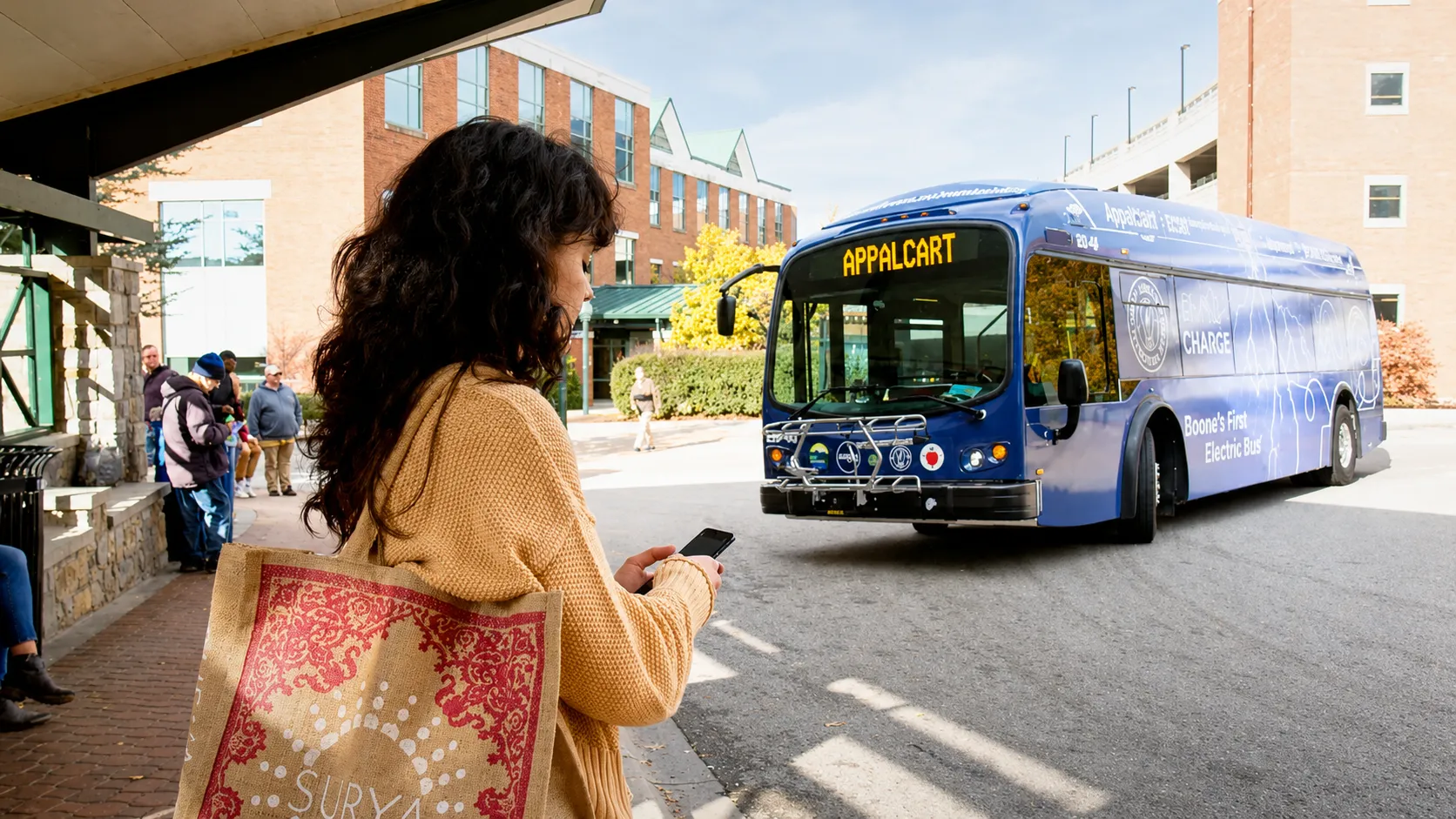
Riders judge service through simple questions: Is my vehicle coming? Am I in the right place? Has anything changed? Will I make my connection? What should I do next?
Agencies work hard to answer those questions across websites, apps, stop displays, onboard information, alerts, announcements, GTFS feeds, customer service, and field communication.
That work becomes harder when rider information is separated from the service conditions operations teams are managing.
ETA helps agencies keep rider-facing information more closely aligned with what is happening in service, so riders have a clearer understanding of their trip.
A clearer view of service, from dispatch to the field
ETA supports the rider experience by helping agencies connect service activity, arrival information, alerts, signage, onboard tools, and data feeds around the trip riders are trying to make.

Before the trip
Help riders find arrival information, route details, service alerts, and trip-planning information before they leave.
At the stop or station
Support digital displays, arrival information, and service updates where riders are making decisions in the moment.
On board the vehicle
Help riders stay oriented during the trip with onboard information, announcements, next- stop details, and service context.
When service changes
Keep riders better informed when detours, missed trips, disruptions, or other service changes affect what they need to know.
After the trip
Use ridership, service history, rider feedback, and operational data to help agencies understand how service is being used and where the rider experience may need attention.
Tools that connect the rider experience with the service behind it
Riders do not see every system involved in running service. They see the result. ETA helps agencies connect the tools behind that result so rider information is clearer, more consistent, and easier to manage.
Rider Information
Keep tracking websites, mobile apps, digital displays, onboard information, alerts, and GTFS/GTFS-RT feeds more closely aligned with what riders are experiencing.
CAD/AVL
Use real-time service visibility, vehicle location, service history, and operational information to support the arrival predictions and updates riders rely on.
Ridership & APC
Collect and review passenger data to better understand how riders use service across routes, trips, stops, vehicles, and time periods.
Reporting & Analytics
Turn ridership and service data into usable reporting that helps agencies review rider demand, service performance, and planning needs.
Integrations
Connect ETA with compatible systems that affect the rider experience, including headsigns, announcements, displays, fare systems, passenger counters, and rider-facing tools.
TransitGPT™
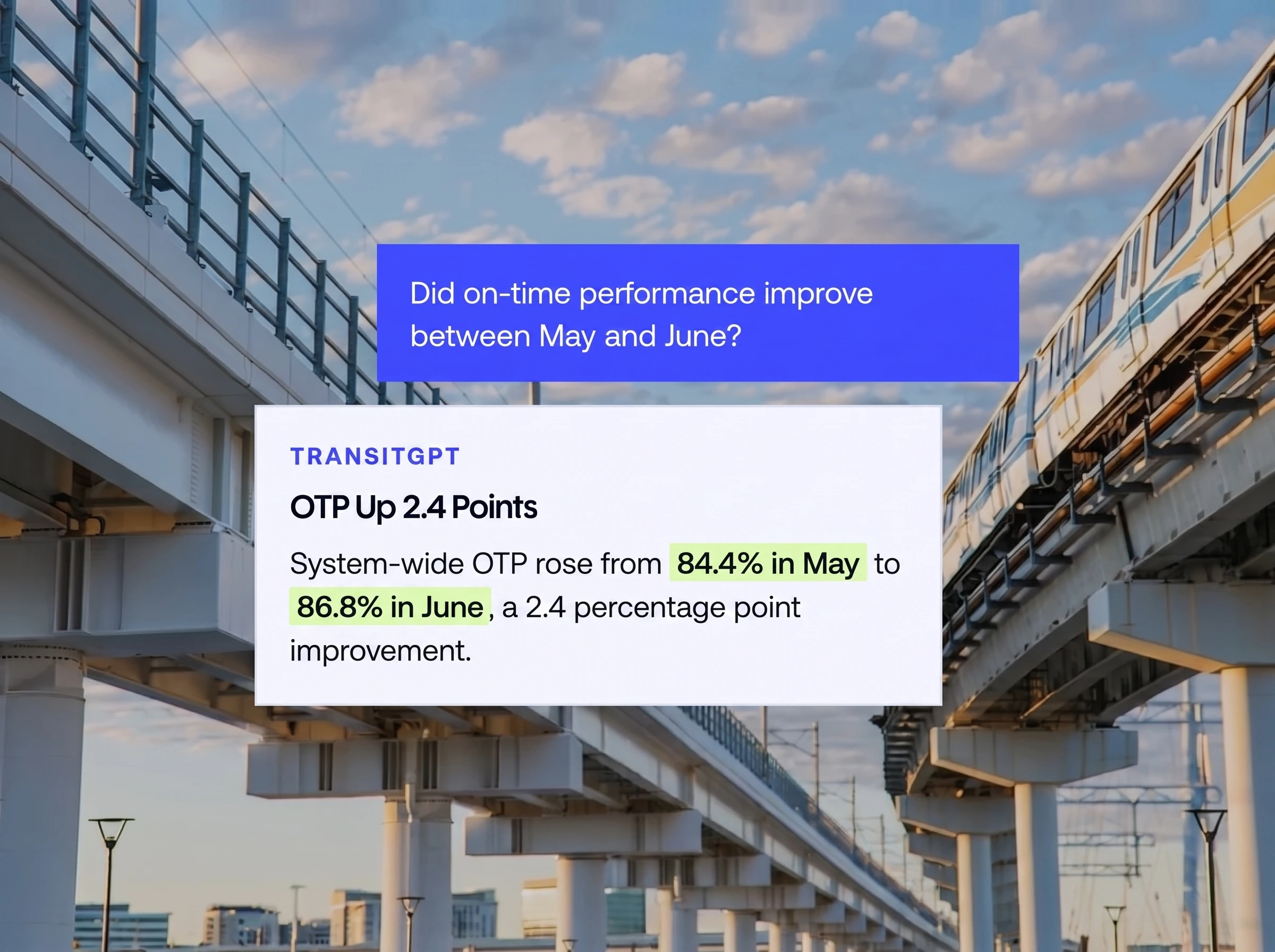
Ask questions about your transit service in plain language and get clear, data-backed answers in seconds.
TransitGPT™
Help authorized staff ask plain-language questions about connected service data and review answers alongside the supporting context.
Better rider information starts behind the scenes
Rider information is only as useful as the service context behind it. If vehicle location, schedules, alerts, detours, onboard systems, and data feeds are disconnected, riders may see information that is late, incomplete, or inconsistent across channels.
ETA helps agencies strengthen the connection between operations and rider-facing information.
Some agencies begin with tracking websites and mobile tools. Others need better digital displays, GTFS/GTFS-RT coordination, onboard information, arrival predictions, or stronger connections between CAD/AVL and rider communication.
The goal is to help agencies give riders information they can understand and use throughout the trip.
Bring us the rider-information work creating the most friction
Talk with ETA about the arrival information, alerts, displays, onboard communication, GTFS, or rider-facing service questions your agency is working through.