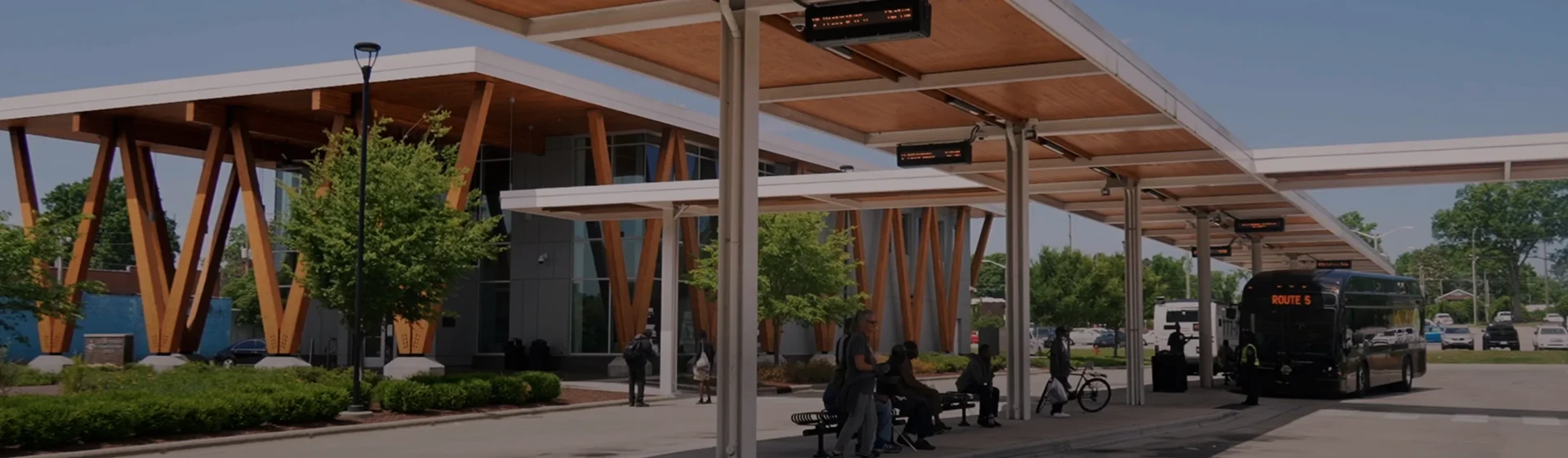
Blogs, news, case studies, templates, podcasts and more; all right at your fingertips. Browse our comprehensive transit resources database to find information your agency needs to improve operations, grow your knowledge base, and expand your understanding of the industry at-large.
Countdown to Transport Ticketing North America 2025 with Portfolio Director, Stuart Barker
Join hosts Levi McCollum and Christian Londono for a special episode of Stop Requested as they welcome their first overseas guest, Stuart Barker, Portfolio Director at Clarion Events, the world’s third-largest event organizer. Dive into the story behind the Transport Ticketing Global event in London and its fast-growing North American counterpart, both of which have become essential hubs for transit professionals exploring the latest in fare collection and ticketing technology. Stuart shares how these events evolved from a small gathering in a London hotel basement to international forums drawing attendees from over 65 countries, and why agencies at every stage of technology adoption, from cash-only to cutting-edge mobile payments, are finding value in attending. Get an inside look at what makes the North American event unique, with focused content tailored to the region’s diverse needs and opportunities for agencies to network and learn from both industry leaders and peers. Exclusive Offer: Transport Ticketing North America in Chicago on June 24th and 25th is free to attend for transit operators, transit agencies, and government representatives. If you’re a vendor, be sure to listen for a special discount code just for our listeners. Register now for Transport Ticketing North America
ETA Awarded Five-Year APC Contract with Island Transit
Boca Raton, FL. May 19, 2026. Island Transit has selected ETA as its automated passenger counting (APC) partner, awarding a five-year contract in April 2026. Installation across the agency’s 54-vehicle fleet is scheduled to begin in early June.
How Bold Transit Agencies Redefine the Future
In this episode of Stop Requested, Levi and Christian explore the dynamic world of transit technology and what sets innovative public transit agencies apart. They discuss key factors such as budget, risk, and system integration that influence whether agencies become early adopters of cutting-edge solutions. The episode also covers various technological advancements, from Automated Fare Collection to Fleet Management Systems, and the challenges agencies face in balancing innovation with practical constraints. Join the hosts as they kick off a conversation on the future of transit.
Moving Austin Beyond the Commute with Dottie Watkins
In this episode of Stop Requested, Levi McCollum and Christian Londono talk with Dottie Watkins, President and CEO of CapMetro in Austin, Texas. Dottie began at CapMetro as a part-time bus operator more than three decades ago and now leads the agency through a period of service expansion and long-term investment. The conversation explores how changing travel patterns are reshaping Austin’s transit network, from more local and crosstown service to new Rapid bus routes. Dottie also discusses Transit Plan 2035, Project Connect, supporting frontline employees, and balancing today’s service with the work of building a stronger regional transit system for the future.
Safeguarding Transit Workers and Strengthening Public Transportation
In this episode of Stop Requested, Christian and Levi tackle the urgent issue of assaults on transit workers, exploring alarming statistics that reveal a troubling rise in incidents over the past 15 years. They discuss the profound impact on bus operators, from PTSD to workforce shortages, and examine the societal factors contributing to these challenges. The conversation highlights strategies such as operator barriers, panic alarms, and public awareness campaigns, alongside new federal directives aimed at reducing assaults and improving safety culture. Join the discussion on how agencies, unions, and communities can work together to safeguard the backbone of public transit.

Navigating the Transit Revolution: Part V—The Future
As technology continues its rapid advancement, the future of GTFS development is marked by a commitment to addressing real-world challenges and embracing emerging innovations. Recent contributions and pull requests to the GTFS repository demonstrate an ongoing effort to refine and enhance the specification.
How ABQ RIDE is Delivering Better Customer Experience with Robert Romero
In this episode of Stop Requested, Levi McCollum and Christian Londono talk with Robert Romero, Transit Manager at ABQ RIDE, as part of a four part series on transit in Albuquerque. Robert oversees Sun Van paratransit service and ABQ RIDE Connect, bringing a customer experience driven approach to operations. The conversation explores how ABQ RIDE transformed its call center from a reservations and complaints function into a reservations and education center, using feedback from riders to drive operational changes. Robert also shares how his background in the private sector shaped improvements in wait times, customer satisfaction, and employee engagement. The episode also covers the rollout of new technology, including RideCo, and how it improved on time performance, reduced complaints, and gave riders more visibility into their trips. Robert discusses the role of communication, community engagement, and taking calculated risks to deliver better service for riders who depend on it most.
How Cincinnati Metro Turned Crisis into Comeback with Steve Anderson, Sr. Director of Development and Innovation (Replay)
After years of declining ridership, service cuts, and aging infrastructure, Cincinnati Metro found itself in a classic “death spiral.” But thanks to bold leadership, a game-changing public vote, and a relentless focus on the rider experience, the agency has staged an inspiring turnaround. In this replay of Stop Requested, hosts Levi McCollum and Christian Londono sit down with Steve Anderson, Senior Director of Development and Innovation at SORTA, to unpack the story behind this remarkable comeback. Steve shares his personal journey—from sketching imaginary cities as a kid to leading transformative transit projects in Cincinnati and beyond. Discover how Metro overcame decades of underinvestment, leveraged new funding, and launched ambitious initiatives like Metro Rapid, a cutting-edge Bus Rapid Transit (BRT) system designed for speed, comfort, and local character. Hear how the agency is rethinking station design, collaborating with neighborhoods, and making data-driven decisions to deliver a rider-first experience. Learn how Cincinnati Metro is building a future-focused transit system that’s reshaping mobility and revitalizing the city for the next generation.

The Rise of Data-Driven Decision Making: How Automated Passenger Counting Transforms Transit Planning
Public transportation agencies face a constant challenge: optimizing service provision to meet the evolving needs of ridership. Traditionally, planning decisions relied on estimates and historical trends. However, the emergence of Automated Passenger Counting (APC) technology has ushered in a new era of data-driven decision making.
Why American Transit Declined with Nicholas Dagen Bloom
In this episode of Stop Requested, Levi McCollum and Christian Londono talk with Nicholas Dagen Bloom, professor and chair of the Department of Urban Policy and Planning at Hunter College and author of The Great American Transit Disaster, about how American transit systems declined and why some cities fared better than others.
Networking, Innovation, and Recognition at 2024 FPTA Annual Conference
In the premier episode of Stop Requested, Christian and Levi reflect on their experience at the Florida Public Transportation Association (FPTA) conference, held from September 22-24 in West Palm Beach. They explore the value of networking with industry professionals, discovering the latest transit innovations, and celebrating outstanding achievements through industry awards. Listen in as they share key takeaways from conversations with vendors, including discussions on cybersecurity for transit agencies, and the importance of connecting with peers to drive the future of public transportation.

Navigating the Transit Revolution: Part I—Unveiling the Power of GTFS
The world of public transportation is undergoing a transformation, and at the heart of this evolution lie s the General Transit Feed Specification, or GTFS. As we kick off this multi-part blog series, we’ll embark on a journey to explore the depths of GTFS, uncover its significance, and reveal how it’s reshaping the landscape of public transit.
Looking for a specific type of resource?

Blog
ETA created content on topics of interest across the transit industry. Expert insight, opinion pieces, and the latest in transit innovation.

Podcast
Conversations with the foremost experts across the transit industry to discuss lessons learned, technological innovation, community needs, and so much more.

Case Studies
See the results ETA’s clients have received through replacing legacy CAD/AVL systems, installing new functionality, and doing it all without full hardware replacements.

Press
New awarded contracts and the launch of innovative technologies are just the start of the latest ETA news.

Glossary
From general transit feed specification (GTFS) to ghost bus, the ETA curated glossary is a reference to better understand industry terminology.
Ready to see our Unified Operational Health software on your routes?
Whether your agency is modernizing an existing system, improving rider information, strengthening reporting, or working through a more connected operational approach, ETA can help make the next step clearer.