
The data exists. Getting to it takes work.

Most transit agencies already collect the information needed to answer everyday questions, including ridership by route, schedule adherence by trip, missed pullouts, open work orders, complaint trends, vehicle history, and NTD data.
That information often lives across different systems, each with its own login, report builder, export format, and learning curve. Answering a routine question may require a report request, an export from several tools, or help from the person who knows a particular system best.
A board member may ask about weekend ridership, a planner may need APC data by stop, or operations teams may want to understand where late service is recurring. The data may be available, but not always in a form that is easy for the right people to use.
“TransitGPT™ is designed to give authorized staff a more direct way to ask questions across connected data sources.”
General-purpose AI is not built around transit work
General-purpose AI tools are not built around transit data structures, reporting definitions, or operational terms. They may not distinguish between a missed pullout and a missed trip, understand how APC counts relate to scheduled service, or recognize where NTD definitions differ from labels used inside agency software.
It understands transit terminology
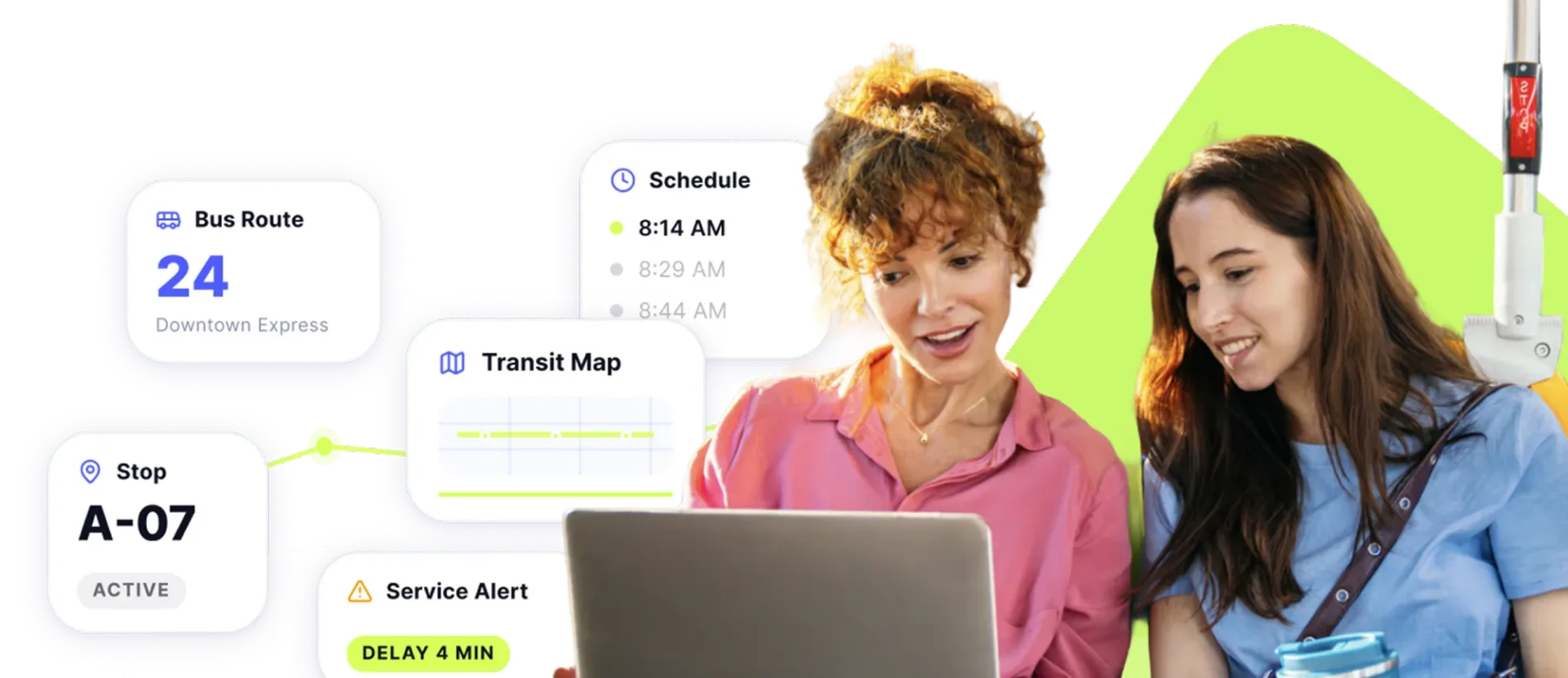
Routes, blocks, runs, pullouts, deadhead, schedule adherence, boardings, alightings, pass-ups, road calls, and service alerts are part of the operational language TransitGPT™ is designed to work with.
Answers include supporting context
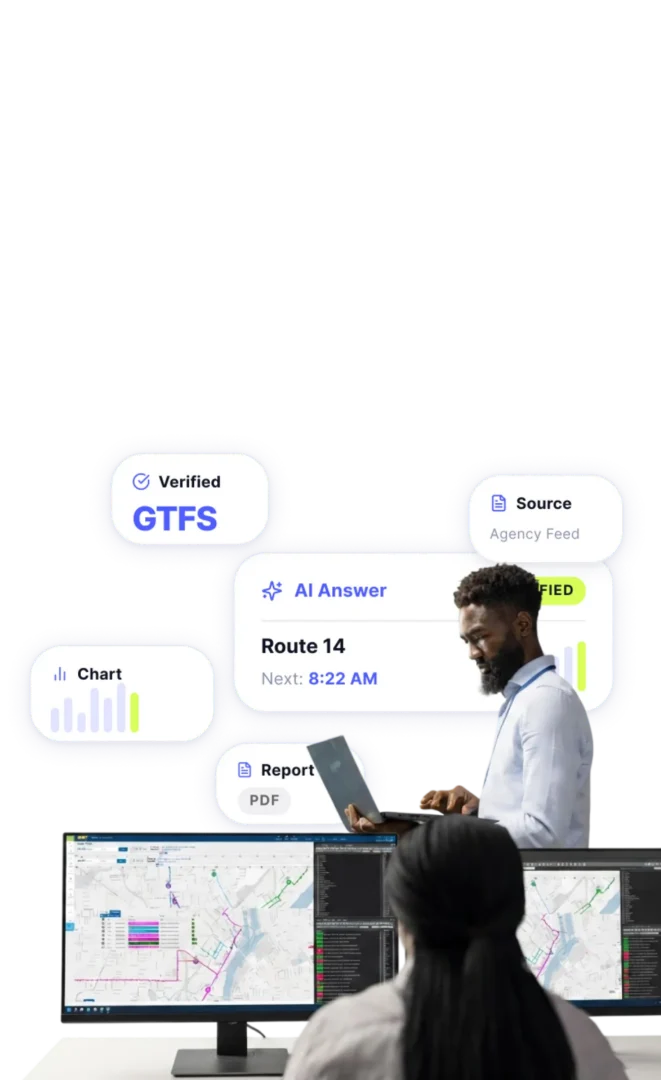
TransitGPT™ is designed to show the relevant data, connected sources, and supporting details behind an answer so staff can review a number before using it in a report, board packet, or public response.
It begins with approved agency data
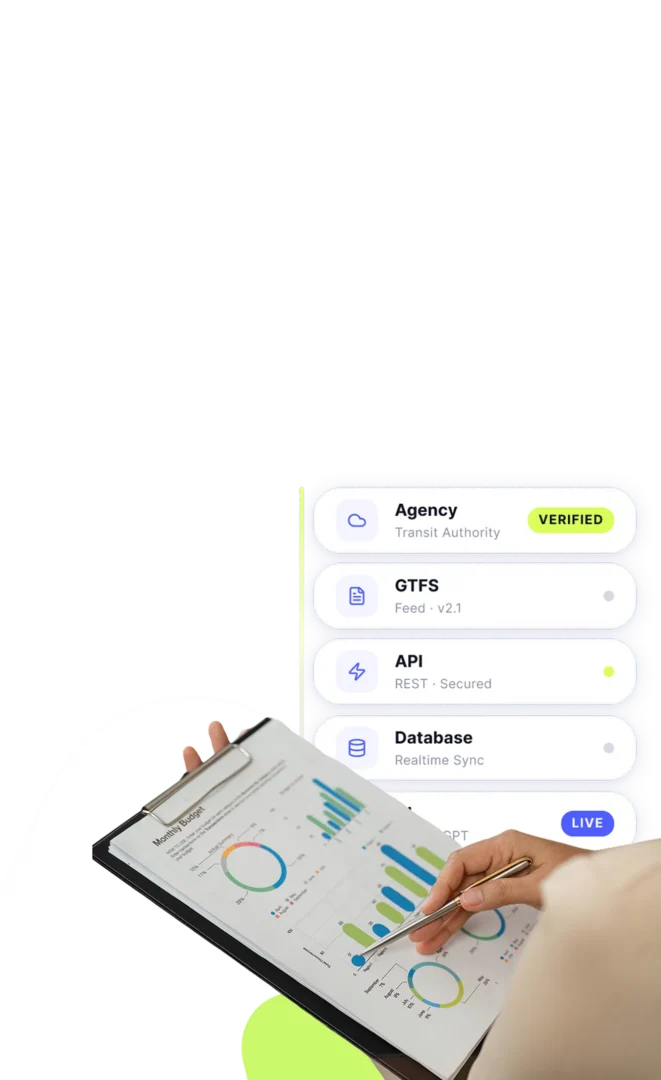
TransitGPT™ starts with the systems and data sources included in the implementation scope. Agencies determine what is connected, who can access it, and how the tool expands over time.
It makes routine questions easier to ask
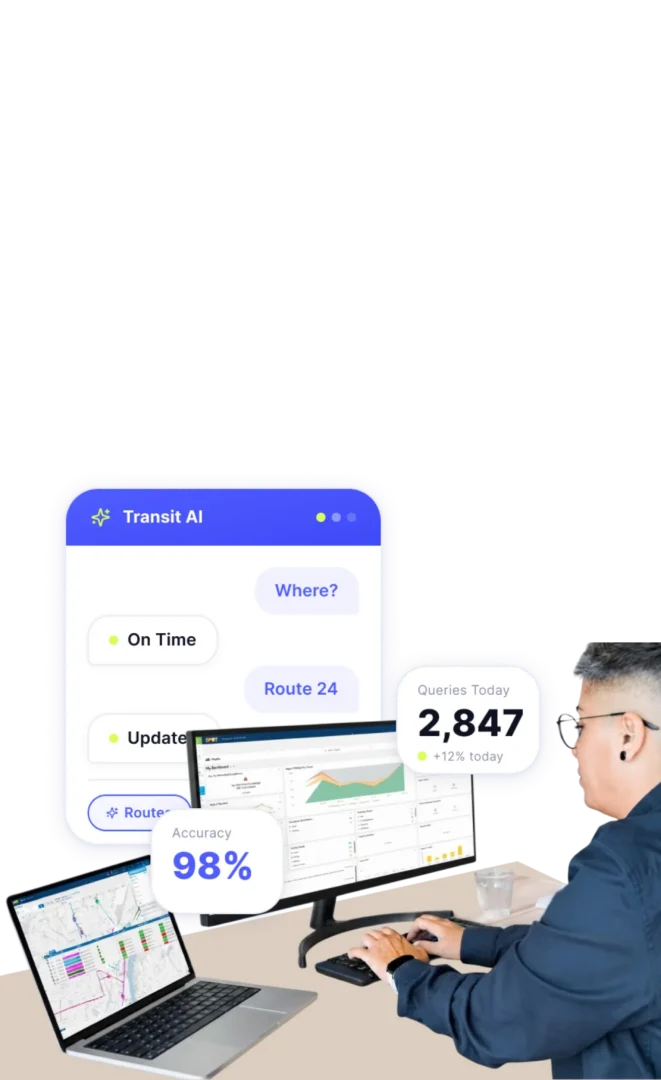
Staff should not need to know a report builder, query language, or export process just to answer a common operational question.
Start with the questions that matter most
TransitGPT™ does not need every agency system connected on day one. Most agencies begin with a focused pilot — one or two data sources, a defined user group, and a clear set of recurring questions. ETA works with each agency to define the initial scope and expand from there.
Identify recurring questions
Start with the questions your agency routinely spends time answering through report requests, manual exports, or staff follow-up. These may involve service performance, ridership, maintenance trends, customer feedback, board requests, or NTD-related comparisons.
Connect approved data sources
ETA works with your team to connect the systems needed for the initial scope. Depending on the agency, this may include CAD/AVL, APC, reporting, maintenance, workforce, customer service, or public data sources such as the National Transit Database.
Ask in plain language
Authorized staff ask questions in the same terms they use with colleagues and in their day-to-day work.
Review the answer and supporting data
TransitGPT™ returns a response with the available supporting numbers and source context so staff can review the answer before using it.
Expand the scope over time
Once the initial pilot is working, agencies can add data sources, users, and workflows based on their needs and access requirements.
Designed around the systems agencies already use
TransitGPT™ can be scoped around the systems and data sources that matter most to your agency. The initial implementation does not need to include everything — it should include the information needed to answer the questions your team needs to address first.
CAD/AVL data
Schedule adherence, missed trips, headways, vehicle history, incidents, route performance, and service patterns.
Which routes had the most late trips after 6 p.m. last week?
APC and ridership data
Boardings, alightings, passenger loads, stop-level activity, missing data, validation issues, and ridership trends.
Which stops had the largest change in boardings compared with the previous quarter?
Workforce data
Operator availability, extraboard usage, overtime trends, run coverage, and related information where permissioned.
Where did operator availability affect service coverage last month?
Maintenance data
Open work orders, road calls, fleet availability, recurring defects, and vehicle issue patterns.
Which vehicles had repeated road calls tied to the same defect category?
Customer service data
Complaints, commendations, recurring topics, route-level trends, and alignment with service conditions.
Which complaints occurred on days with detours, missed trips, or late service?
Public data sources
National Transit Database and other public sources for peer comparisons and performance benchmarking.
How does our ridership recovery compare with similar agencies in the NTD?

With access that fits each role
TransitGPT™ is designed to help more agency staff work from the same operational context without requiring everyone to become a data analyst. Access depends on each user’s permissions and the systems included in the implementation scope.
Executives
Review key numbers before leadership or board meetings, understand service trends, and ask follow-up questions without waiting for a custom report.
Operations
Review recurring service issues by route, block, time period, or day of week and identify where additional operational attention may be needed.
Planners and schedulers
Review ridership and performance data by stop, segment, trip, or time period without first assembling data from separate systems.
Maintenance
Review work-order trends, recurring vehicle issues, road calls, and fleet availability patterns without building a new report for every question.
Safety and customer-facing teams
Connect incident, complaint, and service information where sources are connected and permissioned, giving teams more context for follow-up.
IT and data teams
Help define the connected data sources, access rules, authentication requirements, and expansion path that fit the agency’s security needs.
Connected carefully, with agency control
TransitGPT™ connects to agency systems through controlled integrations. ETA works with agency IT and data teams to define which data sources are included, who can access them, and how the tool should be introduced. Agencies determine what is in scope, what is excluded, and which users have access to each category of information.

Access controls
Answers tied to source data
Agency data governance
IT involvement from the start
Phased rollout
Common questions about TransitGPT™
Answers to the questions buyers and agencies most commonly ask about accuracy, access, implementation, and security.
See what your data can answer
Bring ETA a recurring question your agency spends significant time answering — whether it involves a board request, a report only one person knows how to run, or an operational issue that requires data from multiple systems.