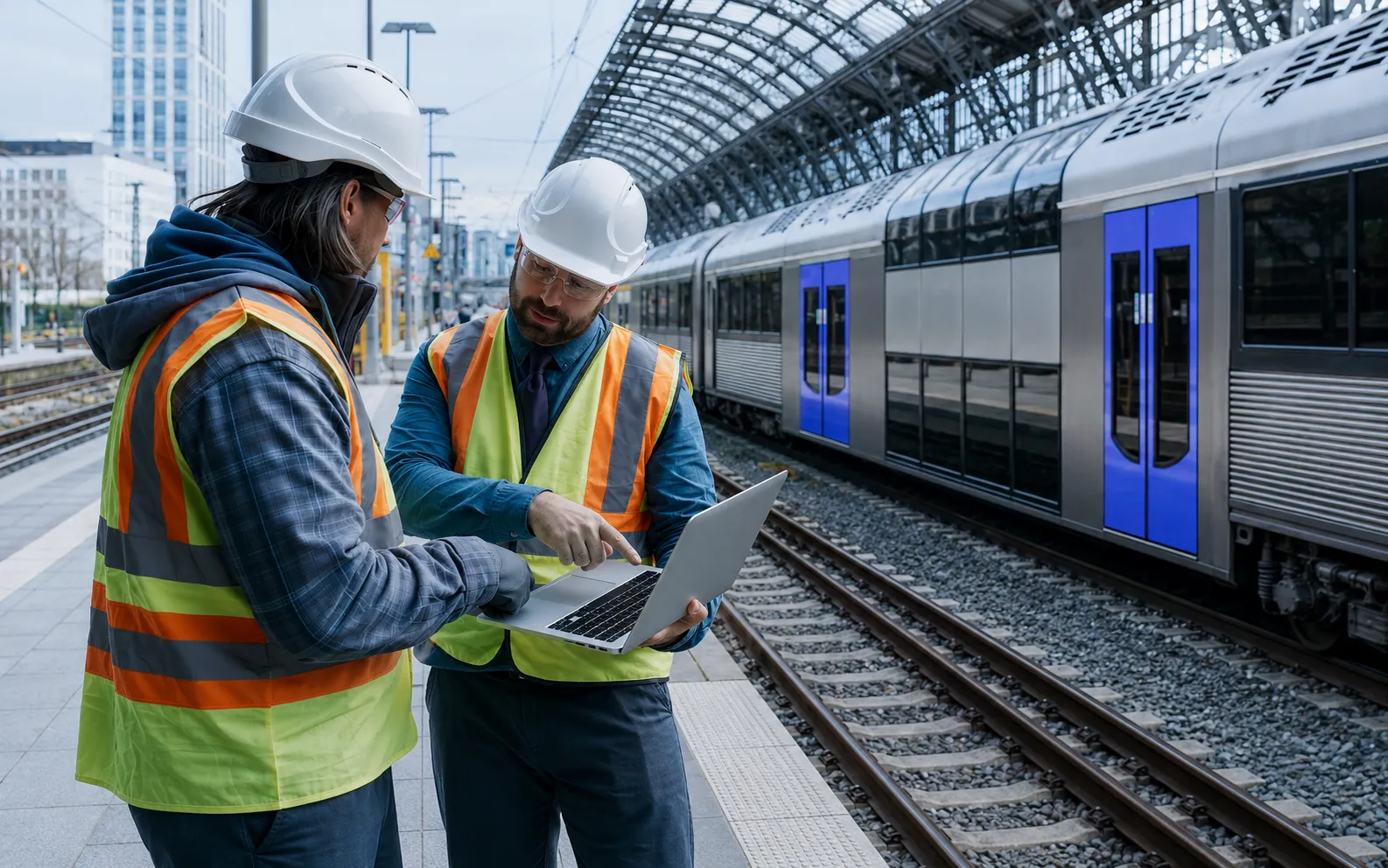
Riders judge rail service at every station and platform
For riders, rail service is often part of a larger trip: getting to work, making a connection, reaching a destination, or navigating an unfamiliar system.
When information is unclear or service changes unexpectedly, the effect can be immediate. Riders may miss a transfer, wait at the wrong platform, or lose confidence in whether the next vehicle is coming.
Behind that experience are operators, operations teams, station staff, maintenance teams, planners, and customer-facing staff coordinating around schedules, headways, vehicle availability, service disruptions, and passenger communication.
ETA helps rail operators make those handoffs more manageable with clearer service visibility, useful rider information, and data that remains valuable after the day is over.
Rail technology has to work across the full service environment
Rail operations depend on more than what happens inside a vehicle. Technology has to work across stations, platforms, onboard systems, operations teams, rider-facing channels, maintenance workflows, and the core systems already responsible for safe train movement. ETA helps agencies consider those connections before defining an approach.

Service visibility needs to follow the operation
Operations teams need current information about vehicle location, service conditions, schedule performance, disruptions, and the status of the service riders are experiencing.
Passenger information matters at decision points
Riders need clear information before they travel, at stations and platforms, and during the trip. Arrival information, service changes, alerts, displays, announcements, and digital tools should help them understand what to expect next.
Operational technology should complement core rail systems
ETA supports the operational, rider-information, and reporting layer around rail service. The goal is to complement the rail systems that govern safe train movement, not complicate them.
The right hardware is part of reliable service
Onboard and station equipment has to account for vibration, power and connectivity conditions, mounting, operator use, environmental exposure, supportability, and replacement cycles. ETA helps agencies determine where durable installed hardware is warranted and where more flexible devices make sense.
Connected solutions for the work of running rail service
ETA’s solutions can be configured around the service, passenger-information, reporting, and operational challenges that matter most to your rail operation today.
CAD/AVL
Support operations staff, supervisors, and vehicle crews with real-time service visibility, onboard tools, operational messaging, and connected vehicle information.
Rider Information
Keep tracking websites, mobile tools, station and onboard information, digital displays, alerts, announcements, and GTFS/GTFS-RT feeds aligned with the service riders are experiencing.
Ridership & APC
Collect and review passenger data that helps agencies understand ridership by station, trip, vehicle, route, and time period.
Reporting & Analytics
Turn service and passenger data into useful reporting for performance review, planning, NTD-related workflows, and decisions about where service needs attention.
Integrations
Connect ETA with compatible systems that support rail operations, including passenger-information displays, announcements, video, radio, vehicle health, inspections, fare collection, and passenger-counting tools.
TransitGPT™
Help authorized staff ask plain-language questions about the data sources connected for their implementation, then review answers alongside the supporting data and context.
EXPLORE TRANSITGPT™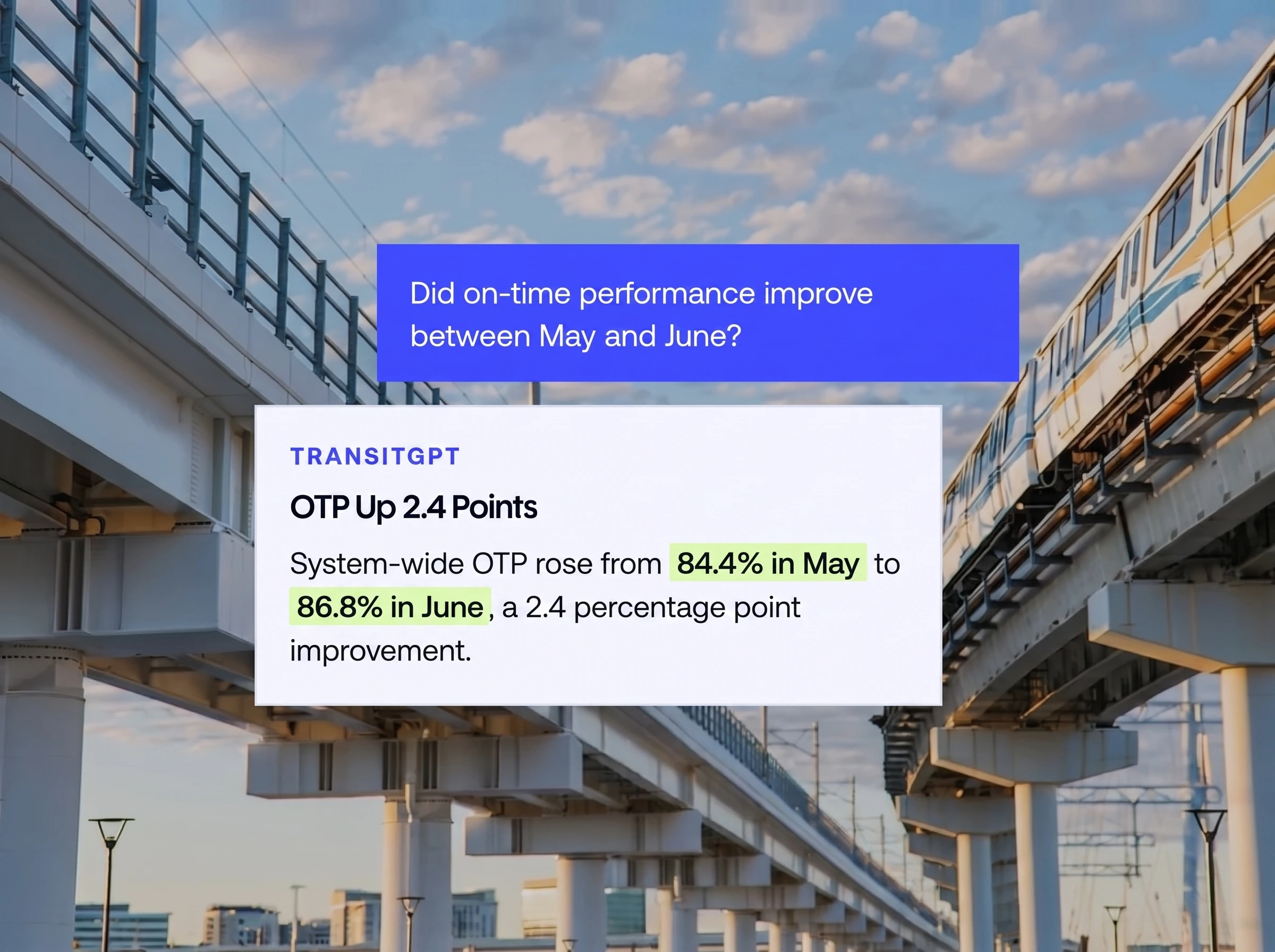
Modernize around the service riders rely on
Updating rail technology is rarely one isolated decision. Agencies may need to account for existing onboard equipment, station information, service patterns, operational procedures, maintenance requirements, integrations, staff training, and the active service that still has to run throughout implementation.
ETA works with agencies to understand those conditions before defining a path forward.
Some begin with service visibility and onboard systems. Others begin with rider information, passenger data, reporting workflows, station displays, or a connection between systems already in use. The scope can account for what remains useful, what needs to change, and what will make the greatest difference for the teams responsible for daily service.
The goal is not change for its own sake. It is a technology foundation that fits the rail operation you run today and supports the people who rely on it.
Supporting Environments
Build a stronger foundation for daily transit service
Talk with ETA about the operational, rider-information, reporting, hardware, or integration challenges creating the most work for your agency today.