Transit’s biggest barrier to interoperability is its own technology vendors.
I’ve spent much of my career in this industry, and I’m still surprised by the state of transit technology APIs. Some provide limited functionality, some companies don’t offer APIs at all, and others have APIs but won’t make them available to their customers. For an industry that talks so much about integration and interoperability, we have a lot of work to do.
Transit agencies invest millions of dollars in technology to manage their operations and improve service. They should expect meaningful access to the information those systems generate. Yet too often, an agency’s ability to use its own operational data depends on whether a vendor is willing to make it available.
An agency can negotiate ownership of its data and still find itself unable to use it effectively. That’s why access needs to be part of the conversation before a contract is signed, not a problem agencies discover afterward.
The days of closed systems are over. If you’re selling technology to transit agencies, you need to be prepared to help them connect that technology to the rest of their operation.
Standards Can Only Take Us So Far
I’m a strong supporter of industry standards. GTFS, GTFS Realtime, SIRI, and others have helped establish common ways for transit systems to share information. We should continue supporting those efforts, but standards cannot address every operational need or evolve as quickly as technology changes.
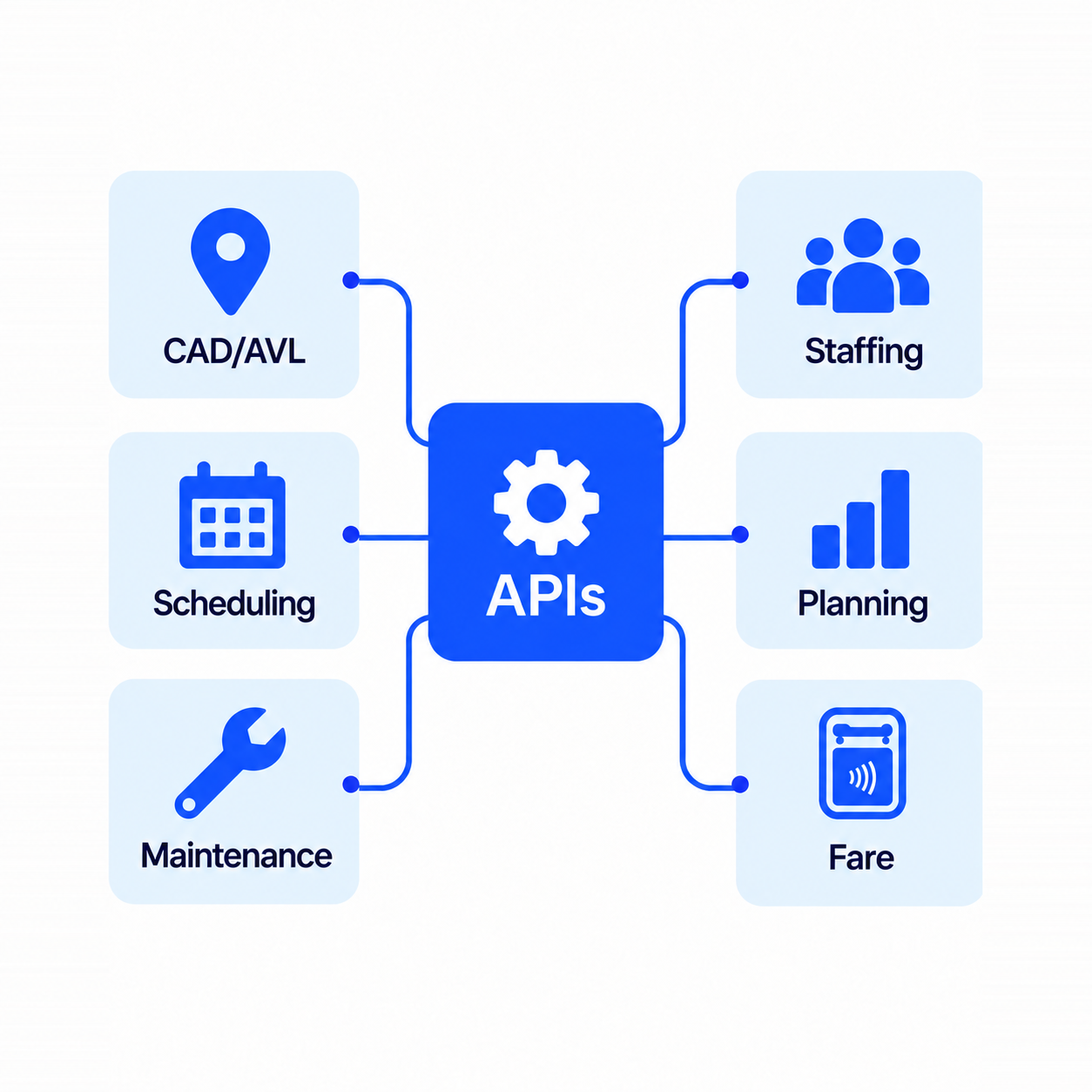
Agencies manage far more than vehicle locations and published schedules. There are maintenance records, operator assignments, incident reports, vehicle defects, service adjustments, and countless other details that help explain what’s happening across an operation.
An agency shouldn’t have to wait for a new industry standard before it can integrate information from two systems it already owns. That’s where full-featured APIs become essential.
Operational Visibility Depends on Integration
Consider an agency trying to understand why it continues to miss its morning pull-outs.
Its scheduling system identifies the service that was supposed to operate. CAD/AVL shows which trips actually ran. Maintenance records may reveal unavailable vehicles, while workforce management systems provide information about operator availability.
Each system holds part of the answer.
If we want transit agencies to embrace connected operations, we have to give them the access to make it possible.
Without effective integration, understanding the problem can mean asking several departments to run reports, export spreadsheets, and manually reconcile information. Better access would allow agencies to examine those factors together, identify recurring problems, and make more informed decisions.
This is the operational visibility agencies need, and it requires vendors to provide access to information at a useful level of detail, including historical data. Agencies shouldn’t have to replace systems they’ve already invested in simply to get a complete picture of their operations.
What Agencies Should Expect from Transit Technology APIs
Having an API and having a useful API are two very different things. Putting “Open API” on a website or checking a box in an RFP response isn’t enough.
Agencies should be asking vendors some straightforward questions:
• What operational information can we actually access, including historical records?
• Is the API documented well enough for our team or integration partners to use?
• Can we securely control access and permissions?
• Are there usage limits that could restrict legitimate operational needs?
• Are there additional costs, and how will the API be maintained and supported?
Open access doesn’t mean making sensitive information publicly available. It means providing secure, agency-authorized access with appropriate safeguards. Security and integration should work together.
I recognize that building and supporting APIs requires investment. There are legitimate technical and security challenges, and we need to hold ourselves to the same expectations we’re asking of the industry.
What I find difficult to accept is the idea that restricting access to customer data is still a reasonable way to protect a vendor’s position in the market.
Our customers are trying to run better transit systems. They’re managing limited resources, responding to service disruptions, and working to deliver reliable transportation to their communities. They shouldn’t have to fight their technology providers to get the information they need.
If we want transit agencies to embrace connected operations, we have to give them the access to make it possible. Vendors who haven’t made this a priority need to act.