SPOT: ETA’s Core Platform
  All Solutions
 CAD / AVL / GPS tracking
 Business intelligence
 Digital signs and kiosks
 Infotainment
 Automatic passenger counting
 Tally NTD Survey Software
 Tracking websites and apps
 Vehicle announcements
 All Integrations
 Demand-response and microtransit
 Fare collection
 Mobile video surveillance
 Pre-trip inspection
 Solar e-paper signage
 Vehicle health monitoring (AVM)
 Voice communication
 Transit
  All Industries
 Airport
 Campus
 Medical center
 Rail, streetcar & trolley
 Rental car
 Tourism & theme park
 Transit
 Case Studies
  Blog
Blog eBooks
 Wall of Love
 Careers
 Press
Press Events
 Support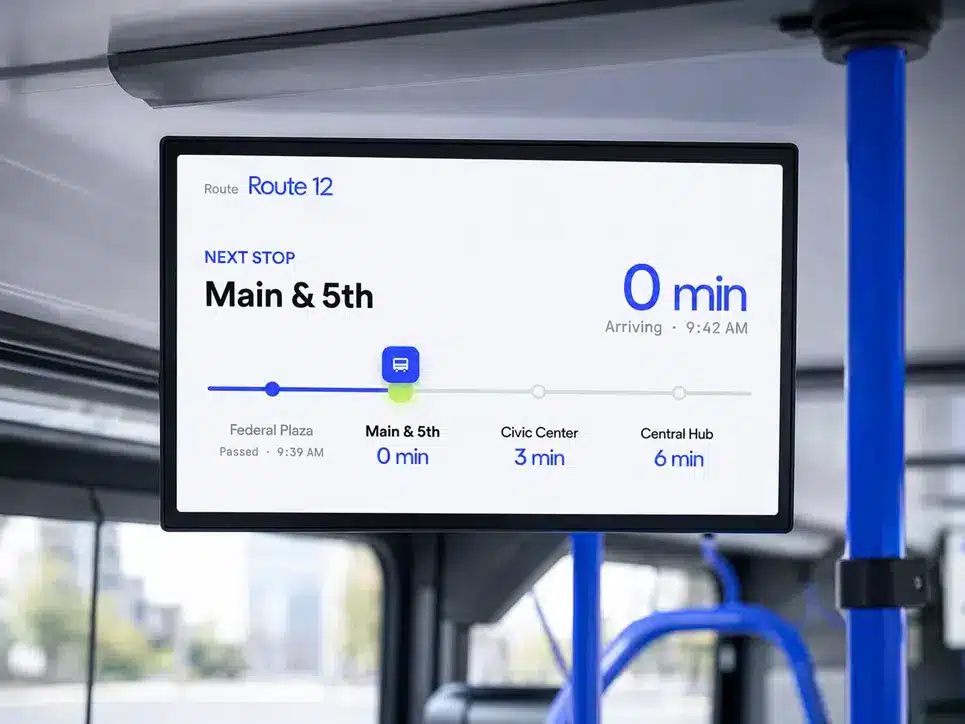
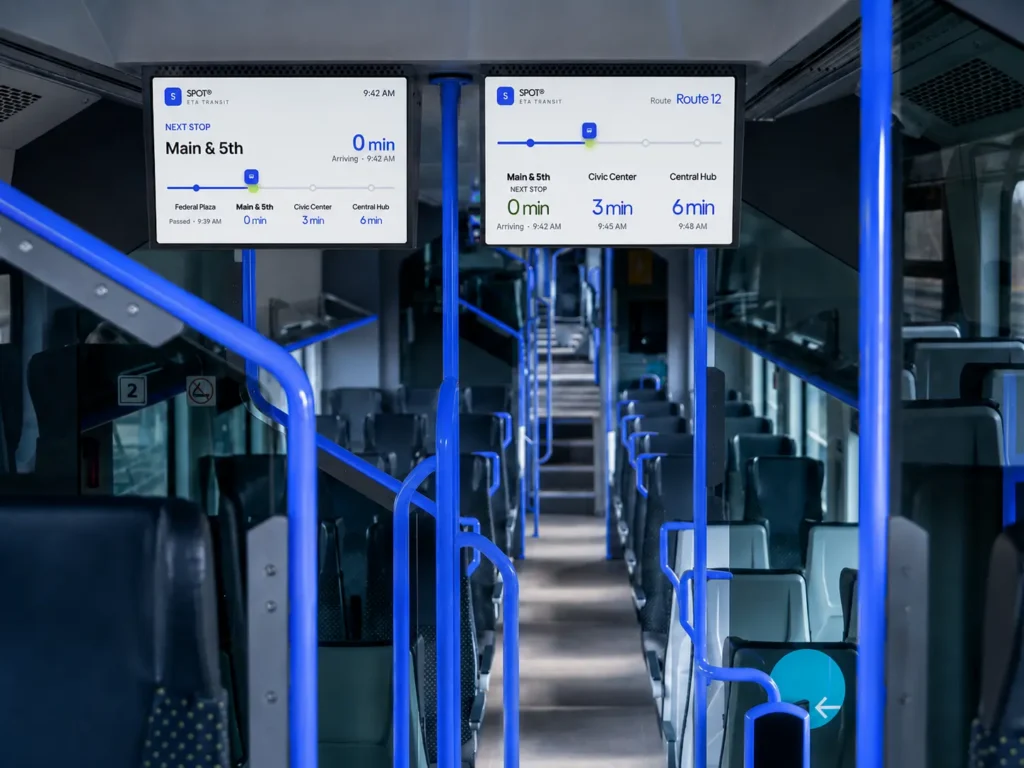
For many transit agencies, onboard screens are a standard part of the rider experience. From next-stop information, route maps, and the occasional service alert, they display the info that reminds riders they are being taken care of. As someone relatively new to the transit technology space, I believe these screens have the potential to do much more as our tech continues to evolve. When paired with the right technology foundation, onboard infotainment can become a powerful operational and communication tool—one that improves service delivery, reduces operator workload, and creates measurable value for agencies.
Improved Service Alerts: Service disruptions, detours, and weather-related changes are inevitable in transit operations. Yes, audio announcements are important, but visual messaging can reinforce these alerts, ensuring they are noticed. The challenge is that a screen is only as good as the data behind it. If a vehicle is forced to detour due to a fire, parade, or road closure, a screen that continues to display the scheduled route creates confusion for riders and most likely increases questions for operators. This is where a transit-aware content management system (CMS) becomes essential. When infotainment screens are synched with real-time vehicle location and service data, route maps and alerts update automatically. From here, clear concise visuals equal aid not just to the rider, but the operator, allowing them to stay focused on safe driving and the most enjoyable rider experience.

Rider Education = Reduced Friction: Onboard screens can also play a key role in rider education. Short messages or visuals can explain fare payment options, how to use bike racks, accessibility features available on the vehicle, or what to expect when transferring routes. These small moments of guidance can make a significant difference, especially for new or occasional riders. By proactively answering common questions, agencies can improve boarding efficiency, reduce dwell times, and create a more welcoming experience, especially for new or occasional riders.
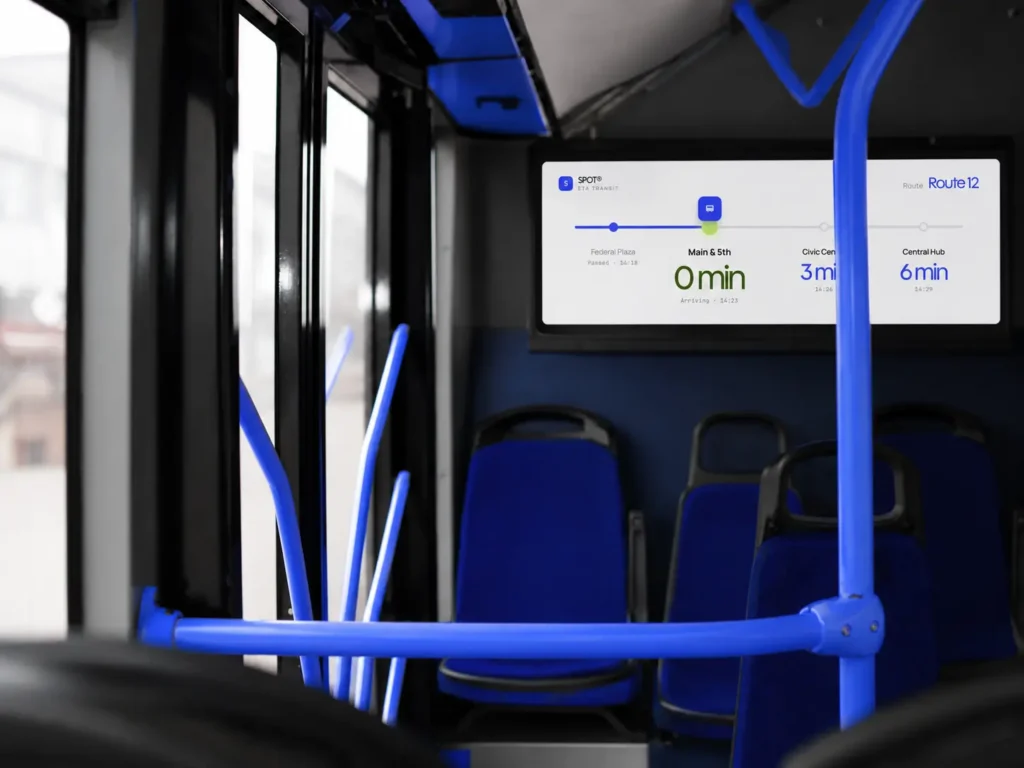
LED vs LCD; Expanding What Onboard Screens Can Do: As the transit industry gradually moves from monochrome LED signs toward modern LCD displays, onboard screens evolve from simple text indicators to versatile communication tools. LCD technology enables agencies to present rich, intuitive passenger information such as real-time maps, visual service alerts, and clearer guidance all while creating optional opportunities for advertising and sponsorships that can help offset system costs. Its not just a switch of hardware, it is pivot allowing a wider net for agencies to support operations, inform riders, and communicate with the communities they serve.
| LED (Monochrome) | LCD (Full Color) | |
| Content type | Text only | Text, graphics, icons, images, video |
| Information depth | Stop name, line, basic messages | Journey progress, maps, transfer guidance, service alerts |
| Layout flexibility | Fixed or very limited | Template-based layouts, multiple content zones |
| Real-time behavior | Basic updates | Transit-aware, synced with location, detours, and events |
| Revenue capability | Not supported | Advertising and sponsorship capable (optional) |
| Future flexibility | Limited | New use cases via CMS configuration |
Strengthening Community Connections: Transit systems are imbedded in the communities they serve. Infotainment screens can help position transit as both your trusted transportation, as well as the channel you turn to for important local information. From public safety announcements, to city wide initiatives, or simply the next local event (think farmers market, parade, college gameday) our onboard screens are added comfort while you ride.
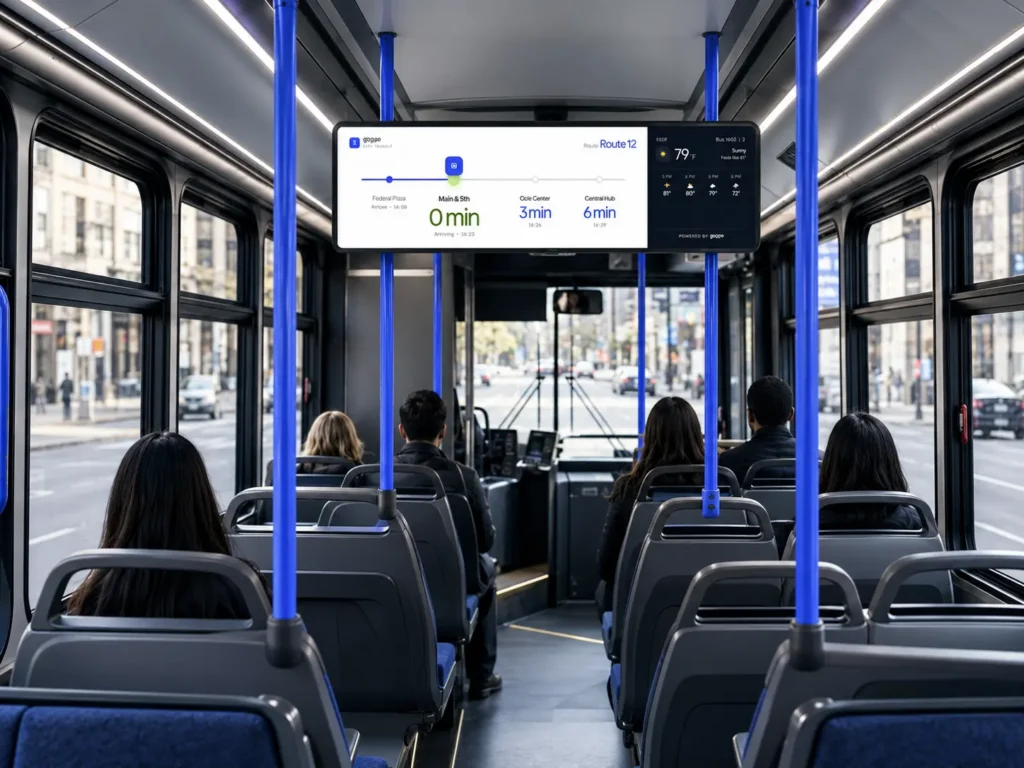
Final Thoughts That Mean Something: Onboard infotainment screens are already a familiar part of transit vehicles, but their full potential is untapped. With thoughtful planning and the right tech foundation, agencies can transform these screens into tools that enhance rider experience, support operations, and strengthen community engagement. Sometimes taking a fresh look at familiar technology is all it takes to uncover new opportunities that benefit both riders and the agencies that serve them. It’s time to take these possibilities and turn them into real, everyday improvements for the people who rely on transit.