I can look out the window and, uh, you know, watch a bus go by and, think, you know, I, I helped make that happen. Stop Requested.
This is Stop Requested. by ETA Transit. I’m Christian. And I’m Levi. These are real conversations with the innovators, operators, and advocates driving improvements in public transportation. Today, we’re kicking off a four-part series on ABQ RIDE, taking a closer look at how a mid-size transit.
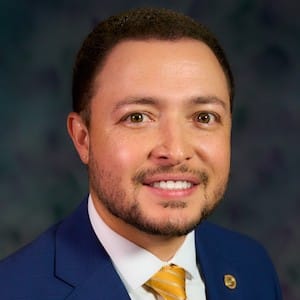
system is rethinking service, planning, and operations. Our- guest is Andrew De Garmo, Principal Planner at ABQ RIDE. We talk about Albuquerque’s
BRT system, how it was planned and delivered, one of the city’s most important corridors, and what it takes to operate and refine that service, over time. Andrew also shares how ABQ RIDE. is approaching a full system, redesign, shifting away from peak commuter service toward all-day, seven-day-a-week service. Here’s our conversation with Andrew De Garmo.
In today’s episode, we’re gonna be talking with Andrew De Garmo. He is the Principal Planner at Albuquerque ABQ RIDE. Uh, Andrew, welcome to the show. How you doing today?
I’m doing great. Thanks so much for having me. Well, we’re very excited to have you here, uh, today, and to have a conversation about your career and all the great things that are happening at ABQ RIDE. You’re, you know, a very innovative organization.
S- numerous projects being put in place, uh, you know, very successful. Um, BRT project rolled out, you know, a few years ago, and it just continues succeeding. So really wanna learn about that, uh, planning work that is done to make, you know, those projects a success. Great. But let’s start with your introduction. Uh, uh, uh, you know, can you introduce yourself and tell us a little bit about your role today at ABQ RIDE?
Yeah. So I’ve, I’ve been here for quite a while, um, actually for 25 years now. It’s kind of amazing. Um, but I- I’m a principal planner here. I’ve, I’ve held that particular role for, uh, probably about 15 years.
Um, and I, I came to ABQ RIDE straight from planning school.
So I went to, went to school in Austin, Texas, and got my master’s in Community and Regional Planning. And, and then, uh, because my wife had followed me. there, uh, I followed her here.
I was- … really lucky to, to land a job. Uh, I wanted to work in a transit agency. I was just lucky to get a job. It wasn’t my dream job, but, uh, but it was great just to be able to work for a transit agency. And yeah, so that was in
2000. That, that’s how I got started here. And tell us about your role at ABQ RIDE. So, so what does it encompass today? Uh, one of the fun things about my job is I get to do a lot of things.
So I, I do our… I’m in charge of our service planning, um, that ranges from everything from the, the network redesign, that, uh, we’re gonna talk more about, um, to, uh, actually doing scheduling and putting together… We, we roster here’ at ABQ RIDE, so actually building the rosters, uh, and the, the bid board for our drivers. And then sort of the other half of my job is working on capital projects, uh, from, from planning all the way through. We’ just, um, we were just talking about, uh, before the episode started, about finishing our bus wash, and that was a project that I managed, um, revamping the bus wash. So park and rides, uh, bus shelters.
I played a, a role in our Albuquerque Rapid Transit project, so it, it’s fun being able to do a little bit of everything. It, that, it is a lot. I’ll tell you, a lot of transit systems have a big team of people that focuses in each one of the different things that you talk about, you know, for ser-service planning, uh, long range planning, you know, different, um, kinda like infrastructure projects and, you know, system service redesign, and it seems you do all that at ABQ RIDE. As, as a planner, uh, it’s a lot of fun. It is a lot of work also as well. Yes. I like that you mentioned that- It is a team.
I, I wanna emphasize- Yeah. No, no, it’s a team. It’s a team- Not- … of course. Not doing this stuff solo. That, that’s great.
And, and, and definitely kudos to your team because we, we see the, the outcome of the work. I like that you mentioned that you went for your education in Austin. Uh, we’ll learn about your favorite transit system later during our rapid fire session, but my- Okay … my favorite system is right there in Cap Metro, and
I think that a lot of the transit planning applications, like, you know, what best practices, you see ’em there. And I, I’ll be curious to learn later on how. much of that you, you brought to
Albuquerque. Um, I wanna, I wanna, I want you to describe for our listeners that are, might not be familiar with Albuquerque, New Mexico, um, how would you describe the city and the transit s- service or system that serves the city? Mm-hmm. Yeah. Um, well, we’re, we’re where Bugs Bunny took the wrong turn, um, where Breaking
Bad was filmed. Uh, but on a more, more positive note, we’re, we’re really kind of a medium-sized city. We’ve got about 900,000 people in the metro area, uh, about 650,000 people in our, in our service area. Or, uh, a lot of people think that, um… A, hopefully you know that New Mexico is a state, not part of Mexico.
Um, but Albuquerque’s a high desert city, so, uh, we probably are, have a little bit more in common in terms of climate and stuff like that with Denver than we do with Phoenix. People usually think we’re, we’re, uh, more like Phoenix, but, uh, so we’re high desert, uh, Sandia Mountains to the east, and, uh, Rio Grande runs through the middle of Albuquerque.
Um, it’s an, a, a new city with very old roots, if that makes sense. So Albuquerque was founded in 1706, but-Um, most of the city was built after World War II, uh, with the Kirtland Air Force
Base being a prime part of what, what made Albuquerque what it is today, and, and actually these days, more importantly, Sandia National Labs, which is a lesser-known cousin to the famous Los
Alamos, uh, labs where the, the bomb was created. Um, so yeah, and longest stretch of Route 66 in the country, 18 miles of Route 66 goes through Albuquerque. And actually our other distinction for Route 66 is that it’s the one place in the country where it crosses itself because there was a north-south alignment before the bridge was built across the river. So we have a lot of Route 66 history here, and that is our, our main transit corridor, to bring it back to transit.
The, um, we call it Central Avenue. Route 66 through Albuquerque is Central Avenue, and that- that’s the oldest corridor of the city, um, and that’s logically where our oldest transit routes are, and it’s our strongest transit corridor.
A- a- and that’s where the BRT is located, right? Central. Exactly. Central. Yeah. Yeah. So it… And it’s, uh, very dominant in our system. Um, it’s, it’s about, at. least historically, about 25% of our service, but over 40% of our ridership actually post-pandemic, it’s been even more. Um, we can talk about that more, but we’ve been very challenged with staffing, so our, our system is, um, has shrunk a lot, but it’s actually given us great opportunities.
It’s, it’s, in a counterintuitive way, it’s an exciting time to be here, ’cause we’re gonna be able to grow back, uh, better than we were before. That’s awesome. A- a- and on that vein, so as you’re, growing, what’s your biggest mobility challenges that, that, that in Albuquerque, uh, you guys are trying to solve? In some ways, I don’t think it’s different than it’s ever been. We’re, you know, we’re trying to get people to where they wanna go, without having to, to rely on a car. Um, but we, we spent a lot of time in the last few years doing a lot of public outreach on what we’re, what, what do people want us to do with all the resources they give us every year.
Um, and we’ve, we’re really pivoting more towards service that, we are gonna provide all day, all week. Before the pandemic,
I would say our, our focus was much, to a much greater extent on trying to get people to office jobs in downtown or on the base. So we, our, like our peak pull out, um, was probably 50% higher than our midday service, so really intense peaks and, and those were routes that just ran, you know, couple trips in the morning, couple trips in the afternoon.
Mm-hmm. Uh, and through our planning process and discussions with, with the public, we’re gonna be pivoting towards providing all-day service and not any of those peak-only routes, trying to help… We’re still helping commuters. We’re still helping people get to their jobs. We’re just not so focused on, um, trying to get people to office jobs in downtown. We’re trying to help people get to their retail jobs, um, you know, service jobs that don’t require them to be at work at 8:00, but they need to be at work, uh, at 11:00 a.m. and, you know, other people get off at 10:00 p.m., um, and they work on Saturdays and Sundays. So that’s, that’s been a big change for us, and as we bring our service back, we’re gonna actually be greatly increasing weekend service, and we won’t end up with as much weekday service as we had before the pandemic.
Wow, I, I really like that. A- and I tell you, um, uh, my, uh, previous experience at, you know, working at a transit agency, uh, like, like yourself,
I’ve, I saw so much opportunity in, during the weekends, right? Because transit agencies usually have, uh… And, and they were structured in a way that the schedules and the service were the traditional
8:00 to 5:00, Monday through Friday. Mm-hmm. So typically you have most of the service 8:00 to 5:00. You have more during those peak times. You have maybe a little bit more, uh, trips and frequency during those times, and then, you know, Saturday is a lot of the times like, uh, two-thirds of the weekday service, and then Sunday is like a third. You know, sometimes- Mm-hmm … Sundays you barely have service. And then- Yeah … and then also that conversation, uh, ridership coverage, uh, how do you handle those things, right? Coverage is very important, but also when we’re trying to drive ridership and make, the service, uh, work for the most, is where you should put service that is gonna benefit the most people, and, you know, making the service more consistent during the day, but also trying to expand service during the weekends, particularly in the main lines, that, uh, those are, uh, ridership increasing moves. Like, we’ve seen that to translate into that because what’s interesting is with the stakeholders, they want anything that you do to translate into ridership.
It’s like, “Oh, you know, where are the ridership numbers? Is this increasing ridership?” Right. And not all changes are, uh, towards increasing ridership, but a lot of the times that’s the way they wanna measure everything that you do. Right. Uh, so having a good mix, but, but definitely if ridership is, is the goal, uh, to go for those strategies that actually raise ridership. Yeah, I mean, we had to, we worked with Jarrett Walker and Associates and, you know, lots of people in the industry know, know, Jarrett Walker, and he’s, he’s really good at, and his team are, are really good at. bringing those conversations to the front, um, making it clear that we don’t make all decisions based on. ridership, that there are these other important needs out there that are not gonna generate ridership, and just making sure that that is an explicit part of the conversation, that we are making trade-off decisions all the time. And so, um, just because we either don’t cover some part of town or we do and the ridership’s poor doesn’t mean that-We’re doing our job poorly. It’s because that’s the feedback that we’ve gotten, that those are important things for us to do or, or that it’s not important for, you know, say, to serve this part of town. Um, and it… So that was a big part of our, our whole planning process, was starting out with questions to the public, um, about what, what do you want us to do? Do you want us to be running a route that’s near to you, so you don’t have to walk very far, but you’re gonna wait a long time for the bus, or do you wanna walk a little bit further and then have a short wait for the bus?
Which is a, it’s a good way to put it to the public and, and the, you know, we, we would be downstairs at our transit center, uh, talking to riders who were going to and from their buses, um, trying to really get feedback from riders and not just, um, you know, putting a survey out and hoping for the best. Um, and it, it was an interesting experience to ask that question, and then in our next phase, uh, and then the r- responses to the question were pretty overwhelmingly, “I’d rather walk further to a bus that’s always coming soon.”
But of course, you don’t know, what people mean by f- walking further. So- Yeah. So then we showed two scenarios. Uh, our whole project was, for this network redesign, was budget neutral, so we showed two, two options, one where we really focused on ridership, like you said, putting all of our resources on a lot fewer routes with frequent service, and then another option that would spread service out on, onto many more routes to get close to a lot of people, but infrequent.
Uh, it was interesting to see the feedback. It, it did shift when people see the reality of what walking further meant to us. It turned out, for some people anyway, it wasn’t what they had in mind.
Um, so it’s, it was great to actually put that in that question in sort of the theoretical way and then actually come back with,
“Well, here’s what it would look like if we did that.” And, and you do get different responses from people. And I think that scenario-based planning is, is extremely important. You’re getting the feedback from the public, and, uh, Christian and I had Ricky Anguiera on the podcast a few months back now, uh- Mm-hmm … from Jarrett Walker and Associates, and, you know, their, their philosophy is, is different, I think, and that’s why they made that name and that, uh, Jarrett Walker and Associates, uh, brand so popular. Uh- Mm-hmm … they really try to get the feedback from the public, and even though they are experts in planning, they’re not experts in your community, and I think they make that pretty clear from- Right … day one. You know, they’re looking to get the input from the, the stakeholders, and that includes the, the riders and, you know, the, the board of the agency and, you know, staff, like yourself.
Um, hey, I, I do wanna take a step back though, Andrew. Uh, uh, you, y-you of course already introduced yourself, but the, you said a couple things in there that I’m, I kinda wanna dig into, if we could. Uh, you know, you, you mentioned going to UT Austin and getting your master’s degree in urban planning, uh, but you said you wanted to work at a transit agency. I’m, I’m curious, where, where did that come from? Um, a somewhat circuitous path, but I actually grew up in
Washington, DC, and that’s probably where my in-interest in transit started. So when I was sort of becoming aware of the world, the DC Metro was still being built. Hope that doesn’t make me sound ancient now, but it’s- Um, you know, so I remember all this coverage about the, the subway and controversy over how much it cost and, and then riding it, um, using it myself, using buses in, in the city, and, um, not wanting to get a driver’s license ’cause I didn’t need one, and between transit and my bike, I could pretty much get wherever I wanted to.
Um, and then, you know, as I moved away from the city, uh, wasn’t as engaged with transit, but did get very interested in environmental issues. That was really what brought me back to transit eventually, um, after working for some, an environmental lawyer and environmental community organizing organization, which was great experience for public outreach.
Um, yeah, I’d, I’d decided that I really wanted to get back into urban planning, um, from, like I said, from an environmental perspective, and that often leads you back to, well, how do people get around in a city?
Um, and that brought me back to this interest in transit. So as I was going through my, my master’s program at UT, uh, riding the bus there, watching the agency there, uh, conduct a lot of outreach that was leading up to a vote on whether they should build light rail.
Uh, I didn’t get to vote in that election ’cause I had just moved away. But, uh, but that really, all of that brought me back to my, you know, that interest that started as a, as a young person in transit and the mobility it provides to people who don’t wanna drive or can’t drive.
Um, so yeah, as I, as I went through my, my master’s program, I, I did my sort of professional report on, uh, on the concept of BRT and how it might work in, i-in Austin.
Um, I got very enamored at the time. I don’t know if people might be aware of Adelaide, Australia, that has sort of a, it’s almost like a rail-guided bus system.
Um, so at the time I thought that was really cool. It, it just made me really interested in transit, and like I said, when, when my wife decided she wanted to take this job here-I just wanted to work in, in the transit agency somehow, so I was excited. I, I got a job working in, uh, a job access reverse commute program. So it wasn’t, wasn’t really a planning role, it was more of a, a program imple-implementation, but it was a way to work here in the, in the transit agency, and eventually
I was able to move into a planning position here. Um, but it was just great to get that initial experience working for a transit agency more on the operational side, and it could open my eyes more to the operational challenges, uh, that transit agencies face. It, it’s not all sort of the, the dreams of an urban planner.
This episode is brought to you by ETA Transit. For decades, transit agencies have been locked into legacy CAD/AVL systems built for another era. Expensive upgrades, rigid architectures, and software that lives in server rooms instead of the browser.
ETA Transit is the modern replacement. Our web-based CAD/AVL delivers industrial-grade reliability with cloud-native speed and flexibility. It integrates with what you already have, replaces closed ecosystems, and gives your team a single real-time operational view without starting over.
Replace legacy, move forward. The future of CAD/AVL is open. See it at etatransit.com. Right. No, I can understand that. Uh, a-and so you said it wasn’t your dream job either. I, I’m guessing that’s because it wasn’t in planning where you got your degree in- Right … where your interest was. Is that correct? Yes.
Yeah. I mean, I– when I came, I was really interested in kind of the intersection of transit planning and, and urban planning, um, you know, how transit and the, the shape of the city, the form of the city around it interact with each other and trying to, you know, really wanting to s-help promote more urban development. So
I really sort of came focused more on, in some ways more on the land use planning side and how transit interacts with that. And
I remember telling my, my mom at one point that I, I would never wanna do scheduling for a transit agency and, and then it turned out that I loved scheduling for a transit agency. Um, but at the time, I, I really just felt like, you know, I’m interested in land use and, and transit’s role in that, and it, it just evolved over the years. Yeah, as it often does, right? You, you don’t really know until you, uh, get your hands into it, and then it’s like, wow, this is, this is a, a new thing that I, I just didn’t know that I, I loved as much as I-
Right … I do now. Yeah. I, I think that happens to a lot of us, and specifically- Yeah, I mean- … with transit I, I think one of the things that’s so rewarding about being involved in service planning and scheduling is the– as opposed to urban planning, y-you get to see the results of your work, like right now. I can look out the window and, uh, you know, watch a bus go by and think, “You know, I, I helped make that happen.”
Um, yeah, with urban planning, you have to wait for a few decades to see the results of, of your work if it ever comes to fruition at all. Right. But when it does, it pays off. Right.
It just takes a while, right? Yeah. You have to be patient as an urban planner- Right … uh, to see it all the way through. So you, you clearly had very formative experiences, uh, riding transit in Washington, DC, where you grew up. You know, I’m, I’m, uh, curious, uh, you know, how that kinda carried over into your time in Austin, which, as Christian mentioned, has a, uh, has a robust transit system.
Did, did those experiences combine in some way that inform how you think about transit today? Yeah, I suppose so. A-and actually, I,
I lived for about a year and a half in the Denver area, right when they were starting their first segment of their light rail system.
Um, and, and that was an interesting experience, too. I– the bus that I would ride? to, to work downtown then had, you know, as soon as the light rail got put in place, it no longer went downtown. It would take me to the light rail station, and then I’ would take the light rail downtown, uh, which was great on days when there was no traffic or when there was heavy traffic.
But other times I’ was like, oh my God, why do I have to make this transfer? Um, and I, you know, I think that did bring an appreciation for me of both the power and the pitfalls of rail as a mode, um, because it– when the tracks end, the vehicle can’t go anywhere else. Um, and that’s, in some ways, you know, said to be a great advantage for urban planning purposes, but for everybody who doesn’t live in that specific quarter, then it becomes a detriment ’cause now. you have a, a forced transfer, and BRT is, is a way to, in at least in appropriate settings, it’ can be a way to avoid that, that sort of choice between providing a high amenity service, you know, versus forcing people to make transfers.
And so I, I, you know, I did see that. I didn’t see that actually happen in Austin, but I saw all those discussions going on about light rail and, um, as well as, you know, can, could Austin support light rail in terms of having enough, uh, residential density and destinations?
Was it gonna solve congestion? Which I think is always kind of a, a fraught conversation. Um, yeah, so those, living in Austin, having lived in Denver and, and watching these discussions did play a big role in the way I think about transit.
And, and I, I wanna now, I, I think it’s a perfect segue to, to talk about, uh, your BRT system, uh, that is called
ART, ART, right? At, uh, Albuquerque, which I thought it was very clever. I was like, “ART? Art. Like, i-isn’t it BRT?” And then I learned, well, it’s Albuquerque Rapid Transit. So you g-you went ahead and switched that
B for, an A, eh, but it- Right … it’s also kinda like artistic. It’s definitely, uh, you know, it, it, it looks very nice, eh, premium transit. And I, particularly have a fascination with BRT systems.
You know, I grew up in a community where it had just, like, regular bus, mixed, you know, traffic, all that, and then, they went very heavy on, on, like, a robust BRT system, multiple corridors and lines. Mm-hmm. And people were selling their cars and just transitioning to, BRT. So, so I wanna learn about your, um, ART projects.
Um, eh, could, could you describe for our listeners the, um, Albuquerque Rapid Transit corridor that it serves?
Sure. It’s, uh, so it is a, a, a full-fledged BRT, so bus rapid transit. It’s, um, it’s got dedicated lanes. It, it’s a center running BRT, so it’s in the middle of the street. Um, stations about every half mile. They’re pretty substantial things.
You, you can see them from quite a ways off, which was part of the, the thinking and designing the, the sort of canopy structures that, uh, are on top of the stations. Um, the dedicated lane portion of the corridor is about nine miles. It crosses from western, the western, more or less the western edge of Albuquerque to, um, a location that’s probably about two-thirds of the way east of the river, and then taking advantage of what I was referring to earlier of, of the flexibility of bus rapid transit, the, there are actually two lines, and one of them turns north, uh, no longer in dedicated lanes, just in regular traffic, and ends in what we call Uptown. And the other line continues east to the eastern edge of Albuquerque, uh, staying on all of this, the main corridor is on Central
Avenue. It goes right by what we call Old Town, the original part of Albuquerque, um, and then downtown. Goes by, um, probably the, the main hospital in town, goes by the University of New Mexico campus, um, and traveling along this old Route 66 corridor, which is 100 years old this this year. Wow. Um, it goes through, um, an area we call Nob Hill, which it was kind of, you know, sort of the, an early, uh, suburb, uh, but, still very pedestrian oriented.
And then it starts to s- um, you know, the corridor starts to expand out into more, more of a modern suburban stroad, if you’re familiar with that term. Um- … and that’s, that’s about where, uh, it goes by our, our fairgrounds, which are, uh, subject to a lot of discussion in terms of planning these days about whether it’s gonna remain fairgrounds or get redeveloped. Uh, and then, like I said, one line goes to Uptown, which is, uh, an sort of an office and major shopping destination, and the other line continues east on Central
Avenue, um, through some lower income areas that, that really benefit from transit service quite a bit, and ends out there at the eastern edge of town.
And it was, um… Z- we started service November of 2019, and, uh, in BC, so before
COVID, just barely. Um, and, uh, those are, the original service design was to have those two routes running every 15 minutes each, so very high frequency for us anyway, uh, on the, the corridor where the two routes overlap, so every seven to eight minutes a bus arriving. Oh, wow.
Um, so very, very high frequency. And I, as I think I mentioned earlier, it is a huge, Central Avenue’s a huge portion of our ridership, um, and not just because we put a lot of service there, but it has all these great destinations along it. It has a lot of residential density along it, a lot of, uh, mix of incomes.
So it’s a, just actually a super transit corridor for a city our size. Um, you know, we, last year we had an average of over 40 riders per revenue hour over the course of the whole year. That’s weekdays,
Saturdays, evenings, the whole thing. Oh, wow. So it’s a very productive corridor. Um, but the, the pandemic did throw a wrench in, in our- Yeah, … plans, so much of it was- Yeah, I understand you, you launched right during the pandemic, right? Yeah. We got about three months before the pandemic, and, uh, and then we actually shut down the, the, the ART for a few months, and then brought it back. And now it’s, now it’s still our most frequent corridor, but, uh, sort of the overlap frequency of service is around
12 minutes. The, our plan is to get back to that original, um, every 15 minutes on the two legs and, and a seven to eight-minute headway between the two of them on the overlap corridor.
And, uh, you know, I think the ridership will support that when we get back to that as well. Wow, that, that, that sounds great. I mean, that, that’s transformational, right? A-and those are great numbers. The community is responding. Uh- Yes … we had in our, uh, podcast, uh, you know, Dr., uh, Nick Faranak. He’s the director of the Center for
Bicyclists and Pedestrian Safety for New Mexico.And he shared with us that since the BRT was implemented, there was a sixty-five percent reduction in fatalities and serious injuries in the corridor. So it, it definitely had a positive impact, not just only increasing service, travel times, uh, people getting to those, uh, destinations quicker. A, you know, you described the corridor and, you know, the, the attractions i-in the corridor, and it seems that, that that’s very important for the people in the community. So not only just increase access and travel times, mobility for, uh, Albuquerque, but also safety, uh, with those reductions of, of serious injuries and fatalities.
I, I wanna just ask you a, a question of, you know, like Central Avenue, one of the most important corridors for Albuquerque, historic, you know, Route sixty-six, uh, which I didn’t know that, that, that fact, that, that, that was actually Route sixty-six, and you have one of the, uh, you know, largest chunks of it, uh, within your community, but also you put BRT, uh, right there, the proper full BRT, not li-light
BRT, you know, BRT light, but actually a proper one. I, I wanna go back then when you were proposing this, since you’ve been with the agency with this long, just how was it to, uh, present, eh, you know, this idea of building a BRT in one of the m-major corridors? A-and I ask th-this question because a lot of the times it’s the one where most, uh, cars are traver-traversing to, and then a lot of people that are, you know, like, “I don’t like to, you know, ride. transit. I like my nice car.”
So, you know, now you’re gonna push me out of this, this corridor? Like, how was the reaction back then, uh, when that was first presented?
Yeah. I, I glossed over a lot, went straight to the outcome. Um, yeah, we, we took a lane away for probably about, I, I think it was– I’ve forgotten the statistics now, but probably about four miles of Central Avenue, we took a lane away, um, from cars to dedicate a lane to transit.
Um, so, uh, just, just to give a flavor of it, it was controversial. Um, when
I first came here, we were working on a light rail, uh, project, trying to, you know, going through the environmental impact statement process to, uh, look at what the impacts of putting light rail would be and what the benefits would be and the costs.
Um, that went on for about five or six years, and then it was clear we were never gonna compete well for federal funding, and we couldn’t possibly afford it our, on our. own. Um, that sort of pivoted to, a streetcar concept that we, pursued for several years. Um, these, you know, these were concepts that were supported quite a bit from, decision makers, and I think the public didn’t really know what to make of them, and they didn’t take us very seriously. This is all sort of background to, um, about, when the streetcar died, and we, we came very close to, to getting the funding locally to build a streetcar. We, we came within one city councilor vote of getting that funding.
Oh, wow. Um, uh, for, for better or worse. I, you know, I’m, I’m actually think that we probably came out well in the end, uh, by, by not doing that. Uh, but we came very close. So all that to say, when, when we started, talking about bus rapid transit on Central
Avenue, people had been hearing about some form of fancy transit on Central Avenue for a long time, and, uh, I don’t think that they engaged all that much in the beginning.
Um, it became very real all of a sudden when we got a Small Starts grant. And, uh, all of a sudden people were very, very interested, and there was a lot of controversy.
Um, like you said, we’re, we’re taking lanes away from cars. Whether you’re on Route sixty-six or not, that would be a big deal.
It is one of only a handful of, uh, bridges across the river- Mm-hmm … that also makes it a particularly contentious, um… As I mentioned, the, some of these cool places that it goes by, like Nob Hill, um, are places that a lot of Al-Albuquerque residents really love and felt that we were threatening, um, we were threatening the fabric of Route sixty-six as a, you know, as Route sixty-six. Mm-hmm.
Um, so it, it was very controversial and unfortunately didn’t really get any better, uh, until it was complete and, you know, I think that now people have gotten used to it. I, of course, I, I’m coming from my perspective, but I would say we have not killed Route sixty-six at all.
Um, in fact, at sort of at the same time that ART was going through, uh, planning and then construction, the city was also revamping its zoning code.
So, you know, as, as I said, I’ve had this great interest in land use and, and I’m not the only one, fortunately. So the, the city was in the process of making it, uh, easier to develop, redevelop along Central Avenue, and that has been very successful.
Um, there are quite a few new apartments and commercial developments along, along the corridor that have come along, I would say helped by ART, probably not, probably not caused by ART, but assisted.
Um, and so it, it’s been a very successful project, but it was, it was quite painful along the way. Uh, and, you know, painful for us, painful for people who thought we were doing something terrible. Uh, but as, as you said, the, the outcome
I think has been much better than many people had feared.Um, traffic still flows well along, along the corridor. It is slower than it was before, but that also means it’s safer. And, you know, like what Nick Ferenceck was referring to, the…
it’s, um, despite having dedicated bus lanes that some people thought were gonna be a, a barrier, it has actually slowed traffic. You know, buses are not coming every few seconds the way cars are, so some people do use the, the bus lanes as somewhat of a refuge to get across the street.
Um, in that Nob Hill area, we put in sort of a wider median so that people could, um… w-we don’t wanna encourage it, but it is possible for you to jaywalk and, and just stand on that median while you’re crossing the street. We put in a lot more pedestrian crossings that are signalized than there were before.
Um, did our best to preserve on-street parking and, um, probably the most controversial part of the project in, in a way was the restrictions on left turns, and that, that has continued to be one of the challenges with the corridor.
So anybody thinking about doing center running BRT, how you handle left turns is a really big deal. Well, th-thank you for giving hope because I think, uh, you know, there’s, there’s a lot of agencies we’ve spoken with and we had on the show that are considering
BRT, that, that are doing corridor studies, and for a lot of them it’s gonna be the first. It, it’s different when you already have one in place and people can see the benefits, the advantages. Uh, you know already how to run it, uh, and maybe, you know, you do light BRT or you have like a mix of things. Like you said, you know, a portion of the corridor is fully
BRT, and then a portion is mixed, uh, traffic and, and… But it, it’s easier when you already have it in place. When you’re trying to paint the picture for people and they, they have not seen it in the community, it’s harder, and being able to go through that process and actually take them to the other side where they see the benefits, uh- Right … it’s the goal for a lot of these transit agencies. I, I wanna ask you about the operational challenges, like running, uh, BRT versus running regular bus.
Could you tell us a little bit about those operational challenges? I mean, in, in many ways you’re, you’re still driving a bus.
So, um, the core of it is not an, a new thing to an agency. You know, unlike light rail or something where you really have an entirely new, oh, entirely whole new s- operation that you need to spin up, um, these are still buses. But that said, um, we, we really wanted to try to do level boarding, um, which under ADA has some pretty stringent, uh, requirements in terms of the horizontal and vertical gap. So we, we worked with, um, New Flyer, who’s the manufacturer of our buses, to do some programming on the buses so that they would be able to adjust to the right height to match the platforms when they get to the stations.
Um, we, uh, we also did a lot of work on trying to figure out how to get the bus really close. Uh, and, and I, I will say, you know, it’s, as an operational challenge, uh, driver training is always, uh, is always a challenge and then, you know, they’re under time pressure when they’re out there, especially when it’s such a busy corridor. So, um, not every driver gets within three inches and half an inch vertically like the requirement, but, but we come pretty close. I think that, that part of it works really well.
Um, running very frequent service is, is also a challenge that I’m sure people who, who have frequent service in their communities will relate to. Bunching is still an issue for us. Uh, we, we’d hoped that the BRT would make run times very consistent, but there are some frictions along the corridor that make that hard.
Um, and then as I mentioned, the, the left turns from the general public across the BRT are, um, are a hazard.
Really they’re, they’re all signalized, um, but not everybody waits for the green left turn arrow, and so we, we do still have some crashes with people who are making illegal left turns across the path of the bus. So those are some of the challenges.
We, one, um, one of the things that we did that, um, makes it particularly challenging for on the bunching question is, uh, we have several areas where we use what we call bi-directional lanes. So we, an advantage of BRT is that you can fit it into a very constrained corridor. You, you know, a bus can, can make weav- weaving motions through an intersection so you can preserve all the left turn lanes and through lanes and on-street parking, uh, you know, as opposed to light rail where you’d probably just have to barrel straight through.
Um, but in some places we actually made a, an even bigger concession, which was to only have one lane for the bus, and we use that lane in both directions using signals for to, you know, keep both buses from being there in the same time.
But those are just like with trains, those are bottlenecks. Um, so we, they cr- uh, those bi-directional lanes are, are a challenge. They, they create a challenge for the drivers to maintain schedules if they’re having to wait for a bus coming the other way. And so we’re, we’re still working, um, on how to improve the signaling in those areas so that we can get the buses through as efficiently as possible.
But tho- yeah, those are s- probably our major operational challenges. And I think it’s good for our audience to hear that too. Uh, once the service goes out on the street, it’s not just, you knowYou, you say pat yourself on the back and say good job, and everything is A-okay. The– it’s very iterative.
Right. Planning is an iterative process, so I can certainly understand where you’re coming from when you say that, look, we still have challenges, and we’re, we’re working through those as they present themselves. Right. Uh, you know, yeah, I want to, uh, kind of shift the conversation a little bit, Andrew, uh, you know, because the, the BRT is a, a project, yeah, of course, that’s on, you know, ongoing. There’s ongoing improvements that you, you just mentioned, but it is in the past.
Let’s take a step in, in the other direction and start looking forward. And in fact, uh, something you foreshadowed earlier, you said ABQ Ride Forward, which is your new approach, your redesign for the ABQ system. Can you give us some maybe a high-level overview of, of what that entails and why you started to take that effort on? It, it had been an ambition of ours for quite a while and, and it, it does relate to ART, uh, in a couple of ways, but in one way is that we didn’t have the bandwidth to, to do ART and do an entire, um, service plan, you know, to revamp our entire route network at the same time. So, um, when ART was over, uh, to the extent that we were just becoming sort of autopilot to operate it and, um, had sort of finished some of the post-construction changes we made, we’d, we’d added a lot of pin curb to prevent people from making illegal left turns.
Uh, we, we were able to then shift over to this ambition to look at our entire route network and, you know, I think as I mentioned earlier, we wanted to just go to the public and say, “What, what are your goals for transit? We’ve been kinda doing the same thing for decades now.” Um, despite ART, you know, really wasn’t a fundamental change to our network. We already had really good service on Central Avenue. Actually, we had a sort of BRT light before we went all in on BRT.
Um, so this was our chance to go to the public and, and say, we, you know, you, you guys give us millions of dollars every year. This is what we’ve been doing in the past. Is that what you want us to do in the future? Um, so it was, it was actually really kind of fun and sort of freeing to be able to go out to the public and say, “Hey, you tell us what you want, and w-we’re not coming in with any preconceived notions of what the outcome should be.”
Um, yeah, so we, we started out with that question of, do you wanna walk further to a bus that’s coming soon, or do you want a bus nearby that’s not coming soon, but will be here eventually, you know, a sort of lifeline service or a convenience service in fewer places? And we started that in twenty twenty-two and took us several years. We went through a multi-phased process, that, that first phase of asking very broad questions. Then our next phase was to show people, here are two networks that we could do with our existing resources.
What do you– where– Not which one do you like, but where on the spectrum between the two of them would you think we should end up? Um, and then coming back with an actual proposal based on that feedback, and then refining it into what we now have, have approved through city council and the mayor’s office as, um, as our final goal.
And, you know, the silver lining to the pandemic and what for us was a really difficult time for recruiting drivers and mechanics, uh, so we, we were only running about two-thirds of our pre-pandemic service. The, the silver lining to all that is that, um, we, we almost were already starting from a blank slate in the sense that service was so reduced that we had a lot of flexibility in how we were gonna come back, and, and I think that made a lot of those conversations easier because some of the things that people might have been really attached to before, like all those commuter routes we would run, peak, peak-only service, uh, they were all suspended anyway ’cause we didn’t have the drivers or the buses due to mechanic shortages to operate that. So it, it did free us in some ways and, and it, I think, also helped the community look at the service in, in a more dynamic way than they might have if they were sort of really focused on the network that had been running for twenty years at that point. Um, they were able to, to think more about, yeah, what, what do we want it to do? Um, so the, the outcome of all this is a network that will be, uh, not peak-oriented at all. It’ll be much more a seven-day-a-week, all-day service that’s kind of a balance between trying to provide more frequent service on more, more corridors, uh, but not losing, um, really not losing any all-day coverage at all. We, we will lose coverage from some of the commuter routes that will no longer operate, but, um, we’re not really losing any coverage of areas that we, uh, covered before with, with all-day service. Um, we’ve also started to mix in some microtransit zones, so we, we are replacing a, a few routes that are just coverage routes now that are low ridership.
Um, we’re gonna replace those with microtransit zones. Um, and then coming back to ART, we actually are planning to sort of build on that flexibility of bus rapid transit so the, the routes will no long– will not only diverge on the east side, they’ll also diverge on, on the west side of Albuquerque and provide basically one-seat rides, for a lot. of people on the west side to get into downtown or the University of New Mexico, um, more quickly and easily.
So the– They won’t have dedicated lanes, but we’ll use the, the, you, know, our five-door ART busesThat’ll go, you know, all the way about, fifteen miles away to, uh, the far northwest corner of Albuquerque and, down similarly to the southwest corner of Albuquerque and bring people all the way in, um, in a frequent service that, uh, will get them straight into a lot of the major destinations on the east side of the river.
Oh, that’s really excellent to hear, and thank you for, you know, giving us the, the breadth of what ABQ Ride. Forward is, is about. So it, it’ sounds like you had a coverage model, uh, previously, to borrow some of Jarrett Walker and Associates vernacular.
Mm-hmm. And now you’re sliding the scale to push it a little bit more towards a ridership model. I,
I’m curious, were there a lot of folks who said that the, the ridership model is y-you know, maybe, maybe not- what we’re looking for? It– we, we, like the, coverage. Or because of the pandemic, as you mentioned, was it, it just was a, a natural time where the service had contracted and y-you decided, this is our shot, this is our opportunity to be able to take some of the feedback that we received and make the ridership model work?
We didn’t come in necessarily wanting to get rid of the commuter routes, although I don’t think we had been very forthcoming broadly with the public about what it meant to run those commuter routes .
So, um, I mean, just to dive into that, just to briefly an aside, um, you know, a lot of people who rode those commuter routes rode them, you know, they wanted to save money on parking downtown or something, but a lot of people also rode them because they, they, you know, they felt good about, “I’m not gonna drive my- car,
I’m gonna take the bus, it’s good for the environment.” Um, we, you know, I… Sort of an embarrassing fact was that it would have been better for them to drive their car because there weren’t enough of them on the bus to make up for the fact that the bus had to drive all the way from the garage to the beginning of the route, and then take them all downtown, and then drive back to the garage. You know, it spent half of its time driving empty. Um, so it, it, it actually was not a net benefit, and we were– With the pandemic and people in office jobs working from home and even, you know, in 2022 when we were starting this outreach, plenty of people were still walk, working from home.
Um, it, it freed us to just be honest about, uh, this, these are the resources that are required to provide that commuter service.
And at the same time, you know, like, you said, it, uh, it made it easier to say, “Maybe we shouldn’t do that,” because a lot of those people aren’t going to work in the office anymore. They’re working from home. And it, so it did sort of pull the rug out from underneath the, the market for that kind of service. And, and it enabled us to also have the, this conversation about people of, think of commuters as office workers. And, you know, that of course comes from concern about congestion and, uh, everybody’s on the road at eight in the morning and five o’clock in the afternoon. And that is driven by, by office workers largely.
But there. are, all these other people who commute who probably actually need transit service more or are much more likely to want to use transit service because they’re not lawyers. They’re, they’re, you know, working the checkout counter in Walmart and serving people at, at restaurants, and so they might really benefit more from being able to take the bus instead of having to try to, you know, keep a car going and, and pay for all the operating expenses. You know, maybe that this way they can share a car with a, with a family member and not have to buy a second car. So I think that that conversation really fed into then the ridership, you know, dovetails with that ridership model of those, those people need service all day.
Um, a-and then it also sort of ties into the, the question about frequency versus direct service, and all those commuter routes were designed to provide direct service to people to get downtown from wherever they were. There no, no transfers involved.
We’re, just gonna ride point to point. Um, and, you know, we’re gonna get on the freeway, it’s gonna be fast, and that, that’s great if you happen to have a schedule that works with the two trips that we’re gonna provide
. If you, if you need to work late or you need to get into work early for some reason, then you’re out of luck. And that also comes back to frequency and having these conversations about, you know, when you, if you drive, um, like a lot of decision-makers do, they don’t appreciate the fact that for transit, the gate at the end of your driveway only opens when the bus goes by. You don’t, you don’t get to just hop on the bus whenever you want, unless we’ put the resources into fewer corridors, and then, then the bus is always coming by soon. Um, so that, those were conversations that I think were really important to have and eye-opening for some people who hadn’t, hadn’t really seen, you know, some of that behind the scenes, um, stuff for us in terms of what it takes to provide commuter routes and hadn’t thought through all those nuances of, you know, if they don’t ride the bus very much or if the commuter worked for them, they hadn’t really thought through like, oh yeah, that, uh, you know, this is very limiting to only have a few trips a day or to have service that only runs once an hour and, you know, maybe I need to be work precisely at, at eight o’clock or something and, unless the bus gets me there at 8:05, I’m gonna have to take the one that gets me there at 7:05, and that, that’s travel time. That extra fifty-five minutes is, is time you could have spent at home with your kids or something.So those, those were great conversations to have that I think in some ways the pandemic helped us out ’cause it, it sort of loosened up some of- Yeah, it, it- … some things that have become habitual.
Yeah. And Jarrod Walker puts it as, uh, frequency is freedom. Mm-hmm. And, and it really e- uh, it really is when, when, when you can actually make those choices to travel when, you know, when it works within your schedule versus, like, there’s only two trips, either you take this or you just have to find another mean, you know, for transportation.
Um, so let me ask you a question. Looking ahead, what does success for ABQ RIDE look like over, over the next, um, you know, several years?
I think, um, not to sound like we’re, not shooting high but success for us will be to hire enough drivers and mechanics to get back to our, pre-pandemic service level. Um, we’re, we, we’re, we’re very excited actually, ’cause we’ve, we’ve started down that, path. We, as of the beginning of December, we were less than 65%, we were probably about 63% of our pre-pandemic service. We were a- able to get ourselves up to 67%, and we’re looking at, uh, adding a, few more percentages in the next few months.
Um, but we, we do have a long ways to go. Um, we’re heading in the right direction, but we need to hire a lot more drivers and, um, we’re having a real challenge with mechanics, so, it’s, uh… Success for us I think will be getting that full service back in place in, in the ABQ RIDE forward network plan.
Um, and, you know, I think we’ve, I think we’ve also really focused in on some of the core basics of transit service. We wanna be clean, reliable, safe, um, and I think those are, things that we can’t take for granted, and so those are also things that we’re, measuring and wanting to make sure that we’re, doing a really good job at providing not only the service the, you know, on paper, but, having it’ be really excellent on the ground. Excellent. And, and I wish you a lot of success, uh, with that vision. I, I think that, uh, you guys are gonna be able to get there, um, you know, after overcoming those staffing challenges and being able to get more of that service out there, uh, back to the, the pre-pandemic levels. Having had visited your system and ridden your system, I mean, you, you guys are doing great things, so, you know, kudos-
Oh, thank you … to all the team at ABQ RIDE and, and, you know, I see great things coming up in the future for you. So a- as we’re closing a, our episode, we do this rapid fire, uh, segment where I wanna be asking you, uh, quick, short questions, and I’m looking for a quick, short answer as well, so like the first thing that come in mind, just throw it our way.
Are you ready for that? Yes. All right. So Andrew, favorite transit system? Oh, that’s, that’s really hard, but- I might just have to go back to my roots in Washington, DC, WMATA.
WMATA? Excellent. Good choice. Bus or rail? I, I’m gonna punt on that one. I, I think it depends on the context. Okay. Okay, okay. Yeah, that, that’s a, that’s a good answer also.
Uh, one transit idea more cities should try. All right. Having punted on the last one, I’m gonna say buses are such powerful tools, and I really think that BRT’s, uh, got a long way still to go in the country. We could use it a lot more.
I like that. Awesome. And favorite place in Albuquerque? That’s another tough one. Boy, but I live near Old Town, and Old Town used to be very, uh, sort of the $10 tourist oriented. Mm-hmm. And it’s becoming a lot more local and, and authentic for those of us who live here, and I, I love that, so I’m gonna say Old Town. Excellent. So y- I’m gonna fill in the, the gap. So it sounds like it, you know, based on your, uh, your studies at, UT Austin and, your, your love of Adelaide, uh, would it be bus? Would it be bus? Yes.
Okay. All right. We got it. We got it. We got an answer for that one. Sorry, had to put you on the spot, Andrew. Okay. All right. All right. So while we were talking,
I took some notes, and I like to share these as key takeaways at the, the ends, uh, at the end of our calls. Uh, so one thing that stood out to me was that you’re very outcome focused. Uh, you persevered through the challenges, uh, you know, and controversies surrounding your, your BRT launch, and suggest other agencies to do the same. Like, it is going to be tough.
There- Mm-hmm … it’s a sort of roller coaster ebb and flow, and you gotta stick with it. Right. Um, uh, service planning is very iterative. I, I think, y- you know, that’s, that’s clear from w- how you’ve described your, your role and some of the, uh, the work that you’ve done with the, the BRT.
Uh, also, don’t take on too much at once. Y- you didn’t specifically say this, but it, you know, there, there was a, a period there where maybe you considered Albuquerque, uh, Rapid Transit,
ART, and the ride forward sort of comprehensive operational analysis and redesign, but decided, eh, this is too much for our personnel and staff to take on.
Right. Absolutely. Uh, a- and then also consider the change in travel patterns. COVID has changed the world in many ways, and one of the ways is the way that people are, are traveling, people are going to work or commuting. Uh, so you need to think about the second and third shift workers, the folks that work on the weekends. Did I miss anything?
No, those are great. Excellent. Glad to hear it. Andrew, this has been an excellent conversation. I want to leave our listeners with a way that they can either get in touch with you or learn more about ABQ RIDE.
Where would you send them? First, abqride.com. That’s easy. Um, and then if people are interested in reaching out to me directly, I’m happy to, to do that. My email is my first initial and last name, A-D-E-G-A-R-M-O
@C-A-B-Q.gov. Excellent. Well, again, thank you so much, Andrew. This has been a really delightful conversation. Um- Thank you … I didn’t mention this earlier, but Albuquerque is one of my favorite cities.
Uh- … I, I’ve been there. It’s been a while, and I took the Breaking Bad tour, so I did my- Oh, good. … self-guided tour because I was a huge fan of the show. So, uh, um, the best of luck to you, your colleagues over at, uh, ABQ
RIDE. And to our listeners, thank you so much for listening. We will be back next Monday with another episode of Stop Requested.

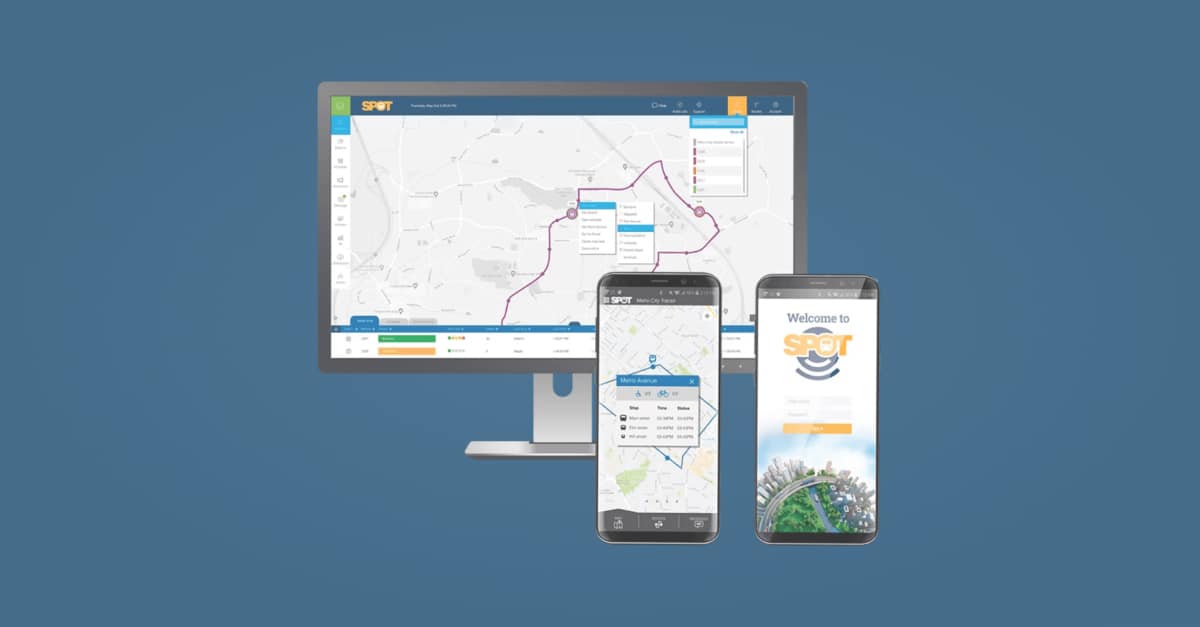
 SPOT: ETA’s Core Platform The SPOT™ ecosystem offers transit management solutions by providing a flexible, modular platform.
 SPOT: ETA’s Core Platform
  All Solutions
 CAD / AVL / GPS tracking
 Business intelligence
 Digital signs and kiosks
 Infotainment
 Automatic passenger counting
 Tally NTD Survey Software
 Tracking websites and apps
 Vehicle announcements
 All Integrations
 Demand-response and microtransit
 Fare collection
 Mobile video surveillance
 Pre-trip inspection
 Solar e-paper signage
 Vehicle health monitoring (AVM)
 Voice communication
 Transit
  All Industries
 Airport
 Campus
 Medical center
 Rail, streetcar & trolley
 Rental car
 Tourism & theme park
 Transit
 Case Studies
  Blog
Blog eBooks
 Wall of Love
 Careers
 Press
Press Events
 Support