Stop Requested. Welcome to Stop Requested, the podcast where we discuss everything transit. I’m your co-host, Levi McCullum, Director of Operations at ETA Transit.
And I’m your co-host, Christian Londono, Senior Customer Success Manager at ETA Transit. All right. Welcome to Stop Requested. Uh, Levi, how are you doing this afternoon? I’m doing great. This is an excellent conference and I’m excited to talk to another guest here. Yeah. So we’re coming live, uh, to you straight from the expo floor at the Transport Ticket in North America 2025.
And today’s guest is Ben Turner, uh, senior business development executive with Kajeet, a leader in secure IoT and rider engagement solutions.
Ben, thank you for joining us. Uh, how are you enjoying the conference so far? Thank you for having me. Yeah, it’s been great here in Chicago. I thought we were gonna get a little bit of, uh, respite from the hot weather down in Virginia, but came, uh, yesterday to about 97 degrees and heat index 103 and
I wasn’t expecting that. But the people here are so friendly, and it’s been, uh, absolutely fantastic so far. Thankfully, we’re inside the air condition today. Yeah.
Yeah. I mean, that’s- it’s nice to have the air conditioning, for sure. We- so we’re coming from a similar situation, uh, you know, being in South Florida, humid, hot, and then coming here, it’s humid and hot. I’m like, “No.”
Where was the… Yeah. Where is the, where is the nice weather that we were looking forward to coming north? Uh, so Ben, you know, thanks for joining us.
Can you give our listeners some, you know, background into you? Like, how did you get to start working at Kajeet and, you know, what leads you to, you know, the conference here? Yeah. Absolutely. So I’ve been in telecommunications and technology for the last 15 years.
Started way back in 2011 as a retail sales consultant inside an AT&T store. And after a year and a half of that, uh, went into the corporate side of AT&T and through a variety of different positions, uh, both individual contributor and people leader positions.
Been at, uh, AT&T and Verizon over 13 years, and just recently came to Kajeet about a year and a half ago, and uh, was asked to really help around building a transportation business vertical, um, going, going to market with some of our solutions and offerings.
And, uh, it’s been a great ride so far. Really enjoying it. Excellent. Well, can you describe what that day-to-day looks like at Kajeet? Yeah. So it’s a lot of relationship building, uh, a lot of business development. What we are really passionate and focused on at Kajeet is being customer focused.
Uh, at the end of the day, we are really not selling a solution. We’re really solving for problems.
And those unique individual problems are different from business to business. And so a lot of my day is, uh, surrounding calls and meetings with customers and going to conferences and trade shows and being on expo floors and walking up and down, uh, learning about, uh, who’s who and all of the, uh, public transit.
And our transportation vertical, it really consists of the public transit, um, agencies, but also we do a lot of EV charging, fleet management solutions.
So really, uh, a variety of different, uh, verticals within the whole transportation industry. I see. And, uh, just to, you know, take it a step back, w- what is Kajeet? Like, I’m, I haven’t really heard of it, uh, until just a few moments ago, but, you know, can you, can you give us some background? Yeah, I’m glad you asked. Uh, so we’re an IoT fully managed connectivity provider.
I don’t want to assume that everybody knows what an acronym means, but IoT means the Internet of Things. The vernacular 15 years ago was M2M, machine to machine, and then it just evolved more into IoT over the last decade.
Uh, but we’re an MVNO, which means we’re a mobile virtual network operator. Uh, and we’ve been around for 22 years. We’re headquartered out of McLean, which is very close to Washington, D.C. And the heartbeat of our operations is more in Phoenix, Arizona.
Uh, but we started 22 years ago as, uh, just try- being a company that tried, tries to bridge the di- digital divide for children, making the internet access safer for kids.
Uh, we have three founders. Um, these dads got together and came up with this great idea of a company 22 years ago.
And they na- they, they got the company name from using the first letter of their children, thus K-A-J-E-E-T. And there you go. We are, we are Kajeet.
Um, but from 22 years ago, trying to make the internet a safer place for children, um, to launching Smart Bus in 2018, and then the pandemic, uh, COVID era, era from 2020 to 2023 where we really dominated the K-12 space with E-Rate. And you think of all the kids that were actually, uh, learning and doing school online, uh, from home, uh, we blew up, uh, in a good way. Uh, we actually were the number one provider in E-Rate for multiple years.
Um, so we’ve really matured going fast-forward to today and our, our mission being, um, we want to provide the foundation for secure, efficient, and flexible connectivity with wireless networks, software, and data-driven insights that improve the daily life for organizations and communities, providing connections for the good.
And that’s where we are today. Uh, we’ve really been putting a lot of focus around our enterprise space, so beyond public sector and beyond the K-12 space, which many people know Kajeet as school buses and children and… ’cause it’s been such a huge identity of our company for two, for two decades.
The last several years, we’ve been building in the enterprise space in healthcare…. transportation and ICS.
I-ICS being interconnected services. So if you think of the hodgepodge or the miscellaneous of all the different varieties of ways that you can connect the machine to machine type apparatus, um, we have a silo for that, but then also business verticals around healthcare and transportation as well.
What I do in, particularly in the day in life of what I’m focused on, I’m in, under the leadership of Jim Bodwell and Scott Langley in building our public transit space that also is, uh, coupled with EV charging and fleet management. So that’s what we’re doing in the transportation space, providing connec-, uh, connectivity and communication solutions to help these agencies move their business goals forward. Yeah. And bringing all that experience from those years of, you know, working particularly with children and making the connecting to, to the internet safer for them.
So you talk about, uh, Kajeet Transit and, and going more into the transit, uh, industry. So, you know, could you tell us about the launch of Kajeet Transit? Uh, the pilot for WiFi digital signage and advertising on buses? And I understand that pilot took place in Long Beach. Uh, could you walk us through that experience? Yeah, absolutely. So, uh, public WiFi on buses is not necessarily a new thing. Uh, but still there’s a lot of agencies across the c- across the country and all over North America that still do not have that offering for a variety of reasons. But public WiFi on buses ha- has been around for a while, uh, but being able to offer it with insights to allow for secure connec- connectivity is, is extremely important.
And at Long Beach Transit, there was some ideas floating around, uh, a couple years ago where, what if we put digital signage on the buses and had advertising that we could potentially provide an additional revenue stream back to the agency? And so one idea, uh, gave birth to a lot of different ideas, but when you think of the technologies on buses today, there’s infotainment, uh, there’s passenger WiFi, uh, there’s automated passenger counting, um, and then fare collections, which is what this conference we’re here at today is focused all about, the digitalizing, uh, payments and, uh, making fare collections very easy and seamless.
Um, these technologies on buses are just extremely important, uh, for the agencies to stay relevant in serving their constituency. Long Beach Transit has been a, has been a great project that Kajeet has been, uh, deeply embedded with over the last, uh, year or so as we’ve made some of these ideas come to life in a very real way, uh, with public WiFi and, uh, infotainment and, uh, programmatic advertising. We’re still doing some deployments there, um, but they’re, they’ve just been a great agency to work with. And, and we understand that in just, um, a month over 2,000 unique riders logged in.
What’s your take on that early adoption? What is, what is this telling us about this project? Well, it’s ex- exceeded all of our expectations at Kajeet, um, Long Beach Transit, and, uh, MessagePoint Media, which is another partner of ours, and Galley Media as well.
Um, anytime that a person is logging in with their email address and the agency can retain that email address, it allows them to be able to make targeted, uh, decisions around their advertising that is relevant to their, to the consumer and to the people that are on those buses.
Um, and it’s attractive. It’s an attractive ecosystem for advertisers to tap into, and it’s also a great, um, a great tool for the agencies to be able to take those data insights and monetize that on top. So just so I understand it correctly, the, as an end-user, if I’m riding a, a, a bus or a train, or, you know, at our mutual customer Long Beach Transit,
I, I’m on a bus there and, you know, I want to tap into the, the WiFi that’s on the bus. gated,
It’s right? And I would have to enter my email address. And, and is it Kajeet that is kind of parsing that information and, you know, using that to inform advertisers as to who is watching and how long and what the email address uh, is and get those demographics? Or y- oh, is that how it works? Pretty much hit the nail on the head there. That is how it works. And, uh, there’s a splash page. Uh, you can… There’s a variety of different ways that you could do that. Uh, captive portal. You can, uh, couple it with a 30-second advertisement before the WiFi kicks in to the mobile device of the user.
Um, or you can have it instantaneously where the person provides the email address and checks the box of, “I accept the terms and conditions.” And boom, they have, uh, they have, uh, WiFi access.
Uh, so, um, a lot of agencies are coupling it with a advertisement because that’s just an additional source of revenue. I see. Okay. So it’d be akin to what you would experience on a, on a plane as well, right? Just trying to connect to the, the WiFi on board and sometimes they give you the option to watch a short video before you have access or you pay, right? That’s right.
That’s right. And, uh, it’s not necessarily does it all have to be a, uh, an outside agency that’s wanting to advertise their product. It could be a public service announcement that is relevant and important to the actual city or the county in which you’re in.
if you think of, uh, big events, uh, Uh, so you know, think of Austin, Texas, ’cause I’ve been in Austin quite a bit over the last couple years. You know, South by Southwest, uh, or, uh, just other events that are just very relevant to the city. If you think of Los Angeles, everybody’s thinking about the Olympics that’s happening in 2028.
There’s so much preparation going in for that. Uh, think of the type of communications that cities and counties, municipalities want to relay to their citizens. They can actually do that through the captive portal as well.
So, it doesn’t have to be a, you know, a third party that’s looking to gain your attention or, you know, try to attract you to buy something, right?
It, it could be the agency itself or the municipalities trying to get that message out about something that’s happening in the city that they want you to know about. It could be a service change, I imagine.
if you have, uh, routes that are changing You know, i- in the next couple months, you, you might wanna give your, your riders a, a head’s up on that and this is a perfect way that you’re, you’re almost guaranteeing that they look at it, right? If they’re trying to access the, the WiFi. And this might be an obvious question, but when people sign up there-
… uh, agreeing to receive, um, you know, advertisement and, and promotional offers, right? I- Is there, like, a form Yeah. … that automatically designed? Yeah. It… There, there could be a… And the agency can also dictate those flows based on terms and conditions and, uh, different policies. But there could be an opt-out for the consumer, um, but then when you’re giving that email address into the captive portal, the email address is being retained by the agency and the agency then can, uh, monetize, uh, based on the, the aggregate of all that data that’s being used and captivated by the different email addresses. So, now you’re talking about capturing a lot of data on behalf of the agency and, uh, processing that data. And then the more data that we’re having in, in transit systems altogether, um, you know, we think about cybersecurity and I know Kajeet emphasizes secured and managed connectivity via the Sentinel platform.
Uh, how is that… uh, how important is that from the agency’s perspective? It’s extremely important. You know, that’s the br- really the bread and butter of our key offering that
I believe differentiates us from all of our competitors. It’s really our secret sauce. If you think of an agency that has a single pane of glass to manage all of their connections, no matter what carrier, and be able to go in and activate devices, suspend devices, um, be able to set certain policy controls that complement what the agency is about and what they’re trying to accomplish to provide a very secure and safe place for their citizens, whether it be on buses or be on rail or be in a park, um, it doesn’t matter. So, uh, s- the Sentinel platform is so robust and it… ih- I mean, also think of all the agencies and municipalities across the nation that are not necessarily the size of a Chicago or Los Angeles or New York City.
Some of these agencies may only have, like, two or three or a handful of IT full-time employees, and they don’t really have the means or the bandwidth, so to speak, of dealing with
AT&T or Verizon and T-Mobile and have three different contracts and three different data plans on, uh, from those different carriers.
But if you go through a single MVNO and you have the ability to have multiple carrier connections in one single pane of glass, one platform, one contract, that’s really the beautiful thing of what Kajeet is offering in being able to provide for these agencies.
Uh, and another thing that I’ll say is it relates to the transit space. So, you have, uh, citizens come onboard a bus and they want access to
WiFi and be able to access the internet holistically. Agencies have to be very careful with that because the last thing they want is a, a mother and child walk on a bus and they sit down and there’s a person over here watching something explicit or, um, doesn’t have ear- AirPods in or earbuds in and is listening to something that is offensive in nature. And you don’t want a child to be exposed to that. There could be liability back on the agency. So, through Sentinel and the SentinelInsights, you can have content filtering and domain blocking. You can categorically block
YouTube. You can allow… As, as an agency, you can say, “We- we’re gonna allow our citizens to get Netflix, but we don’t want them to stream in 4K. That’s gonna eat up so much data.” Well, okay.
The Sentinel platform can make that happen. Or you want to block Netflix, but you wanna allow YouTube. Okay. The Sentinel platform can make that happen. Um, or you could put certain, uh, content ratings on, uh, different aspects or, uh, you can uh, different type of controls to implement those policies.
set, The Sentinel platform can make that happen. It’s a really robust tool and a single pane of glass that makes life a lot easier for the agencies. Yeah. And the… And person can, uh, customize reports on a monthly, weekly, daily basis. If you have 100 buses and Bus 33 is averaging
50 gigs of data in the month of February and Bus 72 is averaging a terabyte of data in the month of February, well, what in the world is Bus 72 doing? Uh, ih- Is this a long fixed route? Are they, uh, all watching Netflix in 4K?
So, you can actually really hammer down on the insights of what data is being… how the data’s being utilized, what time of day, how many users are logged on simultaneously.
Uh, it’s a really powerful, powerful tool. So, how does Kajeet help, uh, improve that rider experience? If I’m sitting on a bus, you know, what, what is the benefit to me? Absolutely. That’s a great question. I was in a meeting last week with… in a m-… with a major city. The city has hosted Super Bowls, um, every big event that you could possibly think of, and this city is not offering passenger WiFi on any of their buses. And they have hundreds and hundreds of buses in their fleet…. and he was telling me, “Ben, we put out a survey, um, in 2023, and we did another survey again in 2024. In both years consecutively, the number one answer of ‘How can our agency improve the passenger experience overall in the city?’
Both years, the number one answer was providing Wi-Fi on the buses.” And I said, “What was number two?” And he said, “Uh, it was bus shelters and not having surveillance systems and cameras,” uh, with a lot of security incidents that were happening in bus shelters, if you can use your imagination as to what happens, especially after the sun sets and, and some of those city straits… ci- city streets, it could be very unsafe.
They definitely have this idea where, or this goal that they wanna put security cameras in all their, their shelters. But passenger Wi-Fi was actually eclipsed that as number one, and I think it goes to the point of we’re in 2025. Passengers expect Wi-Fi to be everywhere, they expect it to be ubiquitous and seamless, and they also expect it to be free.
rewind back to a decade ago, If you every airport terminal you went to, even some coffee shops, um, you would have to pay
$7, $8 to get onto their Wi-Fi. Uh, you go into parks, there really wasn’t Wi-Fi. But now you got private wireless networks and you go into parks in different cities and there’s Wi-Fi. Um, and then you go into airports today, every airport terminal is offering Wi-Fi for free.
When I walk down a hallway and I see a water fountain, I expect water to come out of it and not have to pay for it. And that’s the mindset of today’s average bus rider. They want to get on a bus. They want to walk down a city street and be able to have Wi-Fi.
And, demographically speaking, a lot of the riders on buses have a… There’s a good healthy amount of, um, uh, the pre-paid carrier solutions like the Cricket and the MetroPCS, and some of those networks are not really, really great when it comes to the best, uh, network coverage.
Um, and so when you get on a bus, there’s a really good need for a lot of those, uh, passengers to get on a nice Wi-Fi connection.
And I’m just reminded by this chief information officer of this major city that did two surveys in a y- uh, did two years of surveys. In both surveys, in ’23 and ’24, passenger Wi-Fi was the number one answer for citizens that, that said it would enhance their total experience. I think it speaks volumes. Excellent. So, we’re, you know, we’re here at the Transport Ticketing North America event.
Anything that excites you? Yeah, just seeing really the, the whole advent of the desi- digitization of fare collections. The, uh, the use of cash is diminishing day by day, and, uh, d- I do see a day in, in the future in which we probably won’t be receiving cash and coin, um, the whole analog way, um, and these legacy systems are being phased out.
And so the ease of being able to get on a bus and get to your seat and continue doing what you’re doing, um, whether it’d be your homework or sending an email to your boss or, you know, finishing that Netflix movie you’re in the middle of, you know, people do not want to be disrupted. So, being able to tap or have a wearable and being able to tap their watch, uh, or, um, be able to use their Apple Pay wallet or their Google Pay, uh, application of their mobile device to pay for their fare, uh, it’s here and the future is here, uh, and it’s exciting. It’s exciting to see all these different technologies, the backend, um, secure networks with your, um, finance companies and then the hardware, the software, and all of it meshed together.
It’s a really cool, uh, neat technology. Yeah, it’s a, it’s very exciting atmosphere here at the conference, and this has been a, a great conversation, Ben. Thank you for telling, uh, telling us about Kajeet and a little bit about yourself.
Uh, where can our listeners learn about, uh, Kajeet Transit or connect with you and your team? Yeah, so first would be our website, www.kajeet.com. That’s K-A-J-E-E-T, kajeet.com.
My email address is bturner@kajeet.com, and I’m happy to answer any questions that anybody may have. And I really appreciate the time to spend with you guys this afternoon. It’s been very enlightening.
Thank you, Ben. Uh, enjoy the rest of the show, and thanks for being part of Stop Requested. Appreciate you having me.

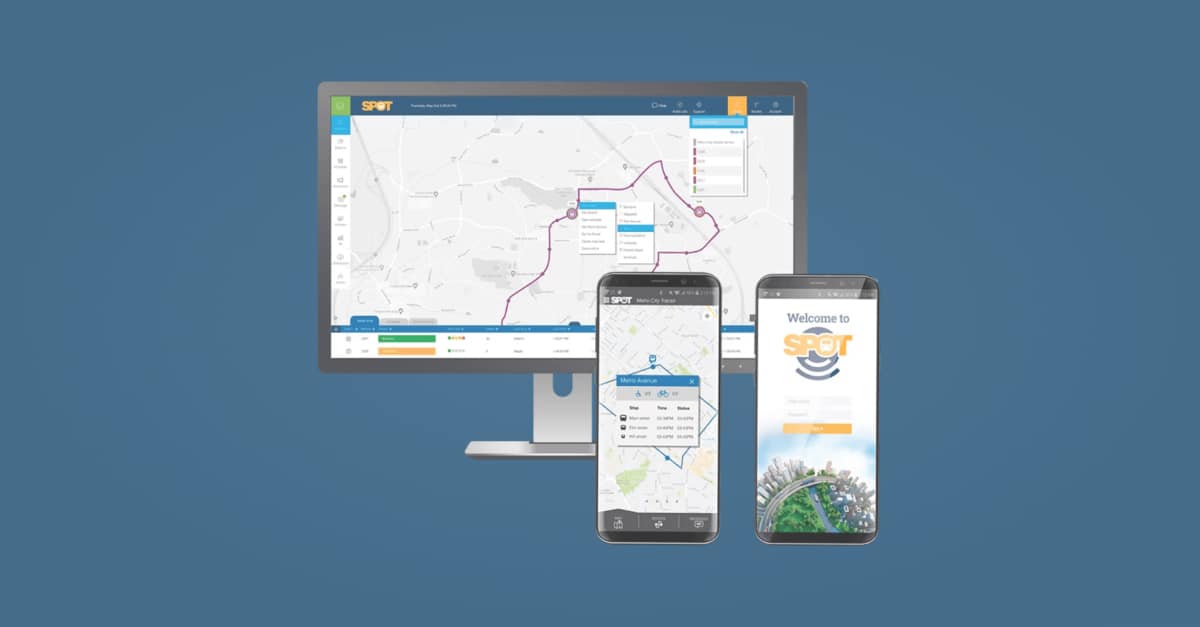
 SPOT: ETA’s Core Platform The SPOT™ ecosystem offers transit management solutions by providing a flexible, modular platform.
 SPOT: ETA’s Core Platform
  All Solutions
 CAD / AVL / GPS tracking
 Business intelligence
 Digital signs and kiosks
 Infotainment
 Automatic passenger counting
 Tally NTD Survey Software
 Tracking websites and apps
 Vehicle announcements
 All Integrations
 Demand-response and microtransit
 Fare collection
 Mobile video surveillance
 Pre-trip inspection
 Solar e-paper signage
 Vehicle health monitoring (AVM)
 Voice communication
 Transit
  All Industries
 Airport
 Campus
 Medical center
 Rail, streetcar & trolley
 Rental car
 Tourism & theme park
 Transit
 Case Studies
  Blog
Blog eBooks
 Wall of Love
 Careers
 Press
Press Events
 Support