Stop Requested. Welcome to Stop Requested, the podcast where we discuss everything transit. I’m your co-host, Levi McCollum, Director of Operations at ETA Transit. And I’m your co-host, Cristian Londono, Senior Customer Success Manager at ETA Transit. Today, we’re welcoming back Carter Lavin to Stop Requested. Carter is an author and transit. advocate, and he’s joining us again to talk about what’s happened since the release of his book, If You Want to Win,You’ve Got to Fight. Carter’s work focuses on the practical side of transportation advocacy, moving beyond identifying problems to showing how advocates, agencies, and communities can actually organize, build coalitions, and win real change. In this conversation, we’ reflect on how the book, has been received, what advocates, often misunderstand about working with government, and how inside and outside voices can coordinate more effectively to move transit forward. We also talk about advocacy as a group effort, the importance of having a clear ask, and what it takes to turn passion into results. We hope you enjoy it. Welcome back to Stop Requested. Cristian, how are you?
Doing great, Levi. How are you doing today? I’m doing superb, and I’m very excited because we have a guest returning onto the podcast for the first time. We have Carter Lavin on today, again, to talk about his book, talk about all the things that have transpired since the book has been published. Uh, he is an author and transit advocate, and we’re really excited to get into this conversation. Carter, how are you? Great. It’s… Cristian, Levi, it’s great being back and chatting with you all and your listeners about If You
Want to Win, You’ve Got to Fight: A Guide to Effective Transportation Advocacy. Just to, to start off, uh, can you give us a, a brief synopsis of the book? Maybe some people didn’t listen to the first episode, and they are intrigued. Yeah. They wanna know what it’s about. What would you say? Sure thing. So the book picks up, um, where a lot of other books in this space leave off. There’s a lot of great books in the transit advocacy world, Better Buses, Better Cities, for example, uh, High Cost of Free Parking, that say, “Hey, here’s this problem, here’s how to fix it,” and the last chapter tends to be, “Oh, and by the way, you know, go out and fix it. Talk to an elected official,” things like that. My book, If You Want to Win, You Got to Fight, basically takes- picks up from there. W- I’m assuming you’re mad about something, or there’s something that’s not perfect in your community, and you wanna fix that. You have that in your mind. So the book takes you from chapter one, you know, getting you comfortable with the fact that your desire is political, it’s often actually probably even radical, depending on your context, uh, all the way to, uh, future chapters about how to make a campaign around that idea. So if you say, “Well, I want there to be more frequent bus service.” “Okay, well, how do you go about getting that? How do you, uh, plan a campaign?”
Chapter three talks about how to localize that. You’re not advocating in Anywhere, USA, you’re doing it in your community. Uh, chapters four through six talk about how to build out a team, work with coalition, work with allies, kinda inside that process. Chapter seven wraps up with tactics, how do you actually implement that plan? Uh, and then conclusion talks about advocacy beyond campaign work.
So pretty quick read, about two hundred pages. Uh, folks have done it in a single sitting on a long Amtrak ride, and, yeah, it helps people go from people who would like something to be changed to being fairly, uh, competent advocates. And for people who are already doing advocacy work or people who already work in the space, it really helps fill out a lot of the kinda missing parts of our advocacy education, because there’s not a lot of times where we’re taught, you know, soup to nuts, this whole process, and so it’s nice to have a book where it’s really all there in one place for people to pick up and read. A- a- and I think it’s a read that I would recommend, um, for transit executives, uh, you know, CEOs. I- i- in their role, they’re trying to connect with the stakeholders, right? Mm-hmm. And, and to get everybody to, uh, rally behind, um, you know, public transportation agenda, you know, mobility agenda. So understanding how, uh, you can be effective at advocating and, and just, you know, having some, uh, tips and ideas, how they can improve, um, in that area, that, that, that’s definitely a plus. Um, so if you could just give us a quick update on the evolution since we last talked, w- a- a- and, and the release of the book. W- when was it released again?
How long has it been- Yeah … uh, released, and, and mm-hmm? It came out mid-November, the thirteenth or something like that, so it’s been a few months. Um, big update is people seem to like it a lot, which is great. It would be mortifying to write a book that people hated. Um, but
I’ve been getting emails from advocates across the United States. There’s some folks in, uh, Australia, some people in Canada- Oh, wow … who have been really interested. There was a person in Portugal who reached out. Um, and, you know, it’s been cool seeing people who are kinda new advocates or maybe bike riders, who are now taking kinda bike advocacy into their own hands, and they said, “Oh, this book really helped just lay out these things.” Uh, I got a great note from a person who said, “You know, reading this, I was like, ‘I kind of know these things, but I have never really just thought these things or, like, heard them before, and thank you for making this so clear.’”
Uh, which has been nice. And it’s been cool read- you know, talking to experienced advocates who read the book and said, “Oh yeah, this really would have saved me, you know, five years of life of just, like, skipping- Wow … ahead in the process.”
And so, you know, it’s pretty cool that that’s out there, that people are enjoying it. Um, and it’s been cool doing book talks for local clubs, did one in Cleveland, groups in Pittsburgh, have one coming up for Vancouver. Happy to chat with, you know, local community groups about, you know, their specific situation, so it’s been, uh, it’s been nice. Yeah, I love that you’re giving these cheat codes to transportation advocates. It, it feels like that, you know, puts transportation at a different level when we have that advocacy, the people who are fighting for it and, you know, trying to improve it, uh, you know, not just get it marginally better, but make it exceptionally better. Part of this has been really interesting is seeing-… how people refer others to the book, and saying, you know, there’s a certain level where your advocacy and transportation work is inherently a group project.
Um, you, you are doing this with others, whether, whether they want you to be doing it or not, or whether you want to do it with others or not. It, it is inherently a group project. And so I’ve heard accounts of people referring allies to the book, saying, like: “Hey, you should also read this, ’cause we’re kind of playing the same game here, we’re doing the same stuff, and so it would be helpful if we were, like, kind of more skilled up on this.” And
I’ve heard at least o- one instance of someone who said, “Oh, I recommended the book to a person who’s, like, trying really hard and doing just kind of a not such a efficient job at it, so to speak, and will really benefit from this.” Because, um, you know, having passion is wonderful and extremely important, and that’s not the same thing as having skill. And, you know, some people just need a little help transforming their passion, and so that it’s a effective application of passion. And so it’s just been very interesting seeing how word gets around about, and how people are recommending it to friends and colleagues, and coalition partners, or, you know, inside advocates, or inside advocates ex- suggesting it for outside advocates to take a look. Yeah, I really like what you said there about, uh, transportation advocacy being a group project.
You know, it, it is very multiplayer. You’ve got a lot of different stakeholders, and, uh, to Christian’s point, i- it’s important that the transit executives understand, you know, the- these are folks who are really trying to help, you know? Mm-hmm. You, you need to bring them in closer, and need to understand them, uh, and try to take on, you know, some of their advocacy positions because you’re, you’re going to have an army of people behind you. Key example of this is, a lot of times, local advocates, you know, when they’re pushing for a better transit service in their community, like, can get the meeting with the head of bus service or the h- head operator, what have you. And one of the big conversations to have is say:
“Okay, well, what could this bus agency or this transit agency do within its own powers to make ridership better?” And h- have that conversation. And as many of your listeners know, transit operators don’t have a magic wand, and so a lot of times, the things that they are struggling with, the things that riders are struggling with, are the same thing. And what the transit operators need is help getting elected officials to do their part, uh, to fund what they should be funding, or passing policies that make things like, you know, bus-only lanes easier to implement.
And so what’s really needed in those c- situations, is for the transit operators to tell the outside advocates, saying: “Hey, by the way, like, these legislative changes would really make our lives better. Can you go push for that?” And one big part that’s really so important about these inside advocates and the outsiders working together, as Chapter 6 talks about, is coordinating. So if you’re a transit operator, and you are pushing for a certain policy at the state level, or you’re at least lightly advocating for it, letting your local advocacy branch, you know, your local group know, hey, that this policy really matters, that’s very helpful to make sure that you all can both be in sync about your demands from the state capital, about what to m- what to do to make transit easier and better in your community. From your feedback,
Carter, th- that you received, on the book thus far, uh, has there been, uh, you know, a particular moment or, you know, maybe someone who’s given you an example of something that they were, were shocked about? That something that’s completely misunderstood, like: “Oh, I thought it was X, and it was really Y, and your book opened my mind to that.” One part that people have kind of been surprised about is seeing that insiders and outsiders can intentionally collaborate together. That that doesn’t have to be a, um, you know, collaborating with this big firewall between us. That like, yes, you’re allowed to call a local advocate or get a cup of coffee, and, like, swap notes and make plans, and helping… I think people just kind of realizing, like, oh yeah, that there isn’t- we’re just talking about people. We’re just talking about other folks. So, oh, how do I get the business association on board? You know, well, ask them, talk to them. Um, I think that’s been kind of helpful for some folks to just get that reminder that there’s a lot of big elements at play in our political space that may seem immutable, or they’re not gonna change, but a big step forward. is just having that conversation, and seeing where it goes, and being opportunistic. Maybe you aren’t going to work together on A, B, or C, but you will work together on X, Y, Z. It’s like, okay, great, then work together on X, Y, Z, you know, while you are in conflict with A, B, C. Like, I think that’s been helpful for people to recognise that, you know, there’s a l- lot going on, and a lot of different ways to be pushing, and you can push at multiple fronts at once, which chapters, uh, two and four specifically talk about, too. Yeah, I, I see, uh, DOTs, uh, sometimes there’s certain organisations putting together advocacy days and, you know, going to the state capital or, you know, even, uh, going to Washington, and I’ve participated in some of those exercises. Honestly, I feel that there’s no clarity exactly, uh, what you’re asking for as a unified front. It’s kind of like, “Oh, let’s go there, and we’re pro- pro-transit. You know, we love transit, and we want you to love it as well.” Like, there’s no specific things and common ground, and like, um, in some way, I feel like arming those folks with the right arguments, and data, and information to know why they should be advocating support for something or, or actually working on, on a given bill or initiative. So o- on that note, w- what’s one, one, one, uh, specific campaign or lesson, uh, from the book that, that agencies and listeners can apply, uh, this week about advocacy? So a big part is always having an ask. That, the ask, could be big, it could be saying: “Hey, we want a billion dollars from the governor to fund transit.” But the ask could be small. The ask could be, “Hi, I would like our transit riders to wear a pin that says, you know, ‘I bus and I bike.’” Kind of taking a, a, a leap out of the Washington Area Bicycle Association, uh, whose example I have in the book. You could say-… Hey, our ask of transit riders is we want you to wear this pin, and so that when you go into shops, that people know, oh, wow, bus riders are our customers. And so when we talk about the importance of bus lanes or bus stop amenities, that businesses recognize that this is their customers. Same things with, uh, bike advocates. And so having that ask of whether that’s of your riders, or whether that’s of your elected officials or coalition partners, is really helpful just to focus the effort. Because as you’re saying, you know, we’re not just having these meetings and to say, “Oh, gee, shucks, isn’t transit great?” We’re saying, “Gee, shucks, transit is great, therefore, we would like you to do this very specific thing that is within your power.” And so always having an ask and making that ask explicit is key. And, and sometimes it can be so easy to forget that there is an explicit ask.
Like, just literally the other day, I, uh, gave a presentation to a group and talking to them about this regional measure to save transit in the Bay Area, the Connect Bay Area effort, which is absolutely vital in the San Francisco Bay Area. And I presented to this group, answered all their questions, and at the very end, I, you know, they were like: “Great, any other questions?” Then someone else said, “Oh, well, I motion that we endorse this.” I was like, “Oh, yeah, that was gonna be my that, that was gonna be my ask. I’m glad you brought that up.” But, you know, it, it is so, so important that you’re not just saying, “Yeah, isn’t this great, to talk about this stuff?” You’re saying, “And I. would like you to do something about this. Here’s this thing for you all to do.” And, you know, the book, really helps people understand that and walk through what are different examples of this. One of my favorite ones is how we’ see this particularly in a bike community, but also in the transit rider space. Your ask can be an, offer. You know, you can say, pass out a flyer and say, “Hey, come to this bike repair clinic we’re doing, or we’ll, we’ll fix up your bike,” or, “Hi, we’re doing this training seniors how to ride the bus.” Like, what are you asking? You’re asking the person to attend your event. Uh, and that’s a big way of helping build up your group, helping build political power together, um, so that you can win, the bigger things that you’re asking of other people. And that’s what I really love about the book, is that it’s, it’s so action-oriented. It takes that next step with, and what now? Uh, so I’m really glad that you’ highlighted that point. I, I’m curious if, you know, you were to sit and talk to some of the, the folks who have, have read the book, uh, are, are they asking you questions about, like, how do, how do I go from a good idea to getting support for said idea?
You know, is there, um, is there a big gap there in between just the, the idea itself and the execution for the, the people that you’ve talked to? So a, a wonderful thing, something I’m very happy about, is the book? has done a pretty good job of helping people see that step. They say, “Okay, I have a good idea. Now I get what my steps are.
Okay, I need to articulate the idea more specifically.” Chapter two says, “God, if I want to achieve this thing, what am I asking of a city council member, of a mayor, of a county supervisor? Those are all different people.
I have different asks of them.” Like, you know, the book does walk people through that. And so what we’ve now gotten to is this kind of interesting layer where someone says, “Okay, well, I know what to do, but I’m too sad, too angry, too, you know, despondent, too whatever, to take action. Too busy. How can
I take the steps needed that I can identify to solve the problem when there seems to be this other barrier?” Whether that’s, I don’t have time, or whether that’s a, you know, lack of confidence.
Uh, and so it’s been really interesting being able to help people through that next step, that much kind of deeper layer of issue, because that is vital to all this stuff. You know, a person can say: Great, now I know how to do a backflip, but if you jump up, spin around, you know, back flip, land, and you’re like: Well, I can’t bring myself to stand up. It’s like, well, that’s an issue. And, you know, the book talks about. that a little bit, uh, in the final chapter. You know, u- a big part is when it comes to motivation, I find that motivation and hope really come from this understanding how it all works. That if you say, “Oh, well, how do I get a bus lane in my community? Okay, now I know this process,” well, okay, well, it becomes a lot easier to get out there’ and pass out the flyers or reach out to the community groups.
And so a lot of the conversations since the book for… with people who have read the book, have kind of been focused around that, along with this other level of, of people dealing with very specific issues, or saying: Okay, but, you know, I was doing X, Y, and Z. I’m doing this inside-outside game thing. I get these, like, general ideas of how to collaborate better with my coalition partners, but jeez, weird thing h- here, you know, is happening. What do we do? And then it’s just much more, “Okay, I’ll zoom in really quickly about how to resolve that particular situation or how to move from it.” Um, you know, because it’s one thing to know the rules or patterns and see how this all works and say: Okay, but which of these should I be doing right here’ at. this exact moment? You know, you might know all the dance steps in, theory, but what’s the one to do at’ that. moment is a little bit tricky, so it’s been good talking people through those questions as well. Yeah, I, I think, uh, a lot of times within agencies, uh, folks are knowledgeable about, you know, how to follow the, the processes and, you know, what’s the, the literature says about public transit and, and good practices and how to run transit. Uh, when it comes to advocating for transit and actually rallying all the different stakeholders together-… to move transit forward in the transit agenda, that, that’s the challenging piece. I think that there’s not a lot of, um, knowledge, uh, within agencies, and, and of course, that changes from agency to agency. Uh, but at least, you know, from what I’ve seen, uh, it’s not a lot of that.
And in my opinion, it has to do particularly because sometimes agencies are censored in terms of the access to, uh, certain e- uh, elected officials, but also what ideas or specific things they can ask for, right? Like, you know- Mm-hmm … i- if you have this board or this set of elected officials above you, and then maybe you, as a transit operator and transit professionals, and even the data saying that you need operational funds to be able to operate on this corridor and benefit this community by connecting them to this and that, I mean, it, it, it is an economic driver. Like, you have all these, um, set of arguments and data to support that, but then can you freely just go to that elected official and tell you- tell them those things, or do you have to go through certain filters that might be able to, to… that might be limiting that? So, you know, well, the question I wanna ask, um, you know, for those transit agencies, you know, transit planners that are looking, you know, how to grow those transit agencies, uh, what’s one, mistake they make when engaging with advocates and the public and, and being able to, move these ideas forward? Yeah, I- one thing I see from an operator and planner side when it comes to dealing with advocates specifically, is sometimes there can be a difficulty in discerning, you know, when an advocate is trying to reach out and work with you in good faith. Uh, I think a lot of times there’s kind of an overly defensive posture. Mm-hmm. And so an operator or planner doesn’t wanna share certain information or doesn’t wanna talk about it, but they show up to the meeting, and they’re just so kind of buttoned up, they’re so nervous about being called out or getting in any trouble, that they can’t point out, like, where they need help because, they, “Oh, that would reveal a weakness or something like that.”
And so, you know, and there, there are times where it is important to show the brave face and a, a strong presence to the community and things like that. But when an advocate is reaching out to you and trying to have that meeting of like, “Hey, let’s talk about the cap- the state capital and what we can be doing together to sync up,” you know, you, you do have to be pretty open about that. And maybe not every advocate has earned that right, has built that relationship, has built that trust, but it’s important to try to actually make that relationship so that it can be a helpful one. You know, if everything you’re gonna say, in the meeting is, “I refer you to our website, and I refer you to our, you know, public statements,” like, okay, well, then you didn’t really need to have that? meeting.
And maybe that. meeting isn’t something you’ wanna have via Zoom or Teams or what have you, but it’s something you’d get a cup of coffee at off-site and talk about it. And so I think there’s just… one of these mistakes is viewing advocates as, like, potentially hostile entities, rather than people who are aligned with you’ in the goal of, “Hey, we want better transit in our community.” And relatedly, sometimes someone is hostile, and they are mad at you, and recognizing and saying, “Okay, well, how do you…”
The goal isn’t necessarily to make the advocate less mad, although that’s nice, and Chapter 6 talks about it. You know, the goal is to say, how do you, you know, judo flip that anger, so it’s not at you because you’re not the one with the magic wand, but in the place where that anger deserves to be.
And I think that’s sometimes a really hard one for an operator or a planner who, a lot of times, isn’t trained in this. You know, they, they would like to retreat when they’re met with this kind of frustration from the public or from advocates. But really, instead of retreating, there’s, like, this importance to reach out and say, “Hey, I hear you. This is what we are doing and what we can do. Here’s why I can’t go further because of these external circumstances. You know, we will take off this other community. or this other elected official, what have you. And hey, advocate, as a reminder, your role isn’t to continue to yell at me, to let me know all my failings. Your role is actually to go change the political reality in our community so that we can do this stuff.” So it’s a, it’s a tricky thing, but I think that’s a big part that people get wrong, uh, when, when working with advocates. Uh, that’s a really important point because, you know, if I put myself back in the shoes of a transit planner and I’m working at a public agency,
I wanted to de-escalate those types of situations, right? I wa- wanted to kinda cool it down because people will come at you pretty strong. Mm-hmm. But I never did the part of redirecting them. Like, if you want this to change, this is, this is how you can do it. It was always, “Okay, you know, I hear you. I think what you’re saying is important,” that sort of response. But there, there is a bit of kind of guiding them i- into the direction that you, you think they should go if they’re really looking to enact some change. You know, to be clear that there’s a lot of interpersonal dynamics happening. So if someone is, like, actually angry and yelling at you, that- that’s probably not someone who is going to be happily redirected. That is someone who probably might respond negatively to you trying to point people elsewhere. Uh, so it is about finding the right partner and figuring out how to work together. But it is such a vital thing to say:
“Yes, we don’t wanna have no buses showing up for an hour, and then all of a sudden, three buses show up all at once. But here’s how bus bunching works, and here’s how we could resolve this. But that resolution takes the State Highway Authority, or, you know, here’s this other agency doing their part. You know, we, as the bus agency, are doing our part, and advocates could help remind these other people to do their part,” type of thing. That’s a really important point, and there’s a lot of nuance to it. It, it does depend on, the individual that you’re working with, for sure. Uh, you know, seeing it from the other side, Carter, uh, you know, just thinking about those advocates, maybe some that you’ve spoken to since the book of c- has come out, what do they often underestimate about working with government or with elected officials? One thing I think people get right from advocates when it comes to working with elected officials and the government is-… recognizing that governments and elected officials, like, go slowly. I think what we’re seeing on a federal level is when governments do want to work really quickly, they are able to move heaven and earth and do all sorts of things on a very fast, uh, timeline, which, uh, you know, depends what they’re doing. You know, moving fast is not inherently a bad thing. One thing I, I think is a little bit tricky from advocates on the outside looking in, you know, we see that governments can move extremely quickly when, uh, a Super Bowl comes to town or pick your thing, like when a government says, “Okay, we are trying to do all this, all of our incentives are aligned.” But outside of that, I think advocates understand, okay, things are gonna move slowly. There’s a process. that’ll take a while. I think where there’s a lot of different expectations is, how slow is slow? You know, advocates can say: “Okay, we’re pushing our local government to take rapid action because something’s desperately needed now.” And the government can say, “Yes, we can leap into action, and within six to seven months, we’ll fix part of this problem with a quick build.” And from an? advocate, it is easy to say, “Six to seven months? That’s not, that’s not rapid.” But for a government, that might be the fastest it’s ever solved that kind of problem.
Understanding what is the speed or what is the reasonable speeds to expect, and seeing what can we be doing to speed up that? So how can we get governments and the people who are trying to do good things, how do we get them to do it faster? And what, what are the internal or external barriers that we as advocates need to do to help grease those wheels and speed up that process? So on, on that note, uh, if you could change one structural thing about how transit decision-making happens in cities, what would it be? A big thing that needs to happen, that needs to be different about how transit decision-making is done, is one part where there’s just kind of an internal process of governments making decisions with external input and going about those decisions. So one, I think that process needs to just happen faster, that regardless of what is being built, one thing that people really don’t like is extremely long construction times.
And so, uh, one structural thing is just we need to get better at moving faster when it comes to making good things happen. That, as we talk about through the book, and as a quote from, uh, the amazing Beth Osborne of, uh, Smart Growth America, you know, we get good at what we do repeatedly. So if we want cities and communities to get really good at making bus-only lanes, y- you need to make more than one every twenty years, uh, or else they’re not gonna get good at that, or you need to have a bus-only lane department of the, you know, state house so that the state is doing this on a regular basis. Building up that kind of state capacity is so inc- incredibly important to make sure that when voters vote something through or when people approve something, it doesn’t just lollygag around, it gets implemented as soon as possible, so people can start realizing the benefit.
They start seeing how government makes our lives better and how it can do that, and that, in turn, starts building the trust. So that’s not like people saying: “Oh, well, I voted for high-speed rail twenty years ago. Where is it now?” They say: “Oh, yeah, I voted for it, and then it happened, and now I get that that was good. I will vote for more good things in the future.” We have to build trust, and trust, in large part, comes from doing what you say you’re gonna do, and part of that is setting expectations, but the other part is getting better at going faster. Uh, so that is a, a very key part of all this.
I hadn’t really thought about it like that, but of course, I mean, the more you do it, the better you get, most of the time, right? Uh, so we just need to do it more, and once we develop that muscle, then we can do it faster. So now, I’m curious, what’s next for you after the book? You’ve, you’ve had it published now for a few months.
You’ve– it sounds like you’ve been doing some talks. Yeah. Uh- What’s on the horizon? So doing more talks, always happy to talk to lovely podcasters like yourself, or local bus or transit advocacy groups, or Zoom in to a transit agency or who, who have you. I,
I, I do a lot via Zoom. That’s great. Uh, and then locally, you know, I’m, I’m still very much an involved transit advocate, so here in the San Francisco Bay area, we have this absolutely must-pass measure, uh, the Connect Bay Area measure, to fund transit, without whom we are seeing just drastic cuts, like thirty-something percent cuts to our local bus service here in the East Bay, uh, BART service, um, having, you know, going to no weekend, like, really terrible things. And so, you know, fortunately, saving it’s pretty straightforward.
We need to collect two hundred thousand signatures from people across five of the Bay Area counties, and then we need to get a majority of vote to pass it in November. So really focused on that. Uh, and if folks are in the Bay Area and like to get involved, uh, Trans Bay Coalition is the group I lead locally that is heavily involved with that, so get involved with Trans Bay Coalition. And, uh, yeah, so book talks, w- w- working on this regional measure. Maybe sometime I’ll take a nap. W- who knows? Naps are always good. Well, good luck to you, uh, in getting those two hundred thousand signatures. I really hope that you’re able to do that for your, your community, for the service. Uh,
I, I know that you’re putting in long hours to make this stuff happen, so really appreciate what you’re doing. And how can people contact you if they want to get in touch? Sure, and as I said, everything’s a team project, so it’s been great working with so, so many people.
I think we have, uh, over a thousand volunteers already on the regional measure effort, um, which is wonderful, and so if folks want to get involved in that or locally in the Bay Area, transbaycoalition.org is the best way to find me. If you are elsewhere in the country and are interested in helping ramp up transit advocacy or bike advocacy, street safety advocacy in your community, uh, carterlavin.com. And if you’re someone who’s just more on the reading side of things and don’t want to talk, that’s fine. Uh, If You Want to Win, You Gotta Fight is out by Island Press and Princeton University Press, who, uh, recently acquired Island Press. So, uh, check out the book and, um, tell your friends. Well, thank you so much, Carter. Uh, this has been a really great follow-up to our first talk back in, in October. Wish you the best of luck again on, on everything that you’re doing and getting those signatures. And to our audience, thank you so much for listening to the podcast. We really appreciate your support. We’ll be back next Monday with another episode of Stop Requested.

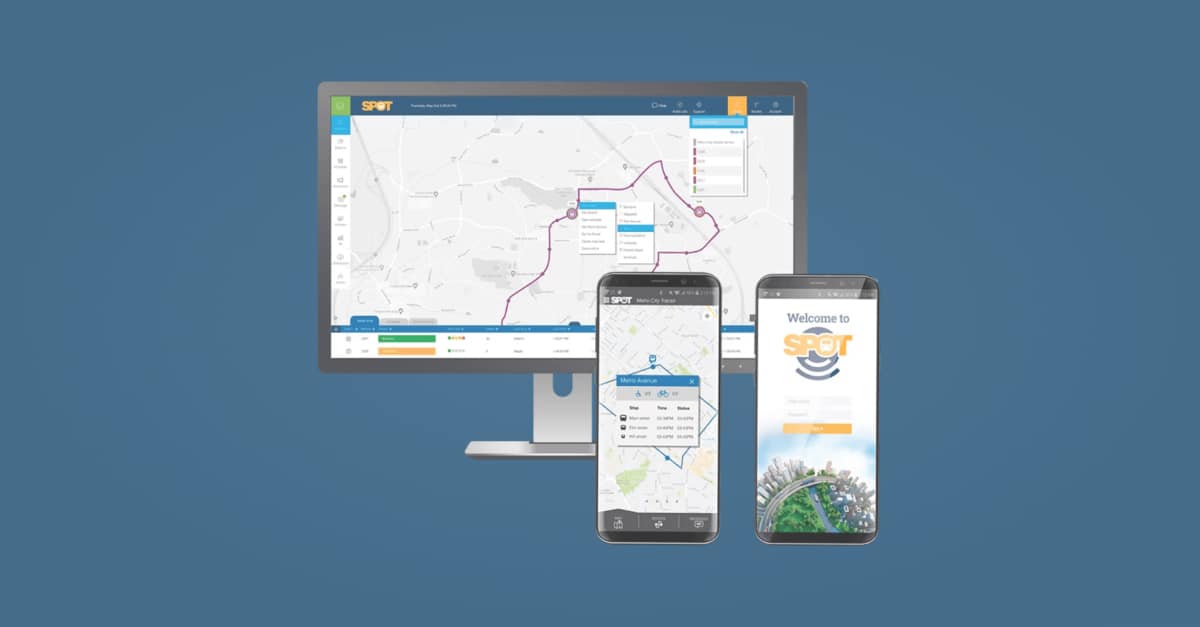
 SPOT: ETA’s Core Platform The SPOT™ ecosystem offers transit management solutions by providing a flexible, modular platform.
 SPOT: ETA’s Core Platform
  All Solutions
 CAD / AVL / GPS tracking
 Business intelligence
 Digital signs and kiosks
 Infotainment
 Automatic passenger counting
 Tally NTD Survey Software
 Tracking websites and apps
 Vehicle announcements
 All Integrations
 Demand-response and microtransit
 Fare collection
 Mobile video surveillance
 Pre-trip inspection
 Solar e-paper signage
 Vehicle health monitoring (AVM)
 Voice communication
 Transit
  All Industries
 Airport
 Campus
 Medical center
 Rail, streetcar & trolley
 Rental car
 Tourism & theme park
 Transit
 Case Studies
  Blog
Blog eBooks
 Wall of Love
 Careers
 Press
Press Events
 Support