I cannot emphasize that enough that the mentorship component is what will retain your workforce.
Stop Requested. This is Stop Requested. by ETA Transit. I’m Christian. And I’m Levi. These are real conversations with the innovators, operators, and advocates driving improvements in public transportation. Today, we’re stepping outside the agency perspective to talk about workforce development and leadership across the transit.
industry. Our guest is Christina Villarreal, executive director of LIT, a national nonprofit focused on advancing mentorship, professional development, and leadership opportunities for transit professionals.
We’ talk about Christina’s path into the nonprofit sector and how LIT, has evolved to support a broader and more diverse pipeline of professionals. Christina’ also shares how mentorship, leadership programs, and early career exposure are shaping the future workforce.
Here’s our conversation with Christina Villarreal. In today’s episode, we’ll be talking to Christina Villarreal, executive director for LIT. Christina, welcome to Stop Requested.
Thank you so much for joining us. Thank you, Christian. I’m so excited to be here. And we’re excited to have you. Uh, we wanna learn about, uh, about LIT, we wanna learn about your transit journey and some of the great things you guys are doing in the industry. So Christina, to kick us off, for listeners who may not know you yet, how do you introduce yourself and the work you do today with
LIT? So I’m the executive director for, for LIT, formerly known as Latinos In Transit, and LIT is a national nonprofit. We’re a 501 organization, so we’re actually an organization that was incorporated for charitable purposes. We’re not a business association like some of the other, um, associations that you might see in the industry.
And so LIT is an, a nonprofit that is committed to empowering professionals. in the transit industry to achieve leadership roles, and we’ do that by advancing opportunities for s- workforce development, mentorship, networking, and education. And so part of my job is to really support our membership, uh, really understand what it. is that they need. We focus a, lot on mentoring our, uh, new careers in transit folks and our middle managers because they’re the core and the backbone and the future generation of what’s to come in leadership within the public transportation industry. So that is really what we do. Uh, I travel a lot, uh, across the country. Since we are nationally and we don’t have, uh, chapters, part of my role is traveling to conferences, getting to know our members, getting… giving them networking opportunities, and also opening them up to mentorship.
That’s a remarkable purpose and very much needed. A lot of transit agencies don’t have a succession plan, and, you know, a lot of times when some of those leadership roles become available, there’s not, like, a clear, uh, path for the next person. And, and you’re talking about, over four thousand transit agencies in the nation that are driving the mobility of tomorrow. And, you know, if you don’t have something in place in, in, in assisting those professionals getting there, then, then it’s gonna be very hard for those agencies to, to find a really good leader to take over next. So I really like the purpose of the organization. Uh, you spent much of your career in the nonprofit.
Uh, you, you even mentioned that LIT, is a, is a nonprofit. What originally dr- drew you to that kind of work, and how, uh, did that eventually intersect with public transit? So I, I’ve been in the nonprofit sector for over thirty years.
Um, I have worked for many different types of nonprofits, and before I actually came into LIT, I was, uh, working as a consultant in my own nonprofit, uh, management firm where I would help, uh, nonprofits with interim support if they didn’t have executive directors. Uh, in tandem with that, I was also going to college and getting my master’s degree. I was getting a second master’s degree in human services, and my thesis actually required me to do and find an organization that was experiencing very fast growth. And lo and behold,
I found LIT as one that really, really piqued my interest because it had to do with public transportation and access to human services like, uh, education and, and to healthcare resources. So it really, really did, um, tie in nicely to the thesis that I was doing. And in that, I met with, um, the, uh, some of the board of directors. I interviewed them for my thesis, and then the rest was kind of history. They realized that I actually knew as much of the organization as they did. So when the time came for them to actually hire an administrative director, they h- they hired my, um, my firm, uh, my consulting firm to come in as administrative director.
And after that, you know, we, we really just started w- moving LIT forward, growing the membership, and in twenty twenty-four I was named executive director. So I’m, I’m very fortunate to actually be now here full-time, uh, as a full-time employee expanding our, our staff and, uh, serving as executive director for, for LIT. You came in in twenty twenty-four.
Uh, you’ve been now in the position, uh, for a couple of years. Uh, was there a particular moment, a story, conversation that made you, made you say,
“This is where I need to focus my energy,” uh, in representing and promoting, uh, transit professionals in the industry? I think I ha- I get the most inspiration by my board members.
I have some very, very committed board members that, um, you know, they are a working board. Um, we have some incredible talent on our board that they jump headfirst into doing the actual work that it takes for a national nonprofit to achieve its programs and services.
So that is really, really inspiring. When you’re in the nonprofit sector, it’s very difficult to work with a board because you basically have 15 bosses, um, and 15 voices and 15 diverse perspectives.
But the board, you know, I, I had the pleasure of coming in when Alba Carrasco was board president. She is one of my mentors. Uh, she made me fall in love with LIT. Um, I really, really thank her for the opportunity.
If it wasn’t for her, I don’t think I would ever have been executive director. So it, it really is the, the board members that I, I have to work with, um, because they really do have a vision of what leadership in the transit industry. is, ’cause they are in the industry itself. And so they really know what goals we want to achieve for our membership.
And so shout out to, uh, Mrs. Carrasco- Yes … for bringing you in, uh, into her wing. A- a- and it’s so important, those mentors that, that we have in our careers, right? Like, we can reflect back and find those, and they make a, difference in who we are as a transit, professional, uh, or just, I mean, as a professional as a whole. So, uh, that, that’s definitely remarkable.
I wanna ask you, when you look back at your journey since you joined LIT, what’s one challenge you had to overcome that really shape how you lead, uh, you’re leading the organization, today? I think that the biggest challenge, and, and, and most people that know the organization probably are aware of this, but, uh, it was rebranding.
Uh, LIT is an organization that started, uh, as Latinos in Transit, and, you know, we’ were started by a group of Latino professionals within the transit industry. that didn’t feel represented within the, within the transit, you know, sphere.
Um, so as our programs and services started to develop and we started really honing in on the fact that we were a public charity, uh, it was very important to us to be able to provide all of our programs and services for a nominal cost.
Because most of our programming is very affordable, much more affordable than, than some of the other, um, you know, associations in the industry, it, it opened up a pipeline of an audience to us that was not
Latino based. So when we saw that opening, um, of, of actually people coming in, and, you know, we’ve actually had an Asian board president, our last board president was Asian American.
Um, and so people would always say, “But you all are Latinos in Transit.” And it’s like, no, we’ve evolved. We’ve grown. Over the last ten years, we’ve grown because our mission and our programs were so strong that we didn’t wanna just keep it with the Latino community. We wanted to open it up to everybody. But explaining that to our membership that we were transitioning was, was very difficult, but I’m happy to say that we were able to do it successfully.
Um, we, we had to, you know, really, really, uh, put out a message out there that, you know, we are a charity, and we wanna make our resources more affordable and more accessible to everybody in the industry. So I think that was the biggest challenge, but I’m, I’m happy to say that it was a very big win for us. So Christina, it’s really interesting to hear about the evolution from Latinos in Transit to LIT. If someone were to come up to you on the street and ask you, “What is LIT, and what problem are you trying to solve?” how would you describe that today? So the problem that we are trying to, uh, resolve is workforce development, opportunities at an affordable cost.
We want to really, really foster a strong pipeline of skilled mul- multidisciplinary professionals that support the evolution of the transit industry. But we need. to find a way to do that at an affordable cost because transit agencies right now are, you know, a lot of them are, are seeing, um, some financial challenges.
And so workforce development opportunities that require you to travel or workforce development opportunities that are, are very expensive don’t provide that opportunity for everybody. So for instance, LIT, since we’re a charity, um, we, we try to do our, our, programs and services, if not for free, at a very low cost.
If we charge for a, a professional development webinar, it won’t be m- for more than twenty dollars, but I can guarantee you the majority of them are for free. And we’re able to do that because our industry. professionals within the industry, um, the ones that really, really back us, uh, volunteer their time to be able to do. this for us. So whenever we do ask you to become a member for LIT, it is so that we are able to provide those opportunities to you for free. Because if you go anywhere else, you’re gonna be paying a couple hundred dollars for, you know, for webinars. Our conference is also the most affordable conference in the industry and also brings probably one of the highest values as far as, um, you know, what you will get in return, uh, return on investment for traveling to one of our conferences. And if, uh, you had to break down what the core pillars are of LIT today, I, and I’m familiar with some of them, uh, like the Leadership Academy. Christian and I had the opportunity to, uh, speak at one of the Leadership Academy events. You’ve mentioned mentorship. Are there others that I’m missing? Maybe the, the conferences. Yeah.
So we actually have, several programs. Uh, we have an ambassador program, um, that’ we just started where we actually reach out to our members that are extremely engaged and, and train them and teach them how to work with our membership so that they are ready for our succession within the board, um, for the future of Latinos in
Transit. So we have people that want to be on’ the board and, want to learn the ropes, so we actually train our ambassadors to be our succession plan for future board members. So that’s one of our programs. The second one that we have is a workforce development task force, and, that’s led by, uh, Rosa Medina Cristobal over at DART. She is the chair of that committee. Um, and that has to do with, um, actually workforce development, technical trainings. Uh, we’re gonna be doing micro-learning sessions that also oversees our mentorship program, uh, which we just piloted, and, uh, we are also through that committee starting to work on, um, on career pathways programming and STEM programming for K through twelve for the, for the students that are in school, are in elementary, middle, and high school, s-so that way when they’re choosing what degrees they wanna go into, they can already know, that every single degree has a career pathway and how it, it’ leads into, into the public transportation industry. We also have our leadership academy that is about to, um, start off its fifth year, uh, probably, uh, one of our most important programs this year. It’s our biggest class. We have sixty-eight participants from all over the country. Um, I am happy to, say that we are able to provide this program to them, s-some of them for absolutely no cost because they are, uh, their transit agencies are members of Latinos in
Transit. And, um, and the ones that are not, uh, from a member organization, the entire program is only three hundred and fifty dollars, and, and they get, um, training in finance, in procurement, in leadership, in even in public speaking. So it. is a very, very well-rounded program. Um, we are very proud of it, and we’re happy to be celebrating our fifth, uh, fifth cohort this year.
So very proud of that program. We also have our scholarship program, and, uh, we give out scholarships to, um, anyone having, uh, anyone that is in school, um, that is looking to work, in transit.
Um, and the, the great thing about our scholarship is that it goes directly to the person, not to the school, so they are able to use that in any way, shape, or form that they see fit that will help them get to school. A lot of, uh, a lot of, uh, our, our folks have even used it for childcare while they’re, while they’re at school. So, uh, very proud of our scholarship program as well. And then we also have our small business program, helping, uh, those that have small businesses, uh, helping with that economic development, helping them get into, uh, procurement opportunities and contracting opportunities within the public transportation sector.
Wow, that’s really incredible. It, it sounds like you’re, you’re touching on a lot of, uh, disciplines within the public transportation industry, and I, I love that approach. Uh, you’re also focusing on the future and making sure that you have people that are in the pipeline, as you put it, to, uh, be able to lead organizations, including your own, including LIT, into the future. I’m curious if you have any examples about, uh, maybe a member or a member agency that has really taken ownership over, um, you know, some of that partnership, and th-they’ve, they’ve made a particular focus to, uh, grow folks in their organization as a result of the
LIT training. Yeah. So I actually have the perfect example. We have many examples of wins, but this year is extremely special, especially since it’s our ten-year anniversary, and we’re celebrating our fifth graduating class with Leadership
Academy. Um, one of our board members, Monica Tellez Fowler, she actually went through, um, our Leadership Academy. Um, since then, she has now become a CEO of COTA of Columbus, uh, in Columbus,
Ohio, so we were extremely proud of her. Uh, we call her our po-poster child. And in our ten-year anniversary, Monica is not only now on the LIT board making decisions for our membership, helping mold the Leadership Academy that she graduated from, helping mentor our, our next, uh, generation of leaders, she is also hosting our summit there in Columbus. And so we’re so proud of that. We met her, um, through the Leadership Academy. She went through that program, and we’ve seen her blossom into, you know, a very, very strong force within the industry. This episode is brought to you by ETA Transit. Legacy CAD/AVL systems were designed when on-prem servers were the only option. Today, agencies need systems that leverage modern technology that are faster to deploy, easier to use, and built for constant change.
ETA Transit? was, built to replace the old model. ETA’s web-based CAD/AVL platform works in any modern browser, connects seamlessly to what you already have, and eliminates vendor lock-in. No server rooms, no fragile workarounds, just a modern command center that, scales with your operation. The next generation of CAD/AVL is here Learn more at etatransit.com
That’s an incredible story. Uh, that really shows you the value of some of these leadership programs. You, you know, you get the tools in a lot of different areas.
Uh, you’re able to exercise that and, uh, spend time with your, your colleagues and your cohort a-and it gives you the opportunity to grow. I, I’m curious, over these ten years, uh, have you seen agencies embrace leadership programs and some of these other, uh, types of, uh, trainings to support their employees? Oh, yeah. Our members are great. Our transit agency members are great.
I, I, I would be here all day if I had to name every single person. Um, but, you know, uh, just off of the top of my head, uh, you know, we have folks over at, um, y- just on the West Coast between Sound Transit and TriMet and, uh, OmniTrans and, um, Foothill Transit, North County Transit
District over in San Diego. We have some very, very, uh, phenomenal, smart CEOs that have embraced LIT one hundred percent because they are able to open up programming to their middle managers that they would no-not normally be able to get. Leadership development, when you’re that early on in your career, is not always accessible, and we’re able to provide it for them. And so our, uh, transit industry leadership people really, really, those that know us really do trust us. Uh, we are very happy to be able to provide these services, for them because it means a lot, and they wouldn’t have access to that. And now being here for ten years, you know, we, we have those case studies of wins, and we know what ha– has not worked. So, um, they have learned that process with us. They have helped us improve our programming, and that’s very important to us. So we have some that have stayed with us, um, from the very beginning. And, you know, LIT didn’t actually have membership up until a couple years ago.
Uh, when we first started, we kind of just said, “Well, everybody’s a member.” And then, you know, as we started growing and we started programming, it was, it was, uh, evident that we were gonna have to really, do a membership structure, and they jumped on board, and they supported us, gave us a lot of that seed money that we needed to do to get to be able to flourish, and, and they’re still standing by us. So very happy that they’re still standing by us, you know, celebrating ten years. Yeah. That’s really great to hear. And I know that your membership is growing, uh, but for those executive directors, the GMs of a transit agency, or, you know, maybe even it’s the CEO of a, a private organization which can also become a member, uh, what, what would you say to them if they’re like, “Nah, I’m kind of on the fence. I,
I’m not sure about joining LIT”? How do you convince them and get them over the hill? You know, the biggest, uh, way that they get convinced is when they realize that there was an opportunity that they missed.
And I’ll get a call like, “Oh, Christina, why didn’t I get an invite for that?” Well, because you’re not a member. You know, it’s only a hundred dollars to become a member. Just, you know, become a member. But I will say that whether you’re a member or not, if you wanna participate in our programming, you still can. Most of our membership is, is, uh, retained through our programming. Once they see our programming, they want it, and they realize that the benefit of membership actually provides that programming for free.
So it’s just cheaper to become a member than to actually, you know, pay every time you wanna do one of our programs. So th-those programs also are supporting the industry and the, the workforce, uh, as you mentioned. Um, so speaking a little bit more about that, uh, we hear constantly about workforce shortages at transit agencies, uh, and the need to build a better talent pipeline i-in the industry. Uh, from your vantage point, what are the biggest challenges that transit professionals are facing when it comes to entering, staying, and advancing in the industry?
So I, I think I’ll answer this, uh, in a very roundabout way. I think the, the what really, really differentiates LIT with other associations is that our branding is very bright.
We, uh, have a, a reputa- a reputation of being very fun and inviting, and so we attract a lot of people that are interested in entering into the space.
Uh, we do focus a lot on, on, um, on the younger, um, audience because not many associations focus on the younger newcomers into the industry.
Um, I will say that, umThis year in 2026, we are actually starting, uh, conversations with universities to get university chapters going, um, really introducing our, our youth to the possibility. When you think transit, a lot of people automatically think bus or mechanic.
They don’t understand that there are so many opportunities within transportation, whether it’s administration, whether it’s IT, the technical side of it, the technology, the innovation.
The opportunity in that space is just limitless. Even, uh, environmentally, if you, uh, have environmental interests, you know, with our different fleets that are having to emerge to, to be able to control that.
Um, also within marketing and communications, I’m a, I’m a nonprofit professional, and I still landed in servicing transit. So, you know, there… it really is opening up that opportunity because like,
I said, w-when a lot of the young people that we talk to, when we talk to them about careers in transportation, they all say, “Well, I, I didn’t go to school to be a bus driver.” Well, there’s nothing wrong with, that, but what did. you go to school for? And
I could tell you how you could work in transit. And so it’s us having those conversations with them. I often do, uh, presentations at schools so that, we, can catch them early in elementary school so that they understand that if they’re gonna be in… if they wanted to build bridges and, and, and, or, and build roads, that they are in public transportation. So it’s just finding that way to communicate that career pathway to them. I think that is the biggest challenge, and we’re hoping to do that with a more refreshed look, uh, really focusing on our youth and really, really getting them ready to enter the workforce.
Yeah. The, the, the focusing the youth is so important, uh, from so many different aspects. Some-something that you mentioned is, uh, that, uh, perception that people have when you talk about public transit, that is you’re a bus operator. You know, even it happens to some of us when we tell people that we work for, you know, a transit agency. “Oh, you know, I work for this transit agency.” And then people are like,
“Oh, are you a bus driver?” And it’s like you have to explain yourself like, “I work for this agency, but I’m, not driving. I’ do these sort of things.” And then you describe what you do. And e-even, even, you know, for, for people, uh, you know, adults, they, they, they end up having that perception like, oh, transit bus operator. And, and of course it’s not because, you know, they’re not fully aware, but, but also because the largest, uh, job classification in any transit agency is, is bus operator, right? Is, is the person that’s actually delivering the service and, you know, driving the trains or, or the buses.
Um, but the piece where you mention about reaching out to the youth and then, uh, mentioning the, the paths and the opportunities, uh, it. reminds me, we had in our, uh, show, uh, the CEO for TARTA, Toledo Area Regional Transit Authority,
Laura Koprowski, and she was saying the same. She also… they have some programs where they, you know, talk to the kids, uh, welcome them into their facilities, and then tell them that, you know, what degrees you could get to do the numerous things that you could do in transit. It’s like there’s no clear path.
Like if you get this degree, then, you know, you can only do this, or like to be in w- uh, working in transit, there’s only like one, you know, degree that you should go for to be able to be in transit. It… that’s not the case. And being able to expose them to those opportunities and highlight the different things they could do in the transit industry not only pretty much gives them that information, that education about the opportunities, but it makes them start thinking of themselves being part of the transit industry in the future, and, you know, what it does for communities a-and the purpose of, of transit and mobility, and how they could be part of that. So that’s definitely, um, you know, a great, uh, thing to focus on.
Um, I wanted to ask you, so let’s say, there is a, a, a GM that is listening or, or an HR director, uh, right now to, to this podcast, um, and they generally want to better support, uh, transit employees and, and new people coming into the industry, or, or some of their employees recently joined or they’re trying to get to the next step in their career. Um, what are three practical things they could do this year that would actually make a difference? Well, first, they can become members. of LIT if they’re not already. That’s one. That’s right.
And then second is offer them mentorship opportunities, whether it is at, their agency or through LIT or through any other association.
You know, uh, the biggest help that someone can get is that mentorship, that, um, non-biased voice that keeps you accountable for your own progression within your own career.
Um, really, really, you know, I, I cannot emphasize that enough that the mentorship component is,
I believe, what will retain your workforce if you provide them that, that, um, that opportunity. And lastly, I would say that along with mentorship, you also as a CEO have to be reverse mentored, hearing what your, you know, your, your, uhPeop your middle managers are saying, hearing what, um, the boots on the ground are saying, your drivers, your operators, um, I, I really haven’t had any… You know, I, I look at the CEOs for the transit agencies that support
LID, and I’m, I’m just so impressed with what they do. You know, when we talk about opportunity within public transportation, even on my board, some of our past board. members, Sal Yamas, everybody knows Sal, um, you know, at AC Transit, he was a mechanic, and then he went up the ranks, and now he’s CEO at AC Transit. Uh, we have
Dieter Aragon, also started off as a b- a bus operator, and now he’s Chief Operating Officer, uh, you know, at, at, uh, OmniTrans.
So there’s so much opportunity, but they were, they did that through mentorship, support, um, really, really, having those people that helped them get through, you’ know, to where they are now. Yeah. And, and a lot of times within transit agencies, your mentors that you have access to, or, or, those mentors are those people within your organization that, that are close to you, uh, and, and that’s as much as you’re able to reach when you’re also only exposed to, you know, the, the folks within your agency.
Um, and, and one of the great things about organizations like LID is having that opportunity to have access to numerous mentors throughout the country. I mean, there’s agencies all over, uh, you know, continental
US, a- and, and you can find people that will be willing to mentor you, that you can have a conversation, and it’ will have an impact. And I think that, uh, as you are progressing in your career, and you become more seasoned and more senior, it, it feels really good to mentor somebody else as well. And fulfillment, that’s, that’s the word I was looking for. You, you have that fulfillment where you’re able to mentor somebody else, and you see their progression in their career. So sometimes, uh, people think that when they, uh, look out for somebody to mentor them, uh, i- you know, they’re not gonna be interested. Of course, there’s, there’s also a limit of people that sometimes that you can mentor at once, uh, but they do get that fulfillment, and if you reach out, you, you know, you have that opportunity to learn and grow.
But, you know, uh, back to the first piece is people, when they’re within an agency that they’re not part of any organizations, um, outside of their agency, then they’re almost, like, limited to the opportunities there. I wanted to ask you about LID’s program. So, uh, the Leadership Acade- Academy, uh, LID has networking events.
They, they have peer circles. How do they translate into real outcomes like promotions, expanded responsibilities, or people st- stepping into r- um, executive roles, and how it connects to those folks that maybe are not exposed to those things? You know, I think that the biggest out- outcome of that is our, our, um, newer people within the industry seeing what is possible, um, in our industry professionals that, that, um, mentor them and that lead them through our Leadership Academy.
They see the opportunities there. When they’re able to hear their stories and how they started off and where they ended up, um, it really, you almost see that, that inspiration to keep on going to invest their life in a career in transit.
Um, you know, because, uh, pretty much we’re, we’re hiring from a work pool, uh, a workforce that can work in any e- sector when you think about it.
Um, so what is it that will make them committed to staying within public transportation? And so when they see that opportunity, when they see those success stories, I think that is the biggest outcome because that’s, that’s, uh, proof in the pudding right there, if, so to speak. It really, really allows them to see what, where th- what they can do themselves if they just follow the mentorship that they’re receiving.
Christina, one of the big things that’s coming up on the LID calendar is the Leadership Summit. And for some of the folks who haven’t attended and may be listening to the podcast here, what are you hoping that those participants walk away with at the end of it? I hope they walk away with connections. Uh, I think, you know, our, our, uh, conference is very, very different from all of the other conferences in, in the industry.
I go to all of them, and I enjoy all of them, but I will say that ours is very different because we do have some technical trainings, but the trainings that you receive at the summit are for per- uh, personal development.
It’s for working on yourself. Um, it is for, um, understanding what you can do with your career, and it is understanding what is, what you can be capable of doing within your career.
Um, so I, I hope that, you know, when people invest in going to the summit, they make that connection with others in the industry that’ll help them and walk alongside them, for one thing.
That’s, that’s something that is, that I see very often with our Leadership Academy, uh, folks, is that after the program, they walk alongside each other, um, even if they’re in different parts of the country, and they come up and meet up every single year back at the summit to say hi, to revisit, almost like a reunion.
Um, and you know, they’re all achieving what they set out to achieve. They’re all still within the transit industry, and they’re all still coming back to LID.
Um, and now, a lot of them are, are mentors. within our Leadership Academy that are mentoring the newer classes that are coming in.And, um, and some of them are even our board members now. So we’re very, very proud of that, hoping that the take, biggest takeaway is that connection and that motivation to really, really, invest your time within the, the transit industry for the future.
And, and what are some of your biggest priorities right now as executive director. of LIT? Where are you focusing your time? So my biggest priority right now is implementing, um, our strategic plan that we just, uh, implemented.
Uh, it, was, uh, implemented last year at the, leadership summit back in October. It was unveiled, and so, um, January hit the ground running, and, um, that is where I’m focusing right now, uh, which is why you see so much programming, uh, our ambassador programming, our workforce development, leadership academy, mentorship, scholarship, and small business program.
Um, everything has a plan. Um, we hope to a- achieve every single goal, uh, set forth by the plan. We have objectives, we have measures. So really, really my, my goal right now is to make sure that everything that our members provided in their feedback to us, um, that resulted in this plan of action that was approved by the board of directors of LIT gets implemented and so that we can see that expans- expansion and trajectory, um, within our own programming and our own organization.
And Christina, when you think about LIT in the next three to five years, what’s your vision? What do you hope comes to LIT, and what can LIT impart on the industry?
I, often think of where LIT will be in the future. Uh, I, you know, people have asked us if we plan to, uh, start chapters. That might be a possibility. I, I would say that three to five years, I would really like to have, uh, an established regional plan, uh, of, so that we are able to establish, uh, more regional connections versus, uh, trying to do the whole, the whole country all at once. Uh, not necessarily by chapters, but really, really focusing on our ambassadors to lead within their regions and to really focus on programming for LIT within their regions. So that is where I hope to be in three to five years. Wow. A-a-and I hope as a board member for LIT to support that, uh, vision and help us grow this organization. I mean, it’s been transformational for me, and I’ve seen the transformation of many others that are part of it. Uh, so definitely in, uh, increasing that impact is gonna help many more individuals out there.
Um, so let me ask you, uh, now a, a little bit about advice, uh, from you, uh, from the organization, but also personally, uh, based on your journey. What advice do you give an early or mid-career, uh, transit professional that, uh, might be listening to our show, maybe is not a member of LIT, but they feel stuck or invisible in their organization?
Mm-hmm. So I would say engage with, an organization like LIT. There are our partner organizations like COMTO and WTS are also phenomenal.
Um, there are resources out there for you, and usually the type of support that you need, you won’t get it one hundred percent from your agency. You have to go, and you have to get it. You have to engage. When you do that work of engagement, it just starts to naturally come to you. So
I… that is my biggest advice. Reach out to an organization that you feel comfortable with. I will also say it is very important that you reach out to an organization and engage with an organization that has long-standing credibility. There’s a lot of, uh, organizations that are starting to pop up that duplicate efforts but have no real, um, case studies behind them. Uh, I would, I would join one. COMTO is celebrating fif- fifty-five years. That’s phenomenal. Uh, WTS has been around for a very long time, since the ’70s, I think. Uh, LIT is celebrating ten years, a decade of impact. And we all have case studies to prove that what it is that we do has real results. So that is my biggest advice. Find an organization to engage with. Uh, LIT engages with WTS and COMTO. We all work together. Uh, we all support each other. Become a, a member of one of those organizations because they are the ones that have the true, um, research and experience in providing programs and services to the industry. That’s really superb advice, Christina. Uh, and on this, uh, recurring segment of Stop Requested, we do a little bit of rapid fire.
We like to have some fun. We’re gonna throw some questions your way, and you just give us the first thing that comes to your mind. Does that sound good? Sure. All right. Who is a leader in transit or, you know, maybe broadly public service, who’s inspiring you right now?
Oh, gosh. Uh, I’m gonna say Sal Llamas. He does great things.
Excellent. Love it. Next, what is one book, maybe podcast, or even a talk that you would recommend for people who want to grow as leaders? Yeah. So I’m gonna pitch, uh, Volar: How to Turn Roadblocks into Runways, uh, into Runways to Success by Mitch Savoy Hill.
She’s a LIT member, and she’s also our key, uh, our always our keynote at the summit. She’s fantastic. It’s a, it’s a short but sweet book, and if you ever wanna meet her, come to the summit Oh, excellent. I’ve gotta add that one to my reading list.
Yeah. Thank you for the recommendation there. Uh, what is your favorite way to recharge outside of, uh, outside of work? W-what do you do to disconnect?
Um, I like spending time with my kids. Uh, for those of you all that know me, uh, know that I also volunteer as a band booster for my son and for my daughter. So my second job is actually as a booster parent, where I’m in charge of props for my son’s state winning, a, a state award-winning marching band. Wow, that’s really excellent to hear. That, that’s, uh, very cool. And finally, uh, what is one word that you would use to describe the LIT community?
Family. Family. I love it. Well, Christina, this has been an excellent conversation. We got to learn a lot about you, a lot about LIT. Uh, is there any parting advice that you’d like to share with our audience before we let you go? Yeah. So one thing I, I forgot to mention, um, you know, uh, if you…
I, I, I wanna invite everybody to the Leadership Summit. Um, it’s gonna be in Columbus, Ohio. It’s our ten-year anniversary. Uh, it’s gonna be a wonder oppor-opportunity for everybody to come together and connect and celebrate the industry and what LIT has done within the last ten years. And, uh, you know, we are also having, uh, several opportunities to get there for free. We, we, we are selling raffle tickets. Our board members are selling raffle tickets. Christian here is selling raffle tickets as one of our board members.
And there’s opportunities to get your expenses paid for free registration, free membership, free flights, free hotels. There’s several opportunities for you to win, so reach out to Christian or any of our board members so that you can get that opportunity for free.
And, uh, you know, the biggest advice I could give you is that if you are ever in doubt of, of, of, or you ever need any assistance, um, please reach out to LIT. We will find that for you. We are often reached out to by people that need financial assistance to get to conferences.
Reach out to us, we’ll see what we can do. Uh, uh, we don’t necessarily take it out of our budget, but we have connection with people that are willing to sponsor people for professional development. So please contact us if you all ever need anything.
Oh, that is an excellent opportunity, and I hope our audience takes you up on that because, uh, there are many conferences, and I know that when I was working at either Palm Tran or Lee Tran, that
I wanted to go to, and I just didn’t get a chance to. Well, for folks that are in that same position right now, it sounds like they have an opportunity to be able to attend, even if they don’t have the, the resources to be able to do so. So, uh, thank you for giving that, uh, that opportunity to our listeners.
And for folks that wanna learn more, you know, maybe they’re interested in, in LIT and wanna dig into it a little bit more, where do they go online to be able to find out some more information? So our website is www.latinosintransit.org, and we’re also on LinkedIn and on Facebook now, and Instagram. We just got a Facebook and Instagram, so we’re very excited about that. Excellent. No, that’s a great way to reach people, for sure.
Well, Christina, again, thank you so much for joining us on Stop Requested this week. And to our listeners, thank you as well for listening. We’ll be back next Monday with another episode of Stop Requested.

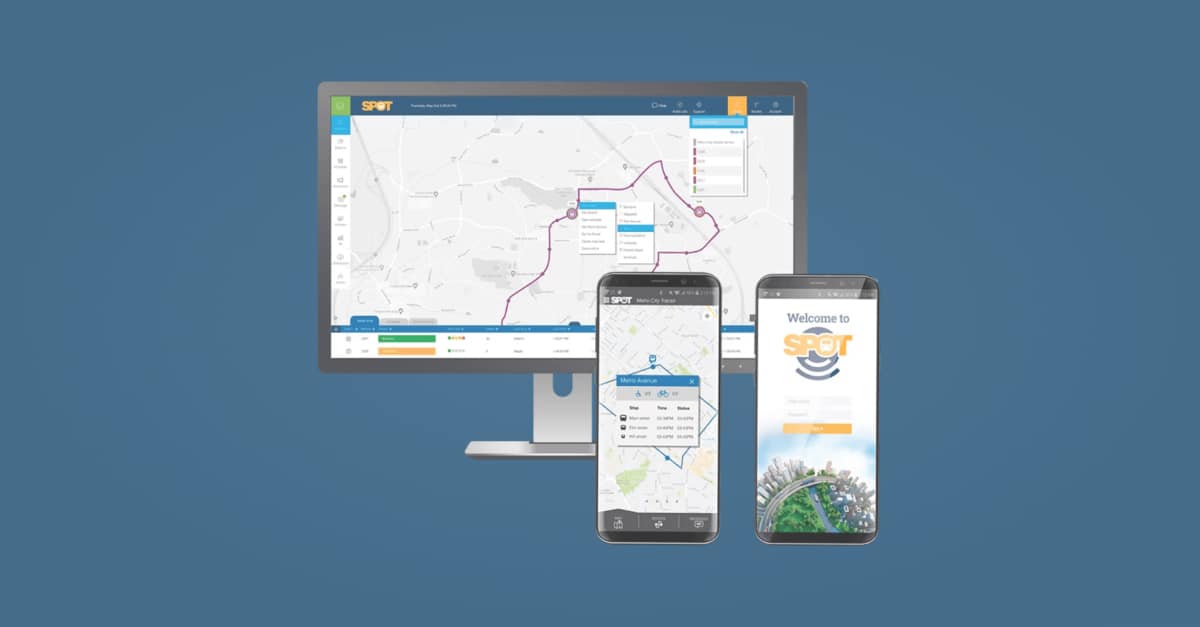
 SPOT: ETA’s Core Platform The SPOT™ ecosystem offers transit management solutions by providing a flexible, modular platform.
 SPOT: ETA’s Core Platform
  All Solutions
 CAD / AVL / GPS tracking
 Business intelligence
 Digital signs and kiosks
 Infotainment
 Automatic passenger counting
 Tally NTD Survey Software
 Tracking websites and apps
 Vehicle announcements
 All Integrations
 Demand-response and microtransit
 Fare collection
 Mobile video surveillance
 Pre-trip inspection
 Solar e-paper signage
 Vehicle health monitoring (AVM)
 Voice communication
 Transit
  All Industries
 Airport
 Campus
 Medical center
 Rail, streetcar & trolley
 Rental car
 Tourism & theme park
 Transit
 Case Studies
  Blog
Blog eBooks
 Wall of Love
 Careers
 Press
Press Events
 Support