It’s very important for the planners, don’t fall in love with your work. Stop Requested. This is Stop Requested. by ETA Transit. I’m Christian.
And I’m Levi. These are real conversations with the innovators, operators, and advocates driving improvements in public transportation. Today, we’re talking about service planning, operations, and what it. takes to lead a transit agency through changing travel patterns. Our guest is Christie
Wagener, Executive Director of the Livermore Amador Valley Transit Authority, also known as LAVTA, which operates the Wheels Bus service in Eastern Alameda County in the San Francisco Bay Area. We’ll talk about how Christie found her way into transit, what she learned working across planning, operations, and customer service, and why she says planning, is always political. Today, we get into planning, operations, microtransit, and why transit leaders need to understand both the data and the people behind the service. Here’s our conversation with Executive Director Christie Wagener.
Welcome back to Stop Requested. Today, we’re joined by Christie Wagener, who’s the Executive Director of Livermore Amador Valley Transit Authority. Christie, how are you today? Hi, Levi. Thank you for having me. I am great.
Excellent. Well, it’s really our pleasure to have you on. Y- you know, we just recently got introduced, uh, through someone that was on our podcast, uh,
James Drake. Uh, he told us to reach out to you because you’ve got a lot of stories and a lot of experience- … and boy, do you. Looking at the, the, the resume that you have, I’m very excited to get into this conversation. Uh, but for our audience, uh, who may have not read anything about you, uh, because they weren’t doing a podcast Uh, can you give them an introduction to yourself and what your role is at LAVTA?
Yes, for sure. Um, uh, kudos to James Drake, by the way. He, uh, took my- uh, replaced me at Sacramento Regional Transit in 2005, and he’s been a, a friend and a colleague since then. Um, but, uh, by way of background, I’m Christie Wagener. I have, uh, been in transit since 2003.
Uh, currently, I am the Executive Director of the Livermore Amador Valley Transit Authority. We are a medium-sized transit agency, uh, in Eastern Alameda County in the San Francisco
Bay Area. Um, I know, uh, you know, uh, being a transit executive, we talk about our fleet size, so my fleet size is 60.
We are, uh, we have 60 Gillig buses, um, in our, uh, at our garage here, and we serve a service area of about 250,000 people. Um, our ridership, uh, each year, uh, post-COVID, has been about 1.3 million trips. Excellent. Thanks for that background. Uh, and, and, you know, those types of stats up front I think really set the tone for the, the conversation that we’re going to have. Your, your background is in planning and operations, so I think we’ll dig into those numbers quite a bit more, uh, throughout our conversation today. Uh, but, you know, in my little bit of research that I did before our call, uh, I saw that you had a story in transitstories.com, which I believe is from SPAIR, uh, and I, I read through that, and I noticed that you said transit was not in your original plan. Uh, so I’m, I’m curious. Can you give us some of your, your background in that regard? Like, how did, how did you get into transit? I always find that that’s a fascinating story. It is. It is, and everyone has a story there.
Um, and many of us- Yeah … accidentally stumbled into transit, which is, that is my story. Uh, so I graduated college, uh, with a degree, with, with two degrees in, uh, psychology and sociology, so this may come as a shock. I actually have no background in planning or urban planning. Um, I,
I am, I’m a people person, and, um, really was focused on becoming a social worker, so I graduated UC Davis long time ago, the year 2000, um, and began working as a social worker in Sacramento, uh, which was really fulfilling. I was raised, um, by a father who was in the Navy, uh, a mother who was a volunteer, and so I just, uh, always felt, uh, a degree of responsibility in giving back to the community.
Uh, so I started as a social worker, and, um, just had a lot of free time on my hands, and my mom, uh, encouraged me to get my master’s in public policy and administration, and I said, “That sounds great.” So I began that program at, uh, Sacramento State University, and I was possibly two years in, going part-time, you know, classes at night, working during the day, um, and my thesis advisor said, “Oh, you need to have an internship, uh, in order to graduate, also a thesis topic. Um, and how great if you can marry those two. Find an internship that gave you an, an, a topic to study.” Uh, I said,
“Okay,” and he said, um, “Oh, there’s a new general manager at Sac RT. Her name is Dr. Beverly Scott. She just started, and she’s looking for an intern.” And I, I just said, “Okay.” I think I just keep agreeing to things, and that’s what’s made me successful in my career.
Um, and I applied for this internship. Um, it was $13 an hour, um, so I took a pay cut, um, from my still very low-paying social worker job, and started as Dr. Scott’s intern. And, you know, I think Dr. Scott,
I did not know anything about this woman when I started working for her, and I have learned so much about her since then. She was a force, and I was privileged to be able to be her intern.
Um, and so in becoming her intern, I, I worked on different studies. Um, at the time, gosh, this is going to date me, uh, Elk Grove was considering pulling out of the Sacramento Regional Transit District, um, and so there was a study to kind of look at who pays what and who gets what in terms of service. Um, I did some governance research for her. She wanted to look at different board structures.
Uh, and I made very good friends with the planning team and the scheduling team, and I learned that I can still help people in this career. Um, it’s just looks different than social work.
I also, um, loved that I got to use math. I love math. I’m a, I’m not, like, a whiz at it, not at all. But I, I like math, and I love numbers. Um, I like s-solving problems. Um, it’s interesting to me. And so I, there was an opening as an assistant planner, and I just applied and
I, I’ve never left. I, I love it too much. It is such a rewarding career, um, and it’s interesting and it keeps me very, uh, keeps my brain very active. So I stumbled in, and then I’ve worked for four different transit agencies since then, and I know we’ll talk about, um, some of that later on. That’s very exciting. I mean, four different transit agencies. That give you a very robust understanding of, you know, communities and, and how mobility and, and, and, you know, transit operations, come all together.
And, and I think the, the people aspect is a very important one when it comes to, you know, public transit, right? Because, you know, this is the business of customer service and, and you know, I’ve shared this, uh, speaking in, in previous, um, you know, uh, Stop Requested episodes, and is that when you’re in this business, you cannot just like people. You have to love people. You, you have to understand your community, how you can serve them. So, you know, in your career, I, I know, um, one of your stops were at the Fairfax
Connector and, you know, there you got an opportunity to work in operations, planning, and customer service. A- a- and that’s another thing that I think is very, um, uh, peculiar or, you know, sometimes is, is not very common, is for folks to have, um, experience on both operations and planning.
We find a lot of folks that they stay in the operations track and all the, the experience operations, folks that are in the planning track, and they stay in planning, and then connecting those two is kinda how e- e- everything comes together. It’s such an important thing. So with, with that exposure that you have to all those different elements, uh, how do you think that shaped the way you look at transit and then you, you know, you balance all those different e- elements, like the customer service piece, the transportation planning, and, and, and then also the, the daily operations?
Oh, I love this question, and I will do my best to answer it. So, um, hey, I worked at Fairfax Connector for seven and a half years, and I’ll just say bottom line up front, I can speak both operations and planning. There are, they are two different languages, and
I think- Mm-hmm … um, part of bridging that gap is just an understanding that we do look at the world a little differently. Um, but I’m so proud of my work at Connector. Um, I started as a, a transportation planner too, and I learned how to schedule routes. I remember we used our Thomas Brothers map to conceive of routes and then, um, Excel and then eventually Trapeze to do the scheduling.
Um, so I learned a lot about, um, the impacts that a schedule has on, uh, a successful operation and how to create that schedule. Um, I also learned, um, through…
So Fairfax, um, contracted out the bus service, so, uh, we had a contract with MV Transportation, and so I, um, you know, jumped in and tried to learn as much as I could. I went out on ride checks.
Um, I learned how to do a PM on a bus. Um, I think, you know, what’s been helpful for me is I’m not shy. I like to learn things. I’m often the first person to raise my hand and, and, uh, volunteer for something.
And so, um, you know, learning about m- you know, the maintenance side of it, learning about, um, the run cutting and the rostering side, which I’m not a run cutter or roster- rosterer, but you, you know, you have to understand those and be respectful of the union rules and the process there. Um, s- you know, ha- dabbling in all of those areas really, um, has made me a well-rounded individual because nothing is, i- there’s no single diagnosis for anything in transit, and the only thing constant is change. And so I think I learned to respect, um, where the different areas where data can come from, that you can, um, sometimes it’s, uh, uh, you have to, in, in my, my case at Fairfax, um, I was responsible for taking over, or not taking over. We, we absorbed, uh, the WMATA, uh, a number of their routes. They were operating in, uh, western Fairfax
County. Um, and so we had to convert those to Fairfax Connector routes, and so I learned, you know, so that was not, uh, anything done out of demand. It was just a, it was a political decision.
It was a cost decision. Um, I was responsible for doing all of the Silver Line planning, um, you know, in Tysons Corner and in Reston, uh, that would, you know, eventually realign all the connector buses to connect to the new WMATA Silver Line. Again, that’s, you know, that’s a huge project that then results in all of this change that’s needed. Um, and
I just think, you know, I also really learned about the politics. Uh, that has come in handy every place I’ve been. Um, you know, one thing I remember from my master’s program is all planning is political, and I think, you know, respecting that, understanding it, and not getting frustrated by it is something that has been, um, hugely rewarding and, and helpful in my career.
This episode is brought to you by ETA Transit. Legacy CAD/AVL systems were designed when on-prem servers were the only option. Today, agencies need systems that leverage modern technology, that are faster to deploy, easier to use, and built for constant change. ETA Transit was built to replace the old model. ETA’s web-based CAD/AVL platform works in any modern browser, connects seamlessly to what you already have, and eliminates vendor lock-in. No server rooms, no fragile workarounds, just a modern command center that scales with your operation.
The next generation of CAD/AVL is here. Learn more at etatransit.com. That, that’s a powerful statement. I know, uh, Levi is probably writing it down for our, uh, key takeaways, and, you know Myself particularly going through, you know, the same on, on my transit agency where I work,
I would at the beginning, and honestly a lot of other times as well, get frustrated with the political aspect of it, right? Like sometimes the decisions are not entirely data-driven. Mm-hmm. Or, you know, sometimes your perspective might be that is not the best decision for the, uh, community, but y- you know, it’s not a, a sprint, right? Like, it’s a marathon. And, and sometimes the political climate might not be in favor of what might be best or in your opinion, best, uh, for the community. But, you know, sometimes later on there’s opportunities to circle back to an idea, to a concept, to a proposal, and then get, uh, that, that approval at that time. So you, you need to learn how to navigate, uh, that political space and, and look at, you know, just hearing your experience, right? Like on the planning side, being able to look at the schedules, how you build the schedules, how you look at, you know, how you provide, uh, service, and then how you operate it, and balancing those two, right? Because just the scheduling part is so powerful, right? You’re impacting bus operators’ lives, how- Mm-hmm … you know, how much time they have to deliver the trips. Mm-hmm. How much ti- you know, what time they come in in the day, what time they go home, you know, if they’re built in overtime or not. And then at the same time, you know, you’re impacting the community’s lives, right? When you’re making the s- schedule changes. But also understanding like in the operation side, what you said in, in, in terms of, um, things are always changing, I mean, forever changing. And every day as new, you know, Walmart comes up or, you know, new- Mm-hmm … you know, things are happening in the community, a road closure, this has a big impact on, uh, uh, on operations. And, and that balancing act is, is what all the agencies, you know, need to master in their, in, in the, you know, in that goal of mastering. Um, so one of the things, uh, uh, going back to that planning and operations-
Mm-hmm … right? A- and a lot of agencies have a little bit of that kinda like conflict between the two because, you know- Mm-hmm … planning is like, oh, everything, you know, on the computer, the data, everything says that this should work. And then operations is like, “No, you need to make these changes because this is a challenge.”
So, you know, where do you think agencies fail in that handoff between planning and operation, that balancing act? Oh, I love this question so much because every agency
I’ve worked for, um, they’ve been set up a little differently. Like, um, particularly where does the s- where do the scheduling folks live? Are they in operations or are they in planning? And that’s, uh, that’s always, uh, interesting. But, um, okay, I could talk for an hour about this, but I think we lack shared meaning. We just talked earlier about the different languages that planning and operations speak. Um,
I, what I have found, it… and this is a very, uh, in the weeds answer I think, uh, and I’ll try to get back up to 30,000 foot in a minute, but just understanding what the scope of a service change is.
Um, making sure, um, that it’s clear where bus stops are added or being removed. When do you need new turn sheets created? Um, there’s, you know, planning,
I love planners. I’m a planner and we’re, we’re kind of idealistic and sometimes we, yeah, we, we don’t get out enough and see the real world.
Um, we’re maybe too future focused. Operation, they’re, they’re just today. They don’t often, can’t often- Mm-hmm … see what’s gonna happen in a week. Um- That’s right … it’s, it’s, so- High urgency.
And so it’s like, okay, so you know, planners could do a little bit more about getting out in the field and, and, you know, learn what a bus can and cannot do. Um, I’m not a bus driver. I haven’t been. I s- some of the best people I’ve worked with have a background in driving a bus, and I trust them, and they can go out, you know, and when we’re planning a route, and they can say, “Yeah, that bus can turn here or not.” Um, I think operations people need to, you know, do their best to, to learn a little bit about how data can influence decisions. Uh, but at the end of the day, it is, it is a compromise, and then you get it wrong, and then you gotta fix it. Um, and so it’s just, um, the best, uh… Let me think. The, like just communication is so essential. Um, at least at three of the places I’ve worked, you know, we have these sort of joint operations and planning meeting, and customer service meetings, and they’re painful, and my staff hate them, I’m sure. But it’s so important ’cause, you know, it’s not just what’s coming up in the next three months in our, you know, our signup, it’s what are the deviations? Oh, there’s a farmer’s market that’s starting. We won’t be able to serve this bus stop. Oh, there’s a 5K run.
There’s a detour. Um, oh, BART’s changing their schedules. What is this gonna do to us? It’s just, it’s constant. And so we’re, we will always speak different languages. That is okay. We always will look at the world a little differently. That is okay. But we need to just talk and, you know, and again, being a people person, uh, my s- my big sin is I just wanna understand everyone ’cause I want everyone to get along and work together. And so I just think the more we get to know each other and, and walk in each other’s shoes, you know, I think it’s meaningful.
Um, I mean, my operations folk, they love it when I’m out in the field and, um, I’m sure my staff hate it ’cause I’m texting them like, “Fix this, fix this.” But it, it, it carries a lot of weight when, you know, you’re out there seeing things with your own eyeballs, um, and, and stepping into your, to someone else’s shoes. So sorry, that was, um, very long-winded.
No, no, no reason to apologize there. That, that was amazing. I, I wrote down so many notes for our key takeaways. Uh, but you know, I wanted to follow up on a couple threads that you left there. So after reviewing your background a little bit, I, I noticed that this is actually your second stint at LAFTA.
You were the, uh, planning and operations director previously, and- Yep … you had some work, uh, as a part of Wheels Forward that was done, uh, to increase ridership. Can you explain some of that process and what, what needed to change? Yeah. And how were you able to, a- again, you know, take it from a planning phase to an operational stage? Yeah. Um, absolutely. So yeah, I became director.
I think my first title was director of planning and communications, and then a new executive director was hired, and so it goes. You have a reorg, and I became director of, of planning and operations. Um, so yeah, at the time, so this… Let me take you back. This was 2015.
2014, 2015. Um, you know, we are a car-rich area out here in Eastern Alameda County, so it is, it’s always been tricky to get people onto buses.
Um, and ridership, I think very similarly to other systems, uh, was stagnant or declining. And so, um, the new executive director who– So the kudos belong to Michael Tree. He, he was the executive director who had come from Missoula, Montana, who had, they had just done this comprehensive operational analysis, right? And
I had actually never heard of it, um, before. Um, and so he comes in and he wants to do a COA, and I was intrigued and interested, and we worked on a scope of work and hired a consultant. Um, I think what was unique about this
COA, so it was very data-driven. Um, we really wanted to look at where routes were underperforming, um, but we also did market research, and I just think transit agencies don’t do enough market research.
I mean, sometimes it feels like we just are throwing spaghetti at the wall to see what sticks. Um, and, and, you know, what, uh, i-i… Understanding what it would take to convert people who are thinking about riding the bus to actually bus riders does require a little bit of analysis. And so we did a statistically significant, uh, survey to understand what are the attitudes and awareness of Wheels and our services. And, you know, we learned that there’s a, there’s a chunk of people in the Tri-Valley that will never be on our bus. Um, and there are a lot of folks who are already on transit. And so what we learned was the market for Wheels riders is really limited to, uh, students, um, and people on BART. We learned that people who ride BART were more open to riding other modes. And conveniently for us, BART parking was full at 7:00 AM. We are an end-of-the-line station. We serve the blue line. Um, and so we had an opportunity to try to, like, realign our services to provide two routes that connected with every BART train, basically, not quite seven days a week, but five days a week. Um, and so that’s what we set out to do, and we identified an unproductive or underproductive service, um, and went through the public process, doing all the public outreach, having all the meetings.
And at the end of the day, you know, the board took a risk, and they eliminated, uh, service in some areas and allocated those hours to, uh, BART, basically BART connector routes, our rapid routes. And that’s, that combined with a marketing campaign because, you know, folks don’t know, folks don’t always pay attention to buses, you know, out here.
And so we, um, did some door-knocking, actually. Again, credit to Michael Tree. Um, he, uh, initiated an individualized marketing campaign to really help educate people who were within a quarter mile of these really high frequent routes to BART, and it worked. And, um, at the same time, we initiated a pilot, um, with Uber and Lyft, uh, to provide coverage in areas of the city of Dublin where we had c-cut service, and
I think we’ll talk about that later. That, that, uh, is no longer a pilot, and it is still going on. Um, but yeah, we, we went all in on BART ridership. Um, and yeah, very proud of the work we did and very, very proud of the outcome.
I really love that you focused on market research. Uh, you know, understanding who is going to be using the service, I would completely agree with you that agencies don’t do that enough. They don’t understand who the riders are. They just think, “Oh, well, we’re here to try to serve everybody,” and I, I think that kinda misses the point. Like, you, you need to serve the people who are going to use the service, and if you’re able to get some additional people out of their car or, you know, from some other mode that they’re using, and they’re, they’re now using public transit, then, then great.
But y-you gotta serve who your audience is first. Uh, so, uh, I, I really appreciated that about what you said. So you, you also mentioned something there about, uh, trade-offs, and, you know, I know you’ve worked at several agencies.
You’ve got this whole load of experience. What are, what are some of the challenging parts about trade-offs that m-may not be so, um, you know, so upfront, right?
Like, what’s, what’s going on behind the scenes? Uh, what type of discussions are happening at the transit agency to figure out, well, do we go more towards coverage, or do we go to frequency?
You know, perhaps we, you know, serve this place or we s- we serve this one, right? You can’t serve both of them. Uh, can, can you give us some, maybe some, uh, you know, insights there about your, your experiences in, in those trade-offs and, and planning in particular? Yeah, I’ll do my best. Um, it’s all about trade-offs. You know, you have limited resources. Um, even when you don’t have limited resources, you’ve got limited time and limited bandwidth. And so, um, you know, it’s, it’s, yeah, the co- coverage versus, uh, ridership conversation.
It’s, um, you know, uh, the directness of a route versus the cl- proximity of a bus stop to your home. Um, and so it’s… Yeah, I mean, and I don’t have a magic answer. It is so, uh, it is so individual to every agency and every community. Um, I, uh, after I left LAFTA as director of planning, I moved to SamTrans, which is on the peninsula, um, in, in, uh, San Mateo County, and we, um, shortly after I started, s- uh, began a, a COA, uh, it was called Reimagine SamTrans, and it was launched right before the pandemic.
And so we had done all of this data gathering and round one of public outreach, which is like, “Tell us what you like and don’t like.” You know, it’s not like you’re giving people alternatives to react to. It’s just, “Here, the sky’s the limit. You know, air your grievances or whatever.” And so, um-Then the pandemic hit. We had– and we weren’t sure what to do. You know, all of a sudden the world was upside down, and we had started this very extensive study that w- you know, multi-year study. We didn’t wanna throw out our data, and so we, a-you know, again, there is no, there is no, um, user guide, so, like, how do you make good planning decisions? It’s, it’s reading the room, it’s reading the politics, and sometimes it’s just trusting your gut and trying something, and then being open to changing it, right? You can do anything. I can try that for six months. I’ll, I will do that for six months, and let’s just be open to feedback.
So what we did in Reimagine was we said, you know, no one’s riding transit, uh, but we have now all of this, we have data to look at who’s riding transit, um, during the pandemic.
We also know, um, in our round one outreach who connected with us, um, that were already riding SamTrans and, and who was a non-rider, and we went all in on the rider. We said, “You know what? We don’t know anything about what the future’s gonna be, um, and we have this study to, to, to get across the finish line, and we know who’s riding our system now. We have APC data. We can look at that.
We know what the riders said they wanted before the pandemic hit, so let’s, let’s lean in on that.” Um, and then, you know, it of course, it gets sticky because then you start to put lines on maps and you say, “Oh, well, I’m gonna remove service here.” Um, and we, we, uh, because of the pandemic, I mean, I hate to say the pandemic was a blessing in, in this study, but it might have been because we were able to really advance equity. Equity was all of a sudden becoming very, very important. Not that it wasn’t in the past, but it’s just, you know, there are different trends that pop up over the years and, and, and equity was just front and center, and so we did really hard stuff, uh, in Reimagine it, and staff advanced, um, a recommendation to cut, uh, service in the, some of the wealthier communities and reallocate that in communities like East Palo Alto, and it, it worked. And so, um, you know, it is, it’s a, it’s always a conversation. There is no magic equation. You know, if you go 75% ridership, 25% coverage, you’ll get this. Um, I think you have to listen to people. You have to listen to your ridership, and sometimes it’s, you know, you gotta take a risk and, and try something. Yeah, I, I like that a lot, uh, sort of educated approach to taking those risks
I think is important. Y-and we spoke of, uh, James Drake earlier and, you know, he said that he was pretty conservative in his approach to making changes to routes. So, uh, y-you know, it just depends on the, the person that’s, that’s making the planning decisions, right? Mm-hmm. And, and of course, the executive director and the board and so on, but, uh, it, you know, it, it does benefit the agency, I think, most of the time to, uh, at least pilot, right? To try something- Yep … out instead of just- Yep … staying in the, the sort of same lane and, and- Yep … going along with, you know, what was previously designed for, you know, who knows how long before. Yep. Yep. Uh, you know, I’m, I’m curious, i-is there anything that you would do differently about some of the service changes or, you know, network redesigns that you’ve done- Mm … in the past at any of the agencies you worked at? Totally. First of all, I have to say how heartbroken it is. I’ve come full circle in my career. Routes that I designed have been eliminated in Fairfax, so, like, that is such a dagger in my heart. Um, but, you know, everything changes, right? We just talked about that. Um, so you know what? I think w-we got it wrong here at LAVTA, um, in 2024, and I’m, I’m comfortable saying that.
Um, in, at the end of 2023, uh, BART announced, um, it was totally reworking its train schedules, and it was trying to, uh, provide more service off-peak because that’s where the ridership was, again, post-pandemic.
Um, and so we had been receiving train service every 15 minutes, um, on weekdays, and I think it went to every 30 minutes on weekends, um, and late night. And BART said, “Let’s, instead of every 15 minutes, um, during the, you know, Monday through Friday, we’re gonna go to every 20 minutes, seven days a week,” so adding more service on the weekends and late night. And we are an end-of-the-line station, and I, I think I mentioned earlier, our routes were running every 15 minutes with BART, so this was a huge change for us.
Um, we anchor to BART for better or for worse. Um, it’s the, the, you know, the regional hub out here. So we went through a, a very short public outreach process, uh, called Wheels Forward, and it really was, um, our best shot at trying to take the temperature of riders. Do they think we should, uh, basically reduce our frequency to match BART, and then in doing so, we can restore service in parts of the Tri-Valley that no longer had service or where service was suspended?
Or should we continue our 15-minute service as is and not add any coverage anywhere, but, but knowing that we’re not in sync with BART? Um, so and then we had an option where we, like, r-pulled coverage back again and had, like, 10-minute service.
And, you know, people like to see lines on maps. I think that’s my conclusion. You know, graphics are very compelling. And, um, and also folks understood, you know, why would you wanna be more frequent than BART? Like, go, you know, go to the 20 minutes, add more lines on the map, and that’s great.
And that’s what we did. And, you know, our ridership is not responding. And so I, what I’ve learned, I think, is something I already knew. Um, people like frequency. And what
I didn’t know, uh, when we made this decision was how, and I, I, I don’t wanna throw shade to my, my very good friends at BART, but how unreliable the BART train schedule is, particularly for trains coming in, um, eastbound.
Uh, so we have a very hard time, uh, reliably connecting to BART, uh, i-in one direction particularly ’cause the trains come in late.And so we’re, we are already out of sync with them to some degree. And so, um, I think we got it wrong, um, and I think we will have to, um, possibly revisit, uh, that decision in the near future, depending on, um, our funding outlook.
But, um, that, yeah, that’s… I would’ve– I think we, we should have just kept the, the system intact with the 15-minute service.
Um- Yeah. That- But we had to try something. Oh, yeah. No, no. It, it, you have to. And, and it’s through those, uh, pilots or those service changes that you can, you know, confirm what you’re, uh, inferring from, uh, the data, right? Like, you, you know, you think this is gonna be better for the community and, and all service changes are ultimately with the premise of, you know, help most, the most people in the community. And, you know, a-as you were looking at that, I, I wanna try to see i-i-if there’s a correlational connection with the, uh, launch of Go Dublin and, you know, the, the Go Tri-Valley partnerships, right? Because you, you have the fixed route changes, you’re changing these routes, but then you also, uh, sometimes w- uh, I’ve seen it part of system redesigns, um, where sometimes, you know, you, you, you bring micro transit or demand response services, uh, to serve the community that would be more prone to riding those services versus the fixed route. And then, you know, you see that ridership, right? Like, th-these are people that maybe are not, uh, fixed route riders, but they would do the, um, you know, micro transit or first/last mile to connect to other services.
Um, so, so, uh, let me ask you about that partnership. What, what, what does, was that kinda like connected to, um, you know, what you were seeing with the s-system performance and then you launched the
Go Dublin and, you know, some of the demand services? Was, was that kind of the premise of it? Or how is that, uh, kinda like, um, connected? Yeah. That, thank you for that question. So we have to go back to
2016. Um, we had at this time just implemented the Wheels in… Oh, it was Wheels Forward, sorry, not Wheels in Motion. Uh, I can’t keep my project names straight, uh, in my old age. It was Wheels Forward, and that effort, uh, eliminated some unproductive bus service in the city of Dublin.
And so at the time, um, maybe there were about 10 or 12 transit agencies or municipalities that had started to work with Uber and Lyft on different programs. Uh, Pinellas County, Florida, was, uh, I think top of the list, uh, always doing amazing and innovative things. Um, and so, um, we conceived of the Go Dublin program.
Uh, we had, a-as a planner, I had, I overthink it. I came up with different options and made it way too complicated, and at the end of the day, we settled on offering a discount of half the fare, up to $5 off, for any, um, Uber Pool or Lyft Line trip taken within the city of Dublin. So there was no requirement to connect to transit, um, and there was no restriction on where this was available. Like, it was available if you lived next to a bus stop or there was no bus stop in sight.
Um, and the idea was to, uh, provide a more cost-effective transportation option, um, and also, uh, some, uh, mobility, not leave people high and dry when we eliminated their bus service. So, um, since Go Dublin launched, um, after the pandemic, it has been, it was expanded to the f- all the Tri-Valley, uh, so now it’s called
Go Tri-Valley. Uh, it’s a very, it’s a still a very generous discount. Um, I have had my hesitations with this program, es- even launching it. Um, I worried about are we competing with ourselves for ridership?
Mm-hmm. Um, are, yeah, are people op- you know, opting to, to take an Uber instead of our bus service? Um, I tr- before I left
LAVTA, um, we started an evaluation and it was, at the time, it was really challenging even getting data from our TNC partners. They were not opening their, you know, their books or their data to us, and so it was kind of a mystery who was riding this.
Um, and you know, where we are now, um, gosh, it’s been running for almost 10 years, it’s wild. Oh, wow. Uh, ridership has kind of gotten out of control, um, and we have been taking steps to kind of pull the program back. Um, and I do believe that we will, um, be sunsetting the program probably in the next year based on a board conversation just yesterday.
Um, I think, uh, there’s a belief that, you know, some people are, you know, using this to connect to transit. I– we know that, that there are folks that are using it, or if they miss their bus or a missed connection, they’re using this. Um, but we also know there’s a quite a number of people who, who are, um, not connecting to transit and whose incomes could definitely support this without a, a subsidy. And so I remain interested in microtransit as a solution in my service area. Um, I think I’ve dabbled with microtransit at SamTrans, and they have two microtransit zones operating now.
Um, I think, I think this community could be accepting of it. Um, it, it’s, it’s a bit of a guessing game, you know, where microtransit works. I mean, w- I, uh, what is, what does, uh, working microtransit even look like? I think that’s even a question. I don’t, you know, I think data’s mixed, um, on, on productivity, but, um, I, I would like to, uh, look at an opportunity to bring microtransit to the Tri-Valley after, um, we sunset the Go Tri-Valley program.
Um, I do think, especially in the low-density, um, communities out here, you know, you’ve got a lot of gated communities. It’s just not conducive to traditional bus service. And so, um, I, I definitely think there, there could be an opportunity to, to have some success there. So Christy, you said that, you know, your agency is, um, focused on, on data, um, and that you, you try to take that data, uh, driven approach.
Uh, are there Uh, some lessons learned from y- you know, looking at the data, maybe overthinking it, like you said, and, uh, you’re trying to, uh, finesse the system in a way, uh, th- that might be beneficial to most, but, you know, it turns out that, you know, maybe the, the data kinda pointed you in the wrong direction. I, I’m curious what the, what your insights are there. Yeah. So, um, I think making da- data-driven decisions is, um, is so important. I think we often, uh, use feelings, uh, to come up with our, uh, solutions. Um, I think, uh, you know, you have to look at all sorts of, uh, data sources.
Um, w- recently here, we, uh, became a customer of Swiftly. Uh, we purchased three of their modules. We got on-time performance, um, uh, operator reports, and running time. And, like, I cannot tell you how helpful having these tools has been in fine-tuning our routes. Um, but I also just think, you know, uh, you know, you can fine-tune forever, but, um, there are someti- like, sometimes your service will just not, will not be productive, and it’s out of your control. Uh, it’s the land uses that you’re operating in. Uh, in our case, we have such a strong work from home presence in, in the Tri-Valley that the j- just, the demand isn’t there. So I think just, you know, recognizing what data is available, looking under all rocks, um, and someti- and also with the recognition that sometimes it’s, it is out of your control. Yeah, and since you, you have so many folks that are working from home, how, how has your agency, uh, been able to, to combat that? I mean, I know you’re, you’re in the San Francisco
Bay Area, uh, generally, and a lot of folks are working in tech, maybe not as much in Livermore and Amador, but, um, you know, just curious, uh, about how, you know,
COVID has, has changed the way that you’ve, uh, developed your service over time. Uh, you know, I, I, I, I say this with all seriousness, I think COVID has completely taken the rug out from underneath transit, uh, in the Bay Area, and I think it’s accelerated work from home, um, everywhere. Uh, so, you know, for us out here, uh, the Bay Area, San Francisco remains, I think, lagging every metropolitan area in terms of, uh, return to office.
That influences BART ridership, and as a BART anchor or a BART feeder system, you know, BART’s at 45% pre-pandemic. Um, and so we are… You know, it’s, it’s, it’s demand. When, you know, people are willing to, to drive into the city, I think if they’re only going into the city once or twice a week.
When you go into the city five times a week, you’re not gonna do that. Um, and so it really has affected us, and I don’t know what the answer is. I mean, I don’t, I don’t know if I have an answer.
Um, yeah, 30% of the city of Dublin residents work from home, um, and that’s the fastest growing city in California, and that’s, and that is in my backyard. And so, um,
I think just, so what do you do? You, you do market research. That’s what we’re about to do. You know, you can sit around and hem and haw a- and try to throw spaghetti at the wall, or you can say, “Let me, let me go back and do what I did 10 years ago, and let’s understand what, what, who’s my market again?” Um, and I think what we’re going to learn is it’s not, I think students remain a strong market, and I think BART ridership will eventually come back.
But, um, I think really leaning in on services for your, our aging community, for our disabled riders, I think that is gonna be even more important, um, as we still continue to normalize coming out of the pandemic. So thank you for, for that answer. And, and, and like you mentioned, I mean, uh, COVID has changed mobility patterns, and it’s going back into putting, you know, the finger to the pulse of the community and seeing, you know, how you can pivot to better serve the community. At the end of the day, if mobility is changing, then, then you have to change with it as well. So wh- when you returned, uh, to LACTA, now as executive director, uh, what changes have you seen? What differences have you seen from when you were then, uh, planning and now leading the organization?
I have more gray hair, and I’m fatter. So- I’m s- you know, no. The- there’s more stress, obviously, you know. Um, it’s, I, I left f- I went from a director of planning at SamTrans. I wasn’t even in the C-suite, and I made this incredible leap to executive director, and so, and I’m so thankful for it, and I, I struggle with imposter syndrome every day. But, you know, it’s, yeah, it’s the stress. I mean, what didn’t change is my f- feeling of responsibility for the work I do. That’s always what’s made me, I think, s- s- what set me apart from s- some of my colleagues, um, or peers, is I, you know, I take it very seriously. I care about this work, and uh, so that hasn’t changed.
Um, it’s, I have to make a lot of decisions. Um, I like being the boss. I’m a kind of a bossy person. I like being in control, so that’s fun. I like that.
Um, but it’s, you know, I don’t know if I’m making the right decision all the time. It’s stressful. You know, now we’re like, we’re d- dealing with our budget, and my finance director’s like, “What do I do about diesel prices?”
I’m like, “I don’t know, yo. I don’t know. Let’s just make the best decision we can. Let’s put a buffer in.” And, um, and so yeah, it’s, um, it’s, it’s, it’s challenging, but I think, and, and the board relationships are also very, that was the biggest, um, nervousness that I had, was how do
I manage the board? How much do I bring to the board? What do I bring to the board? Do I have lunch with the board members? Like, all sorts of things. And I’d say three and a half years in, I’m finally getting into my groove with the board. I’m, I, I can read the tea leaves better, uh, better predict outcomes of conversations, know when to give somebody a heads-up, know what items will be spicy. Um, but yeah, it’s, you know, it’s, it’s a, it’s different. And I guess I’ll, I’ll say, ’cause I think you have a lot of planners out there l- hopefully who will listen to this, um, what’s hard for me is I don’t get to be in the weeds as much anymore, and that’s, that’s been hard.
Um, I, I, luckily working for a medium-sized transit agency, we all have our own projects. We all, you know, have things that we have to roll up our sleeves and do, but I do miss being, being staff. Um-So-
Yeah … that, that is the difference That is typically the, the, the trade off, right? And, and the, the thing is, you as a professional, um, you have to evolve, uh, to that leading role because I, I- sometimes it, it happens to, you know, the best transit professionals out there, that when they become the leaders of the organization, they continue getting too much into the weeds, and sometimes you have to.
Um, but your role is now different, and, and that burden of responsibility is what, you know, aged, uh, you a lot during, during- … you know, that role because you, you carry the burden of responsibility. There’s a lot of people counting and depending on you, you know, all the different stakeholders and, and, you know, always questioning yourself, “Am I making the right decisions? Am
I, you know, doing a good job?” And I guess that self-questioning is good for keeping yourself, uh, sharp, but sometimes you also have to be kind to yourself and, and realize that- … you’re human, and as long as you have, you know, the best intention, you’re following- Yep … process, you’re data- Yep … driven, and you’re really working that relationship with the board, because I think- Yep … that that’s the main role of the leader of the organization, then, then you’re, you’re gonna be fine. And, and, you know, it seems that you finally got that groove, and you have a good- … uh, kind of a cadence now with, with, you know, your meetings and, and leading the organization.
So i- i- this is great, uh, you know, moment to ask you this question. What are the most important priorities, uh, for, uh, LAFTA over the next two and three years? Yep. Great question.
We need to secure funding for Bay Area Transit, full stop. That has to happen this November. Otherwise, it is going to be the death spiral of transit out here. So that I will be remiss if I didn’t say that.
Um, I would also be remiss if I didn’t say LAFTA received, uh, the largest low-no award in the state of California this past, uh, November, and the fourth largest low-no in the country, uh, which is, is phenomenal, also super surprising. So what do I have to do? I have to build a new headquarters and a new maintenance shop. Uh, so that’s, we received a $64 million grant, um, to build out our new headquarters. So, um, those, that, that’s two priorities. Third is, um, kind of answering the question about ridership. We’re continuing to iterate on our services and continuing to innovate with new services to try to, um, you know, get people out of their cars and onto buses. Well, good luck with those initiatives- … and, and congratulations, uh, on those grants. It, it- Thank you … seems that you have a strong, uh, you know, team that, that is applying for those grants because it is, uh, you know, about having projects ready to go, but also having a good, uh, you know, grant application writer and, and good relationship with those stakeholders, uh, to get those grants and, and, and, you know, get the projects going.
And, you know, um, wish a lot of luck with, you know, your initiatives this November. Hopefully get some dedicated source of funding. Thank you. Uh, pretty, you know, very much needed during this climate, uh, that we’re in. Yeah. So, you know, hopefully the community will, uh, continue investing in, in, in driving mobility.
Um, so as we’re coming, uh, to the, uh, end of our, um, uh, podcast episode, we have this, uh, rapid fire, uh, section where we’re gonna be asking you the short questions, uh, short answer, kinda like first thing that come to mind. Uh, so you ready for them? Yep, I’m ready. Excellent. So the first one is, what’s your favorite transit system?
It is WMATA, Washington, DC. Awesome. Awesome. Yeah. Tho- tho- those are kinda like large system that has a really interesting application of transit. Yeah.
They’re quite exciting. Yeah. Um, most overrated- … transit idea. So many answers to this one. Uh, single occupant autonomous people movers posing as mass transit. Ooh, I like that. Yes. Posing as mass, mass transit. Posing as mass transit. That’s not mass transit.
That’s, that’s right. No. That’s it. Uh, most underrated improvement? Operator restrooms. We didn’t even talk about operator restrooms. They are so important and so undervalued. Oh, my God. I… There, there’s a whole conversation there. There’s a whole conversation. Yeah. Yes. There is. I’m holding back. We’ll, we’ll, in a later episode, we’ll come back and talk about that. That, that’s definitely a, a, a very important underrated improvement. Yeah. Uh, and my last one, tool or habit you rely on most?
Um, I am gonna say field work. Getting out there is, for me, the most important thing. Excellent. Man, I’m, uh, I’m just giggling to myself here as you were answering those because those are some, uh, superb answers. I, I loved every single one of them.
Yeah, we’re stealing some. Exactly. Trying to make note of them for the, uh, key takeaways here. So, you know, if you’ve listened to the podcast, you, you know that we have some key takeaways. Uh, we try to be, um, as comprehensive as possible in, in the, uh, little amount of time, but, uh, you know, I just, I wanna go over a few of them that I wrote down, and you tell me, Kristi, if I got any of them wrong or if you would say them differently, and maybe you have others to add. So, uh, one that I think we, we hear a lot on the podcast, uh, um, honestly, it’s almost every week, that you need to be a person who volunteers and says yes. It might not come with extra money. It might not come with an attaboy or a pat on the back, but just to raise your hand and be willing to do things that are outside of your normal work responsibilities, uh, that’s key.
Uh, planning is political. We… You, you, Cristian and I completely agree with that. We have conversations on the side that are all about that, or at least we did when we were at Palm Tran and LeeTran, um, or
LeeTran for me. Uh, do your market research. That’s a, a brilliant one that has come up in the podcast several timesUh, y- you know, try pilots. Uh, just doing something for three months, six months, get some data, see how it works, then make an educated decision on what the future of that program is. I think that’s a really important point. And also graphics. Y- you know, an agency that, uh, focuses on graphics is one that’s going to be more convincing, more compelling, uh, to the general public. So i- if you don’t have a graphics person, you need to get one. Yep. Did I miss anything? Yeah, hire a firm. Yep. Yep. Um, I would say something I would add that
I didn’t say, but I think it’s very important for the planners, don’t fall in love with your work. I just think, you know, be open to feedback no matter what. Um, and again, going back to that planning is political.
But no, I think you, you, you nailed it. Um, uh, I appreciate this conversation. It’s been really enjoyable. Yeah. Well, the, that last one that you said is probably the one that hits home the most because, you know- … as a planner, I always fall in love with my work. Oh, I know.
And it’s like, “Okay.” Yeah, I know. How dare somebody eliminate the bus route that I designed 12 years ago, which probably- Exactly … is not carrying anybody.
Um, but yeah, no, it’s, uh, I, I just find don’t fall in love with your work is just kind of a Zen thing to remember, you know? Um- Yes … it’s all about keeping that
Zen. Mm-hmm. Y- you’re absolutely right. Um, that’s, that’s a really important point. Y- you know, you have to be impartial, uh, to decisions that are made, and sometimes when they don’t go your way, you just have to let it slide off your back and, and move on. Yeah. Uh, that- that’s extremely difficult to do for me.
Um- … but I think it’s good advice to give for other people. Um, and I hope that they take it because then you’ll, you’ll be much better off than, than myself. Uh, so Chrissy, this has been, uh, just a superb conversation, really one of my favorites that we’ve ever done on the podcast, and we’re, we’re nearing 70 or have surpassed
70 now. Uh, as we, as we close out, I wanna give you the opportunity f- uh, to, you know, share some information about your, your agency. You know, how can people connect with you? How do they learn more? Absolutely. Thank you so much. And I know you say that to all your, uh, guests on the podcast. Um- So, uh, yeah, I would love, love to connect. You know, this r- this industry’s about relationships, and I’ve had incredible mentors.
Um, and I would, you know, I am always here to help, so folks can email me directly. It’s dwegener@lavta.org, or visit us at wheelsbus.com.
Um, I also trink- treat LinkedIn like my personal blog, and so, um, folks are welcome to connect with me on LinkedIn, um, and follow me there. Um, and my marketing, uh, manager told me to mention we have a newsletter, um, and so folks can sign up and learn about what’s going on at Wheels.
Excellent. Well, lots of ways to connect with you and your agency. And I don’t say that to all. I say it to some. And this is, this is the some. All right. I’ll take that. Yeah, this- I appreciate that. Yeah, really, really was a superb conversation.
A- and thank you so much. And also thank you to our listeners. We’ll be back next Monday with another episode of Stop Requested.

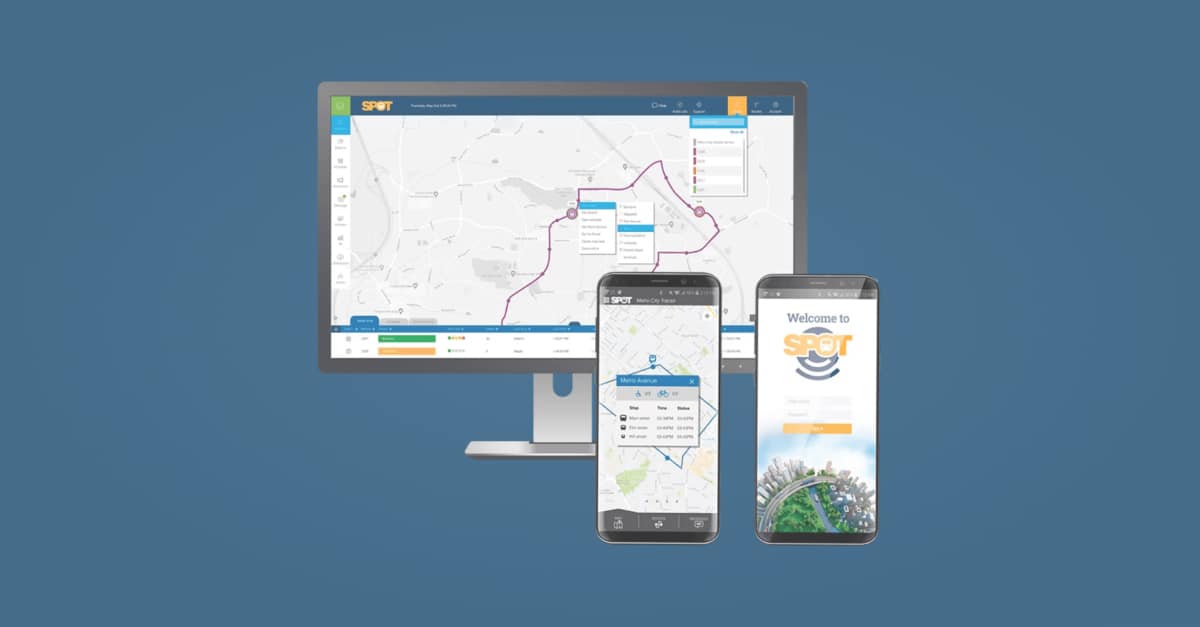
 SPOT: ETA’s Core Platform The SPOT™ ecosystem offers transit management solutions by providing a flexible, modular platform.
 SPOT: ETA’s Core Platform
  All Solutions
 CAD / AVL / GPS tracking
 Business intelligence
 Digital signs and kiosks
 Infotainment
 Automatic passenger counting
 Tally NTD Survey Software
 Tracking websites and apps
 Vehicle announcements
 All Integrations
 Demand-response and microtransit
 Fare collection
 Mobile video surveillance
 Pre-trip inspection
 Solar e-paper signage
 Vehicle health monitoring (AVM)
 Voice communication
 Transit
  All Industries
 Airport
 Campus
 Medical center
 Rail, streetcar & trolley
 Rental car
 Tourism & theme park
 Transit
 Case Studies
  Blog
Blog eBooks
 Wall of Love
 Careers
 Press
Press Events
 Support