Stop Requested. Welcome to Stop Requested, the podcast where we discuss everything transit. I’m your co-host, Levi McCollum, Director of Operations at ETA Transit. And I’m your co-host, Christian Londono, Senior Customer Success Manager at ETA Transit.
Today, we’re joined by Hayden Clarkin, founder of TransitCon and widely known as The Transit Guy. Hayden is a transit engineer, planner, and consultant whose work spans agency operations, digital products, land use, and public advocacy. Many people know Hayden through his writing and social content, where he breaks down complex transit issues in a way that’s accessible to everyday riders, not just industry insiders, while still challenging agencies and policymakers to do better.
In this episode, we’ll talk about how he first got into transit, how experiences abroad shaped his perspective, and why he decided to create TransitCon as a more open and accessible space for learning and exchange in the industry. We also dig into rider’s experience, land use, agency capacity, and what actually matters when it comes to building transit systems people want to use. We hope you enjoy it.
Welcome back to Stop Requested. Levi, how you doing today? Christian, I’m doing very well. How about yourself?
I’m doing phenomenal. Uh, we have a great episode this morning. Uh, we have, uh, Mr. Hayden Clarkin, who’s the CEO and founder of TransitCon. He’s also well-known as The Transit Guy, and similar to you and myself, he’s a Mass Transit 40 Under 40 awardee, uh, in 2023. Hayden, how you doing today? Good. Thanks for having me. I really, really appreciate this.
Thank you for accepting the invitation to talk to us, and, and of course, engage with our listeners. I wanna start our conversation to ask you, you know, for our listeners who might be new to your work, what do you do? Well, um, it is funny because, uh, I’m currently in D.C. for a conference, and so, you know, you, you go to a lot of these networking events and, and you talk to a bunch of people, and, uh, a lot of people are like, “Are you that guy. that tweets?”
So, I guess first and foremost, uh, d- people probably, if they do know me, they would know me through, uh, social media as The Transit Guy, where I do, like, a lot of content, creation, but to pay the bills, uh, I’m actually an engineer and a planner, and a little bit more recently working kind of with product and digital product and how that’ works around transit, and how do we make our transit, systems better in the backend. Um, that has been kind of a new chapter in my life that I’ve been working on and discovering and, and actually really enjoying. So yeah, that’s kind of what I’ve been doing, uh, as of recent. So yeah, The Transit Guy is basically how I pay my bills as a consulting firm. A one-man band, as if you will. That sounds like a lot. I mean, just like transit planner, engineer, it’s a whole bunch, uh, working in that space, and, and then now you talk about social media, creating content, is incredible. So, uh, it, it, you know, let’s go back to the beginning. How did you first get interested in transit? Yeah, so, it, it’s one of those things where growing up, uh, I give, I give a lot of credit to my late grandfather. He was a public transit bus driver for the state of Rhode Island, um, RIPTA, uh, a transit service. And growing up, he became a, a widower right when I was born, and so he didn’t really know what to do with his first grandchild, and basically it was like, “Hey, let’s watch the, the, the new train station in Providence, and let’s watch these buildings get built downtown, and I’ll take you on my bus ’cause
I don’t know what to do with you, so I’ll just take you on my bus and you can come on my bus.” And I, I would sit there with him, and it was really an indelible moment of, uh, enjoying both engineering and enjoying sitting on the bus. And so it was something that I always wanted to do, loving Thomas the Tank, all of those things, but it, it sort of faded away because I, I grew up in an area of Rhode Island that was quite suburban in nature, uh, with respect to, like, the transit service and whatnot. So I didn’t really get that, you know, hunger always, like, uh, fed. And then I wanted to be an engineer, though I did know I wanted to be a civil engineer, and so I went to college, the University of Connecticut, and I really wanted to actually build bridges. That was my big thing, and in my first class on my first day in engineering, I met a professor, Dr.
Norman Gerick, and Dr. Norman Gerick is famous with- for his research around transit and the built environment and how those, how those, uh, two intersect, and it was love at first sight, and, uh, I said, “I need to do transit. I need to work in transit even though UConn has no transit classes. I need to do this.” And yeah, that’s where I got my start, and, uh,
I, I, I went to Germany for a year. I double majored in German just so that- no offense to Germans- I, I got my double major just so that I could go to the University of Stuttgart for a year and study public transportation operation and, uh, urban and regional planning. So that’s kind of where I got my start. That sounds very interesting, and, you know, with people that we had on the show, eh, there’s,
I would say, two buckets. There’s people that just fell into public transit, they just got this job at a transit agency that was just, like, a planner job or, like, whatever title, and then they fell in love after they saw the operations, how it works, and learn about the industry. And then there’s the other bucket, which I’ve seen transit professionals that also tied their, uh, bringing into the industry. to their family, either their dad, their uncle, like, somebody work in the transit industry, and they got to see some of these things up close, and it’s like, “Oh, that’s really cool. That’s interesting.” And then you, you understand, like, you know, how pretty much transit is made, right? And, and, you know, hearing how you and, and your grandpa, you know, they got to ride the system and see how it works but then also had the opportunity to be impacted by some of your early mentors and, and travel overseas, I think that- that’s the other component. Like, for Levi and I, we both travel to other communities and other countries, and some that have, like, premium transit, like, you know, fast train lines and, you know, very robust networks, and you’re like, “Wow,” you know, like- Transit engineering has a lot of, uh, opportunities, you know, to really transform, uh, mobility in communities.
So, I wanna ask you, in your career, and, you know, as you were studying and learning all these things, you know, what early experiences or moments pull you deeper into the field? Yeah. I, I think … It’s a hard question ’cause I don’t think there’s ever, like, ever a single moment. As you just said,
I think if America paid for every single person to, like, pilgrimage to a, a place with great transit, I think we would really … I think transit would look really different in America as people would see how it worked. And so, for me, I think that was a radicalizing experience, to go to Germany and Europe and, and, and see how good transit worked. And to be fair, I don’t really think the academic part of, of the German experience
I had helped me as much as it was just riding trains, understanding how they worked, understanding what good transit looked like, understanding what bad transit looked like. That was really helpful in the context of, like, living in a country that had a robust transit system. And so you, you just kinda, like, learn through osmosis, like, what actually works and what helps. I think that, for me, that was, like, a, a huge pivotal moment because you can always learn transit from, like, an academic book or from an academic perspective, um, but when you’re living in it and you understand it and you are coming back from the bar at 2:00 in the morning as a college student and there is a bus waiting for you and another one’s coming 15 minutes later, you’re like, “Wow, I want this for America.” And so it just kinda radicalizes you to want better and want to apply a lot of those great things that other countries have, um, that we don’t. And so, for me, that’s always been something that, that’s kind of pulled me in deeper, of like just wanting that for America. Yeah, I completely concur with that, Hayden. You know, your experience in Germany, uh, i- is very, uh, very touching to me. I, I had the, the same experience when I went to Spain.
You know, the academic side of it, yes, I learned some Spanish and I, I took some classes here and there, but really it was those crucial moments, as you explained, where you’re just out and about, you’re exploring the urban environment, and you, you get to use, that public transportation system that you didn’t know existed.
That’s, uh, that’s really inspiring, I think, to, to me, and it should be to our listeners, too. I, I would like to encourage anyone who’s a student to just study abroad. You know, go and experience something else other than where you’re from. We just did a very long cruise in the c- uh, in the Mediterranean with my family and it was, like, a big family trip. And my, like, at one point, my dad was like, “Why don’t we have this?”
Like, of just seeing how great the transit was, the walkability was, just the urban environment. And he just, like, kinda turned to me when we were on the, uh, on Barcelona’s metro, and he’s like,
“Why don’t we have this?” And I was like, “See? I told you.” Uh, I think this was his first time in Europe in many, many decades. It, it’s definitely a, a revealing experience. Right. Yeah. It changes the way you think about the world, for sure. As you mentioned early on, the, The Transit Guy, this is, you know, your, your moniker online. And I think that for the folks who are listening to this, if they already know you, like you said, uh, they probably have come across some of your content. I’m curious, where did this come from?
How did that, how did that start? And where did you get that impetus to say, “I wanna be The Transit Guy. I want people to know me as that”? Yeah. So, pettiness.
Honestly, it was, I was very petty. I was working at a … I was working on a very large transit project in California. I’m not gonna name, but you can probably infer. I was working in the Bay Area on very large transit projects, and I was working at a firm where, this is all too, all too common, I was one of two people out of maybe a dozen or two dozen people who would come into work every day? not driving in. And so it was kind of normal for me and this one other person who’ usually rode a bike, but I was coming every day? from San Francisco all the way down to South Bay. And, so I was taking the train every day, and it was funny because, everyone was getting their parking validated. Mind you, we were all working in the transit department for this, this firm. And one time, I’ had a coworker who was a little snarky when we were talking about parking validated, and someone was like, “Oh, that’s Hayden. He’s our transit guy.” As almost kind of like, a … It seemed like, it was slightly an insult because I was so pro-transit and so nerdy about it, and really lived and breathed it, that I was like, “You know what? I am the transit, guy.” And so I, I, I did it, uh, like, at … in that moment. I was like, “Yep, I’m
The Transit Guy.” And so I had renamed my, um, my Twitter. This was in, I think, probably 2019 or early 2020.
I just renamed my Twitter from, like, an Adele fan account The Transit Guy, and I did that. And obviously, I didn’t think it would be what it is today, but that’s really how it started.
And anyone else can be The Transit Guy. I, I … But it just, it kinda stuck. I mean, it’s, it’s catchy. People know you by that name now, so I, I think it’s gonna be that forever.
Hope so. You should just, should just change it. Your government name is now The Transit Guy. Right, right. Well, so when you, when you changed your, your handle on Twitter, you started to produce content. Or I’m assuming that those two things were kinda linked.
Or was there, you know, a period there where you, you just changed it and you didn’t produce content, and then you said, “Hmm, maybe there’s, there’s something here. Maybe there’s a gap that I’m trying to fill.” Is, is that kinda how it came about, or could you describe that process for us? It started in tandem. Basically, um, what had happened was I started … I, I changed my name to The Transit Guy, and I was posting a lot with people within…There were other fellow transit nerds that kind of … There was a few of us. I don’t know, I would say maybe there was 30, 40,
50 of us that were, like, uh, into tr- interested in transit and kind of always just talking in circles about transit and whatnot. And then, during the pandemic, I really missed the human connection of talking with people, going to, you know, industry meetings, going to, like, uh, SPUR, which is like a think-tank around transit and… or transportation issues in San Francisco, and I just kinda missed that. And then, also, we were faced with like, I think 2020 probably … You would all argu- uh, you both work in transit as well.
It was probably one of the most existential crisises, uh, that transit faced in modern history. Uh, I’m not trying to be, uh, dramatic, but I think i- i- it really was a make-or-break, and so I really just wanted to post about it and talk more about why it was important that transit, good cities, and s- and, and stuff survived, and, like just kind of the importance around it. Obviously,
I had like 3,000 followers at the time. I did not think that, like, I was gonna move the needle, but I thought it was really important to start talking about why transit was so important, and, like, what good transit would look like, and then just mixed it with The Transit Guy, and it, it kinda just grew. Um,
I think also, I don’t know if it would’ve grown as much as if I started today than when most people were just, like, sitting at home in lockdown. And what type of content do you, did you start with? Wh- what was- Yeah, so I- … you know, gaining traction? Yeah. So I, I had started really just talking with other transit nerds of like, just very nerdy transit things, and I realized that while that’s perfectly acceptable, people totally wanna talk nerd, super specific to others that are other fellow nerds. I think that’s great. I noticed that there wasn’t someone talking about, like, transit from someone who’s tangentially interested in it, because I always bring up the point that, like, there are millions and millions of people who ride the subway every single day. There are millions of people in New York City who are car-free.
I wouldn’t call them transit nerds, right? But I think they also have a vested interest in understanding transit, and understanding how it works, and understanding how we can make it better, understanding the state of how we got here, and that is very interesting to me as a person, and I do the same thing where I follow other people. I’ll give you a perfect example on nuclear power. I’m a civil engineer. I don’t know anything about nuclear power really. I’ll never forget, there was a moment, uh, maybe a year or two ago, when people were really worried about the s- the state of Zaporizhia’s nuclear power plant because it was being shelled by the Russians at the time. I was like, “I don’t know if there’s gonna be a second Chernobyl from this,” but I knew that there was a person online who was, like, the expert in nuclear power, and I followed them through that, and am I, like, going to advocate tomorrow for nuclear power? Not necessarily. Or, like, physically, will I go out and, and argue it? No. Do I support it? Yes. Is it something I’m tangentially interested?
Yes. But am I an expert in it? No. And, and can I follow this person who I know will be, like, a guiding light through, you know, helping me understand nuclear power? Yes. And so that’s kind of what
I wanted to cultivate with, um, transit is I want you to trust me to understand what’s going on with transit, what can transit be, what can transit look like in a way that’s kind of a, a, a more honest approach. That’s kind of where I came from, and I think that’s helped. Uh, the, the, the first post that really took off was the post about how Disney World’s bus transit system and its monorail system is actually bigger than … I think it was, like three or four times the size of Orlando’s transit system, and people were shocked at that. And I came to the realization that if you can approach both transit and the, the state of transit in a way that’s really approachable, and understandable, and, and, and can really have people think, like, you know,
I’m making you think about transit and something i- in terms of Disney World, which you might love. I’d able t- I’m able to get something that you love, make it about transit, and now you kind of understand, “Oh, wow, like, that is crazy.” Like, “Wait, what are you talking about, that a amusement park, albeit a big one, um, amusement park is the 11th biggest transit agency in the world’s largest economy? That’s kind of crazy.”
And so if I can create these approachable, um, and accessible ways about going about understanding the state of transit, I can get you to buy in on other things down the line, and I can get you maybe, hopefully, civically interested in how transit, you know, is in your community That’s really insightful because you were able to kinda grow your sphere of influence there by just dipping your toes into this area that not a lot of people talk about, or, you know, maybe they, they think about, but you probably have to be a nerd to think about that, probably like the three of us, and probably some of our listeners as well. But for you, you thought, “Hmm, h- if I can touch on something that maybe the ordinary person who likes transit, maybe they’re not doing this for a living, if, if I can get into their mind space, and i- and, and share something that would be of interest to them, then, you know, perhaps I can, I can grow that, that impact.” So that, that, that’s really fascinating to me, uh, how you came up with that. One thing that I see you post a lot is about land use. Uh, I don’t know if you wanna kinda go into your approach there with, uh, talking about land use, but parking and land use seems to be a big part of, you know, your narrative, so I’m, I’m curious to see what your take is on that. Yeah. I, I think that’s one of those things, too, where like, um, I think Americans don’t realize that this is not the norm, and also it’s hard to see that there’s a lot of parking sometimes from…… a ground level perspective. And so what
I usually do in that area is I do a lot of 2D or sometimes 3D, uh, with Google Earth, 2D explanations of like, just like showing the glut of parking in our cities and making i- it be both the environmental, but also more so the economic financial disincentive that we have when most of our cities in America, especially our mid-sized ones, are just gluttons of parking. And what does that do around the vibrancy of the city, the tax base of the city, just the overall health of the city. And our parking minimum, uh, laws that are in every municipality mostly in the country are absolutely insane. They’re nuts. And, uh, me being able to kind of just explain that has been really interesting. And it’s been very funny because one of the things that I get all the time is people like my, my dad was like, “You’re not, you don’t read pill people, but you do like the transit parking pill people.” And I was like, “Great, love that.” Uh, uh, basically, uh, I get a lot of DMs of people being like, “Damn it, now I see things differently.” And I think once that clicks for people, um, you can’t ever turn it off. You kind of see it all the time. And that’s what I’m sort of trying to do, is get people to just see things differently that they might not have seen it before. And so when you are just getting in your car to go to the grocery store and then driving across the street to go get, I don’t know, a sandwich, and you’re driving across the street to go get your prescriptions, and you’re driving across the street to pick up dinner tonight or, or whatever kind of errands you run, you are just going basically from big parking lot to a big parking lot to a big parking lot. And just pointing out that to people and, and, and understanding that like, it, it’s an odd way of how humans behave relative to how we’ve done it, how humans have behaved for our, our whole history has been really cool and also really interesting. And I think people really have responded especially to, like Tulsa, Oklahoma. I did this parking map of downtown Tulsa, and also I did one for Louisville of just like, here’s all the parking on the map.
I mean, a- and I made like yellow polygons on all of the surface parking, and like a majority of the city was just yellow, and you’re like, “Well, we’re, we’re dealing with a housing problem. We’re dealing with tax base problems.
We’re dealing with funding issues. We’re dealing with these cities not being vibrant.” And, um, you know, parking is not just the only reason, but a main, uh, you know, a major reason in that formula
And that’s got to be the ultimate compliment, right? For someone to say- … that you, you changed the way that I see the world. I mean, wow- Those are good DMs. … that’s pretty profound, right? Well, yeah, I mean,
I don’t know if it’s all the world, but a lot of times it’s just like, I, I can’t unsee the parking lots now, right? Like, I can’t unsee the lack of transit, the lack of good walkability. And I think for a long time, that was me as well before I, I started, like, deep diving into it of like, I, I didn’t really look at it, you know? It’s funny because I have family members who will go to, um, Italy all the time where it’s like this beautiful, walkable, like commune town that my family is from, and then in the same breath, they’ll be like, “I thought the Market Basket parking lot, they didn’t… They did such a great job with it.” And you’re like, “I don’t know what you’re talking about. It’s literally just asphalt and a few trees,” and you go, think it’s wonderful, but then when you’re in Italy, you’re like, “Wow, this is incredible.” So it’s just an odd dichotomy that like, I think we’ve just culturally not totally recognized. I would agree with you there. Uh, so you talked about how you received these DMs from folks who have said that you’ve changed their thinking. How has writing and putting yourself out there in the public sphere, talking to agencies and writers, how has that changed your own views? It’s a complicated one because I think agencies, advocates, and writers all have different experiences and, and different wants and needs. And I think one of the things that, uh, and I wrote about this recently on my Substack, The Transit Guy, I, I needed to relearn a lot of things, um, even up until last year. And I mean, obviously I’m still learning, but I, I really had to like, I had to really learn that what a transit advocate wants or what we want as advocates for better cities and better transit is not… The process of getting to that is not always what riders want or just the general public want. And I think sometimes
I, at least for myself, I’ve been so myopic in my, you know, quest for better places and better cities and, and, and better transit that I don’t think I recognize that sometimes what I was wanting policy wise, you know, streetwise, transit wise, all those things could have negative impacts on people. And so
I think it’s really, really important that all three of the agency, the advocate, and the riders are, are all aligned on the goals, even though we might not totally agree on the process to get, to get there. I think that’s been something that’s, that’s difficult to do. But also understanding where we are with respect to how we can’t build anything as a country and how we are really struggling with our own state capacity to get things done has been really eye-opening. You know, I worked on a project, and we were in- doing like an open house.
It was like a, it was a subway project, and there was this woman that’s like a abuela, and through her translator, she was like, “This would help me so much if this was built.”
And I was like, and I just was like, she needs this now, and this won’t be done for like more than a decade. Yeah. I, I think one of the points you made, and, and we heard transit executives, uh, leaders that are in that role of advancing transit, telling us that the most critical aspect is the community involvement, and make sure that any plans for transit is the community’s plan. Like, you have that involvement. Because navigating the political arena and getting all those stakeholders to support and get behind the plan is very difficult. It’s really the most challenging task a CEO at a transit agency has. But the key for that success, from what we heard from those folks, is that is a community plan, that is the people’s feedback, and, and they’re the ones asking for it that makes it or gives it a good chance of, of success. Uh, so I,
I really like that you share that. And yeah, it is sad, uh, when, you know, you have, like, this abuela, right? Like, you know, somebody very much up there in their years asking for transit so they can get an opportunity of life, right? Like, you know, accessing life, uh, which is what transit is, right? Access to opportunity. And, you know, those changes and those improvements they might not be able to see. Uh, but however, they are doing the right thing by, uh, you know, advocating for those that eventually would get to, to enjoy it. I wanna pivot a little bit and, you know, discuss a little bit, uh, your work with Transit Con. So you, you created Transit Con, and, you know, we, we want our listeners to learn about
Transit Con, so c- could you tell us what problem was Transit Con designed to solve? So I, so I’m working at this consulting firm. It is
2019, and I want to go to a conference called… I think it was called Rail Evolution. It’s called something n- different now. I think it’s Impact. But I’m, I might be, um, you know, wrong. But it w- it was called Rail Evolution. And I really wanna go. I really wanna go because there are cool people that, that I can see that are gonna speak there, and I, and, and I wanted to go.
And, um, I was basically told through, like, the ether at my job that, “Well, you can’t go because you’re not… you don’t have a high enough seniority, and this other person is gonna go who’s… has higher seniority, but who never rides the train.” I’m talking this person, like, never rode the train, and we lived-
… and worked by trains. And we worked on trains. That was what we did. And it totally, totally devastated me in the fact of like, but I’m the one that’s passionate about this, but you’re gonna go because of your title. And, um, again, pettiness. I’m not gonna lie, there was pettiness. I was like, “Well, if, if I can’t go to that one, I’m gonna start my own.” The year later, during the pandemic, I was like, “Well, everyone’s already remote anyway. Let’s create a conference online.” I created the conference online, uh, with my, uh, co-founder Johnny Monette, and, um, we, we really just got,
I think it was like four Zoom rooms. We had a Google Form for pe- for speakers to, like, want to speak. We had four Zoom, like, licenses that we, that we had received, and then I put, like, a website up on Squarespace. It was like the transit…
like transitcon.squarespace.com I think. And then I posted it out there. Uh, I think in the first year, we got like 1,100 people to come. We had a ASL translator, and we had, I think, 50 to 55 speakers. And it was super fun. It was great. We had a wonderful time. A lot of people got to talk. And the cool thing was it was just people who were passionate about… We, like, we did one session about, like, colors and, like, colors for subway lines and, like, how that works, what colors work better, and, like, why the new WMATA line is gonna be purple instead of green. Like, just little things like that. And I thought that was so cool and so fun. Everyone there, there was like no… It was like a flat… I don’t know what the right word is, but it was sort of like a, a flat, uh, uh, conference. Like, nobody had a hierarchy over no one.
Nobody else was a keynote over anybody else. And that was super fun, and it was great to just work with peers, you know, or people of, of my age or my experience who all kinda have been silenced by their workplaces and being able to come just as themselves as transit advocates, you know, with no labels.
We, we made sure that nobody put their organization so they didn’t feel like they had to censor themselves, and had a great time. I mean, we genuinely had a really wonderful time, and I said, “Oh, maybe there’s some… They’re there.” And we’ve done it, um, we did it two more times after that, and again, just, just had a wonderful, wonderful time. Now, the, the, the problem that I’ve been trying to figure out is in a world that’s post, um, lockdown and sort of pandemic, how do we provide a free transit conference like… So I should’ve said Transit Con was free, um, and anyone could’ve went.
How do we provide a almost free and accessible transit conference that could be in person, which is what a lot of people have asked in feedback, that could be in person, that’s also online, that also, like, you know, brings speakers in.
Uh, how do we do that in a way that’s, like, financially works and also that is, like, as accessible as possible? That has been a, a big question post all of this. But it was an incredible time. We had so much fun. Yeah. I mean, it, it sounds like it. And, and, you know, and, and I really admired your determination and initiative, right? Like, because sometimes we see gaps, and we just take it from it is what it is, you know? You… It’s the reality, and that’s it. And that’s what a lot of people do. And, and honestly, having worked in a transit agency-I know that, that reality, and I know is the reality for a lot of transit agents around the country, where the executive senior staff that has the longest, the biggest titles, they get access to all the conferences. And, you know, there’s, uh, guidelines for train and travel, right? Like, the, only certain people with certain titles can do out of state, uh, and, and, and … Or they could do so many different conferences. And there’s a budget, and then a lot of those mid-level transit professionals, either they don’t get any opportunity to go to any conference whatsoever, or they have to choose out of all the great offerings there are to attend during the year, they can only go to one, right? And then the problem is that that access to knowledge, to learning, to sharing, to networking is very limited for those folks. And then you took the initiative to actually creating something so they can have access, right? To some knowledge for networking, peer exchange. Uh, so I think that’s very commendable. I mean, j- j- just think about that and reflecting, uh, of the years when I wanted to go to some of these conferences, uh, before I got to the level and title that allowed me to and I was not, you know, able to go. It, it was quite frustrating. So, you know, I just wanna applaud that. And definitely that, that’s a big question. Like, how do you keep it free and then also virtual, but then also in person based on the feedback, and, and merge all those things? So, you know, I don’t know what the answer is for that, but, uh, y- you know, I, I, I really, uh, commend your effort there.
So, I wanna ask you one more question about, uh, Transitcon. Mm-hmm. Is, you know, what surprised you the most about the community response being able to participate? I mean, just that number of attendance the, the first year-
Mm-hmm. … is, is incredible. I know a lot of vendors and, and people out there that coordinate conferences and they don’t even get to that level of, uh, attendance. You know? Can I tell you- Is that part that surprises you the most, or- Can I tell you the attendance was larger than the conference
I didn’t get to go to. What? Did revolution- I was too happy. My little petty self of like, being like, “Fine, I’ll do it myself,” and then it having a lot of the speakers that were already there for free and … . That was great. What surprised me most about the community response, so like when we had started, like the day of when the conference happened, I was like, “This is either gonna be the greatest, like it’s gonna go off without a hitch, or it’s gonna be hor- horrible.” You know, ’cause I just didn’t know. It’s a free conference. I mean, you, you both know like, if you tell someone, “Hey, we’re having a free happy hour tonight,” you know, and, and a hundred people register, a hundred people aren’t coming. It’s free. There’s no penalty in people not coming. And then for us to like, open up all the Zoom, Zoom rooms and to see hundreds of people already in them, in each one, I was like, “Oh my gosh, this is really exciting.” I, I think people were really, really happy that it was free, but also we did as much as we could to make it as accessible as possible. I’m sure we could do more, for sure. There’s … Without question. But for us to f- but for it to be just like such a nerdy conference in the way that like Transportation Camp is and whatnot of like, we’re not sitting here talking about like, just, you know, what you would ask like the FTA administrator. Like, no insult or dig there, but like, it, it was just like, “Hey, so like what are the issues with WMATA?” And having someone who’s like a big nerd being able to sit and present like this unofficial, uh, slide deck about what the issues with WMATA are. And, or, we had one that was like about, um, how Deaf people in DC go about interacting with the built environment. So, it was things like that where you’re like, “Oh, this is so cool,” right? Like, this is a really cool like way about going about things. You’ve clearly shown that all of this is kind of like leading towards something, right? Did, did you know at the time that you were leading towards your own practice as a consultant No. So I quickly found out that being the Transit Guy and being in big consulting was just not gonna work.
I, I’ll, I’ll leave it at that. But yes, I, I had realized quickly that like, me having a voice online that was very honest, um, and without filter … And I wasn’t like saying anything insulting people or, or whatnot, but it was more just like, “We’re not doing this because of this. We’re not doing that because of that. We need this, we need to do this, we need to do that. Like, these are the things I need to fix,” and like advocating for it. I mean, there are, you know, hundreds and hundreds and hundreds and hundreds of people who work in transit in, in the country who are as passionate about it as I am, but they don’t post about it because of …
They have to self-censor them for their work. Um, so I kinda had to go the independent route in order to just pay my bills, with, with all honesty And, and can you describe who you’re working with today as a part of your consultant practice Yeah. So I work with a transit agency. I work with two bus startups. A- also, it’s been something that I didn’t think was gonna happen. I’ve actually been working on a lot of social media strategy for people just outside of transit, which has been fun. Uh, I didn’t think that that was like a core competency people wanted to hire me for, but yeah, that’s also been something that’s been really fun to do.
So yeah, I’ve been doing, uh, planning for an I- uh, inner city bus company and helping them with their expansion plans. I do a lot of project management for a transit agency as a contractor for them, helping them in … I- fixed a lot of their internal tools and their external tools. And so that’s been a, a really fun place to be. And then, yeah, I’m obviously always looking for, for, for more clients, so reach out to me at aidan@thetransitguy.com. So yeah, that, that’s what I’ve been working on and, and really enjoying. And, what do you find most rewarding about working with, with some of these clients? Uh, you know, maybe just, uh, to pick on the agency side. Like, what’s really rewarding there It’s one of those things like you need to dog food what you talk about. And, that has been fun. That’s been fun to like understand the mechanisia of what goes on. So I’ll give you an example of like, uh..Uh, people get mad when there, like especially during the last couple of years, we’ve been dealing with a historic bus driver so- shortage.
You know, it’s been, it’s been better lately, but w- we were dealing with one. And just, like, understanding that advocates and riders were rightly angry about, you know, ghost buses and, and, and bus issues. But to be able to see, like, in the backend how that’s working and understanding, like, “Okay, because of this, because of this trip, because of this software tool, because this person called out, because of our, you know, our work practices and whatnot, this is why this happened,” it’s really helpful and eye-opening as an advocate because you understand kind of what goes on in the black box that is, like, a lot of these large transit? agencies and you understand how government works. At least in a, in a more broad or, or more in-depth sense, broadly than, um, you know, someone who might not be so, that you kinda understand, like, what are you gonna advocate for? What are you gonna talk about? What, what things can advocates and, and, and, uh, advocates change given what agencies can change, and what, what do advocates need to, like, advocate for from an elected official perspective in order to change and, and help, um, transit? So, that’s been a big thing.
So Hayden, thinking about the future of transit, public transit, i- in your opinion, what are the biggest structural challenges facing transit agencies, uh, today- Hmm. … and into the future? So much, and I honestly … The, the thing is … So I, so I’ve been in D.C. for the last couple of days. We’re talking about the transit conferences and whatnot. Um, or, or it’s a transportation conference, but we’re talking a lot about transit issues, and every single transit agency has different issues that are specific to them, so
I’m not gonna pretend that I’m sitting here and saying like, “Here’s the silver bullet.” Um, I would, I would say the … one of the biggest structural challenges right now, to me, is state capacity and agency capacity. That has been something that really, really, really, we need to address and fix. Our in-house expertise, making sure our in-house expertise is great.
Making sure we are able to retain both drivers, both maintenance workers, both cleaners, and, and, and on the admin side, making sure we’re able to keep planners and schedules and whatnot, and are able to keep and retain those and keep that knowledge, and then from a, a capital standpoint, able to do enough work and have a capital plan that’s funded well enough so that we can have a, a consultant-free
, uh, you know, implementation of our capital plans and projects would be highly beneficial, and that is something that I would really like to see. I mean, we are … Most of our transit projects that are built, especially on a bigger scale, are consultants managing consultants on behalf of transit agencies, and I just think that’s so crazy. And if we’re able to build out these robust agency cap- like, agency capacity, we’re able to better understand our riders better, we’re able to perform and, and make changes and iterate better based on, you know, historical knowledge of how we’ve done things in the past.
And so that is a really big thing. I know everyone would say funding. I don’t think funding is the number one. I mean, obviously, I think, you know, states and whatnot are dealing with dedicated funding issues for transit. Totally those are valid, but on, like, a, on a micro-level, we’ve seen this with, like, Randy
Clarke in D.C., I mean, I literally was in the suburbs of D.C., um, staying with a friend for this conference, and y- yesterday, on a s- on a, on a Saturday, or sorry, on a, on a, on a Sunday, we w- I was seeing five-minute frequencies for the train. This is crazy. Wow. This is a suburban weekend train , and I’m seeing a eight-to-ten-car train come every couple of minutes in the suburbs. And why? When you have very competent, like, executives and very, very good people that know what they’re doing and are passionate about what they’re doing, and understand the system in and out, that is key. That is key. And right now, we’re, we’ve seen a revolving door, as well as just kind of a, a gutting of agency c- capacity to be able to do and, and perform the work that they need to do to, to deliver for riders. So that would be really my number one structural issue, outside of, you know, funding. That would be great as well.
Yeah, I, I can agree with that. I mean, and, and, you know, we talk about frequency improvements and being able to build that robust, uh, transit system and … But if you don’t have the capacity for it, … You know, a lot of transit agencies, they only have like one, uh, scheduler. And schedulers, they don’t grow on trees.
You know, like, they … It’s very difficult to find one, right? Like You pretty much have to steal it’ from another transit agency, or do the due diligence and the work to develop your own, right? And then, you know, if they leave, then, then there’s no continuity. And then there’s the only one person that is actually drafting the schedules and making the schedule changes. So if you don’t build that internal capacity, it, I mean, that enables everything else for an agency to be able to do, so I would agree with that one. And I think some agencies are making progress towards that. Some agencies, it may be also because of funding. They feel that they cannot just grow and develop that, like, that capacity. But it also starts at the state level, like you said, you know, to be able to lead those projects.
Uh, but w- where do you see the most opportunity for improvement? It, it … You know, I know these, these questions are a little general and not specific, but if you think some opportunity for improvement in our industry, where, where do you see had the most opportunity? Yeah. So I’m actually working with the Institute for Progress right now on f- on transit cost and how, how to fix transit cost and procurement costs.
We’re, we’re paying 700 to … 700,000 to $1 million for a bus that easily could be paid for by $300,000 if, if you take what France does. And so there’s a huge delta between there. So, like, it’s just, like, little things like that is, is something that we need to do, especially when monies are constrained. But where I see the most opportunity for improvement is really focusing on rider information…. and really focusing on rider experience. There has been this talk that kinda drives me a little nuts about, like, “Well, in order to get riders back, we need to have, like, the nicest bus shelters.” And we do need, w- you, you need those things. I’m not, I’m not arguing with that. But a lot of times, the conversation is like, “Well, in order to get people back, like, what if we have wifi on trains?” And I’m like, “That’s not, that’s not the problem here.” Like, those are, those are great things to have, but, like, the idea that, like, someone is gonna ditch their car and, and take a train because of w- wifi when you’re not, you don’t have wifi in your car doesn’t make any sense. So, it, it, it’s really a focus on getting the basics right and providing a great level of frequency.
That, to me, is, like, really, really getting to the basics, and making that work is what r- riders will respond to. And so that is my biggest focus. My second-biggest focus is around land, use when it comes to transit.
I think agencies have been doing a, good job. D.C.’s been doing a good job of this. New Jersey Transit is starting to d- do better. Um, I know VTA in San Jose is doing a pretty good job of this, of, like, focusing on what land use looks like, and how does it connect to transit and, and transit service. That is exciting to me, um, especially given those two things are inextricably linked and haven’t been for a while. And so focusing on that, to me, is, is, is, is really, uh, ex- exciting, exciting adventures. And also, I mean, if Congress or states allowed it, allowing transit agencies to, you know, uh, develop th- these land, this land and, and use the, the, development of, you know, uh, that development that comes from, said light rail expansions, train expansions, bus BRT expansions, allows them to then use the, moneys that generated from that development to then go back into the system or to pay for the initial cap ex, I think is, is wonderful. That’s where I would really like to focus. Uh, I would agree with that.
Um, last question on the future of transit. Uh, you know, what gives you optimism about the future of transit? Um, this is something that Jarrett Walker always says, and I think everybody agrees with it. The, what makes me op- optimistic about the future of transit is that transit is a geometry problem. It will always be a geometry problem. It will always solve a geometry problem.
If the New York City… I just, I just heard this fact, um, a week ago, and it, like, blew my mind, that when the L train in Manhattan that connects Manhattan and Brooklyn was gonna shut down, the tunnel was gonna shut down when, uh, Andrew Cuomo was governor and Andy Byford was the, the agency head of the MTA, there was a huge political football.
Like, what are we gonna do? The L train moves so many people. And I found out there was, like, a statistic that in one hour in the morning,
I don’t know which hour it was, but in the peak hour, the L train moves more people than all of the bridges and tunnels into Manhattan do at the same time. That, to me, was crazy. I was like, “This is, that’s an insane statistic.” And so it’s one of those things where, like, as, you know, autonomous vehicles become cool, as we talk more about, like, the lack of need for, you know, transit, um, or, you know, that’s what people will say, because of these autonomous vehicles, I think just geometry will always play a, a role in just the efficiency of moving a lot of people per square foot. And so that’s what makes me very excited about transit is that I think we can really, really seize on the idea that, like, yes, these things are cool. Autonomous buses probably are gonna happen. Autonomous transit throughout the country hopefully will happen. But at the end of the day, the utility for transit will always be needed given this geometry problem, and that doesn’t go away, and that makes me excited. So, when I have to argue with people online as to, like, that, that transit still needs to exist, it’s, it’s, it’s like having those conversations that, that make me happy. Yeah, absolutely. Uh, I mean, it is an issue of space, uh, and- Yep. …
I really love that, that line from Jarrett Walker. So, as we start to conclude, Hayden, I want to just go into a few of the key takeaways, uh, that I wrote down while we were talking. Uh, one is be approachable and accessible in ways that may be of interest to an everyday person, someone who’s not necessarily a transit nerd like us three. Mm-hmm. Uh, one thing that’s really inspiring, uh, about your story is that, you know, if something doesn’t exist, take the initiative and make it happen. Yes. You say it’s out of pettiness. Regardless, you did it- … right?
Yes. You, you moved the ball forward, and you made it happen. Uh- Thank you. … you created something from nothing. So, that’s really impressive to me, and I, I think that that could go for someone working in the public sector, someone working in the private sector. Wherever you’re at, uh, just take the initiative. Uh, you gave some really sound advice there for agencies about, uh, hiring and growing those in-house experts, making sure that you’re developing your, your staff, and that includes your, your bus operators, your maintenance technicians, and all of the other folks who support the operation. And then finally, refocus on the basics and specifically with rider experience, with frequency, and, you know, I completely concur with you there. Sometimes we focus on the ancillary items rather than on the service itself. Uh, and
I think that that’s what, you know, a lot of, uh, you know, South American cities for sure, European cities, they focus on the service, you know? And then everything else comes once you get the, the service right. Uh, did I miss anything? Or, uh, maybe I got something wrong. You let’ me know. No, I don’t think you did. Um, one thing that, the only thing I will add is I know you were talking about just kind of what has made, um,
I guess my profile online really popular is I always tell people, especially people who wanna write at Substack and whatnot, is that you really wanna make sure you are the source of truth for whatever you’re writing about and that your perspective…… that the perspective you’re writing is, like, true to you and how you feel. A lot of times, people will put content out or will post just to post, or just to want to be a- another number in that topic. And I would really, really, really caution people from doing that. It’s not that interesting. Or like, if, if something comes up, you know, about transit or about planning or cities or whatever news, and you’re just basically rehashing something without your own perspective or bringing something to the table or bringing your voice to the table, don’t write it. I promise you. I know that sounds mean, but please, do not write it.
Write something that’s in your voice, that is true to you, that, that people can leave and say, “I, I learned something today. I might not agree with, you know, Levi or Christian, but like, I learned something today. I understand it.” And that’s what, a lot of times on my Substack, people don’t always agree, like with what I’m saying or the perspective I’m bringing up, but at least they understand like, this is Hayden’s truth, this is what he’s talking about, this is where he’s coming from, and I understand it. A lot of times, I’ll find people just kind of putting stuff out there just to put stuff out there so they feel like, “Oh, well,
I have to hit a content quota.” Please, please, please, please, please, do not do that. Please. I promise you, it does not work. I promise, people will wait. People will wait for good, for, for good content and, and, and good, a good voice. Yeah, it’s really good advice for people who are wanting to increase their impact and, and talk about a particular subject, if it’s transit or, you know, anything that’s kind of adjacent to transit.
Uh, we also have this, uh, segment, Hayden- Mm-hmm. … where we do some rapid fire questions, just a few. I want to get your favorite transit system. What is it and if- a brief explanation as to why. Yes, so this was a … I just want you to know, this is a very hard question. So, um, it’s not easy. My favorite though, is, is a little bit of a, is a little bit of an odd one, but I think the PostBus system in Switzerland is incredible. Well, it started off as a bus system that connects, I believe you have to have
250 or 500 people in a village for you to get bus service. And basically, it, it, it provides normal city bus service to these little, little hamlets, towns, villages all throughout like picturesque Switzerland with quite frequency. I mean, I’m talking about like every hour, you’re getting a bus that goes to a town, of like 250 people or 500 people. I, again, I’ forget that, I forget the exact number that’s required by, by their law. Um, and to me, I think that is incredible because if we had that level of, service in America, it would be just insane to see, you know, what rural America and just suburban
America bus. service would look like. For me, I just think it’s so extensive and it’s so cool. And yes, Switzerland’s dense, I understand and all that stuff, but to me, I think it’s, it’s an incredible s- it’s incredible public service that started off as a way of delivering mail. That’s why it’s called
Post. Um, of a way of delivering mail to these villages, and they just also started providing bus service. Interesting choice, and I learned something new. I’m gonna have to check that out. As- Yeah, it’s really, really cool. … second rapid fire question, if you could snap your fingers and change one policy about public transportation or, you know, land use or any of those adjacent areas that we talked about, what would it be? I would say, like off the top of my head, um, I would require transit agencies to do, most of the planning and design in-house of m- almost all of their capital projects. That’s what Italy does. Italy does about 80% of their, of the state or agency, will do, um, the planning and design of their, of, of a transit line or transit project or what, or whatever kind of construction improvements are needed. And then the other 20% goes to, the private industry, consultants and, and, and construction. And that’s why they build things for the cost of what we build a staircase. So, you know, literally, I think, I think the MTA spent $40 million on building a staircase and an elevator in Times
Square. And I think you could get … I’m pretty sure, with the conversion, you can get either two or three subway stations in Turin, Italy for the same price. That, would be what I would like, and it kind of ties into having a robust, uh, state, um, that has the capacity for it. And you could also do that for anything, right? Like, f- like I know y’all are in Florida. I mean, Florida DOT could do the same thing with highways and, and bridges. and culverts and, and canals and poles and all of those things. And so, yeah, I, I, I, I think that would make things a lot more cheaper as well as keep that, um, keep the state capacity that the, the country desperately does not have. When you’re speaking with, uh, family members or, friends who are not part of the transit world like we are- Mm-hmm. … what’s, what do you think is the most misunderstood aspect of the industry? When you talk about it in the context of American transit, it’s basically that transit is considered welfare. And I think that’s, I, I, I, I think that’s true not- Not that I think that that’s true for transit, I think that’s in the eyes of A- America and our policymakers. I 100% believe that a majority of our policymakers believe that transit is a form of welfare and therefore should be treated as such. And we have this kind of always, we talk about like, the, the rider, uh, the, the, the dependent versus choice rider and that whole conversation. But yeah, I, I, I think that’s how it’s seen and I always bring up the … When I was living in Germany and I was living in Stuttgart, there was a S-Bahn stop under campus and I would always have to go downtown for, for, for, uh, for work and studies and stuff.
And so, I would get on every day almost the same time every morning so I’d catch almost the same train. And there was a woman who always was like, on the train already from, uh, you know, a previous stop and she always was dressed beautifully and she had Christian Louboutin shoes on. I don’t know if y’all know, but those, are the red bottom shoes that are famous and they cost at least $1000, probably more, probably a little less at that time. But I, but I had asked her one day like, “Why are you taking the train when you can afford obviously to not do this?”
And she looked at me like I was crazy and was like, “‘Cause it’s the fastest way into the city.”And I was like, “Oh, you know, you’re totally right.” And so, um, obviously that’s the same with the MTA. That’s the s- I mean,
LIRR has a, a larger, uh, I think LIRR, the income o- of people who ride the LIRR would be like one of the richest demographics in the country, and the reason that is, is. because people of higher means who can afford to, you know, drive into the city every day take the train because it’s the most convenient option, and we have created a system where we don’t see transit as a m- means of convenience. We just see it as checking off the boxes for those who can’t own a car, and designing transit systems around those who can’t own a car or, like, for the reason of, like, people are riding this ’cause they don’t own a car versus they’re riding this because they want this to be the most convenient option for them to get from point A to point B. We obviously don’t, we don’t, we obviously don’t do the latter, and it shows. Well, Hayden, this has been an excellent conversation. You know, I, I feel like I’ve learned- … a, a number of things, and I’ve, you know, maybe we got a strategy for our social media on the Stop Requested podcast now after speaking with you. I’m not sure. But you, you shared your email earlier. Just for those who may have missed it, uh, if you wanna share that’ again in any way for those folks, uh, that- are listening to get in contact with you.
Sure. Um, I’m on Substack, on BlueSky, on Threads, on Instagram as thetransitguy, um, and then I’m on Twitter at the_transit_guy. I, don’t know who is thetransitguy without underscore, but they will not give me that handle, so sorry. And then if you wanna get in touch with me to work or, or potential work or, or you have questions or you need some sort of advice or whatnot, I’m h- hayden@thetransitguy.com. And, uh, yeah. I’d love to, love to talk to y’all.
Again, thank you so much for appearing on the podcast. This is, has been a lot of fun. Really love, uh, talking about, uh, you know, foreign transit too, and I, I feel like we touched on the, the international aspect quite a lot in this conversation, so thanks, Hayden, and thanks to you all for listening. We’ll be back next Monday with another episode of Stop Requested.

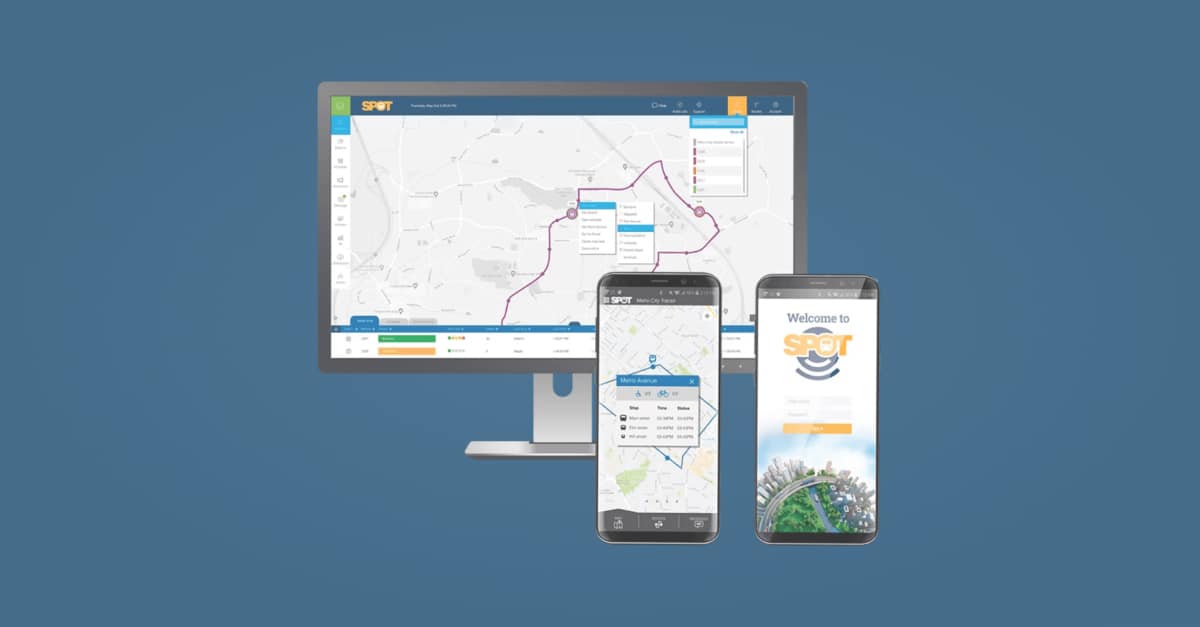
 SPOT: ETA’s Core Platform The SPOT™ ecosystem offers transit management solutions by providing a flexible, modular platform.
 SPOT: ETA’s Core Platform
  All Solutions
 CAD / AVL / GPS tracking
 Business intelligence
 Digital signs and kiosks
 Infotainment
 Automatic passenger counting
 Tally NTD Survey Software
 Tracking websites and apps
 Vehicle announcements
 All Integrations
 Demand-response and microtransit
 Fare collection
 Mobile video surveillance
 Pre-trip inspection
 Solar e-paper signage
 Vehicle health monitoring (AVM)
 Voice communication
 Transit
  All Industries
 Airport
 Campus
 Medical center
 Rail, streetcar & trolley
 Rental car
 Tourism & theme park
 Transit
 Case Studies
  Blog
Blog eBooks
 Wall of Love
 Careers
 Press
Press Events
 Support