Transit options should not be presented as Tinder does with people. You know, you’re not swiping left or right based on how transit looks. Stop Requested.
This is Stop Requested. by ETA Transit. I’m Christian. And I’m Levi. These are real conversations with the innovators, operators, and advocates driving improvements in public transportation.
Today, we’re talking about what it. takes to move projects from planning into implementation. Our guest is Hunter Abell, project manager and transit lead at Modern
Mobility Partners. Hunter began his career at LeeTran, spent four years at MARTA, and now works with transit agencies, cities, and state departments of transportation. across the country. We’ talk about why plans often stall without a clear internal champion, how agencies can involve the right stakeholders earlier, and why implementation. rarely goes exactly as expected.
Here’s our conversation with Hunter Abell. Welcome back to Stop Requested. Today, we have Hunter Abell, project manager and transit lead at Modern Mobility Partners, or MMP for short. Hunter, how are you today?
Doing all right. How about yourself, Levi? Man, I’m doing very well, and this is one that I’ve had on the calendar for a while.
Uh, I, you know, we worked together, and I’m sure we’re gonna get into some of those details a little bit later into the conversation. But, uh, y- it’s always a pleasure to talk to you, love to see what you’re up to, and I’m really excited to hear, you know, all the, the projects that you’ve been working with, uh, uh, as a part of Modern Mobility Partners. So you wanna get into it? Sure, let’s do it.
Okay, awesome. So i- for the folks who don’t know you, uh, like I do, uh, could you give an introduction to yourself and what it is that, you know, it means to be a, a transit lead at MMP?
Yeah. Thanks, Levi. Um, so let’s see. I am about inching closer towards that 10-year mark of experience now, which is a little scary. But, uh, started my career down in Fort Myers. As you mentioned, we were coworkers there at LeeTran, for about a year and a half, and then jumped over to MARTA, which is the primary transit operator here in the Atlanta region. Spent about four years there doing service planning, bus stop planning, GIS, you know, any emergency coming down from the executive
C-suite there, uh, that day. And then, uh, jumped over to Modern Mobility Partners, where I’m at now. Uh, coming up on four years there as well. Uh, and in that time, doing a lot of transportation planning, uh, projects with the state DOTs, Department of Transportations, uh, transit agencies, here in Atlanta, uh, and then elsewhere across the US. You know, we’ve got work in Denver right now with RTD. We’ve done some work in Nashville with WeGo.
Um, and you know, I have a passion in transit. I love working with cities, counties, DOTs whenever possible, but I think at the end of the day, I love coming back to transit. So the last couple years at MMP have been focused on some of the, uh, commuter bus networks here in Atlanta, and then more recently, just helped MARTA bring their, uh, network redesign across the finish line.
Which has to be pretty cool, right? You’re a, a former employee, and now you’re working for a consulting group, and you’re going back to work at MARTA, uh, you know, on a consulting basis. But still, you’re helping them, you know, with a, a project and trying to get it over the finish line.
Right. How are those experiences different? Yeah, I mean, I’ll say, uh, I tell a lot of the staff that I work with and anyone that’s in grad school thinking about what to do is it’s… I think it’s very rewarding working both in public and private sector. You know, learned a lot of things in the public sector about how the different mechanisms work and just kind of pushing through bureaucracy at some pain points there.
But then on the private side, you know, really being able to brainstorm ideas for clients and, you know, you’re, uh, very much under the gun a lot of times, and it, you know, teaches you to work with a team to bring ideas to clients and then continue to push that forward.
I’ll say for MARTA, um, this was actually the first project that I was working on directly since I left with them. I call it a bit of, like, a decompression period. Uh, but still catch up with everyone over there, but it was great to be back and, uh, help with the bus service changes that are literally right outside my apartment door here.
Uh, you know, that’s something that comes up quite often on the podcast, which is you’re planning or scheduling or, you know, operating perhaps the, the service that runs in your neighborhood, and there aren’t- Mm-hmm … too many, uh, you know, professions where you get to see the fruits of your labor, and it’s very evident for public transit. Um, and you know, you being right there in, in Atlanta, you all have a, a decent amount of transit. There, there’s a lot to experience and to plan for.
Uh, y- you know, your, your background is, uh, in geography, in economics.
I, um- Mm-hmm. What, what drove you to, uh, go towards public transit? What, what was that… Why was it such a light for you and such an attraction?
Lord. You know, honestly, it was kind of by accident that I fell into public transit, which I think is no different than a lot of the answers you’ll get from people that work in transit now.
Uh, you know, I knew when I was a kid that I was very interested in infrastructure, transportation projects, uh, just how cities, you know, move and evolve and how people get around.
But then I never really knew that I was in tune with transit. Uh, one of my first experiences I remember is usingUh, the bus in Louisville, Kentucky, uh, TARC,
Transit Authority River City. I went to undergrad there, and with your student ID, you got free, uh, you know, transit around the city. So I remember taking it from campus to go to downtown for events, et cetera. And that was really the first time I got exposed to transit. Uh, there’s not, you know, a ton of it in
Kentucky. And then, honestly, I just started kind of applying for jobs after undergrad and, you know, I think over time I’ve even fell more in love with transit just because of the way that it can efficiently move people around the city. It puts kind of everyone on the same playing field.
You know, it’s probably the least barriers to entry transportation mode that you can think of out there. It’s… And it gets you pretty much anywhere you need to go. Um, so that’s kinda how I just fell into it and then have stuck with it. Yeah, that, that’s good to hear. And, and that’s, uh, a very common journey, like you said, you know, people that are coming from, uh, not necessarily targeting, uh, public transportation industry as their career, but just falling in love with it and, and just, you know- Right … enjoying s- seeing, like, uh, Levi said, the fruit of their labor.
Mm-hmm. Um, you know, y- you had an opportunity to work with different transit agencies and, and I’m a little jealous because, you know, most of my transit career was working for one transit agency. And I, you know, I, I grew that institutional knowledge and, you know, different aspects of the transit operations, and I feel, uh, where I’m at right now, I, I get to learn a lot about other transit agencies. Uh, but, but you really had that experience of working with, like, smaller transit systems and then bigger- Mm-hmm … transit systems, and then seeing how, how it interacts with the community it serves. I, I wanna ask you, you know, when it comes to planning for projects, a- and then delivering the projects, right? And, and those two things you, um, would want to be very seamless. And, you know, a lot of times when you’re the pr- uh, doing the planning work, you only experience the planning, never the implementation. But, you know- Right … as somebody that, uh, have experienced both, and you’ve been in the planning stages of projects and actually the delivery, uh, where do you think, uh, things most often break between those two phases, the planning and the delivery?
Yeah. I mean, I think, so, you know, the general process it seems to be is, you know, someone has sort of a beginning vision or objective or may- you know, there’s a problem that’s come up that planning is trying to address. And, you know, you can do a 12, 18-month study to kind of figure out, build consensus rather on the solution there, and, uh, just kinda understand the different factors that are going on and get opinions from different stakeholders. You know, if you’re working with one agency, maybe it’s across the different departments, and then you go out and talk to jurisdictions and the public and whatnot. But I think, you know, once that process is done, it’s kind of a what’s next? And that seems to be where the break most often occurs, is the transition from planning to implementation. And I think one of the key things that gets lost sometimes is making sure that you have, like, a visible and almost outspoken champion, for whatever, you know, objective, goal, or solution that you’re bringing forward, ideally from planning to implementation. If there’s not some sort of internal, uh, voice within the agency or on a team somewhere that’s kinda making sure that that ball gets going from planning to implementation, then it gets dropped. And then ultimately that’s, I think, the planner’s worst nightmare is, you know, something that gets sat on a shelf, and we all talk about, we’re not gonna make a plan that sits on a shelf for a decade. But I think, you know, halfway through that planning process, you should be looking at who’s your champion for taking this to the next step, ’cause otherwise it is gonna end up on a shelf, sadly. So I think that’s one of the big things where I see, particularly within an agency, is making sure you have that champion, and it can be in planning, it can be in engineering, wherever it might be, but someone that’s gonna carry this through that’s, you know, absolutely in love with the project, the process, the objectives to make sure that they are there from day one start to finish.
Yeah, that, that’s a great point. And, and unfortunately, uh, you know, uh, planners, you know, transportation planners, they, they, they would agree with you, where a lot of these plans, they end up sitting on a shelf. And, and- Mm-hmm … there’s plans that are made just for, to be compliant because you’re supposed to have a plan, but then there’s no commitment around it. Like, there’s not- Right … you know somebody, like you said, that is championing, uh, at a specific project and saying, “Hey, we’re gonna take it to the, to, to the end goal.” Uh, so, you know, thank you for that, uh, suggestion. I mean, those folks have to be involved early- Mm-hmm … and be part of that planning. So it’s just not planning. It becomes action as well.
Um, you know- Yeah … let, let me ask you, what are some of the things planners consistently underestimate about the implementation piece? And, and, and I think that could be part of why that implementation fails, right? Like, sometimes in the- Right … planning world, everything is perfect. You know, like you look at the spreadsheets, you look at the data, and then you create a plan that on paper seems to be perfect, but it may be, you know, there’s stuff that we’re underestimating, uh, when it comes to the implementation. Can, can you think about something that planners are underestimating?
Yeah. Let me think here. I would probably run with, I’m gonna give you, like, a more general, um, answer here’ and then go more in depth into what I mean.
So yeah, I would say, you know, external factors and a couple things come to mind there. One is both within the agency itself, so maybe there’s a department that you just either forgot to involve or just wasn’t relevant to have in the study at the time. Those sort of departments, maybe it’s legal or communications or someone, if you get 90% of the way done with your planning and you haven’t involved these other departments and all of a sudden they’ve got a fatal flaw, then that can really slow you down and eat away a lot of time.
Um, I’d also say that, uh, you know, in being sure to involve the public early in either planning or implementation,
I think a lot of planners know this, um, but you know, there’s a lot of different groups and people that you just may not think of while you’re doing your planning process. And then all of a sudden you get out to implementation and you’ve got people that have never heard of what you’re working on, um, you know, you didn’t think about when you were doing your study, that now all of a sudden have these issues that are arising and you’ve got some unintended consequences that came out of those decisions.
And so I think, you know, some of that can get underestimated in implementation and trying to think if there’s any solutions there, if I’ve cracked that yet. But honestly, involving, you know, people from very different backgrounds, um, trades and whatnot, can really help open your eye on the planning front to make sure that you’ve covered your bases as much as possible.
But then also, I sound like I’m rambling a little, I’m just kinda like jogging my memory on all the things in implementation, but um, I would also think about, you know, come to, come to terms with that you’re gonna miss things as you go into implementation.
You know, make a backup plan, be okay with not having everything 100% right ’cause things will go wrong on day, one, and it’s really about how you’re gonna overcome that or how have you planned ahead to, you know, any possible scenario that might come up, you know, day? one, day three, day
30 of implementation. Yeah. And, and that’s part of the planning, you know, process, right? Like, it, it- Right. … it’s not a perfect process and like you said, there’s things that are unforeseen. Like, you know, you, you’re trying to catch everything that you could ever think of- Mm-hmm … and then have all the data. But you could also, you, you, uh, also have to be mindful that because it’s not perfect and there might be something that you’re not keeping in mind, uh, that should not be holding you back from, you know, making some progress because then you’re not gonna do anything. You’re gonna keep thinking about what else and what else, and then you’re not gonna make any progress. So I? really like what you said, you, you have to- Right … come to that realization and then be okay that, uh, with the fact that you might end up missing something. Mm-hmm. But something that, uh, it’s been very, uh, like a recurring statement, uh, by some of our guests here on the show, is that you have to involve the community. They, the community- Right … involved, make plans, any plan, a community plan, it really increases, uh, exponentially the chances of succeeding with any project or initiative. Just getting the, the community behind it, uh, it’s very important. I,
I’ was gonna ask you- Yeah, and I mean, those are, like getting the community behind and getting their input, that’s a key data point that you can show to decision makers and board members, executive team, particularly holding onto that data as you get into implementation. Because you know, when you start to implement things, of course you’re gonna get the people that said that, you know, this is the first time they’ve heard about it or they may not agree with what’s going on. But if you have that data that you’ve, you know, through your planning process that you’ve built as sort of a backup of wealth of information, then that’s really valuable to have on hand during that first iteration of implementation to say, “Well, here’s what we heard. Here’s the data. Here’s how we inform these decisions.”
That kinda gives some ground for, you know, your elected officials and board members to stand on when they may get pushback from some of the implementation, too.
This episode is brought to you by ETA Transit. Too many agencies are still operating critical transit systems on legacy software that is costly to maintain and difficult to evolve.
ETA Transit offers a clean break. As a fully web-based CAD/AVL platform, ETA replaces closed aging systems with an open architecture designed for real world operations. It integrates with what you already have and delivers a clear map first command center your staff can trust on day one.
Modern CAD/AVL without the baggage. Visit etatransit.com. Uh, and Hunter, what does that feedback look like for you? Or what is an ideal, uh, set of, you know, documents or comments from the public? Yeah,
I mean, so I’ll give you an example. Uh, we’re working, or well, we just wrapped up a, uh, network redesign for the express commuter bus service here in the Atlanta region, and that service redesign was all about reorienting the service based on post-pandemic trends. Uh, and so one thing we did as part of that redesign in the planning effort was we did a, uh, customer satisfaction survey, and in that survey we asked some questions that, uh, would help us kind of inform how we would rework the network. So a couple, so, um, you know, the commuter service right now, is primarily, uh-Origin originating at park and rides and then ending in downtown Midtown Atlanta.
So it’s taking people from the suburban areas into where there’s a high concentration of jobs typically in the middle of the city there. And a couple questions that we ask customers is, you, know, how far would you’ be willing to, drive to another park and ride maybe? So if, uh, the, park and ride they were using was maybe underutilized, would they be willing to drive five, ten minutes, um, from their current one to another park and ride to continue to use the express commuter bus services?
Uh, and another question we asked was, would you’ be willing to transfer to another regional service? So would you be willing to transfer to MARTA at a train station? And that ultimately helped us inform some. of the decisions about, you, know, whether we closed park and rides, uh, reassigned riders to different areas, uh, ending some routes or connecting some routes at MARTA stations so that, people can access
MARTA more quickly, uh, rather than hang on the bus until they get to downtown Atlanta. And so some of those survey responses were really helpful in our presentation to the board at the time on why we made these service recommendations. And then, you know, we leaned in on that, um, throughout the planning process, throughout public input and said, “Here’s what we heard through the survey.” Uh, and we had a, you know, set of PowerPoint slides and an executive summary for that, that board members, you know, could review and understood when they approved the plan and got through implementation that way. Yeah, um, that’s good to know, and that makes a lot of sense. I’m, I’m curious if, uh, h- or how you communicated those trade-offs to the public, and w- what I mean by that is, uh, we recently, uh, had on Andrew DeGarmo from APQ Ride on the podcast and, and he said that when they first went out with Jarrett Walker and Associates and surveyed, they said, w- they asked the public,
“Would you be willing to walk farther?” Right? And that farther is ambiguous. Uh, eh, but, when they kinda drilled down into that, asked follow-up questions, and then really showed them what farther meant, some folks were less inclined to say, “Hey, I’m, I’m not walking half, a mile to my bus stop just so I can get faster service.” So how, how do you present those trade-offs in a way where you get honest feedback from people that’s, that’s actionable? Yeah, that’s a really good question.
Um, I will… What first comes to mind is one of my old coworkers at MARTA, uh, this is, uh, this is gonna sound like a odd comparison here, but we were talking about, you know, different transit modes and presenting those to the public. He kind of told it in this way. If you’re… You need to be, uh, rather, transit options should not be presented as Tinder does with people. You know, you’re not swiping left or right based on. how transit looks.
You know, everyone would swipe right on probably a train and maybe less inclined on other modes and whatnot, but treat it more as a eHarmony matching service, where you’re asking questions about, well, how are you gonna use the service? Where are you going? How often? And kind of matching the service mode and type more to how people are expressing how they travel or how they wish to travel at least, rather than just giving them a picture of, oh yeah, this looks great, or no,
I don’t want that one because, you know, some other preconceived notions. So we did our best in that survey to kind of format the questions in understanding how people’s travel, you know, habits and preferred travel patterns would be. Um, I’ll say that, you know, due to the nature of that project, we had about nine, 10 months to get that from planning, to implementation. So that survey was really our sole source for understanding the sentiment, at least, from how people would travel. Of course, there, was a lot of data, you know, um, where trips are coming from and to throughout the region that informed a lot of the decisions as well. But, um, ultimately, what we did find, uh, through that survey and then, post-implementation is people were a lot more… Well, people indicated they were far less inclined to, you know, for example, drive further than they actually did in the end, and maybe that speaks to some other external factors, you know, reliance on the transit, or maybe they didn’t have as many o- other options available. But what we ultimately found is that people were, while they said they were less willing to, you know, maybe drive further to another park and ride, for example, at the end of the day, post-implementation, we found that a good percentage, much higher percentage of people did in fact end up, you know, doing the opposite of what they said on the survey. So, um, I guess it’s good to have data, but understand that it’s not a perfect solution, and it’s not gonna be the end-all at the end of the day. So Hunter, uh, you’re talking about the, the alternatives and the matching, right? Like it’s not, you know, somebody selecting rail or selecting bus. It’s more like understanding what are their mobility needs- Right … and then what are the trade, trade-offs to be made. So when it comes to creating alternatives and recommendations for folks to choose, you know, uh, from, w- what makes a good alternative? What’s, what’s…
When you’re the a- analyzing recommendations, right, like there is a thousand ways that things could be changed, uh, but what, what makes a good alternative to present for, you know, your stakeholders to consider?
Yeah. Uh, you know, I think I’m gonna jump back to your earlier question about, um, you know, where do planners underestimate implementation and where do things break between phases? Because
I think what makes a good alternative, or at least what helps develop a good alternative, is for an agency or, you know, a, a county, city, municipality to have some sort of overarching goal or objective that they’ve established long before we’ve started to think about alternatives.
Uh, you know, if, if we have some sort of end game goal, um, that people, either the executive team or elected officials or governing body has laid out, that ultimately helps develop a good alternative much, uh, more efficiently and quickly.
Uh, you know, I think one of the, one of the things that on the consultant side that we, uh, have to, that is a challenge at least sometimes, is being brought in before that has been established.
Um, or, you know, I’m certainly happy to help that. But without some sort of objective or goal or driving horizon, it’s really difficult to understand, you know, what’s success at the end of the day.
Uh, so being able to define what success is and have some sort of achievable, you know, realistic goal is really what helps make a good alternative. We can do all sorts of, you know, data review and pull. There’s a wealth of data out there that you can pull from and, you know, we can get public input and stakeholder input, but we really need at the end of the day define what the goal is. Uh, and I find myself in projects so often going back to, uh, you know, the project management plan. That’s something I love to set up at the very beginning. It’s probably, if not during the kickoff meeting, it’s the second meeting after that where we’re deciding why are we all meeting here today? What are we doing in this room and what are we trying to achieve? So at the end of the day, I think, you know, that is what preempts a good alternative, and that’s what I would lead off with. Yeah, I love that. I mean, it, it has to be goal driven.
Mm-hmm. And, and, you know, what are we trying to do here? It, it just makes me, think about, like, service planning, also, right? Right. Like, some changes have to do with improving on time performance. Some changes have to do with improving access to service. You know, maybe there’s an employer that requires people to come to work very early in the morning, and people are not able to get to those jobs or use the transit system because you don’t have any service at that time. Right. So, so it has to be that alternative of that change, that trade-off, right? Like, where you put in resources and focusing on has to be aligned with the goals. Like, what are the goals- Right … that we’re trying to achieve here? And then as you’re bringing those f- in front of people for their decision a- and, and their mobility needs and, and their reaction to it- Mm-hmm … eh, you know, to get their feedback, it’s first aligning with those internal goals that you have. I, I love that. I love that answer. I 100% agree with that.
Um, let, let, let’s- Yeah, I mean, it can be, it could be a fun goal, like expanding transit access or you’ve got a new employer. It could be a not so fun goal, like you’ve got a budget constraint that you have to meet now.
But either way, you know, that there’s that driving, um, force that you’ve now, recognized, and that’s kind of what you’re working towards at the end of the day. Yeah, and especially when it comes to service cuts or, or those difficult decisions,
I mean, it, it, it has to be a surgical decision, right? Right. Like, it has to be… You, you have to be very careful because everything that we’ do, we’re trying to benefit the most and we’ wanna try to impact the least, right? Mm-hmm. Like, to serve the most people in the communi- in the community the best way we can. Um, so, so you mentioned budget, uh, which a lot of the times is a big constraint.
Eh, you know, how much of these decisions have to do with data-driven decisions versus, like, some of those constraints?
Yeah, I mean, I think, you know, if I were to rank those in sort of like driving forces, uh, you know, where the out- the reality of today is the budget is probably the one that comes first. So you’ve got, you know, a, a operating budget that you can’t exceed. Maybe it’s increased lately or maybe it’s decreased lately. That ultimately sets kind of, uh, some guardrails on what you’re working towards. You know, maybe you’ve got a budget of $100 million, and ultimately that is the pot that you get to work with. And then from there, you know, I think best planning practices and performance-based planning practices tells you that that’s when you can start to bring in the data that you want. So you’ve got $100 million to spend. Well, let’s outline some sort of data criteria, and before we even start pulling that, let’s get buy-in from different stakeholders and, um, the public or decision-makers at the agency and to say, “Are these the criteria that you really want us to focus on?”
Uh, you know, for example, here in Georgia, one of the things that we look at from the DOT perspective is, uh, the benefits of projects for freight movement, for example. So that’s been one benefit that we’ve learned, uh, through working with the DOT that they value, and so we work that into our criteria. Maybe a different agency has a different benefit or goal that they wanna look at, um, but then you can start to kind of pull the data that you want to use with that.
So for example, if I’m looking at freight benefits, maybe I’m looking at the total hours of delay that I achieve for commercial vehicles through this project, or maybe the crashes reduced for commercial vehicles.Uh, if I’m working with a transit. agency, maybe their, their goal is to increase employment access for, um, you know, for the region, and then you can start to kind of identify data that will help that. Uh, for example, we’re working on a project, uh, right now where we’ve got a major employer moved into the region, and they’re, you know, needing to hire a significant number of people. And so some of the data that we’re using to inform those decisions is, you know, well, what’s the demographic of the people that you typically hire? What’s the income and education age, uh, and age for those? Well, let’s find out where they live in the region. How can we best kinda lay out this transit. service to serve those communities so that we can increase access for employment opportunities there? I like how you’re connecting…
You, you first, uh, spoke about the goals. Mm-hmm. Like, what are we trying to achieve here? And then now you’re connecting the data to those goals from those stakeholders, right? Like, if you have- Right … all these stakeholders, you’re gonna need their, buy-in with the project.
Then, you’ know, first is. setting up those goals along with them. Like, what is that that we wanna achieve? Oh, this is important for me. This needs to be budget neutral. Oh, we need to see- Right. … that improvement on this. This, this will be very important if it has this positive impact in this factor that is important to me. Then when it comes to data, then you’re looking at the data that is connected with those, uh, factors, with those goals, so you can also show the value, right? Like, the best way to sell- Right … a project is you told me that X thing is very important, and this is how we’re improving
X. Then- Yes … then you’re almost, like, they, they cannot say, no. Like, that’s addressing what they said it was important to them. So I, I like that, that connection between, you know, project goals and also the data that you’re evaluating.
On, on that, um- And Christian, I, I love the way you- Uh-huh … framed that. Like, you told me X, so let me tell you why, how, the why, and what we’re doing.
And I try to instill this to all the planners on our team, and, uh, you know, anyone that I work with is it’s. better to go ahead and, you know, develop a methodology or show outcomes and get someone’s reaction out of it’ than to ask them, you know, “Well, what’s important to you?” I think a lot of times if you ask too much of an open-ended question, you’re either not gonna get an answer or not the answer you’re looking for. If I show something to a client and it is totally wrong, and it, and I’m just way off base, at least I got an answer for what they’re not looking for at the end of the day, and I can go back and say, “All right. We heard what you weren’t looking for. Let’s try this way instead.” Uh, you know, ’cause we’re trying to keep things moving forward, especially on the consultant side. So having something for someone to react to, I would always recommend, even if it’s not e- you know, not what they’re looking for. It’s a better outcome than none at all, I suppose.
So a- a- as planners, we tend to be very idealistic. Mm-hmm. Right? A- a- and we, we wanna make things better. You know, we, we’re looking at a problem or a situation, and then helping come up with a way to overcome it and, and make things better. H- how do you balance that ideal solution utopia versus what’s actually feasible?
Yeah, that’s a great question. Um, I’ll say, you know, it… I don’t wanna sound pessimistic here, but I could tell when I was in grad school from the beginning, you know, having worked four years in the planning field, I could already see a bit of a difference between where my mindset was coming from and, say, someone coming straight out of undergrad, for example.
You know, I could already see some of the decision-making and the parameters that, and realities that, you know, agencies and municipalities have to work with, and that kind of reined in my utopianism view on things, um, in a way. You know, really just setting, okay, what is a realistic goal here? And I think that goes back to what we were talking about, you know, don’t let perfect get in the way of good.
Um, and, you know, if you get 85% of the way there or 90%, how much effort is that remaining 10 or 15% actually gonna take? And is it, is it worth pursuing? Is it feasible? Have you kinda spent all of the, uh, you know, data and political currency that your project has? And at the end of the day, if you achieve that goal, then I call it a success. Yeah, I think that’s really well said there,
Hunter. Y- so you spent four years now, with Modern Mobility Partners and, and doing this type of work, helping, you know, agencies, uh, like Marta, uh, like DOTs, uh, I’m sure you know, plenty of cities and, and, counties, uh, you know, in the region, uh, maybe across the country even.
W- in, in your experience, how, how do agencies go about this the, the right way? In other words, when they’re bringing in someone like a Modern Mobility Partners, um, i- is there a, a particular frame of mind that they should have when bringing in an outside consultant that would help make the partnership stronger? Yeah. I mean, one thing that I would say i- is kind of,
I’ll say one challenge that we face a lot, uh, particularly on the, you know, the outside looking in, is the decision-making structure sometimes. You know, not having that laid out in black and white or somewhere within the organization.
Uh, you know, we work with a lot of different departments, a lot of different teams and staff in the agency.And if there’s not a clear setup of where decisions might occur, then that’s what typically, you know, can draw out projects or, uh, kind of,
I think almost going back to that finding the champion within a project. Who’s gonna make the decision? Who’s gonna carry this forward? Who’s gonna bring this to the top for, uh, the decision-makers in the agency?
And so having that structure and framework laid out, I think, is really important as you bring in outside support. Um, and so who’s gonna make the decisions, and who’s gonna sign off on things?
And that can really make or break a project and a schedule, um, real fast. Yeah, that also makes a lot of sense. Uh, yeah, I,
I think that when you’re, coming in as an outsider, uh, like a, a consultant typically is, you don’t have a lot of familiarity with who to go to, uh, when there– you need an exact answer from somebody. It’s sort of a yes or no- Right … type, you know, binary, can we pursue this or, or not? Uh, if you don’t have that chain of command, if you don’t know, who to go to, then you’re kind of left just stuck, right? Right. There, there’s not r- there’s not really a place for you to go.
Uh, you’re waiting on the agency to make a decision, so I’m sure that can really slow down projects and make it a lot less efficient.
Right. Exactly. Uh, where do you think consultants add the most value, uh, to these, to these projects?
Um, y- you know, I imagine that with your experience working inside of MARTA, and now, uh, you know, outside and kinda looking in, there’s a lot of, value there, but there, are- Right … I’m sure plenty of agencies that you have not worked with, uh, that you’re now, the consultant for. So w- where do you’ feel like you add a lot of value? Yeah, I feel like I get asked this question during interviews with clients all the, time, and ask myself in my head about this too. But, you know, one of the first things that comes to mind is just the, the nature of our work has us working with multiple agencies at multiple times, maybe solving the same problems, objectives, maybe a totally different problem objective. And I can’t tell you the number of times that we’re working on something for one agency, and it’s– we just have this aha moment for something else that we’re working on for a totally different agency, and crossing those skills or, you know, lessons learned from one to another, being able to share the, the best practices, I’ll say, across the different agencies there. Um, uh, another thing is just being able to provide, what I’ve done a lot recently, honestly, is being able to provide the on-the-spot support for agencies. Uh, having been in the government side, you know, I know, that hiring sometimes can just take forever.
It can feel like forever, at least, to be able to hire people for your team. Um, and so, you know, there’s plenty of examples where we’re pretty much providing on-call support for agencies ’cause they’ve got things that have come up, and they need it within a few weeks. And so we’re there to be able to just provide that on-the-spot support for agencies that, you know, maybe they don’t need it long term, but maybe it’s a project that’s come up for the next six months. And so we can kind of pivot and offer that additional capacity that might, you know, be more inefficient for the agency to have to go and hire and go through all the steps to have that person there ready for that project. Yeah, it certainly doesn’t hurt to have an extra set of hands. And- Right
… uh, uh, as you know, and said- … uh, agencies take a while to do things sometimes, and sometimes that’s intentional. Other times it’s just- Right
… you know, bureaucracy and red tape. But- Right … having a third party to come in and assist, uh, can be really beneficial when you’re in a crunch and you’re, you’re just trying to you’re trying everything you can, you can to, uh, get a project over the finish line.
So, um, yeah. Yeah, and I mean, the number of times I’ve sat and stared at a project or. a problem, and then the second I go and ask someone else for a second opinion, I’m like, “Oh my God, why did I not think of that?” That,
I think that’s what, we’re kinda here to, do for, or to do for clients as well. Yeah, another great point. Uh, sometimes you need the sounding board or just some-
Exactly … some other set of eyes, someone that’s not you- … to look at, the problem and, and tell- Yeah … you, like, “Hey, what am, what am, what am I missing here?” You know?
Mm-hmm. Is there, is there something that. is just buried in this, or I’m too close to it? You know, it’s the can’t see the forest for the trees. Um, you- E- exactly
… you know, if you’re in the middle of it, it, it is really hard to gain the perspective that, like, the, uh, an outsider can, can give you. So- Yes … yeah, I really love those examples you gave.
Uh, you know, it sounds like based on? the work that you were doing for the express routes, you know, from the park and rides into downtown Atlanta, uh, that it, those projects are probably due to underutilization due to
COVID, right? Uh- Yeah … uh, I would think anyway. If I had to make an assumption, it’s b- it’s because that there are fewer people going into downtown because more people are hybrid or working from home.
Yeah. How else are you seeing agencies adapt to a post-COVID world? Yeah, that’s a good question. Um, so one thing that I’ve seen, you know, directly with one of the agencies working here in Atlanta is that the customer base for some of these transit, services has totally shifted.
Um, give you’ an example, the express, um, services that are in the Atlanta region, those have largely catered more towards the nine-to-five office jobs that are in downtown Atlanta, and that’s typically when the service operates today. Um-You know, there’s actually a surprising proportion of those riders that are students, that are college students at some of the universities in the middle of town, um, which was kind of a pretty cool thing to learn.
Uh, but a lot of the transit service that we’re seeing in agencies I’m working with are really pivoting to focus more on where in-person employment is occurring throughout, uh, you know, the region or the metro, uh, where jobs that have historically always been, you know, requiring people to be in an office or in a workspace somewhere in person four or five days a week. ‘Cause when we’re talking about transit demand, you know, yes, it’s great to be able to be there for special events. You know, we’ve got the World Cup coming to Atlanta pretty soon, but where is the consistent transit demand? Where is someone gonna be using that service four or five days a week? That’s where your, your, you know, best return on investment is gonna occur. So that’s one way that we’ve seen, you know, particularly transit agencies pivot based on overall demand in a post-COVID world. From a project delivery standpoint, uh, you know, there’s…
And going back to data-driven decisions, there’s definitely been a pivot from the types of data that we can use and what’s available. There for the first few years after COVID, you know, there wasn’t, uh, you know, all the travel demand models and historical travel patterns were just chaotic and just inaccurate because COVID totally changed how people moved around the region, when and where and why.
And so we’ve had to adapt to different other, you know, different data sources, um, to be able to drive those decisions, um, and, you know, really lean on innovative planners, those fresh out of grad school, to come up with new ideas for how to, you know, estimate demand and fill out some, the service alternatives matrix, for example. So. Uh, that, that sounds really cool. And, and we have some, uh, folks that have joined our podcast that, that also refer to the same, right? Like, the impact, uh, in the world of, of COV- like, post-COVID, right? Like, how are- Right … agencies adapting, and how the mobility patterns and, and demand for transportation is changing and shifting and, and less of the, you know, traditional
8:00 to 5:00 and, and, you know, a lot of service in the morning peak and the PM peak, people returning home, to more consistent service throughout the day. There’s people that are- Right … hybrid.
And like you said, you know, like that, uh, origin and destination analysis, like where are these employers that are working remotely, and before used to be, uh, in the office, and people not ride it anymore, and which ones are the employers that are, you know, in person only? Mm-hmm. You know, because those people, they don’t get to telework. Like, if you have to be in person, you have to be, and those tend to be, you know, your more steady riders.
Right. So how, after this post-COVID, you’re aligning your services with, with those transportation demands. Uh, that, that’s definitely good, good conversation there. Uh, Hunter, we’re, we’re coming towards the tail end of our conversation. Thank you for sharing all those insights and your perspective, both as a consultant, kinda like private sector, and, and from the public side, uh, as you were in an agency working with developing, you know, service plans and, and projects.
Um, as we’re coming to the tail end of our podcast, uh, we have this segment that is our rapid fire segment. I’m gonna be asking you- Boy … some, uh, short questions, uh, for, you know, rapid answer.
Uh, are you ready for it? All right, let’s do it. We’ll see how well I can answer here. All righty. So our first question is, what’s your favorite transit system? Ooh, okay. I would say outside the US, uh, the favorite one I’ve experienced personally would be Copenhagen. The, the scale of automation in their metro system is just, it’s impressive, and it wowed me the entire time
I was there. Within the US, I’d have to probably say Minneapolis Metro. Uh, you know, they’re, uh, they’re not the biggest transit system in the US, but they have just been so innovative, and
I’m telling you, I’m envious every day I read about another new rapid arterial line or a new service opening in Minneapolis. I think they’ve just been fantastic about going from planning to implementation in a short amount of time and very efficiently, at least from an outsider’s view. Wow. Yeah. For me, it’s been Cap Metro, like with the innovation and like- Mm-hmm … I, I have not really checked out
Minneapolis b- or Copenhagen, but I’m gonna add ’em both to my list. Thank you for sharing that. Um, my next question is a project you’re most proud of and why.
All right. So I would say it’s, it’s gonna be less project, um, driven, but more of just a m- the minor service change that I could think of. Back when I was at MARTA, we had a, um, huge distribution center open, uh, on the west side of town, and it employs thousands of people, and we had to… It was just kind of a puzzle, you know, figuring out how to serve this distribution center with the appropriate amount of service. ‘Cause I’ll tell you, when we first put the route out there, there was a bus coming every 60 minutes, and it was just getting slammed at shift changes, you know. We’re talking hundreds of people trying to board a bus that can maybe fit, you know, 60, 70 when you include standees. And so we did some reworking of the network right within that area, and, um, ended up with bus service every 30 minutes to that area, and then-Actually, what’s hilarious about the whole thing is, so as part of the MARTA Next Gen network redesign, I was out at the, um, one of the rail stations that connects directly to this bus route, and I got to see, you know, in real time everyone that was going out to this distribution center, and it, it just was, like, full circle for me to be able to see that still occurring throughout the network redesign and four years later. Wow. Yeah. A- as a planner, that, that’s the most fulfilling moment, right? Right. When you see what you worked on serving the pu- public. They’re not gonna know. Like, all those people riding, they don’t know, that, that you had something to do with it. Right. But you know, what you did and, and the impact you’re having on their lives. That, that, that’s a really cool answer.
Uh, my next question is most, uh, misunderstood part of transit. planning? Ooh.
Let’s think. I’m gonna probably give you a more operations-focused answer there, in that I think it’s, it’s easy to draw lines on a map, but when you go out there into the field and start testing with buses and figuring out all the geometric, and I’ll tell you, roadway constraints is probably the biggest hurdle when you’re talking about transit service planning. And navigating a 40, 50-foot transit bus through anywhere in the city, especially a city. that is, you know, older with very tight roads, that is probably the one thing that’s gonna trip you up the most is just where can you drive the bus on the street, and where can you not, make a turn? Where’s a railroad crossing, a height clearance issue?
It’s, it probably is the one thing that drives me nuts still when doing service planning. I agree. I agree. I couldn’t agree more. Uh, one piece of advice for someone early in their career trying to break into public transit.
Yeah. I will… So thinking back to my start in public transit, you know, I had the great opportunity to work with Levi at LeeTran down in Lee County,
Florida, and I’ll say that was probably one of the most rewarding early, uh, environments in my career.
I say that because it was a smaller agency, and, you know, at a smaller agency you have far fewer decision-makers and fewer layers that you have to get through, and so you kinda see everything all at once. You know, at LeeTran, you’re doing all the NTD reporting, all the bus stop planning, the route planning, everything under the sun. You’re just kinda getting thrown into it all. So I would say, you know, as early in your career, you know, don’t say no to different projects, as boring as they might seem. That experience will definitely come back around down the road. And try to, you know, learn as many skills as you can early in the career because you’ll find that as you get older, it’s far less opportunities to learn skills, let alone be able to practice them still. Um, so definitely keep that in mind early in the career. That’s a great piece of advice. I, I really like that one. Uh, if you weren’t in transit, what would you be doing? Oh, let’s see. You know, I’ve wondered that before. I’m like,
“What would I do if I was not in consulting and not in transportation planning?” ‘Cause, uh, you know, this is my life at this point, and I really enjoy it, and I’m glad that I fell into the path that I did. I would say, this is gonna sound crazy left field nerdy, but there’s something nostalgic about just doing gardening work and going and mowing lawns and landscaping. So honestly, maybe that’s my future retirement job.
All, all right. I was not expecting a landscape architect or landscaper. To pop out of the transit planning world. Yeah, that one, that one caught me off guard. That is good to know. That’s why we ask the questions- … Hunter, so we can get answers like that. Well- So think about that, future employers out there.
Exactly. Exactly. Uh, well, you know, Hunter, this, this has been, as it always is, a, an excellent conversation. Um, you know, really appreciate you coming on, spending an hour with us, and, you know, sharing your insights.
Another reoccurring segment that we have here on Stop Requested is the key takeaways, uh, and I’m just going to give you a few that I, uh, made notes on during our conversation today. You let me know, if I got any of these wrong or if you would add anything. Uh, but number one is the planning to operations breakdown often occurs when there’s no internal champion, so you wanna make sure that you have that person that’s very vocal and outspoken about the project or initiative.
Uh, you always gotta think of your internal and your external, uh, stakeholders. Make sure that all those departments that are embedded within your organization are included early on, not late in the game.
Um, one of my favorites, uh, from our conversation today is your example about, uh, Tinder and Match.com. I, I think that was really great. You said that was a colleague at MARTA that came up with that.
That was superb. It, it was. He’s still there too, yeah. Yeah, that, that’s excellent. Who is it? We should give a shout-out to that person. You need to reach out to Andy McBurney I think. What is his title now? I think he’s Manager of Service Planning over at MARTA now.
Okay. Excellent. Well, we gotta give him credit for that because that- … that is so good. Uh- Yeah … always start with a goal.
Uh, and if you’re gonna bring out, bring on a consultant, uh, to help you, uh, then, make sure that you share what that decision hierarchy is within your organization.
Uh, and, then finally, exposure, right? If you’re an early entrant into the field. of public transportation or, uh, you know, transportation generally, even broader than that, uh, just be exposed to a lot of different areas. It’ helps. Right. Even though you might think that, “Oh, I’m stuck here. in this small agency,” it’ does benefit you because- Yeah, … you get to see a lot of the organization and, what everyone does, and you’re, you’re in a smaller organization, but you wear more hats. Yeah. Did I miss anything? No, I think you got it all. You know,
I, I mean, transit planning is just, it’s so much fun, and I enjoy the work and love it, and definitely encourage anyone that’s, interested to reach out, and, um, we’re hiring at Modern Mobility Partners right now. So if you’re interested, you can find me on LinkedIn and, hit me up and shoot me a message and a resume. Excellent. What, uh, can you tell our audience what positions you are hiring for?
Yeah. We’re hiring probably for three or. four positions right now, so we’re definitely looking for applicants. Uh, but, you know, anyone that is in transportation planning, transportation engineering, uh, those that are interested in tool development.
So one thing we’re finding that’s pretty popular right now, is being able to develop tools that agencies can use, for prioritization or cost estimation.
So, you know, if you have an interest in any of those topics, please feel free to reach out. Excellent. Well, again, thank you so much, Hunter, for joining us on
Stop Requested. And also, big thank you to our audience who tune in every week. We’ll be back next Monday with another episode of
Stop Requested.

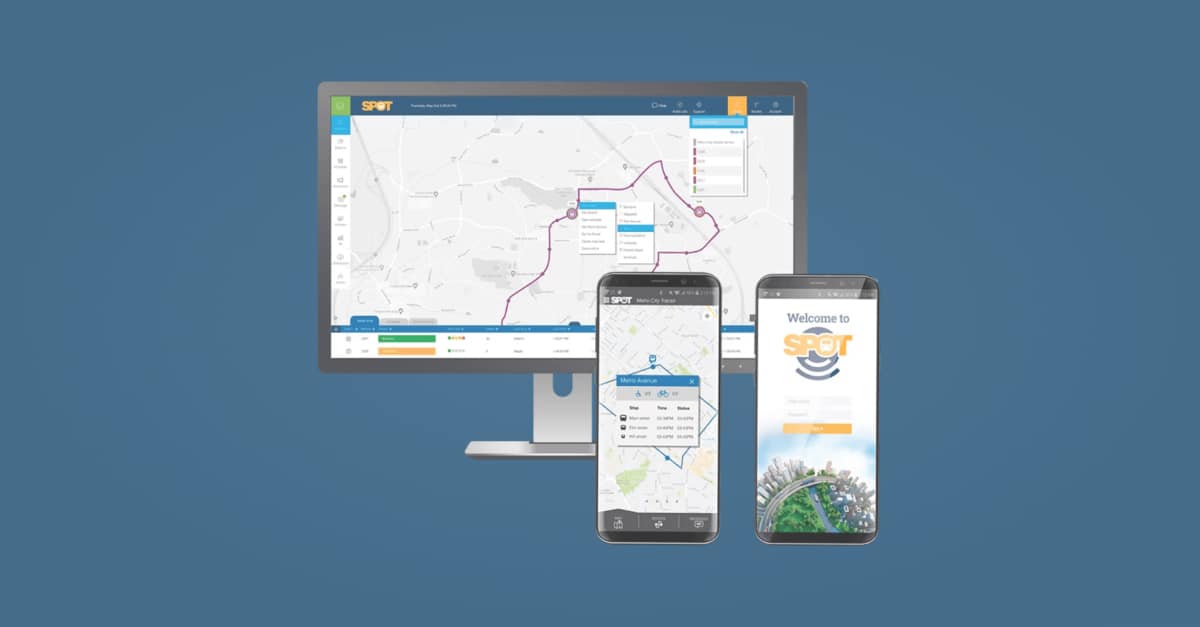
 SPOT: ETA’s Core Platform The SPOT™ ecosystem offers transit management solutions by providing a flexible, modular platform.
 SPOT: ETA’s Core Platform
  All Solutions
 CAD / AVL / GPS tracking
 Business intelligence
 Digital signs and kiosks
 Infotainment
 Automatic passenger counting
 Tally NTD Survey Software
 Tracking websites and apps
 Vehicle announcements
 All Integrations
 Demand-response and microtransit
 Fare collection
 Mobile video surveillance
 Pre-trip inspection
 Solar e-paper signage
 Vehicle health monitoring (AVM)
 Voice communication
 Transit
  All Industries
 Airport
 Campus
 Medical center
 Rail, streetcar & trolley
 Rental car
 Tourism & theme park
 Transit
 Case Studies
  Blog
Blog eBooks
 Wall of Love
 Careers
 Press
Press Events
 Support