I think data, where data, is the most helpful is not so much for like formulation of a hypothesis, but for validation.
Stop Requested. This is Stop Requested. by ETA Transit. I’m Christian. And I’m Levi. These are real conversations with the innovators, operators, and advocates driving improvements in public transportation.
Today, we’re taking a closer look at how transit. service actually comes together. Our guest is James Drake, Senior Manager of Service Planning at Sacramento Regional Transit, where he spent over two decades shaping bus, light rail, and microtransit service. We’ talk about how service planning works in practice, from building ridership data systems early in his career to leading major service changes at network redesigns.
James also shares how planners balance ridership and coverage, why data is more useful for validation than direction, and what it takes to translate plans into service that actually works for riders.
Here’s our conversation with James Drake. Welcome back to Stop Requested. Today, we have James Drake, who is the Senior Manager of Service Planning at Sacramento Regional
Transit, or SacRT. James, how are you today? Hey, Levi. I’m great. Um, thank you so much for having me. I’m really excited. And hello to Christian as well.
Absolutely. Well, this is really our pleasure. It’s gonna be a good conversation. As our listeners know, Christian and I have a background in transit planning, and you being at SacRT for a couple decades have quite the experience there. But before we dig into the details, uh, could you give our audience a little bit of background on yourself, what your role is at SacRT?
Uh, James Drake, Senior Manager of Service Planning at Regional Transit. Twenty years here at SacRT, all of it in service planning, and I do the service changes. Uh, it’s mostly bus, uh, you know, a little light rail, definitely some microtransit, um, some work on paratransit too, but really the service changes are what I’m here for. Um, so yeah, the maps, tables, charts, exhibits, the presentations, the time up at the podium, the reports and resolutions, um, you know, that’s, that’s me and my area.
And in between that stuff, all the things that support that. So probably foremost, the ridership data, the NDD reporting and all that. But then a lot of supporting work on grants, uh, Title VI, bus stops, reviewing DOT projects, uh, and a lot of other special projects.
That’s, uh, actually is what I expected to hear from a planner because y-you, you really cover it all, right? And, uh, I’m not sure exactly how big your staff is there, but, uh, it sounds- It’s not as big as
I’d like. Yeah, I can imagine, especially with all the work that you’re doing, and you and your team, uh, have, have a lot to, uh, u-under your belt there. So, uh, yeah, I’m curious, uh, James, how did you get into transit? Well, I was a, I was a computer science student at University of California, Davis.
Um, that’s my background. I was– And I, I loved coding, still do, you know. This was before, like, data science was a field.
It was the summer after I graduated. I, I, I loved all that coding stuff, but I wasn’t– I’ve never really been, like, a tech guy or a gadget guy, so I kinda didn’t really wanna go into industry.
So I was temping at Regional Transit and kind of trying to figure out what I’d do next, and this spot came up in planning, and I read the job description, and it sounded like playing SimCity for a living. So I thought that was cool, and I went and talked to the supervisor. She was cool, super smart, uh, had done the job before, knew exactly what went into the job, and I asked her,
“Well, what are you really looking for?” And she basically said, a-after going through all what the job does, supposedly, she said, “Really, we need someone to work all our ridership data.” And, you know, back at the university,
I had done, like, database development, so I’m like, “I think I can work your databases no problem.” And that’s basically how I got the job, and that’s probably the main way in which I learned transit is doing the ridership stats every month.
Um, like, my first big project, my first big project I guess I’m really proud of was, like, an APC database that I built for us in-house. And this was, this was like, this was like a Friday afternoon project, which, you know, honestly, like, half or more of my resume caliber projects or talk about it in a job interview projects, they started the same way. It’s like Friday afternoon, you know, you’re maybe a little burned out on what you’re supposed to be doing, so you start doing that special project. That’s how this APC database started. We had, we had a CAD/ABL system. Um, we were lucky to have, like, full deployment on our fleet. We had APCs everywhere, but we didn’t have, like, a ridership platform, so I basically, like, built us one. It, it was just, like, Visual Basic scripts and access databases, but it was good. This, this system was good. And in 2010,
I got this thing certified by FTA for National Transit Database reporting. We used it for, like, ten years until we finally got, like, real software. But that was really, like, one of my first big projects. Early on, I got to get very meaningfully involved in service changes, um, and the circumstances weren’t the greatest. We had major budget problems, 2008 to 2010.
We had three major service cuts. We had three fare increases, and back then, planning did fare increases too. But altogether, we ended up cutting, like, thirty percent of the bus system over three changes, and I’m– I think it may be the largestsingle service change that was ever done at Regional Transit. Certainly going, we’d probably be going back to 1989 when we first passed a major local sales tax.
Um, so this is like one of the biggest service change projects really that’s ever happened. And it was, to a great extent, it was kinda just me for this thing. Um, the supervisor who had hired me, um, she had left. My director had left. We had hiring freezes because we were having a budget problem. So I was kinda just working with my VP on this. And yeah, huge service change, hugely consequential. And, you know, this was not like– I mean, this was probably six months beginning to end. This was not a big one-year thing and a study, and not bringing on consultants, not doing all that. It was like, put together.
a proposal, executive team’s gonna look at it, we’re gonna take it, to the public, and we gotta get this done. So, you know, taking people’s bus, away probably isn’t like the happiest project to be working on. But, you know, if you compartmentalize, it was a very interesting project to work on.
It got me involved, and I think I liked it too because, I mean, look, we were trying to figure out the least bad thing to do, right? It was, you know, choosing between bad or worse. And I felt like I could make a difference, and, and what I was working on went directly into something that was gonna happen and gonna change.
That’s a tough position to be in, but it, it’s one that I think all agencies are familiar with, uh, unfortunately. Yeah. Uh, where you have to pull some bus service.
sometimes. And it, it sounds like that was a good learning experience, uh, you know, maybe pretty stressful at and it puts a lot of weight on your shoulders, I’m sure, uh, you know, especially coming up in, as a relatively new planner. Uh, you know, how were you able to compartmentalize it, as you say? I, I never found it difficult to compartmentalize it.
Um, you know, it, it was a highly relevant task, and it was very clear that it needed to be done well.
And, you know, the other thing I’d say is, I mean, it, this was a crisis, but I think crises can be underrated. And I don’t mean that in like some cynical political way, like it’s an easy way to like hammer through all this stuff you wanna do in like a state of emergency or something. I mean, when it’s a crisis, you get help, you get resources.
Um, you know, I, I was dealing directly with leadership on this. But just a couple years ago, we, we rebooted our microtransit here in Sacramento, and that was like a four-month, highly urgent project. And when there’s urgency, you know, you’ve got the senior attorney, you’ve got the manager of procurement, you’ve got the VP of ops.
They’re taking your calls, they’re responding to your emails. Um, you’re top of the list. That’s cool, you know? So there’s a lot of good things about urgent projects and crises. Um, yeah, a little more pressure, um, but you know, I think, I think, you know, kinda,
I guess lower risk projects, it, it can be a little overrated. It, it’s not the greatest when you’re at the bottom of everyone’s inbox. It’s just, it’s not fun, and it’s, it’s not a recipe for advancing your career the way you want to either, right? Yeah. Well, pressure makes diamonds, right? So it, it sounds like, uh, you were able to take on the challenge.
Uh, so now you’ve been playing SimCity for real for a couple decades at SacRT. What, what’s changed the most over that amount of time?
I don’t, I don’t think SacRT is alone in this, but to me it’s simple. Like I, I miss working in person. Like work from home is what’s changed most. And, and what it’s done to our ridership, I mean, that’s been studied and talked about to death. But to me, yeah, it’s more like internally,
I miss everybody working in person. I miss seeing everybody. Um, like our young people, our people entering the workforce who, like by the way, are phenomenal, who are like way more prepared than I ever was when I started. I do kinda feel bad ’cause I’m like, I don’t think there’s any way for them to understand even just the sheer fun of it, of seeing everybody in the halls, uh, seeing the different disciplines, seeing the shop guys in the jumpsuits, and the, the operators and supervisors in their crisp uniforms and all that. I liked that.
Seeing people going to the parking lot and running to lunch and all that. And, and I don’t think there’s any way for like our new people maybe to understand. And they’re all like super efficient too. I mean, Teams and everything has done great things for us, and our young people, as much or more than anyone, know how to do that.
But I don’t know if they can understand how awesome it was to hit the speakerphone button, press four-digit extension, have somebody right there. You don’t have to do a busy search or whatever setup.
I mean, you just call ’em. Or if you’ve got someone you need to have a more sensitive conversation, maybe someone you haven’t been getting along with, and you’re like, “You know what? I wanna catch them in their office and talk to them face to face.” It’s harder to do that now, and I miss that. Yeah. Collaboration, right? Yeah. Uh, uh, being able to just walk up to one another.
Uh, and, and I, I, you know, I, I work hybrid and, you know, I remember we went through all this through COVID and, you know, uh, it kinda pushed people to actually adopt more the use of technology because all this already existed.
Um, but we started like losing that collaboration. Now, the, the, the, the upside I would say is that sometimes I would get interruptions in my office. Like all these people- Yeah … maybe stopping by wanting to talk to me, and then sometimes, you know, like being at home is nice when it’s quiet, and then you can get a lot of your work done. But in terms of collaborations, we, we lost a lot. I, I do agree it’s better to have people together. And, and also in, in the transit planning, um-A team, right? E-especially when, you know, we talk to people where, like, the, the planning team is a, a team of one, and it’s one person for everything.
Bus stop management, you know, long-range transportation planning, service, you know, planning, all this stuff is, like, the same person. And then you go to large agencies where, you know, you have almost, like, every person for every process and, and every portion of the work. So I wanna learn a little bit more about transit planning in your agency, uh, for you,
James. I mean, you, you guys, uh, operate a transit agency that is quite multimodal. You have, you know, fixed route bus, you have light rail, microtransit, all this demand response that is working. So could you tell me a little bit about your team structure, how do you handle different pieces of transit planning, but also how do you look at your system as a network, as a multimodal net-network versus just looking at one of the services?
Uh, sure, yeah. I mean, the team is, is small. It’s lean and mean. It’s, it’s basically me, one assistant planner, and one intern. We’re in a planning department with a, a few others, um, but it’s really just the three of us that are focused and dedicated on service planning.
And kinda speaking to your earlier question, too, and earlier, I mean, our team, we are in every day.
We come in, um, we, we do three days in the admin office, and we do two days at the bus garage, um, we, uh, over at operations.
Um, that, that’s kinda been my thing. Those are our customers, right? We don’t wanna be a stranger to the folks on the front line, um, plus they give us all our best ideas.
You asked about, yeah, like, the system, you know, like, how you think of the network as a system, not just individual routes.
Um, I mean, w- one thing I’d say about that is for sure, like, for many of our customers, it is just an individual route, right? Like, I think it’s, like, sixty percent of transit trips are transfer free. It’s just… So for that person, yeah, they’re just riding one route. It’s a bit of an oversimplification, but for them it’s just one route. But for, like, forty percent, which is almost half your riders, yeah, they’re having to make a transfer, um, and in se- here in Sacramento, it’s more than that. I, I think our transfer rate, like, sixty percent of our people make a transfer. We’re a very transfer dependent system here. We went in heavy on light rail in Sacramento, and for most of my time here, ridership has been, like, fifty percent on light rail, which is a lot.
Um, but so for all those people, it’s more than route planning one route at a time. It’s network planning, and, and that’s harder. Route, route planning is hard enough on its own. Planning a network is a lot more complicated.
Probably one of my favorite projects, probably my favorite project, SacRT Forward, this was 2018, 2019. This was a network restructuring we did, um, right before the pandemic, and the timing ended up being actually really fortunate.
Um, and I gotta say, too, major thanks to, uh, my general manager, Henry Lee. He, he vested a lot of faith in me on this project. I got to be very personally involved in the final product.
And y- yeah, this was a true network redesign. Um, you know, people on the outside looked at it and they said, “It doesn’t even seem like you changed that much.”
Y-you go down to our board meeting and hear what the riders had to say. They, they thought we were changing everything. So it depends on who you ask, right? How much you change.
But, um- Oh, yeah. Yeah. You’ve been to those hearings, right? Oh, yeah. Yeah. We’ve, we’ve gone through that process system redesign, and, you know, and to your point, like, it, it, for the public and s- and especially people that don’t ride the system, it’s like you’re not changing a lot because they’re just looking at the, uh, route shapes or, you know, like the graphic where the bus goes, and essentially all the major attractors in a given community, they’re gonna be destinations. Like, you’re gonna serve the places where people wanna go. That’s gonna stay there, but they, the scheduling changes, you know, the span of service, uh, the, the way that it connects with other routes for transfers.
You just mentioned, like, one big piece that is important for your riders are transferring. So you could be making slight changes that at the surface they look like they’re not big changes, but they could be drastically affecting people’s lives, right? In such a region like yours where, you know, so many people are riding transit, you get to, uh, kinda like play with their lives, you know? Like, you know, are they gonna have a little bit more time to sleep or are they gonna have to wake up slightly earlier? The same thing then for the bus operators running the service. You know, do we have enough time in the day? How is our day today gonna look like?
Um, a-and so, you know, with that, uh, uh, just wanna talk about how do you and your team, um, you know, balance the ridership coverage, e-e-when you guys are making decisions and particularly, you know, a system redesign. Yeah, I love that question.
Um, ’cause yeah, I think, I feel like we get that a lot in, uh, you know, in the planning, especially the transit planning circles, it’s like there’s this trade-off between ridership and coverage. And
I, I actually think it’s, it’s a false dichotomy. I, I think it’s a false, what it, what’s the term? Um, like a zero-sum game.
Uh, I, I don’t think those two are mutually exclusive. Um, there’s… I think there’s kind of a mythology built up that like, you know, oh, transit ridership would be so much better if we just put all our resources into our, our highly productive lines, and I, I just don’t think that’s true. Um, a-and like one of the best ways to understand this, I think, is almost like in reverse if you’re thinking about a major cut. Mm-hmm.
Your GM underst– your board members understand this better than anyone, and they listen to the riders who under… It’s oftentimes it’s, it’s us planners that, that fail to understand this. But say you gotta make a major service cut, and you’ve got this one route, and it’s kinda like, it’s like fifteen boardings an hour. It’s not that good, and it’s kinda long headways. And then you’ve got this other route, and it’s like, it’s like one of your best routes. It’s fif-fifteen-minute service. That-that’s really good for us in Sacramento.
Let’s say it’s like forty boardings an hour. And, you know, sometimes us planners go, are clinging to, and they’ll, “Oh, that’s our best route, and we’d like to maybe c-cut this one. It’s kind of a dog route. It’s doesn’t get very good productivity.”
And your board members will come in, and they’ll say, “All right, look, the first thing we should do is stretch the headways. Let’s try to avoid cutting any routes absolutely.” And sometimes there’s this instinct in planners to go, “Oh, no. Geez, okay.”
But do the math. Work through the numbers. Um, try to, like, disconfirm your biases by working through what you think ridership would actually be. That route, that kind of middling route with long headways that’s fifteen passengers per hour, you eliminate that thing, you’re probably gonna lose all those riders. It’s, especially if it’s a non-redundant route, it’s in an area, it’s the only route there, you’re probably gonna lose all those riders, and you’re gonna lose riders on all the routes it feeds.
And that route with, that great route with the great productivity, the fifteen-minute headways, you stretch it to twenty minutes or something, you’re gonna lose some, but most of them are probably just gonna still ride on slightly longer headways. You’ve got other trips they can ride.
And I see this play out when I do my spreadsheets. I think it’s essential to make, you know, ridership forecasts, um, you know.
But we, there’s sometimes, I sometimes hear, oh, you know, there’s not any worth to doing ridership forecasts. Um, they, they’re far too speculative to even matter. You do ’em because,
I mean, for one thing, like, your CFO is gonna ask for ’em. When you go to the board, you have to say your fiscal impact. You know? You have to say, “This is what it’s gonna cost or what it’s gonna save, and this is what it’s gonna do to fare revenue.”
So you have to have a ridership number. Everybody understands there’s some margin of error to it. You do your best, and you try to do work that your budget people will look and go, “Yeah, that, that makes sense.” And by the way, this isn’t anything that credible companies don’t do in every other field, too. If, if, if you’re, you know, publicly traded, you’re s- on the S&P five hundred or whatever, every quarter you’re making sales forecasts, right? It’s speculative, but you do it with industry standards and good techniques, and other smart people look it over, and they say, “Yeah, that’s a good number,” or, “No, that’s a lousy number.”
This episode is brought to you by ETA Transit. Too many agencies are still operating critical transit systems on legacy software that is costly to maintain and difficult to evolve. ETA Transit offers a clean break. As a fully web-based CAD/AVL platform, ETA replaces closed aging systems with an open architecture designed for real-world operations.
It integrates with what you already have and delivers a clear map-first command center your staff can trust on day one. Modern CAD/AVL without the baggage.
Visit etatransit.com. Right. And, and, and the other thing is, like, not all service changes are necessarily or should necessarily be measured by ridership, right? Like, that’s not necessarily the goal of every service change or even every route. I like when you said that, you know, you both l– you look both at the system as a whole, like in terms of how all the s– uh, the different services, either routes or even different modes of service interconnect and feed and support each other, but also at the individual level.
Because when you’re a transit rider, you don’t ride all the routes, all the services. You know, I live in neighborhood A, and, you know, route one goes through neighborhood A, and, uh, you know, I ride transit every day and typically take route one. And sometimes I take other routes when I connect to other places. But, like, because I live in this, you know, neighborhood A that is in route one, that’s the route that I care the most about, and that’s the one that pretty much serves my needs. Like, if you’re touching other things in other parts of the service, I might not even care about because that’s not my, you know, my route of use or, or, or, or choice. And, and I like what you said about the ridership piece in terms of, um, uh,
I’ve heard this term unapologetic planning. It is, you know, a lot of, um, systems have to go through a robust process before they can get services approved. And through COVID, there was a little bit of, uh, just doing what needed to be done, particularly because when you’re stretched in resources and you have to do cuts like the ones you have to make, then you’re trying to see how you’re gonna affect the least amount of people and benefit the most. And to your point, like, if you’re just reducing the headway on very popular routes where people can still access, uh, places to go, and they can just slightly modify their schedule, it’s way better than taking the service on the dog route, where you’re killing completely access, uh, for those people. So, a-and it also affecting the ridership. So I, I really like your take. Most people just look at the ridership of coverage, where you’re gonna get ridership off, uh, increasing frequency in top routes, and not thinking that you can lose ridership or retain or even grow ridership in those dog routes that also serve purposes and take people, you know, from origin to destination. So I really appre-appreciate you sharing that. The, the last thing I wanna ask you about this segment, uh, before we jump into the next is, you know, you, you just gave us one, but what’s another common misconception about service planning, uh, that you can think of?
Well, I could, I could give you a couple. Um, it– one that I think laypersons don’t understand, when I talk to, like, ordinary people, they kind of assume that, like, that there’s, like, ridership software that is gonna tell you where, like, all the ridership is, okay? The, the– and, you know, like, there kinda is software for, for that, but most of it isn’t that good. Uh, what I tell people is, like, honestly, the art and the science really is on the cost side of the ledger. It’s not on the ridership or demand side of the ledger.
Um, and that applies both to the schedulers who get our product after approval and to us in planning, who take it to the point of approval. For us, it probably is a little more art than science, but
I mean, where you’re going to serve, and, and Christian, you kinda mentioned this earlier, where you’re gonna serve oftentimes is sorta dictated anyway. Like, and I don’t just mean that it’s political or whatever. I mean, there’s a major hospital, there’s a shopping center, there’s a major high school, there’s, like, a welfare office or a courthouse. You’re gonna go to these, okay? You don’t need your elected officials to tell you this. You’re gonna go to these. The challenge really is like, okay, right now, if it takes five buses to serve this area, and I can figure out a way to really kinda hit all the hotspots but do it with four buses, I saved, like, twenty percent on cost. And, you know, like, by the way, your farebox recovery is probably not better than twenty percent. So if you save twenty percent on cost, that’s equal to, like, the entirety of the fare revenue you’re getting from customers.
So that’s the game. That, that’s what you’re doing on the planning side. But honestly, that also, there is not a lot of science to that. That’s– it’s still very much an art or a craft.
The real science, I think, is really when you hand it over to the schedulers, and they put it into P’s or HASTUS or whatever, and this computerized system does a run cut. Like, that’s where the wow and amazing is to me for the most part. Um, one thing, one thing I never heard anyone mention, and Christian, you kinda touched on this earlier too, y-you kind of mentioned sort of a, yeah, how, you know, it’s not a game.
You know, we made this analogy like SimCity, you know, and whatever, and I think that’s why it’s intellectually interesting. But it’s not a game to the people who are riding the bus, right? This is someone’s life, right? And that experience, being in an agency, seeing things through completion and adoption and ridership monitoring, what happens, it’s made me fairly risk-averse about restructuring. Um, you know, and you can add service to a system. You can add weekend service, evening service. You can improve headways, and there’s decisions to make there. Should we do it in area A or B or whatever? What’s gonna give us the most bang for the buck? But restructuring a route, that’s a whole different thing. That introduces way more design risk, and you’re not gonna get it right ten out of ten times. I mean, and I, like,
I didn’t go to business school or anything, but it’s like, I think of, like, the people who made New Coke, right? Like, they took their best product, and they’re like, “Let’s change it.” It didn’t work out, you know? Like, that happens in route design and network design too. Um, the thing–
So I picked this up, like, kinda being in, like, investing and taking financial accounting, which I recommend everyone take. But accountants have a concept called goodwill, and goodwill i-is an accounting term for, it’s an intangible asset. It basically means a customer list, and it’s classified as an asset by accountants because it produces revenue. It’s not tangible, but it makes revenue.
And the analogy I always give is it’s like, suppose you own a café, and, you know, you decide, “I’m tired of being downtown. I wanna move out to the suburbs.” And you set up, you get a new café 15 miles out of town, and you get a lease, and it’s, like, the same price, and you get, like, you bring over all your same employees, and you’re paying them the same wage, and you’re getting all your supplies at, like, the same price. But what did you not bring with you? You didn’t bring your customers with you. You are starting over from scratch with your customers.
So the same thing goes for us. Transit is a business that’s built mostly on repeat customers. You’ve got some route restructuring that you think is gonna be, like, better. You better be sure it’s gonna be a lot better because you’re taking, you’re forfeiting that customer list.
You, in theory, you may attract more customers with your new thing, but on day one, those people who liked it the way it was, they’re gone. They’re gone on day one. Those people you’re supposed to get, getting them back is a tenuous thing. It’s not a certainty.
James, y-you, you gave so many good nuggets of information there. I’m, I wanna pick up on one of those threads that you, you left, and you said that a lot of the folks in the, in the public, they might think that there’s some magical software that can just tell you where the ridership is, and you said, “Nah, there’s, there’s not really one good one or one that you can consistently rely on.”
Uh, I’m curious, what tools do you rely on to be able to determine where your ridership is? Are, are there some that you, you trust more than others and you do use consistently?
And then, y-you know, if they don’t exist, uh, what, what do you wish actually was out in the world? Well, for, uh, for what’s out there, we use our APCs.
We’re super fortunate. We’ve got full deployment APCs. It’s great. Um, for how we work with it, I hate to sound super fancy here, but we use this thing called Microsoft
Excel. It, it works great. It’s fast. It’s reliable. It’s everywhere people have it. It’s traceable. People can follow your formulas. It’s portable. You can send it to people.Um, so that’s a lot of what we use.
Um, we, uh, here in service planning, I mean, a lot of stuff we’re doing, it’s pocket calculator kind of math. We’re doing, you know, sanity checks. Um, stuff is coming to us from the board, from the general manager, whoever, uh, ’cause they don’t have time to run all the scenarios. It’s up to us to run ’em. But a lot of times less is more. Um, keep it simple. Um, for like ridership forecasting,
I mean, w-we use benchmarks, and we use elasticities. Um, and that’s like, that’s maybe another thing I think is maybe a misconception kinda in the service planning realm. Um, I think there’s this, this notion out there that like, that improving headways is like the salvation to transit ridership, and I’m not saying that it can’t be, ’cause like, hey, go up to Canada, they’re running more frequent service than we are, and they’re more productive than we are. But on an individual case-by-case basis, it, it doesn’t check out. I would never bank or budget on that. I mean, like when I say elasticity, I w-I just give an example. I mean, suppose you’ve got a route, and it’s like
1,000 riders a day, 30-minute headways, and you go, “Okay, let’s double the investments, go to 15-minute headways.” Ridership’s probably not gonna go to 2,000. It’s probably not gonna double, and it’s probably not gonna go over
2,000. It’s probably gonna go more like 1,300, 1,400. That’s a payoff. That’s like an ROI of like 30, 40%, and that’s, that’s super common.
Um, so when I’m budgeting, that’s what I usually assume. But just because it’s common doesn’t mean that’s what will always happen, and that’s, I think, where there’s still a lot of art in this whole thing, which keeps it interesting.
Um, but other tool– You asked about stuff I wish I had? Um, yeah. Well, okay, um, yeah, we use Excel,
Google Maps, we use a lot of that. We use a lot of cheap, free, we use PowerPoint. I wish I had a Replica license. I’m hoping to get one soon. Uh, cell phone data with like one click, um, that’s pretty cool, and I think that could change the way we do things. Um, one thing I gripe about, I guess, a little bit is like lack of fare payment data. I don’t know, it was like 10 years ago, smart cards were hitting the industry. Every agency was getting them, and, and every vendor came to us with the same thing. “You’re gonna have like this wonderful, perfect origin destination,” and most of us don’t. Most of us don’t have this wonderful origin destination data from our smart cards, and I feel like it’s waiting for somebody to do something about it. But I feel like most agencies, it’s like smart card data isn’t as complete as APC data, so and most agencies only have time to really work with one data source.
Uh, you know, they, they got one source that has to check off NTD and give a complete census every month. They got time for one, so they’re doing APC, and a lot of agencies just aren’t really doing anything with their fare card data.
Yeah, I l- I like that you’re teasing out the nuance in all of these points because, uh, y-you know, j-just speaking from experience, I think it’s easy to get caught up in what everyone else is saying, like the, the common sayings and vernacular that people use, and, “Oh, yeah, if you just increase headway, then all of your problems are, are solved.” And y-you’re like, hang on, it’s not so, it, it, it’s not a sh- a linear sort of path to be able to get there.
And, uh, your point is well taken that just because you, y-you know, increase the, the, um, increase the frequency and, uh, you know, maybe reduce that headway by half, it doesn’t mean that you’re doubling your ridership.
So there are trade-offs with how much financial backing you’re going to put to a certain service change. So, you know, with that,
James, how do you evaluate if a service change actually works? Like what, what is success to you when you implement something new or you’ve, uh, adjusted a route, whether it be timing or its geometry?
I think, at least for me, I suspect most people doing my kind of work, it’s really two things. Um, like, did my forecast turn out right?
‘Cause the agency is basically asking me for two things. It’s asking me for a cost estimate, and it’s asking me for a ridership estimate.
Um, you know, and they’re not, you know, I’m not the one who’s gonna cut the runs. I’m not the one who’s gonna drive it, but that’s the one thing they’re asking me for.
And, you know, I don’t get to make the decisions on, on what we end up doing. But yeah, when that thing, when it goes to scheduling, and it comes b- when I s- if I said, “We can do this with four buses,” and it comes back, and it’s four buses, okay, I did my job. But when it comes back, and it’s five, that’s embarrassing.
You blew it. If you said ridership was gonna be great, and ridership didn’t turn out great, you blew it. I, and I, I think that’s what most people in my line, my line of work hang their hat on. A-and, you know, you have a lot of this data that you’re, you’re, uh, trying to use to be able to make the forecast.
How does that translate into your service changes? A-and what I mean by that is, uh, do you, do you have a particular, mm, sort of algorithm to be able to say, “These are, these are my steps to get that successful service change that I’m looking for”? I might quarrel with maybe the, the supposition that, um, that the data is necessarily, or even majority of the time, like a path to a successful change.
Um, it, it may be one way, but to me, what we’re doing here is we’re usually looking for problems and trying to fix them. You know, a route that’s underperforming, a new area we, we’d like to find a way to serve at no cost or low cost.
Um, we’re, we’re trying to solve problems, and I think you, you hear like, “Okay, we want the agency to be like data-driven,” or whatever.
And I, I kinda think that presents data as though it’s really important for the beginning of the process when it maybe isn’t so much. Like,
I think, I think data, where data is the most helpful is not so much for like formulation of a hypothesis, but for validation. So like most of your ideas and hypotheses, not all of them by any means, but a lot of them, probably more than half,
I think, are personal observation, right? You go check something out, you look into something, and a lot of these things are plagiarized, right? Like, someone in a uniform is telling you about a problem that’s out there, and they know exactly what the problem is, or they think they do. Uh, you know, “Oh, my bus is full every day.”
Well, the data will tell you how full it really is and how full it is compared to other buses, right? So the data is great for validation and for comparison, right? Like, how full is full? Let’s compare it to other things. Um, but for inquiry and investigation, yeah, I kinda think personal observation, um, is a better source of ideas, just if
I’m looking at it, what’s worked the most. Um, I mean, I, I s- I tell people this a lot too, like if you watch cop shows, like if you watch like The Wire, right? If you’re a city guy, you watch The Wire and you, you know, it’s like detective goes down to narcotics and it’s like, how can you not have an informant out on the street? You can be a great detective, but if you don’t have a couple informants out on the street, you know, like some guy who’s in drugs or gang or something out there every day who comes in and tells you what’s going on, you’re missing a huge part of your game.
Um, ’cause yeah, you can be great working your spreadsheets and everything, but we get questions every week where like you could go try to look into that from your desk, and you could spend all week, and the end of the week you’re gonna have a couple pretty flimsy approaches or, uh, a couple pretty flimsy, um, ideas or hunches. But i- if you’ve got a good contact list in your phone, y- sometimes you can pick up the phone or shoot a text to somebody, and you can have an answer in like five minutes that’s way better.
Um, I mean, one thing I would say, data, uh, I think the data is better at the tail end of the process than the beginning. Not that it’s worthless in the beginning.
Sometimes that does tell us interesting stuff we hadn’t been thinking about. But I don’t think it’s celebrated enough how helpful it can be at the tail end of the process, ’cause one thing you’re doing a lot of in planning is you’re trying to argue about, uh, what should we do, A,
B, or C? And a lot of times you’re arguing with people who are above your pay grade, okay? And hey, I, I’m not one to, to say I’ve got the magic formula for that, but to the extent I’ve learned anything that’s at all effective, it’s, “Hey, let the numbers do the talking.”
If somebody above you, if some board member wants to do something and you think it’s a bad idea, they’re probably not gonna respond too well to you saying it’s a bad idea. Just shut your mouth, run the numbers, give them the numbers, and let the numbers do the talking. If they still wanna do it, fine.
You know, y- you are a minister, you’re a technician here. It’s not really your call. Just show ’em the numbers. Uh, but also by the way, sometimes stuff you think is a bad idea, you run the numbers, hey, it turns out it was a pretty good idea.
So, you know, you gotta let go of that pride sometimes and just do the work. Yeah. I, I, I, I like a lot of stuff that you said there. I mean, I loved everything you said, but, you know, particularly about the data, uh, particularly about, uh, visual observations and actually going to the…
like riding the service or, or, or getting the information from the source, right? Th- there’s a philosophy called Kaizen for, for, uh- Mm-hmm … you know, continuous improvement, and it talks, one of the principles is that you have to go to the source. Go and see. You have to see it.
Yes, go and see. Exactly. Mm-hmm. You cannot just sit from the back of the computer and just look at the data, the numbers. And the data, the numbers are great. I mean, you have to do the work as well because there’s, you know, thousands of trips, and you have, you know, several routes. It’s very hard to look holistically at everything and also see it all as a puzzle and the impacts that it could have, uh, without running data and then getting numbers of it, right? Like, what are my routes that are struggling the most with on-time performance? Okay, are this routes? You know, what are the reason those are struggling? Is it the, uh, time of the day scheduling conflict? Is it, you know, what is it? So you look at all these things that come from the numbers, and the numbers tells you a lot, and it’s really good for communicating to stakeholders like elected officials.
Mm-hmm. But you know, that, that go and see, that, that, uh, uh, observation and actually touch and feel, you know, get on the bus, see why now we have to add, uh, you know, additional running time. Like there’s two, three wheelchairs coming in in this stop. There’s maybe a new adult daycare or something, or there’s, there’s new people just came into town, and they happen to be, you know, transit dependent and have ability device, and it’s affecting, you know, boarding times in certain locations. So you have to go and see it. You have to get, get, um, you know, in the bus.Uh, as a transportation planner and also talk to the bus operators.
Uh, you know, I know particularly, and I’m gonna ask if this is the case for you, but if we were changing route three, then we go to drivers that, you know, are all the time on route three, like they know it. Mm-hmm. And then start asking questions. Is that something that you do particularly when you’re changing certain routes? Oh, yeah. Yep. I mean, uh, I tell our folks too, like, um, look, like what we’re looking for are the exceptions.
Um, we’re looking for the fringe cases, the corner cases, the outliers. Um, your APC data is never going to tell you about the 20 college kids, uh, that are trying to get to the community college that get passed up at the light rail station every day because the bus is full. You know why? ‘Cause the bus is full. They’re never gonna get on and walk past that passenger counter, right? Right. Like, your AVL data, uh, is never gonna tell you about the three minutes you could squeeze out of this time point because it’s never late, it’s never early, because the operator’s dragging. You’re never gonna see that in your AVL. So, uh, yeah. O-one of the things we’ve done, one of my things I’m most excited about in the last year or two is we’ve kind of set up our own little internal stakeholder group, our own little internal focus group.
Uh, we, we modeled this after stuff we, we saw at a couple other agencies, but we said, “Look, we need our own thing, like kind of a group of these informants.” And you know what? Some of them are members of the public, some of them are employees. So we set this thing up. We call it the Capital Transit Alliance.
We meet once a month. Me and the planning team, we head this thing up and coordinate it, but we bring in, it’s about 50% members of the public who are interested and engaged and like really into this stuff, uh, and about half of it is employees. It’s the people that want my cell, that wanna blow me up with ideas. And we get the two of them together, and they can really like connect a lot of dots that way. And, and not only do we meet, but it, it’s essentially a mailing list too, so it’s become a tremendous resource for all kinds of stuff like that. So that, that program seems, uh, very interesting in bringing, uh, members of the public and employees to brainstorm and, you know, feed you ideas or opportunities for making the service better. And it’s interesting because with transit planning, you look at the macro, all the services, all the buses, all the, you know, different trips, but you have to look at the micro level too, right? Like there could be a stop that is located at a location that is a little unsafe or, you know, is a challenge for people. And sometimes the request might be just to relocate the stop and something that might seem so small. But, you know, having those people that are both riding the system and also deli-delivering the operations coming together, uh, that’s definitely a formula for success, uh, at your agency.
Um, I wanna now ask you about, you know, another mode that is been increasing in popularity around the country, uh, which is microtransit. And I intrigued with an org- uh, with an organization as multimodal as you are. And, you know, considering your, um, you know, transit planning process, uh, where does it fit in your network? How do you use, uh, microtransit today? And if you could tell us a little bit of, you know, that service, uh, the vision and how you currently operate it. Well, the microtransit here in Sacramento has actually undergone a revolution, uh, a little over a year ago. We were pretty early and big in microtransit. Um, we– it was, I don’t know, 2016, 2017, we first started doing it. We were up to like nine zones, seven hundred riders a day. Oh, wow. But our cost was like eight or nine million a year, and we couldn’t sustain it. I mean, we’re having some budget challenges right now. I mean, we’re not the only agency like that.
But, um, 2024, we said, “Look, we gotta scale this down.” Um, we scaled it down to a program that is one point five million a year, and, um, it’s basically a lifeline version of what we were doing before. Um, before it was general public. Now it’s restricted to seniors, disabled, and low income. Now we move, I mean, it’s only like a hundred and fifty people a day. It’s not moving a ton of people. But we wanted, you know, a soft landing and a lifeline for people who had really come to depend on that microtransit. Um, and nothing encapsulates better where it fits in, I think, than like the pricing, right? Because for us, it, I mean, it’s not a ton of riders, but it, it kinda helps defray the impact on our
ADA paratransit, because that ridership is always growing. We’re always struggling to have enough operators, to have enough vehicles.
Um, so that helps defray a little bit of ridership from that. But for customers, it’s like a win-win because the fare is two dollars and fifty cents. It’s, so they’re saving money out of pocket, um, and they’re getting an on-demand option. They can ride same day, and they like that. I mean, it’s, it’s a lot more convenient to ride same day, same day than, than book in advance.
But, um, I think also, I mean, we, we had to retrench this thing, um, just what we were spending was, we couldn’t sustain that. Yeah. But now we’re, it’s, now I’d say it’s probably one of our most sustainable services because we get about eight hundred thousand a year from one local source, and we’re on the cusp. We think we’re gonna secure another seven, eight, nine hundred thousand a year from another source, and these are purpose restricted. These are not like just general transit dollars. These are purpose restricted to very specific type of services.That this mode fits. So that’s basically money that we’d be leaving on the table if we weren’t doing this. So we think we’ve gone from like something that we couldn’t sustain financially to something that’s actually very financially sound.
Yeah, and, and it’s the case of different tr- the same story, very similar story from different transit systems around the country, right? Because microtransit also is not mass transit, right? Yeah. You, you don’t have a good amount of people, you know, traveling together and just driving some efficiencies.
Uh, this becomes more of a coverage service in, in first last mile in a lot of areas, you know, giving some options to additional folks. It is an expensive service, but if you structure it properly, and it seems that, you know, through iterations you were able to get there, um, you know, you, you get to a good, you know, a service that, that is sized properly to actually complement the rest of your network. So, uh, I think that’s, that’s definitely a great, uh, learning from that.
Um, as we’re coming close to the end of our episode, uh, James, thank you for all those cool stories that you shared with us. I wanna start with some rapid fire. So this is gonna be, uh, short questions, uh, short answers. Just wanna hear what you have in mind. Um, are you ready for it? Let’s do it. Excellent. So first rapid fire question. Favorite transit system? It doesn’t have to be just in the US, anywhere in the world.
Favorite transit system. That has gotta be Ottawa. And, uh, but I’m gonna also say apologies to Ottawa because honestly, it’s Ottawa pre-rail.
That, the double-decker bus system they had there was so distinctive and so cool. I, yeah,
I… Ottawa has got to be it. Oh, okay. An honorable mention to Pittsburgh, though, I will say. Um- … ’cause we were there for APTA a couple years ago. Yes. And awesome system.
Love it too. I, I, I, I agree. The, the inclines are, are pretty cool as well. Uh, most underrated, uh, SACRT service. The most underrated SACRT route is Route 86, and there’ll be people, if anyone from Sacramento’s listening, they’ll be like, “What route is that?” It, y- it’s, it’s a route that goes through North Sacramento. It’s always had good total ridership.
It’s always had good riders per revenue hour. I don’t think we’ve ever changed it. We’ve never added service. We’ve never cut service. We’ve never had to do anything with it. It’s always just been this good route that just flies under the radar. I, I like having routes like that in the network.
We all do. Uh, bus or rail? Bus. It’s more- Bus … more intellectually interesting if you’re a service planner. Yeah, and dynamic, right? Like there’s, there’s more places you could go.
Uh, I like that. So, uh, next question is, one planning metric you trust the most. Uh, actuals.
Um, I, I, I don’t care what the metric is so much, but actuals, okay? As in not budget, not forecast, but what actually happened. I…
So we get forecasts from consultants on ridership, and it’s broken down by rail sys- by, by station on like a rail line or a BRT, okay?
First thing I’m doing, I’m comparing that to bus routes in the area, okay? What do we get at, what are our busiest stops? Comparison to actuals.
Um, you know, I, I’ve noticed that NTD reporting and, and audited financial statements, um, tend to withstand scrutiny better than, um, I don’t know, better than foreca- better than horizon year forecasts. So yeah, I insist on benchmarking everything I see to actuals, and uh, and I, I think it should be a habit for anyone in this line of work.
Hmm. Very interesting. And, uh, last rapid fire question is, one thing agencies get wrong about service planning. Uh, well, the… I’ll tell you what, this is something that I’ve gotten wrong about service planning most of my career.
I’ve always thought of service planning as kinda synonymous with short-range planning, you know. Um,
I, I usually tell people my horizon is like six months, seldom more than a year. Uh, so I’ve always thought of it as kinda synon- I’ve always thought of the two as kinda synonymous, but what I’ve come to realize is your capital projects, your fixed guideway, your major investment projects, those need service planning at the very beginning, um, you know, as a prelude even to act one, even more than your bus service does.
Oh, those are some really good answers. I love all of those, James. Uh, it really made me think during this entire episode, so, uh, thank you. Thank you for giving that intellectual, uh, stimulus that I, I think I needed today. You know, another reoccurring segment that we have here on Stop Requested is, uh, key takeaways. So I wrote down a lot, arguably too many things, because there were so, so many good ideas buried in there.
Uh, but I am going to just pick a few off my list, and you tell me if I missed anything that you feel like I should have highlighted or maybe, uh, if I got it all right. But one thing I, I liked that you said at the beginning was that you took advantage of those high-pressure situations, and y- you just used it to, uh, enact a better version of the service or the service that you wouldUh, that you would want to see, that you think is going to do the best for the, the population that’s using the service. Uh, you know, even though there were some tough decisions to make there, um, I, I like that you kinda took the bull by the horns, so to speak. Uh, there was another thing that you said about, you know, making sweeping transit adjustments and losing goodwill. I, I think that agencies can often see past that, right?
We, uh, uh, you know, think like, “Oh, this shiny new thing, if we were to only make these adjustments on these routes, then everything is good.” Well, that does have some implication, right? Because if it’s not so good, or if any of your assumptions kinda baked into this service– this service change or service adjustment is wrong, then you’re potentially losing a lot of riders that you actually had, and those are real riders, to your point about actuals, uh, versus projected. I also love that you said the informant on the street. You know, for m-me, I, I framed it as eyes and ears, right? The operators- Mm-hmm …are the eyes and ears. Your supervisors are the eyes and ears. They’re the ones, like I think you mentioned earlier, that they’re the ones that are going to have the most information. They’re the ones that give you your best ideas. And you spending two days in operations with them, I, I think that means a lot. It probably means a lot to them, but it definitely means a lot to you because you’re able to hear it and, uh, get that insight without having to just go through mountains of data, right?
Y-you’re st- and things that you might not even find in the data. Like you said, it’s more observation focused first, and then, “Hey, let me go check and see if that on-time performance is really as bad as they’re saying it is. And if so, let’s see what we can do to fix it.”
Um, yeah, you’ve got good internal and external stakeholders, and that Capital Transit Alliance, I think is a, a prime example of something that transit agencies should try to model as much as possible. That was a lot. Did I miss anything?
Uh, I think that’s a great summary. Uh, uh, one thing I get to– I think I’ll add, you know, we talked about, yeah, just having a lot of personal contacts, working with your frontline, your uniform folks. It’s important for information gathering, but
I also think it’s really important for attitude, for setting the tone. Um, and that has nothing to do with the ideas themselves. Um, there’s some correlation for sure.
But, like, hey, I would advise anyone, i-if it’s been a while, spend some time down in your agency’s dispatch. Um, that’s where I go when I need to get my head straight, right? When I start thinking about complaining about my job, I go down to dispatch for, like, fifteen or twenty minutes ’cause, like, those people are solving more problems in twenty minutes than most of us office people are gonna solve in, like, a couple months, let’s be honest. And you know what else? They’re doing it, um, they’re doing it without complaining. They’re doing it, you know, they’re sitting up straight, they’re, they’re getting it done, and they’re moving on to the next thing. I think that’s really important for just cultivating the right attitude. Um, there’s some– it’s for cultivating urgency. I think it’s, it’s really important. When you’re in the office, you’re faced with decisions every day of, of how rigorous to be with things. Um, and we’ve talked a lot in this discussion about frankly being a little, uh, my own personally, my risk aversion to taking chances with route design or, or with network design. But when it comes to the other half of the planning job, which is the public administration, getting the approvals, how rigorous you– Sometimes you need to take some chances. A-and if you don’t realize that, go down to dispatch and see how many decisions they’re making every minute. A lot of them are more consequential than what you may be working on back at the office. I think it’s a really good way to get perspective on what you’re doing in your office work, when you need to spend a little more time making sure you’ve done everything the right way, and when you need to just make a decision and just do it. Yeah. Really excellent advice all around there,
James. Thank you so much for joining us on this episode of Stop Requested. It’s been a real pleasure. Uh, if folks that are listening want to learn more about SacRT, learn about some of these initiatives, maybe get in touch with you, what’s the best way for them to do so? Uh, just email me, uh, jdrake@sacrt.com.
That’s my first initial J, as in James, my last name, Drake, like the, uh, the musician or the pirate, at, uh, sacrt.com, S-A-C-R-T.com.
Um, you can add me on LinkedIn, but actually what would be best is meet me in St. Louis this summer because the one other thing we maybe didn’t cover is I’m very involved in APTA.
Um, like, Levi, you and I met at the Transit Operations Planning Scheduling workshop in Pittsburgh back in twenty twenty-two. Um, going to that workshop in two thousand eight, way back in the day, was probably one of the things that really hooked me on transit from the beginning.
I met people there, and I couldn’t believe how much these people knew about transit. It opened my eyes how much one can know and how well one can do one’s job. Um, and so anyway, fast forward twenty years later, I, I’m now quite honored and stoked to be the chair this year and next of the Transit Operations Planning Scheduling workshop.
We will be in St. Louis this summer, August ninth to twelfth. Um, we’ve met with the Metro staff. They’re awesome. I’m totally stoked for the conference that’s coming together.
Um, highlights are always the tours. If you’re coming out, plan to get there Saturday night, ’cause Sunday night we always do tours. We do system-wide tours and revenue service, and they’re always amazing.
So yeah, I’d love to see folks out there. Yeah. So you heard it, listeners. Uh, meet James at the Sustainability and Operations Planning conference that’s coming up this summer. Uh, and you know, interesting side note is that that Pittsburgh conference was the first time that Christian and I had the idea for Stop Requested.
So this all feels like it has some, you know, interrelation having this conversation- Wow …today with you, James. That’s right. Um- That’s right. Everything’s come full circle.
It has. It has. It really has with this episode. Well, James, again, thank you so much for taking, you know, an hour or more out of your day just to speak with us about all the things that you’re doing at SacRT. It’s been a real pleasure. Enjoyed it so much. Well, it’s been a total pleasure on my end too, guys. Thank you so much for inviting me. And to our listeners, thank you for listening as well. We will be back next Monday with another episode of Stop Requested.

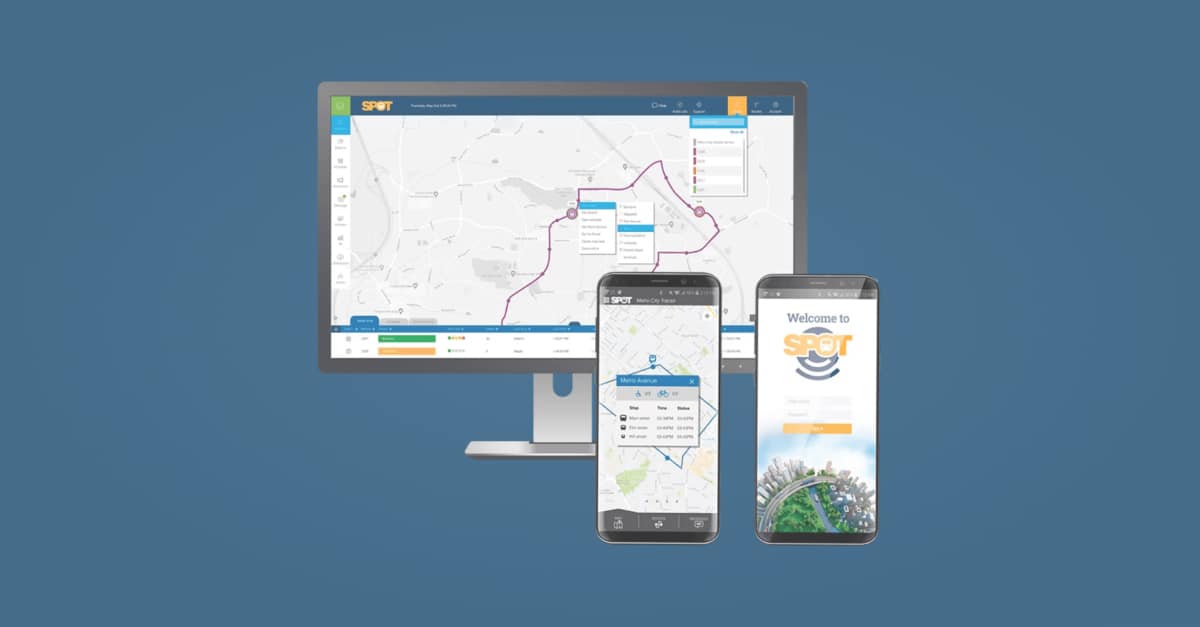
 SPOT: ETA’s Core Platform The SPOT™ ecosystem offers transit management solutions by providing a flexible, modular platform.
 SPOT: ETA’s Core Platform
  All Solutions
 CAD / AVL / GPS tracking
 Business intelligence
 Digital signs and kiosks
 Infotainment
 Automatic passenger counting
 Tally NTD Survey Software
 Tracking websites and apps
 Vehicle announcements
 All Integrations
 Demand-response and microtransit
 Fare collection
 Mobile video surveillance
 Pre-trip inspection
 Solar e-paper signage
 Vehicle health monitoring (AVM)
 Voice communication
 Transit
  All Industries
 Airport
 Campus
 Medical center
 Rail, streetcar & trolley
 Rental car
 Tourism & theme park
 Transit
 Case Studies
  Blog
Blog eBooks
 Wall of Love
 Careers
 Press
Press Events
 Support