Safety has to be your bedrock. Stop Requested. This is Stop Requested. by ETA Transit. I’m Christian.
And I’m Levi. These are real conversations with the innovators, operators, and advocates driving improvements in public transportation. Today, we’re talking with one of the most accomplished transportation. leaders we’ve had on the podcast.
Our guest is Jolene Molitoris, former administrator of the Federal Railroad Administration, where she was the first woman to hold that title, and also former director of the Ohio Department of Transportation.
Jolene shares her journey from Ohio rail advocacy to the national stage. We’ talk about her work leading the FRA, creating the Railroad Safety Advisory
Committee, advancing collaborative rulemaking, and helping deliver the safest years in railroad history during her tenure. Here’s our conversation with former FRA administrator, Jolene Molitoris.
Jolene, it’s great to have you on the podcast. For our listeners, Jolene has held some of the most critical leadership roles in our industry, including the administrator of the Federal Railroad Administration, where she was the first woman to hold that job, serving as a director of the Ohio Department of Transportation, and as my former boss and mentor at GeoFocus, uh, was one of the pioneers in, in
CADD-AVL for the nation’s largest railroads. Jolene, you and I have had some great chats, uh, over the past couple weeks. It’s great to see you again. Um, but for the folks tuning in who might not know your full story, could you kick us off by sharing a little bit about your background and how you got your start in transportation? You know, I would say, first of all, I have to give all the credit to my parents, because I had the greatest parents ever.
Um, they, they never thought there was anything I could not do, and that was what I learned from them. And so, um, you know, they, they just gave me every opportunity.
I had a fantastic education. I was in Catholic school, uh, from the beginning until graduate school at Case Western.
Um, it was a fantastic, um, educational opportunity. I graduated from Catholic University of America in Washington.
Um, and, and then, um, when I was in graduate school, I met my then husband, and, uh, we’ got married and moved to, um,
Columbus. And so then my, my first, uh, kind of bucket of life was my family, uh, because I was committed to focusing on my children. I have two children, two grandchildren, and, um, I was focused on them until they were on the school bus, and then
I could look for career opportunities. Um, so I, I just… I mean, one of the things I think should undergird every part of what I share with you today is the fact that none of this would have happened on my own, and I think that’s one of the messages for people coming up. The f- fact is, you, you really can’t do anything significant on your own, unless you’re an inventor or, you know, something like that. But, um,
I, I just always want to focus the camera on those who worked with me, who helped me, like John. I mean, you know John. I guess you were kind of a younger guy, but you had ideas, you had energy, you had things that you wanted to share with the world about transportation.
And I, i- it was my pleasure and my great opportunity to help you do that any way I could. And, you know, we have to give, um, J- uh, David Rush a, a lot of credit, who actually was the first owner of GeoFocus and, um, came to me when I was leaving FRA and talked about coming to GeoFocus. So
I think the one theme that I want to be sure undergirds everything that we talk about is how important teamwork, collaboration, um, and the opportunity never to give up no matter how challenging, whatever it is that you’re doing. Um, so when, when I, uh, when my kids were on the school bus, um, trying to think.
You know, we lived kind of in a, you know, a not just suburban, but more rural area, because my husband at the time, that’s what he liked, m- as opposed to what
I liked. And, um, so it, it was, you know, a, a bit of a challenge to know how that would fit together and what would be an opportunity for me. And, um, so my dad, who at the time was a federal judge in
Youngstown, Ohio, uh, my dad is a Joseph Molitoris, and, um, he said that there was a man in Youngstown who was the chair of a new, um, a, a new, uh, agency in the, in Ohio, and it was the Ohio
Rail Transportation Authority, so ORTA, O-R-T-A. And he said, “You know, Jolene, maybe since it’s new, maybe there’s something there that would e- be of interest. You could contribute,” so on and so on. And so, uh, I went down and interviewed andWhat happened?
I became the executive director of ORTA. And, um, that was such a phenomenal experience, and I learned so much from everybody.
I mean, there were people there that I worked with, they didn’t necessarily, they didn’t necessarily, um, work at ORTA, but they were supporters of rail in Ohio. And some of these people were in their, you know, 70s, 80s, and for whatever reason, they had certain things they wanted to make happen, and for some reason, they decided that I was gonna be the best person to fight for them. And so they become a very important ally, uh, for me.
And I listened a lot, I learned a lot, um, and I, I just treasured them as career partners. And, um, now they were all males, of course. There were no women any-anywhere around. And, um, one of the stories I do like to tell is that when I was sworn in as FRA administrator so many years later, these gentlemen, there were five of them, um, they lived in a small community in, um, Ohio.
They drove to my, um, um, swearing, to my swearing-in.
And they were there, but God bless them, and if I’d known, I, I didn’t know this at the time, they couldn’t afford to stay overnight, so they drove all the way home after it was over. But, I mean, it was that kind of bonding, it was that kind of commitment to one another and to rail that was consistently there. And one of the things
I like to tell people about rail is it’s a family. Look at John. He found me after how many years, John? 20-some. And, um, you know, it’s, it’s a family because we know that the rail family can do anything if they’re together, if they collaborate, if they find partners in all elements of the business.
And so, you know, I still am, am, you know, I’ll, I’ll say that, you know, going forward, that there’s, you know, I’m, I’m still involved today. I mean, Federico Peña, my first secretary, I talked to him at Christmastime, this
Christmas. And, um, you know, I, I think that’s very unique in this world, that, uh, people stick with you all the time. This episode is brought to you by ETA Transit. For decades, transit agencies have been locked into legacy CAD/AVL systems built for another era. Expensive upgrades, rigid architectures, and software that lives in server rooms instead of the browser.
ETA Transit is the modern replacement. Our web-based CAD/AVL delivers industrial-grade reliability with cloud-native speed and flexibility. It integrates with what you already have, replaces closed ecosystems, and gives your team a single real-time operational view without starting over. Replace legacy. Move forward.
The future of CAD/AVL is open. See it at etatransit.com. Yeah.
So Jolene, you mentioned there that, you know, you were the executive director of ORTA and then moved up to the, the federal level, the Federal Railroad Administration.
How did you make that jump, and how did things change when you moved from a state level scale to the national stage? It’s very– It’s actually a remarkable thing that happened.
You know, I always say, a-and again, I don’t know if this goes well in your, in your podcast, but I believe that, you know,
I always say God was in charge of where I was. And, um, you know, I always think of, you know, sometimes people have little dogs, and they kind of hold them by the nape of the neck. And I always felt like
God sort of had me by the nape of the neck, and he’d show me this, and he’d say, “Uh, see that? Now do something about it.” And so that was my job. I had to do something about it.
So, um, the opportunity in Ohio was, was extraordinary. Governor
Celeste, Governor Dick Celeste, um, during that period in history was when the railroads were being deregulated, and it was an extremely difficult process, and it, it, you know, it had many opportunities to fail.
So you had to have people like the governor and so many others, um, like, uh, Bernie, Bernie Hurst. He was my first director of transportation when I went over there as, um, rail executive.
And, um, all of these people gave me a chance, shared with me, taught me, showed me, and, um, you know, I guess this whole theme again is look around and don’t forget who helped you. Don’t forget who was so critical in the evolution of whatever it is that you yourself were doing.
And so, umWhen Governor Celeste, the next governor was Governor Voinovich, and, um, he identified a director of transportation, and
I had a lot of Republican support, to say the least. Um, but he decided I was not the right one for him.
So he said, you know, “You, um, we, we can’t go on.” So I said, “Fine.”
And my beloved husband, David, he came down, helped me empty out the office. And then, um, you know, I, I s- I was home and I was… ‘Cause I was with my team at, uh, ODOT for
13- ORDA and ODOT for 13 years, so they were surely very close to me, and I close to them.
And so I was sad for one day, and then, um, I tried to think, “Well, what’s, what could, how do you trans- how do you translate from the Department of Transportation to Central Ohio?” Like, what could you do? So, um, it turned out that there was an opening for the executive director of the Literacy Initiative of
Central Ohio. And, um, so, you know, I’m very big on education and, uh, for everyone, and so I went and talked to, uh, to them, and amazingly, they wanted me to be there. So
I, my next job was the executive director of the Literacy Initiative of Central Ohio, and it was, I loved it.
You know, it was teaching adults to read who could not read. Now, how can you get better than that?
And so, um, I worked with, um, the mayor. I had a little office in the mayor, in the city building, and, uh, with Mayor
Greg Lashutka, and, um, with so many people because the whole opportunity, um, to, to help people who didn’t know how to read, um, it needed a lot of partners. And so, um, we went forward and, and I was happy as a lark.
And then all of a sudden, what happened? This guy from Hope, Arkansas, Um, all of a sudden he was elected president.
Well, I was thrilled, you know. But here’s what… And I, I hope that I can communicate how important this is at every level, wherever you are, whatever you do.
Um, all of a sudden, I’m in my little office at the city building, my phone started ringing off the hook, and, and people were calling me from all over the country saying, “You’ve gotta be federal railroad administrator.” And I said,
“Oh my goodness. How’s, how, how kind of you. That’s very kind of you to say, but I’m not from Arkansas. President Clinton doesn’t know me. I didn’t work on the campaign. I know that’s not gonna happen, but you’re so kind to say so.” What I did not know, see, when this deregulation of the railroads was going on, we at the little, uh,
Ohio Rail Division, um, we created an o- a, a plan to save our companies, to save rail service for our companies, and to protect our companies all throughout the state, um, with what could have been a disaster, and, um, and it worked.
And so what I did not know at all was that all these people, and at the time I was still at ODOT, um, the rail division, all these people, um, were sending letters to President
Clinton saying, “This Jolene Molitoris, person should be the federal railroad administrator.” I didn’t know any of that. And, um, so all of a sudden,
I got a telephone call from the president’s personnel office, a person who worked for Celeste originally, and
I knew well. And she said in a, in quite a, quite a gruff voice, “Jolene, if you don’t apply, we can’t even invite you for an interview.” And
I said, “Apply? What?” Mm-hmm. So that day, and this was surreal, honestly, after I hung up from that call, and she actually hung up on, me, um,
I sat down at my little computer and I wrote, “Dear Mr. President,” and I wrote a four-page single-space, um, letter about my dream for railroads and railroad safety and railroad passenger service and high-speed rail, and it,
I went on. and on. And folks, I put it in an envelope, I put a stamp on it, and sent it to the President. And soon thereafter,
I got a call for an interview and, um, I went, and it was a very cold day, and my first interview was with Secretary Peña.
He was the first DOT secretary for President Clinton. And, uh, I didn’t know him, he didn’t know me. And, uh- And this is in Washington, right? This is in, uh, where, where you interviewed? Where I interviewed, in Washington, yes. Mm-hmm.
And, um, so he said to me, “Well, Jolene, what’s your highest priority?”And I said, “Oh, Mr. Secretary, that’s easy. It’s safety.” Now, I knew that most, a lot of these people were probably telling me, telling him it was high-speed rail, ’cause I worked on high-speed rail a lot.
Um, but I said, you know, and he, he said, “Well, what are all those railroads gonna think when you come riding in on your white safety horse?” And I said, “Well, Mr.
Secretary, if they really know what I’m talking about, they’ll think I’m the best friend they ever had, had, because they will be so much better on the bottom line. They won’t have all those fines. They won’t have, you know, all of these lawsuits and all of that,” so on.
And so I guess it resonated, and we talked for a long time, and then, um,
I went, “Ooh.” And, um, not so long after that, um, my phone rang at the, my literacy initiative office, and
Jackie, the one in the personnel office, said, “Well, Jolene, the president said your name today.” Oh, my goodness, gentlemen. It, it was, it was…
I can’t even tell you. There’s no words to describe how that felt. Um, because you know what?
Should it have happened? I wasn’t from Arkansas. He didn’t know me. I didn’t work on the campaign. And that would be another example of how collaboration and sharing and working together, um, really is the key. Whether it’s private sector, whether it’s local, state, federal, collaboration, teamwork.
So, um, all I said- And, and, and it’s all these, all these people that you work with that you impacted in so many different ways that were speaking on your behalf, right? Even reaching out. You were not even interested, right? In applying for this, you know, very prestigious high-level position, and where all these people, they’re reaching out and saying, “Jolene Molitoris, that’s the person that needs to be in the office.” A- and that’s how you got that call, uh, from the President of the United States.
I mean, that, that story is incredible. Well, it is incredible. But what it says is, to everybody, no matter what you do and when it is and so on, is the fact that we shared, that, that mean my team in Ohio shared this method of protecting the private sector businesses and their ability to have, um, rail service. ‘Cause you know you can’t have any manufacturing if you don’t have rail service, for goodness sakes.
Um, I mean, the fact that we… And, and of course, when we shared all this with everybody, I didn’t know it was gonna have any impact on my personal professional life or no. I was just sharing with them ’cause it was so important for the rest of the country and for all these people who were working so diligently in the face of all this rail deregulation.
And, um, I mean, the other thing that was so amazing during Governor Celeste, you know, he was, he and President Clinton, oh my goodness, they’re so smart. And, um, he wanted to meet all the railroad
CEOs, and he had me do that, set it up. And so that’s the way I got to know, be- way before I went to
FRA, all these CEOs of all the major railroads. And again, that was something you couldn’t even have fathomed, you know, that it would happen. But it, it kind of prepared me in such a way, um, to be able to address the issues that were national in scope. And, um, so let’s see. Let, let me ask you a question here. So, uh, uh, how, h- uh, how were you received by those folks, right? Like they’re, uh, starting to get to know you. You’re coming in, um, you know, to head the, you know, Federal Railroad Administration. Are you talking about the FRA, people? Y- well, no, all the CEOs from all the rail, um, agencies, you know, that, that you’re gathering, uh, to meet them all at once. How, how did they receive you as the incoming head of the FRA?
Well, first of all, it, we had individual meetings. In other words, he met with CSX, he met with N, uh,
Norfolk Southern. He met with, you know, Bonrail. He met with each individual meeting. It was not all of them together. And so, you know, we of course prepared the governor for, with, you know, things that he needed to know.
A- and here’s the thing about Governor Celeste, and this was the true also for President Clinton. Um, we send this book, you know, with all this information for them to review, and Governor Celeste would come in. He’d roll up his sleeves, he’d have the book, and you could see that the book had all these yellow sticky papers, you know, in it. And that was because he,
A, read it and, B, understood it, and, C, y- the questions he asked were based on what he had learned. That’s the kind of remarkable people I had the privilege to work with.
And, um, so when I went to, when I went to, um, FRA of course they didn’t know who, who was this short blonde woman who was coming in.
Mm-hmm. And, um, but I’ll tell you-I could not have had a better team. I- if I picked them myself,
I couldn’t have had a better team. They were really… Now, I mean, there were some that were perhaps a little bit hesitant, you know? Um, because maybe they, you know, they didn’t know what was this gonna mean. Right. But, but one of the things that, again, I think it applies for private, for small business, for, for, uh, local, for state, it applies for every- everywhere.
Um, what is, what was my approach to them? One, respect.
Um, two, letting them know that we had so many things to deal with, and that we could only succeed if we were a team.
And now, did it, uh, did it affect everybody the same way? No. But it took, uh, some people a little longer, but they knew that I was gonna fight for them, I was gonna fight for our industry. I think, I don’t know if this is still true, but I think at, at the time
I know it was true, I was the only administrator who ever went to Wall Street and spoke, uh, passionately about railroad industry.
Um, I was, I was very, very respectful and appreciative of the, of the union people, the people who actually, I mean, they actually made the railroad run, for goodness’ sake. Right.
And, um, you know, I, I really– In fact, I should say this ’cause for a story, I wasn’t there in Washington for, I mean, two weeks or three weeks or something, and, um, there was some kind of a dinner I was supposed to go to, so I went.
And I was sitting, you know, at this dinner, and a gentleman came up and said, “Administrator, would– There’s somebody that we would like you to meet. Would you be willing to come over and meet them?” I said,
“Sure.” So we went, and we walked. It was a very big room. We walked and we walked and, um, I could see we were heading toward this table, and there was this gentleman, he looked like the all-American boy. You know, he had blonde hair, his cheeks were really rosy, big smile.
And, um, it wasn’t until I actually was introduced to him that I learned by looking that he had only one arm and no legs.
And he had been, you know, working a, a freight delivery to a corporation.
And of course, the situation that it was in, there was no regulation about what they had to do, and so that’s how he was so crucially injured.
And you know, guys, I never forgot that face. I never forgot that experience, that not only that man, but his family lived with the rest of their life. So, you know-
Wow … um, it was, it was a powerful moment for me. And, um, so I think it was probably appropriate to say, I mean, I, I don’t have specific evidence, but I went to places where the rail workers worked, like way out in the boondocks and all kind of things, where no administrator had ever gone before. But I believed that if I didn’t really see it, if I didn’t have some experience, now I could never experience exactly what they did, but I could see, I could look, I could have a sense of what they were facing. And I felt really, it, you know, that that was very important. And then, I don’t know if you, uh, John, had looked at anything recently, but in the last administration, uh, and I think, do, do you remember what RSAC was, uh,
John? RSAC? No, sorry, I don’t. Railroad Safety Advisory Committee. Oh, dear. And it was a, an entity that we created to enable, um, collaborative rulemaking. There had never been collaborative rulemaking, before then.
And of course, you know, a lot of people said I couldn’t do it. Well, uh, we sure did. And, um, you know, when I left FRA in 2000, we had the seven safest years in railroad history, not in just that administration, but in railroad history. Now, that doesn’t happen by accident.
RSAC was, RSAC was a big part of that. And in addition, we had these, um, other creations, things that, um, we put together to assure collaboration at all levels, the railroad management, FRA, and the unions. And, um, this is a story that
I will never forget. When the actual, oh, what would you call it?
The actual, um-Time when this was gonna be signed by the secretary, um, this collaborative rulemaking, RSAC. Um, ’cause there were a whole lot of people involved. I mean, a lot, um, y- y- you know, from- In, in the creation of RSAC, right? Like, o- o- of, of this body for safety, right? Yes, for, for everything. And, um, so, and again,
I did, I didn’t know a lot of things, I guess. Um, the, the guys, because it was all guys, um, they went to the secretary on their own. I knew nothing, again. And, um, they said,
“Mr. Secretary, would it be possible for you to schedule a meeting for May 17th to sign the RSAC?
‘Cause that’s Jolene’s birthday, and we just wanna do that, if you’re willing.” And he said,
“Oh, sure.” So we were there on my birthday, and, uh, all of these guys were all around the table. There must have been, I don’t know, a whole lot. And, um, so
Federico Peña, ver- he used to be mayor of Denver, and he’s very smart, and, uh, I, I like him very, very well.
And, um, he said to the one man who was kind of to his left sitting at the table, he said, “Can you just explain to me, you know, why this is so important to you?” And something else, something like that. And this man said, and I quote,
“Mr. Secretary, when we started this, see this man next to me?” It was a management guy. He says, “See this man next to me?
I hated him, but today I love him.” Wow. It just, it just about, you know, it was pretty, pretty powerful, and it was powerful for the secretary, too. And so, um, you know, all those people deserve huge amounts of credit for taking a chance, uh, to make this thing work that everybody said couldn’t work.
And, um, so we, for the first time, had collaborative rulemaking. They, uh, we had other organizational, uh, innovations.
Um, for example, they would have, like, monthly meetings at the site of a railroad w- that was having problems with something. They would all be there together, the unions, the, the management, and, um,
FRA. And that’s how w- It was those kinds of things that enabled the safety to jump up so much and to have the seven safest years in railroad history.
That, that’s commendable, and, and it’s incredible, right? Like, y- it sounds you really brought safety at the forefront, uh, for the industry. A- and you mention at, at a time where they’re going through de-regularization. So that sounds like taking requirements and, you know, taking a lot of regulations out. And I would imagine that with a safety focus, you are putting new regulations to drive safety and, you know, it’s very difficult at that time, like you mentioned, especially for a woman in leadership in a space that is mostly men around the table, to get a consensus to put new regulation, new, um, you know, bills in place that are, uh, championing for safety.
So, uh, could you tell us a little bit of some of those safety initiatives? Are they any, uh, regulations specifically that you can, uh, think of that came off of those efforts and, you know, drove those improvement, uh, in safety? Well, it was, it was the collaboration of management, labor, and FRA on all subjects, whether that be, you know, how many, how many people in the cab, uh, whether it be delivering, um, to, you know, corporate, corporations to make sure that was safe so there’s no other people that end up with one arm.
Um, I mean, we, we studied… And, and the thing is we, the, the great thing was we had those, um, monthly meetings where it was eyeball to eyeball.
You know, people talking about real things, not just some sort of, you know, s- something in the air.
This was real problems that they were having. And, you know, what we always pressed was, how do we make this a winner for everybody?
For the railroads, for the workers, and for FRA. That was our, our theme. That’s because it was this collaboration, uh, of the rulemaking, because, y- you know, when there was not collaborative rulemaking, what happened was, you know, it was really all about
FRA. And, uh, you know, the, the companies, the management companies, and even the unions, you know, they couldn’t feel like they had everything that they wanted, and maybe don’t get everything, but mostly what they needed. And so, um, I think talking to each other, and big one, listening to each other. Listening.
And the other thing is a bipartisan effort. I mean, even
Governor DeWine, who’s governor of Ohio today, he was a congressman. And-He, his daughter, I don’t know if you know this, but his daughter was killed by a drunk driver. And when you walked into his office in Washington, and you look to your left, there was a floor-to-ceiling picture of his daughter. And when he found out that, you know, I was this safety, this crazy safety person, um, he used to invite me to everything that he had, like meetings or events or whatever, um, that had to do with safety. And, and you know, uh, some people from the Clinton team said,
“Why do you go to, why do you go to DeWine’s office all the time?” And I said, “If it’s about safety, I’m there.”
And, and that’s the kind of, of collaboration and support I got from President
Clinton. And also, one, one thing, I wasn’t there probably a month, and I got a call like 1:00 in the morning or something, and they said that there was this terrible accident in
Alabama, and we had to go right away. So we, you know, we went to the airport. We took the ODOT plane. Then we got to there, we took another, uh, Alabama DOT plane, and then we took a, um, oh, like a– We had to, we had to have the Coast Guard help us get there ’cause it was, it was in the boondocks. And, um, we got there, and we, at the end, we had to be on a boat because it was in the bayou. And
I don’t know if you’ve ever actually seen the bayou, but it isn’t just mud. I mean, it isn’t just, like, water stuff. It was mud. And what I could see was this brand-new locomotive headfirst in the, in the bayou, which meant that everybody in the cab suffocated.
Well, let me tell you, it was a very traumatic situation. But here’s what President
Clinton did. He called Federico and me and said, “Mala Torres, I want you to go to the hospital where anybody from this terrible wreck had to go, and I want you to go and visit with each of them. I want you to tell them I sent you, and that we would help them any way they can.”
Now, how about that for leadership? I mean, to me, that was all about Bill Clinton. He was extremely smart. He could run big stuff, but he was all about people, too. So I did that. I went to the hospital, took me almost all night. And, um, and then the, as they say, the rest of the story is that about, I don’t know, a week or two later, I was in my office, and my colleague called me and said, “There’s a woman on the phone who was on the train, and you came to see her in the hospital, and she said it’s urgent that she talk to you.”
So I said, “Okay.” And what she told me was that these Amtrak lawyers had come and, you know, were doing their best, I guess, for
Amtrak. But they had her sign papers, and she didn’t know how much was wrong with her at the time. And she said, “I’m in real trouble. I didn’t know I was so injured, but
I am, and nobody wants to help me, and I’m, I’m coming to you ’cause you said, president said he would help.” I said, “Well, ma’am, you just give me a day. Let me see what we can do.” And I called the president of Amtrak, which was Tom Downs at the time, and
I said, “Tom, we got a big old problem.” And, um, I said, “Your lawyers probably thought they were doing a good thing, but the president told these people that they’re, that he’s gonna help them.
And I have a lady who’s in big trouble health-wise, and she needs help. And they got her to sign this paper, these papers that says, you know, they won’t, she wouldn’t, she wouldn’t, uh, like sue or anything like that.” And he said, “Well, let me see what I can do.”
Bottom line is he, he worked it with his lawyers, and I was able to call her back and say, “Ma’am, we’re with you. Let’s see what we have to do.” So I mean, it’s that kind of thing when you know you’re in a place that you can make a difference.
And it’s clear, Jolene, that you’ve made a difference throughout your entire career. Uh, after the FRA, if I’m not mistaken, that’s when you became CEO of GeoFocus.
Yes. Um, and correct me if any of that timeline is wrong, but that’s, that’s when you and John linked up- Right … and were colleagues.
Yes. Uh, so how, how should agencies think about integrating technology, uh, into their safety and operations? I mean, you, you transitioned from the private sec- uh, from the public sector, from public service to the private sector. I’m curious how you, how you took that with you and how you suggest or recommend agencies to think about including, you know, safety into their operations now? It has to be the bedrock.
It has to be the bedrock. It has to be, I mean, I think it should be on every agency, whether it’s aviation or highways or transit or, or, or rail or s- safety has to be your bedrock.
No matter what you’re thinking about, no matter what you’re doing, how does it affect safety? And, you know, if you, if you’re really serious about it, people are gonna look at you, and they’re gonna see safety.
They’re gonna know what’s number one in your book and in your team’s book. And, you know, maybe people think safety is not glamorous or something, but I will tell you, I think it is the most important thing ever, whether it’s, um, w- whether it’s private sector or what, no matter what. And, um, that’s how we did it.
I mean, I mean, I just, for example, my daughter and I were seeing something just recently, and they were talking about a, a device, a very simple device, and, um, they said that every day,
I didn’t know this, every day seven people die from choking. And this particular device, um, was something you could have in your home. And a lot of the people who die, they’re alone.
You know, they’re home alone. And, um, this device, they can save themselves. But how many people know that? You know? I don’t know how, how many, how much they’re getting this device out there, but what was the most important thing? Safety.
And, you know, people just, um, I think everybody needs to make it their passion. Yeah,
Jolene, um, you know, talk, talking about, uh, how do you apply technology to safety, I mean, y- you’ve got a strong background in this, right? Um, you know, Levi and Kristin, you always hear me talk about the need for properly engineered systems a- and how rail in many ways is more complex than transit because in rail, w- when something goes wrong, it goes really wrong. It goes- Right? Massive loss of life. So, so the amount of engineering one had to do in the technology space was an order of magnitude more complex than transit. A- and Jolene,
I mean, thinking back, you spearheaded a lot of the positive train control initiative well before it became a positive mandate.
Yes. Yes. But I think what people miss is the people part of it. The people part of it is crucial to making the technology part of it work. I mean, you gotta have the smartest people anyway to develop the kind of technologies that we are, you know, we’re all seeing and using and, you know. I mean, I don’t know what AI’s gonna do for the rail industry, but there’s so many things technology-wise.
And, um, you know, I just think people think of safety more related to hardware in a way than they do people. And you can’t have one without the other. I mean, you won’t succeed. That’s, that’s the simple part. Without the people part, you won’t succeed. Yeah, that was, that was one of your greatest lessons to me, you know, when I worked for you back in the day.
Um, make it about people a- and, you know, your mantra was always communicate. Um, and I think we’ve done a decent job of that here, right? Creating a culture of voice, um, you know, challenging one another a- and, and just communicating, um, and so for that,
I thank you. Well, I, I think everybody who helped me, I mean, and you helped me. The thing is, h- I may have had a title or something, but it was everybody with me that, you know, and, and speaking the truth, boy, that was important.
Um, you know, that no matter where you were in the organization, you were encouraged to speak the truth. And if there was something going on that wasn’t good, you need to say it. And people who were responsible need to listen and make it, make it happen.
So, you know, everybody has that key role that is essential to making the outcome that you desire actually happen.
So Jolene, before we wrap up, I wanna make sure we touch on something incredibly important that you’re working on right now. Shortly after Russia invaded Ukraine, you stepped up to become the chair of the Global Ukraine
Rail Task Force. Can you tell us about how the task force came together and the work you’re doing to support the Ukrainian rail workers on the front line? Well, I’d be happy to, and I really appreciate you, um, asking about it because it is very important. At least, I think it’s important to them, and surely important to the task force. What happened was the Russians invaded and, you know, um, John,
I always felt after, especially after FRA, um, that the railroad industry at its best was like a family.
And so the family is around the world. So one of my friends and I were talking-Um, he was, uh, someone that worked with me closely when I was in FRA.
He’s a lifelong Republican. You know, bipartisan does work if you have people of good faith and goodwill. And, you know, we were saying, well, any, any, um, any money, anything coming from a government and so on, it goes to the military. And in
Ukraine, the railroad is called the Second Army, and that’s because it does everything. It, it moves munitions, it moves medicine, it moves refugees.
It, it, it’s unbelievable what it does. And, um, so we, you know, we were just talking, saying,
“Golly, you know, somebody– somehow they’ve got to get help and, and support.” And so, you know, it came about because two people were talking and said, “Can we do something? Do you think we can do something?” And so we have, um, almost ten, ten members, and they’re all– it’s all volunteer.
Um, and all of them are, um, quite astute with regard to railroading, railroad business, track safety, everything. And so we said, “Well, let’s give it a shot.”
And, um, we started. I, I reached out to people that I felt were of the right caliber to understand why this was important. And so, um, it came together rather quickly. You know, it doesn’t have any, like, government lingo or anything like that.
And, um, so then we, we began to have weekly calls, and we had, um, individuals who had some relationship to one or other parts of the railroad industry.
And, um, then we were able to fortunately get this wonderful gentleman, um, who was part of the railroad, um, to actually serve on our task force so that we had that connection with the railroad and also, um, the railroad workers, because they’re the ones that were getting killed, or they’re the ones that are losing their limbs or other, you know, terrible things because the Russians just bombed the, the dickens out of the railroad, and these guys jump out and go to fix it and, you know, at the expense of their life.
And, um, so we started and, um, we talked about, you know, what the railroad really needed, what the workers really needed, and that has evolved over time. In the beginning, we were giving them food and water because they didn’t have it, and their homes were being destroyed. And, um, I mean, just such, such difficulty, such pain, such suffering. And, um, so in the beginning, that’s what we were doing. And then, uh, as we went forward, they said that they really needed, um, protective gear, you know, like helmets and chest protectors and things like that, so that they could survive when they go out there to fix the railroad. And interestingly enough, the railroad itself was never down. When I say down, that means can’t operate, um, more than two hours ever. I mean, to me, that was, like, extraordinary.
And, um, so the railroad workers, the unions, they worked with us. And when we got the food and water, for example, they, um, knew where to buy it in Ukraine so that we could keep the economy, you know, th-this boost to the economy in Ukraine.
And then, um, they would deliver it to the railroad workers who had been injured or, you know, whatever.
And, um, so that’s how we started. And, um, and then, you know this, then we had to figure out when they said they really needed protective gear, um, we had to figure out, like, where, where would we get it and, you know, is there a place in Ukraine and, you know, a lot of things we didn’t know, John. We didn’t know. We had to learn. And, um, they were– you know, they worked with us, and we got those things, and I, I think we saved a lot of lives.
And I’ll tell you this, John, we have a call once a week, and we’ve been having this call once a week for four years because we pulled ourselves together right after the invasion.
And we have this call. Sometimes it’s only our task force. Sometimes it’s people from the Ukraine, from the railroad, from the unions. And I get off that phone call, and I, I have to take in my breath because you hear these people so brave. You know, in the midst of bombing and everything, they’re so brave, and they’re so dedicated to their country, to their people, to, um, the ability to fix as much as we could fix. We have, um, partners overseas.
Um, one is, uh, All Rail, and they have helped us connect with different charitiesSo that we could get– the, the money would be protected.
So, you know, that– And, and we have it arranged now where you could get a tax exemption, you know, something on your taxes if you gave. And, um, we have raised over half a million dollars- Wow
… um, to, to help these brave, smart, unbelievable people. I, I just– It’s so inspiring.
I mean, I’ll tell you, at Christmas time, this was so amazing to me. No matter who you asked, whether it was a grandmother, a grandfather, a child, a parent, whoever, and you say, “What do you want for Christmas?”
They would say, “Peace.” Not a toy, not… You know, this is even the kids. And it’s just very, very inspiring.
Um, now we’re– Uh, most of the money of the ha- half a million plus, uh, came in from overseas.
So we are now, um, creating a new effort, and the goal is to, of course, raise money for the things that they need and try and get the
United States more involved. And, the fact is, um, they, they need a multipl- multiplicity of things.
But, um, we need to make sure that we get the right thing at the right time to the right place.
And again, the unions will be helping us. Um, different companies, rail-related companies like track-related, um, companies that have, uh, some elements of, uh, cars, uh, rail cars, and, um, we have people that– One of our members, um, is someone who goes into Ukraine, uh, like once a month. He drives from Poland and, um…
You know, it’s just– I, I guess sometimes, Jon,
I think I get more out of it, and our task force members get more out of it even than the Ukrainians because it’s such an inspiration. I mean, you look at those people, how they value, how they value their freedom, how they’re willing to die for their freedom. And you know what’s frustrating to me? Because I talk directly and, um, I hear the kind of things that people are saying, like they’ve lost the war. Uh, the latest thing I heard was, um, the administration was saying they, they lost the war militarily. That’s absolutely untrue. And in fact, these people are so smart that they have taken this whole drone, uh, way of using drones in fighting, and they have captured how to do it better than anybody else in the world.
And, and different countries are c- are coming to Ukraine to ask them, you know, to hire them to teach their people how to do it.
So, you know, for me, I think, I think we, the task force members, certainly myself, get more out of this than they do because we’re inspired. We recognize that freedom’s not free, um, that we need to protect our democracy, we need to fight for our democracy, and we need to be together.
Um, and, and so this is– In fact, I had the call this morning. Um, we had our call this morning and, um,
I don’t know. I, I… It’s hard to capture, to find the right words to capture the incredible inspiration that these people, you know, give to us.
And, you know, uh, uh, we try to send small things at Christmas and, you know, I mean, you just get very close to these people, and y- you’re grateful that we are free and we don’t have, you know, bombing every night here’ in Columbus or Boca Raton or…
And, uh, but, but the fact is, these people do have a bombing every night, and they, they’ve learned to live with it and come up with ways to fight it. And, you know, I, I’m grateful to God that I have a chance to learn from the Ukrainians.
That is amazing. And Jolene, if, uh, folks wanna learn more about the Ukraine, uh, the Global Ukraine Rail Task Force, uh, they can find that on LinkedIn, yes? Uh, well, yes.
Or, you know, they can just send me their name, and I would have them send, um, have our task force people, um, send to them if they’re willing to give their email so that, uh, we could send the donation letter to them and other, other things about, um, how to support the efforts that we’re making.
And the best way to reach you through email is jolene@molitoris.us. Is that correct? That’s perfect. That’s perfect. And it’s, I’ll spell it because some people, it’s not
Smith. J-O-L-E-N-E at M-O-L, three little words that you use every day, it, or, and is .US.
Awesome. Well, Jolene, this has been a wonderful conversation. Thank you so much for joining us. And also thank you to our listeners, as well for tuning in each week to listen to
Stop Requested. We’ll be back next Monday with another episode.

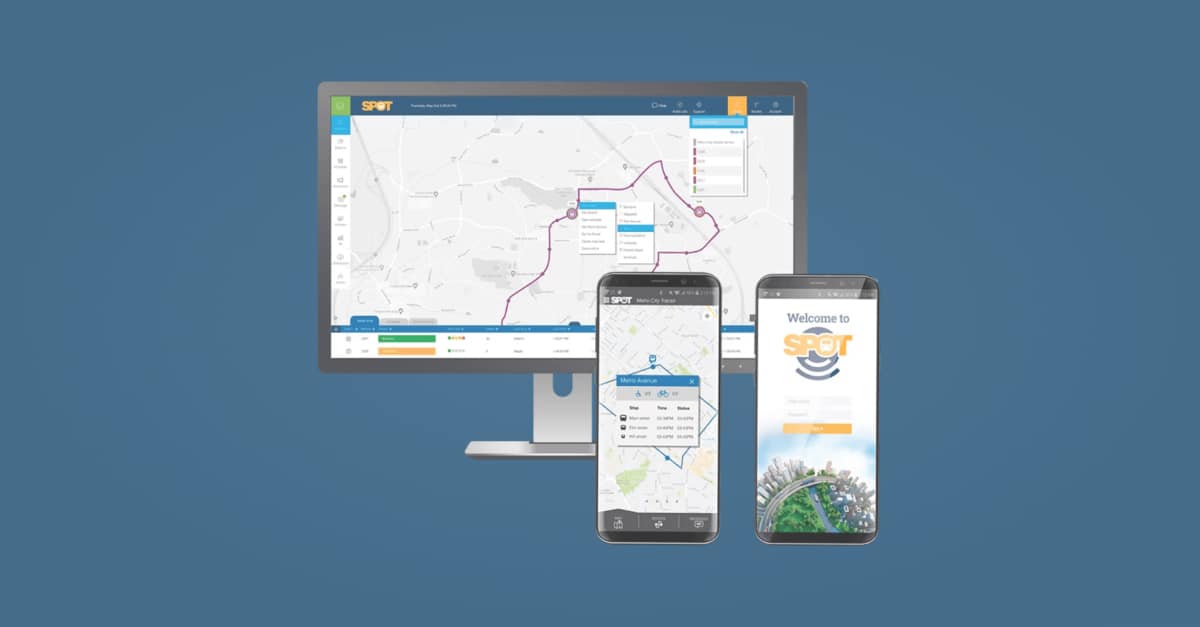
 SPOT: ETA’s Core Platform The SPOT™ ecosystem offers transit management solutions by providing a flexible, modular platform.
 SPOT: ETA’s Core Platform
  All Solutions
 CAD / AVL / GPS tracking
 Business intelligence
 Digital signs and kiosks
 Infotainment
 Automatic passenger counting
 Tally NTD Survey Software
 Tracking websites and apps
 Vehicle announcements
 All Integrations
 Demand-response and microtransit
 Fare collection
 Mobile video surveillance
 Pre-trip inspection
 Solar e-paper signage
 Vehicle health monitoring (AVM)
 Voice communication
 Transit
  All Industries
 Airport
 Campus
 Medical center
 Rail, streetcar & trolley
 Rental car
 Tourism & theme park
 Transit
 Case Studies
  Blog
Blog eBooks
 Wall of Love
 Careers
 Press
Press Events
 Support