I look at CAD/AVLs as really the backbone of any effective fixed route system.
Stop Requested. This is Stop Requested. by ETA Transit. I’m Christian. And I’m Levi. These are real conversations with the innovators, operators, and advocates driving improvements in public transportation. Before we return to wrap up our Miami-Dade series in the coming episodes, today we’re heading to the Midwest. Our guest is Laura Koprowski, CEO of the Toledo area Regional Transit.
Authority, or TARTA. We talk about Laura’s path into transit, how she moved from communications and government relations into executive leadership. Laura also shares how TARTA is using data and technology to guide service decisions and preparing for the possibility of bus rapid transit in Toledo. Here’s our conversation with TARTA’s CEO, Laura Koprowski.
Today, we’re excited to explore Toledo’s mobility evolution with Laura Koprowski, CEO of TARTA since twenty twenty-one. With twenty-five years of experience from COTA to OPTA, Laura’s driving innovations like TARTA’s twenty twenty-five Metro Magazine Award with ETA Transit.
Laura, great to have you. Thank you. Excited to be here. We’re really looking forward to this conversation, Laura. Uh, and before we get into some of the nuts and bolts of what’s going on at, at TARTA, because I’ know you have a lot going on, let’s first get to understand who you are as a person and how you got into transit. Yeah, sure. So, um, I grew up in Toledo, Ohio, which is a great part of the state, by the way. We’re right on Lake Erie, which not many cities in Ohio can claim that. I went away to college to Ohio University down in Hocking Hills, and I thought I was gonna be a journalist, but I just turned that passion to make a difference in the world and political science degree.
And I threw myself into that, thought I might be a college professor. Um, but after doing an. undergrad thesis, I’ was like, “You know, that’s a little bit much” in terms of diving into that content. And so I. switched gears, got a master’s in public administration at Bowling Green State University.
I learned about local government, economic development, um, nonprofit management, and I just was like, “This is fascinating. There’s so many ways I could go.” And I was looking for a job, and there were a lot of different, again, different opportunities in front of me, but I ended up taking the one with the Mid Ohio Regional Planning Commission in Columbus, Ohio. Honestly is what got me into transit.
Now, I’ll back up. I didn’t preface by saying Toledo is transportation. rich, multimodal, home of the Jeep. Very awesome. Um, we also have other major car manufacturing related companies here. We have a port, we have Amtrak, so biking, walking, you know. So
I grew up really in quite the multimodal transportation environment. But to parlay that in planning was really, really cool. Um, and what I loved about, and I love when you get to have time at a planning commission or council of government, you get to just see this… It’s like a web, a spider web of how transportation connects to just about everything in our community. Yeah, I got to see it from the landscape of energy, environment, housing, land use, and then I really kinda dived a little deeper in, um, government relations and public policy. That, uh, regional planning commission or those, those types of bodies, they, they do expose you to a lot, and it sounds like you were able to see maybe how government or government administration works as a system. I-is that fair? That is fair. And I got to do a lot of long range planning, um, but what I was missing was like, gee, I’m a little jealous of my friends over at COTA. I mean, they’re like, we’re– I’m part of a big long plan, or I’m big, uh, part of a big public policy initiative.
I wanna be a part of the day-to-day delivery, the service. So when a, um, VP of Government Relations came open at COTA, I was like, “Oh, this feels right to give that a try.” And I was really fortunate to have that opportunity, um, and then quickly that job morphed and changed over three years, like really in a lot of different areas, marketing, communication, customer experience.
And then I was able to parlay that to OPTA, Ohio Public Transit Association, as the executive director, um, and see things from a statewide perspective. That was great. I really loved working with all of our sixty-six transit systems, and feel so passionate about what they do and the variety of what they deliver. But I gotta admit, it’s… when you’re running a nonprofit like that, you’re, you’re a s- a small and mighty army, and I missed, I miss the team. I missed, again, I wanted to get back into kind of that day-to-day connection and delivery of service with the customers.
I see. And then from OPTA, you were able to find a role at TARTA. I-is that right? But you, you didn’t start as CEO at TARTA. Is that correct? Correct. I, um, came in as the chief communications officer in twenty twenty. So a colleague, um, mentor really of mine, Kim Dunham, had joined TARTA. as the CEO, and she enticed me with the fact of getting to rebuild and transform a transit, system, and it’s like, oh, just by the way, that happens to be my hometown. And that was e-extremely appealing. And I did really work with Kim, and I, I encourage others as you’re moving through your career, I talked with Kim about, I did– about the pathway I was looking for. So rather than leave it up to chance, I was very deliberate in talking with her about,
“Hey, I am in love with this, with the industry. I wanna learn more about areas. I don’t want to just stay in the track of comms, marketing, government relations. I’d really like to be getting a little more into the operations.” Within the first year, by the end of the first year, I also had paratransit reporting to me and mobility management.
And that matters where you have that ambition to keep learning, keep evolving, uh, you know, it can really take you places, just the ambition alone.
So your, your path is super fascinating. I, I love the journalism background and then the MPA. It all seemed to kinda come together for you, you know, really show you, you know, what you could do with, with this degree or with these degrees and, and create a career in public transportation. I think planners, engineers may know if transportation is their jam. Uh, for the rest of us, we’re like, “Well, where should I have gone to school to get a job in a transit system?” And that’s one thing we could do better in our industry is to show the pathways with different degrees. Political science, uh, public administration, I use that every day. Leans so heavy in my role because of the, the decisions that I need to make, because the relationships I need to manage working at a board level. We’re just doing our little part up in Northwest Ohio. We have two great higher ed, well, three higher ed institutions, and so we’re trying to work very closely with them to expose young adults and even high schoolers to a public transit career because, again, unless you’re engineer or planning, there’s, there’s just not, you know, that, that typical path for where you claim a major in, in transit.
But we, we need to keep that pipeline of talent coming to us. Yeah. That, that’s a really superb point, Laura, because we talk to a lot of people on this podcast, and for most, it’s a very windy road to be able to get into transit. It, it’s just– And I,
I think yours is probably an example of that, where you, you tried some different roles, and then you made your way, y-you know, in, back to your, your hometown agency in Toledo and, and then became CEO.
Um, we need to be better at, at kind of guiding those students who are interested in public transportation because it is such a vital part of our communities across America.
Uh, o-one thing that you mentioned earlier, Laura, is that you, you had a mentor, and I think Christian and I both know how important mentors are. You know, we’ve had Clinton Forbes as a common mentor and others. You know, our CEO, John Maglio, he credits Jolene Molitoris, who’s the former FRA head and Ohio DOT director.
Do you have any other influences or any other mentors that have helped shape you along the way, maybe give you an extra push? I wanna pile on with
Jolene. Jolene Molitoris is a national force, um, and, and leader, just incredible. I’m– was very, very lucky that early on in my career, she was appointed ODOT director. So to just be moving up through my, um, into management and beyond while she was serving ODOT, just seeing, seeing people like yourself, and in transportation at that time, there were very few women leaders. Um, there were two, so many times I was at a meeting and the only woman at the table or sitting along the wall. So it was wonderful.
And you mentioned Clinton Forbes. Um, we, we just passed each other, um, at COTA, but inc– another incredible, incredible person who we unfortunately lost way too soon, um, who even though I think this is what mentors do, and as we think about ourselves as being mentors, sometimes you don’t even need to have worked with someone. It’s their legacy and their impact on others and how they pay it forward in their organization. But I have to give a shout-out to, um, Marilyn Brown, who was the director of public affairs at MORPC, Middle Ohio Regional Planning Commission, then a Franklin County commissioner. And she just beat it into my head, um, figuratively, that surround yourself with the best people possible. If they’re smarter than you, you know, it’s all the better. If they’re more talented in, in areas than you, I mean, let them shine because if you let them shine, you’ll shine. And
I could not subscribe more to that because you can’t do it all. You just can’t. You, you know.No I in team, right?
Or that’s why there’s so many players on a baseball team or a winning Olympic hockey team. And so you’ve got to let your team shine, support, and hire the best you possibly can. Don’t settle. Um, I’ve often had my eye on someone, you know, went through an interview process. Was like, “No, it’s really clicking. Wait, I have this person.
I’m going to go pursue them.” And it pay, it pays off. It’ll pay off for your own career and success. Yeah. That, that’s awesome. And, and, you know, that’s one thing when we speak with leaders is, uh, they speak about their mentors and, and the importance of, uh, taking the good, and then sometimes just ignoring the bad, right? Like, not, not all the mentors- … are perfect, but those people, uh, shape you as a transit professional.
And I can, you know, relate to what you said and, and kind of reflect back on things that I pretty much copy, uh, uh, or have copied from, you know, some of the mentors that I had. And then the fact that you just have to approach people and talk to them, right? Like, you know, we, we… Everybody’s willing to mentor somebody else, but you’re not, you know, pulling people, you know, towards you. Like, people have to make that, that attempt. Like, you know, come to those folks in leadership. positions or, or f- you know, people that you admired or have attributes that you would like to, you know, learn from, and just, you know, have a conversation and, and surround yourself, like you said, w- with great talent, great people. And it just helps you, um, you know, get to roles like the one that you have today as a CEO. So I wanna ask you a little bit about your role. You know, for those listening and thinking, “Okay, well, what’s the role of a CEO, you know, like, the CEO, at, at TARTA?” Uh, could you tell us, uh, a little bit about your responsibilities?
I. mean, you have over 400,000 riders, um, you know, in 237 square miles, uh, in your service area. And maybe tell us a little bit about your 2021, uh, tax win, and how it helps expanding services. Well, I just wanna update that ridership number, because now last year we’ hit a n- a new post-COVID record, really a new record for TARTA for decades, which is 2.2 million. Woo-hoo. Fixed route rides. Yeah. And then additional, when you add our paratransit and our microtransit, we’re just creeping over 2.5 million. So we’re really excited about that. Typical day for me is, or a best day starts out just like I did today, riding a bus, um, into work.
And that is a time where I can actually sit and watch how the service is being deployed. And just being… I mean, my operators will sometimes say, “Are you trying to be a secret boss?” No, I’m trying to be a secret customer. And so I just like to observe from big picture to minutiae detail what’s going on. And I, I do’ just love seeing the city through a bus window. But once I get here, I do feel my day is all the time it’s a tug and pull between internal meetings, deadlines, conversations, and external opportunities, projects, deadlines. I think, though, too, one. thing I didn’t realize till I got into the role I’m in, you.
really will do a lot more in finance, HR, administrative work than you. ever thought you would. So everything- Hmm … from boring, approving POs and payments to actually doing, be sitting down and working side by side our CFO and determining our five-year operating forecast. I also do a lot with the board, and that ramps up a lot as we’ get into two weeks of every month. That is, that is always my top priority because we have committee meetings one week, and then the board meeting the next week. And when I’m doing external, the external work is, can be everything from doing presentations to having meetings about our service, about future big plans with partners. But it’s also, interestingly, as, as a CEO of a transit system, there’s other things that the community’s working on that they have asked and requested me to be in those rooms, those conversations. It’s about bringing that perspective, the TARTA,
TARTA, perspective, and not even sometimes even talking about specifics of TARTA, but sitting down there and talking. For example, um, the city of Toledo, and the area office on aging, there’s, it’s a widespread issue of not enough drivers all around. So there’s,
TARTA can’t be everywhere, but we’ don’t have enough local businesses providing transportation as well. And so being a part of a conversation with those other entities where how do we collectively increase not just recruiting drivers, but how do we support the private local businesses, um, to, to be in this game of helping to move people to where they need to go?
This episode is brought to you by ETA Transit. Too many agencies are still operating critical transit systems on legacy software that. is costly to maintain and difficult to evolve. ETA Transit offers a clean break. As a fully web-based CAD/AVL platform, ETA replaces closed aging systems with an open architecture designed for real-world operations. It integrates with what you already have and delivers a clear map-first command center your staff can trust on day one. Modern CAD/AVL without the baggage. Visit etatransit.com.
Yeah, and, and it’s a lot about bringing those stakeholders, like you said, the– doing the external work, uh, for the CEOs and, and, uh, those, you know, businesses in the community, uh, those different, you know, education centers is, is being able to make them part of the conversation. Uh, I think that that’s remarkable work.
And, and I really, uh, like that you mentioned that you ride the bus to work. Uh, we had Brad Miller, CEO of PSTA. He shared with us he also does the same. And I think for employees, uh, that’s something they admired a lot, like, right? Like we’re, we’re a… You know, you share some of the ridership numbers, and ridership is one of those, uh, main metrics that we track at transit agencies. And the more customers that we have, the more we’re growing and, and, and succeeding, right? We’re moving more people. We’re helping mobility in the region. So I, I wanna highlight that. I, I, I think that’s great, uh, that you’re doing that work and, and then leading the way because nationwide, like most of the board members of transit agencies, they don’t ride transit. And, you know, we’re trying to tell people, ‘Hey, listen, even if you have a car, that’s great, but like consider taking a few trips,’ right? Like in b- uh, what best way, uh, when you’re making decisions about the lives of people in the community that are using the service, the lives of the bus operators that are operating the service, right? When you’re making modifications and all that stuff, then riding the service and seeing it firsthand, and then knowing, okay, well, this route goes here. You know, this is the challenges sometimes some locations with, you know, mobility devices or things like that, so you can, you know, help improve your system. Uh, so I, I think that’s awesome. And, and, and with that, uh, in terms of making changes and making decisions to change your network, which is also difficult, right? Because we’re trying to benefit the most people in the community. We’re trying to improve mobility, but somehow changes sometimes affect some people. You recently had on January twenty-fifth a big system redesign, added, you know, a h- close to a half a million worth of service, created a new Route eighteen.
Uh, I wanna ask you, uh, how do you gather all that input for making these changes and, and got your board and your community behind this plan? And, and how is it going so far, uh, with implementation? So far, it’s going great. Uh, this really started, though, back in twenty twenty-one as we started developing our comprehensive operational analysis for our fixed route system and beyond, and it got adopted in twenty twenty-two, so it did l- take a fresh new look at the routes. What I would say is, you know, that was when you’re adopting in twenty twenty-two, just coming out of COVID, and now here we are, you know, we’re in twenty twenty-six and looking beyond, uh, we got a lot of things right and a lot of things have been different. So we, we modified some of what was in that TARTA Next, and the way that we confirmed that we were going in the right direction is just going above and beyond with public community and customer input and feedback. Um, we have a customer advisory committee that meets every other month, so they provided that feedback. And really, as you said, Christian, I mean, unfortunately, most board members don’t ride transit, and that’s our situation. So our board is going to want to understand how we justified and did our due diligence, and we’re really engaged with the community to confirm these changes.
Um, one example where, you know, we’re, we’re taught, right, that service should be straight and easy and not a lot of deviations, certainly not into specific maybe parking lots or, or, um, something really kinda catered like that. But there was a particular apartment complex or development that was so heavily transit dependent that when we took away, we proposed taking away that stop, the, the outcry and the advocacy to reverse that, um, we did, we did restore that. And I’m a big believer that, you know, we, we wanna be data-driven, and we’ve invested a lot, um, to become that. That’s part of our relationship with ETA, no doubt.
But we also have to layer that with talking and hearing authentically with our riders and with the community and do our due diligence. Um, but so far, the response has been great. Even though we launched this January twenty-fifth, when we got about ten inches of snow, and it was bitter, bitter cold, but we just kept running. We kept running the buses, and people were there.
They still had places to go. Um, and we have seen that Route eighteen, uh, start off with about50, 60 riders that first day, and I know last I looked, I think we were doing over three hundred rides a day. So it’s going– it’s got a lot of great destinations, not to mention just jobs, but grocery stores. And this one hits, I think, three or four grocery stores. And people, you know, food deserts are real, so people are traveling, will be traveling that route to have those options. That’s really great that the Route eighteen has, uh, so many grocery stores on it. Uh, a-as you said, uh, food deserts are real, and people often don’t have access to fresh food and vegetables, fruits, and things like that. So the, the access, uh, to those, you know, it, it helps feed people’s families. And th-this is the, uh, the, the critical part of, uh, public transportation in our communities. Uh, so I,
I just, I really love that example. Uh, you know, you also mentioned, Laura, a little bit earlier that, uh, you have committed completely to using technology, and you’re trying to be as data-driven as possible. And of, of course, uh, you, you know, you are a, a customer of ETA, and, uh, you use our, our CAD/AVL system, and, uh, I know the dispatchers are using the s- uh, Spot system for real-time tracking. I, I’m curious, how are you using this technology to be able to make decisions? You know, maybe one is that example of the Route eighteen, where, m-you know, you can figure out, uh, if people are, are using that particular route or not, uh, you know, if they’re boarding and alighting at those grocery stores. But I’m curious if you have any other examples. That data was critical into, um, the service that we deployed in January, just as you said. I mean, knowing the, um, the ridership for key destinations, and it can also help us determine where the best ROI is because also with our redesign and new service launch, we did discontinue some routes because the data just absolutely confirmed it wasn’t meeting minimum standards. But I, I look at CAD/AVLs as really the backbone of any effective fixed route system, um, or transit system. It’s, it’s a skeleton. It’s not– It’s something that as riders, and myself included, like this morning, you know, I can check and see, oh, my bus,
I’ve got three minutes to wait at the bus stop, which is good. It’s cold out. It was about nineteen degrees . You know, I’m, I’m conscious of how long I, I have to wait. But it’s that technology that, again, it’s like the backbone that– And you, the average person or even some of our employees don’t realize that that exists. But it is so critical to making decisions on where limited resources can go. I also think it has done wonders to make sure that we are offering the most safe system and environment that we can. We have to have, our dispatchers have to have a good way to be able to manage and communicate with the vehicles. That is just critical.
A-and I completely understand that, and I think it’s a good point regarding safety. Um, you know, I can think of times where, uh, you know, unfortunately, there, there are accidents, right? We’ve, we had a couple at Palm Tran. I had some at LeeTran whenever I was there. And we used the CAD/AVL system to be able to figure out how to reroute the, the service, so that way we, we don’t have those accidents anymore. In particular, left turns, you know, can be particularly, uh, difficult to navigate with a large vehicle like a bus. Levi, there’s something else I almost forgot to mention, is that we started two years ago a performance management program.
So just a really formalized way to set measurable goals and hold ourselves accountable to the board and to the, the taxpayers who fund us. And if we didn’t have this CAD/AVL system, I mean, we wouldn’t be able to collect and drive the data for that as well. So there’s so many important layers to what a system like that does for us that, um, again, I, I think it, it’s, it’s kinda like turning on the lights that you just start to take it for granted. But if it’s not there, uh, and believe me, when I came to TARTA, it was not there in a sufficient way at all. When I talk about a performance management program, I mean, it’s like you are driving in fog. You just, you’re like, “Well, I’m going for it, but I have no idea where I’m gonna end up.” And that’s not a smart move for anyone running an effective business or organization.
Right. A hundred percent agree with you there. Uh, Christian and I are very familiar with these performance management programs. We’ve spoken to a lot of people, uh, that have implemented them and seen the benefits.
We had one at Palm Tran, and I’m sure Christian can give you, uh, thirty minutes to an hour just on, on how ours was ran at Palm Tran. That’s right .
Uh, but, you know, it’s excellent to hear because w-to me, what matters as a public organization is transparency, and you, you, you do more than just check a box with having a performance management program. You’re really holding yourself accountable, and then y-you can implement continuous improvements to make the service better. Uh, soKudos to you and your team for you know, using the CAD/AVL system, being data-driven like that.
Uh, you know, I’m curious, have you– what have you heard from these committees and, you know, maybe some of the community, uh, regarding you putting this information out there? Was there a little bit of shock at first, like, whoa, they’re being this transparent? Or, uh, you know, did, did people just, uh, start, you know, looking into the data immediately? I’m curious. For, um, the community, I think a lot of the elected officials, it– they’re just glad. They can tell by sharing that like, okay, you have a direction. You are not being random. I see and understand, and you’re backing up your, your vision. It’s been very helpful for the board to be able to, um, advance their transit knowledge and help us continue to set effective high-level policy. It gives us really good, good conversations about ridership, because board members will sit down at their seat, their first meeting like, “We gotta grow ridership.” And you’re like,
“Well, that’s a complicated goal, because just increasing numbers can also increase costs beyond what you were expecting.” Right? So
I mean, when you look at paratransit service versus fixed route or even a microtransit service. So it, it, it definitely helps have informed decision-making. But, uh, again, back to, to what you asked, if I look externally, I think it is really confirmed for the community and external audiences, okay, we see TARTA. TARTA has plans. They have a vision, and they’re gonna hold themselves accountable.
Yeah. And I, you know, I want to, uh, bring up something that we were talking about before, uh, we started recording, Laura, uh, and it-it’s your, your maintenance shop. You said that you have all this, uh, technology and, uh, you know, the, the folks that are the, the technicians and all the support staff that you have out there, they’re, they’re using all this high-tech equipment for zero emission buses. But your, your maintenance facility is, uh, uh, next in line to get some improvements, right? You, you’ve got improvements going on everywhere facility-wise, it sounds like, you know, based on our conversation earlier. Uh, you know, looking in the, the near term, maybe, you know, mid-range, what are some more… what are technological upgrades that you’re looking to do?
Sure. Well, maintenance facility, number one, and it’s a major going to take some, uh, financial resources to get there, um, but it’s necessary. Like you said, I mean, buses, transit is so tied and intertwined with technology that we can’t afford at TARTA to still operate, have maintenance operating in a building that was outfitted and built in the nineteen seventies. Just does not, does not work at all.
Um, if I’m going to look at the customer, what we wanna do technology-wise is I definitely want to increase the technology for our paratransit customers and their caretakers. Currently, you cannot schedule rides online, and I wanna make sure we can do that because any more the caretakers are, um, baby boomers and younger, and they’re very tech savvy. And I think this is my impression, um, having been in marketing, overseeing marketing, that now and into the future, it’s gonna be really important that everything from a customer standpoint can be done online and with not having to talk to an individual. Maybe chat, but not talk to an individual. Um, it’s– just take it, if you have teenagers, young adults, whether they’re your children, your nieces, your nephews, um, we all know they do not want to call and talk to a customer service person. But customer service is critical to them, right? So we have to adapt to that. The other is we need to be cashless on our buses. We currently have fare boxes, accept cash, uh, and fare cards, and then we have validators which accept smart cards and phones.
We gotta get to tap to pay. Um, I love that feature. I want that feature here. I know we’ll get it soon. We’re part of the great NeoRide consortium. But we’ve gotta get to being cashless off the bus.
Uh, fare boxes are, while they’re a great, um, for now, a great equalizer, great for people who, um, don’t, you know, don’t have credit cards, they’re very costly to maintain, and their reliability is not, it’s not up to par for our standards. So that’s gonna be a big change and evolution for us and our customers, um, in the next probably two to three years.
Wow. That, that’s a lot. You’re looking at internal upgrades and changes. You know, like you said, the maintenance shop, the, some of the use of the technology, and some external to the customers, right? Like making it, uh, more accessible, giving more avenues for people to do self-service. And it seems that with the technology more and more, we’re getting more used to that. Just doing the self-service, going online, doing what you need, don’t need to talk to an agent. It has the potential also saving on operational costs, right? Like if you’re paying for- Yeah … all these customer service agents, and you’re able to reduce the amount of calls, and maybe you can free some of the positions, and little by little start dropping the amount of agents that you need based on, you know, these new features that allow people to do the self-service.
Uh, so I think that’s great. I mean, there’s, there’s a lot of innovation and, uh, you know, projects that are coming along, uh, at TARTA. I wanna ask you, what other projects are coming up? Are you considering a BRT?
And could you tell us a little bit more about TARTA Flex, how it works? Sure. Yes, we’re considering BRT. We’re finishing, um, a study to, um… We will actually in May have a big event that we’ll share with the community what our locally preferred op- alternative is, so stay tuned. I, I love BRT. I, I just get so excited. I got to be involved with the launch of CMAX down in Columbus, and just seeing how it, BRT is just accelerating across the country and so effective. TARTA Flex microtransit for us has really been a game changer. When we passed our sales tax, that meant that we were going to finally have the funds to service just about all of the co- of Lucas County, and then a neighboring suburb, um, just out in the neighboring county of Rossford. Well, outside the city of Toledo,
Toledo has a lot of dense parts, but also a lot of really suburban style development.
And the suburbs, um, are primarily all very suburban style to, to even some rural, rural areas. Monclova Township is one. You know, where people have gone out and they’ve bought property, built a home to be surrounded by farm fields. That is not ideal for fixed routes, so I just was really passionate about microtransit being this middle service that could work in zones, um, and if our customers or residents needed to get into the city of Toledo, they could easily and safely connect from the microtransit vehicle to fixed route or paratransit. So this service, we have four big zones that, um, are just doing fantastic. They are growing like gangbusters, and we cannot actually keep up. So-
… isn’t that a great problem in our industry? So we are trying to figure out, um, some strategies. We worked recently with Nelson Nygaard, and, and we just presented to our board kind of a menu of options so that we can maintain this great service but start to hopefully free up some capacity for s- for more riders. And again, it goes back to having to hold yourself accountable to taxpayers. So, you know, are we, are we operating the service most efficiently? And there are some areas that we think, like, maybe our zones are just a little too, too large, um, and they’re only benefiting a minimal amount of rides, so we might be looking at… We likely will be adding another zone or two. And then also just taking a look at the cost of the service. We th- we are thinking that we want to also review that and maybe increase that to, to fit, better fit, um, the service that the customers are getting.
And it’s about accessibility, right? Like those, um, microtransit servers, that first last mile connected with your robust, uh, fixed route system.
Uh, so, you know, it’s awesome that the zones are, uh, succeeding and that you’re constantly looking at how you can make them better. Sometimes you have to modify the zone and, you know, add a, a little segment or subtract, right, to make it also cost effective. Yeah. Uh, and, and keeping that purpose of connecting to the overall transit system, uh, not necessarily just kinda like replacing
Uber or Lyft but, you know, getting people connected, uh, to public transit, especially on those regions that are a little bit more rural, less density, they’re more suburban. Those are great, uh, solutions for that. And, you know, it’s awesome that you already have that in place, that you are looking at BRT, and we had different people on the pod also, uh, telling us about their success with BRT in different, uh, places around the country. So it’s really exciting. It’s definitely the best time for BRT, and it’s all about those travel times, you know, directness, and being able to move people faster.
So I, I’m, I’m excited- Yeah … uh, to see what’s gonna happen, um, in Toledo when it comes to BRT. Uh, a-and on that vein, I wanna ask you about your bold vision, uh, for TARTA by, you know, 2030. Uh, looking at this current trends, including BRT, uh, w-what do you think you have kinda like in mind, uh, between now and 2030 for TARTA? I…
Well, we just had our board adopt our new strategic plan that carries us, um, from 2026 to 2031, and we were, we made sure r- to add some bold items, um, ’cause we’re ready for it. And
I feel like it’s the theme for us, a-and it’s bold not just for TARTA, but it’s for our region, our community, is that, um, we need to be a part of how we grow and develop. I mean, transit can only be as effective as the land use patterns and the type ofDevelopment that’s occurring. And if we’re not going to start to encourage, request, um, put our own resources to making sure there is mixed use and density, you know, we’re gonna constantly be kinda chasing how do we deliver good transit.
Um, we can’t go curb to curb everywhere. We just can’t. And if we’re gonna have BRT on one of the, the top corridor we’re looking at, there are just, there are many gaps that are just crying out for infill development. I wanna make sure we are at the table and that that infill development is aligned with transit. It’s transit oriented development.
So that is… And you know what? We have to do it. We’re working on it really hard even in downtown Toledo. And sometimes what that means is there, if many cities are like Toledo, like a Detroit, where you have these corridors that are mini highways, and we know that that is just not effective, um, that especially in a downtown area, right? It should be more oriented toward people.
So again, the bold vision, um, which is we need to be a part of those conversations requesting even being an advocate, a, a, a friendly, open advocate, but sometimes noisy, relentless pain in the butt. Like, hey, we’ve got to make these areas friendly for bus, for pedestrian, and bike, and more safe. And the last thing I’ll say about this because I’m,
I’m picturing right now where our tran- our downtown transit hub is, and if we don’t do it, no one else is gonna do it. It is bordered by a very highly populated, dense area neighborhood, the Vistula neighborhood, but the majority of that neighborhood is below the poverty line. They have a large number of seniors. They feel disenfranchised, and we have to be their advocate.
And something else we’re doing bold is to look at our transit hub. What do they need that they don’t have in this community? And we have space. We have lots of space at our transit hub that is not being used. Could we bring services? Could we be an incubator for these residents to start a new business?
Anyway, we’re just getting started with that, but that’s what we’ll be working on. That’s very exciting, and, uh, particularly how you’re looking at your transit hub, what it can do, uh, for the community, especially for those that might be more transit dependent. And, you know, public transit is, is, uh, the options that they have, right? The, the places- Mm-hmm … that they could be and, you know, the jobs that they could, you know, uh, take and things like that. Uh, so I think that’s, that’s definitely, um, you know, something important to keep in mind. Uh, I wanted to ask you, uh, in the Midwest, as a transit
CEO, what’s some of the biggest challenges right now, and what advice do you, would you give to other agencies that are trying to chase those mobility gains? I think the biggest, um, obstacle or what’s our challenge, and it’s not even for Midwest CEOs, it’s all of us. I mean, it’s just there’s so much uncertainty and unknown, and we are f- facing that I think at levels I’ve, I’ve not seen before, and change is coming at us so fast, and then it’s changed again.
Um, we gotta get comfortable with that and not let it throw us off our game and stay focused on long-term vision. And with that, we need to, um, remember as CEOs that we really set that culture of an organization, and for that matter, a board and even a community a- around public transit.
So when all this uncertainty is happening at various levels, you know, being able to articulate a vision, t- being able to still show excitement, energy, passion for what you do, people will gravitate to that, and they will… I mean, I’ve e- I’m experiencing it here. They will go with you on the ride to places that if you believe you can get there, we believe it too, and we will come with you. And so you can’t, you can’t let the unknown stop you and freeze you.
Um, I do have to say, it’s, it’s a little more chall- it i- it can be more challenging sometimes talking about that with boards because you just don’t want them to take that unknown and that feeling unsure and, and then dropping into the weeds about things. You know, that can be a real, like, I can control this by getting into the weeds.
And I have to watch my own team and myself that I’m not doing that. No, you gotta keep moving, moving forward because uncertainty will be here all the time. Sometimes a little more intense, but all the time.
Yeah. And I, I think for a lot of agencies right now, and a- a- and maybe into the future, it’s about how do you adapt? Mm-hmm. How are you, you know, figuring out where you’re at right now, and then if something new comes your way, then you have to be able to evolve and change with the times. Uh, it, it is a constant learning process, I’m, I’m sure.
I just wanna say real quick, I mean, just don’t subscribe to the doom and gloom. Don’t. You know, there’s, there… It doesn’t help anyone. If you have– if you’re not in that situation, you know, move forward.
Move forward. If you’ve got a solid financial year, you’ve got some great grant-funded projects, don’t, don’t let yourself get into the doom and gloom scenario. Right. That is excellent advice. Uh, it’s important not to be pessimistic. And, and maybe overly optimistic too. You gotta be, uh, I’m sure as you can attest as a leader, you have to be pretty even keel- Right
… uh, and not let the emotions get too much in, in the way because you’re– y-you have an important job, and you have to make big decisions.
Uh, sometimes our emotions don’t allow us to make the best decisions. So, uh, I can– I completely agree with your advice there. So on this segment, this reoccurring segment that we have, Laura, on Stop Requested, we do, uh, some rapid-fire questions. So I’m just gonna give you a few questions here, and you give me the first thought that comes to your mind. Sound good? Sure. What is one underrated TARTA route, or what is the most underrated TARTA route?
I think it’s the Route Twenty. I don’t think it’s gonna stay that way because we added more frequency to it in January. Um, but I… And I think it’s coming into its own. It’s, majority of it goes down Central Avenue, and that portio- all along Central Avenue actually is getting a lot of new development. And I think also why it gets, it gets overlooked, and we gotta change it is it, it’s close to our University of Toledo, and so I’d love to see more students taking advantage of that route. Excellent. Love that answer. All right, number two. What is an important lesson that you’ve learned from a key mentor? Network like your job depends upon it because it does. Yes, networking is key. I love that one too. Do you have a favorite pre-board coffee spot, so somewhere that you would go may-maybe just before you catch the bus? Yeah. I, I love coffee, so there’s so many good places. Um, let me just say two of ’em because I got my pre-board meeting coffee spot, Sweet Nate’s, and then, um, the other one would be Brew House right by my bus stop.
And what I love about that is in the morning, I can get coffee. In the evening, it becomes– they open their speakeasy downstairs. So then I could have, you know, a, um, oh, what do you call that? Uh, um, it’s the espresso martini.
So I can go a morning latte and an espresso martini in the evening. Excellent. Yeah. C-Christian and I are right there with you as far as our love for coffee.
Uh, next time we are in Toledo, we will get a cup with you. Good. Uh, uh, what about diesel versus electrics for your fleet? I k- I know you’re moving towards electrics. How are, how are you feeling? Where, where would you put your money right now? I would put ’em toward both.
Both and, and for sure. Um, they both have a lot of advantages. We’re just… We haven’t even reached a year of running fixed route electric buses. One thing I have to say that I did not expect to hear were all the positive comments from people who live in the neighborhoods where our bus routes run, you know, almost twenty-four hours a day. They love ’em. They’re quiet. They’re, you know, they’re cleaner than diesel. But I still…
Diesel buses have gotten so much cleaner, and they are just workhorses, you know? I mean, they do what they need to do. So right now, I have to say they’re both my favorite children. I see. No, that is fair. Uh, I think there are applications for each, as you’ve highlighted. And you’ve given a lot of advice in the podcast so far, so, you know, maybe this is a bit redundant, but y-do you have, uh, a bit of advice maybe for up-and-coming leaders, emerging leaders who, you know, they, they could be in the C-suite right now, but maybe they’re not quite CEO, trying to get there?
What would you say to them to be able to make that next step? Be curious. Throw yourself into every opportunity that you can. It’s great to voice that you wanna be in leadership, but as you do that, make sure you are demonstrating that, again, by, by volunteering to do, to be on projects, to take assignments, to sit at a table. So match your interest in advancement with your actions. Wow, that’s, that’s a great word of a-advice. And, uh, even for my, uh, professional career, as you were saying that,
I, I can see that being one of the reasons, uh, I was able to kinda climb, uh- Mm-hmm … the ladder is, is get involved, right? Like, there’s people like- Yes … it’s not my job or, uh, why should I do that a-a-a-and, you know, and there’s the kind of people that always raise their hand, like they wanna get involved, they wanna learn. And every new thing that you learn about the business, you know, paratransit, you know, either if it’s marketing, if it’s operations, you know, transportation planning, it just builds you as a transit professional.
Now you know more things. Now, you know, you’re more desirable. You know, the people will wanna hire you because you’re more well-rounded. So I, I think that’s a, a, a great, uh- Yeah … word of advice. Um, you know, Laura, thank you for sharing with us your ideas, your thoughts. Some of your advice
I, I think is excellent. Uh, where can our listeners learn more about TARTA or even connect with you? Sure. Well, learn more about TARTA at tarta.com. It’s a new website we launched not too long ago, so love for people to check that out. And then I’m pretty active on LinkedIn, so I hope you will connect with me.
Excellent. So you heard that, uh, please befriend, uh, Laura on LinkedIn and learn more about TARTA. I know there’s great positions, uh, and it’s a great organization, so 100% recommen-recommend to all my, uh, fellow transit professionals if they’re looking, uh, to consider, you know, going to a new transit agency to take a look at all the great things that are happening at TARTA. Uh, Laura, thank you for joining us today.
And to all of our listeners, thank you for joining us today, and we hope you come back for a new episode next Monday.

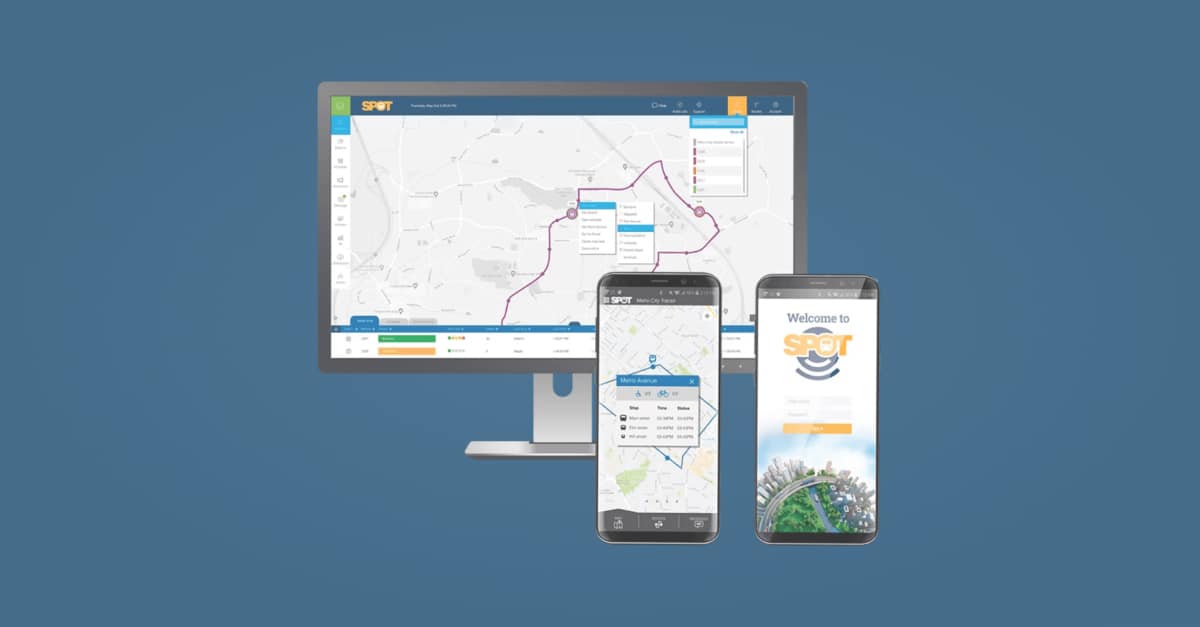
 SPOT: ETA’s Core Platform The SPOT™ ecosystem offers transit management solutions by providing a flexible, modular platform.
 SPOT: ETA’s Core Platform
  All Solutions
 CAD / AVL / GPS tracking
 Business intelligence
 Digital signs and kiosks
 Infotainment
 Automatic passenger counting
 Tally NTD Survey Software
 Tracking websites and apps
 Vehicle announcements
 All Integrations
 Demand-response and microtransit
 Fare collection
 Mobile video surveillance
 Pre-trip inspection
 Solar e-paper signage
 Vehicle health monitoring (AVM)
 Voice communication
 Transit
  All Industries
 Airport
 Campus
 Medical center
 Rail, streetcar & trolley
 Rental car
 Tourism & theme park
 Transit
 Case Studies
  Blog
Blog eBooks
 Wall of Love
 Careers
 Press
Press Events
 Support