Um, at that time I walked in, we were missing thousands of hours of service a week. Stop Requested. This is Stop Requested. by ETA Transit.
I’m Christian. And I’m Levi. These are real conversations with the innovators, operators, and advocates driving improvements in public transportation. Today, we’re wrapping up our four-part series on ABQ
RIDE, looking at how leadership, culture, and operations come together to transform a transit. system. Our guest is Leslie Keener, transit director at ABQ RIDE, leading a multimodal system that includes fixed-route service, the ART BRT line, Sun Van paratransit, and ABQ RIDE Connect microtransit. We’ talk about her path from freight rail into transit leadership, and what it was like stepping into an agency facing major service gaps, staffing challenges, and cultural issues.
Here’s our conversation with Director Leslie Keener. Welcome back to Stop Requested. Um, today we are very excited to be concluding a really interesting series of conversations we’ve been having with the ABQ RIDE, team, uh, from Albuquerque,
New Mexico. Today, we’re joined by the transit director of ABQ RIDE, Leslie Keener. Leslie, how you doing today? Doing great. How are you? Excellent, and, and very excited to, uh, have you joining us today and continue this amazing conversation we’ve been having with your team.
Uh, I wanna get started with, um, you know, this typical question that we ask to our folks. Uh, for listeners who might not know you yet, uh, how do you introduce yourself and, and what you do at ABQ
RIDE? Yeah. So I am the transit director here at ABQ RIDE. It is one of the many departments in the city of Albuquerque. Um, and my role at its core is really public service, um, responsible for delivering safe, clean, and reliable transportation to our community through our fixed- route, which includes our
ART line, which is rapid transit, um, Sun Van, which is our paratransit, service, and then Connect, which is our microtransit. service. So you, you have a very multimodal agency, and it’s interesting because, uh, o- um, in a short span of time you’ve been, uh, putting in place different, uh, modes of service. So you have a very robust, uh, BRT system, uh, that’s been very successful, microtransit, the Sun Van service.
Um, how do you describe ABQ RIDE today in one or two sentences? Yeah, I think ABQ RIDE today is not just evolving, but we’re really transforming the way we deliver these services. Um, you know,
I think for us, ART obviously was, uh, a really big deal for us in 2019. I wasn’t here’ at the time, unfortunately. Uh, I didn’t get to, to see how all that evolved, but I know you talked with Andrew a lot about that during, uh, his podcast. But I did get to, uh, get us jump-started into the microtransit world in 2024 with
Connect, and, and that was a, a game changer for our community. Um, I, I think it was really helpful for us in the two zones that, that we kicked off to, you know, spur some ridership and, you know, get people connected to the rest of the network that, that normally wouldn’t have been familiar with the ABQ RIDE services.
But I think we’re just continuing to look at, um, technology and what it can do for our community and, uh, for our network. Uh, that’s awesome. And, and you have some suburban, uh, areas in, in, in your service area, and then you have some really dense ridership, kinda, uh, uh, areas that have all the, uh, right ingredients for, uh, transit ridership. And, and being able to tailor your service to, you know, the urban, suburban, uh, environment, it just makes everybody more connected and, and just putting the service that people would wanna ride, right? Like, not just putting service out there just to have the service, but actually, you know, making it useful and meaningful for people. Um, what does it mean to you to be leading, uh, ABQ RIDE at this moment with all this evolution? Oh, I think it’s extremely rewarding to me, um, one, in, in so many ways. I mean, I get to lead a team that, that really just has such a passion for the service that we provide and the work that we do in the community, and you really get to see the impact on people’s lives, which, um, is something I think I haven’t seen before in, in other roles that I, I’ve had d- throughout my career.
Um, so it’s amazing to see, you know, as you add the services, like I, I discussed Connect, you know, and you bring those in and you, you get to see how it can completely change someone’s life. You know, really just being able to connect them to their community is huge. Um, you know, you really expand their horizons. You allow for upward mobility, and you allow them to really think of possibilities that they maybe never would’ve ever been able to think about before because they were just limited just because of the transportation.
So speaking of other roles that you’ve had in your career, Leslie, and kind of wanna go back a bit and, uh, trace your, your origin story. Uh, can you give us how you got into public transportation and, uh, you know, eventually made your way to be transit director at ABQ
RIDE? Yeah, I sure can. I mean, I, I guess I, I still kind of tr- I don’t really consider myself a, a transit person. I, I’m getting there. I’ve been in transit now for only about, um, almost four years of my career, so I kinda say transit leadership sorta found me. I really didn’t find it.
And even just going back, uh, early in my life, uh, I wasn’t really tied much to transit. You know, we had the luxury, uh, as a family of, of having vehicles in the house, multiple vehicles. Um, you know, we did live, uh, just outside of Chicago in Northwest Indiana, so, you know, from time to time when we’d go downtown, that would be about the only connection that I had to, to public transit. Uh, Indiana South Shore Line, I’ll give a shout-out there. I, I think that’s, you know, where I got my first feels for transit. Um, but I ended up, um, coming out of college and going into the railroads. So I spent the first 20 years of my career in, you know, basically a freightRailroading. So I still kind of consider myself a railroader at heart. Um, you know, BNSF was the railroad that I worked at for, for 20 years. It really did help to, um, you know, develop me, create a lot of my leadership style and my skills. Very grateful to, to that organization for everything that it was able to provide for me throughout those 20 years.
Um, and then I just came to a, a point where I had a, an opportunity to, um, you know, I was already in Albuquerque. I was working for the railroad out of Belen, um, and just looking for other opportunities to, you know, grow my leadership, uh, grow my skills, and this position, actually for the deputy director position for the City of Albuquerque popped up for the transit department, and, you know, gave it a whirl, and here I am almost four years later, you know, starting to really consider myself a transit person.
Oh, that’s great to hear. I really appreciated the shout-out there to South Shore Line. They’re one of ETA’s customers, and, and a good one. So, um, glad to hear that it had a positive experience on, on your upbringing and, y- you know, the, m- maybe your, your first, uh, foray into public transit. Uh, so when you, uh, when you arrived at Albuquerque, uh, what were some of the, the biggest opportunities, and also if you wanna mention some of the challenges that you, that you saw, uh, that could, you know, kind of prevent you from getting to that next level. What, what were those opportunities? Honestly, the, the biggest opportunity was the culture. Um, you know, I, I could say from day one, just during the city onboarding process, um, and probably throughout the first several months, maybe even a year, um, y- you know, you could tell someone within the city that you’re from transit, and they actually look like they wanted to console you.
It was kind of a grimace. Um, you know, I’ll, I’ll sort of paint you a picture of where the department was. Um, at that time I walked in, we were missing thousands of hours of service a week. So I’ll say that again, thousands.
It, it was, it was a lot, and, um, no one was really seemed too bothered by it, unfortunately. Um, we had nearly 80 vacancies. We had drivers dropping like flies, so that vacancy rate was, was just continuing, um, to increase. Buses were pretty dirty both inside and out. We had a broken bus wash they were getting ready to start doing some rehabilitation on, but we were just kind of, uh, accepting our fate that over the next couple years, the buses were just gonna be dirty ’cause we didn’t have a bus wash.
Um, you know, we had a v- 80% vacancy rate on servicers. We only had four people cleaning all of our bus stops for the entire city. Um, pivoting to, like, safety, there was no dedicated security team for transit. Uh, we were just sharing the city’s metro security guards with the entire city, so they, they really didn’t have any kind of focus that was transit specific, nor how to really respond to transit, ’cause that does require kind of a, a targeted response.
So the response times were really nonexistent. Honestly, our drivers felt just completely unsupported, so they weren’t even reporting issues. Uh, we were also eight months into piloting zero fares, which kinda was taking the blame for all of the above but was not the root cause by any means. Um, and then there wasn’t a whole lot of technology. The technology that we did have just needed improving, and we weren’t relying on any information to make any of our decisions. We were really operating in silos, and there was a lot of just undermining of each other’s works, and
I think a lot of that had to do with the fact that we were just in, in pure firefighting mode. Um, everything was, was reacting to, um, items and issues that, that were ongoing during the day. So there wasn’t a whole lot of, um, long-term planning, um, in the operations side.
It, it was a really, really, you know, challenging time to, to walk into ABQ RIDE, but also an amazing time to walk into ABQ RIDE because, um, and I think throughout my career, even with the railroad, I’ve, I’ve always been put in, in really challenging, uh, situations in which, you know, whether it’s either just underperforming teams or, um, even in including some roles in which we were doing some really, you know, out there stuff at the time, you know, even just trying to get maintenance and transportation on the same page and, and talking and, and planning and, you know, having those kinds of conversations that can be difficult sometimes when you’re in silos.
So I felt like it was a really amazing opport- opportunity and time to be walking into the department, even though there was a lot that needed to, um, to be corrected and fixed, and, and, you know, for us to be able to continue to move forward and, and have a great network, which, you know, I, I think we’re, we’re continuing to make those improvements and really showing a lot of promise here, uh, in the last couple of years.
Well, I appreciate the transparency. Um, and you know, I’m sure that other executives, uh, can empathize with your position because oftentimes that, that is the case. You know, you go into a new organization and, and in, in some cases, maybe it was very well run, and in some cases, you know, it, it might be, um, you know, one that, that needs some improvement, right? It, it needs a kickstart.
Uh, yeah, I’m, I’m curious, when you came in, how, how did you approach that? Because that, you know, I’m thinking about the, the challenges that you just laid out there, and that would be pretty intimidating. Um, m- maybe not to you, and I don’t wanna put words in your mouth. I’m curious how, how you approached that a- and just overcame that on a day-to-day basis of all these sort of obstacles kinda laid in your path. Yeah. I mean, it, it was, uh, it… I guess one, you know, I, I was coming out of the role as a terminal manager there in, in Belen, New Mexico, for the, um, for the railroad, and so
I, I guess, you know, Belen’s kind of, just to give you a little background of some of my freight leader- freight railroading stuff, Belen’s really just kind of like the, um, the, a lot of people refer to it as the Indy Pit Stop of the Southern TransCon.
So, um, you know, you got about 100 trains coming through there in a 24-hour period, 24/7 operations. Everything gets fueled and inspected. There’s a lot of work events that happen there. So it’s kind of pure chaos all the time, uh, controlled chaos. And so, you know, it’s, it’s, it was one of those things where I was kind of used to that and used to, to being able to be the calmIn the storm that’s going on. And I think that that was something that I was able to really bring to the city and to the transit department was, you know, okay, yeah, things are not going quite our way. There’s, you know, a lot of missed service out there, but like, let’s pause for a minute. Let’s, let’s calm down, get our wits about us, and let’s start putting a plan together on what we need to do to address that and, and being real realistic about it. Um, and you know, that did come to, to the point of, of having to do some really tough service reductions at the time because we just didn’t have the staff, and that was part of why we were, we were bleeding out on staff too. I mean, we had drivers working lots of hours to try and keep up and still having all this missed service and seeing no end in sight. And so naturally, that’s not somewhere that you’re gonna wanna stay. You’re, you’re gonna look for other opportunities, and the opportunities were out there to, to move on to other organizations.
So, you know, the big, the big item at the end of the day was how do we keep people here? And, and to do that, unfortunately, at that time, you know, we did have to, to cut some services back, but it, it allowed us to at least kind of pause for a minute and, you know, start to create a better working environment, um, that I think, you know, translates to our riders too. So when we have drivers that are stressed, that are, you know, not getting sleep, working just crazy hours, not getting days off, um, uh, you know, they’re, they’re stressed and, and the riders feel that when, when they’re getting on our buses and using our services. Um, and it’s just not a pleasant experience for anyone. Thank you for, uh, that explanation. Uh, you know, I, I think it, it, it, it matters a lot to the riders, like you said, uh, you know, how the organization is run. Um, it, it does trickle down for sure. I’m, I’m curious how you set a different, different stage and different set of expectations coming in on day one and, and knowing that, you know, these challenges are ahead of you. You’ve got a team here that may be not as organized as you’d like them to be, and you seem to be pretty, pretty punctual, pretty organized, meticulous maybe.
Y- y- you know, how, how do you enact that vision that you have for the agency? That’s a great question. You know, I, I think it, a lot of it has to do with, with being present, listening, observing, you know, um, really identifying problems, and then not accepting defeat. And, and sometimes you’ve gotta get people in a room and start throwing ideas at the wall and, and seeing what sticks ’cause, you know, we had a great… We had a lot of great people on our team, um, at the time with a, a lot of great ideas and, you know, just really not knowing how to get everyone together because you can’t operate in silos. It doesn’t, it doesn’t work well, um, especially when you talk about transit and all of the, uh, different functions that have to occur for, for transit to, uh, move a city.
Um, you know, it requires maintenance, it requires our operations, IT, customer service, dispatch, and if they all have different, different ideas of where transit is headed, where the team wants to go, you’re, you’re constantly going to be fighting against each other. And so I think the biggest, the biggest key to get started with it is just getting everybody together in a room, seeing what’s been working, what hasn’t been working, where we wanna go, and, and getting everybody aligned.
The alignment is, is a key piece of that. And then just understanding that, you know, we all need each other, so how are we gonna help move these goals along? Um, how do, how do I help you, and how do you help me? And, and just really kind of building those bonds. You know, and it was a lot of teamwork building on our end too because th- that’s not really how a lot of the team was operating. And, you know, we kinda broke it down into even doing some things like site visits where we’d go check out, uh, like the aquarium or the zoo or go to one of the food pantries and, you know, really get an idea of how some of the other parts of the city were functioning. But outside of that, it also just opened up the ability for us to start building better relationships with one another. So it was a lot easier, you know, to ask for help if you felt like you were in a challenge and you couldn’t quite figure out what the answer was or, you know, what possible solutions might be out there to, to get yourself into a better position.
Um, you know, and, and a lot of our ideas too, even on the operations side, were coming from, you know, maybe the marketing team or the planning team that, that normally wouldn’t be involved in those conversations of, of missed service. This episode is brought to you by ETA Transit. Legacy CAD/AVL systems were designed when on-prem servers were the only option. Today, agencies need systems that leverage modern technology that are faster to deploy, easier to use, and built for constant change. ETA Transit was built to replace the old model.
ETA’s web-based CAD/AVL platform works in any modern browser, connects seamlessly to what you already have, and eliminates vendor lock-in.
No server rooms, no fragile workarounds, just a modern command center that scales with your operation. The next generation of CAD/AVL is here. Learn more at etatransit.com.
Uh, it’s clear that you’ve taken a, a people first approach, you know, as you started your journey at
ABQ RIDE. How have those priorities evolved over time? You know, you get your team in place. Most people are aligned most of the time. Y- you know, what, what comes next?
Is there a kind of a, a second step there that you can say, “Okay, now we’re ready for this, this next stage in our development”? Yeah, I, I think– I’m glad you said that ’cause people, people first was, that was really very much my philosophy. You, you’ve gotta treat people right. Um, you treat people right, a lot of the other things end up taking care of themselves.
Um, you know, and I still think we’re undergoing the culture change. It’s, it’s not something that you can do in just one to two years. It, it takes time, and, and it, it takes paying attention because you do have people that will naturally just, you know, kinda fall back into the ways that they’ve done things. I mean, there was a certain way that transit was run here for, you know, for many, many decades. And, you know, to step out and have a different view on things, you know, eventually you kind of, like, roll back into the way things were. So you’ve gotta be able to notice when those are happening and, you know, have those really candid conversations with people about, like,
“Okay, I’m noticing that this is starting to happen again. You know-What do you think is, why is that happening and, and what do we need to do to get back to where we need to be?
You know, on top of that, over the last year or so, we’ve made some changes to our operations organization. Uh, we did split apart our fixed route and our paratransit operations, um, in, into two different divisions, um, which I think has helped to give us some focused attention to both of those and, and put some, some new leadership in place as well that very people focused on supporting, you know, both our CDL and non-CDL drivers.
Um, you know, and now as an organization, we’re really starting to, um, see some transition on some of our other division managers as well. Um, you know, just, just through retirements, we’ve had several of those here over the last year in vehicle maintenance, in planning, human resources, and, um, in our training organization, which, which is a new organization too. We didn’t have a training, specific training department, um, when I first stepped into the role. So that’s something that we had created.
So now I’m kind of finding, you know, as we’re bringing in new leadership, that we’ve gotta set that expectation again and we’ve, we’ve really gotta sit people down, um, get them to start interacting with one another, building those relationships, and then also just creating the alignment, um, throughout the organization that we need to continue to progress all of the cool things that we’re trying to progress throughout the network.
Yeah. It sounds like, um, you know, definitely establishing the leadership. A- a- and leadership can make or break any organization, uh, but it’s critical for setting up the employee culture. And, and you spoke about that cultural shift that is still happening. And, and, you know, I, I tell you, I, I, after talking to your team, I can see it myself. So i- it seems that first you stop the bleeding, uh, the issues with the employees leaving, you know, the, the, the e- the challenges with keeping up with the service, uh, switching that culture and the way the employees align with the organization, and then going through those stages, right, for every team. You know, like the, the forming, norming, the storming, and performing. And I think that you are now just getting into that performing where things are moving, uh, faster, but also the, the, the employees are happy with coming to work to ABQ RIDE. And, and I can tell you after speaking with your team, the passion, like ABQ RIDE today is a great place to work. I also know you have some positions open out there, so for those listening, uh, that might be interested in, you know, the next step in their career, I would 100% encourage you to take a look o- at, uh, any opportunity at ABQ RIDE.
Um, I would say that the, uh, training move, uh, is definitely one of those, um, strategies that is, is helping move things forward.
A, a lot of agencies, they’re challenging with, um, recruiting bus operators and keeping them, and, and not having the power to, uh, you know, train CDL and, and certified and, and getting behind the wheel. So having that training, uh, division created not only to, you know, for new employees, but e- even retrain, uh, the existing, i- it sounds to be one of those critical aspects of the transformation. I, I wanna state right now your vision, I, I mean, your, your mission as an organization. And, and I wanna ask if that was, uh, revisited when you c- uh, came in because, uh, the, the mission reads, “ABQ RIDE’s mission is to provide the community with safe, clean, and reliable transportation.” And the conversations with the, with your team members that we had so far, they’ve been about those three pillars. The, the, the safety, cleanliness, and reliability o- of the service.
Um, so I wanna ask you, how do you see those three areas fitting together into a larger modernization effort? And if you could speak a little bit of how do you, uh, like did you restate that, that mission when you came in? Because aligning the employees is, is also having them understand what is the purpose of us, uh, to exist. So, so could you speak a little bit about those things?
I sure could. Yeah. The vision we did. We, we actually… or the mission, we actually did sit in a room and, um, you know, we revamped our, our mission. We also, uh, created our core values, which, um, our core values are DRIVE, and that’s dependable, respect, inclusive, value, and excellence. And so, you know, our mission is really what o- what we’re about, who we are, or what we do, and, you know, our values are how we go about doing that and, you know, really incorporating them into, you know, everything we do here at ABQ RIDE. So, you know, if
I’ve got some goals in mind, I, I should be tying those to, um, cleanliness, safety, reliability. And, and they really are pillars for, you know, any transit agency, and I think that’s why we lean so, so heavily on, on the three of them. And I think it’s because, you know, these are items that, that have huge implications for the riders in our city.
Um, you know, they, they want to feel safe when they get on the bus. They wanna feel safe when they’re waiting for the bus. And, you know, if, if it’s not clean, that tends to make you not feel safe.
Um, so those two kinda tie hand in hand. And, and reliability is also a core priority for us and a core value because people need to be able to know that the bus is gonna come, it’s gonna come on time, it’s gonna be able to get me to where I need to go because a lot of people depend on using these services, you know, to be able to earn a living. And so if, if we’re not reliable, then they’re not reliable.
And the reliability also kind of ties back into safety, I think we found. You know, as you’re missing a lot of service and, and you’re not reliable to the public, you, you know, you’re leaving people sometimes standing, um, here in Albuquerque, it gets super hot, right? And so if we miss a busIn some cases, you might have someone that’s now waiting on a bus for an hour in some locations, um, because of the service that, that we have. And, you know, as they’re waiting, they’re obviously not happy with the service, so, you know, they’re kind of escalating. They’re not in a good place, and then they get on the bus, and they’re taking it out on our drivers, and so it just comes full circle. And so, you know, really thinking about those three pillars, safety, cleanliness, and reliability, if we can perform and deliver on those three, um, it, it just helps to bring people to transit. They wanna be a part of that, and they wanna use it as a service, and that just helps to, you know, make our city, uh, a better place. We can move more people and, and get them to where they need to be, and, um, it, it’s just a lot better, uh, for us all as a whole. Yeah. And, and public transportation, uh, drives and supports the economy. And, you know, like you mentioned, a lot of those folks, they’re going out shopping, they’re going out to work or to school. It’s that access to opportunity that you provide them, uh, by having a, a system they can use and, and, and get them to where they need to go. Uh, I wanna ask you about what you’ve learned a- and you heard from your team, those employees that are on the ground, uh, making the change.
Uh, what have you heard from your team, and, and especially on this transformation? Yeah. I think, uh, I think initially change is hard. It’s, it’s not something that, that most people like. It’s, it’s kind of one of those things against, you know, human nature, even though you need change to survive. Um, and so I think it’s, it’s scary for people. They, they, they… You know, it’s, it’s an unknown.
And so I, I think one of the things that, that was, you know, a lesson for me, as I mentioned earlier, is just being present. And, and that, that goes to getting the entire leadership team present.
So you’ve gotta be engaging with folks. And, and even with our, our mission and our values, it’s, it’s one thing for myself and the leadership team to sit in a room and, you know, okay, say we’re gonna be safe, and we’re gonna be clean, and we’re gonna be reliable. But, but we need to get that down to all the employees within the organization a- and have them understand the why behind it, why it matters, you know, why it helps them. And, you know, that way that they’re engaged, and they can start seeing those changes because that’s where the real magic happens.
It, it’s not about developing all of these, you know, ideas and these mission statements and these core values, but it’s actually driving it down into the organization so that the employees and then also the people that use our system can see the changes happening.
Um, you know, with the drivers especially, I, I think it was a big deal for us to just even be coming down and, and sitting in the driver’s lounge and having conversations with them. Um, you know, very quickly, myself, my deputy directors, we made some time. We sat down. We had conversations with them. We still do that to that d- to this day, and I’ve been able to see that evolve over the last few years.
Um, you know, initially when we h- sat down and had those conversations, no one really wanted to talk to us. Mm-hmm. Um, and so you’re kind of forcing those conversations, getting people comfortable with you. So you can’t just show up once. You have to show up multiple times, and, and you start to see the engagement change. So it went from no conversation to just tons of negative stuff the next time that we were there of all the things, you know, that are wrong, which is amazing. And you’ve gotta be able to hear that stuff because that’s where the change lies. That’s where you can now set your direction of these are the things that we need to fix to make the lives of our employees better, which will then help to attract more employees. And, you know, we’ve seen this evolve over the last few years of now I can go, and I can hang out. I can walk through the driver’s lounge and have just positive conversations. And every now and then, yeah, th- hey, this could change, but there’s a lot more of, wow, you know, now you’ve got transit safety officers out in the system.
I see them responding to things. They’re helping me out. Um, you know, I’m really seeing a difference. And, and that for me is the magical point of where you feel like you’re starting to make an impact.
Um, and so I, you know, I really think that, that it’s gotta be one of those things where you’re including everyone, and you’re helping them to understand why this is your mission, why it needs to be their mission, and, you know, how we’re going about doing these things. And then getting their input so that you can make a difference in a way that is actually tangible and makes sense for the employees that you serve. You have to be present for your frontline employees. I, I think, uh, what you said is, is quite powerful.
It… When you have those town hall conversations with the frontline employees, and at the beginning, uh, they, sometimes they don’t wanna talk to you because it’s like, “Oh, we already mentioned these things in the past, and nothing happens here. So what’s the point?”
And as after you start engaging them, you know, uh, over and over again, and you start giving them feedback and, and getting their feedback, and they, they start seeing things are happening, that you start earning their trust, and they buy in. It’s like, “Oh, okay, you are actually serious about improving the organization, and I can see how things are… You’re putting in place to, you know, make things better for, for all of us. Now, you know, I, I’m on board.”
So I think that, that transformation process, uh, I would say that, uh, a key component of your transformation was exactly there, like supporting and being present, uh, for your frontline employees. And, you know, o- one of the things I’ve noticed, uh, wh- when
I was on site, uh, visiting your team, is the importance you’re giving to safety. Uh, you know, your manager of safety just starts all the meetings, uh, speaking about safety, reminding about, you know, everybody about the, the exits and the, the, the plan, a- any kind of, um, a safety event.
So, like, keeping safety paramount. It’s, it’s something that, that is happening i- in your agency. So definitely, uh, the transformation is, is happening.
I, I wanna ask you, y- y- you know, w- what do you think are the biggest signs that ABQ RIDE is becoming a, a more modern agency? When I think about modernization, uh, really the three things that I– that come to top of mind right now are, are the apps that we’ve got out there, which is, is something that, that we hadn’t been using a whole lot of in the past.
Um, so to have three is, is pretty cool. Um, I think we rely o-on those quite a lot, uh, to make the customer experience much better. And when I talk about the apps, the apps I’m referring to are the, the transit apps. So really helping with just our, you know, the reliability issues, and that was a big one for us when, um, as, as I said, we had a lot of missed service out there. We’ve, we’ve gotten so much better here in the last year. Um, you know, we’re, we’re not in the hundreds at all. Sometimes we don’t even have any, which is, which is pretty amazing, I think, for a transit organization. But that was a good communication tool for us to be able to at least let people know if there’s not gonna be a bus out there, um, you know, they can check the app and make other plans instead of being stranded at a stop and not knowing that the bus isn’t gonna be there until the bus is supposed to be there and it doesn’t show up. Um, so that’s been a big one for us.
I, I think the See Say app is another one that just really does, uh, play into our safety initiative and, you know, putting the power back in the rider’s hands to where they feel like they have someone that they can reach out to very quickly if something is occurring. And it doesn’t necessarily have to be safety, it could be for cleanliness or, you know, even just customer service. Uh, we do have a lot of, uh, thank yous come through over for our drivers on, on both of those apps. But it’s, it’s a huge thing for, for someone to… You know, prior to that, they were either maybe placing a call to 311, which, um, as, as you’re probably aware, those calls sometimes can take anywhere between two to three days for us really to get back to the person on and, and make a difference. And a lot of times by the time it makes it to us, it’s already been corrected.
Um, so by being able to use the See Say app, we’re able to do some real time, um, corrections for people and, you know, even have and engage in a quick chat with them, which has been some great feedback that we’ve gotten from people. They feel like they’ve got support while they’re out there and, and they’re not alone and, and that is something that’s huge in trying to attract people onto your system. And then finally, the, the ABQ Ride Go app is, is another one, and this has been, I think, a, a real game changer for our community, especially for our Paratransit community.
Although it does also support Microtransit and our Connect as well. But for our Connect and Sun Van, Sun Van particularly, um, you know, we’re, we’re blind really. They, they didn’t have a way to see where their ride was.
They couldn’t book their rides online, so they were really dependent on calling into our, our customer service lines, which, you know, a lot of times the, the wait times were, were quite long, and so there was a lot of frustration there.
But, you know, I’ve heard story after story with that of how just, uh, life-changing it has been for people not having to sit out and wait for their van, and actually knowing where their van is so that they can keep, you know, doing whatever it was that they were doing and then, you know, coming down and being ready to get on the van as soon as it’s gonna show up. And you don’t think that that’s gonna do a whole lot for someone until you, you hear the stories of them coming down and waiting for 20 to 30 minutes for a ride, right? And you think about all the things that you could have done in that time period. Um, you know, it really does help to create more freedom for people.
And, and you’re transporting the most fragile, uh, members of the community. And, you know, i-if you don’t ride the service or you don’t have a relative that does ride the service i-i-in, on the Paratransit side, then, then maybe, you know, you, you don’t see that impact, uh, sometimes.
Uh, but, you know, when you do, when, when your, you know, you know, elderly mom or, or you have a disabled, um, you know, kid that, that is depending on the service and, and you see the improvement in their lives.
Like e-even some of them that ride Paratransit that, that have, uh, some sort of disability, uh, they also go to work or they go to school. A-and so improving the service and starting to improve the service first for that community, I, I think says a lot about how much you guys care about the members of your community. Uh, I wanna ask you some questions about the future, right? Like we… You made some improvements, uh, technology-wise that is, uh, helping those demand response services. Uh, you’re now, you know, stop the bleeding in a sense in terms of, you know, the challenges with staffing, uh, due to a former culture, and now improve that culture, all employees aligned, uh, you know, getting that training, loving coming to work, and being in an environment that just is so fun and, you know, so, uh, purpose driven. Uh, I wanna ask about the future.
Uh, you know, what does success look like over the next few years at ABQ Ride? Uh, that’s a great question. I, you know,
I… Continuing improving of the culture. So just being able to get, you know, more feedback from employees and being able to act upon that and, and continue down this path ahead. You know, we still have a lot of vacancies that we do need to fill, so, you know, being able to, to speed up and attract more individuals so that we can continue the implementation of our, our new route network in less time than we’re actually planning. I, I think Andrea had mentioned, you know, we’re, we’re planning for about a three to five year rollout. It would be amazing if we can shorten that time. Um, and I really look forward to, to being able to do that. But not only just implementation of a new work network, but being able to talk about growing even further beyond that, because even that new network is, is not enough service for what the n- the people in Albuquerque need. We, we already don’t have enough service out in the streets, even with this 2019 recovery plan that we’re putting in place.So I think that would be, um, something that success would look like. Thinking about long-term safety, um, having our safety team fully staffed.
Um, we’re getting ready, and one of the jobs that you talked about was a transit safety and security oversight manager that is posted. We’re also gonna have another job here in the next couple months, which will be a transit safety, um, and security data analysis coordinator.
Um, so those two will be key in really just establishing our safety and security program. And then continuing our transit safety officer hiring, so we’ve got about 27 of those transit safety officers right now on the system. We’re trying to get to about 87, so being able to fill all of those positions I think would have just major impacts on our system. And then I think I’d be remiss if I didn’t mention one of our big projects, which is Uptown Connect, and, and that’s a project really linking transportation, housing, and commerce in a transit center development, and it’s in one of Albuquerque’s liveliest urban centers. And I think that that is gonna be a project that will be amazing and, and hopefully by the end of the year we’ll be talking about a groundbreaking for it. Wow. That, that all sounds very exciting, and, you know, I wish you good luck and, and a lot of success with those projects. We definitely would love to have you, uh, maybe in a year from now to see how much progress we’ve made and, and hear about those, um, new services and, and initiatives coming into place. Uh, if, if you were speaking to your riders in, in the community as a whole, what would you want them to understand about where ABQ
RIDE is heading? Yeah. So I think we’re working toward the comeback because our service levels are not where they need to be, but the comeback is not to 2019.
It’s to an ABQ R- RIDE that’s really evolved and transformed. It’s, it’s well beyond where we were with 2019 in just service levels, but also in technology, so ease of use for the system. You know, I, the… People have their phones on them all the time. It’s, it’s almost part of your hand anymore, I joke.
And so we’ve got to be able to put the power into their hands so that anything that they need to know about our service, where to, where to get paratransit rides, how to apply for eligibility, how to get on ART, how to, where it takes you, how to transfer along the system, how to use ABQ RIDE
Connect, all of that should be just seamless, and I think, um, that’s where we’re headed. That’s very exciting and, you know, good to hear that services will be expanding so folks will have more opportunities, uh, to navigate ABQ RIDE and, and, you know, the community as a whole in Albuquerque. Uh, you know, the places that you go are sometimes the opportunities people have, right? Like for employment, for education, uh, you know, even to have fun, like, you know, to go to a park. So it sounds very exciting for, for the folks of the community. They’ll be able to access more and be able to do more, uh, inside the community. I wanna ask a couple more questions before we start going to the conclusion part of our podcast, and it’s what lessons from Albuquerque do you think will resonate with other transit agencies going through a modernization effort? Yeah. So I think obstacles and challenges don’t equate to failures.
I think we need to see them as opportunities to change, pivot, and improve, and it really does take the entire communicate, the community to make it happen. Um, from our advocates, who are amazing, uh, to our riders, to our staff. You, you can’t forget your own staff, and I think sometimes, you know, we, we just see them as, as the people who get it done and, and don’t support them as they need to be. But we also need to be including the people that don’t ride because those are users that are untapped, and really making it beneficial for them so that we can continue to grow our services is, is extremely important.
Thank you for that answer. That, that, that sounds, uh, really exciting. Uh, and, and something that other directors, uh, that are walking into, you know, a challenging situation, um, you know, could see as a little bit of relief or, or a hope for, you know, their, um, their own journey as they’re facing those challenges at, at their new agencies.
Uh, you know, my final question before we kind of start going through key takeaways from our conversation, if you could leave lisa- listeners with one takeaway from this entire ABQ RIDE series, all these conversations we have with you and your team, what would it be? So I think it would be to take a realistic assessment of your team and your services and where you’re at. Be transparent with the community and the staff. And although you need to live in the now and know where you are, you also need to live in the future, and you need to dream of what the possibilities are, and let the team dream big with you, too. And I think that’s when you can really start to, um, make some, some targeted changes that are going to be so impactful for the community.
I really love that. And so as we round out the podcast episode here, Leslie, I, I took a few, uh, key takeaways from our conversation. Probably too many to go into, uh, because I made so many notes. Uh, there were a l- lot of r- really just nice highlights and gems in there, uh, but a few of them that I think are particularly meaningful that can help our audience. Uh, one, prioritize the people, your staff, and your riders. Uh, leadership will impact your service then, and that includes the, the riders, so all of that does trickle down. You need to be present both mentally and physically, and engage your staff, engage the riders, be in the public, and, you know, understand that it is a public service that you’re providing. Uh, you, you didn’t quite say this, but I, I think it, uh, the values need to be a part of the organization’s DNA.
Uh, it really needs- Definitely … to be present. YeahUh, and obs– you, you said this at the, the very end there, but obstacles and challenges don’t mean failure. Use them as opportunities to improve. I mean, wow, that, that really hits home.
Um, realistic assessment, uh, of your, of your service, of your staff, and then be transparent with the public. Did I miss any that you would add? That was pretty good.
Yeah. I mean, you gave us a lot, so there’s a l- there’s a lot to work with. Uh, no shortage of, of nice quotables there, so excellent.
Um, y- you know, as we, as we start to close, I would like to ask you in, as a part of our reoccurring segment here, we have a quick fire question. So just, uh, first thing that comes to your mind, you give it to me, and, a- and then we’ll move on to the next question. Sound good? Got it.
Okay. All right. So what is your favorite place in Albuquerque? So I think I would say the Bosque. Oh, okay. All right. Excellent. What is your favorite transit idea that cities should try?
Maybe one that, you know, ABQ RIDE has already put into place. So I actually, I think mine is one that I haven’t tried, and I’m super interested in it- Mm-hmm … and that’s autonomous vehicles.
Okay, okay. All right. Yeah. I mean, that, that is, uh, that’s definitely the, the hot topic, so- Yep …
well, uh, hopefully you can get there. I, I, I think there’s a, you know, a lot of future in that, so. Uh, though, with the service that you have now, you, you’ve got bus, rail, uh, w- nearby anyway.
Uh, w- of those two, which are your favorite? Which is your favorite? I kinda feel, I kinda feel like this is making me choose between my kids. Um- Yeah. But if I ha– and I can’t get away from the rail. I mean, I’m sitting here right now, and although
I don’t, I don’t have rail under my purview, it is literally out, right outside my window. Um, but you know, I have to say rail ultimately shaped me. Um, so- Hmm … I, I’m gonna go with rail.
Mm. Sorry, guys. Okay. Well, hey, you gave us a more straightforward answer th- uh, than Andrew did. I had to kinda get that one out of him when he said the bus. Yeah. He, uh, he punted on a few of these, too. He did, he did. He took the easy way out. We, we roped him back in, though. We, we got him.
Good for you guys. Uh, what is one word that you would use to describe ABQ RIDE’s future? Oh, I think we’re trailblazing.
Trailblazing. I love that. Wow. That’s, uh, that’s awesome. What a, what a good word. Well, Leslie, thank you so much for your time today. It’s really been a delightful conversation with you and your colleagues. We, you know, Christian and I, the whole ETA staff, we really wish you the best of luck in your future endeavors, and, you know, hope you get those autonomous vehicles and, you know, all the projects. Um, you know, get back to full service. Uh, you know, get that ridership back up to 2019 levels. We’re, we’re really rooting for you here. Thanks. We’ll get there. It- I have no doubts in this team. Absolutely. And for our listeners who wanna follow along with that journey and, and see how it, it progresses throughout the years, uh, how can they do so? How can they connect with you? Uh, they can go to abqride.com, follow us on socials off of there. Um, and then I am on LinkedIn as well, so, um, feel free to shoot me a message.
Excellent. Well, again, thank you so much for your time. And to our audience, thank you as well for listening each and every week. We really appreciate it. We’ll be back next Monday with another episode of Stop Requested.

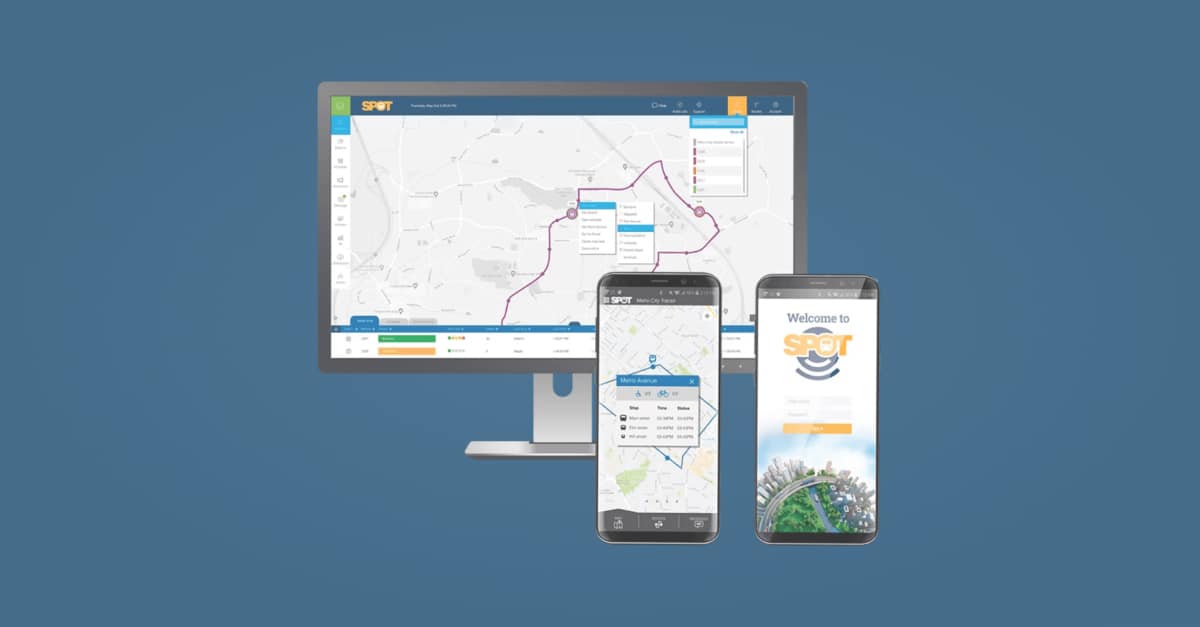
 SPOT: ETA’s Core Platform The SPOT™ ecosystem offers transit management solutions by providing a flexible, modular platform.
 SPOT: ETA’s Core Platform
  All Solutions
 CAD / AVL / GPS tracking
 Business intelligence
 Digital signs and kiosks
 Infotainment
 Automatic passenger counting
 Tally NTD Survey Software
 Tracking websites and apps
 Vehicle announcements
 All Integrations
 Demand-response and microtransit
 Fare collection
 Mobile video surveillance
 Pre-trip inspection
 Solar e-paper signage
 Vehicle health monitoring (AVM)
 Voice communication
 Transit
  All Industries
 Airport
 Campus
 Medical center
 Rail, streetcar & trolley
 Rental car
 Tourism & theme park
 Transit
 Case Studies
  Blog
Blog eBooks
 Wall of Love
 Careers
 Press
Press Events
 Support