Stop Requested. Welcome to Stop Requested, the podcast where we discuss everything transit. I’m your co-host, Levi McCollum, Director of Operations at ETA Transit. And I’m your co-host, Christian Londono, Senior Customer Success Manager at ETA Transit.
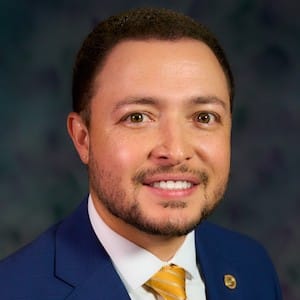
Today, we’re joined by Dr. Liliane Finke, CEO of ExecuteCoach 360 and a longtime transit executive who built a
24-year career shaping teams, culture, and professional development within the industry. We talk about how she grew from a marketing assistant into a leader in organizational development and why continuous learning and mindset shifts are so critical in this industry. Liliane shares how she helps agencies navigate red tape, design training that actually changes behavior, and support leaders through big transitions. We also dig into her own move from transit executive to executive coach and her advice for everyone in public transit who’s thinking about their next chapter. We hope you enjoy it.
Welcome back to Stop Requested. Levi, how are you doing today? I’m doing splendidly. How are you, Christian? Phenomenal. I, you know, very excited about, uh, today’s episode. Uh, today we have the privilege to, uh, interview a very dear friend of mine, uh, a mentor through my, uh, transit career and is just an incredible transit professional, uh, Dr. uh, Liliane Finke. She’s the CEO of ExecuteCoach 360, and she’s a, a longtime transit executive helping transit agencies around the country. Uh, Liliane, how you doing this morning? Oh, I’m doing fabulous. How are you doing? Doing great.
And we’re very excited about this conversation and learning about your transit journey and also your, uh, word of advice for all of our listeners and transit professionals out there.
Oh, I’m excited to get it rolling. No pun intended, right? So, Liliane… Right, right.
You know, o- one of my favorite parts about doing this podcast is figuring out how people got started in public transportation, and I’m, I’m curious, was yours a linear path or did you kind of snake your way there and, and end up in public transit as a transit executive for a number of years? You know what? Fell into it. Uh, and if you speak to quite a few people- Mm-hmm. … they’ll tell you the whole, “I fell into it.” It was like way back in, you know, 1995. I, I was single parent, just divorced, uh.
I knew nothing about public transportation, not one thing. I knew there were buses. I knew that. And I knew that I would take a bus down in Miami when I was in my teenage years to go to South Beach. That’s about all I knew about buses. So basically, I fell into it and, um, started in the marketing department as a, as a marketing, um, as a, a marketing assistant. And back then, the agency that I was, uh, that I was hired with, they didn’t have a marketing department. So it was a brand new department. Uh, so it was starting from the ground floor. And I’m like, “Okay. Well, this is interesting.” So I just went for it and one thing led to another, and the next thing I know, 24 and a half years later. Uh, not a marketing assistant. We’ll talk about that in a little bit, uh, the different areas that I ventured into. But that’s how I started, Levi. Just fell into it, and I think it was meant to be. Let’s put it that way. You know what they say, Levi. Once you’ve got public transit in your blood, you can’t get it out.
And I think, Chris- Uh, it- … I think you’ll agree with that, Christian. That’s right. Yeah, it seems to be the case, you know, people get in, they don’t really understand or know much about public transportation, maybe have ridden it a few times and o- once you get in, you’re, you’re hooked. Yeah. And you stay in for, for decades, uh, as we’ve seen on, you know, talking to people on this podcast. Uh, do you have a, a favorite memory or accomplishment from your career? You know, that’s a great question. There are so many accomplishments and memories, uh…
I, I, I could just go on. But when I saw this question I thought, “Wow, I need to really think about this.” And the first thing that popped into my mind was the biggest accomplishment, was the continuous learning.
It was constant. Constant learning, uh, learning something new, uh, it, it just never stopped. And in addition to that, was also my career progression. So, you know, I look back and I went, “Wow, started off as a marketing assistant,” which is great, okay? Started from the ground floor. Now, keep in mind at that time, I didn’t have a college education. So
I had a high school degree, which is great, okay? So I didn’t have the education. I’m like, “What am I gonna be doing in marketing?” But I pushed myself through it and worked my way through, and I really, I, I thank the agency for that, to open the learning opportunities for me to do the progression. So I started in marketing, went up to customer service, um, ran the customer service department, and then next thing I know, manager of marketing and customer service and so on and so forth, and the final was the organizational development, senior manager position. Which, which was awesome.
I would have never dreamed of that, and without that I wouldn’t be where I am today, having the passion that I do for organizational development. And the other thing, the other accomplishment was the learning library. Uh, I had pulled together a huge, uh, a huge learning library for all of the employees at Palm Tran which included over 347, give or take, books on leadership, management, career progression, uh, juried journals, articles, uh, anything you can think of that was right there for them to use, uh, for the whole… for all of the facilities. So that was a huge accomplishment, uh, to work with… an agency that was open to that and say, “Oh my God, this is, this is really, really important for the employees to show, hey, you’ve got all the resources here to learn and move ahead.” So those would be my memories and my accomplishments there, Levi, was the continuous learning and being able to set a system for growth and for the employees to learn through the library. I love that, and that’s, you know, quite the legacy, and also really speaks to your desire to continue learning, right? That you now have your PhD and it’s something that, um, you know, that is very clear when talking to you, that education is important. Uh, y- you know, on the, uh, on the other side of this, right, we, you’ve had all these accomplishments, you have the, the learning library. Uh, wha- what are some challenges that you faced and how did you overcome them? Do you … Is there one that is particularly powerful?
Yeah. Th- The, and the challenges facing not just as a leader but even consulting in transit is implementing change in a regulated environment.
And I think, Levi, I think you know what I’m talking about and s- and Christian as well. It is very difficult to implement change in an environment that’s regulated. That’s not a bad thing. I’m not saying it’s a bad thing, but it takes longer. Uh, y- you, you’ve got policies, you’ve got procedures, you know, “Well, we can’t do that or we can do this.” So to me, that was a challenge, because I am let’s get up and go, let’s make it happen, let’s, let’s put these changes in action, let’s, let’s do this. Eh, well, we, you know, you have to wait or y- you have certain bridges to cross before y- you get to the other side, to the side that you want to get to. So that would be one thing. The other one was, um, develop- y- delivering training that actually changes behavior. Um, you know, training in, in transit is not one fit, one fit for all.
It’s not. You’ve got operators, you have supervisors, you have managers, you have technicians. You know, they all learn differently. So another challenge was developing the training that they want to change, that it’s different than, okay, how to fix a bus, how to, uh, you know, how to …
Planning for it is another one. You know, how do you plan for routes? It, it’s, it’s, it’s, it’s different. I- It’s not just, “Hey, you know, let’s learn how to communicate better.” So that was another challenge. The third one was shifting of mindsets, especially in some environments that resist change. We have the fixed mindset and we have the growth mindset, and shifting from that fixed mindset to the growth mindset is not easy. First thing is, you have to want to shift, and it’s … And you have to look at it like, okay, this is something new. For example, encouraging moderating leadership practices. What’s a moderan, you know, mod- moderan leadership practice? Emotional intelligence, communication, uh, executive coaching. And here’s a big one, and
I’m sure, Levi, you’re familiar with this, emotional intelligence. That’s huge right now, as we all know. Mm-hmm. So, you know, the challenges, those are some of the top three, but in, in my, you know, the way I’m thinking, those are my top three, is the shifting of mindset, delivering training that actually changes one’s behavior, and trying to implement change in an environment that’s regulated, for example, a government environment.
So Lili, you bring up a, a lot of really important points there. Those challenges, I think, are shared by m- many of our audience as well. I- I’m curious, what was your approach when you were faced with a situation that had a lot of red tape and you’re trying to change people’s minds? Uh, how did you go about doing that? Were there particular, uh, practices that you employed to be able to change people’s mind in a very regulated environment? Okay. Excellent question. First one, first one is patience. But the second one is to let them see what’s in it for them, the what’s in it for me and what’s in it for them. This is a … For example, this is a training program that we really support, we want to push at the agency, uh, it’s keeps hitting red tape.
Okay. Why? You always go back to that why. Why, why is the red tape there and what’s the good, the bad, and the ugly of that red tape? And it’s, it’s not just convincing, ’cause sometimes you have, y- you, you have challenges and roadblocks you can’t go over. So patience is one of them, is to sit back and say, “Okay, they don’t want to do this right now. We’ll put it on the back burner. We’ll come back and visit again.” When it’s definitely going through the red tape is you got to have a lot of patience, but you also have to understand the why. Why on the other side, why is it taking so long?
I mean, I have this joke that I said I ordered a, a pen in 1995 and I’m still waiting for it . I mean , it’s like, “Where’s my pen? I ordered it in 1995.” You know? So there’s, there’s always
… There’s a, there’s a reason. There’s always a reason. It’s to understand what that reasoning is and also just saying, “Why is this being bottlenecked? What can I do about it?” But on the other hand is what can I do to show them what’s in it for them? For example, the learning library, that had some red tape, had a lot of red tape. But then when they finally realized, “Okay. Well, you know, wh- why, why can’t we bring this in and help the employees?” Uh, they generally couldn’t give me an answer, but you know, you’re right. So it’s just being patient and understanding the policies and procedures of the e- of the public agency that you’re in.
Yeah. And, and, you know, also understanding w- like you said, what’s in it for me? Like, but also understanding those different people, right? Like, those different personas. When you’re talking about technicians, when you’re talking about, you know, executives or, or, or transit planners or, you know, different folks within the industry. And, you know, based on what I’ve heard from you, like, I can tell that your career and being exposed to different people in different areas of the organization, you know, marketing, you know, operations, uh, all these folks, eh, uh, have allowed you to understand how to better approach them when it comes to coaching, learning, and development. So I wanted to ask you, what inspired you to transition into executive coaching? Right? Like, you know, you started… You, you mentioned your career started in marketing, but now you focus on executive coaching and professional training. So what inspired you to get there, uh, after your transit career? Um, Christian, thank you for, for that question. Um,
I have always been driven by the term transition. Always. Uh, it’s a word to me, and I think to, to the listeners, that would describe growth in one way or another. You’re transitioning from one career to another, that’s growth. Personally, your transition from one home to another, because your home that you’re in is growing and you’re like,
“Oh, I’ve got four kids now. It’s time to get another home.” That’s transitioning. So to me, the term transition describes growth, no matter how you look at it. Uh, sometimes it’s not. Sometimes it could be negative, positive, and different, but it describes growth. I have been involved in coaching for over 20 years, for over 20 years, and professional development training. I have always been an advocate for that. Um, as a, as a, as, as a teenager, I was an advocate for that. It, there’s just, you know, it’s just something that I don’t know if I was born with it. You know, we’re always born with, with these different passions and things. We don’t know where they come from. But I am an advocate for this, always will be. That growth is essential, and transitioning is a way of life. It’s, it’s just like, you know, you hear people say, “Change.” Change is the only thing that’s constant. Uh, you, you might have your coffee in a different way tomorrow morning because you don’t have cream. Now you’re gonna have to change your mindset on that. So it’s, it’s what I believe in. I’ve always been an advocate. When I retired from transit,
I knew, Christian, I knew it, that this, the professional training and the coaching would become my second… I’m not even calling it a career. My second passion. There was no way out of it. It was gonna happen, because I, I was just not gonna retire and go off into the sunset.
That’s not what I was gonna do. And, and I, I’ve been witness of, um, the growth and that change and transition that, that I’ve seen in other folks, uh, after, um, you know, they, they, they came to you for coaching. And, and me personally, you know,
I, I, I, I got my master’s degree after you encouraged me over and over to go after it. And, and honestly, hearing your, um, you know, your career, like how you, you know, started and you didn’t even have your degrees back then, but you said, “I’m gonna go after them.” And then you’ve seen how much that had an impact on your own personal life, and then now you coach other folks in how to get to those places as well, uh, is really commendable.
So I, I wanna learn more about when you- But Christian, if I can interrupt you and go back to that. Mm-hmm. Uh, working with you is, was, will always still be a pleasure. And I’ll tell you why. Because I do remember that conversation we had. And it was like… I’m like, “You know,
Christian, go for it. I don’t wanna hear excuses. Just go for it.” But you took it and you did something with it. It’s not like, “Oh, yeah, well, let me think about it.” No, you, you went out right away and you registered, and I remember you telling me, “Oh, look, I, uh…” And I was all excited for you, and you didn’t stop. The momentum kept going. So when you… When you’re coaching individuals and working with anyone that is preparing to do that, quote unquote, transition, it’s important that you have to have that mindset shift, which you have and you continue to have. So I’m glad you brought that up. That was a good memory. Thank you.
Yeah. I, I, I agree with that. Um, but n- and now I wanna learn about what your executive coaching, right? Like, you’ve been coaching with, with, you know, different executives and C-suite, you know, uh, professionals. Um, could you tell us about a time when you coached a leader or agency through a significant change, and what was the outcome? Uh, you know, the… First of all, you gotta think about the ultimate goal. And the ultimate goal when coaching or working with a coachee, whatever, or working with an organization, an agency, is driven by the desire to change.
If this desire is not there, forget it, okay? But if desire is there, then the outcome is gonna be a positive turn. Again, connecting it back to the mindset shift. Um, I’ve coached a lot of individuals one way or another. They have sig- significantly exhibited some change. You know, they changed their patterns. Um, it… And it all s- stems on raising their level of awareness, and what is it that needs to be changed. You know, coaching is not a bad thing. It’s not.
I, I, I love it when I have, you know, an organization that calls me and says, “Hey, we have, uh, a C-suite,” or not a C-suite, doesn’t matter, “that some help.” My first question is, “Why? Why do you think they need assistance? Is it something that you are needs requesting, or is it something that they are requesting?” And I will tell you, if it’s for an exit strategy, I will not do it.If someone comes up to me and says, “Okay, we need to coach such and such. Uh, we feel they need executive coaching. They can’t communicate properly,” okay, well, that’s important. That’ll definitely help, but why? “Well, this is their last chance, and if they don’t change within, you know, two months, we’re going to fire them.” Well, then I’m not your coach. That’s not going to happen. I’m in it to help that individual reach that next level. I’m in it to help that individual realize that their level of awareness need p- needs to be risen to a higher level for them to understand, “Well, why do you not communicate properly?” A, is it because you don’t know how?
Or maybe you’re not happy where you are, and that’s, that’s the case and that’s your choice. You know, I have a saying that says, “When a horse is dead, dismount.” That’s a very powerful statement. When you’re at that point that, you know, you’re just not happy, it’s not working out, doesn’t mean, uh, you’re bad. It means it’s time for that, quote-unquote, that “word of transition.” So the key, Christian, is raising levels of awareness in that you want to do it, that you want to do the change. So that’s, that, that would be, you know, to answer your question-
Right. … you gotta go through change. Yeah, and it, it starts within, right? Like from within. Yes. That, that, that individual organization has to be actually interested in, in changing, improving, in seeing things different. I- if it’s kind of like a forced change, it’s, it’s the most difficult way to try to put it in place. Um, so we talk about developing individuals. I want to ask you, what do you think organizational development is so important for public transit institutions? Well, you know, OD, I call it, you know, org- OD, organizational development is important for any, any organization. It doesn’t have to be just for, uh, you know, public agencies. It’s public and private. Um, again, going back to the change is constant and it is fast.
To, for example, to, to instill a strong organizational development culture, you need to support the changes. And those are supported through training initiatives, again, that can center on communication, and it helps the employee to feel valued, informed, and empowered. So to think about when you, when you think about organizational development, you gotta think about the people and the culture.
Do, do you have, do, do you have the people to do that culture? You know, starting an organizational development is, is, uh, de- department that you may not have is not easy. It takes a lot of work. But it, it’s all about the culture. Will the culture support that? Do they want an organizational development in a department or institution within their agency? It’s a lot of work. It’s not easy. But it’s important for anything. And again, it’s all about change. Are they ready for it? Are they ready for it? You know, Lili, a lot of people are very hesitant about going through that transition, whatever it may be in their life. You seem to have embraced it and just go, uh, headstrong into it. I- I’m curious, what made you pursue or what motivated you p- to pursue that second passion of yours and, and come out with this consulting business on the other side of your, your transit career? Good question, Levi. I’m laughing here because for those of you who know me and my personality, what do you think I was going to do?
No way was I going to go stop. No way. And I said earlier, I was and will continue to move forward. Um, I wasn’t ready to stop helping others grow, uh, and helping other transit agencies reach their highest potential. I wasn’t gonna stop. Um, let’s face it, not all agencies have the staff to support, first of all, an organizational development department. And we kind of know that. Um, and th- that is just solely designed, I just talked that earlier, on professional development programs. They must, you know, agencies must have the drivers. They have to have technicians. They have to have, uh, the, the planners. But they also need to be focused on the other spectrum on succession planning. Supervisory and management and leadership training and coaching is an area that sometimes they don’t focus on. Because le- let’s face it, we were all in transit here. We understand, got to get the buses on the road. You’ve got to get the people trained to know how to, how to, you know, how to operate the buses. You need the technicians to be trained. Look, look at you, you all, planners, planning. Oh my gosh. Without, without that, we’re, you have nothing.
So it’s, you know, it was to a point where I’m like, “Okay, I’ve done what I needed to do. Now, I need to specialize on focusing on the soft skills.” Uh, so it’s, it’s an, it’s a specialized area and it needs attention. Our goal here at Executive 360 is to fill that gap, that fill, to fill that transition. And as you mentioned, uh, three of us worked at public transit agencies for a number of years and now we’re in the private sector. Do you have any advice for people who are considering a similar transition working at a government agency and then, you know, maybe they want to go into consulting like you or just start a new career?
My advice to that is follow the passion. Follow what your passion is. And, and then this question is sort of like, you know, it’s, it’s a personal choice question, if you think about it. Um, you know, you’ve worked all your life and, you know, you might have started, who knows? My first job was at McDonald’s when I was 16.
I mean, it, you know, you, you’ve really have worked one way or another. You s- you got to where you got, Levi, f- from somewhere. So th- the question is, you’ve worked all your life. Now all of a sudden, you have the time to do whatever you want to do. Whatever you want to do. And I will tell you, it was scary. You know, working, you know, and, and I did retire kind of early. Uh, I could have hung in there for a couple more years, and I didn’t because it was time for me to move on…… to something. I, you know, it was time, it was that transition, you know? It was time to dismount, as I said. You know, once the horse is dead, go to something else. So maybe, since it is an individual choice, maybe it’s time to chill. Maybe the individual wants to chill for a while. Hobby. Better yet, volunteer. Teach as an adjunct professor, which I’ve done. Uh, or where I am right now, start your own consulting firm. But take the time to reflect. You deserve that reflection time. The thing I want to give you advice is just don’t sit there and wait for something to come to you. Do something you love. Give it back.
I’ve always said, you know, it, uh, uh, y- you’re not finished serving when you’re in transit or in public agencies. You’re just serving differently. You just have a different mindset of it. I really love that proactive approach, and I, I think that can apply to a lot of things in life. Uh, how have you stayed connected to the transit industry? Are there particular ways or techniques that you have to make sure that you’re not too far from that industry and still helping out, uh, you know, individuals, uh, at those public agencies? You know, I keep in touch regularly with, with my peers, and not just locally. Just all over. All over the States as well. My advice is network, network, network is key. Keep your connections close to you, the connections that you’ve built, uh, not just at the agency you might be at or the organization you’re at, but outside of that. Also attend conferences. I still attend conferences. Uh, I attend
FPTA conferences. I attend the Georgia conferences. Uh, DB certified in four states. Um, and I also keep in touch with the boards. I’m on various boards. That’s important. And I volunteer. So again, being retired, you kinda have that luxury that you can do that. But definitely volunteer, get on some boards, uh, sign on for different associations. Remember the old saying, “Out of sight, out of mind.” And that is definitely true. They don’t see you, they don’t know you’re there.
Yeah, you, you have to show your presence and, and get involved, right? Like lean in, raise your hand, you know, get involved. And, and, and that’s how you also build your network, right?
By participating of those conferences. Uh, Lili, let me ask you a little bit more about ExecuCoach360. So you built this, uh, coaching firm and you’ve been helping agencies. Could you remind our listeners what’s the mission of ExecuCoach360 and what sets you apart w- uh, with your approach? You know, it’s like I’ve s- I’ve said since, you know, this, this great podcast we’ve had, is the mission is always to facilitate positive transformation of individuals and teams and organizations. What sets us apart here as ExecuCoach is our services are not your regular cookie cutter approach. Um, everything we do, is there’s a reason for it. And everything that we do here at ExecuCoach is customized and people centered. We’re focused on driving real change, just not checking a box, ’cause everyone’s different. We’re different as humans and organizations are different. Agencies are different. Uh, y- e- everything is, is different. So it’s not a cookie cutter approach at all. It is, you know, we’re, we’re very centered on getting down to the why. Why do you need us? Why did you want to secure us for, for a project? What was it? What stood out? And, and I really truly believe it’s the transformation of organizations, teams, and people.
Yeah. And, and like you said earlier, eh, you know, different personas within a, a, a transit organization, they need different types of approach and lay- they learn differently. So having that understanding of the transit industry, it would, uh,
100% help when, you know, drafting a, a, you know, a program that would actually have an impact. So could you tell me, Lili, what types of organizations do you help and what are some common needs?
You know, we focus on all types of organizations, Christian. It doesn’t have to be transit-driven. Um, if we encounter a challenge, we’ll find a solution for it. Okay? We’ve worked with government agencies, all the way to hospitals. Believe it or not, car dealerships. We’ve coached executives at all levels, uh, including all levels of management, and individuals who are looking for their next career move or their next transition. Um, we, we, we just don’t focus on… You know, sometimes I feel uncomfortable using the word just executives, but it’s, it’s anybody who, who needs help.
It’s, it’s someone… I- it could be as far as, you know, a college student transitioning, just graduating, getting into a new field. So we’re, we’re, we’re open to all of it. And I will tell you, we have a lot of connections. So if it’s something that ExecuCoach or myself cannot meet their needs, we will do everything we can to find a match, to find someone that can help them. ‘Cause you know, we don’t know everything. No one does. So that’s important. So we will definitely find, we’ll do the best we can to find a match with either another, another expert in another field. Uh, but if, we don’t know it all, but we will do the best we can to try to get some type of an answer for the organization that needs help or the individual.
Wow. That, that sounds good. That’s very, uh, powerful. And, and, and, and, uh, I encourage, uh, those out there that might be interested in learning about ExecuCoach360 to, uh, reach out to Dr. Finke. Um, Dr. Finke, we’re coming to the last segment of our podcast. So I’m gonna throw at you a few, uh, rapid fire questions and some final thoughts. And the first I wanna ask is, what best books or resources for transit leaders do you recommend? Oh, there’s so many out there. Oh my gosh. Uh, the first one, uh, you’ve probably heard of it, Christian, The Servant Leader by James Autry…. which talks about servant leadership/service leadership. It’s a quick read. It’s a great read. I, I don’t care how old you are or, or, or what position you’re in. It is a great to-go book. The second one is Mindset, which is, uh, written by
Carol Dweck that talks about the new psychology of success. It’s a great book, breaks it down in different areas of your career, even sports or personal or family. Um, and then a big hot topic right now besides AI is, uh, imposter syndrome. And this is called Letting Go of Imposter Syndrome by Serena Chow. And imposter syndrome is the persistent feeling of doubting your abilities, um, feeling that you’re, you’re not as good as you are, even if you are in a certain successful position. Uh, so that’s been a hot topic right now, is this feeling of doubting your abilities and fearing that you’ll be exposed as not as good as you are, even if you’re successful. So that’s an interesting book. Hmm. I, I have not read, uh, the final last two books that you mentioned. So thank you for those recommendations. I’m gonna give them a shot. Uh, my next, uh, rapid fire question, I wanna ask you for a moment you felt
Stop Requested in your own journey. How did you know to change direction? It, it… As we discussed before, is I got to a point in my career that I was done, that
I needed a transition, uh, needed to expand beyond where I was. You know, just because I had retired didn’t mean I was tired. Um… … I felt a calling to use my passion and experience to make a greater impact.
I did what I did for many, many years at the agency that I was at, and my work was done. Uh, it became clear that it was time for me to share that knowledge that I gained and help others, you know, find their path and, and raise organizations’ level of awareness that, that change is constant and that it needs to be done.
Again, you keep doing what you’re doing, you keep getting what you’re getting, right, Christian? Right. Yep. And it’s, it’s opening a new chapter in your life, uh, and being ready for that, right? Embracing the next chapter, not just getting stuck in one. Yeah. Uh, Lilli, what, what’s your closing advice for our listeners? You know, I would say to stay focused. Don’t wait for permission to step into your potential, because you’ll never get it.
You gotta do it. You gotta make that first step. You know, the next chapter starts with the moment you say yes to a new venture or saying yes to a new opportunity. And sometimes that’s not easy. It is situational. Everyone has different situations that they’re in. Um,
I will tell you, time flies, and we all know that. Where does time go? Who knows? But it flies. Before you know it, you’re gonna be at that retirement age and say, “Wow, what happened? Where did it go?
Where did it go?” So that’s my, that’s my closing, is to stay curious and, and tap onto that passion that you currently have ’cause Levi and Christian, you’re young, and my listeners are probably at that level. You’re young. Go for it, because b- you’re gonna wake up and you’re gonna go, “Wow, it’s Medicaid time.”
Well, that’s, that’s great, uh, w- uh, word of advice, uh, Lilli. Just go for it, right? Like, don’t wait. Stay focused on your passion and, and don’t wait to take the chances. Uh, how can our listeners get in touch with you? Well, they can get in touch with me. They can go on, on our website, which is executecoach360, uh,
.com. They can reach me. Uh, I am on LinkedIn. They can reach us by phone if they’d like to at 561-5124-514. But if you go on our website, everything is right there, right where you need it. And if anyone just wants to chat, they can just reach out to me at any time and we’re here to assist.
Thank you, Lilli, and, uh, thank you for participating on Stop Requested. It’s been an honor to have you join us this morning and talk to us and, and, and to our, uh, listeners about your transit career, uh, and what happens when you get to that retirement in transit and, and what are the things that you can do, uh, beyond, you know, working for a transit agency. So thank you again for joining us today. Well, I wanna thank you and, and Levi for this, this opportunity. It’s always great to reconnect again. Connections are, are, are endless and they’re powerful. And I wanna thank you both for this opportunity. I truly had a great time. Thank you,
Lilli. And to our listeners, uh, please join us next Monday for another episode of Stop Requested. Thank you.

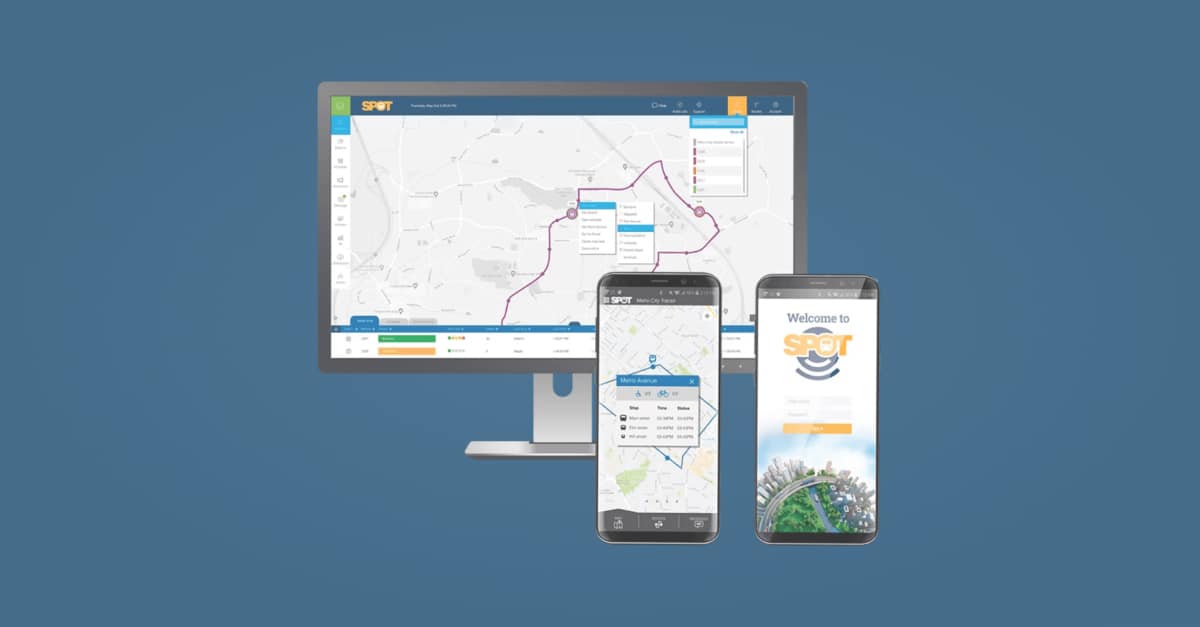
 SPOT: ETA’s Core Platform The SPOT™ ecosystem offers transit management solutions by providing a flexible, modular platform.
 SPOT: ETA’s Core Platform
  All Solutions
 CAD / AVL / GPS tracking
 Business intelligence
 Digital signs and kiosks
 Infotainment
 Automatic passenger counting
 Tally NTD Survey Software
 Tracking websites and apps
 Vehicle announcements
 All Integrations
 Demand-response and microtransit
 Fare collection
 Mobile video surveillance
 Pre-trip inspection
 Solar e-paper signage
 Vehicle health monitoring (AVM)
 Voice communication
 Transit
  All Industries
 Airport
 Campus
 Medical center
 Rail, streetcar & trolley
 Rental car
 Tourism & theme park
 Transit
 Case Studies
  Blog
Blog eBooks
 Wall of Love
 Careers
 Press
Press Events
 Support