Overnight, my job was redundant.
Stop Requested.
This is Stop Requested. by ETA Transit. I’m Christian. And I’m Levi. These are real conversations with the innovators, operators, and advocates driving improvements in public transportation. Today, we’re starting a series on Miami-Dade Transit. Our first guest is Linda Morris, Chief of Service Planning and Scheduling for Miami-Dade County. We talk about what makes planning service in a countywide system different, from coordinating with municipalities to launching projects like MetroExpress BRT and updating the agency’s planning tools.
Linda also shares her path into transit. and lessons learned from major capacity projects earlier in her career. We’ get into network design, reliability, and the trade-off between long-range planning and daily operations. Here’s our conversation with Linda Morris. Welcome back to Stop Requested. Today, we have Linda Morris, the Chief of Service Planning and Scheduling at Miami-Dade
County. Linda, how are you today? I’m doing pretty good, thanks. Glad to hear it, and it’s really great to have you on. You know, you’re going to be a part of this series that we’re doing at Miami-Dade County. with a couple of your colleagues. I know you. I’ve known you for a few years now, uh, but perhaps our audience doesn’t. Can you introduce yourself and just d- explain what it is that you do at Miami-Dade County? Sure thing. So, um, I’ve been at the county now for nearly five years, and, uh, so just, just over five years, actually, and I am the Chief of Service Planning and Scheduling. So what that means is I oversee all the kind of day-to-day, uh, service planning that we do. We have three schedule changes a year, and that’s what my team oversees, and obviously, all the schedules associated with that. We have bus and rail and MetroMover, uh, under our department, so, uh, that’s what I oversee. That’s really interesting that you have all, all three of those k- uh, under your group. You know, I, I wanna take a step back and, uh, understand you as a person. Like, how did you get into transit? I think it’s always an, a pretty interesting story to hear how someone makes their way in the industry. Uh, could you go into that a little bit more and, and tell us how you got into transit, and then specifically, how you landed in service planning? Sure. So
I don’t know anyone that, uh, thinks they wanna go into service planning from a teenager. Like, it’s not it’s just not something that’s on people’s conscious radar, I think.
Uh, so like most people, I fell into transit, um, but from a urban planning background. So I did a geography degree. I was definitely interested in all things urban planning. Um, my course was really specific to kind of human geography. From that,
I started at a pedestrian movement consultancy, and so that was using GIS to determine how people moved around spaces. Essentially, I just really gained a great GIS foundation from that position and then moved into, uh, other consultancies, working on more urban planning-type projects. And then
I knew that I didn’t want to go into the private sector. I really wanted to eventually be in the public sector. I ended up from the private sector into academia, um, but again, focused on urban planning. Um, well, actually, that was my first foray into transportation.
I was in a transportation research group, and we were looking at mixed-use streets and figuring out how kind of the land use and the transportation worked together, and that was my first look at, um, transit agency’ data. I was actually working in the
UK at the time and getting bus data, um, understanding ridership patterns, and that was my first take on that. From there, I decided to move to the US, as you do. I knew that coming from the UK, coming from London, I needed to have a place that had good transportation, good public transportation, and that was, for me, San Francisco. And so I moved to San Francisco, thinking that I would eventually do a master’s in urban planning at Berkeley. That was my goal: get there, get residency, do the couple years, and then go back to London.
But instead, I moved there, got residency, applied to Berkeley, didn’t get into Berkeley, and then landed a job at AC Transit. That was the literal journey, uh, into transit. I did my 13 years at AC Transit and ended up actually going back to Berkeley and doing a guest lecture on what we were doing at the Transbay Terminal at the time. Uh, so everything kinda came full circle, which was a lovely thing for me anyway. Yeah, I, I really love that. Uh, you know, even though you didn’t get in, you were still able to go and do that guest lecture. I, I can see how that, that made it feel full circle. And, you know, one of my favorite things about speaking to urban planners is that a lot of them have backgrounds in geography, and I’m one of those. Mm. Uh, I don’t have a degree in urban planning, but I have a master’s degree in geography, so I feel a kindred spirit, and I don’t feel alone anymore, so- Happy to help. Uh, uh, yeah. Right. Thank you for sharing that background. Appreciate it. I’m, I’m curious because you come from the UK, uh, and y- you moved to the US.
You know, are there any experiences from your childhood in the, in the UK or teenage years that really, that really cemented in your mind how important transit is? And perhaps those experiences, you know, kind of play into how you plan your services at Miami-Dade County or even when you were at AC Transit. Yeah, I think growing up in the UK, um, growing up in Europe in general, it’s, it’s just built into culture….
as I said, the reason why I chose to move to San Francisco is because it was, to me at the time, the most European-type city. Uh, you had that density, you had the level of transit that you could get around without owning a car, and I never owned a car in the UK. I didn’t have a license in the UK. That was actually one of the first things I did when I moved to the US.
I knew that having a driving license w- would be a prerequisite for a job, and so I literally was on the plane, moving to the US, reading the California Driving Manual, ’cause I had a test that week that I moved, and I vividly remember reading this manual, and at the time, the governor was Ar- Arnold Schwarzenegger. And there was a message at the front of this manual from Arnold Schwarzenegger, and I thought, “Wow, what am
I doing?” Um, this is pretty insane. But, um, yeah, I passed my test, and I had the license. I didn’t buy a car in California, but I had the license, and I could get any sort of job in the industry.
That, that’s funny. That was my childhood, uh, hero, so it’s interesting, you’re just trying to get your driver license, and then there’s, uh, Terminator, uh- Mm-hmm … greeting you as you’re flying to the US. I think that’s a very American thing, though, when you think about it. You know, I,
I visited London, uh, over the holidays. I was there for Christmas, and, and that was my first time, and I loved it. I mean, public transportation, why, why do you need a car? Like, you don’t need a car. Y- you know, you can just ride the public transit system, and it’s just beautiful. As a, as a transit nerd, I, I had a great time. But I want to learn more about your experience at AC Transit. You know, that- that’s a, a really good transit agency.
A- a- and I want to learn about the roles that you hold there, a- and if you can tell us and our, uh, our audience, uh, how the- those experiences at, um, AC Transit, uh, shape you as a planner, as a transit planner that you are today. When I first joined AC Transit, uh, the, the role was actually as, uh, an amenities planner. What that meant at that time, uh, this is going back 2007, that was the bus shelter program. They had just got a contract to do real-time signage at a variety of bus stops, and that was a relatively new technology at that point.
So I spent a few years managing that program, installing a whole bunch of, uh, real-time information signs, and working with that data. So I remember going to various meetings in the South Bay with Google staff to talk about this thing, the, the GTFS, and- Mm … a potential new thing about real-time data. I remember the, the pushback on, “Oh, well, we don’t wanna tell passengers about our real-time data.
We don’t wanna we don’t wanna put that out there because it might be wrong.” And that was a real big concern for not just a- our agency, but, but many agencies were very reluctant to start publishing that data and be transparent about, um, when, when their buses were coming and performance data, right? And obviously, you’re putting your stuff out there, but you’re informing the public, which-
Right … is a great thing. So that was, that was my first role. It was managing those programs. Then a position came open as a service planner, and that’s something that I was always interested in doing. So I started, uh, managing the service for the, the south part of the district, uh, which is the more kind of, um, less dense area of the district. Uh, which was a great kind of, um, test ground for me, getting my feet wet in, in service planning, understanding how, how to create, uh, routes and schedules.
It was, it was just a good way of kind of redesigning the least impactful things, but still making a big difference and making things more efficient, uh, more reliable, et cetera. But that was how I really learned the craft, was in that kind of southern area, where there’s, um, just, uh, more suburban. So, um, after I, I kinda learned the craft, just doing the regular service planning,
I then, um, became a senior planner, where I oversaw the Transbay service, so all the folks coming from the East Bay into Downtown San Francisco, across the Bay Bridge.
And at that time, there was this transformational project, what was the Transbay Terminal, which became the Salesforce Transit Center. I was responsible for managing that implementation, and so I started on that project in, in 2012, and I became a senior planner in 2012 and managed the Transbay service, which was about a fifth of the ridership of- Wow … of AC Transit.
I guess there were two big things there. Uh, one, during that time, there was huge growth of ridership going into Downtown San Francisco, to the point where, you know, there’s, there’s 27 agencies in the area, and we… There’s a few that go through into Down- that feed Downtown, and there was a big project called Core Capacity, which was BART. The, the, you know, the rail service going into
Downtown San Francisco is at capacity. They literally cannot carry more people through the Transbay Tube to Downtown, and were at crush loads. Our service was at crush loads, um, in the peak of the peak.
How do we increase capacity? And so it was a wonderful kind of regional effort to try and figure this, this out. What, what we did, I led a project of, uh again, drawing from my background, of double-decker buses. Wow! Double the capacity of a bus.
Yes. You know, again, with this is commuter service, you’re on the freeway…. uh, you don’t wanna have an articulated bus going on the freeway. Uh, it was all about the passenger experience as well. These are essentially tech people getting into their jobs in downtown San Francisco. So we did a pilot. AC Transit was really gracious and gave me, uh, some time to study, uh, places. So we went- so I went to, to Vancouver, um, or, uh, sorry, Victoria, and, uh, met with some folks at BC Transit to see how they, they got a extensive double-decker fleet, because the, the big concern was no one’s used to double-decker buses here. But I thought this would, was a great test bed because it was express service, right? I,
I understood that people getting on and off like they do in Europe at local stops, that was gonna be a huge culture shift, and that was a little, little bit too far. But for express service, it totally makes sense. You, you get on, you stay on until the end of the line. We did the pilot project. We got one bus. It was really fun to be involved from, you know, that, you know, inception to the, the completion of the project, which was to… We eventually got 15, uh, double-decker buses from an Alexander Dennis.
And again, working with our operators, figuring out how, you know, the training, ensuring that they were comfortable with this new bus, figuring out any modifications that we needed to make, and all the way through to implementing them, doing surveys with passengers. Everyone loved them. Everyone thought this was the, the wonderful solution to our problem.
Then, uh, in the meantime, I was also working on the d- not the design, but it was 2012. You know, the design, of the Trans Bay Terminal was decades in the making, right? This was a $2 billion capital project. We were looking at, uh, a new facility that had 37 bays, three agencies, three bus agencies sharing it. The eventual project is. gonna involve the, uh, a downtown extension from Caltrain into Downtown, and that’s, you know, honestly, the bulk of the, the cost. But this facility also comes in off the Bay Bridge. Again, huge project, decades in the making, so it was, it was great fun, um, and incredibly fulfilling, uh, to be able to, to implement that project, uh, in 2018. Um- Sounds very exciting, and, and, and, and having the opportunity to solve a problem that both agencies would love to have, which is, you know, uh, high ridership-
Mm-hmm … and having to find a way, uh, to better serve, uh, the folks. I, I’m interested to know about, uh, the cross-agency, um, collaboration, because you, you mentioned different agencies kinda serving the, the same region. Could you just tell me a little bit about that? For the Trans Bay project, uh, we- AC Transit was definitely the largest agency, so that’s why I was managing it. But, you know, everyone was very involved in the, in the design, and that was… One thing that I really learned from that project is, involving stakeholders from the inception, right? Ensuring that their operations are taken into account in the original design.
And so ensuring that we, we reached out and had just core meetings involving all the, the stakeholders, that was really key to getting a successful design, and also just the buy-in and continuing relationships, as when you move into operations, things happen, and you need to have really strong relationships with other agencies in order to resolve any issues. Yeah, that, that, that sounds like a very, uh, exciting project and, and transformational, right? And, and it, feels like it’ was made for you in a way because, you know, you’re coming from London, and you were so used to double-decker buses, and then now, you know, it’s, it’s the way to go to solve, you know, a capacity issue, and a, a successful way of resolving that issue. So that, that seems that those experiences really pushed you to your next experience in potentially making that move from California to, to Miami-Dade. So could you tell us about that move and, and what motivated that move? I had no intention of leaving the Bay Area, but then, uh, there was COVID. Oh, yeah. And so as I talked about, the big problem that we’ were trying to solve in the Bay Area was this huge, huge loads trying to get through from the East Bay, uh, into Downtown San Francisco. Overnight, my job was redundant.
It wasn’t an issue anymore, and, and certainly because of so much of the, the economy in the Bay Area being tech, you know- Mm … everyone worked at home for, for a very long time after COVID as well. That real problem that we were facing as a transit industry was just not a problem anymore. That’s not to say that I couldn’t continue doing my job as a transit planner, but there was just nothing, nothing to solve. We would just be doing- Not as exciting. Not as exciting. And so this opportunity came up in Miami, and the backstory on my relationship with Miami- is that my, my mother actually grew up in Miami. I,
I knew it very well, um, having been back and forth visiting relatives, and then I happened to meet my husband in the Bay Area, who is from Miami.
And so this opportunity came up. Everything kind of pointed that this was, this was the right thing to do at that time in my life. Frankly, it was an amazing opportunity, right? Miami, I love Miami. Miami is not known for world-class transit yet, so there’s a real opportunity for improvement here in a way that there, there wasn’t in the Bay
Area. Again, I mentioned you’ve got, you’ve got 27 agencies with amazing people doing really good work, and yeah, there aren’t 27 agencies in South Florida.
There’s a lot of really good work to be done here, so it was a, a really interesting challenge for me to, to, to take on. This episode is brought to you by ETA Transit. For decades, transit agencies have been locked into legacy CAD/AVL systems built for another era. Expensive upgrades, rigid architectures, and software that lives in server rooms instead of the browser. ETA Transit is the modern replacement. Our web-based CAD/AVL delivers industrial-grade reliability with cloud-native speed and flexibility. It integrates with what you already have, replaces closed ecosystems, and gives your team a single real-time operational view without starting over. Replace legacy, move forward. The future of CAD/AVL is open. See it at etatransit.com.
So, so tell us a little bit about the experiences that you had at AC Transit that, um, you know, translated very well to Miami-Dade, you know, adjusting in this role and joining this new transit agency. And where did you find some differences, where it’s like: Oh, okay, things here, you know, they just work differently because, you know, the lay of the land? Uh, so could you tell us a little bit about that?
The wonderful experience I had at AC Transit just gave me a, a real foundation in understanding the industry, and the work that I had done more embedded with the operations side of the house, right? Um, in terms of, you know, the fleet and the operations of the, of the
Transit Center, really helped me understand how they think. Frankly, just gave me that kind of lesson of, you know, relationship to everything. And so one of the first things I did when I moved to Miami was I reached out to my operations counterparts, and I said: “Let’s, let’s do lunch. My role as a service planning and scheduling manager is, is really to, to serve you guys, and I want us to move forward together and, and work together collaboratively.”
So that’s what AC Transit experience really, um, gave me, is that foundational understanding of how important relationships are and understanding the operations and the, you know, the nuts and bolts of how we move people every day. So could you tell us some of those differences in the planning and scheduling? Yeah, things, things were definitely more rudimentary when I got here. Um, you know, we, we had, have a very old scheduling software, uh, where one of the big projects I’ve got this year is we’re transitioning to brand-new scheduling software that we’re very excited about. Um, and so that, that was new to me. I was used to software being different and didn’t understand the limitations of the, the older software that we had. Um, so that was my first kind of big shock. But I think, you know, the, the service planning formula doesn’t. change. The one thing. that was very different here is, is the governance structure. So, at AC Transit, we’re part of a board, one of the few elected boards, actually, in the country. Here in Miami-Dade, we’re one department within a county. That’s been a really interesting distinction and, more of a challenge to, to- help move things through, is getting that buy-in at that level to ensure that just our general day-to-day can continue as it needs to. You know, there, there’s always pros and cons to different government structures, but that’s been just the biggest difference, I would say. Linda, so you, you talked about your, your experience at, at Miami-Dade and, and some of those differences and, you know, Christian and I both being in, in South Florida, we know how many cities are, are located in these larger counties, you know, from Palm
Beach County, Broward, and then, of course, where you’re at in Miami-Dade. Uh, I imagine that takes a, a lot of coordination with the cities here, too. Uh, could you kind of speak to that from a service planning level? Like, how, how do. you make sure that’ you’re involving some of your, your colleagues from the municipal side of the house? Yeah, really good question. That’s been one of the big challenges as well, is the proliferation of municipalities here and the fact that. they also have their own services. Through the half-cent sales tax, it allowed a lot of the municipalities to provide their own fixed route services and more recently, on-demand services. And as the county, we actually authorize that, so, not only do we provide that’ funding, but also we have interlocal agreements with municipalities that’ authorize the use of those funds for their services. And, historically, the services that they provided haven’t necessarily been complementary to the countywide network. Since I took over, I’ve really made that more of a focus, is to ensure that anything new going forward really has to be designed thoughtfully and holistically with the county network. And so when we redesigned the network in 2023, that was a portion of what we were trying to accomplish, is really reduce redundancy on. some of those fixed route services that municipalities run and, use our collective resources more efficiently.
Since we did the redesign in 2023, um, and it, took us, you know, a good eighteen months to settle everything down, um, that’s been my latest focus is actually going back to the municipalities and ensuring that, we can work with them to address their, their fixed routes, that’ in some cases, have been in operation for decades, doing duplicative work, and again, more recently, on-demand services, uh, and ensuring that they make sense as well. You know, we’re not gonna authorize on-demand services in an area that has a really high level of fixed route transit, right?… Those things just take a little bit more time to, to finesse, but we just have to be really mindful of using the collective tax funds efficiently. And I can understand that. I mean, if you’re coming from a municipality perspective, you, you’ve gotta look out for your constituents. You wanna make sure that, y- you know, if you’re the, the mayor of that particular city, that y- you’re serving the, the folks that are, that are there in your community. Uh, from a county perspective, you’re, you’re looking, uh, over many municipalities, and you have a lot more people’ to, to kinda care for and see how they’re moving regionally. You know, other than those, those challenges of, you know, maybe the, the political side, were there any service planning specific challenges, like, you know, I know you mentioned overlap, but I’m, you know, I’m thinking, like, a- on the scheduling side, timing-wise and, uh, transfers. How, how were you able to kinda understand all that, considering how many bus stops there are, or how many vehicles, you, you know, not only does Miami-Dade have, but also those municipalities as well? One thing that we focused on with the network redesign was, was high frequency. Typically, where, uh, we’re providing… We, we provided a, a 15-minute frequent grid. That’s, that’s really what we wanted to do as part of the Better Bus Network, and within that, we then would have municipal service that could connect to that high-frequency route. So in terms of timing on our end, that wasn’t a, a big focus of the network redesign. Are there specific inst- instances where, you know, we have kinda low-frequency routes and, you know, uh, other municipalities that have more low-frequency service?
Yes, and we can definitely do better at timing those services. Um, and again, that’s really been the focus, is to h- forge those relationships with muna- municipalities as well. So, um, I think. we’ve got 30, 32 municipalities within the county, uh, and right now I’ve got a, a planning, a service planning team of, of four. Um, and so my, my goal is to, A, up my team, which we’re recruiting right now if anyone’s interested, and, and, B, the idea is to really forge those relationships with the municipalities to ensure that we’re kept up to date with what their plans are, um, and, and vice versa. So that, again, has been one of the gaps that we’ve had in, in recent history, so really wanna be able to forge those relationships going forward and just up the communication so we can all plan better service for passengers.
It, seems like a lot to tackle, and, y- you know, f- really, if I were to put my planning hat, on, I, I feel for you here because there’s a lot of coordination that has to happen. I’m, I’m sure of it. And also good to know that you are hiring, so if anyone, uh, in the, the audience here listening to the podcast, if they’re interested in a position, d- can you share what positions you have available? Absolutely. Uh, so we are hiring for a service planner, um, it should be going out in the next, uh, few weeks, I believe, um, and also a senior scheduler. So senior schedulers are very difficult to come by. I was very fortunate to, to grab someone from, from MBTA, um, but it’s, it’s an industry problem. But, but certainly, if there are any senior schedulers listening, uh, we will be hiring. I wanna go back to w- what you talked about with the, the internal coordination, you know, the, the first couple days that you’re there at Miami-Dade, and you’re meeting with your operations team. Uh, you know, I, I completely understand the perspective that you are there to serve the operations since you’re part of service planning, but if you kind of look to the, the other side of the spectrum, there’s this whole long range and l- you know, long-term planning as well. How are you able to kind of bridge those two? Because you do sit in the middle of them. I, I’m curious how you would- you take the plan from maybe the long-range team, uh, you know, try to, you know, exercise it, massage it, whatever you need to do to be able to get it, uh, operable and, you know, keep your internal customers, your operators, and your, you know, directors of operations happy.
Great question. I think, ag- it’s all about communication and, again, going back to relationships. So one thing that I did start up when I first got to Miami was there was no real internal meeting with across the departments. Uh, a lot of places are siloed, but, but there was definitely a lot of silos going on. Um, and so one thing I did was start up an internal meetings that we were able to s- discuss everything coming up in terms of our, our schedule changes, our line-ups, et cetera. So a good example is o- one of those projects that we’re talking about is coming from long range was the BRT. So we, we just launched our MetroExpress October last year. This was, as many are, decades in the making, um, lived in the long-range planning realm, and frankly, construction realm for, uh, all those years. And it was really at the tail end where service planning came in to make it operable, as you say. I think there’s always lessons learned with projects, and, and one of them is to really have everyone at the table, like I mentioned before, at the design of the project. Certainly, we kinda took what we were given, and one of the biggest challenges that we had with BRT is, uh, originally it was planned as a regular hybrid CNG bus, and then halfway along the project, electric vehicles came in. Now, as you and I’m sure your listeners know, electric vehicle is a very different bus in terms of scheduling than- Yeah … a regular CNG bus. We also would need different software, scheduling software, to enable us to properly schedule this…. So that was one of our biggest challenges, uh, kind of inheriting this project, trying to figure out how to schedule these, these 60-foot electric buses. That was really key with working with our operations. So as everyone was learning on the way, you know, we didn’t have such a, a large fleet prior to this that was dedicated to a route. We, because of the central platforms, um, and, you know, these are dual-door buses, we would only be able to use these buses on this route. We couldn’t have a CNG bus on the route, so that really gave us constraint, operational constraints that we had to work with our operations partners to figure out how to move forward with it. So I think that’s a good example of kind of inheriting a project and then really getting together with your colleagues to figure out how to make it work. Is- let me ask you a question. Do, do you have any opportunity charging on, on that corridor or not yet, or is there any plans for, you know, the future to be able to have opportunity charging that would kind of like mitigate some of the range, uh, constraints? Great question, and when I first got here five years ago, that was my first question. That is being built out as part of the project now. Um, but again, we launched in October, and we, we won’t be able to, um, use those chargers probably until end of this year, I think. Uh, so we have one terminus at, yeah, Dadeland South and the other, um, down in, in Homestead. I think the Dadeland South chargers will be available to us by the end of the year. We’ll see how that then helps with our scheduling of the buses.
Y- you know, essentially, and I’ve heard that from some systems that do have that opportunity charging, like, i-i- they have it set up in a way that pretty much the buses could be running forever. Uh, like, they, they keep, you know, that energy, um, you know, neutral, where, you know, whatever is being consumed, they’re able to, you know, recharge, uh, in those opportunity chargers. So, uh, looking forward to, to see how that comes in, uh, to be and, and how it’s gonna help the operation. Um, well, I wanted to ask you, so now it’s been a few months since MetroExpress service came, uh, into service. What have you learned about how the s- service is performing? Like, what’s, what’s the assessment so far of the performance of the service? I think it, it’s, it’s been really interesting to see how, uh, how it has improved in the last few months. So, uh, another of the biggest challenges, all these challenges, another of the biggest challenges that we had with, with BRT is that it was an operational corridor to begin with. So in terms of testing prior to launch, our opportunities were really, really limited. Obviously, you plan as, as best as you can, uh, with the knowledge that you have. We knew, though, that going into launch, you know, we wouldn’t get it 100% right. You never do. There are so many different variables with the service in terms of, uh, the, the signal timing, you know, preemption. We have barrier arms coming down. It’s a, you know, corridor that is adjacent to, to
US 1. There were large safety concerns with, with the preemption buses rolling through intersections, and also the barrier arms give a train-like feel to the service, and that was, uh, one of the community concerns is originally they wanted a train, and instead they got BRT. This, the barrier arms really ha- have that, that feel of the rail arm, of the rail. The first, uh, first week was difficult, right? It’s a learning curve for everyone, but we’ve seen our, um, operators get more comfortable, our supervisors. We’ve made some adjustments on the signal timing, so we’re- we’ve actually exceeded our on-time performance goals for, uh, for the, the service, which is pretty impressive. And, um, and yeah, they’ve kind of got the rhythm of, of how the system operates, and they’re still out there making sure that, that certain signals are working as efficiently as possible. But, um, it’s been an incredible team effort to, to get that service to, to where it is today. And, and you see, for me, also, kind of like putting my transit planner hat on, like, I, I’m a big fan of BRT. I wish that so many, uh, transit agencies, um, could get the community to rally around supporting BRT, uh, because, you know, it’s, it’s cost-effective and, and the most important aspect of, um, helping choice dri- uh, riders, like, those, those choice riders being interested in riding public- riding public transit, is travel time. To me, travel time is everything, right? Like, you’re checking, okay, I have- I go in my car, it’s 30 minutes, and then if I take public transit, it’s an hour and a half, two hours? No, there’s no way I’m gonna be doing that. But even if I had the nicest car and travel time is quicker on public transit, a lot of the times I’m gonna be compelled to do a park-and-ride or somewhere where I can just get quicker to my destination. So with this BRT, and, and it seems the way it’s been planned and all the aspects of the operations that you guys put in place, right? Because there’s a light BRT, there’s, you know, no, uh, you know, TSP, no, no, no other aspects that will help reduce the travel time, uh, other than, you know, having the platforms and maybe, you know, striping, you know, bus-only lane or something like that. But it seems that you have a lot of these, um, you know, strategies implemented for real BRT. Do you see, uh, choice riders coming into the system?
Is, is there any indication that people in Miami, maybe along that corridor, are saying, “Well, let me, you know, park and ride or let me try this, uh, fast service?” Yeah, I think… I mean, w- we launched in October, it’s now January, so it’s still really, really early days. But we, we’ve seen the, the ridership has been pretty steady. I think once we’ve had that kind of establishment of the service to- well, well, I agree with you that the travel time is everything, it’s also about the reliability of the travel time. Right. And that’s what we wanted us to get to, is to know that-… you know, today, if I get on there, I’m gonna- it’s gonna take me 50 minutes. Uh, if tomorrow it takes me 70 minutes, well, that’s kind of an issue, right? Um, so we wanna make sure that we do have a reliable travel time so that you can just bank on it. Um, so I think we’re at that point now. You know, the, the kind of the next phase is to really start attracting those choice riders. I actually had a really interesting, uh, chat with someone who works at one of the municipalities down south. She lives just off the transit corridor, and she works just off the ca- the transit carrot, corridor. Wow. And she was like: “Oh, yeah, I’ve heard about the
BRT.” And I spent half an hour telling her all the reasons why she needs to try it.
Uh, just try it. I, I ground her down, so, um, she, she’s gonna be trying it. Um, and I think, you know, obviously, me going to all these individuals and marketing it in that way is maybe not the best way of doing it, but I think it’s just such a big cultural change. I mean, we’ve got an amazing service, like, the stations are beautiful. They’re like these large aircraft hangars, but they’ve got air-conditioned vestibules to wait in, and there’s some public art that’s, that’s wonderful.
Like, it’s a real elevated experience, but people don’t necessarily know about it or understand how it works because riding a bus is new to people.
It’s been a car culture for very long, especially in that southern portion of the county. So I think it’s, it’s up to us to really start messaging those, those choice riders and making sure they understand how, how this can really change their lives. Uh, again, to have that reliable tran- uh, travel time, uh, instead of being stuck on
US 1 for however long. I’m excited to see it grow in the next… Again, it’s only been a few months, but in the next few years, and there’s just- there’s also a huge amount, uh, part of the large, larger, longer-range planning project is how many transit-oriented developments there are along the corridor, and to s- to see that land use explode in the last few years, and there’s so many developments coming online within the next year or two. So I have absolutely no doubt our ridership is gonna explode.
Um, so it’s partly with all that development that’s coming online, but also for us to really engage people and help them understand how, how wonderful a service this, this is gonna be. Uh, I think it’s gonna be a home run. I- and, and we’ve seen it with a lot of, uh, transit agencies around the country that have launched BRT. I mean, we, we had, uh, Brad Miller, uh, CEO of PSTA, you know, a few episodes back. Uh, he came on Stop Requested to discuss his projects, and, and for them, was transformational. Also, in, you know, good stations, good planning and infrastructure of the service, reliable service with, you know, reliable travel times, like you mentioned, and then it takes time, right? Like, building that education, having people trying it, and having a, a, a pleasant experience.
Uh, I’m gonna tell you that, you know, Lisa and I, we’re, we’re here in Palm Beach County. We’re not that far, uh, from, uh, Miami, and we have not tried it yet, uh, but I, I am committing to you that I’ll come down there, uh, and try it. Come on down, guys. We’ll show you around. Uh,
I’d love to ride it, and maybe we could ride together. That would be great. I know- Absolutely … you’re very busy, uh, but we, we would wanna give you our feedback, also, you know, based on, um, you know, our observations. But I’m just very excited for this project, and, and I hope it’s gonna result in more BRT, uh, corridors in Miami-Dade, and, and the community and, you know, the elected officials and, and stakeholders to continue rallying on supporting your projects. So, Linda, one of our r- recurring segments here on Stop Requested is, uh, rapid-fire questions. So I’ve got a few, and I’m gonna throw them your way, and just, you give me whatever is on the top of your head.
Ready for it? Sure. All right. What’s your favorite transit system? I mean, obviously, I’ve gotta say London.
Okay, all right. No, I mean, that makes sense. Bus or rail? Bus. What would you choose? Oh, okay, all right. Kind of threw me for a loop there on that one. It carries more people. Uh, so what is an early memory that you have of riding transit? An early memory? I would, I would have to say kind of late-night
Tube ridiculousness. Just, uh, the revelry that you would get on late-night adventures on the, on the Tube in London as a, as a young person up to no good.
I love that. That’s great. Not specific, but I, I get where you’re coming from- … so I’m gonna leave it there. And what’s, uh, one piece of advice that you have for someone who’s maybe earlier in their career? Maybe if some of those people are wanting to apply to Miami-Dade, what would, uh, what would be your piece of advice? Passion is everything, and if you really are passionate about, I mean, anything in general, but certainly if you have a passion for transit, that is really gonna stick out a lot more than whatever else is on your resume. You know, and, and, you know, some people are really passionate, some people land into it. I mean, I landed into it, but I am also very passionate. But, um, I, I would say just let your passion shine through, uh, ’cause that’s… You can’t train passion. I’ll leave it at that.
Wow, that’s, uh, that’s one of the quotables that we can add to our, our wall of quotables. I think we’ve had so many guests- … who have just put these little nuggets out there, and I’m like, “Oh, man, that should be on a T-shirt.”
Um- S- so an- another thing that we like to do on Stop Requested, Linda, is to have some key takeaways for our audience. Uh, we talked about a lot over the, the course of the hour or so long conversation that we’ve had, and I’ve got three in particular. You gave us a lot more, but I’m gonna try to keep it nice and concise. Uh, knowledge sharing is critically important. You mentioned your visit to Victoria whenever you were doing the, the planning for the double-decker buses. I would encourage those types of site visits, y- you know, for any, uh, agency out there that’s wanting to plan a new service. Go and, go and learn from your colleagues at other agencies. Number two is involving stakeholders from the inception of a project.
You have to i- increase your, your coordination efforts, and in turn, that should increase the chance of success for the project, so that’s, uh, another thing that I noted as well. Third and final is break down the silos between your departments. Uh, just because you’re in planning and the other guy or, or woman is in operations, it doesn’t mean you can’t go to lunch and be cordial and, and have fun and try to learn from one another. Uh, you know, transit is a, a very collaborative industry, and, you know, sometimes that doesn’t always play a- so well at the, the local level inside the department.
Um, you know, it’s much more like planning to planning or operations to operations, but we gotta break down those silos to make sure that folks are working together and putting the be- best service that we can out in the street. Did I leave any out, or would you add anything? No, I, I think you got it. Okay. Okay, excellent. Well, Linda, this conversation has been a blast, uh, really one of my favorite ones that we’ve done on Stop Requested thus far. Thank you so much for joining us. It’s been a pleasure to get to talk to you and, and learn about your, your background and what you’re doing at
Miami-Dade, and as Christian said, we’re, we’re gonna come visit you, so- Oh, yeah … uh, keep a seat warm for us. Absolutely, will do. It’s been a pleasure. Thank you so much, guys. Thank you, Linda, and thank you to our audience for tuning in for another episode of Stop Requested. We’ll be back next Monday with another episode.

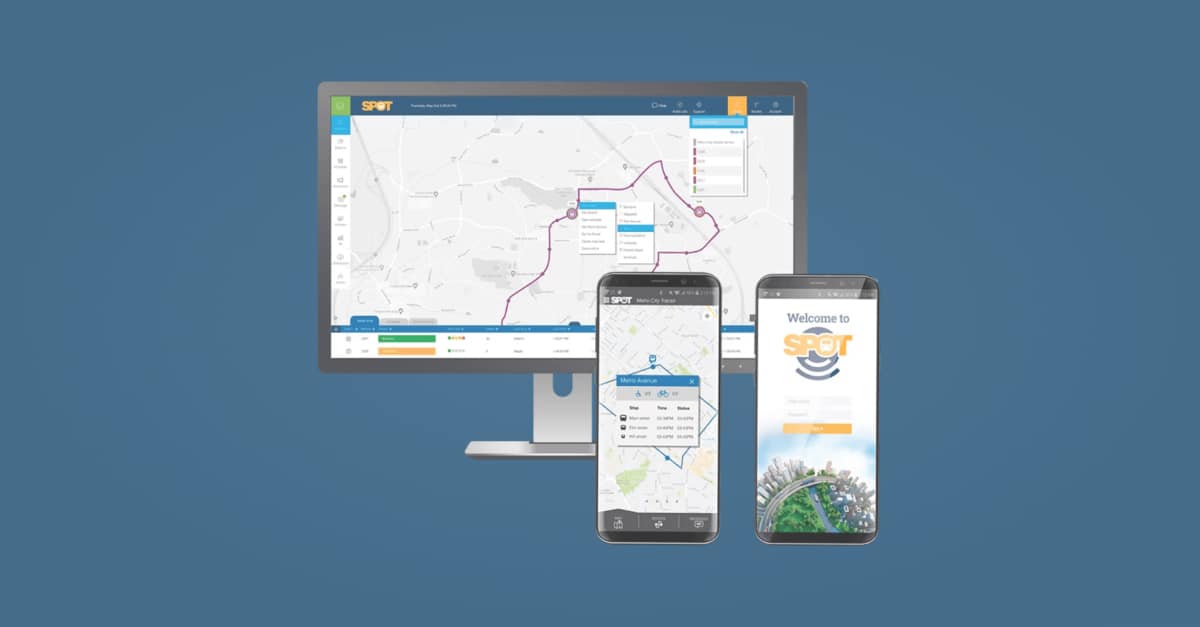
 SPOT: ETA’s Core Platform The SPOT™ ecosystem offers transit management solutions by providing a flexible, modular platform.
 SPOT: ETA’s Core Platform
  All Solutions
 CAD / AVL / GPS tracking
 Business intelligence
 Digital signs and kiosks
 Infotainment
 Automatic passenger counting
 Tally NTD Survey Software
 Tracking websites and apps
 Vehicle announcements
 All Integrations
 Demand-response and microtransit
 Fare collection
 Mobile video surveillance
 Pre-trip inspection
 Solar e-paper signage
 Vehicle health monitoring (AVM)
 Voice communication
 Transit
  All Industries
 Airport
 Campus
 Medical center
 Rail, streetcar & trolley
 Rental car
 Tourism & theme park
 Transit
 Case Studies
  Blog
Blog eBooks
 Wall of Love
 Careers
 Press
Press Events
 Support