In this episode of Stop Requested, hosts Levi McCollum and Christian Londono speak with Lou Ferri, General Manager at Transdev leading paratransit operations for RTC Las Vegas, about his remarkable 25-year journey in paratransit services.
Lou shares how he transitioned from working at a gym to discovering his passion for paratransit through a chance encounter with Palm Tran’s executive director. Learn about the operational complexities of managing America’s largest single paratransit contract, completing over 6,000 scheduled trips daily with 445 vehicles across Las Vegas.
The conversation explores the unique challenges of paratransit operations, from eligibility processes to rider demographics, and how Las Vegas differs from Palm Beach County. Lou shares powerful stories about serving riders with disabilities, including visually impaired individuals who’ve found independence and community through accessible transportation.
Discover insights on leadership, the importance of treating people as human beings, and Lou’s advice for emerging transit professionals: expect the unexpected, ask questions, and find your “why.”
Stop Requested. Welcome to Stop Requested, the podcast where we discuss everything transit. I’m your co-host, Levi McCollum, Director of Operations at ETA Transit.
And I’m your co-host, Christian Londono, Senior Customer Success Manager at ETA Transit. Welcome back to Stop Requested. Levi, how are you doing today? I’m doing very well, Christian. How are you? I’m very excited. Uh, we have, uh, you know, uh, an excellent guest today, uh, in our show, a mentor of mine and, you know, somebody that I admired, um, a lot. And I’m very… Uh, we’re very pleased to have him today on the show. Uh, his name is Mr. Lou Ferri. His current role, he serves as the General Manager for
Transdev, leading the paratransit operations at RTC Las Vegas. Uh, he’s previously worked also at PalmTran, uh, leading the parat- tr- the paratransit operations as well. How are you doing today, Lou?
I’m doing excellent. Thank you, uh, Christian and, uh, Levi. Happy to be here. Thank you for joining us today. And, uh, just a quick overview, Lou. Today, we’re gonna be discussing a little bit your career journey. Um, you have a robust career in paratransit, over a quarter of a century working in paratransit. Um, so we wanna learn about the challenges that you experience, uh, maybe some stories, eh, that you carry with you, um, and also some advice for professionals in the industry.
Sounds great. So Lou, can you sh- eh, walk us through how you got started in your career in public transportation?
So, thanks for asking that, Levi. So, it’s… That’s an interesting question. I like to ask that question to a lot of people when, when I meet them for the first time because it seems like in transit, it’s not usually your goal to get into transit. You just kind of find your way. So, I was actually working at a gym and I was, uh, working, uh, the, the, the people at the gym wanted me to be a personal trainer at that time. And my dad always gave me some advice, and he said, uh,
“Always look around when you’re at your, your, your first job, or wh- when you’re at, uh, you know, you’re working and you look around and see if you wanna be the person above you. See if you wanna be your supervisor, see if you wanna be your manager, things like that.”
So, one day, I was looking around and I, and I saw these guys with ponytails. Of course, this is the late ’90s. Uh, guys with ponytails hitting on all the women, and I was… All the moms. And I was like, “I don’t think that’s for me.” So,
I knew I needed to change. So, um, at that time, the executive director of PalmTran would work out there every night. So, we would… Uh, we became friends. We were big sports fans, so we talked about sports and things like that. And I remember it took him three times. He took me out to lunch, uh, and said,
“You know, you went to Rutgers University. You’re a smart guy. Why are you doing this?” And I said, “I’m not gonna be a bus driver,” ’cause that was the first thing I thought of. “I’m not… I don’t wanna drive a bus. I don’t wanna drive.” He’s like, “No, that’s not all we have in the transit industry. There’s so many different things.” That third lunch, he, uh, said to me, “I want you to go down. I want you to meet someone in the Paratransit department.” I said, “I don’t even know what that word is. What does that even mean?” And I went down to meet the director at that time, and he was very good, um, at speaking. And he, he hooked me, he hooked me real quick when he talked about, um, how we really make a positive impact on the people that ride the service. We help people they need. And I said, “All right, I’ll do it.” So they created a position for me, this like project coordinator. And what I found was everyone gave me all of the work that they didn’t wanna do. But
I ended up reading everything, just learning everything I could, making myself valuable. And then within seven months, I was promoted. With another year, I was promoted again. And I just worked my way up by just being involved in a lot of things. Yeah. And sometimes that’s just what it takes, right, is it… You, you gain that experience by doing. And it, it sounds like it, that was primarily the way that you were able to learn the industry in and out and, you know, be in the position that you are now. Um, I, I have, uh, just a, a similar aside. Uh, when I went to my son’s school, I, I told the teacher what I did. And, uh, I said… Well, I said, “Oh, I used to work at PalmTran.”
And she said, “Oh, as a bus operator.” Not that there’s anything- Right. … wrong with, uh, you know, being a bus operator. We, we absolutely need them in the industry. Uh, but that’s what most people think of. Uh, a- and, you know, clearly, there are other positions in the public transit industry, you know, outside of just being a bus operator. Uh, would you, would you share some maybe key moments that you’ve had where maybe it’s inspired you to take that next step in your journey?
Sure. So, um, I worked for PalmTran for about 23 years, and now I’m here, uh, in Las Vegas for, uh, only four months or so. But I did find that throughout my journey, um,
I would look around and see what other people were involved in and see if that interested me, and I would just throw my hat in the ring. I was one that, that, that never wanted to say no because I thought if I learned a little bit more about every little thing, or, um, it may be a little bit more dangerous, so to speak. Uh, I might not be an expert in everything, but I know at least a little bit enough to be dangerous, so to speak, which I think helped me throughout my career. So, uh,
I always found a way to try and say yes, not no. Um, one of the big things I learned too is when someone asks you a question, you don’t have to answer the question if you don’t have that answer. You could say, “I’ll get back to you. Uh, let me figure that out.” But the key of that is trying to get back… You have to get back to them with something. So, um, those are some of the things that I,
I, I learned. As far as paratransit, uh, the interesting component of paratransit is it’s an ever-changing world. Um, there’s the fixed route. Paratransit is usually known as the, the, you know, stepchild of the fixed route. Uh, a lot of areas, it’s, it’s kind of like that thing on the side…. but in Palm Beach County, it, really, paratransit is the main source, source of transportation really, kind of. Um, we have a fixer out there in pa, in
Palm Beach County, but really, the paratransit was the one that, uh, kinda got a lot more attention. So that was kind of interesting.
Uh, so you, you shared some pieces of advice that you’ve received. Who were those mentors that kind of imparted those ways of thinking on you? Did you have anyone that was, you know, really stuck out in, uh, in your experience at Palm Tran? Yeah. The, the first executive director there, uh, Perry Mull, he was really instrumental in, in helping me to understand that, uh, that I could do this and that I should do this, and, um, encouraged me to go to those, uh,
APTAs or the, uh, Florida Public Transportation Association conferences, the, the, the TD conferences in, in, in Florida. Yeah, actually just a lot of personal growth in just learning the industry. I think that’s something that’s, that, that people really have to learn the industry, but also learn how to be a manager, learn how to be a supervisor. Always try to continuously learn and improve on your leadership and improve just on, you know, how to learn. Remember when we’re in school, we’re there, and sometimes you’re not gonna use that, that statistic course or whatever that is. But it’s teaching you to apply yourself, learn something, and then you get through it. I think, um, in our professional lives, sometimes we stop learning, and that’s something you should never do. Always try and learn. So, um, so Perry Mull was really big on that. Um, the first director at, uh, Palm Tran, his name is Dennis
Dee, he has passed since then. He was, he was instrumental too, just in kind of teaching me paratransit, which was interesting ’cause he was, uh, a guy that was, been around for 30 years, uh, all kind of different places throughout the country. So and, and I, I really, I, I try to take something from everyone I meet, whether it’s a reservationist, uh, whether it’s someone that I meet at a conference, anything. I try and take a little bit of something from everyone. So that, that’s kind of a, it’s, it kinda sounds like I’m not answering your question, but I’m kinda answering in the fact that just even if I talk to an operator or a driver or something like that, you know, “How was your day today?” And just asking questions to anyone in the industry, I can take a piece of that and use it within my own work life. Yeah, that makes a lot of sense. I mean, there’s, there’s something to be learned from everyone, uh, as you’ve stated. So, uh, you know, I, I really get where you’re coming from there, uh, just being able to pick up those nuggets of information along the way. And it sounds like you’re, you know, an avid learner and you’re, you’re someone who’s a self-starter. Uh, uh, has that influenced the way that you’ve thought about public transportation over the years? Has that changed? So it’s interesting you ask that question because right now in my current role, I am on the, uh, private side. I used to be on the public side. So, uh, being within the public side, things tend to move a lot slower.
So, uh, I think I have a propensity to want to get things done, but I had to learn that I had to bide my time with a lot of things. There’s a lot of different… You have to wait for the county attorney to do something. You have to wait, bring this to the board, things like that. So some of the change you try and implement takes a really long time. If not, it doesn’t come at all sometimes, just because there’s so many political parts to it, but also so many hoops to, to jump over. I’ve seen in the private side, you know, I have the client who’s like the county or whatever, right? But, but also within my own world now, and so now I’m the general manager of the paratransit in Las Vegas, which
I learned, uh, all about like month and, about a month and a half ago that… So I am the GM at the largest single paratransit contract in the United States. That’s how big the contract is here and, and the amount of trips we do and vehicles we have and all that. So with that comes a lot of responsibility. But with that responsibility,
I can enact that in, that change immediately. I can make changes a lot quicker on this side. So, um, I have seen throughout the years how
I struggled, but I had to learn how to navigate that process with on the public side, where on the private side I can make a change a lot quicker. So, Lou, uh, in comparison, uh, just, well, I’m curious, now that you mention that this is the single largest contract for paratransit in the, in the country, um, approximately how many trips are you completing a day on a weekday? So yesterday, so Wednesdays are our busiest day, just like pretty much everyone else in the paratransit industry. We scheduled over
6,100 trips, I think. I think we ended up, uh, completing close to 5,000. Uh, we have 445 vehicles, uh, two different yards. Uh, it’s a, it’s a big operation. And at Palm Tran, we had 300 vehicles, uh, scheduled close to
5,000, you know, before COVID. Uh, when I left but in April, we were doing about, I guess, 4,500 scheduled trips, and then about, uh, about 3,800 completed, completed of course because of the no-shows and cancels. That’s incredible. I, I’ve talked to uh, many transit agencies, uh, where that’s the total trips they perform in a month
. And once you share those numbers, it’s, it’s, it’s, they, they don’t get to, uh, comprehend the, the size of the operation. That’s, that’s certainly i- very complex, especially when you have, uh, different garages, uh, you know, you have a large service area, uh, and you serve different, you know, senior centers or, uh, you know, there, there’s all these different partnerships or, you know, special needs schools and, and some of the agreements local jurisdictions might make with, um, you know, nonprofits and so on for transportation. So there’s, there’s a lot of nuances, and the bigger the operation is, it’s more complex.
So, you know, Palm Beach County, certainly a, a huge, uh, paratransit operation, and now RTC Las Vegas, uh, you know, could you share with us and, and our listeners, what are some of the biggest operational challenges that, that you face in paratransit?
Sure, sure. Uh, so in Palm Beach County, one of the biggest challenges in Palm Beach County was, uh, when Palm Beach County started getting the revenue from, uh, I could say the mid 2000s on the real estate boom, they just started giving money to paratransit. So instead of fixing things, they would just throw money at it, which grew the program, which in Palm Beach County, it does not follow the three-quarters of a mile ADA, uh, traditionally like that. It’s ac- instead they have a core area. So essentially the whole county, which is the, Palm
Beach County is the largest county east of the Mississippi, was, was eligible for paratransit, pretty much. You had to have a disability that prevents you from using a fixed-route bus or low income. But there, it grew so much throughout the years that you couldn’t sustain that. And once you start giving, it’s hard to take away.
Mm-hmm. So that’s an interesting part of Palm Beach County. And now the Board of County Commissioners and the administration is starting to say, “Wow we, Palm Beach County, in Palm Beach County, Palm Tran is the third-largest budget in Palm Beach County.” First is the sheriff’s, second would be fire/rescue, and then Palm Tran. And a lot of people are like, “Why? What, what is this all about?” And the interesting part that I always say about transit is, people don’t really understand transit unless you have to use it or rely on it. Transit is something that you know is there out there. You see the big bus, or now you see the little buses that are the paratransit buses. You don’t really understand it unless you have a family member or if you have to use it. So, it’s hard to support something that you don’t understand. So in
Palm Beach County, I see that there’s kind of a shift in, in what is this paratransit? It’s too much money. But then when you dig a lot deeper, who actually rides paratransit? I referenced it before by saying it’s those that can’t access the fixed-route bus, and it’s due to a disability or barrier, and also those that are low income, where we could all agree, are our most vulnerable citizens, right? So in Palm Beach County, it was that it grew so large that right now it’s unsustainable and they don’t know what to do about it. In
Vegas here, uh, first of all, it’s Vegas, which is kind of a different place than any place in the c- in the world. very unique. But uh so, yes, very unique and so it’s interesting ’cause it’s just surrounded by mountains and it’s
Mm-hmm, a valley. Um, but the first thing that I even thought about in Vegas, and I’m sure you guys do as well, is so it’s Vegas, so it’s the Strip, right? Think of the Strip and the craziness of the Strip. Mm-hmm. But there’s a whole world that lives outside of that Strip. The, the, there’s those that, that support that industry by working, by, you know, also frequenting it, by, by going to the casinos and spending their money and all that. But there’s a whole world out here that people don’t realize that people live out here. There’s also that, which is, which I’ve learned so far, that the, they have a very extensive, uh, fixed-route service here. It’s, it’s, it’s, you know, when I say Palm Beach
County was close to 2,000 square miles, this is about 680 square miles. But there’s a lot of density within that, right? So the fixed route pretty much covers the whole valley, which then, of course, for paratransit, anywhere there’s a fixed-route bus within three-quarters of a mile, it’s paratransit. So there’s a lot of paratransit, um, uh, service here too. One interesting thing just to add to that.
Um, in Palm Beach County, the eligibility process used to be just a registration process where you filled out a piece of paper and it was like, okay, you’re good. Doctor says you’re okay. They changed that in Palm Beach
County to an in-person, I’m sorry, an in-person interview. However, COVID came, so now it’s a phone interview. But and nonetheless it’s an interview where you dig a little deeper so you can really make sure you get those that are eligible to actually be on the service. Here in Vegas, if any of you guys have a chance to visit Vegas, they have one of the most amazing functional assessment places I’ve ever seen. I know COTA has a nice one, Cincinnati has a nice one, but this one is absolutely amazing. There’s two big buses, there’s, there’s a simulation for, for stops and, and there’s simulation for, for, uh, roadways and walkways and, and crossing the street. It’s absolutely amazing. So they do a great job here making sure those that, that ride the surface are eligible, but there’s just a lot of people here. There’s a lot of people in Vegas.
So, so Lou, I’m hoping that that’s an open invitation to come and see it, because that sounds, uh, very interesting. Absolutely. But second, does that mean that you guys have conditional eligibility?
So, uh, just to, to talk about the responsibilities. So my responsibilities or Transdev’s responsibilities as the contractor, we are responsible for putting a qualified driver behind a well-maintained vehicle, okay? We also do scheduling and we do dispatching. RTC does the eligibility component and the reservation component. So they do the eligibility component and they do have s- they do have, um, different levels of eligibility. They have conditional and unconditional. Mm-hmm. Um, and they also, uh, where, where I say it’s so amazing is they go in and, and they measure wheelchairs. They, they give them straps to, to bring on the fixed-route and paratransit. They’re very, very involved with the customer. It’s, it’s what’s, I thought we were involved on the Palm Tran side, but I will tell you, the RTC really customers are first and they really are worried about the safety and the customer experience here. I’ve, I’ve, I’ve never seen it this much and, and I thought I cared a lot on the Palm Tr- Palm Tran side.
That’s interesting and that, that’s the beauty of, um, benchmarking in a way, right? Like looking at different systems and, uh, finding best practices and, and that’s certainly something, uh, to highlight in terms of how robust the, the process is for eligibility and, and all the different efforts they put in place to make sure that those folks that are riding are the ones that, you know, should actually be riding. And, and that’s a challenge in different systems, uh, around the country. Now on that vein, uh, I wanna ask you, uh, you know, uh, if there are any recent innovations or changes, uh, implemented at RTC Las Vegas, uh, that you could share with us and our listeners?
So, I’ve only been here four months , but, uh, changes I guess would be I’m here. No, I’m kidding. Uh, uh- . … Uh, Transdev, well Transdev, Transdev came, um, in D- December. We took over for the previous contractor and Transdev had to execute an emergency contract, and we did it in 21 days. So we took over from the previous contractor in 21 days. And I told you how big the service is here with the amount of vehicles and the trips and all that, so that unto itself I think is a miracle that w- they were able to do it. Um, then the process of, of the new contract, the new contract it started on, uh, April
9th. It’s a five-year contract with a two-year renewal. So I think right there, uh, the implementation of a new contractor is a very important step. Um, but also, the contract that was written by the RTC stipulates many, many of the things that we’re talking about, the efficiencies, the on-time performance, um, and customer service. So, our, our goal is 93% on time with 1.7 passengers per hour. And we’re actually hitting that goal right now, so 93% on time and 1.7 passengers per hour, so per, per revenue hour. So I think that’s pretty amazing. Um, as far as technology, uh, something exciting that’s happening here, uh, they have Trapeze right now, but in first quarter of 2026, uh, they’re moving over, RTC is moving over to RideCo. So we’re very excited about that.
It’s gonna be a new, uh, new software for us. Um, we’re all very cautiously optimistic but very excited to have, uh, have a new software that pr- that promises a lot of great things. Yeah, it’s really great to hear. We worked with, uh, RideCo on a couple different projects, and w- we know that there are some good people there. So, uh, best of luck to you when you make that transition. Uh, yeah, I wanna go back to some of the differences. I, I know you’re still early on at Las Vegas, only a few months in, but how are the rider demographics different out in Las Vegas versus your experience at, in Palm Beach?
So demographically, I would say it’s similar. ‘Cause I mean, in Paratransit I was actually talking to someone the other day. In Paratransit you have to look at it as, you know, again, fundamentally it’s someone that’s disabled or low income or seniors, so that’s pretty much everywhere in the country you’re gonna see that, right? So Paratransit is, is we help those that, that are, that are most in need.
Um, as far, I would say, I would switch it to say the interesting part is where are they traveling, right? So, uh, they are traveling to work, but here they go to the casino. They go have a good time. So there’s a lot of that involved, more so than I saw in Palm Beach County, where again, trust me, everybody gets out and has some fun. But here,
I, I, we’re 24 hours, 365 here, and we’re taking people to the Luxor at 2:00 AM or picking them up, you know, really late, or, you know, we’re going to the, to the Wynn or we’re going to, to, to the casinos. And, and it’s an interesting demographic as far as the purpose of riders, uh, where they go. You know, that, that I think is an interesting thing.
Are there any particular experiences, Lou, that you’ve been able to take from your experience at Palm Tran and apply those, I know it’s still early, but apply those over in Las Vegas? Is there something that comes to mind?
I think, uh, as far as personally and, uh, with the workforce, I think it’s just the years of growing and understanding that I’m the general manager now and, um, in, in essence you would think that everybody works for me, but really I work for everyone here. And coming from a public side to now having to deal with union employees and driver’s union and scheduler union and dispatch and all that, I found that if you just try and treat people like human beings and be reasonable with them, uh, you can get through anything. And I think that’s kind of the biggest thing that I, that, that’s changed here, is that I brought that thought process with me of just sitting down, making time for someone, and listening. And I think sometimes we, we get so far into the operations of everything or the financials of everything, but, but fundamentally we’re all in the people business, whether it be our external cur- customers or our internal customers. But it’s a, it’s… If you put the people first, you know, they really will follow. So Lou, uh, um, I would imagine that along your experience working in the Paratransit field, eh, in, in Palm Beach County and bringing all that experience to Las Vegas, you might have brought with you as well some, some particular stories that, that you remember, and maybe some stories that involved the riders, eh, and, and the people that you serve through Palm Beach County. I- is there any particular story that, uh, comes to mind that you wanna share with us and our listeners? Sure, sure. I, I, I tell every new group of, uh, drivers or new group of, of, uh, employees that we’re very fortunate, especially on the Paratransit side, where every day no matter what happens, um, you can have either a very difficult day, you have some knuckleheads out there that are riders and all that, but you can go home, put your head on that pillow and know that you did something good for someone. And if you hold onto that, that is my why, uh, I found out in my life, that, that uh, every day offers that opportunity to do amazing things to help people. Uh, we talked about kind of the demographics of the people that ride Paratransit.
Uh, when you really get out there and you meet some of the riders, uh, uh, I have endless amounts of stories, but one would be just someone that’s visually impaired, right? So, and they can’t get anywhere else but, but using Paratransit. So I remember several folks I worked with this 4- Center for the Blind in Palm Beach County, and, um, most of them take, take our service obviously for Palm Tran. I remember the first time I drove over to the center
I pulled in the spot and there was nobody else in any of the spots. I said to myself, “I wonder if I’m in the wrong place.” And I realized, wait, everybody’s blind, they took Palm Tran Connection here. So it’s just, you know, the different perspective you have on life. But going in and meeting the people that take our service and, and realizing that there’s a group of, of, of blind people that are teaching blind people life skills and not realizing that…They don’t use that as a crutch, they use that to actually live their life and nothing stops them. There’s people at that center that have, have… I’m looking outside my window right now and I see the Strat right there this, and, and there’s a big tower, right, in, in Vegas if you’ve been there.
I have people from that Florida Outreach Center for the Blind who, who’ve jump- bungee jumped off that Strat, okay? . And they’re blind, and first you’re like, “What? They can do that?” And it’s like, so really this paratransit service that we have allows them the opportunity to live a life just like anyone else. So it’s not that they have a disability, it’s that ability in their, in that disability. I know it sounds corny, but to see the people that ride our service and spendtime with them and see that there really doesn’t have to be a limitation. One of the best things I guess, a quick story would be, one of the, uh, fellows that, that, that became visually impaired he was losing his sight.
He was a football coach, he, he has grandkids, he saw kids go, go to college and s- and, and got them scholarships all that. He lost his vision and he became depressed and he didn’t know what to do in life. But when someone told him that, you know, that you know that there’s this thing called paratransit, this transportation that you could still get out, you can go to the football games, you can do things. He was depressed and his life was probably gonna end because he thought that he couldn’t leave his house. When he realized that he, all he had to do was sign up for, for, for the paratransit service and that could get him out to go see his grandkids play football or be part of, of something again.
He’s now the president of the Braille Club in Palm Beach County and they do karaoke every Fridays, they have lunches every Wednesday, uh, they, they, they go to the zoo, they do all these things but, but that wouldn’t have happened without transportation. I had someone tell me a long time ago that, and he’s visually impaired, his name is, uh, David Evans. I guess another person that I could have answered someone that really influenced my life, um, he, he, he was… It’s amazing, this, this gentleman Dave Evans was lost his sight but when he was younger he had, he had, uh, retinos- this, pit pigmentitis where your eye is almost like you have a donut on top of your eye and as you get older that donut closes so then you can only see your, your peripheral vision. And, um, he lived such a crazy wonderful life that he actually was in the Olympics for the triple jump. Like he was actually in the Olympics in, in- Oh, wow. …
the ’60s and he lost his vision but then as he was losing his vision he worked for Lockheed Space and, and Missile and he helped develop the first lunar, lunar, uh, rover that’s on the, uh, moon right now. So you get to l- you get to hear about these people that do these wonderful things and he told me that really if you think about it transportation is the hinge which around everything turns. If you don’t have quality dependable transportation in your, in your area, it doesn’t matter if you put free food, free access to, to, to the gym or whatever you wanna say, free anything, if they can’t get there it doesn’t really matter.
Wow. Th- that’s quite a, a powerful story and, and that is true and being able to empathize with those folks and, and know their challenges, right, and, and the power of, uh, transportation services to help them continue with their lives, carry on with their lives. You travel to other countries and you see, you know, they don’t have no ADA, they don’t have accessibility and accommodations and a lot of folks become very home-bound, like they really cannot live, uh, a full life the way that some folks can live here in, um, in the US.
So that’s, that’s a, a powerful story and also get to know people and, and what they’re about and what interests them. And, you know, eh, what’s interesting is, eh, for this conversation I, I do have a story that, that’s kind of like burned in my brain, eh, that, that has to do with you, Lou, and
I tell people about that story and the power of connecting with, uh, paratransit riders, learning from them and, and helping them, um, live their best life. But I remember, uh, one, uh, baseball game, uh, you invited me to attend with you and, eh, that day you also coordinated transportation for a visually impaired individual and he was joining us. He joined us for the game and then you were narrating the game to him and he was so happy to be there and I just, you know, that story to me is, is super powerful. I remember that and, and to me that’s leadership. That’s being there for the people that you care about and making a difference and like you said every day is an opportunity to do something special for, for somebody, especially in the paratransit world and I’m pretty sure that guy, you know, that day, uh, he felt very special and he went home very
So that, that experience and being part of that and seeing you do that, uh, you know, I really kept happy. that with me so I just want to congratulate you again for your commitment, um, you know, to your paratransit riders and helping them, uh, live their best life. Thank you. I appreciate that. That was a fun time. Yeah, it was, uh, you know, access to opportunity, right? Giving people a chance to be part of something and, you know, throughout the years at, at Palm Tran we always talked about going to a baseball game and we went to a spring training game and it was just a fun time, just was a great time. Thank you.
So, Lou, if you were to speak to maybe a young individual that’s coming up in the par- paratransit world or even in public transportation more generally, what advice would you give them? You got so much great advice as you worked your way up. I’m, I’m curious what you would have to impart with that younger generation.
Sure. So, um, one of the first pieces of advice that I got from, from, uh, that gentleman Dennis Dee was paratransit is not for the faint of heart
. So- Yeah. And it’s not. Uh, it’s, it’s, it’s a challenge, uh, because as we talk about, you know, 6,000-… scheduled trips a day, that’s 6,000 thought processes on how a trip could go. And we talked earlier about a, a bus operator. I don’t wanna…
Uh, I didn’t want to be a bus operator. What is, what is transit? Like, every o- uh, that’s really what people think of transit. But there’s so many components that go into just scheduling that trip, making sure that trip goes right, making sure the maintenance on that vehicle is proper. And really, you know, the biggest thing we want is we want to keep people safe, right? So safety is paramount over everything else. Um, really, my advice would be, uh, expect the unexpected. Um, be very open so to learning new things. Don’t think you know everything, because you don’t. And ask questions, ask questions, ask questions. Ask questions to, to the people around you,
’cause really we’re not, we’re not really experts in anything. We’re always just learning. Uh, so that, that, that would be my biggest advice. I mean, I have a who- whole bunch more, but, but really it’s also to find that why and hold onto it. Uh, that, that’s another big, big thing, I’d say.
Yeah, that was great advice. I appreciate that. I’m sure our audience is going to, uh, to resonate with those words as well. Uh, y- you know, if… I think about something that you said earlier regarding, you know, the fixed route and the, the paratransit service. Paratransit is often seen as this, you know… I mean, it is a, a complementary service, uh, that runs alongside the, the fixed route service, but it… You know, me coming from the, the fixed route world,
I know Christian’s been in both, and Lou you’ve been on the paratransit side. How could someone like me who is more of a fixed route mind also consider or better support those paratransit teams that we often work with, but, you know, maybe not in the day-to-day? Sure, like I… Uh, so paratransit only exists really because fixed route exists, right? It’s, it’s… As you said, it’s complementary or comparable to, to the fixed route. Uh, one of the biggest things I’ve seen throughout the industry is the thought process that fixed route is for those that are ambulatory and able-bodied. One of the first, uh, experiences I had to open up my mind was early in my career,
I went to the Easterseals Project ACTION conference up in Washington, DC. And I saw a gentleman from Los Angeles, and he had no legs. He was in a powered wheelchair and I said, “Oh, you ride paratransit?” He said, “No, I don’t ride paratransit. I ride the fixed route.” Um, conditionally I can ride paratransit if there’s a barrier or if it’s raining or something’s wrong. And it just opened up my mind to say how, how do we look at fixed route and how do we think about who we accept on fixed route? A lot of drivers throughout my career, when I talk to fixed route operators, it’s, it’s almost like it’s a burden or it’s, it’s, it’s, it’s a hassle to pick up someone that’s in a wheelchair. It’s a hassle to pick up someone with a, with a walker. So I’d say the first mindset to get fixed route and paratransit to work a little bit more together and, and, and in harmony would be for fixed route to understand that we exist because fixed route exists. Paratransit exists because of fixed route.
But also you can partner better by accepting the paratransit riders more. And that’s a tough one. That’s a really, really tough one. The other part is, I really do think that the, the transit industry in general, we all have to start thinking out of the box. We all see that changes are coming, right? Whether it be, uh, traditional fixed route, traditional paratransit. That’s not how it’s gonna be. And we’ve already seen that. It could be autonomous vehicles. It could be first and last mile. It could be technology components. But really it’s… We all have to think non-traditionally when it… when we’re talking about it. The easiest thing to say is put everybody on the fixed route bus. It’s the most cost-efficient way of doing it. But to some people that’s… They can’t just… They just can’t. So, so how do we, how do we fix that? I, I’m always the one in a conference where
I, I raise my hand and, you know, you have the autonomous vehicles or something like that and I say, “Well, how does the blind person use it? Or how does someone that’s in a wheelchair use it?” And they all… Their answer is always like, “We’ll get to that.” So my, my… Really the… My biggest advice to everyone in the transit world is, why don’t we start with those that would have a hard time using the service? Start from there. And then the able-bodied and everybody else can use it.
So speaking of thinking outside the box, Lou, what does that look like in terms of your paratransit service? Is it something that’s like autonomous vehicles, like you just mentioned? Or is it maybe commingling? You know, the, the term commingling nowadays is, is thrown around quite a lot a- and for our audience who may not be familiar, it is the concept of putting your traditional fixed route rider and your paratransit rider on the same vehicle. Uh, is it something like that? Is it something I’m not even thinking of, Lou? Yeah. So I, I think, I think what I’ve seen in the industry is… I saw a few years back the fight of, what is this TNC thing, right? For those that don’t know what TNC is, it’s, it’s the transportation network companies like the Uber and Lyfts and things like that. So that first came about. Paratransit and transit always u-… kind of u- incorporated taxis. Then this TNC component came and how can we do that? How can we utilize technology with TNC? And then you see what we call micro-transit now, right? So there’s micro-transit service. Uh, so I think what, what, what the in- industry can do to, to kind of get the fixed route and paratransit riders more in, in, in sync with that would be to utilize these non-dedicated services, incorporate them into the services, the Uber, the Lyfts. And then now there’s, there’s a couple, uh, ADA-accessible
TNCs like Silveride or You Serve. So you have some alternatives to try and utilize your TNCs, your taxis, but also ADA-accessible
TNC/taxis in these new services. So I do s- think it’s coming. I think there are some changes that have to be done on the federal level and the FTA, the thought processes behind this. Uh, as I said before, safety is, is the utmost importance to everyone, right? But how do we keep people safe?
That’s the first thought process is, if you put them in a taxi or you put them in a TNC, what regulations do you have over that to ensure that they’re safe? I think that we can do it. In Palm Beach County, uh, we partnered with You Serve for the ADA-accessible, uh-… partnership there, but we had also did a rider’s choice program with Lyft, where we said, “Okay, those that can take a Lyft program and they choose to take that instead of the traditional paratransit, we will allow you…” At first it was 50 rides a month, then we turned it into 60 trips a month, where you’ll only pay the fare, which is, was, uh, 3.50 fare. And then you can go anywhere you want, but we don’t take your reservation, we don’t do anything. You’re gonna do that on your own. And the UServe component, the UServe component was a overflow option for us with a compliant ADA,
ADA service. Here in Las Vegas, we actually have Silveride and UServe as two, uh, alternative transportation non-dedicated services that are ADA compatible. ADA compatible meaning they do
… order to a service, they have background checks. Uh, actually we just incorporated within the last month with Silveride. Uh, we have n- uh, ADA accessible mini vans, so it’s w- what we call a wave service. It’s called wheelchair accessible vehicles.
So we have them in service right now, picking up, uh, those that are non-dedicated in wheelchairs. So I think, uh, I think that’s the way right now. I think technology, maybe AI and all that in the future will probably come about. Uh, I know that they are trying the not- the, uh, autonomous vehicles here in Vegas. I think one got in an accident, so now they’re, they’re driving around th- the valley with people in them to make sure that they’re doing the right thing. So that could-
But that could be in the future as well, so, yep. Yeah, and, and it really sounds like, uh, RTC is the cutting edge i- in com- uh, when it comes to, uh, implementing, uh, out of the box strategies or, or newer strategies, uh, to continue drive, uh, operational efficiency and, and make life better for those riders o- of your system. So, uh, as we’re winding down, uh, just wanted to, um, just list some of the key takeaways that I took from our conversation today. Uh, so I have five. I could actually have cont- have, have gone to listed, uh, 10. But I’m gonna narrow it down to these five, and Lou, you help me fill the gaps if I missed, uh, anything, uh, important. But the very first one, eh, when it comes to a career in this industry is learn everything you can and be involved. That- that’s how you grow your career. Never say no when it comes to, uh, learning new things, and find a way to say yes so you can, you know, learn more and grow your knowledge base. Um, the second takeaway is ask questions. It’s, it’s so important because knowledge comes from everyone, drivers, re- reservationists, riders. Eh, treat people like human beings. That’s how they can open up to you and, and you can get that, uh, know-how or that information. The third one is transit…
eh, you don’t understand transit until you use it, and it happens in a lot of communities, uh, those that, you know, sometimes they don’t see the use of it or, or why it costs, you know, how much it costs, or the relevance to the community is because they never used it.
And once you get familiar with it, then you understand it. Um, my fourth takeaway is, um, how people travel in Las Vegas. So particular than other places, uh, uh, folks go to have fun and a lot of the trips are to casinos, as you would expect from Las Vegas. I thought that was very interesting. Um, and the fifth takeaway is that in paratransit, you have to expect the unexpected. Things could go a million different ways with, uh, each trip.
Uh, but what’s important is that every trip every day is, uh, an opportunity, uh, to do something for somebody and, uh, help somebody. And when you, at the end of the day when you get home and you rest on your pillow, you know that you did something good. So those are the five takeaways that I took from your head our conversation. Anything else you want to add, Lou? I think that’s great. I think you, you’ve summed it up great. Um, I will sum up my part of it that this has been an amazing journey for me. Um, it’s been good for my family. You know, on the public side, sometimes you don’t make as much money, uh, and you stick with it because it’s, it, it’s something right, it’s something comfortable. But I could tell you in my journey, uh, you know, 23 years at Palm Beach County, I had five more years, I could’ve retired, but
I, I also challenge our listeners that, um, sometimes in life, uh, personally, uh, life doesn’t get started until you challenge yourself and feel a little uncomfortable. So I made the decision to move 3,000 miles away-
… but it was a life lesson and a life journey for me to say, you know, “Can I do this?” And I can tell you that, um, coming over to Transdev, which is a great company, I, I really… They have an amazing tools that they’re giving me here. It’s, it’s an amazing, uh, opportunity I have here and with the RTC seeing it from a different perspective. But really knowing that I can do it and, and saying, “Wow, I, I can actually come out here and do something, uh, and I can challenge myself.” So
I, I also challenge our listeners to say don’t always sit on your laurels and, and say everything’s comfortable, you know. Life is really about challenging yourself, about getting out there and trying new things. That’s why when you talk about leadership, I always think that, um… Uh, Christian and Levi is probably gonna laugh at me. We had a previous, uh, executive director, Clinton Forbes, and he was very big on leadership, and he was a servant leader, so he would keep asking his leadership, “What kind of leader are you?” And him and I had kind of a back and forth about this, because, uh, he would want me to define my leadership. And the way that I think about leadership is I have to be a versatile leader. That’s what I call myself. I don’t want to put myself in a box.
Because each employee that I have, each person I encounter, they might need something different from me. So I don’t want to put myself in a box. So I challenge everybody, don’t put yourself in a box. Get out there and be whoever you have to be. That was very powerful. Thank you, Lou, for, uh, sharing your insights and your stories. Um, one last thing, Lou, where can our listeners learn more about RTC Las Vegas, uh, Paratransit
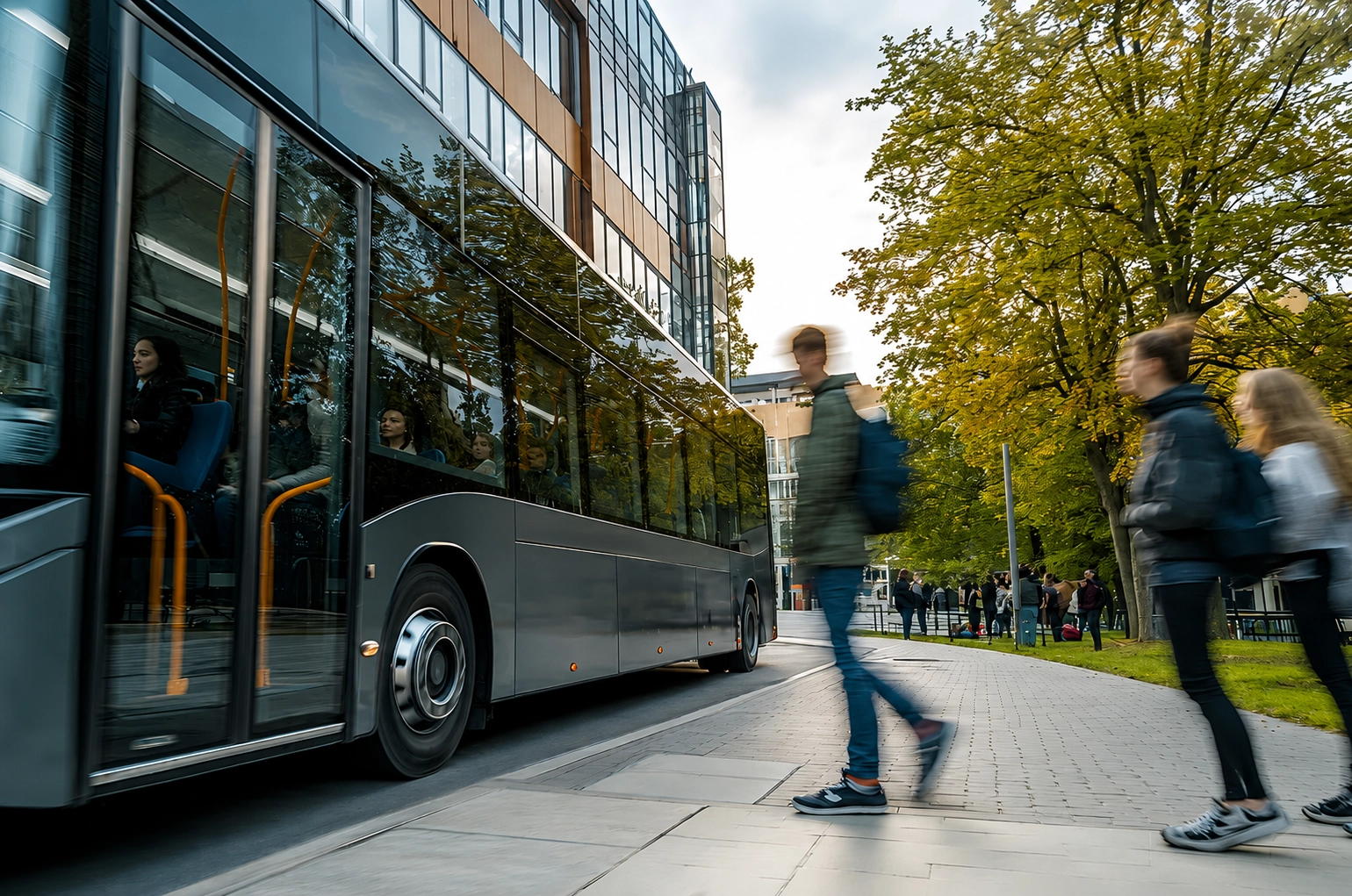
Services, or get in touch with you? Sure. So, uh, RTC is the, uh, the Regional Transportation Commission of, of Southern Nevada, and you can find us at www.rtcsnv.com. So there’s a lot of good stuff on there. I, I encourage you to come on there. They have a great rider’s guide, really cool things, uh, where you could see some of the things like I talked about, UServe and Silveride. Uh, they have a microtransit here. They got some really cool things out here. Actually, if anyone ever comes out to Vegas, the best way to go up- get up and down the Strip is they have a, a double-decker bus called The Deuce and it’s only $8 for the whole day, and you can go from one side to the other side of the Strip and it’s, it’s amazing, air conditioned and all that stuff. Uh, for me, uh, my email is louis.ferri@transdev.com. So L-O-U-I-S dot
F as in Frank E-R-R-I @transdev.com and feel free to contact me anytime you want. Thank you, guys. Excellent. Thank you, Le- uh, Lou, for joining us this afternoon. It’s been very insightful, and thank you for our, uh, listeners for tuning in. We have a new episode every Monday and, uh, we’ll hope, uh, to catch you again during the next episode. Thank you.