Welcome to Stop Requested, the podcast where we discuss everything transit. I’m your co-host, Levi McCullum, director of operations at ETA Transit. And I’m your co-host, Christian Londono, senior customer success manager at ETA Transit.
Welcome back to Stop Requested. Christian, how are you today? Doing well, Levi. How about yourself?
I’m doing very well. And we’ve got another great interview in store for our listeners. Today, we’re going to be speaking with Lucas Boehm of TARTA. He’s the IT director there. Lucas, how are you? Hi, everyone. Doing great.
so Lucas, for our listeners who m- might not be familiar with you or, or with TARTA, could you give us some background into, you know, your, your role there, and how you became to be the
IT director at TARTA? Absolutely. So, I actually became the IT director about five, six years ago now. started in 2019.
I jumped in and here I am today. Excellent. That’s an interesting progression there in your career journey. so you were a subcontractor a- and they were just hiring you, for what, odds and ends, or, you know, did you have a m- a major role when you were in that subcontractor position?
Yeah. TARTA actually… So I worked for an MSP and TARTA was my main client, and I worked with the previous IT,
IT director quite a bit on, yeah, just odds and ends. Whatever they needed help on. And y- you said that you came on board as the IT director in 2019. So, you know, clearly that put you right into the throws of, of COVID.
you know, what, what was that like, you know, being in the industry or being an, the IT director a year for and then, you know, getting turned upside down with COVID? Yeah. So, operationally we were struggling to maintain services. you know, most COVID look… Most people look at COVID and, you know, it’s full of bad things. For a transit agency as…
Especially TARTA, I almost think it saved us from a lot of perspectives, with the additional funding to help, you know, public entities and transit specifically.
we were able to use some of those funds, to really, I guess, improve, some of the things we were doing.
But, in terms of like operationally, yes, things changed. You know, being such a, you know, we can’t…
Our drivers can’t do other jobs remotely. a lot of our people at that time and a lot of our tech- technologies didn’t allow us to do remote work.
so we did have to scramble a little bit to, to, you know, to get that access to allow people to work from home computers. to, to really start that hybrid approach.
yeah. A- and it’s made us better, so. in your time at TARTA, what have you found most interesting about transit technology?
And, you know, compare it to maybe other positions that you’ve, you’ve held in the past. Is there anything that’s really just wildly different? You know, something that entices you a lot? Yeah. so coming from the private industry, going to a public in transit, I, I didn’t know a lot about transit when I first started.
and I can say it’s been very, very nice to be able to work with other transit agencies and, and vendors. And, and because we’re public and we’re all trying to achieve the same goal, to move people, you know, you’re able to work collaboratively with other, other peers. which is not the same for private industry.
additionally, you know, we’ve seen so much, especially in the last, you know, five, five, six years, I, I feel like the, transit technology has really grown.
Where before everything… It wasn’t standardized. A lot of things were not common place. And, you know, a lot of things that you’re seeing pop up and all these new vendors, really challenging the existing, you know,
I guess, larger organizations that have been doing this for years, forcing them to change how they, they do technology and, and really move to the next gen, of solutions and, software. So it, it’s been exciting to see that grow and I’m looking forward to what else comes. I mean- Wow. … do you think that having that extra competition in the industry is, is a good thing then? y- we were… It just felt like sometimes you’re a number to these other, these, these software organizations, and, and they don’t actually care about what-… what they’re providing or, you know, the service that they’re giving. So yeah, these new, you know, smaller vendors popping up, forcing them to change, to, to rethink everything, very good. Yeah. The, the, the vendor community sometime, becomes complacent and, and it’s just that disruption there’s been a rapid acceleration technology adaptation at different of agencies. And, and we see it from the, you know, technology vendor community.
but just to talk a little bit more about TARTA’s, technology, where you are today, and where you’re heading, could you, first start giving our listeners a description of TARTA? what type of services do you guys operate? And a little bit about your community that, that you serve.
Yeah. So TARTA, we serve around, I think around 2 million people now. And, we’re… I think we’re above
COVID numbers as well. A lot of people, compare that to pre-COVID numbers versus post-COVID numbers. we… I think than, than most that I hear.
So we, we run fixed line operations, and we have a total 70 fixed line vehicles. I think our max pullout’s around 45.
And then we also do paratransit, in which we have around 40 vehicles.
And so that has been a huge, hugely popular item that TARTA has offered, and, we can s- continually see it grow, and I think we have around
15 to 20 microtransit vehicles right now that we’re utilizing. Right. and all the different things that entails running those services,
I’m pretty sure you guys have, you know, different pieces of technology. So And could you tell us a little bit of your vision for integrating those technologies and, and kind of like make them better? Yeah.
So, microtransit service started, we had to rent these vehicles.
And so we’re actually still, renting, leasing these vehicles, and that poses a challenge because now I can’t install all the IT equipment in them like I, I would want. So, you know, we don’t have routers, we don’t have MBTs, nothing like that.
We essentially just have a tablet within there. And so, as we’re deploying new technologies like the, the TARTA card we have to find a way to make these, these vehicles, these leased vehicles accept that payment.
And so the, the previous tablets, right, they didn’t accept SVA. they didn’t take the TARTA card or the chips. So we were gonna get new tablets and we were gonna go through that. and then we found the tablets were very, very weak, right? It was almost impossible to read even though they, they approved it. So, you know, through trial and error, we finally found a, a solution, a handheld phone that could use as a scanner, that uses cellular since we don’t have any internal, wireless on these vehicles.
And says they, they need X, Y, and Z ’cause that’s what the riders want, and, essentially, we go to the drawing board, and as these come, we, we make it work. Obviously, it’d be better to, to pre-plan, but that doesn’t always happen in the world of transit ’cause we gotta move . Yeah. It’s, it’s very dynamic and, and- Yeah. … like you said, a lot of times, it comes from the community and, and there are decisions that are made. And a lot of the times with projects or even increasing service, it means that you have to expand technology and, and you have to figure it out how you can make it work.
y- you know, wanted to ask you a little bit about your radio system and, and, you know, if you tell us about the, the story how, you achieved some integration and, and improved communications with the radio system.
that would be a good story to hear. Yeah. So back when we… We went to an RFP for a, a new CAD AVL system.
And during the time, our radio system was end of life. we had vendors saying, “Hey, you guys, you know, will no longer be supported. We can’t order the hardware. It’s getting harder and harder.
you guys should look at finding a different way to handle this.” And at that time, you know, VoIP was out, we were… While we used it internally, you know, using it over cellular connection, and talking to several peers over the agency, it just… it was never really…
We never got really positive feedback from them. They were like, “Man, I wish I, I had my old radio system. I miss that thing.”
And so we were looking at it, and talking, with the executive team here, we were really interested in partnering with the Lucas County,
TARDA, if we needed to transportate- transport people for the county or, or help in any major disaster, we could be a part of that system.
it would offer us redundancy. It would offer us, you know, a robust system on the backend that, that we just couldn’t do without, you know, making our own towers. And, and we don’t specialize in radio communication, so talking with the Lucas County Radio System, it was a huge win.
they, they agreed after years of saying no to us, they, they agreed to allow us to jump on. now we just had to figure out a, a CAD/AVL vendor, that could help us because we, we had several situation where, an operator would be talking on the vehicle to dispatch and, you know, maybe they’d say something rude about a passenger or, maybe they, you know, were in a dispute with a customer and that could be heard forever, you know, to all the other radios. And, you know, you know, talk over others. And it just became a problem where we’re like, “We need a closed radio system.” we’d have to find some other way to make that happen. And so, during the RFP, that was an item that we really, really wanted.
And so we add that and, you know, not everyone could, could say they had a solution.
and so that was a big win. ETA was able to sit down with us, you know, to create some custom development and, work on an implementation that allows us to have a closed radio system with backup in case, you know, something doesn’t go wrong, the cable’s broken, ETA system’s down.
so it was really nice and it, it met all our, our, all our criteria. Well, that, that’s a cool story. And, and, and most importantly, you know, help you get the functionality, to improve the riders’ experience. I, I cannot imagine what the experience was previously for riders just hearing all these different, you know, scenarios that are taking place somewhere else and maybe even getting concerned like, “Oh, somebody’s getting kicked out,” or, “Oh, you know, like this is happening and, and now it’s impacting other people, that, that should not be part of that event.”
So that, that’s definitely, you know, a, a great story. Wh- what’s on tech- the technology roadmap for TARDA? So what are the next things that you guys are currently working on or, or potentially will be starting to work on soon, five years.
I think we have completely revamped everything from the, from the ground up, whether that’s server side or desktops or, you know, even transit technologies themselves.
so while we don’t have necessarily a specific, you know, new project, we, we do need to… ‘Cause with, there’s been so much, we really do need to take a step back and, and really, really focus on getting the most of what we have and making it, making it work, right? ‘Cause every software you deploy, it takes time. There are things missed in training.
you’re, you’re not usually using it 100%. And that’s, that’s what we’ve found is that, we deployed a product, there was something, we are not using all its features. So
I’m being honest, probably this year and the next year, we’re really gonna focus on just making sure that our platforms are all working, exactly how they should and getting the most of those.
And then, at that point, most of our, our contracts will be up and we’ll be going back to RFP, and where we need to, you know, redesign what our next steps are going forward, so. So you know, can we buy more sensors for this and that? but very often agencies are not, maximizing the technology that they have and, and the use of the technology. And I particularly think that, that retraining is, is a big, component there. So is, is that something that you’re thinking on, on doing, like lining up, lining up retraining for a lot of the, the areas just to make sure that at its best value?
Yeah, we’ve been doing a lot of, yes, training. Training’s huge. can never have enough training. And then really making sure you create the, you know, giving them the documentation and the, you know, you know, SOWs to, to make sure they’re following the process, as, as expected. I would imagine all of those new technologies, of, of course they’re going to have some real impact on the way that you do business, on the way that you operate. Are there a few examples that you have of, you know, how the radio integration or how the new CAD/AVL, and, you know, as I understand you also have a new website, you know, how those things
And, and we are still working to release it for our, TARTA Flex service as well as, completely all of our paratransit service.
So the, the TARTA Card is great because it’s… The idea is to allow people, Right? I- it’s an introduction to cashless, fare system essentially.
and why that is so beneficial is because customers can now use fare capping, utilizing this card, which will always give them the best value when, riding any service.
they’ll no longer have to get that. We won’t have to order, you know, hundreds of thousands of transfer passes because the transfer’s built onto the app or into the TARTA Card.
they’ll… They’re able to use that for a reduced fare card, so that when they scan it knows they’re reduced fare. Whereas before, they had to carry two IDs, they had to go through all these… this process to get that, and, and now they don’t need to do that.
Another cool thing is we’re working with, some of our partners, the school systems around, Lucas County, and right now they’re th- w- they’re giving passes, right? They’re buying TARTA passes and they’re having to drive and deliver these, these physical passes to the, the customers, to the riders so that they can ride.
Well, with the Easy Fare Card, Easy Far Card, the TARTA Card, whatever you wanna call it, they’re, they’re able to manage that piece from a backend system now without having to physically hand out passes. They can just apply passes or apply funds to the account so that the, the riders can do that straight from their phone or from a computer.
So it doesn’t just help us. it helps our vendors and ultimately helps our, our riders, find easier and more convenient ways to pay.
So that, that’s a big one. the website, obviously, we, we wanted to make it easier for them to get information, to navigate, to utilize tools, such as ride, ride planning, scheduling, and then also getting involved. There are other vendors like ETA,
Transit App, all those different vendors, and, and kind of using that as a one-stop place to ni- get ’em to where they need to go and where they prefer. I really love those examples because they highlight what all the, the time and effort that you spend as an agency. You know, you want to improve and lower the barriers of entry to th- the system.
If you get the right partners on board, then, it can, certainly help and facilitate that process. You know, thinking from a technology standpoint, Lucas, and, you know, you being the IT director, I, I feel like it’s natural to ask about cybersecurity in some way.
i- are there any concerns or challenges that you, that you’ve seen or do you perceive to, to happen with onboarding these new technologies? Yeah. I think you should always be looking at it from a security standpoint.
it’s… So that, that’s a, it’s a good question. So with technology and security, it’s always something you need to assess, and, we’ve even started building out requirements in our RFPs and, and procurements, to address those.
As we have seen from previous incidents like SolarWinds, you know, even your partners can be an entry point, into your systems.
So really, you know, as you’re developing an architecture, you need to, to make sure that you, you put layers, of defenses in place.
for example,
Wonderful.
However, we don’t want the entire, organization to be able to do that. You know, we need key individuals or key devices to be able to access those when needed, so, you know, subnetting your network or, you know, role-based access so
Joe, you know, John Doe can’t access anything he wants at any time. You gotta put those things in place as you’re building up the product, that way if something was compromised, you know, it will be a minimal impact instead of, all of your, operation technology going offline for whatever reason. Yeah, it really sounds like you’re thinking about this holistically, Lucas.
y- you know, and just trying to broaden, the perspective here and, y- you know, think about your internal customers as well, some of the, the folks that, that you serve that are, you know, either working under you or working maybe in dispatch or i- in, you know, in operations, what’s the satisfaction, like, been so far? Have, have people had good things to say a- about the technological upgrades that you’ve been making?
Have there been some, you know, negative Nancies along the way? And just wanna get a sense of what people are saying.
Yeah. I think you’ll always have people who don’t like change, right? -Going, going from one sys to another can— i- i- it’s a lot, sometimes. It can, you know… Everything you did, everything you known is thrown out the door.
But we’ve had a lot of good feedback. before dispatch, you know… CatADALE is such a huge part of everything we do. before, right, we had to manually count passengers or, manually do radio checks to see, you know… For, for the operators to give us a number so we could update our records. So passenger- you know, automated passenger counters are, are huge and it saves so much time.
the ability to replay a route, you know, is a, is a big win. So dispatchers, if they need to see where a bus was at a certain time, to identify a complaint or, you know, if there was an investigation from the police, on a non-related item, to, to be able to replay that GPS and have, you know, that history of information available to you is, is nice. And all in one place is even better. you, you don’t have to, you know, log into
X, Y and Z for this and go over here to grab that and then compile a list of Excel spreadsheets to, to match everything, you know. Having a single interface where you can grab all of your operational information is just such a powerful tool.
themselves have been so happy. You know, they… You, you get some drivers that say that people just talk on the radio all the time, and with the implementation of the closed radio system, to, to free that up for important communication, you know, I’ve got a lot of feedback of how, how nice it is, not to hear every single thing that they don’t need to hear as, as they’re operating their vehicles, and really being able to focus on what their, their main job is. So,
Yeah. It’s, certainly rewarding, right? When you get to deliver these projects and, and ultimately when you’re implementing technology,
I would say in most of the scenarios you’re looking for, for operational improvements, right? Like, it, it should have an, when you actually, deliver.
but it’s, it’s also a lot of challenges along the way. So with all these different, technology upgrades and, and modernizing your systems, what would be- are some key, takeaways for, for you? Yeah.
I, I’ve always liked it and the… We don’t implement technology just to implement technology. So this kind of goes off what you were saying. we, we want to implement it purposely, like purposeful, if we implement this, we right? want to have this change on people. We want to affect people in a certain way to help them. Ultimately, our job is to help move people and give them the information at their fingertips to, to help them plan their rides to utilize our service. So,
I, I’ve always liked that. You know, don’t just implement it because. Make sure there is a purpose. and that’s, that’s really what we’re here for in this industry, is to help people. That’s right. And, and I,
I… You were, starting to answer my next question that I was gonna ask, I guess. that’s part of what you were saying,
So certainly, you know, having a purpose, right? Like, just not, implement something because it’s cool, but that the return of investment or that, you know…
Like, that return you’re gonna get from that activity, it’s gonna be meeting your goals and not just, like, implementing it because it’s the cool thing to do. Absolutely. but are there other things agencies should consider where, where they’re planning for, you know, technology upgrades? Yeah. I, I think,
I think it sh- it’s always good to consider, you know, how it, it’s going to affect…
you’d be surprised, right? Especially from an IT perspective, once you implement something, you’re like, “Oh,” you know, “it… It’s for this department,” but the, the, the waterfall effect it has on all the other departments, it’s always good to bring s- you know, someone else in from other departments to get their… ‘Cause you don’t, you don’t know how they’re gonna interact with that new application or, to really, from an organizational standpoint, make sure that you understand who it’s gonna affect and, and, and also make sure we, we inform, To try to inform the operators, because they are the frontline staff and, and they are the first ones to, to greet the customer, to talk to the customer, to educate the customer. So, trying to take some of that information and, reducing it in a way to inform not only the, the people who are, you know, on the back end, but also the people who, who may see bits and pieces of it from the front end. Yeah. And, and, and that’s critical. I, I think those two suggestions added with the first one, about making sure you have a purpose, that they’re, you know, spot on.
Eh, you know, particularly involving people that will be using the systems, making sure they’re on board.But also understanding your technology ecosystem, right? When you’re adding things, how is, is it going to impact, the operation other systems, or what, what other systems does it need to connect with or interact with? so o- on that, you know, could you tell us a little bit about the importance of, of having good partnerships when it comes to implementing technology? Yeah. I think partnerships can really make or break a lot of, a lot of deals.
you know, I, I briefly touched on this in the beginning, but, eh, it feels like we’re, a number or a paycheck to them and, you know, they don’t take input. They don’t, they don’t try to improve themselves.
And, and we’ve had some really good, vendors who have treated us, as equal, as partners, who, who have lis- listened to our feedback and, you know, have considered how something we’ve brought up may have an impact for other agencies and similar size. So, it, it’s not just… It’s not just helpful for the customer, but the, the vendor as well, you know, to, to improve their product, to, to, to help the other customers that they might have.
And it just, it really, it, it’s a whole different relationship, a- makes me wanna stay with them all honesty , right? Like, I- I’m much more likely to stay with someone and who, who gives feedback or, you know, says, “Oh, we can’t do this, but you know, we might be able to make this happen,” than someone who just…
there’s no conversation at all. You know, you get what you get. that’s really good advice, Lucas. And just to sum up here, these are some of the notes that I took during our conversation, but you definitely want to bring in stakeholders early to understand the impact of a new technological project, know your security risk and d- develop a plan to be able to mitigate those, and choose your vendors wisely. anything else that you would add that I didn’t capture there, Lucas? No, I think those are some good ones.
Excellent. Lucas, so Lucas, for our listeners who would like to, you know, maybe learn a little bit more about TARTA or perhaps contact you if they have any questions about any of the projects that you’ve implemented at TARTA, how could they do so? Yeah.
so obviously, you can always go to TARTA.com, but, if you’re interested in talking more from a technical aspect and any of our journeys, you’re more than welcome to email me.
with emails L-B-O-E-H-M @TARTA,
T-A-R-T-A,.com. you can always reach out there, and I’ll get back with you. Excellent. Lucas, thank you so much for joining us today. This has been a, a wonderful conversation, and I’m, I’m really glad we got to share this time together.
Yeah, thanks for having me. Appreciate it. Thank you, Lucas. And for our… . Sorry, I messed you up too.
Okay. let’s see. Let me say thank you, Lucas, first, and then- Yeah, yeah. You go for it- . … and then we’ll, we’ll piece that in . I goofed that up. My bad. You ready?
I am ready, yeah. Go ahead. Thank you, Lucas. And to our listeners, we’ll be back next Monday with another episode of Stop Requested. Thanks for listening.

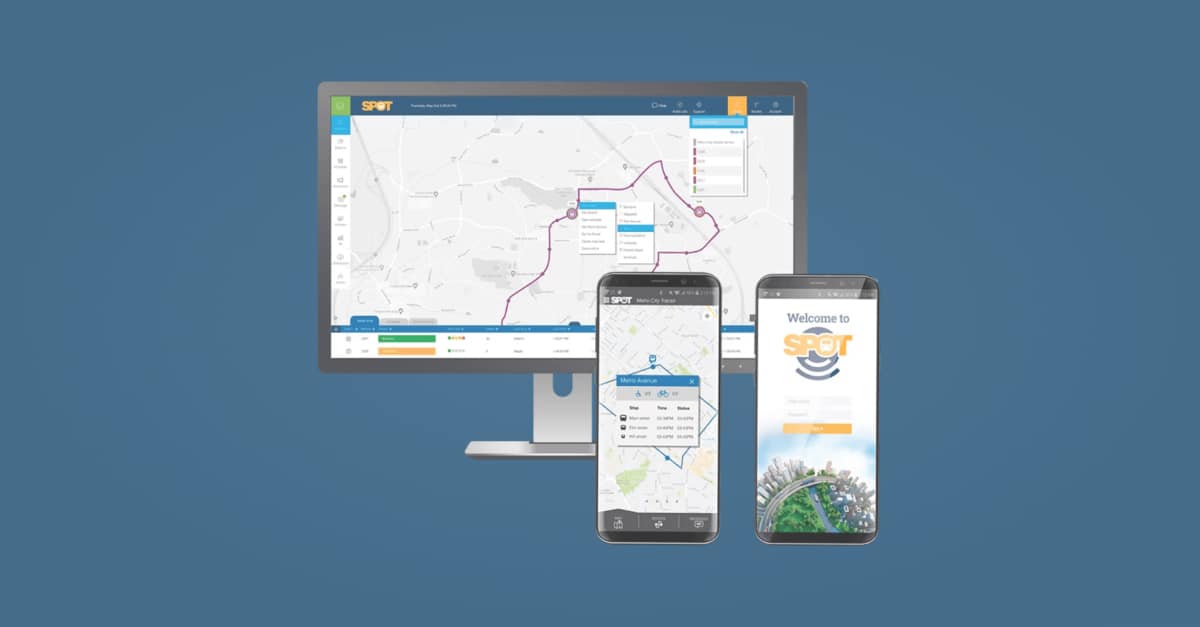
 SPOT: ETA’s Core Platform The SPOT™ ecosystem offers transit management solutions by providing a flexible, modular platform.
 SPOT: ETA’s Core Platform
  All Solutions
 CAD / AVL / GPS tracking
 Business intelligence
 Digital signs and kiosks
 Infotainment
 Automatic passenger counting
 Tally NTD Survey Software
 Tracking websites and apps
 Vehicle announcements
 All Integrations
 Demand-response and microtransit
 Fare collection
 Mobile video surveillance
 Pre-trip inspection
 Solar e-paper signage
 Vehicle health monitoring (AVM)
 Voice communication
 Transit
  All Industries
 Airport
 Campus
 Medical center
 Rail, streetcar & trolley
 Rental car
 Tourism & theme park
 Transit
 Case Studies
  Blog
Blog eBooks
 Wall of Love
 Careers
 FAQs
FAQs Press
Press Events
 Support


