Transit systems don’t succeed because of schedules or vehicles. They succeed because of the people who operate them. Stop Requested.
This is Stop Requested. by ETA Transit. I’m Christian. And I’m Levi. These are real conversations with the innovators, operators, and advocates driving improvements in public transportation.
Today, we’re talking about the human side of transit. and how customer experience is shaped by the people riders interact with every day. Our guest is Mark Hughes, founder and principal transit experience lead at Transit Experience Group and chief design officer at Mark
Hughes Creative. Mark brings a background in product design, digital experience, and customer experience from companies like Microsoft, Sony PlayStation, and JPMorgan Chase into the transit industry.
We’ talk about why transit may be one of the most demanding customer experience environments, and how training, communication, way-finding, and frontline readiness all shape rider trust. Here’s our conversation with Mark
Hughes. Today, we’re joined by Mark Hughes, founder and principal transit experience lead at Transit Experience Group, and also chief design officer at Mark Hughes, Creative.
Mark, how are you today? I’m doing great. Thanks for having me. Absolutely. It’s really our pleasure. You know, I’ve been following you on LinkedIn for a little while now. I, I see the amazing work you’re doing, and I want to share it with our audience, uh, here on Stop Requested. It– this is gonna be a really fun conversation. I know you have a lot of passion and enthusiasm about this topic.
Uh, but so our listeners get to know you, uh, can you explain to us what your background is and how you got into transit? I always find that that’s an interesting story.
Sure. Um, so Mark Hughes here, founder of the Transit Experience Group. My background is in product design and digital product leadership.
So I’ve spent my career helping places like Microsoft, Sony, PlayStation, JPMorgan Chase, and Marsh McLennan design systems that work better for the people using them. So what drove me to transit is that it’s the most real form of user experience and customer experience because riders don’t experience transit as vehicles or schedules or infrastructure. It’s through human interaction, and not just as users, but as customers. And so that’s where I got drawn to it because operators, conductors, custodial station staff, and basically the frontline employees are, are part of that mix. And so when I created the Transit Experience Group, I did it to strengthen that human layer.
We focus on four areas, uh, training; communication, which is technology and apps, and that comes through sometimes our Mark- my Mark Hughes Creative. business; and performance measurement; and workforce readiness, because it’s in those areas where the rider trust is built or broken.
So I guess I made the jump from private sector into transit. It just started with an observation. I mean, in the private sector, companies invest tons of effort into making experiences intuitive, consistent, and predictable, and every touch point is designed intentionally. It is– It amazes me the amount of work we would put into a workflow when I was at Microsoft, working on the Windows team, just deciding where a start button would go, or is it going to be a checkbox or a radio button? And we would spend days sometimes trying to figure that out. But when I looked at transit, I saw something different. I saw these dedicated frontline employees operating in complex environments, but really, they didn’t have standardized training, systems designed for the realities that they were facing every day. And
I thought, “Oh, here’s a niche. It’s my way- to get into transit, and I can take what I’ve done and use it for the good of all.” That’s how I got to where I am now. Oh, that, that, that’s very interesting. And, and, you know, a lot of people we’ talk to, you know, they, they just stumble i-i-into transit and, you know, they started working at a transit agency at, like, a particular capacity, maybe in operations, planning, and building their, their experience like that. Uh, you came into transit with a specific background and kinda like a specific goals o-of, you know, how to improve transit, especially from that customer experience background.
And I’ve been seeing a major trend, uh, a-across the country where we’re talking more about customer experience and how can we improve all those different, uh, touchpoints where we’re interacting with customers to make that customer experience better, and particularly, like any business, to bring more customers, right? If we take care of our customers- Yes … if we make that, uh, riders experience exceptional, hopefully that will translate into customer loyalty and building ridership.
So I, I wanna know specifically, like, if you could maybe have some, um, a examples or, or something you can share with us of your experience doing customer experience, like, let’s say at, uh, JPMorgan, and how they were looking at that customer experience, and what are some of those things that translated into, into the public transit industry?
Sure, Cristian. So transit is the most demanding customer experience environment imaginable, period, because you’re dealing with time pressure, public safety, accessibility needs, service disruptions, and emotional situations all in real time. And it’s funny that you mentioned JPMorgan because when I was at
Chase and we were dealing withHere’s something that, um, I– a story I love to tell. So I get my ideas craziest places, and I keep a set of markers in my shower, and I will sketch out maps or workflows. And so because it just…
That’s just me. So- … um, I was going on a trip, and
I was trying to find a way to change my travel notifications. Okay?
And think about it. If you’re traveling and you’re going away, let’s say we’re flying down to Disney World, okay?
And we’re going, “Okay, I’m gonna be away.” I go to use my card, and the card gets declined because the bank sees that I’m not home, and I didn’t tell them. So it’s a safety measure.
Well, I thought to myself, I said, “Hmm, if we geolocate everyone as it is, why don’t we just des– why don’t we just calculate from the point of origin if the person leaves a certain radius, like let’s say they go forty or fifty miles outside of that radius, that we automatically come to them and say, ‘Hey, it looks like you’re traveling. Would you like to turn on travel notifications?’”
That way, it’s less work for the, it’s less work for the customer, it adds a level of security to their account, and it gives the bank a ni– it makes us look like we’re really on top of our game and that we are looking out for the customer.
Yeah, the thing that I’ve also noticed is that transit, user experience and customer experience, the minute people start paying for something, that’s when the whole game changes.
And so I’m dropping fare into a box. I expect on-time service, a fairly clean coach.
Uh, that’s, you know, we can talk about that later. But I expect, you know, a decent environment, safety, on-time environment. And because I’m paying for it, it’s, it’s a whole different game than just saying,
“Oh, here’s something that I’ve decided to use.” And so I think when I started looking at that whole CX piece, I thought, well, if those same human-centered design principles that I use in the private sector had come over, they would dramatically strengthen how transit agencies prepare and support their frontline workforce and also build up, their products. I can, uh, empathize or, or, or see myself there. I, I do remember traveling and, and, you know, having my card decline and having to go into the app and then try to approve or, or select that I was traveling and then try it’ again. Or just trying to find it. We had six other banks we had to use, we used as examples, and you have to go down five or six levels to find it. It’s ridiculous.
And we can ta- uh, we’ll get to wayfinding later. But yes. I, I’ completely… I– you understand what I’m saying. So, so bringing that experience for transit and, and trying to reduce the friction, making it easier for riders to, you know, access the service, use it, and, and have a good experience, you know, a-and having applying, uh, that, that experience that you had with that human-centered design, uh, is definitely something that, that is helping transit agencies get to that place where, you know, they’re, they’re making the riders’ experience better. Uh, tell me a little bit about the importance of, uh, um, training, uh, and communications when it comes to supporting, uh, you know, uh, that cus-customer experience goals. That’s a great question, Cristian.
So when riders file complaints, agencies often first look at operations. So they’ll look at schedules, equipment, infrastructure.
And they’re important. But many riders’ frustration stem from moments of confusion or just plain old miscommunication. So when riders don’t understand what’s happening or don’t feel acknowledged, uncertainty then turns into frustration, and that’s why communication is operational. It directly affects rider confidence, safety perception, and trust in the system.
But training isn’t separate from operations. Training is actually what makes operations work. So, you know, we start with… This human-centered design starts with understanding reality. Not ideal conditions, but real conditions.
And so transit workers, we know, operate in unpredictable moments. Riders can be confused, stressed, late, or vulnerable.
Service disruptions occur. Accessibility needs arise. Emotional situations happen. So the training has to prepare the staff for those situations.
And you can’t just do it with procedures, but you’re gonna have to do it with judgment, situational awareness, but basically communication. And, you know, you’re not training people to operate equipment. There’s more than that. We’re trying to prepare them to manage human environments.
This makes me think of, um, a story where I was on the train, and the announcer came on and told us immediately during our delay why the train was late, so people didn’t have a chance to foam over.
But there were some tourists on this same train, and the locator was stuck, and it kept saying, “Next stop, 34th Street.” And these people were German tourists trying to go to Independence Hall, which is at 5th Street. So you can imagine you’re hearingYou’re hearing 34th Street, the locator is saying 34th Street, but you look outside and you see that you’re leaving 8th
Street. And it, it’s funny, we– when we’re in a situation, especially in transit, and we’re trying to go somewhere, and we’re in some place new, our body language changes. It al- it can almost become panicked.
And I caught that, and I thought about this, and I thought, “Hmm, let me ask them.” And so I intervened, and I was able to get them to Independence Square. But that was just, that was just one instance. So my thing is now, how am I gonna communicate to, um, the depot, to whomever is handling this, this announcement readout that it has to be fixed? Is there a problem in the software? Is it something that’s system-wide? Are the trolleys having it as well? Is it something coming from control?
So it all creates a big, you know– It, it’s like the communication is super important because even though it’s one piece that one person is noticing, the source might be even larger depending upon how, how this information is, is spread throughout the system. This episode is brought to you by ETA Transit.
Too many agencies are still operating critical transit systems on legacy software that is costly to maintain and difficult to evolve.
ETA Transit offers a clean break. As a fully web-based CAD/AVL platform, ETA replaces closed aging systems with an open architecture designed for real-world operations. It integrates with what you already have and delivers a clear map-first command center your staff can trust on day one. Modern CAD/AVL without the baggage. Visit etatransit.com.
Yeah, Mark, I can certainly see how that would be confusing to a rider, especially if you didn’t know the system.
I-I’m thinking of times where I’ve traveled, gone to a new city, and you’re just kind of fumbling your way through it. You know, you get tunnel vision sometimes because you’re not sure if you’re supposed to go down this corridor or w- you know, which stairs am I going for here? It, it can be really confusing. Uh, h- I’m, I’m curious, how, how would you, how would you expect that to, to happen in an ideal world? Do– This example where you’re stuck at a station, and it sounds like, you know, the train operator did their job.
Uh, software probably, uh, could have been better. But you’re, you’re really, like, testing this out in real time. You know? You’re, you’re building the plane as you fly, so to speak. Uh, what would have been ideal there from a customer experience standpoint?
So wayfinding is, is having designed maps and wayfinding systems for a large urban transit system for Swiss Federal Railways.
You have to design, I think, you– when you– we would hear people at Windows say, “Think about designing for your mother or your grandmother.” No, no, no. That is completely wrong. You have to design for everyone, and that’s kinda difficult.
You have to design for your ADA users. You have to design for your non-English speaking users. You have to design for your colorblind users, and be careful of which shades of blue and green you’re using, ’cause in forty percent of all
Northern European men, they’re blue-green colorblind, so certain shades of blue and green will track as gray.
So I s– when I was thinking about this, I was thinking, what did we do before electronics where we were to alert people of their place at a station? So the Broad Street Subway dates back to nineteen twenty-eight, and if you look at the Electric Railway
Journal, which was a trade journal at the time, tabbing these new stations, it talked about how they were color-coded with this beautiful tile. And it is still in place. Even I as a kid, being a trans– being a subway fanatic, I was aware of every color scheme. So color is one way to do it. But also making it so that you have either a call box, some automated systems, okay, where you’re not going to have station staff. If you have a call box where someone can press and you will go to a central control area and say, “Hey, I’m here, and I’m trying to get here. Can you help?” Or if for your more tech-savvy people, you would have your QR codes that they can use. I had a friend tell me about the QR code he used in New York on the MTA, and his bus came when it said it would, and it made their trip easier.
So I think thinking of the user and thinking of the situation most likely to be a big friction area, and that’s being lost, being turned around.
Also, with directions, being clear with directions. If it’s inbound, outbound, or uptown, downtown, or east, west. You have to remember, not everyone is from Boston. Not everyone will understand inbound, outbound. So having good visualsAnd letting people sort of see and have a way to either map themselves or have sort of like on, um, on how, um, who wants to be a billionaire, having your, having your free call, having that call box where you can signal for help. That would make a– that makes a big difference. And one thing
I always say to my operators that I’m teaching is, you really do need to know the system. I know you may be running late or something like that, but you’ll have people get on and say, “Can you tell me how to get somewhere?”
Now, you don’t necessarily have to have them sit on that front seat and tell them where to get off, but you should be able to explain the general layout and kind of help them where they’re going, and if not, give them an option. Most people carry cell phones. You can direct them to the app. So I think it’s almost ha- like having an arsenal, a toolkit of, um, of safety catches as it were, for those customer situations, um, that might arise.
I completely agree with that. You, you have to be able to exercise multiple tools to get the job done. Uh, you know, from your experience, the, the frontline worker, you know, is the one that’s going to be interacting the most with the public.
Uh, do you think that they define the rider experience? You know, is it the operator of that vehicle or perhaps an attendant at a station that, that is what, uh, people are left with whenever they use public transportation and whether they’ll use it again?
Oh my God. To riders, they are the transit system. They are. They’re the face, the voice, the authority of the agency right there. You just said it. So, you know, in those moments of uncertainty we were talking about, service disruptions, delays, accessibility needs, the frontline staff determines whether the rider feels informed, respected, and safe.
Now, we know the infrastructure moves vehicles, but the frontline employees move confidence. And so we conduct– like a lot of the discussions on transit safety focuses on the biology of burnout, and cortisol levels, and trauma responses, and fatigue. And I, I don’t mean to sound dismissive of that. I think that research is important.
But if we’re not careful, it can lead the industry down a very myopic path. So, for example, when accidents occur, the instinct is often to look inside the operator for answers. Did he get enough sleep? Was he impaired? Is there psychological stress? But if you talk to an operator, they’re gonna tell you something very different. Fatigue in transit is rarely biological. A lot of it’s operational.
And so representing the face of the agency, you know, here we have the operator, it comes from constant decision pressure, schedule compression, passenger conflict, uh, unpredictable traffic conditions, and the cognitive load of managing safety while keeping service moving.
You’re, you’re, you’re moving this sixty-foot metal and rubber multi-ton box with forty lives down the street at a high s- at a high rate of speed. That is a lot of responsibility.
We take it for granted. I think it, it’s– that’s why every time I see a bus, I kind of smile because that operator is really doing, a major thing, keeping it on the road, keeping it safe, not… You know, getting his passengers to their destinations quickly. And we just ac- we accept it. We just… It’s second nature. And I think that’s what gets lost in the agency executive offices. They forget, you know, um, they forget about… Unless they’ve come up through the ranks, they kinda, they kinda lose track of what’s going, going on out there in the field. So for decades, agencies relied on training campaigns and awareness programs to address fatigue, for example.
But education just can’t fix structural conditions. It can’t do it alone. You know, knowing the symptoms of burnout, it doesn’t help me in a blind intersection. It doesn’t change a schedule where there’s no recovery time because you were held up during your run, and it doesn’t change constant passenger conflict or dispatch, or dispatch pressure when you’re dealing with a vulnerable– if your route goes through a vulnerable area, and you have to engage with that.
So, you know, I think with modern safety thinking in industries like aviation, they’ve moved towards systems analysis, and they ask questions like–
They don’t ask, why did the operator fail? But they ask, what conditions made failure more likely? And so transit needs to adopt the same lens, especially where the frontline worker is concerned.
You know, it’s ’cause this piece, they’re– these people are human, and we just can’t treat operators like malfunctioning endocrine systems while ignoring the operational environments we place them in every day.
So, you know, we have to look at them at what they do. It’s not fatigue, for example. It’s not just biological.
And for that frontline worker, it’s operational That’s a really excellent point. And, you know, I have not been a bus or a train operator, neither has Christian, so we don’t know that experience.
Uh, but- Mm-hmm … I have been on a lot of buses and trains and have seen how people interact with the operators and, you know, attendants and, uh, fare collection staff.
Uh, unfortunately, there are those people out there who, uh, you know, will treat, uh, others badly and others who are just- Mm-hmm … trying to help. Uh, in- Mm-hmm … you know, I think some cases, the, the train operator, the bus operator, that transit employee doesn’t handle the situation probably as, like they could.
Um- Mm-hmm … a- at least not in the, in the way that I would, I would hope that I would behave in that situation. Um, you know, how, how do you go about teaching judgment?
How, how do you get the operator or the transit staff to think o- on their toes in a situation that you might not be able to be prepared for, but you– there’s some underlying framework with how you can conduct yourself in that professional environment? Gosh, you guys are like mind readers. These questions are amazing.
Um, so I have a story for you, and Christian, and our, and our listeners. So I was on my way to the dentist one morning, and I decided I would take the bus to Center City, and I’d transfer to the train. So I hop on the bus, sit down, coming down the street, we turn a corner, and out of the corner of my eye, woman in a wheelchair hobbles over.
Boom, rolls over, her head is under the seat, and people start to scramble.
And I’m kinda sitting there, and I’m just looking. I’d forgotten I’m wearing a SEPTA baseball cap. So people come up to me and go, “What do we do? What?” And at first I’m like, “I don’t know what you do. Do I look like I work for…” And I had to stop myself, because even though I may not have been a frontline worker,
I looked like one, and people were going to make a decision about the agency based upon their interaction with me.
So I said– The, the operator stopped the bus, and
I said to her, I said, “Did you turn…” And she looked completely frazzled, and I just was thinking, I was like, okay. I said to the operator, I go, “Did you put, put your flashers on?
Are we out of the line of traffic? Okay, you need to call control and tell them what happened.” I turned to the woman in the, on the ground, and I said,
“Ma’am, are…” ‘Cause I didn’t wanna move her, not at all. I knew better. I said, “Are you able to move?” And her pocketbook had string things all over. It was kinda just a bit chaotic, and everyone sort of holding their breath. And she was like, “I think I can move.” I was like, “Okay.” So under her own power, she got over and got up into a seat. And then I turned her chair upright. She was okay. I asked her, “Did you need medical assistance? Do you need…” Because I figured they would send a supervisor out, and they could deal, but she wasn’t hurt, just from, you know, from what I had checked.
And people are yelling, “Yo, man, I gotta get to work. What do I do?” And I said, “Well, there’s going to be a bus behind us, or you can walk to Broad Street and take the Broad Street subway, or you can walk to Girard and take the L that way.”
And I think maybe because I was wearing the hat and I spoke with authority much out of line, I shouldn’t have, but I didn’t– I wanted to help. And the operator was– did pull it together, and I said, you know, “You’re– You know, you checked and made sure that everything’s okay.”
It was, it was really frightening because I imagine if I hadn’t been there, and what if someone yelled, and they took it the wrong way as an attack? Because, you know, again, you’re not just– When people get on the bus, you’re not just dealing with a rider. You’re dealing with someone going to a dentist appointment, someone going to school, someone going to a dialysis appointment, someone who had a bad morning and spilled coffee. You don’t know what you’re getting. So again, this takes us back to communication and being clear and being accessible.
And it– I, I, I noticed that morning that maybe I was out of line in helping that operator, but I also was an example of what things to check off on the list, and the fact that I understood that the operator, she also felt, she felt good that she had done the things that she was supposed to do. You know, and so not yelling or screaming or feeling chided or, you know. And people were grumpy because they’re trying to get to work, and this is a delay. So by her repeating me and saying,
“Well, there’s another bus behind us. Here comes the fifteen trolley to cha…” By her offering options, it made it, it de-escalated that situation.
And, and, and that training is paramount to be able to get there, right? To get those frontline, uh- Right
… employees to know how to handle those, those situations. And I understand some of the services that you provide, uh, help agencies with standardizing curriculum and training and being able to get some improvements there. Uh, could you, um, tell me a little bit about the services you provide to transit agencies? Uh, maybe speak a little bit about, you know, scenario-based learning and simulations like the one you described. How, how do you tailor some of your services to assist transit agencies with their, with their training and, and improve customer experience?
Okay. So let’s say, for example, let’s say I was gonna work with the Stanford, um, the– with the Marguerite Shuttle people. Let’s say I was going to work with them.
So I’m talking to these operators. Now, the operators are running from the city of Palo Alto and for shopping center and the campus. And, you know, we have a vulnerable population that is at the Palo Alto Caltrain station. So you get students, you get regular riders, you get, you get all these types of people.
So a lot of the things that I love to do is we have sort of… It reminds me, well, I teach it like an improv class. I have sheets of paper with various scenarios, and I have two people go and pick out of the hat and see what they get. And one person is on…
One person’s a passenger, and the other is, you know, one is either the operator or the passenger or this vulnerable person, you know, who keeps hitting on.
You have one, you’re a drunken, “Oh, what am I?” I’m a drunken customer who keeps hitting on a younger passenger sitting next to me. And it gets people out of their heads when you take these real-life scenarios. It is my favorite part of teaching because no matter what agency, people will come to me afterwards and say, “You know, Mark, I still remember that class you taught about dealing with that, that, um, person I had who overdosed on my bus, and I was able to deal with it because it– I couldn’t believe it wasn’t– it’s not something I do every day, but because your class prepared me for that, I felt like it was something I could do. I didn’t feel overconfident, but I felt prepared.”
So that is, that is one of the things. There are also, um, observational exercises that we do.
Um, look at someone and tell me you have, you know, thirty seconds to look this person up and down or to turn around. I want you to tell me about them. I want you to describe them. How tall are they?
What are they wearing? Because think about it, you have people get on your bus every day, and if someone gets on and commits some sort of infraction, and the police show up, I’m not saying that you have to remember every single thing, but you have to be attuned to looking for certain anomalies and outliers. Like, why are they wearing a heavy down coat in the middle of June in Boca? What’s… Like, what’s going on? What are they hiding? Um, is this something that I need to, um, turn my light on and get assistance, and sort of stopping the problem before it starts, you know, and looking at those outliers. So that’s, that’s really where this training is. And on top of it, it’s also providing that excellent service.
I mean, when you– people used to say to me, “Mark, you have– You’re– There’s no way. You’re quick-wit. You can’t be a bus driver.” As you’ll– I was like, “No, no, no, no. Uh-uh.
Not true.” Because my number one job is to operate the bus, and I’ve got to deal with traffic and all these things, plus collect fares, plus keep everyone safe. And people are getting on dropping fares into that box or paying their fare with the understanding that it’s a given they’re going to get to their destination without worry or without problem.
And again, that’s a big, that’s a big responsibility, so we wanna make sure the training we offer is, is really useful. Like, for example, making sure our signage is correct, making sure that we don’t change protocol. Well, you let that person off in the middle of a block. Why can’t
I get off here? So it’s more than just rules, but it’s again, of– like I said earlier on in our conversation, it’s consistency. And so what you wanna teach is judgment, and that’s what training should emphasize. ‘Cause rules are essential, but rules alone aren’t enough. You know- Right … transit of, you know, they r- they require judgment. They have to assess situations.
They have to do this all in real time. So we’re just build, you know, we’re building professional judgment, not just procedural compliance.
Oh. Yeah. And, and, and transit operations are, are, are quite complex. And, uh, the scenarios, uh, particularly bus operators face every day, I mean, there, there’s no way you can cover everything there is. So it’s not, you know-
Mm-hmm … just using the scenarios to teach them what to do in each scenario. It’s more about, like you said, it’s building that judgment, like what to do in different scenarios, and all kinds of things happen in transit and how to better respond.
Uh, I, I’m curious, when you’re providing these trainings to agencies and, and helping them equip, uh, with better tools to respond, uh, could you tell me a little bit about measuring impact? Is there any- anything you’ve, you’ve, uh, seen as a result of these trainings in terms of reduction of incidents, complaints, or maybe, um, employee satisfaction or rider satisfaction? Is there anything that, that you’ve seen correlated with those services? So, you know, in creating these programs, you wanna create this standardized curriculum, okay? Basically, so like I said, again, consistency.
But what we’re looking at is, you know, you can tell your agency is– that your frontline needs improvement
’cause it shows up in complaints, it shows up in employee turnover, hesitation in d- dealing with difficult situations, and inconsistent rider ex- experiences.
So those areas that I just mentioned are areas where you would track a performance to look for a decrease in those numbers. Are our complaints going down? Because training isn’t a one-time event, it’s ongoing. And to measure that impact, it shows up in reduced complaints, increased employee confidence, improved retention, and stronger rider trust. And those are all metrics that can be measured because when employees feel prepared, riders feel confident in the system.
That’s, that’s just it plain and simple. So, a- a- and, and that sounds great. I mean, definitely, uh, the kind of metrics agencies should be looking at. Um, I wanna inquire about what agencies often overlook. Like, when you start that conversation. with agencies about, you know, improving their customer experience and so on, um, what is often overlooked, uh, uh, particularly about the bus operator and, and customer-facing roles, uh, folks that are directly dealing with the, with the riding public?
So the biggest thing agency overlook is they underestimate how much the rider experience depends upon the frontline readiness, period. ‘Cause infrastructure, don’t get me wrong, it? matters, and technology matters, and wayfinding matters. And yes, these wonderful bright colors with sans serif fonts, and we have a consistent name, and blah.
Yeah, that’s all important. But that frontline readiness, the people in those fare booths, the operators, the trolley operators, the train, the train engineers, everyone, you know, that workforce readiness is rider experience readiness. And the level of the frontline worker satisfaction will be equal to the rider’s level of satisfaction.
Because if you have a happy, content operator who’s excited about coming to work and understands that their needs are being met and they’re being listened to, and that they’re getting the training that they need to make them, uh, excel at their role, it’s a trickle-down effect.
And we find that when riders don’t feel– when frontline workers don’t feel appreciated or don’t feel understood, it’s almost, it’s almost a matching number. You can match it to the level of dissatisfaction in the riders because no one wants to deal with someone surly if they’re trying to purchase something, like if you’re trying to purchase passes or you’re trying to get somewhere.
I, I think there ought to be a program where senior management rotates throughout the company, and they do custodial, they work in sales, they walk and do ride-alongs with system pl– with the system police because I guarantee you they will say, “Oh my
God, I had no idea this is what they go through.” Yeah, this is what we deal with, or we’re trying to keep these schedules and something makes us late and I don’t have time for, uh, a bathroom break or a biological relief break.
And so I’m cranky, I haven’t eaten, but I have– I’m driven to keep this bus on time and worried about repercussions from that. And there are times where, you know, we can’t help things. Things happen.
Life, life life’s. You know? It’s… I’m sorry. It’s not you, you weren’t aware that that traffic light was gonna fall in the middle of the intersection, or someone was gonna hit it on the A1A and mess up. traffic all the wayYou know, from Fort Lauderdale to Davie, for example, like you had no idea that this was gonna happen, but it did. And it’s in the dealing with that, ’cause
I think management would say, “Wow, I was really impressed by how he dealt with this and what he did.” Because if they’re looking at all of this infrastructure as pieces of equipment that are very expensive, a bus is expensive, I’m sorry. And, um, if you’re looking at how you’re paying these people every day, go out, deal with the public, and it is a roulette wh- it is a wheel of chance that you throw every day. The stories are amazing. You never know what they’re going to tell you. You never know what an operator will tell you what they ran into. It’s funny. Sometimes it’s scary, but you– that’s why I love this job, because nothing is the same.
And I think what we can do, though, is make everyone in the agency aware. That’s why when I do, when I do these trainings,
I make sure that, um, I allow space for management to come and sit in to see what they’re doing and see that their money is well spent on the training.
All right, Mark, as we round out the podcast here, we have a few rapid-fire questions to send your way. You give me the first thing that comes to your mind.
Sound good? Mm-hmm. All right. What’s your favorite transit system? MTA. MTA
New York? Uh, MTA New York and Metro North Railroad. Okay. All right, excellent. Okay. What is one behavior that separates the great operators from the average ones? Situational awareness.
Yeah, great operators don’t just drive the bus. They have to read the whole environment, the passengers, the street, the mood of the vehicle, and so they anticipate problems before they happen.
Yes, anticipation is key, absolutely. Mm-hmm. What is the most common training mistake that agencies make? Training operators for ideal conditions instead of real conditions.
Also a good answer. I like that. Uh, yep, it is, uh, tough out there, and it needs to be tough when you’re training, right? You gotta prepare them for- Oh, yeah … what they’re going to experience. It’s unpr- ’cause it’s unpredictable. We, y- the three of us could not make up a story that hasn’t happened on, on, on a bus or something. It, it’s just you’re dealing with people, period. All right, next question. What is a practical improvement agencies could implement very quickly?
Oh, I say they could build real recovery time into schedules. And lastly, what is a piece of advice that you have for a brand-new operator?
Remember, what I tell them is, remember that every passenger’s day intersects with your bus, that their professionalism and calm presence might be the most stable part of someone’s day and could be the difference between breaking them and really making their day. Yeah, fantastic advice.
Well, Mark, this has been a great conversation. I want, uh, to leave our listeners with a way to contact you and learn about your workshops, other training programs. Do you have any social media or a website that you wanna drop here?
Sure. So as you know, as you said before, you can find my work on LinkedIn. Anywhere I write about transit ops and training, or on my Substack, which is Transit Man.
And otherwise, you can just go straight to Transit Experience Group site, which is trxg.org. And also, if you want to see other work, you can go to Mark Hughes Creative, um, which is markhugg,
M-A-R-K-H-U-G, .net. I also have been, um, doing some speaking and writing engagements as well on transit experience, so please feel free to reach out. My work, as you know, focuses on the human side of transit, basically because I feel operators, supervisors, frontline staff ultimately define the rider experience.
And I just wanna say one thing is that if I’ve learned anything working in transit, it’s this: transit systems don’t succeed because of schedules or vehicles.
They succeed because of the people who operate them, and that’s what drives me every day. Very well said, and I, I think we’ll leave it at that. Yeah. All right, Mark, this has been a lot of fun, and thank you so much for joining us. Thank you to our audience as well for tuning in to this episode of Stop Requested. We’ll be back next Monday with another episode.

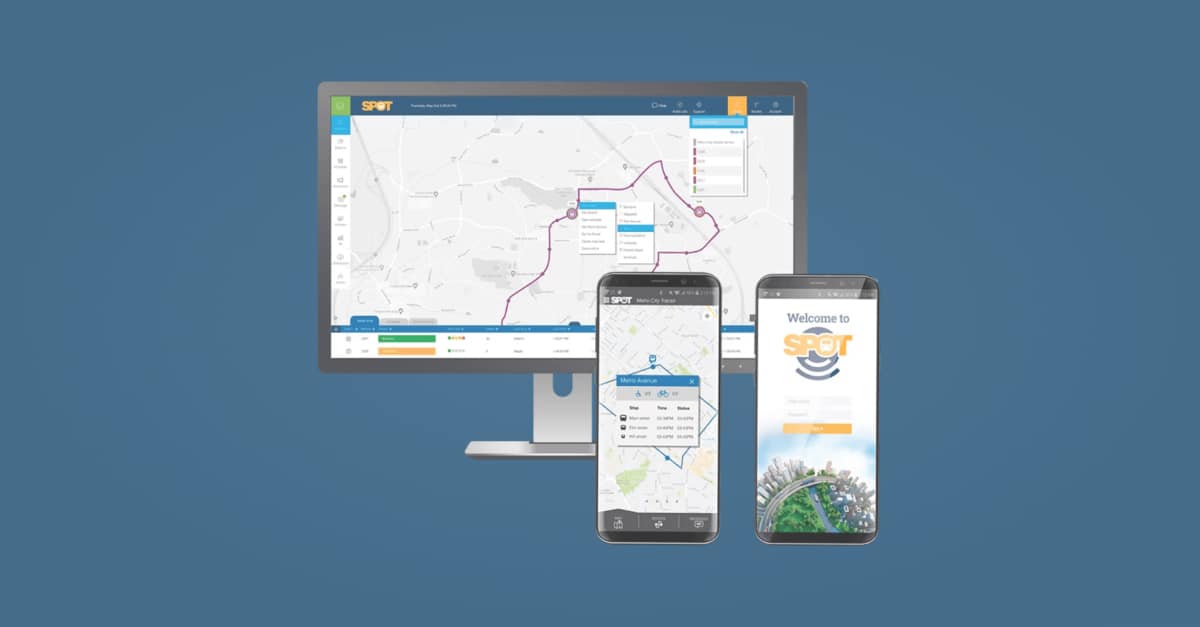
 SPOT: ETA’s Core Platform The SPOT™ ecosystem offers transit management solutions by providing a flexible, modular platform.
 SPOT: ETA’s Core Platform
  All Solutions
 CAD / AVL / GPS tracking
 Business intelligence
 Digital signs and kiosks
 Infotainment
 Automatic passenger counting
 Tally NTD Survey Software
 Tracking websites and apps
 Vehicle announcements
 All Integrations
 Demand-response and microtransit
 Fare collection
 Mobile video surveillance
 Pre-trip inspection
 Solar e-paper signage
 Vehicle health monitoring (AVM)
 Voice communication
 Transit
  All Industries
 Airport
 Campus
 Medical center
 Rail, streetcar & trolley
 Rental car
 Tourism & theme park
 Transit
 Case Studies
  Blog
Blog eBooks
 Wall of Love
 Careers
 Press
Press Events
 Support