Stop Requested. Welcome to Stop Requested, the podcast where we discuss everything transit. I’m your co-host, Levi McCollum, Director of Operations at ETA Transit. And I’m your co-host, Cristian Londono, Senior Customer Success Manager at ETA
Transit. Today, we’re joined by Dr. Nick Ferenchak, Center Director for the Center for Pedestrian and Bicyclist Safety, Chair of the TRB Pedestrian Committee, and Associate Professor at the University of New Mexico. Nick’s work focuses on pedestrian and bicycle safety, with an emphasis on proactive approaches that go beyond crash data to understand how land use, infrastructure, and equity shape real-world safety outcomes. In this episode, we talk about latent demand, why some unsafe streets never show up in crash statistics, and how research can help cities identify and fix dangerous corridors before fatalities occur. We also discuss arterial safety, BRT as a safety intervention, and what it. will take to rethink how we’ design streets for walking, biking, and transit. We hope you enjoy.
Welcome back to Stop Requested. Levi, how you doing this morning? I’m doing very well. How are you, Cristian? I’m very excited. Uh, we’re in for a treat, uh, during this podcast. This morning, we have with us Dr.
Nick Frentszek. He is the Center Director for the Center for Pedestrian and Bicyclist Safety, CPBS. He’s also the chair for the TRB Pedestrian Committee, and he’s an associate professor at University of New Mexico. Uh, Nick’s work is saving lives by making streets safer for walkers and cyclists amid rising fatalities. Nick, how you doing this morning? Doing well.
Thanks for having me here. So Nick, could you walk us through your path of, from going from an engineering undergrad to directing this, this huge USDOT center? Yeah, so, um, I actually consider myself a, a plengineer, a planner and an engineer combined. So I, I, I, um, did my undergrad studies, uh, at Lafayette College, focused on engineering, and after four years of that, I was kind of, uh, sick of being best friends with my calculator and physics book. Um, and I kinda wanted to, uh, get more into the, the people side of things. So, um, I, I switched over for my master’s to focus on, on planning, um, and that’s really where I really started, uh, focus on- focusing on transportation as well. After I, I finished my undergrad, I actually worked at a cement plant, which was kind of a… It was okay, but, uh, it got boring, uh, fairly quickly. And my favorite part of the day was actually just riding my bike to work, um, and going for a jog on the trail. And I was like, “Well, I’m, I’m not gonna stay at the cement plant forever, so, like, what do I wanna do? And, well, my favorite part of the day is walking and biking. Why can’t I do more of that? Why is it so difficult for me to do that to, to other places?” So for my planning, uh, master’s, I kinda decided to focus on, on transportation, specifically walking and biking. Uh, how can we build places where people can do more of that? Um, and after my master’s, I was kind of interested in research at that point, so I decided,
“Hey, let’s go for a, a PhD.” At that point, I switched back to, to engineering, uh, wrapped that up at University of Colorado in Denver, and I kinda just, um… When I started as a professor, there was some pressure to, uh, focus on the high-tech stuff, autonomous vehicles and electric vehicles and, and all of that, but
I, I really, truly believe that we need a lot more work, uh, making sure that people can walk and bike safely to where they need to get to. Um, so I stuck to that, and, uh, a couple years ago, we submitted a proposal for the Center for Pedestrian and Bicyclist Safety, for a, a USDOT University Transportation Center, and we were actually awarded that. We’re in year three out of five with that center. Uh, I’m leading it out of the University of New Mexico, and then we’ve also got, uh, University of Tennessee, University of Wisconsin, San
Diego State, and Berkeley on the team, leading those efforts, trying to figure out how do we make places where people can safely walk and bike to where they need to get to. I, I really love that, and y- you know, it, it sounds like y- you’ve figured it out along the way. I,
I’m curious, what made you go back to the engineering side for the PhD? Was there some, you know, kind of push to go back to more the maybe the quantitative side of things, or was it something else? Yeah, I think the, the quantitative side of things always resonated with me, and, um, to some extent, engineers kind of have the final say, for better or for worse, right? It all comes down to, uh, I would say, unfortunately, it all comes down to level of service, right?
An, an engineer can always throw that out at the end of the day and say, “Hey, level of service is too low. We need to add another lane,” right? And that’s the end of the conversation. So to me, I, I wanted to get back into engineering to figure out why that is, how that came about, and how we might be able to think differently about it. Have you found that having that professional background in engineering has maybe given you even more authority to speak on some of these subjects regarding active transportation? Yeah, I think it, it has, um, and especially that plengineer background. ‘Cause I, I do have the experience with the planning, but I,
I also have the professional and academic experience with the engineering. Um, I actually got my professional engineering license a, a couple years ago as well, so I, I did work professionally for a couple years, you know, throughout that whole journey. Um, so I think having that professional experience on both sides has kinda helped,
I don’t know, maybe give some, some authority to my involvement with transportation. Yeah, it, it helps to be in the academia and the research, but also some on the practice, and, you know, lead from the front. … Uh, let, let me ask you a question about your time, University of Colorado in Denver, and, and your studies on suppressed child bike/ped trips. Uh, first, if you could, you know, explain what that is, uh, for our audience and people that might not be as familiar with this, a- and tell us about how that research, uh, shaped your approach to proactive safety, versus reactive crash data. If you could tell us a little bit about that, that would be great. I would say most of my work focuses on pedestrian and bicycle safety, and most of that work is built on the foundation of, of crashes, where a crash is happening, right?
Early in my research career, you know, you can do a crash analysis to figure out where people are dying as, as they’re walking and biking around a city. But pretty early on, I, I realized, well, you know, not all of the safety issues that I know of, just a- as a person who, who travels about this city, um, not all those safety issues are actually showing up in, in a crash analysis. So we wanted to look a little more proactively at safety issues, right? Can we identify a road, I don’t know, maybe think of a seven-lane arterial in your city that is so unsafe that nobody’s out there walking or biking on that thing, therefore, there are no pedestrian or bicycle crashes, and they don’t show up in a crash analysis, right? So how would we proactively identify that as a safety issue? So what we did is, um, we linked, uh, land use, with infrastructure. So basically, we used land use to estimate where we expected there to be demand, for walking and biking. If there’s, you know, a lot of residential, and there’s a lot of commercial right next to it, we would expect some demand to be there. Um, and then we looked at the infrastructure to say, well, there’s a lot of potential origins, a lot of potential destinations, but in between those, there’s this massive seven-lane arterial road that’s probably going to be holding back some of that demand, what we call latent demand.
So we, we kinda came up with a system to automate that for the entire city of Denver to, to try to estimate where we thought there would be demand and where that demand would have been latent because of, of safety, concerns. And one interesting thing that came out of that was, um, we actually found that in the higher-income neighborhoods, right, those roads that we identified as being safety issues, right, those stayed as latent demand. There were no, no crashes occurring on, those, those corridors. However, in the lower-income neighborhoods, on those roads that we identified, there should be a lot of demand on these roads, and they’re really unsafe, boom, there were a lot of crashes on those roads.
So we think that kinda the, the socioeconomics underlying all of this is, is, is so important. Uh, right, higher-income neighborhoods, there’s an unsafe road, well, the kids can get into a car and be driven around. Lower-income neighborhood, neighborhood, uh, there, there’s a really unsafe road, but there’s not enough cars in the household for everybody to, to have access to that, so the kids have to go and walk or, or bike on those unsafe roads, and that’s when the crashes occur. So it’s this interesting mix of, of land use and infrastructure and, and the socioeconomics behind what, what options people have to move around. You know, uh, all transit. trips, they start as a pedestrian. Uh, there’s no way that people can access, you know, that bus stop or, or that rail station, uh, i- if not as a pedestrian first or, or a bicyclist. So I’m imagining that that also has that impact, uh, on public transportation is, you know, not, uh, th- those roads not being safe enough, uh, for pedestrians and bicyclists and, and therefore, also not being able to access the, the public transit system. And, and the correlation of the socioeconomics there, like, you know, between the, uh, wealthy neighborhoods and the low income and the crash data,
I, I, think is, is awesome. I mean, being able to see what- what’s happening in the community and where you have to prioritize and, and being proactive because that’s the other piece. You know, when you’re looking just at, the crash data, then you’re looking at, okay, that accident just happened here, you know, can improvement be made? But then you wait until there’s accidents to be able to take an approach a- as, you know, redesigning versus, you know, start to be proactive before that, that even happens. Pretty much you… that suppressed trips concept is flipping safety, on its head, is, is really it changing how the cities like Denver, Albuquerque, plan for bike/ped networks. Let me ask you, in terms of, uh, countermeasures for materials in, uh, geographic fatality shifts, what’s one breakthrough project agencies should watch or pay attention to? Like, a- any project that’s been implemented to address those fatalities? Yeah, so one project that, that comes to mind out of our Center for Pedestrian and Bicycle Safety is actually pedestrian level of traffic stress, projects coming out of, uh, University of Wisconsin-Milwaukee with Bob Schneider. Um, and he’s, he’s creating this system that basically identify what we were just talking about, right? Proactively identify unsafe streets, regardless of whether there’s a crash occurring there or not. This episode is brought to you by ETA Transit. Too many agencies are still operating critical transit systems on legacy software that is costly to maintain and difficult to evolve. ETA Transit offers a clean break.
As a fully web-based CAD/AVL platform, ETA replaces closed aging systems with an open architecture designed for real-world operations. It integrates with what you already have and delivers a clear map-first command center your staff can trust on day one. Modern CAD/AVL without the baggage. Visit etatransit.com. Folks have probably heard about bicycle level of traffic stress.
Uh, that was, uh, created by Peter Furth…. probably about a decade ago now, been implemented by a bunch of agencies across the US. Um, so this is kind of the same idea, but for pedestrians. So hopefully we can identify those unsafe streets without having to wait for somebody to die on one of those streets to really identify it as, as a safety issue. So I’d, I’d look for that pedestrian level of, of traffic stress project. Um, that one’s actually out in the world now. You can, can access it, and we’ve got a couple of reports on it, and we’ve got some more projects going right now that we’re gonna be continuing to be updating it specifically for, you know, for instance, children, older adults, um, folks with different dis- disabilities, uh, and really validating not just kinda what we came up with, uh, in our, in our research lab, but really validating, does this actually resonate with what, you know, actual people o- on the streets are, are experiencing? And, uh, a- another question, uh, um, you know, on that regard is, as, um, you’re looking to increase pedestrian safety and bicyclist safety, what are some of the performance indicators you’re looking at, or, or some of, kind of you can speak a little bit about the goals that you might have. I- is it, uh, increasing the number of, like, protected bike paths or, you know, a number of intersections that have pedestrian crossings? Like, what are some of these, you know, measurements that you have in place that you’re kinda like aiming to, to help increase, uh, safety, at least, you know, in, in, um, New Mexico. for pedestrians and bicyclists? Yeah. So, yeah, that’s a good question. Um, I think we often clump pedestrians and bicycles together, especially in terms of safety. Um, but I, I think there’s very different ways to, to approach them. For bicyclists,
I, I definitely think, uh, it would be, uh, not just bike lanes but, but protected bike lanes. That’s kind of the, the, the standard that, that folks would expect now, and, and we just wrapped up some research that looked at twenty-eight different cities across the US. Uh, and this paper was just published in Nature Cities, summer 2025, so you can actually look this up and, and, and actually throw it out there, cite it. Uh, but we’re finding that not only build it and they will come, so bike lanes, install a bike lane and ridership will increase, but install a protected bike lane, and ridership will increase even more. I forget the exact number, but, you know, ridership will increase, like, double what you would, would, would see with a, a, just a standard bike lane. For bicyclists, it’s definitely providing that separated, protected space for the bicyclists. For pedestrians, I, I struggle because a lot of cities have sidewalks, right? It’s really, how do we get pedestrians across these roads? Um, and we’ve got new infrastructure and treatments nowadays, uh, rectangular rapid flashing beacons and pedestrian hybrid beacons that cities are installing, but to be completely honest, I don’t think that’s enough. The, the main pedestrian safety issues are on our large seven-lane arterial road or, well, large arterials.
Yeah. For instance, in Albuquerque, many of them are five lanes or even seven lanes wide. That’s where our main issues are. These roads are so large that the signals are pretty spread out, right? One of the Central Avenue in Albuquerque, one of the worst roads for pedestrian safety in the country. A- at some points, the signals are half a mile apart. What the city has done is install pedestrian hybrid beacons, kind of in between those signals. So now you’ve got a crossing every quarter mile apart, but, like, that’s still not enough for, for a pedestrian. It’s just against human behavior to- Mm-hmm … to walk a quarter mile out of your way, wait for the crossing there, cross, and then walk a quarter mile back, right? Sixty seconds of delay for a, a driver at an intersection is too much, but, you know, ten minutes of delay for a pedestrian to do that, uh, you know, well, we think it’s acceptable. So all to say, I, I, I actually lean against some of these new pedestrian treatments to get pedestrians across the road. I think we need to fundamentally rethink these arterial roads. We need to be having conversations about road diets and improving network connectivity to, to make sure that traffic can continue to, to flow, but we, we need to be slowing traffic on these arterials, maybe lowering traffic, lowering the distance where, uh, that pedestrians need to cross. It’s a really fundamental re-engineering of these roads, more so than just try to slap a Band-Aid on to, to let pedestrians cross at a certain point and then call it a day. Yeah, a- and it’s making progress towards, uh, being multimodal, right? Like, giving people more options. One of my favorite systems is, uh, Cap Metro in Austin, and, you know, you see, you know, the transportation-oriented development, you know, like all these housing with no parking on top of, you know, the, the rail stations, and then they have electric bikes that are at pretty much all the stations and major bus stops. They’re connected to the transit system, and they have the protected bike la- bike lanes. So there’s a lot of people that are moving in bike, in rail, they’re taking buses, and then, of course, there’s the space for the cars, but it gives that multimodal.
And then in terms of, you know, pedestrians, to your point, you know, like, they have better, uh, signaling. The road or, or the streets are not so spread apart, where they have to walk half a mile. So there’s, there’s different improvements that have to, uh, come in place to be able to get them, uh, to a place where you are multimodal, right? Like, you’re just not focused on cars, and then, then now the bikes and the pedestrians are an inconvenience. Like, “Oh, how c- can we move these people without disrupting the cars?” The…
That would actually be one of our other big projects that I would point to. It’s, it’s not out yet. I’m still working on it. We’ve got a bunch of different perspectives we’re taking on it, but basically, we’re saying that if we really seriously care about Vision Zero and getting towards zero fatalities. on our transportation systems, we, we need to be thinking multimodal. I think we’ve been stuck for generations into building, assuming a hundred per- hundred percent of, people will drive, and then trying to figure out how to make that safe, right? I think we need to flip the conversation and, and figure out, how do we make good places where people can walk and bike and use public transits?… fewer car trips is, gonna result in fewer car crashes, like, that’s the real way we get towards zero. So, yeah, I, I absolutely agree with what you’re saying.
Thank you for saying that. But I, I agree, uh, also, and, and, and I’ve seen the work al- uh, here in, in Palm Beach by our, um, you know, MPO, and that’s been the drive, is, is making the streets for everyone, right? Like, not just for the ones that wanna drive, but, like- Mm-hmm … everybody that wants to get around the, the community, there’s a place for them, and there’s infrastructure that, you know, it would allow them to, to navigate within the community. Uh, I wanna shift the conversation, and, you know, before we started r- recording, I mentioned that I really wanna learn more about TRB, and I know you are the Pedestrian Committee chair, uh, which allows you to shape national policy and, you know, contribute to these great conversations. You know, if you could tell me, how do trends like rising cyclist fatalities tied to land use and infrastructure, uh, uh, c- connected to all the work and the discussions you had at the
TRB level? Yeah, so one, one big theme that we’re seeing is, is especially prevalent for pedestrians, is a shift away from downtown central business districts for pedestrian fatalities and towards the suburbs. So
I, I think this probably goes a long way in explaining the, the recent increase in, uh, pedestrian fatalities. So, uh, I, I think the l- we had a low point in pedestrian fatalities, like a forty-year low point or something like that in 2010, and since then, pedestrian fatalities have gone up, like, eighty percent, over eighty percent. So yeah, something’s going on in terms of pedestrian safety. We’re, we’re falling way behind our international peers, uh, and I think it’s because our suburbs are getting… maybe not our suburbs are getting unsafe, but maybe more pedestrian activity is happening in these suburbs that are unsafe.
So I, I think one point might be, uh, that, that might be causing this is, uh, uh, suburbanisation of, of poverty. So over fifty percent of people in the US, uh, living under the poverty line are now actually living in the suburbs. So this used to be a, poverty used to be an inner-city thing. Uh, city streets probably a little bit safer for, for pedestrians to, to navigate, whereas now folks that might not have access to an automobile are living out in these suburbs that were built under the assumption that a hundred percent of people would drive.
And you think about s- a CBD, it’s pretty small versus the suburbs of a lot of our American cities are just absolutely massive. Um, so we’re, we’re seeing this migration of, of safety issues out into the suburbs, and we’re seeing our overall numbers skyrocket.
Um, so I, I do, I do think we really need to think c- more critically about land use. I’m not sure what, what exactly folks in the transportation world can do about land use. Um, right now, we can definitely recognize that, uh, a lot of the suburban low-density development that we’ve built over the last couple of generations is going to be very conducive to, to driving and, uh, not, uh, downright unsafe for anybody trying to walk or bike or, or get to transit. Um, so what do we do about that at this point? I think that’s a big conversation we need to have in the transportation world. Uh, just to follow up on one point that you, you brought up, and I, I think Christian said this earlier about electric bikes, and you could probably even throw electric scooters in there. As our, our density decreases and y- you know, suburbia becomes even more suburban, it, it seems that folks are travelling longer, and they’re looking for these extra technological i- advantages to be able to get to their destination faster. There’s, there’s no issue there, but to me, it seems like the issue is that you’re, you’re now increasing their speed and then putting them on the, the same roads or perhaps the same sidewalks as folks who are just walking or maybe they’re running.
Uh, have you f- studied i- how the proliferation of electric bikes or scooters has played into this phenomenon of, uh, y- you know, increased traffic deaths?
I have not. I would, um, refer folks to, uh, Chris Cherry at University of Tennessee. He’s definitely a leader in, in that area, uh, e-bikes and all the scooters and different devices that you see out on the streets nowadays. I definitely refer for everybody to his research. As far as, uh, their impact on safety outcomes,
I, I can’t really s- say a lot ’cause I haven’t dug into that, but I, I would say that I’m super excited for, for e-bikes. I’m kind of… I don’t know. I’ve, I’ve had an e-bike for eight years now that I, I commute on.
I love it. It’s amazing. It’s so much fun, but I’m kinda surprised they haven’t taken off more so. Uh, they solve so many issues of, you know, things are too spread out. Well, you’ve got an e-bike, so now you can move faster, and it takes less time. People don’t wanna be sweaty when they get to work.
Well, e-bike, you don’t actually have to, you know, put that much energy into it. To, to me, I think e-bikes are, are amazing. I, I would be interested to know what an e-bike city looks like. Um, I,
I was just talking about this issue of the suburbs. Well, suburbs are spread out, uh, so e-bike can, can deal with that issue, right? Uh, to me, these e-bikes can solve a lot of issues, and I’m, uh, I’m, I’m hoping that they, they get more, more adoption. That being said, yeah, there’s obvious conflicts, and we need to think about, you know, pedestrians versus traditional bikes versus e-bikes. Where do they all fit in? We need to make sure everybody’s got safe infrastructure, so we probably do need to rethink our, our infrastructure a little bit. Um, we also need to make sure we’re careful when we talk about e-bikes versus all of these other motorised devices. Like, legally, I think an e-bike can go up to twenty-eight miles per hour, so when you see people zooming down the road at, you know, forty miles per hour on this e-bike thing, right? That’s not technically an e-bike. We need to kinda figure out where all these different classes of devices fit in. So there’s a lot of problems there, but I, I think there’s a lot of, lot of opportunity that I’m pretty excited for. … I, I get it that you’re, you’re bullish on e-bikes, and that makes a lot of sense. I, I think that they do solve several problems, as you, uh, identified. I’m sure others who are researching this have probably articulated better.
Uh, but a lot of those trips that, uh, Americans take are less than a couple miles, and an e-bike, in my mind, or a regular bicycle or, you know, walking perhaps if, if that is, you know, an option, sometimes there just isn’t the infrastructure to be able to do that, but, uh, they solve a lot of those problems. They, they get you to the grocery store or, you know, going to- going to the pharmacy or, you know, those, those small trips throughout the day that, that you need to take, uh, they get you there faster.
For our transit folks that are listening, I- they, they might be wondering: well, you know, wh- when are you gonna get to the, the transit talk? And, uh, you know, I would argue that all this is really transit talk because we’re, we- we’re talking about folks who are on bicycles or they’re pedestrians, and then, as Christian said earlier, they’re, they’re getting onto a bus or a train perhaps.
Um, I’m, I’m curious though, because you have a really good example in your backyard in Albuquerque of a bus rapid transit system from ABQ Ride. Um, my understanding of that project is that they converted a, a stroad, for lack of better term, I, I know that’s the Strong Towns term, but, you know, they converted this, uh, this really wide roadway, this arterial road, into a BRT. Have you, have you noticed that because of the, the attraction to a better type of transit service, that perhaps there’s, y- you know, more, uh, more opportunities for incidents a- along that BRT corridor, or is it maybe the other way around? I’m, I’m just curious what some of the lessons are that we could learn from Albuquerque. Yeah, great point about the, the link here with transit, pedestrian, bicycle, and transit. Um, I haven’t done a lot of research directly on that, but I, I did wanna, uh, just refer people to… We are doing research in our Center for Pedestrian Bicycle Safety. Uh, Candace
Breakwood and, uh, Allison Rewalt out of the University of Tennessee, they’re doing a lot of research looking at pedestrian safety around transit, so I’d refer folks to them, uh, if, if you’re interested in that, that specific connection there. And then, yeah, getting to the, the BRT in Albuquerque, so stroad is it’s probably too light of a term for this road. It’s, it’s Central Avenue that I, I mentioned before. So yeah, it’s old Route 66, um, seven lanes wide, relatively low volumes, which is actually probably a bad thing ’cause now cars can kinda weave in and out of the platoons and, you know, shoot down this road fifty miles per hour. Uh, so really, really unsafe road. And the BRT was installed on, I think, like ten to fifteen miles, right in the middle o- of this road, um, lane reductions, so most parts of the, the road saw two lanes, two vehicle lanes given over to the, to the BRT. There were, uh, center medians put in, so to restrict left-turning vehicles so that they don’t, uh, disrupt the BRT operations. Uh, so a lot of different changes were, were made there, uh, on a pretty significant corridor right through the middle of town. Um, in terms of safety, it’s a… Overall, it, it’s been really, really positive. For pedestrians, it’s a little bit more of a mixed bag, and I’ll,
I’ll talk about that in a second. And for bicyclists, we just don’t have enough data. There’s no bike lanes on this road, so it’s… We just don’t have enough data to say a whole lot about bicyclist safety with the BRT conversion. Uh, but, but getting back to overall traffic safety on this corridor, there was a sixty-five percent reduction in serious injuries and fatalities on the part of the corridor that had the BRT installed after installation. And, uh, the, the parts of Central Avenue that didn’t have any BRT installed only saw, like, a five percent reduction in serious injuries and fatalities, so definitely a strong safety link, safety improvement linked to, to the BRT installation. We’re- we’ve done a number of different papers looking at this, and, um, there’s really two big mechanisms that, that came out for us. Number one was, uh, vehicle speeds. So there’s about a twelve percent reduction in eighty-fifth percentile speeds, which is basically a, a good measure of, uh, the, in the highest speeding out there. Uh, so a pretty significant reduction in, in speeds along the corridor. And I think that gets back to what I was talking about before with the lane reduction. Now you’ve got more platooning of vehicles, so you’ve got less opportunity for, for the fastest drivers out there to kinda weave in and out of the, the, the platoon and get to the front and kinda speed off. So there’s, there’s more platooning, so lower speeds. Uh, and then also, uh, the left turn restrictions with the center, uh, center running BRT. Um, so I think we saw, like, a eighty-five percent reduction in serious injuries and fatalities w- with, uh, left-turning movements. So two big mechanisms that I think the BRT really improved safety overall.
And I, I think this is critical, I think this is, this is so cool because in our– in my classes, when we talk about how do we improve safety on these roadways, right, we’ve got this tool bag of traffic calming devices that work for local roads or work for collector roads, but then when we get to these seven-lane arterials, uh, you can’t put a speed hump on a seven-lane arterial, right? All these traffic calming devices, you, you just have to throw out the door. Like, what do you do to improve safety on this big arterial? We don’t… I don’t think we have good answers, but here is an answer, right? A, a BRT. We keep people moving, everybody can still get to where they need to get to, but we’ve also improved safety, right? So I, I think this is, is super exciting. I think this is an answer for how do we improve safety on these big, nasty arterials. We give people other multimodal options to keep
’em moving…. Uh, and then, like I, I mentioned before, pedestrian safety. So some parts of the corridor did see pedestrian, uh, decreases in pedestrian crashes. Some parts of the corridor did see increases in pedestrian crashes. We’re not exactly sure why that is. Uh, it could be more pedestrians trying to get to the stations in the middle of the road. Could be that they’re basically treating the BRT lanes like a pedestrian refuge, and there’s actually more crossing of the road. Uh, we’re n- we’re not sure. Those are just guesses. Um, but yeah, it’s, it’s… was more of a mixed bag in terms of, of pedestrian safety. You know, what you just said about, uh, increasing cr- uh, safety in a, you know, high-speed transit corridor with several, several arterials, and connecting it to making the corridor multimodal, like truly multimodal, I, I think that’s gold. And I would love that a lot of, um, you know, elected officials and, and professionals that are in this space that are listening, take a look at some of these studies, and even quote some of the numbers that, you share. I wanna just kinda like paraphrase, too, and then please correct me if I kinda like captured this wrong, because these statistics are super important, and I see BRT is one of, the, biggest trend nationally. A lot of transit systems are looking to implement BRT. They’re doing corridor studies. They’re working to get it in place, and it is an uphill battle. It’s tough getting, you know, traffic to play together, uh, getting people to, uh, imagine a world where you reduce a lane of traffic from, you know, cars, and then you, you put another mode. I-
I’ve seen there’s a lot of resistance for that, and a lot of people, you know, “I love driving, and I have a car. Don’t take my lanes.” A- a- so, you know, I, I, I really like that, and the… one of the statistic I wrote down, and, you know, again, please correct me, 65% reduction in fatalities and serious injuries after putting in place BRT. Compare before and after, that’s a huge decrease of fatalities and serious injuries, 65%.
And then the other number that’ I wrote down was 85% reductions at left turns, so pretty much not allowing people to make some of those, you know, very dangerous left turns. I mentioned before the recording of an accident that happened in Palm Beach County, you know, with a bus operator and a pedestrian.
M- it was making a left turn. Though those could be very dangerous. So did I get those two statistics correct? Yeah, 65% reduction overall in serious injuries and fatalities, and- Okay, … it was a 85% reduction in left turns resulting in serious injuries and fatalities. Yeah, tho- those are, those are major, uh, statistics, and I hope, you know, I, I just wanted to kinda like, reiterate those because those could be a talk, a talking point of folks and, transit planners that? are out there proposing some of these BRT, uh, solutions. Uh, so definitely, uh, reach out, um, you know, to Nick here if, you know, you’re listening and, you know, wanna use any of these, uh, statistics or, or learn more about this as you’re moving forward your BRT project.
Um, so let me ask you this question: looking ahead, uh, what’s the biggest opportunity or threat for US, uh, pedestrians, bicycle safety over the next, uh, five years? I mean, one thing I’m interested in, excited maybe, would be that, that conversation around land use. I, I think, uh, I experienced this when I worked professionally, where, you know, the land use decisions had already been made, and then they come to the transportation, professionals and say, “Okay, figure out how to connect these two things.” And, you know, you built this new housing development 10 miles away from where all the, the jobs are, and then you come to the transportation professional and say, “Connect it.” Well, there’s only one thing you can do, build a highway, right? I’m really think the transportation professionals need to get into the, the land use discussions more. I don’t know what that? looks like, uh, but I think it’s, it’s absolutely critical. I mean, one other one that’s on my mind is autonomous vehicles. I don’t know where, if that fits under opportunity or if it fits under threats. I’m interested to, see where it comes out. I think opportunity, because we can eliminate some of the, that human error, possibly a threat because maybe we have more vehicles driving more miles on our roads. I’m not sure where it’s gonna land, uh, but
I’m, I’m interested to, to, to keep an eye on it. Uh, I mean, one thing I will say is that I don’t think we should wait for any technology to come and save the day. A lot of our international peers have fatality rates that are, you know, one-third of ours. You know, we could be saving tens of thousand of… tens of thousands of American lives every year if we could just, be as safe as they are today. So to, sit around and wait for some kinda technology to save the day, no, I, I think we know how to build good places. We just need to figure out how to actually make it happen. So yeah,
I, I think that’s the, the biggest opportunity there. All right, Nick, this segment on Stop Requested, we, we have, like to have a little fun. Uh, we do some rapid-fire questions, and I’m just gonna throw a few your way, and you give me what’s top of mind for you. Sound good? Yep, sounds good. All right. What’s your favorite bike or ped project?
Is there one that’s e- especially meaningful for you? I guess my favorite project is the one that, I… It’s not even- it’s not new, so I, don’t know if I’d call it a project anymore, but, um, the North
Diversion Channel in, uh, Albuquerque, I commute on that one every day. It’s grade separated. It follows a, a drainage channel, so it’s grade separated, and you can get 10 miles north, south across town without having to cross any traffic at all. So that’s… I’d say that’s gotta be my favorite bike, ped project. If you could change one policy regarding bike and pedestrian safety or perhaps movement, what would it be? What would you change? Um, I guess I’d get back to that land use conversation, and, again, I don’t know exactly what this looks like, but making sure that transportation professionals are in the room and have a say when the, the land use, fundamental land use decisions are, are being made in the first place. … if you could recommend maybe a book or a research paper that you’re reading right now that would be particularly, uh, insightful for our audience, what, what would it be?
Um, I guess a book would be Killed by a Traffic Engineer. I guess Conflict of Interest is written by my PhD advisor, Wes Marshall, up at University of Colorado, Denver.
But yeah, it’s a, it’s a really, witty book that really gives you a deep history of how we got to where we, we are in terms of transportation engineering. Uh, so yeah, I’d, I’d recommend Killed by a Traffic Engineer. Excellent. I’ve yet to read that one. Uh,
I, I saw it going around, and I think it caused quite a stir there- -for a little while when, when it was immediately published. Yeah, step on a- Um, probably because of the name. Step on a, yeah, step on a few toes with that, that, uh, that title.
Yep. Right. Yeah, that’s inviting a bit of conflict, but, uh- Yeah … perhaps it’s, perhaps it’s needed. Yeah, it’s the other, the, the title is very contentious, but read through it, and, uh, I don’t think there’s much that you can really argue against. It’s pretty well, pretty well backed up with, uh, you know, citations and, and all of that. So, um, get into the book, and it’s, I think, much less contentious and pretty, pretty logically laid out. Excellent. Well, that’s one I’m gonna have to pick up and start reading. So as we start to wind down here on the podcast, Nick, I just want to recap some of the key points that you’ve made throughout our discussion. And I know we’ve already talked about some of the statistics, which I think are incredibly important for our audience, and as Christian mentioned earlier, you know, folks who are planning BRT can take those stats back and be able to use it to support their own projects. Uh, but a, a few takeaways that I have, and feel free to correct me or add to any of these that, that you’d like to, but economic disparities, uh, seem to contribute to the pedestrian and, uh, bicycle crashes, at, at least in some of the research that, that you’ve seen, um, and that, that you’ve directly been a part of. Uh, taking a proactive approach is now more commonplace, instead of just waiting for, you know, pedestrian or bicycle deaths to take place, which is extremely unfortunate and, uh, you know, very reactive. Uh, there are some, some folks, some researchers now that are taking this proactive, uh, measure to be able to determine what a safe road is and then how to correct it before those deaths take place.
And then, based on your recommendation, we, we need to think about how we’re engineering our roads to reduce traffic, reduce lane widths and number of lanes, uh, so pedestrians and cyclists can make it across more easily, because that’s where a lot of these conflicts are taking place.
Any that you would add or modify what I said? No, that all, all sounds good, and, yeah, definitely the, the focus on land use as well is, is so important, and excited to figure out what that, that could look like. All right, Nick, well, thank you so much for joining us on the podcast today. It’s been really a pleasure to talk with you and to learn about some of the research, learn about other researchers that are studying this problem of pedestrian and cyclist, uh, safety and crashes. How can people follow your work, and learn more about you? Yeah, you can, um, check out, I guess maybe the best would be, like, my Google Scholar page to, to see all the, the research that, that we’ve got out there. And then, um, definitely check out our Center for Pedestrian and Bicycle Safety.
Uh, our website’s pedbikesafety.org. Um, and like I said, it’s a bunch of different universities, ton of researchers that are, are working on these topics, so go, go, check all that. out. We’ve got, um, a bunch of research on there, but we’ve also got, a webinar series, um, free webinars. Uh, we’ve got a newsletter you can sign up for.
You can follow us on LinkedIn. Uh, you can, you can find all of that from our, our website, pedbikesafety.org. Excellent. Well, thank you again, Nick, and thank you to our audience for listening to Stop Requested. We’ll be back next Monday with another episode.

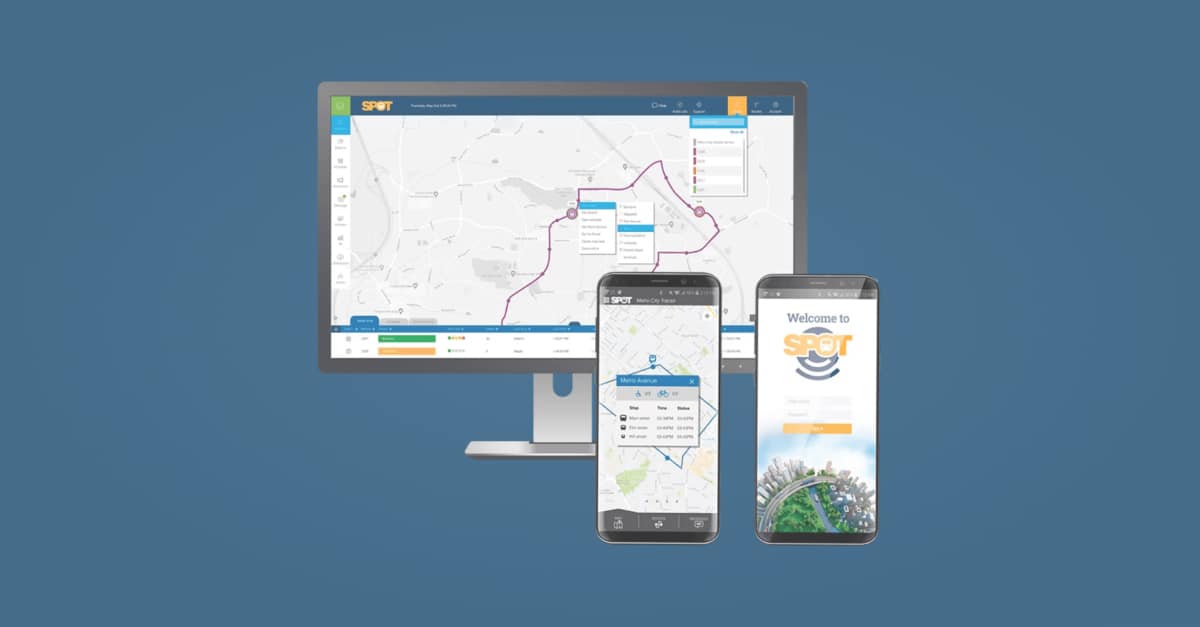
 SPOT: ETA’s Core Platform The SPOT™ ecosystem offers transit management solutions by providing a flexible, modular platform.
 SPOT: ETA’s Core Platform
  All Solutions
 CAD / AVL / GPS tracking
 Business intelligence
 Digital signs and kiosks
 Infotainment
 Automatic passenger counting
 Tally NTD Survey Software
 Tracking websites and apps
 Vehicle announcements
 All Integrations
 Demand-response and microtransit
 Fare collection
 Mobile video surveillance
 Pre-trip inspection
 Solar e-paper signage
 Vehicle health monitoring (AVM)
 Voice communication
 Transit
  All Industries
 Airport
 Campus
 Medical center
 Rail, streetcar & trolley
 Rental car
 Tourism & theme park
 Transit
 Case Studies
  Blog
Blog eBooks
 Wall of Love
 Careers
 Press
Press Events
 Support