Stop Requested. Welcome to Stop Requested, the podcast where we discuss everything transit. I’m your co-host, Levi McCollum, director of operations at ETA Transit. And I’m your co-host, Christian Londono, senior customer success manager at ETA Transit.
On today’s episode of Stop Requested, we’re joined by Nina Verzosa, Assistant Vice President of New York City Ferry at the New York City Economic Development Corporation. Nina walks us through how NYC Ferry service is planned, evaluated, and adjusted, including the thinking behind the recent route and service changes that you might have read about. We talk about what it. means to plan a ferry service in a dense, complex city like New York, how ferry planning compares to buses and rail, and where ferry fits into the broader transit. ecosystem. This episode pulls back the curtain on what it. really takes to plan and manage ferry service at scale. We’ hope you enjoy it. Welcome back to Stop Requested. Christian, how are you today? Hey, Levi. Doing great. How about yourself? I’m doing extremely well, and
I’m very pumped for our guest, Nina Versoza, who is the assistant vice president NYC Ferry, New York City Economic Development Corporation. Known Nina for a little while. We worked together at Palm Tran, the three of us.
Uh, now we’re back together again. Nina, how are you today? I am doing well. Thank you guys so much for having me on today. Absolutely. It really is our pleasure. And, you know, just to watch you kind of grow throughout your career and end up at the NYC Ferry, the NYC E- EDC, uh, is truly remarkable, and
I’m, I’m super happy for you. Uh, you know, Christian and I know you, but our audience, of course, m- might not be familiar with you. Uh, can you give a bit of background on yourself and how you got to work o- in ferries? I originally came from the Philippines, and having grown up there really defined my interest in doing some sort of public service in one form or another. And so when I was thinking about starting college, like, I thought about pursuing a major in economics. So I started at the University of the Philippines, and later on transferred to the University of
South Florida in Tampa, and that’s actually where I met Dr. Vicky Perk. So she was my professor in macroeconomics, and at that time I know I want to be involved in s- public service, but I wasn’t sure if I was gonna go into housing or, uh, food security, but she was the one who kind of opened the doors for me to, uh, transit.
I interned with her every summer to do some NTD work as well as do some research on BRT, um, while I was a graduate student at Florida State, ’cause I also… Yeah, after graduating from University of South Florida, I went to Florida
State University to pursue my master’s in urban planning and, uh, international affairs. So it was really a credit to Vicky for introducing me to the transit world. After graduate school, I worked for a consulting firm, uh, for CDM Smith. I stayed in Tallahassee, and at that role, I was fully embedded at the Florida Department of Transportation at their public transit office there, and so it was a really great role because I was kind of shooting two stones at once. I was a consultant, but I was also very much involved in a lot of the work that the FDOT office was working on, so a lot of the TDP reviews, um, a lot of the great research projects that they’re working on there, so that was really exciting. But I know that I wanted to kind of enhance my technical skills in transportation, so I then pursued further studies. Uh, I did a PhD in transportation, um, from the University of Sydney. They…
The business school there has a program, the Inter- uh, Institute of Transportation and Logistic Studies. They focus on applications of decision sciences, um, discrete choice modeling, to different transportation challenges and issues. There I kind of really and learned a lot of the modeling techniques and statistical techniques that we can apply in different, you know, transportation problems that we have, and my focus there was on surveys and trying to understand how we can improve participation diligence as well as the quality of the surveys. In Australia, the public transit there is amazing, and I really fell in love with their ferry system specifically. I just remember being able to hop on a ferry to go hiking, and that to me was such a great amenity. Uh, around 2020, during COVID pandemic times, um, I returned to the US. I worked in the city of Fort Lauderdale, and they have, like, a free river trolley, and, and that was one of the contracts that I was managing there at the city of Fort
Lauderdale. So, uh, that was kind of piquing my interest in ferries. It’s like, there’s so much opportunities there. We’re surrounded by water. Learning about the different… Like, how they were operating and the value that it offered, especially during the pandemic times when people were using it, because public transit, you would have to social distance if you were using the bus but not so much in, uh, an open-air public area.Um, so that really piqued my interest in ferries and how it operates. Later on,
I had the opportunity to finally work in, you know, a transit agency, uh, working with you and Levi and Christian, and learning a lot from you all there, and focusing mostly on long-term strategic planning. So, that was great. And putting all of these experiences together, you know, my academic career, how do we ground theories and data-driven techniques into practical uses in transportation? That’s one thing that I’m, like, focusing on. And the other part of it is, you know, having worked with a transportation consulting firm in the state agency and then later on in the city level and then to a transit agency and, like, it- it’s just such an amazing experience. I feel like I’m such a lifelong learner. It helped me a lot to understand, like, the different connections between different agencies, different levels of government, how academia can be more useful in practice. Now, in my role at EDC, I’m definitely putting together all of the things that I’ve learned in the past years and applying it in the work that I do now as a transportation planner. I am mostly responsible for long-range transportation planning and policy tasks in connection with NYC Ferry. Yeah, that’s pretty much, uh, a long introduction of background of how I got into transit and how, uh, I’m now in- working with ferry system. Thank you for giving us that, that explanation. And, you know, walking through each of those steps of your career, you see how they build on top of one another, uh, the, the breadth is truly impressive. You know, I, I think that, uh, some folks, you know, will stay at an agency for a, a while, you know, they might spend 20, 25 years, a- and clearly, that’s, that’s hasn’t been your approach. You know, I would imagine that having that sort of experience across multiple agencies has changed the way that you think about planning. I- is there one particular project that stands out to you where you think, like, “Ah, that, that shifted my mindset about what planning means or what mobility means?” I feel that every project is special and is teaching me something.
But I would say that my experience working for the city Fort La- City of Fort Lauderdale really helped me a lot to connect, like, the different pieces of what I’ve done in the past and where I want to go in the future. The reason for this is that, in that role, I was really able to witness and be part of the different parts of the planning process, so from start to finish. When we looked at the planning process, we think about, like, ideation first and think about what we can do, do research, and then apply for funding, then conduct a study or start a new program, and that would involve some sort of procurement and, uh, legal processes. And then after that, we would then implement and focus on operations part of it and then track. All of this, like, different stages of the planning life cycle I was able to be part of in that role at the City of Fort
Lauderdale. In the past, like, it would be focused on research, and now I’m kind of, like, more focused on long-term planning. That definitely helped me to have, like, a clearer view of like, “Ah, okay, this needs to happen first before the next thing occurs.” Or, “This is what we need to do to be able to get funding.”
Or, “These are the different organizations involved in the planning process, and they would have to be informed here, they would have to be consulted there.” So, uh, so yeah, that was, uh, a great experience.
So, learning a little bit more, uh, about your current role, uh, you certainly covered a lot about your experience and the places where you work, which is very impressive, of course, uh, what, you know, the, the, the variety of experiences and how you connected them together. So, what does transportation planner, um, means at the NYCEDC in practice? What do you own? Like, what’s your responsibility day to day? Could you tell us a little bit about that? Absolutely. So, NYCEDC is a quasi-governmental organization here in New York City, and we manage different properties as well as projects on behalf of the city of New York. So, it is an economic development vessel for the city of New York, and NYC Ferry is one of it- of the portfolio that it manages.
So, NYC Ferry is a publicly funded, privately operated transit system in New York City and in my role here, um, we- so, EDC is the one overseeing NYC
Ferry contract and we are also very much involved in the planning and policymaking for NYC Ferry. Different departments within EDC, like our asset management, for example, they are the one managing the different ferry landings or maintaining the different ferry landings and then our capital program were responsible for building them. So, my role is…… within the ferries department. So there are 16 staff members within the ferries department, and I am part of the planning, policy, and special projects team. So day-to-day for me is different. I, I would categorize it into three ways. So the first one would sometimes be a lot of heads down work, focusing on different types of, uh, policy task and including, um, you know, route optimization exercises, fare and ridership modeling, equity and dis- impact assessments, the system expansion analysis. Um, but E- I’m also involved, uh, depending on the project, on community outreach, and I also collaborate a lot internally with other EDC departments, and then externally with, um, other partner agencies within the city. I mean, that, that’s a really interesting day-to-day responsibility and I, I’m glad that you broke it down in that way. I think it makes it a little bit easier to understand. But for, you know, Christian and me, probably some of our audience, you know, we’re, we’re not entirely familiar with, uh, with ferries, uh, even though it’s a pretty integral part of the fr- uh, transportation network in a lot of cities, uh, across the country and, and of course the world.
Uh, buses can change fairly often, right? Where there are three or four service changes throughout the year. Rail, once it’s put on the ground, it’s, it’s mostly there, right? You might add extensions but that, that’s about it.
How do ferries sit in that spectrum of changing very often to none at all? Are you seeing a lot of changes in, in, in your service patterns since the time that you’ve been at NYCEDC? So with ferries, it’s so interesting that in NT- in NTD, we are actually considered as fixed guideway. But of course, as you pointed out, Levi, unlike rail or unlike BRT, for example, with exclusive lanes, um, we are not necessarily having to lay out a new road or new rail to be able to operate or serve a particular area. So for us, we’re able to reconfigure our routes, um, along the waterway where there is a landing already available. But in the past, we’ve mostly focused on independent route level changes. So, um, we, for example, would add a new landing to an existing route, or would expand, extend an existing route to a new landing. So for example, in 2019 we added Brooklyn Navy Yard to the Astoria route, and then in 2022 we added Governor’s Island to South Brooklyn route. It was … The optimization plan that we did this year was the first time where we actually reconfigured the entire route as a whole. Um, we looked at the different issues of each, of each, of each, of each route and then, um, addressed all of them and see like how that would impact our operations and connections as a whole. And, and so you’re speaking about the changes that went live about a week ago. I- is that right? Yes, that’s correct.
Yeah. And what were the main goals of that redesign? Did you have anything in mind before you started? Or was it just let’s gather feedback and uh, uncover any of the issues that might not be, uh, you know, well-known by staff? Yeah. So it was a year-long process, so we have been doing internal analysis, just looking at the operations data that we have as well as the different survey responses that we’ve received throughout the years. Our goal is to really provide riders more places to go, particularly by connecting them to the employment hubs in Midtown and Lower Manhattan. We also wanna speed up commutes. Some of our routes are very long, um, have seven stops or have six stops that are very close to each other. So we really wanna find a way to speed their commute and reduce the route length without sacrificing the, uh, quality of the service.
We, the … We also have an issue of over capacity some … on, during peak days, uh, for the East River route, and so we wanna address that issue and make more seats available. The other things, the other goals that we have that’s more system focused is to operate more efficiently. We wanna find ways to reduce running empty vessels, and we also wanna make sure that we are very much fiscally responsible in making these changes. So, um, we wanna make these changes at a very limited cost. So those were our main goals. Those are, those are pretty mighty goals. And you know, I, I hope that it’s gone well. After a week, you can get a sense of w- how the public is reacting to the changes. Have you heard any feedback since the, the changes went live? We haven’t heard much. So it’s only been a week so far, so hopefully it goes smoothly from here. And, uh, just to take a step back, you mentioned a, a few different routes. Can you give us a…… lay the land for what NYC Ferry has to offer for, uh,
New Yorkers? W- how many routes, how many vessels are we talking about? So NYC Ferry, as I’ve mentioned earlier, it is a publicly funded, privately operated public transit service in New York City. So, uh, EDC manages the contract and then Hornblower, they are the one who are overseeing the day-to-day of the service. Um, they also maintain our vessels. We currently have six year-long routes. So we have the South Brooklyn route, the St. George route. So the St. George route was added in 2021 and it is one of our fastest growing routes. Prior to optimization, it was not connected to any of our other routes in the network. Part of our goal in reconfiguring our routes is to connect it to the rest of the system.
So now, for all of our riders, they can just, they just need one transfer to get to connect to the other routes in the system. So yeah, so we have St. George route and then we have the East River route. So it i- East River route is our most popular route in the system. Its predecessor was the East River Ferry, which was a pilot during the Bloomberg administration and it was really the inspiration to a citywide ferry that was then announced during the de Blasio administration in 2015.
So de Blasio announced a citywide ferry service in 2015 and within two years, NYC Ferry was launched. Yeah, so that’s the story with the East River route. And then we have the Astoria route. The Astoria route, operationally it’s working really well, so that’s the only route that we did not make any changes at all with optimization. And then we also have the Rockaway route. So the Rockaway service is very, very popular during the summertime because it has access to the beach. Every summer, we not only increase the service level to the Rockaway route but we also add special services such as the Rockaway Rocket and Rockaway Reserve where people can reserve a seat and not have to wait in long queues to get to the Rockaway.
We also have the Soundview route. So this is a committed commuter route, so we have a very large group of loyal riders, um, along the Soundview route. It is farthest away from lower and Midtown Manhattan in terms of our service area, but we provide a- the m- the best service to them in a sense that ferry is a lot faster than any other mode of transit, especially for commuters from Soundview and Fairpoint Park. That l- sounds, uh, impressive, uh, in terms of the connectivity and the system and six different routes and, like you said, it’s, it’s the fastest way to cross, uh, you know, across the water, right? Like, to go from one place to another one and then be connected with the rest of the transit system, uh, in New York City, right? With the MTA.
Um, so I’m curious what your route changes, like this new service that just came alive. Is any new route or is it like the same routes and then did you look at, uh, in these changes, like the ridership, like adding more service where it seems that there was a lot of ridership and need for additional service?
Was it on time performance? Like, you know, having kind of like a fixed system. Like, you know, like almost like Rail, right? Like, you know, you have your, uh, route and for the most part, you just run on it. Uh, you know, were you trying to improve on time performance? Was that something that you have to look at and change the schedules to, you know, operate more timely? Could you tell us a little bit of that data and how those changes came to, you know, realization? Yeah, I think that all of those factors are all important.
Um, the way we looked at it is that we looked at all the policy levers, right? So we see service levels, changes in service levels as a way to influence the cost which is direct function of service levels. It also impacts ridership, more frequency, better service, higher ridership. And then the other policy lever that we look at is fare policy. So as part of optimization, we did not, we do not have any plans to increase fare as part of it. Most of the changes that we did was on the service levels. As we mentioned, we would like to improve connectivity for our riders to better connect them to the employment clusters. We also would like to make their service faster for them. Our goal is to keep our subsidy low, so this is something that’s very important to us. So at the peak of COVID, um, the subsidy was around $13 and we’re very proud that we’re able to reduce that by 36% to now $8.33.
With optimization, our main goal there is to ensure that we keep our subsidy, uh, low throughout. So we’re, we’re making all of this reconfiguration by just really reallocating the existing resources that we already have.
And just to, uh, continue building on that, so you’re looking at all this data. You’re looking how to optimize it, bring the subsidy down and, you know, congratulations for, uh, you know, that huge reduction. But, uh, my question is, any of the, any of the, um, changes came from the riders or even from the vessel captains or is that something that was just purely looking at the data and finding those, um, optimization opportunities? Yes. Absolutely. So, one of the most important thing to us is the impact of all of these changes to our riders. So, we did an extensive community engagement process.
Um, we, uh, have tabling sessions, we have canvasing at each landings. We did social media promotion to talk about the plan proposal that we have. The biggest component of it is, uh, an online feedback, an online questionnaire where we resear- wh- where we received about 15,000 res- individual responses. As part of it, each individual are able to review more than one landing. We received about 22,000 landing reviews and about 10,000, um, written comments. So, in all of that what we found is that the riders were very much, uh, supportive of the proposed changes. 90% said that they will continue riding NYC Ferry or even ride more as a result of the optimization proposal. About 71% said that the proposal will improve their connectivity. That was definitely a win for us. With the written comments that we received, each member of our team reviewed each of those written comments and we identified the different themes from those comments. Most of them were general statement of support and request for expansion to new sites. There were two particular areas where we found that riders from those areas, like in the East
River route and South Brooklyn route, were wanting to maintain certain connections. And so with the final proposal that we have, we made some changes based on the feedback that we’ve heard from the community engagement. In particular, uh, with the East River route we… What we initially proposed is to split the East River route into two routes. So, we have
East River A and East River B. So, it’s a skip-stop route throughout the day. That was our proposal. But based on what we’ve heard from the riders of that route, what we’ve then recommended, uh, in our final changes is to have the skip-stop only during peak hours so that we can open up more seats for that route. But it’s th- all of the local connections would still be available during off-peak hours and winter weekends.
That was one thing. The other thing is with the South Brooklyn route, we heard from a lot of riders that they would want to maintain certain connections be- especially during peak seasons, and so we are maintaining connections between Bay Ridge and, um, Sunset Park, and connecting them to the new South Brooklyn route during summertime. It’s a process where first we did the analysis internally, then we went back to the community to validate the proposal that we have and hear from them on some of the gaps that we missed.
The third thing is incorporating what we’ve heard from the community into the final changes that we have now implemented. Nina, I have to say, it’s really admirable how focused you all are on the customer feedback.
Uh, y- you know, that’s an, such an important, uh, point that you made throughout our conversation today. I think a lot of agencies, you know, will say that they pay particular attention to what, what the customers, what the riders are saying, um, but it sounds like you all act on it and you’re, you’re very in tune with the feedback that you’re receiving on these most recent changes, and it sounds like it’s a pretty iterative process. W- I, I gotta say though, i- are there specific challenges or what are, what are the major challenges that you face when trying to implement some of the, the feedback that you receive from your riders?
Is it not having enough landings or few vessels or the, the amount of dwell time it takes to stop at one of the landings? As I’ve mentioned earlier, it wasn’t part of the optimization feedback form at all, but in the written request one of the main themes that we received is request for expansion. Our riders would want to see service to new sites and connections to new sites. When we’re looking at expansion, we’re, one, very much limited by servicing areas within the waterfront. Um, there’s only very limited areas that we can go to and serve. The other thing is that there are a lot of physical constraints that we do have to consider when operating a ferry service. One is bridge clearance heights. You also have to consider freight traffic and water depths.Um, and make sure that the existing vessels would be able to navigate i- in certain parts of that requested site, right? So, I would say that one of the biggest constraints that we have is understanding the physical barriers for a ferry service. The second thing is that also, um, having a better understanding of who owns that particular site or property. So some of the sites that are being requested are located within a national park, with it comes with a lot of, like, regulations and oversight by the National Park Service, so y- we wanna make sure that we, we understand, like, what are the requirements to be able to safely serve this area within the rules of the federal government.
The third thing is also funding. You know, it’s possible to do anything in transit if there’s enough funding and advocacy for it, right? So, those are the three things that I would say are the main constraints, uh, in ferry planning. I see. That sheds a lot of light on it for me and, uh, I think for our listeners as well who are maybe not as familiar with ferry planning. Uh, any time you have these public feedback sessions, you know, there are charrettes and, uh, form surveys that people fill out, you get a big backlog of items. Uh, there’s, there’s a lot to do, right? To be able to make the service better. What’s maybe one big improvement that you would like to make, uh, to the NYC Ferry over the next year or two? One, the optimization plan that we just implemented is really a response to a lot of the requests that we’ve heard from the community, but also based on what we’re seeing as some of the gaps in our operations, right? So, I th- we think that that optimization plan addressed a lot of the things that we’ve seen and heard in the past. The second thing is that as part of the optimization plan, we’ve also made two major announcement. The first one is commitment to cost-effective growth. We announced expansion to new sites in East Harlem and then in Maid Bush Terminal, so those are going to be new sites that will be f- serviced by the ferry. So, they are cost-effective growth because one, they’re already within our existing service area. Adding them into an existing route, for example, would not require us to recruit, procure new vessels and it will be really zero to low cost operationally. The… Part of it also is to look at expanding the space for queuing and slips at East 34th Street, which is our Midtown east terminal. It is one of the busiest landings in the system. NYC Ferry is not the only who dock at East 34th Street. Other private operators also dock there. And so one of the projects that our team is working on is in expanding that and finding a new design that would accommodate all the operators, um, in that terminal and all the routes that are coming in and out of East 34th Street. The other thing that was announced, uh, as part of NYC Ferry’s future is conducting a visioning study or a visioning process by which we look at new expansion sites and also consider ways to pursue a zero-emission operations.
I, I love all those improvements, um, and, you know, especially the zero-emission one. Christian and I have been speaking to several people a- across the transit spectrum a- about zero emission and that is certainly one to watch. You just went live with these, this redesign, this optimized plan about a week ago. What are you gonna be watching for, a- as time passes here? Are there particular, uh, areas of the service that you wanna focus on to see how you can continue to make improvements? Yes. I think that both of you are very much aware of this and a- are doing this as well. We always monitor, like, all aspects of, you know, transit. And we are, in particular, focused on, uh, shifts in travel behavior because that tells us so much about the effectiveness of the changes that we just implemented, right? So, the heart and beat of our service are the riders who use it, existing riders, past riders, and future riders. And so understanding, uh, their preferences and their travel patterns is key to unlocking what’s next and what needs to be done next in the planning process. And I’m sure your quantitative background will come in handy there, right, Nina? Yes, absolutely. Yeah. It’s quantitative analysis that’s grounded on what we’re hearing from the ground. All right. So, Nina, as we start to wrap up here, I, I wanna ask you some rapid fire questions. These are questions that we typically ask our guests, and I’m curious to see what your answers are. Uh, what is your favorite transit city? You’ve traveled a lot. What stands out to you as being one of the best? I would say that I’ve lived in two cities with amazing public transit systems. So you have New York and Sydney.
I guess my favorite one is, and it’s going to be a controversial one, is the transit in Metro Manila. And of course, there are a lot of problems there, but the reason why that’s my favorite transit city is that is the city where I live that really inspired me to be where I am today, but also, it is the city that allowed me to be able to get to school and get all the things that I needed to be able to move to the US at some point. Like, it’s, it’s a big part of why I am here today.
Um, so I would say Metro Manila. All right, next rapid fire question. Is there one technique that you rely on when conducting public meetings? What is your go-to? Yeah. So the technique would be … It’s not necessarily, like, a planning technique, but rather just, like, as a person,
I think that in public meetings, it’s really important to listen to what is being said and as planners, try as much as possible to one, if it’s something that’s a- addressable, to, um, address them in, within the plan. And if it’s something that’s not achievable at that point in time, um, then definitely something that would be documented and later on revisited when certain conditions are better.
And last rapid fire question. What’s one thing that you wish your fellow transit colleagues, uh, around the country and who may be listening to this podcast, what they kn- what they know about ferry planning? What’s, what’s one thing that you wish they knew? It’s one of … I think that it’s one of the transit modes that it’s really fun. It is something that focuses on commuters, but also caters a lot to recreational riders. If you have … And, and I invite you, Levi and Christian, like, if you’re able to visit New York one day, definitely take NYC Ferry. And what you’d notice is that it focuses a lot on hospitality and really focus on how to improve the lives of our commuters and riders.
There are so many fun things that the ferry allows, so it’s something that focuses on not just having faster service or better connectivity, but really improving the quality of life of riders who are using it.
So it’s a fun … Uh, if you’re a transit nerd, like, definitely a fun mode to be learning about and engaging in. Excellent. Yeah, I’m gonna take you up on that. And we’ll definitely take NYC Ferry next time that I’m there. Uh, so we’ve got a few key takeaways from our conversation, Nina. Uh, I’m going to just read those back. I’ve been taking notes as we’ve been talking. Uh, fill in the gaps for me if I missed anything or if I get anything wrong. But, uh, the first item that I’ve got as a key takeaway is that customer feedback is critical, uh, when you’re making, uh, any sort of change, but especially a, a system-wide redesign. Uh, make sure to listen to those customers, uh, approach the, the meetings with open ears, and you’re probably gonna be in better shape than if you just had a response queued up as to why you can’t do something, right? It, it needs to be, uh, listening first.
Um, also, uh, cost-effective growth and being fiscally responsible as a, a, you know, offering a, a public service, a, a publicly funded agency, that is very critical. And also, you took the very classical approach for o- optimizing your routes. You said, “Hey, how are we going to reallocate our existing resources?” Right? We have, let’s assume, the, the same amount of funding, uh, the same number of vessels, uh, the same number of landings, and let’s try to reorganize this so we’re most efficient. Was there anything that you would add to that?
I, I think you got it, Levi. Just- Oh, were you gonna say something? It, it is a collaborative planning process. I- absolutely. Absolutely. As all planning should be, right? It’s very collaborative with other organizations that, uh, either support or benefit from public transportation, as well as, you know, hearing from the public who uses the service. So, um, it
… You’re making a service that, that belongs to the people, that benefits the people. So for our audience that wants to learn more about NYC Ferry or follow your work in particular, how can they do so? Yes. So if you wanna learn more about the different services that NYC Ferry provides, you can visit ferry.nyc.
And then we also have, like, the different planning and policy projects that we’re working on, you can visit edc.nyc/ferrys. Excellent. Well, Nina, thank you so much for being a guest on our podcast. Thi- this is really a pleasure and a long time coming. I’m glad that we finally made it happen. Uh, I wish you the best of luck. And to our listeners, thank you so much for tuning in. We’ll be back next Monday with another episode of Stop Requested.

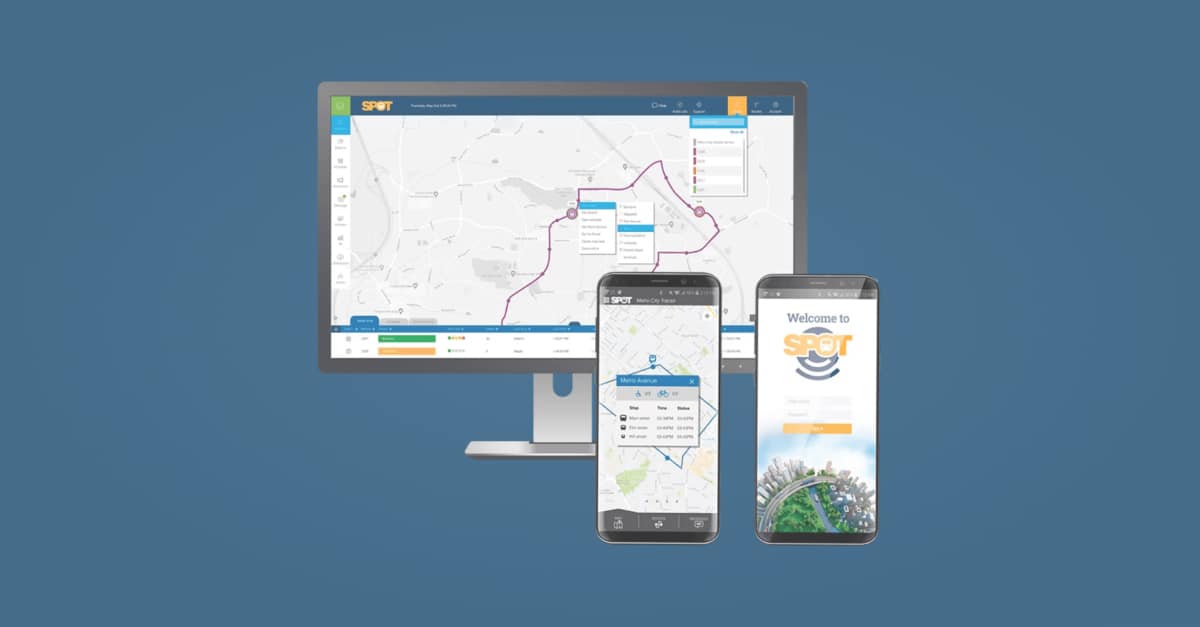
 SPOT: ETA’s Core Platform The SPOT™ ecosystem offers transit management solutions by providing a flexible, modular platform.
 SPOT: ETA’s Core Platform
  All Solutions
 CAD / AVL / GPS tracking
 Business intelligence
 Digital signs and kiosks
 Infotainment
 Automatic passenger counting
 Tally NTD Survey Software
 Tracking websites and apps
 Vehicle announcements
 All Integrations
 Demand-response and microtransit
 Fare collection
 Mobile video surveillance
 Pre-trip inspection
 Solar e-paper signage
 Vehicle health monitoring (AVM)
 Voice communication
 Transit
  All Industries
 Airport
 Campus
 Medical center
 Rail, streetcar & trolley
 Rental car
 Tourism & theme park
 Transit
 Case Studies
  Blog
Blog eBooks
 Wall of Love
 Careers
 Press
Press Events
 Support