Stop Requested. Welcome to Stop Requested, the podcast where we discuss everything transit. I’m your co-host, Levi McCollum, Director of Operations at ETA Transit. And I’m your co-host, Cristian Londono, Senior Customer Success Manager at ETA Transit.
Today, we’re joined by Nirit Glazer, co-founder and CEO of LookingBus. Nirit comes to transit. from a non-traditional background, with training in science, education, and technology, and a strong focus on practical problem-solving and social impact. Her work is centered on improving reliability and accessibility in public transit, particularly around bus pass-ups, an issue that affects riders across agencies, but disproportionately impacts people with disabilities and riders with limited options. In this conversation, we’ talk about how real rider experiences led to the creation of LookingBus, how technology, can help prevent pass-ups, without adding hardware at stops, and what it takes to introduce innovation in a complex operating environment. We also discuss equity, rider trust, and why getting the basics right is essential as agencies, work to rebuild confidence in public transit. We hope you enjoy it. Welcome back to Stop Requested. Levi, how you doing today? Man, I’m doing very well. How about yourself? I’m doing, uh, terrific. Very excited about today’s episode. Uh, we have a very interesting guest, uh, bringing some, uh, very important perspectives in our public transit industry. Nirit Glazer, uh, she’s the CEO of LookingBus. Nirit, how you doing today? I’m fantastic.
I’m very excited to be here. Thank you so much for having me. I’m very excited, uh, that you’re with us, a- and you’re giving us, this opportunity for this conversation. You know, I, I wanna start by, uh, learning a little bit about your background and, and how that, uh, background shape your approach to problem-solving, uh, and understanding human behavior. Okay. So, um, I’m Nirit, like you mentioned. I’m co-founder and CEO of LookingBus. I entered the transit agency in a non-traditional way. My professional background is a degree in science, specifically chemistry, and then later on, I moved on to science education and technology education, with a PhD from the University of Michigan. Throughout all my life, I always was also… I was, like, in the academia. I was always interested in the practical applications, not just publishing papers, and it was always involved, no matter it was, like, on the education side or technology side, so it always was the intersection of technology and social impact. So by na- nature, I’m entrepreneur, and as entrepreneur, I’m the kind of the people that cannot leave the problem out and must see how to attack them. So that’s, uh, a little bit about myself. The, that, that’s very interesting, a- and I like, I like that determination, right? Like, you cannot rest. If there’s a question that you don’t have an answer for, you have to research and, and apply that scientific method. And it’s very interesting, the, the, the background, right, like how you’re putting all these, uh, things together.
Uh, so thank you for that, Dr., uh, Glazer. Thank you. Now, I wanna ask you about what experiences, uh, or insights led you to focus on, on accessibility, mobility, and, and just challenges in the transit industry? So tha- that’s actually… There is no really clear answer to this, except that, like, life happened. So it’s all started with, like, random meeting with, um, people with visual impairment, and then we saw- we heard from their experience, like, we saw it firsthand, their frustration. Eh, we had a nice conversation about technology and science and a lot of other stuff, and then all of a sudden, one of them just turned in to us, and was very serious, and said, “How come with all the technology in the world, no one solved our problem?”
So we, we, we were kind of like: “Okay, what is your problem?” So then they all started to say, “Every time we go to work, we are at the risk to getting fired. We, uh, sometimes need to wait to the bus, like, three times it pass- by us.” And it was in Michigan, in the freezing temperature of Michigan. Sometimes the frequency is just, like, 20 minutes between the buses, and et cetera, et cetera. So we started to, you know, to ask around, talk to people, talk to agencies, just see what’s going on, and we decided to step in, and the rest is history. So when you first started, eh, eh, were you, were you thinking of creating this, this business or, you know, this, um, th- this organization, LookingBus, at from the beginning?
Or did you just kinda stumble into it based on that challenge that you discovered? You know, it’s evolved. Like, we, we didn’t know what the solution at the beginning, but then we thought,
“You know, it should be very easy. Why we will not let the driver know that someone is waiting at the stop?” We were very naive, thinking that just letting the driver know is an easy things. But, um, then we started to develop the technology. It’s not only me. Uh, we have, you know, the CTO and developers, and, um, learn all the industry of transit. We saw all the slogans and all the terminology and all the…
You know, you name it, you know it also. And, and we, we basically discovered, like, a whole world, and it’s very appealing to us. We enjoy-… we learn, we continue to learn. We really feel like what we are doing is important. Like, no one did it before, so which is really, really interesting and challenging together at the same time. So we are like to bring, like, new approach, new perspective, and from this point of view, it’s helped that we are not grew up in the transit industry because we, we were not fixed, we were not tightened with our thoughts, so we could think about this, like, out of the box, and thinks about, you know, like, if you see, uh, also to transfer some technologies, like all the IoT and stuff from other fields. So, so it, it’s a journey for us, a good journey. You know, I, I think a lot of folks in the transit industry can relate to this problem because if you’re working in customer service or planning, perhaps, you’re, you’re going to receive these emails, uh, and sometimes they’re nastygrams about, “Hey, why did you pass me up? I, I was at this particular bus stop, and this operator drove right past me,” right?
Operations I know will, um, will oftentimes have to send somebody else to go pick up that person, either in, like, a supervisor-type car, or, you know, maybe it’s, uh, it, it’s a follow-up bus to, to be able to pick up the person that they drove by. Because as you mentioned, the frequencies are often not the best, right? So you’re, you’re waiting for a considerable amount of time. Just related to this, so at the beginning, we only talk to people and heard stories, and, you know, we talk to agencies, and they always tell us, “Oh, it’s the number one or top two complaints we have.” But then when we started to really dig into the problem and look for reports and all kind of board meetings and statistics, it’s way bigger than we even thought at the beginning because, first of all, it’s not only a problem of ADA riders. And overall, across transit agencies, regardless of the size and the location, it’s account for about twenty-five percent of the complaints, which is huge, and in some agencies, we find even thirty-three, thirty-seven percent of the complaints. So it’s, it’s something that is kind of ignored, but it’s on the table. Everyone talk, it’s a problem, but keeps the status quo. Right. Uh, well, I think part of that is because there’s not an obvious answer, at least to, you know, folks other than you and your team. It sounds like you, you’ve got something, uh, that you’ve, you’ve cooked up that, that, that works to solve this problem. You know, I, I’m curious, did you experience this yourself, like, when you were, uh, perhaps at the University of Michigan or, y- you know, just in your travels, where… Have you been passed up? Yes. I definitely experienced it, um, mostly with the regular city transit.
Uh, I usually rode, when I was at the University of Michigan, I rode the s- the university bus, and the frequency there was every ten minutes. So even if the bus passed m- us up, it, it wasn’t a big problem. But when you go to lower frequency or to remote areas or on the weekend or you name it, or at night, so then it’s way more frustrating, and, um, yes, we definitely experienced it. We, we never thought about this like a huge problem until we talked to other people. I see.
And when you were speaking to folks that, you know, perhaps this, this happened to, and then, of, of course, you know, based on your own experience, I’m sure you talked to some a- transit agencies as well. Sure. What were the, the primary reasons that these pass-ups happen? Oh, that, that’s one of the great questions because sometimes we talk to people, and… So first of all, pass-ups is different terms across agencies.
Some people call it, like, pass-bys, pass-ups, miss-ups, missed stops. Sometimes it’s different terminology. Some o- some agency only categorized it when the driver, like, chose to not pick up the rider. Um, for example, there is, like, problems of homeless, or the bus is full or whatever, so it’s like intentionally the driver know that he’s missing the rider.
But the main problem is that it stems from so many reasons, and the agency are, they are in the dark. They are not always know what the reason for this.
And it’s not always a driver fault, so you cannot just do a better, uh, training. Sometimes, you know, just the rider is not visible. It’s not standing in the right location, especially when it’s rider with disability. Uh, you know, like visual impairment, they are not always know where to stand. But also, sometimes the, the light is not clear at night, you know, whatever. And, uh, so there are many, many reasons for this. One of the things that we also do besides solving the pass-ups is also to monitor them. So then we provide information on when and where they happen, and then later on, it can be analyzed in order to better identify the problem. And we had, like, a situation once that there was, uh, repeating pass-ups on a certain bus stop, and the transit agency just didn’t know why, and then they went to this bus stop and just found out a branch of a tree that blocks the view of the driver, which was really easy fix. Sometimes it’s more complicated fix. It’s not, like, easy like this.
Yeah, I appreciate that response because there is a lot of nuance to this, and I, I’m not sure if you heard this particular reasoning when you were speaking to transit agencies, but working at, at Palm Tran and at LeeTran, I recall some operators saying that they didn’t realize there was a person there because of the advertising….
an advertising panel being in the way, or perhaps the advertising panel had a person on it, and they had mistaken that the person was actually part of the advertising? So actually, the advertising not yet, but the construction signs. That’s a huge problem, and sometimes, you know, the just the sign blocks the view of the rider that’s waiting.
Sometimes, you know, the stop is, uh, busy, and bus come and go, and, you know, they are on a tight schedule. They cannot really stay forever to look for riders, so they have to stop a little bit farther away from the stop sign. And then by the time the people realize it was their bus and run into the bus, so the bus already left. Sometimes just, you know, you know, the riders, like, when I take a bus, I usually do, like, eyeball or flagging the driver, but especially with busy stops, it, it’s really hard. It’s really hard for the driver. One of the things we really were surprised when we started to work o- on this same area is how complicated and complex the driver work is. He needs to juggle between a lot of stuff, and most importantly, remain focused on the road and be safe. Things happen. He can miss a rider, and m- most often, it’s not intentionally. It’s not because the bus is full, and he doesn’t have a room for the rider. Yeah, it, it’s hard to determine, right? Like, one thing is, I, I would say, I would recommend for agencies to record the complaint as is, you know, presented by the customer. So if people say, “Hey, we, you know, this was a pass-up,” then, you know, record as such and, and look into it because there’s, you know, a portion of it that has to do with riders. Like, riders have to show the intent of riding and, and make themselves visible, but then there’s also the driver checking at every stop that there’s somebody…
you know, potentially there’s somebody there, uh, that needs to be. ‘Cause it’s hard to determine sometimes, like, where is it? Was it in the driver? Was it in the person? And also, any other, uh, situational, uh, factors, like you said, you know, there’s a tree branch that is covering the stop or covering the area, or even the weather, right? Like, it, it makes people kind of like shelter themselves from it, and they might be a little harder to, to see them. So I, I wanted to learn a little bit or understand more Look ‘n Bus, right?
Like, you, you came up with a solution to try to mitigate those, and I will tell you, speaking with agencies, uh, pass-ups continue to be a complaint that is common across agencies in the US. I want to learn how you’re using technology and how Look ‘n Bus systems work, uh, and integrate with agency operations to try to minimise those pass-ups. Yeah, I’m really glad you asked because that’s, uh, to explain what we are doing. So in simple world, we address the pass-ups, so we have, like, a pass-ups avoidance and monitoring technology. And then by pass-ups, we mean any scenarios in which the driver doesn’t pick up a rider at the stop. So it’s not just, you know, scenarios like the bus is full, et cetera. We already talked about this. And basically, it’s very, it’s very coincidence.
It’s funny because your podcast is called Stop Requested, and this is basically the core of our product. We have, uh, literally do, like, smart stop request, and that’s actually why I started to follow your podcast because I saw
Stop Requested. I say, “Hey, someone else is working on making sure that the bus- – will stop for the rider.” And, and then I saw you do, like, um, CAD/APL system, but, but that’s really funny. So conceptually, what we are doing, it’s very similar to the onboard stop request that the rider that is in the bus, you know, push a string or, or a buttons to let the driver know that they are about to exit the bus. But we do it for rider that’s waiting at the stop and without any hardware at the stop. So everything is, um, based on software at the stop. So that’s basically what we are doing. We let the driver know that someone is waiting at the stop and is intent to board. That’s in simple word. Yeah. Now, when you, uh, talk about all the technology, it’s not so simple. It’s like, you know, let the Uber driver know that someone wants to know. It’s, it’s not just pushing a button, right? So there is a lot of logic, and there are a lot of technology behind this. It all start, like, the rider has, like, a, an app. They mark, like, their intention to board, but we also know their destination. So then later on, when we do the notification to the driver that they intend to board, the notifications are smart, so they are only targeted to the specific driver that’s going to the same direction that this, the rider, is intent to go, and only to the bus that is about to approach this bo– so, uh, this stop. So let’s say he needs ride number four, we will not notify all num… bus number four that now on the road, just the one that is about to approach this, um, stop. And we only notify it after we verify that the rider is physically present at the stop. Because you can schedule the trip ahead of time, and it will be basically activate only when you arrived at the stop. So we, we, it’s like the geofence.
It’s complicated, like we know, which is different, you know, discussions, you know. How far from the stop the rider needs to be in order to be considered at origin, and then only then all the magic happens. So we send to the right driver, and also we need to send it also on the right timing in order to not confuse the driver. So it’s very similar to the onboard stop request that you- the rider push the string just when it’s time to get off. So in our case, it’s the message pushed to the driver just when it’s time to pick up…. It’s very similar concept from the driver perspective. It’s something that they use to get messages of stop requests, so there is no additional distractions or additional workload. And then in order to make this message displayed, we need to integrate with some systems on the bus, and, you know, that’s the technology side. Yeah, I’ve heard in our industry transfer protection a lot, so pretty much making sure that people can make their connections when they need to transfer from one bus to the other one.
Uh, not very often I heard what it sounds like pickup protection, and particularly if it’s a route that is not very frequent, you know, maybe forty-five minutes, maybe an hour frequency. So me as a rider, through LookingBus,
I can request a pickup, and, and then, of course, to ma- to make sure that I can make that request, the system requires me to be, uh, physically there, right? Like, that I’m not just making random requests, like, just for fun to mess with people, and then it’s going to the driver, but there’s no person there.
But you have to be there to be able to make that request. And then it kind of ensures that you don’t get, uh, pass up, right? Like, that you actually get picked up because the driver is saying, “Hey, right here, there is a person that needs to get in the service.” So very clever. I, I, I really, um, you know, like the, the premise of the system and then what it can do for agencies. Uh, just to clarify, everything- Mm-hmm. … it’s exactly what you said. I need to put you maybe on my marketing team, but, um- uh, the pickup request is just for fixed route buses that, that it’s there in schedule anyway, so we are not asking for a special bus to come over. Right. Right, right. So, you know, it just- It’s ensuring they don’t leave you behind … fits with the regular schedule.
Yeah. Yes, a- a- and that’s the, the next piece I, I wanted to, uh, learn more about, is, uh, how does it improve reliability, safety, and rider experience? I, I guess that we talk a l- a little bit, uh, about this already, uh, but you’re not requiring a hardware to be physically put at the stops, to do this. So you, you mentioned, uh, today, if a rider is on the, uh, in the bus, they pull the cord, or they press the, the bus stop, you know, uh, stop request the button, and then the drivers know. Now, you’re not putting any hardware at the stops, uh, but, you know, how is the improvement on reliability and, and rider experience? So, so that’s a great question. If you think about this, reliability, in simple words, mean you can rely on the service, right? So for riders that wait at the stop, it mean that they can be picked up and get to their destination.
And also, we m- we talked about, uh, earlier about complaints, so it’s a, a little bit messy because each agency categorised pass ups in different categories. But in general, most of them put it under reliability, or at least half of the agencies put it, like, under reliability, and for, for a good reason. Because you need to rely on the service in order to get on the bus and get your, your destination. So in our case, we also make sure that, let’s say, the driver know you are at the, you are at the stop, everything is perfect, and then the driver really wants to stop for you, but then the bus is full, which, which happens. So in our case, we also verify that you made it on the bus, um, and then if you didn’t make it on the bus, the scheduled trip is automatic roll over to the next bus. So that’s one of the things that we do in order to increase the reliability. Thank you for clarifying that.
Um, so let me ask you, when agencies, uh, start implementing or adopting tools like this, uh, what type of, uh, uh, challenges do they usually have, or what’s challenging of implementing LookingBus? Of course, there is no one formula fits all. Every agency is different, but the agencies are already complex system and in very complex operating environment. So the biggest challenge is to fit a solution into a system that is already complex.
And also, the agencies have a lot of responsibilities to their community, and they’re moving thousands of people from place to place, so they need to be very careful about what they are doing, and, uh, adoption is very slow.
So even when we already integrate and doing everything, still, you need to be very careful before you announce it to the public and everything. Like in any other innovation and, uh, early adopters, the people that do choose to take this challenge, they are basically the ones that move the industry forward, and that’s true for any early adopters. Nirit,
I, I want to talk about the, the last few years in public transit, where we’ve, we’ve had this, uh, you know, very abrupt drop-off in ridership due to COVID and the pandemic, when we were advised to not be in close spaces, uh, you know, at least for, for very long. And transit is one of those places where you’re going to be, uh, close together with other people. Uh, so the ridership has really, y- you know, dropped off precipitously there for a couple of years anyway, and now we’re starting to see this resurgence in, in ridership, uh, all over the country. There are, uh, many agencies that are reporting some record ridership, in fact.
Uh, how do you think that that shifts in the rider expectations as some folks kind of come back into public transit? Are they, are they looking for tools and technology like this to be able to make their, their ride better? And f- you know, from the agency’s perspective too, are, uh, are they looking, uh, to bolster their service with these- this new tech that’s coming out? … So, another great question. So the way what we see, uh, that as the pandemic continues is the transit agencies now shifting from survival mode to getting back in the game, and they are gaining more interest in technology and to become innovation.
And for good reason, because transit doesn’t exist in a vacuum, and once people experience, you know, other modern options, and they have also competition, you know, public transportation is not the only mode of transportation. So people will not go back to, you know, to the old style. So in order to stay in the game, the transit agencies m- must move on in order to gain back the trust. And what we see is that they are not only gaining interest in new technologies, but they also talk more openly about their customer experience. When we just started, it was really hard to find reports about customer experience, and specifically, like in our case, it’s pass-ups. So we- they told us verbally it’s a minds-and-top complaint, but there was no really statistics out there. And now we see a lot, a lot of transit agencies that really share their board meeting, they’re sharing the discussion, they put up, like, customer experience plans. They really become more openly, and, and that’s great because transparency basically builds trust, and they need to rebuild the trust, with their riders. So that’s the trend we see, and we do need more agencies to step in because we still see some agencies that just keep all the information internally.
But, um, the trend i- is really in the good directions, in my opinion. I would agree with you there, that trust is, is the core of public transportation, right? You need to be able to trust, as a rider, that that bus or that train is going to be there when it. says it’s going to be there.
That it’s a social contract that the transit agency has with the rider. So you mentioned, Nerit, that th- this brings about more equitable transit. How do you think LookingBus helps make the service more equitable? Based on the Act of Fact book, fifty percent of the trips are to and from work. So if you think about this, if you s- improve the reliability that people can get to and from work, you make transit more equitable. It’s very simple. Just make it. more reliable, more people will be able to get on the bus, and then it’s more equitable. Yeah, I, think you put it plainly. On the surface, it might not seem like this is, uh, an, equitable tool, right?
Or one that might have obvious, you know, improvements to equitable transportation. It, it does, uh, get people to where they need to go, and you’re, y- you’re ensuring that they’re able to make that trip and on, on time, and as you mentioned earlier, that folks aren’t losing their job, right? Because that is a real concern, uh, and a worry for a lot of folks, that if they miss that bus, or in this case, the bus misses them, then they’re not going to be able to keep a job.
A- and then it’s for, it’s for all riders. So of course, for people with disabilities, sometimes they don’t have other options to get to, to the job, and maybe other people can drive. But, you know, in the big cities especially, driving is not easy. Finding a parking is not affordable. So, um, so basically, it’s for everyone, for all riders. You know, one thing that I’ feel like we haven’t touched on is how your, your background played into, uh, your ability to think about this problem, to reason about it, and come up with a solution where there was none previously. We touched it a little bit before, but basically, we were not biased. Uh, we, we, we investigated this, you know, thoroughly from both sides. Like
I mentioned before, the problem started from the bottom up, from the rider experience themselves. It’s not– it wasn’t like a request from the agency to solve the problem or, you know, for we had technology and had to find a solution. And then we had to think outside of the box, and we had to ask a lot of questions. So, you know, as academia before, asking questions, research questions, that’s the top of the skills, right? But, uh, asking questions, try to look at the reports, analyze a lot of data, so this a lot of skills that I brought with me, before, but also think about the technological solutions, so with our technology people. And the CTO, they also didn’t grow up in transit, so all of us, basically, um, were not tied to a specific approach, and, uh, we came with fresh perspective. That’s very interesting. Uh, and, and a lot of the times, that, that helps you see the problem differently, right? Like, without the constraints of, uh, it has to be done this way because that’s how it’s always been, uh, which typically wh- what happens with somebody that is, uh, been a long time, uh, around a, you know, given process or industry. Um, let me, let me ask you this question, uh, Nerit.
What keeps you motivated, uh, while navigating the slow adoption cycles o- of, you know, types of– these type of technologies and some of the operational constraints? Okay, so the simple answer is the impact.
So we believe it’s a real problem, and I’m a big advocate of public transportation. I always was a user of public transportation since I was a child…. and I really believe that there is a real problem that need to be solved, so the impact. But it’s also not just the end result, it’s a whole journey, and for, for us as entrepreneur, it’s, it’s really excited to see how an idea become to reality and how it’s involved. We also do a lot of mistakes and a lot of pivots, and we learn from each of them, and then we do other mistakes. Hopefully, don’t do the same mistakes. But see, building it from the ground up and see it, it take shape and become to life, that’s very, very rewarding, and especially that at the end of this tunnel, there is a real impact. It’s not just seeing something that is a gimmick. As we start to, to close out the conversation here, Nirit, I, I’ve got a few key takeaways that I, I want to share with our audience, and y- you know, get your feedback on. If I got any of these wrong or if you’d like to add to them, uh, please do so. But a, a, a few things that I wrote down as we were talking, that pass-ups are usually not intentional. The bus. operator is not just seeing a person standing by a bus stop and, and blowing right by them. That’s typically not the case.
In fact, the reasons are pretty nuanced. There’s construction, there’s tree limbs, there’s lighting or lack thereof, that could prevent the operator from even seeing that there’s a person standing there, or as you mentioned about your ADA example, someone who’s visually impaired might not know exactly where to stand.
The second key takeaway that I wrote down was that pass-ups don’t just affect persons with disabilities. This is a problem that exists, uh, pretty widespread through- throughout the industry and can affect riders o- of all abilities. Finally, this technology exists. You know, you don’t need the hardware at the bus stop, m- you know, some sort of push button at, at the bus stop to be able to notify the operator that there’s, as Christian put it, uh, and I really like this, the pass-up protection, right? You have the transfer protection. This is kind of pass-up protection, uh, to at least mitigate, you know, some of those chances where the operator would overlook a, a passenger that was standing at a bus stop. Is there anything that you would add to those, or did I get the majority of them? No, actually, you summarized it, perfect, but the only thing I would like to add that the pass-ups is a pain point, not only for the riders, but also for the agencies because it’s damaged their reliability and perception. Yes, that’s an excellent point, and as you mentioned earlier as well, a lot of those complaints that the agency is getting is because of pass-ups, uh, and I think Christian and I have directly experienced that, either as part of planning or customer service or operations, so
I, I really think you’re spot on there. We also have this segment in Stop Requested, where we ask some rapid-fire questions at the end. So if you’re ready, I’m going to just shoot a couple of these questions over your way and see what your initial take is on it, okay? You ready? Okay. That’s my favorite part. Okay, excellent.
It’s my favorite part, too. All right, so what’s one transit myth that you would correct if you could? That pass-ups are not just because the bus is full. Number two, what is a transit system that you admire? That’s an easy answer, the Magic Bus of the University of Michigan. And number three, what’s a non-transit technology that you find inspiring? What, what’s something that you try to achieve with your own technology that- Yeah, I, I really love 3D printing. We play with it a lot.
Okay, 3D printing. Okay, that’s, that’s interesting. I like that answer. What about a particular idea that’s kinda shaped how you approach, uh, your responsibilities and duties as a, a CEO and, you know, leadership in the industry? Never give up. Again, another excellent one, that you, you have that determination, is pretty clear. And then finally, what’s one change that you would make to improve public transportation worldwide? If you could just wave a magic wand, what would it be? Uh, tell the people that work in the transit agency to use their services. Just get on the buses, get out of your buildings and reports, and see what it looks like out there in real life.
Yes, that, that is a, a, a common theme that, that you hear i- in the industry, is that some folks who work at the agency don’t use the, the service, and that’s unfortunate. I, I think you have to be your own customer a- and dog food to a certain degree, right? Maybe not every day, but it needs to be a part of your, your commute in some way, whether it’s frequently or infrequently, but you, you have to test the service. Nirit, this has been a, a terrific conversation, and really appreciate your perspective. You’re coming on with something that’s a really novel idea. I,
I don’t think that we’ve talked about anything close to this on the podcast so far, so it’s gonna be pretty new, I think, to a lot of the audience as well. If any of the audience is interested in getting in touch with you or wanting to learn more about Looking Bus, how can they do so? So there are many ways. Uh, if you have LinkedIn, so that’s the best way to reach me. Another way, just, you know, a form on our website or just my email, which is my first name, nirit@lookingbus.com. Well, again, Nirit, thank you so much for joining us, on Stop Requested, and thanks to our audience for listening every week. We’re gonna be back next Monday with another episode of Stop Requested.

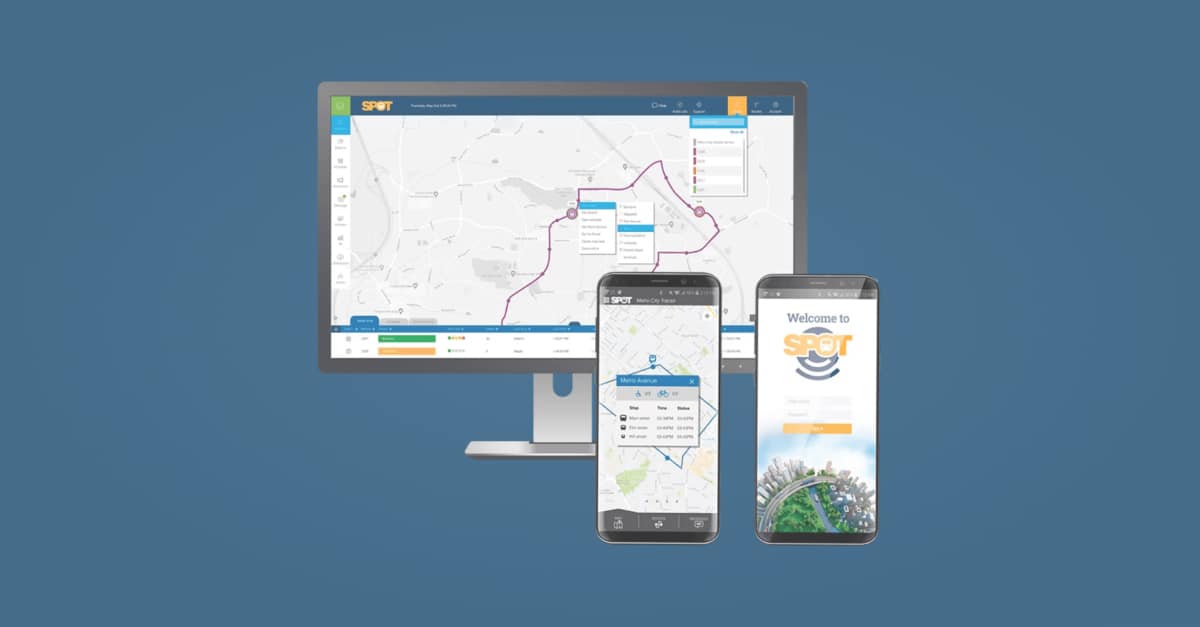
 SPOT: ETA’s Core Platform The SPOT™ ecosystem offers transit management solutions by providing a flexible, modular platform.
 SPOT: ETA’s Core Platform
  All Solutions
 CAD / AVL / GPS tracking
 Business intelligence
 Digital signs and kiosks
 Infotainment
 Automatic passenger counting
 Tally NTD Survey Software
 Tracking websites and apps
 Vehicle announcements
 All Integrations
 Demand-response and microtransit
 Fare collection
 Mobile video surveillance
 Pre-trip inspection
 Solar e-paper signage
 Vehicle health monitoring (AVM)
 Voice communication
 Transit
  All Industries
 Airport
 Campus
 Medical center
 Rail, streetcar & trolley
 Rental car
 Tourism & theme park
 Transit
 Case Studies
  Blog
Blog eBooks
 Wall of Love
 Careers
 Press
Press Events
 Support