If you don’t wanna climb the ladder of success, Levi, your whole life, only to find out at the end it was leaning against the wrong wall. Stop Requested.
This is Stop Requested. by ETA Transit. I’m Christian. And I’m Levi. These are real conversations with the innovators, operators, and advocates driving improvements in public transportation.
Today, we’re talking about leadership, communication, and what it. takes to build strong teams inside transit agencies. Our guest is
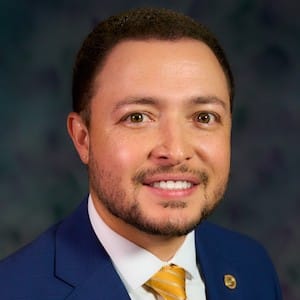
Paul Comfort, Chief Customer Officer at Modaxo, former CEO of MTA Maryland, and host of Transit Unplugged. We’ talk about how he got his start in transit, how communication, became a core part of his leadership style, and what he learned leading large, complex organizations.
Paul also shares his perspective on building high-performing teams, why relationships matter more than metrics alone, and his new book, Find Your X Factor: Follow Your Personal Treasure
Map to Purpose, available August 11th. Here’s our conversation with Paul Comfort. Welcome back to
Stop Requested. Uh, today we have a great episode. We have a celebrity with us in the room, uh, Mr. Paul Comfort, and he’s made a big name in public transit. He’s known for his work with Transit Un-Unplugged.
He’s also a published author with thirty-plus years of experience in our public transit industry. He was a former CEO of MTA Maryland, and he’s now, uh, Senior VP and Chief Customer Officer at Modaxo,
Executive Dire-Director of the North American Transit Alliance, and known as a transit evangelist. Paul, how you doing today? I’m great, Christian, and really honored to be on your show. Thanks for having me. Thank you for being with us. And, and for listeners who somehow don’t already know you, which I think they just came into transit yesterday, how do you like to introduce yourself these days? Author- … podcast host, former CEO, transit evangelist. Could you tell us a little bit about your, your own introduction?
Yeah, sure. So I, I guess I’m leaning into author right now because I’ve got a new book coming out, Find Your X Factor, and it’s my seventh book, so I probably would introduce myself. That’s what my Instagram says @paulwcomfort.
It, uh, l- I’ve, uh, I’ve signed up on there as an author, so. Yeah, but you know, as you said, I’ve spent now thirty-eight years in the public transit industry and in local government. I was a county commissioner, elected, and a county administrator, which is like, you know, the, the CEO of the local government, so those were my two main gigs as well as transit. So yeah, I’m a government guy and a transit guy and an author. So Paul, your story is absolutely incredible, and I really want to get into a lot of the details today. Uh, can you give our audience some of your background, how you got into public transit? What drew you into the field? Yeah. So, you know, from an early age, I knew I wanted to be in government. Um,
I, I ran for office when I was very young. When I was twenty-one, I ran for, uh, county commissioner and Democratic Central Committee. I won for central committee but lost for commissioner, and, uh, I’d just gotten pulled into politics and loved it and knew I wanted to be in local government. That’s why
I’d run for commissioner. Uh, I was a junior in college at the time at University of Maryland. So when I graduated, um, I applied for a bunch of jobs and got some offers. Um, some of them felt like they wanted my soul, and I didn’t wanna give them that. I got offered a job as a speechwriter for the governor, but, uh, as a, like an idiot, which you are when you’re young, you know. I was like, “No, no, I don’t wanna be behind the scenes type, and I wanna be out front.”
I mean, can you believe the gall? But anyway, you know, when you’re young, whatever. So, um, i- I had run for office with another fella who was running for a different office, local office. His name was Irving Pinder, and he was the director of the Department of Aging. And, uh, it was called the
Office of Aging at the time, and he called me or talked to me at some point and said, “Paul, um, listen, I really like you. Uh, I know you wanna be in government.” You know, we had talked along the campaign trail. And he said, “I’ve got two positions coming open when you graduate from college.
Um, one of them is nutrition coordinator. You would oversee all the senior centers in the county. And the other, I’ve got enough vans now and vehicles taking people to the senior centers and to the doctors that we actually need a transportation coordinator. I’ve got a one-year grant. It pays fourteen thousand eight hundred and seventy-six dollars a year.” This is back in 1987.
“And, um, you could have that job. I’d be happy to hire you for that one. And, uh, which one would you like?” And I said, “Well, I don’t know, Irving. Which one do you think I should take?” So obviously, he said transportation, and here I am thirty-eight years later.
So that’s how I got into it. And it, it, it pulled me in the right directions. You know, my dad was a minister. I was raised active in, in church and felt like, you know, I wanted to…
You know, I saw this job as a ministry almost, you know, helping the senior citizens, improving their lives. And I could see every day the impact I was having on them because I got a CDL, and I would drive sometimes. I wrote our own first dispatch software. We didn’t have anything. We wrote it in that program called Access, if you people remember that. And we built a data beta pa- database of passengers, and, and, uh, I really got into, you know, everything ’cause it was a small operation. We had a quarter million dollar budget at the time, about fifteen employees plus one dispatcher and me. And so I did it all. I wrote the grants. I got, you know, got to know everything.
I got a chapter in my book called Do Not Despise the Day of Small Beginnings because I got to do everything. Unlike being pigeonholed in a single responsibility, I, as a, as a transportation coordinator of the county, uh, I got to do it all. And then they asked me, “Would you like to start a public transit system?”
The commissioners did. And I was like, “Sure.” So I got to do it all, plan the routes. You know, I even got to raise money. I went out and knocked on doors to fifty businesses and got them all to donate to give us extra money to match the grants we were getting for some, for expanding the service onto weekends called the Shore
Shopper Shuttle, uh, ’cause I live on the Eastern Shore of Maryland. So all that stuff was just, you know, scratching my itch to help people, and it was just what I always wanted to do. Uh, and I was still working in radio at the time. I had a part-time job working at a local radio station.
I had a show called Comfort’s Corner, and, uh, you know, I made twenty-five dollars a week. It wasn’t for the money, but it was– I loved being in public communication, and soThat’s always been a theme of each job I’ve been in, as I’ve always tried to find the angle where I could still do some of that public communication. I ended up working in the private sector, uh, some for many years in business development, and then in the, back in the public sector, and as you said, then ending up at MTA Maryland, where
I kind of finished out my active operating career after thirty years. Uh, I mean, that is quite the impressive resume, and it, it just goes to show that you don’t start on top, right? You, you have to work your way up, uh, to become that, that chief executive officer or that executive director of an agency, and those experiences that you get when you’re just starting out are extremely valuable. Christian and I have had a lot of conversations on the podcast about this. As recently as just a, a couple weeks ago with, uh, some of the
CEOs that, that we’ve been talking to, uh, so, you know, I, I think what you’re saying there really speaks to that. Uh, you know, just thinking back, you know, over your career, what’s, what’s something that you’re most proud of as a transit leader? I’m a people person, you know, Levi, and so the things I’m really most proud of,
I mean, you know, we have a lot of achievements. In two thousand and sixteen, I got, uh, I was, you know, named, um, AASHTO’s, I got the President’s Award, which is the top award you can get from the American Association of State Highway and Transportation
Leaders. It’s kinda like the top individual award. I was at the MTA at the time. We had won, you know, the APTA Gold Award for safety, and we were having some of the best on-time performance in the country for our paratransit system, and we started a FM radio station run by them and, and, uh, you know, reoriented the whole agency. We’re building the biggest public-private partnership in the country at the time, the Purple Line, five billion dollars, uh, sixteen point two mile light rail line outside of Washington, D.C., which is getting close to completion now,
I’m happy to say. And, um, and we revamped kinda how the operation ran. We had, uh, you know, five thousand employees and contractors, a billion-dollar budget, a hundred and twenty million passengers a year, eleventh largest transit system in America. And I really tried to reorient the ship, you know, kind of right the ship. That’s what the governor asked me to do when he hired me. Uh, he felt like the agency was kind of listless and unmoored, and it needed to be given direction and get going. But to be honest with you, what I’m most– the, the legacy, I think, and what I’m most proud of is the relationships I built with the people and, and the teams I built, of leadership teams, where
I really felt like, you know, we went through all four stages of organizational development, you know, form, storm, norm, perform. And in several groups that I was with, probably three, we were able to go through all those stages and get to the perform phase, which is where kinda you’re hitting on all eight cylinders, if you wanna use a mechanical analogy. But everybody loved what they were doing.
Everybody got along with one another. We woke up in the morning excited about the work we’re doing, and, uh, it feels good when you’re operating. You don’t always get that in every job. And so that, to me,
I think at least three times I was able to achieve that, and the way I know the impact it had is that years later, people were still asking me, begging me, “Please come back and work here. Take the job,” the people that were still there. And so that lets me know, you know, that the leadership that I was able to bring to those meant a lot to them. And seventy percent of job satisfaction has to do with your relationship with your boss, and so wherever I’ve worked, I’ve always tried to build a top-notch, you know, fully functional team because
I really think leadership development and the leadership in an organization is what makes a difference between super success and just, you know, mediocre. Um, and so anyway, I would say that’s really what I’m most proud of and, and most fulfilling was the relationships that I still have with people that I worked with, you know, thirty-five years ago. Yeah, those relationships are key, and you, you know, you build that network over time, and it just seems to keep accumulating, right? You, you’re able to, uh, have those conversations with folks and then go back to them and continue getting either mentorship or advice. It does contribute to the success of an individual long term. Uh, one, one thing that has me curious here, Paul, is that, you know, you’ve got this government ad-administration experience and, as you mentioned, this radio experience. I’m, I’m curious how you were able to, uh, combine those and if there was a, there was a, a particular example that you have where that, that communication style that you have or just, uh, being in government administration, how that shaped the way that you ran MTA Maryland. Along the way, I got my law degree as well. I went to school, law school at night, um, near the end of my Queen Anne’s County government job, two years, and then two years when I worked for Mark Joseph at Yellow
Transportation. Uh, and so I’d go at night, you know, work all day, and then, and, but I knew that a law degree was gonna be essential for my career. I, I didn’t really wanna practice law, although
I did for a year in between jobs, and I knew I would hate it, and I did. Uh, so I didn’t get the law degree to practice. I got it to make me effective in what I was doing. I felt like, you know, in government and transportation, I’d be dealing with a lot of legal matters, and I didn’t wanna be intimidated by lawyers. I wanted to be able to do the legal work if necessary, understand the, the core principles behind them, and utilize that degree. And so it’s been one of the best decisions I ever made in my professional career was to get the law degree. It also boosted my salary a lot after I got that because it gave me the potential as with an advanced degree to get all kinds of more senior executive positions.
So the, the two things that you mentioned are what I call my X factor, and that is the things that you’re interested in, my passions, which is communication, uh, and my abilities, which is government transportation. I got to be kind of an expert in local government and, and in, in operating public transportation. Uh, and so where those two intersect, that’s my X factor, and that’s what I wrote this book about, how to… You know, it’s not just like we’re coming up to graduation season, and you hear a lot of graduates told, you know, “Oh, follow your dreams,” and that’s all fine and good, but that’s only half the equation. If you’re no good at it, like a friend of mine, I used to have a band in college, and he wanted to sing, and he had an awful voice. And, uh, all he was, you know, “Oh, I really wanna sing.” I said, “Why don’t you try to pick up guitar or be a sound man?”
He’s like, “I really wanna sing.” Well, that’s just gonna lead to disappointment because he didn’t have the ability. And so, um, you wanna make sure that-When you want, wanna be a success, and this is– you ask how I intersected them, it had to be what I was interested in, which is communication.
I love, you know, being on the radio, TV. I was a newspaper reporter, all that stuff. I started a, um, a syndicated radio program while I was in law school called Power Minute, and had it syndicated on 11, uh, radio stations.
Um, but I, I had to, you know, along the way, I’ve had to drop several things when I knew they weren’t gonna be, uh, I wasn’t gonna be able to do them at the time or the effectiveness to do it. So the interesting thing was I’ve been able to, and I gravitated toward in every job that transportation expertise or government expertise, but then my interests. So for instance, in the first job, I was working part-time on the side, so that worked out good. But I also started a newsletter, and I started a monthly meeting where I could talk and share with my drivers, you know, things that were going on. And then when
I went into other jobs, um, I was able to do more communication-related things as county administrator for two counties, Queen Anne’s and Charles. I started local public education government TV channels, the local cable access channels.
When I was at MTA, as I mentioned, I started an FM radio station. We had a television show that we expanded and, uh, made it, its commuter connections seen in a million households in the Baltimore-Washington, DC area.
And we added staff and added budget to it because we wanted to be able to be vertically integrated and tell our message directly to our passengers.
So I’ve always worked on, you know, doing the things that brought me passion, you know, what I was passionate about, and it is about communication. And I think that’s really the number one skill set required for a leader in the twenty-first century is the ability to communicate effectively. Uh, and so it’s what I love and enjoy. You know, they say nine out of ten people are scared to death to get in front of a crowd and talk.
Not me. I’m the one. That’s the one thing I love the most. Yes. And so, um, so I’ve been able to lean into that, and it’s differentiating me from what I call the bean counters and others who have risen up to CEO roles in transit agencies. on the basis of those skills. I was raised on the b- on the basis of really, uh, my ability to be a good… This is what the governor told me when he hired me. “Paul, you got twenty years experience in transportation, you’re an attorney, and, you’ve run government agencies very effectively as a county administrator.” I won a bunch of awards when I was doing that too. “So bring those skills together and run the MTA. That’s what I need.” And so that’s what you have to do. You have to analyze yourself, I think, and figure out, what are my passions?
What are my abilities? Find out where they intersect, circle that, and try to lean into that. You don’t have to blow up your whole life, you know, and quit your job and all that, but just lean into that. Volunteer for things. One job I had when I was working at Washington Metropolitan
Area Transit Authority, running the paratransit system, there wasn’t really an opportunity to do any of that stuff. I was a contractor. So I said, “Well, you know what I’m gonna do? I’m gonna do the, um, orientation for new employees,” because that way I could stand in front of a group, I could give them the big picture, which
I love doing. People don’t get the big picture too often, and they always complain, “I don’t know what’s going on here.” Well, I wanted to make sure they did know what was going on. So
I was able to kind of scratch that itch that I love, you know, communicating to people in a public setting just by doing training. And, you know, I wasn’t paid any more for it, blah, blah, blah, but it’s something I love doing, and it made me fulfilled, and that’s what you want out of your job, right? This episode is brought to you by ETA Transit. Legacy CAD/AVL systems were designed when on-prem servers were the only option. Today, agencies need systems that leverage modern technology that are faster to deploy, easier to use, and built for constant change. ETA Transit was built to replace the old model.
ETA’s web-based CAD/AVL platform works in any modern browser, connects seamlessly to what you already have, and eliminates vendor lock-in. No server rooms, no fragile workarounds, just a modern command center that scales with your operation.
The next generation of CAD/AVL is here. Learn more at etatransit.com. Yes, I, I couldn’t agree more. And, and I think this is a perfect segue to, you know, as, as we were talking about your career and different factors within your career that led you to where you are today. And there’s definitely plenty of success to discuss all the things that you achieved in different organizations. And I think it’s, it’s what you said, is the skills of a leader is having, uh, to, uh, the charisma, uh, to actually communicate the energy, the passion to the folks and, and get the following.
Uh, and, and it’s also that professional communication. Like, if you’re a good communicator, you can be a great leader and, and lead a transit agency. And to your point, I also know, you know, GMs and, and, and CEOs that sometimes a, a lot of them came through that operations track, so maybe they were drivers at some point or, or they started, you know, mid-level management in, in operations and, and rose to the CEO role. And then they spend a lot of their time still trying to oversee the operations and still trying to see, you know, are we, you know, the buses are on time or, you know, do we have too much redlining? And it’s too much into the weeds of the operation of the agency, and they don’t spend as much time collaborating with the stakeholders, with their boards, with the unions, with the public, and doing all the public engagement work, which is the work of the leader, you know, being that- That’s right
… communicator. So I, I wanna go back and discuss, uh, your books. We, we talk about factors, uh, that lead you to success, and I think is, is a good way to start talking about your, uh, newest book, uh, Find Your
X Factor, you know, finding that purpose in life, knowing this is what I should focus on, which is very hard. And I’m one to wanna do everything. Like I tell you, Paul, I’m learning how to fly. I’m learning Italian. I’m– I, I do several things at once.
I, I own a lot of instruments. I try to learn how to play the guitar, the piano. I’m really bad at that. I love singing, too, just like your friend. You know, you can really like it, but if you don’t have that skill set to actually, you know, be able to compete, then maybe that’s not for you. So I wanna bring it back and give us, give us what, what was the, the premise of this book? You know, you’ve been writing about public transportation, engaging CEOs, talking about the innovation, what’s happening with the public transportation industry. And then now with your new book, you’re taking a different spin and, and you’re putting more of a, a personal development, uh, touch into this book. So could you, like, give us a, a introduction into the book and what pretty much position, pos- position you in the, in, in a place where you wanted to write about, um, you know, personal development?
Yeah. Thanks. Um, so I’ve spent a lot of timeBasically almost all my life in management. Um, and, um, what, what I’ve seen is that, um, a lot of folks, you know, there’s a thing called midlife crisis, right? Where you’re in your forties, you look back at your first 20 years of your career and you’re like, “Oh, wait a minute. How did I get here?
What am I doing here?” I mean, I kind of had that when I left transportation and went into county government. It, it wasn’t fulfilling me as much as I wanted it to, probably because I was in, uh, you know, a job where I wasn’t able to do all the things I wanted to do to, to fulfill the p- the passions that I had. And, uh, so
I’ve seen that over and over again. I’ve done a lot of, you know, kind of coaching of people and talking to people, and a lot of analysis of my own career and that of my friends. Uh, and I’ve come to the conclusion that, um, we can live on Maslow’s hierarchy, and I love the fact, Christian, that you’re constantly improving yourself. That’s something my dad taught me early on, is always be improving yourself. So I think it’s important to always be doing that because there is no such thing as luck. Luck is being ready when opportunity arises, and the way you get ready is you’re constantly improving yourself, and you’re out there networking with people, and so that you have opportunities to connect with them. So the book Find Your X Factor is just a simple premise. Uh, there’s a lot of stories in it and examples, and I have eight, uh, leaders who have risen to what I call the top of their Maslow’s hierarchy in their careers, from sports to entertainment to, um, you know, law and business and transportation. But the idea is, um, finding that sweet spot in your life where every day you wake up with a fire in the belly ’cause you’re excited about what you’re doing. You’re not just working for your paycheck or working for the weekend so you can make money so you can do your hobbies on the weekend. You figure out a way to integrate them, and the book teaches you how to do that.
I’ve got a website, findyourxfactor.ai, with more information on it. You can even take a free assessment, uh, there and, um, sign up for a newsletter and all that stuff, and you can pre-order the book, uh, if you’re interested in doing that. So that’s the concept behind it. You know, it’s like, um, I guess because I care so much about public transportation and government, I really believe that we need the strongest possible leaders in the top executive roles, right? What’s the difference between Walmart and Kmart? I often tell this story.
You know, Walmart and Kmart, a lot of people don’t realize they started around the same year selling basically the same thing, big box retail. One went on to become the largest company in America and still is the largest employer, I believe, with about two million employees, and the other went bankrupt.
And when you ask what the difference is, I would posit that largely it was leadership, and the, the effective leaders who were principle-based at Walmart, Sam Walton and his strategy of, you know, sell more by selling it at the lowest possible c- price, uh, was a winning factor, and the principles they put into place in the organization went on to make it, you know, from just-in-time inventory to all the other things they do there, went on to make it a very, very successful company. And so I believe that leadership in transit agencies is critical too, and so I’ve spent, you know, my podcast, Transit Unplugged, is basically me interviewing top executives about what works for you, what doesn’t work for you.
I’ll be in Boston next week at an executive summit for the Think Transit Conference with almost 70 CEOs and C-suite executives, and that’s what we’ll be talking about. What’s worked for you in AI? What’s worked for you in cybersecurity? How did you come back from that ransomware attack? Uh, what’s happened with safety, security, and fare evasion in your group? What’s not working?
And we share around tables, and it’s in a, it’s in a, uh, Chatham House Rules, uh, you know, environment, so you can share freely and know you’re not gonna have anything attributed to you. So I’m constantly thinking about how to improve the leadership in our industry, and so the book is an extension of that.
It’s, uh, the, the first six books have all been about, you know, the trends in transit. What’s the new future of public transportation, AI, autonomous vehicles, zero emission fleets, hydrogen, cybersecurity, all that. This is more about the people side of things, uh, and even the last book I wrote, The New Future, the chapter I wrote in it was five traits of a future transit leader, ’cause that’s what I’m focused on, is I wanna make sure that we equip our leaders and our up-and-coming leaders, um, with the tools they need to become very successful.
We don’t want to see, um, situations where, uh, an agency falters or flounders because of inadequate leadership. We want the opposite. We want leaders who are honed and skilled and, and love what they’re doing and are able to lean in on the areas where they really have the interest and abilities and shore up the other places with other folks who are good in those areas. For instance, you know,
I’ve, I, um, I know what I’m strong in. I know the areas where I need support, so whenever I’m in a position, I always surround myself with people who can do the parts that I need support in. So a lot of it is about self-knowledge as well and not thinking you can do it all, but understanding you do need a team in order to m- and, and hiring the right people. When I’ve gone from job to job over the years, a lot of times I’ve brought some of the same people with me from job to job. I bring in a lot of the– Like when
I was the MTA, you know, I brought in maybe 10 people who I had worked with before or knew very well before, and I knew they could plug into certain spots that we needed in the agency where there were vacancies, and we could really see a dramatic improvement because of the style, of leadership they exhibited. So that’s what the book, is about, Find Your X Factor, published by Morgan
James. It’ll be available August 11th. Uh, I’ll be giving away copies up until then to various places I’m going, like this one, but the best way to secure one is to go to, um, findyourxfactor.ai and just order it from
Barnes & Noble. That was August 11, you said? Yeah. That’s when it’s gonna be out in bookstores, is August 11th. It’s a little bit of a wait, but, um-So I’m gonna spend the next four months building anticipation for it, and hopefully get on, uh, get on the, uh, you know, USA Today’s bestseller list. I’ve had four number one bestsellers in the transportation category on Amazon, but I– this is a general category book. And they’ve told me, Barnes & Noble has said to our publisher, indicated to them that if, you know, it doesn’t seem like a lot, but if three hundred individual people buy pre-order copies of the book before August 11th, that indicates to them there’s traction, people are interested. They will then give direction to their bricks and mortar bookstores, you know, since I’m a new author in this area, to go ahead and stock the book.
So that’s my goal, to get three hundred pre-orders before August 11th, um, through, through Barnes & Noble. There– it’s available, you know, Target, Walmart, Amazon, everywhere else, but to get them through there, ’cause I’d love to get them in bricks and mortar bookstores and Barnes & Noble. And we’re gonna have a big, uh, kickoff event here’ in my home county at a brewery where we’ll do a book launch and live music and all the entertainment and all that stuff there as well on August
11th. But that’s the game plan. Excellent. And, and, and to our listeners, if you could, uh, support and try to get your copy, secure your copy, I would advise you to do so. I know, Paul, you most likely you’re gonna be part of APTA Expo. I mean, this year- Yes …if you’re not going to APTA Expo, I don’t know what you’re doing. But this- Yeah …is the year to show up to APTA Expo. It’s going to be massive, and that’s gonna be a little bit after, uh, your book is out. So if you bring a copy, you might have, uh, the opportunity to get Paul to give you his autograph on it. Uh, if, if- Yes, I, I’ll be doing a book signing there at the Medakcho booth.
Yeah. A-a-and I’m gonna bring mine, Paul. I definitely wanna get you- Yeah …uh, to sign mine. Um, but this is very important, right? Like, the work of communicating the value of public transit, speaking about it, you know, having a podcast, writing books, and now even focusing on the leadership development side, right? Like, being able to get, like, this information out there and more people talking about it is just advocacy for our, our industry. So, you know, not only talking about it, uh, getting people mindset to align with, you know, what it’s going to help improve public transit in America, but also now talking about the leadership. A-and it’s so important what you said, right? Like, the, the leadership makes such a big difference on the future of the organizations.
It starts with that vision of that leader and then how it resonates throughout the agency, uh, to make sure that we’re, we’re, you know, developing, uh, uh, the next transit systems of America.
So going back to, to finding your X factor, I wanna ask you just kinda, like, one more question. So what I’m understanding from the book, I have not read it, uh, but I will commit to you that I will read it, uh, once I get my hands on it. So it sounds like it’s, it’s, it’s a practical tool to, like, let’s say I’m not sure if I know what my X factor or purpose is, or my, you know, what I should focus on, uh, or maybe I feel that I found it, but it feels like going through the book is like, is like a guide. You know, actionable, uh, examples and stories that help you get to that, uh, purpose of yours. Did I describe it correctly?
Would, would that be the expectation readers, uh, should have of, of the book? Yeah, that’s exactly right. It’s, uh, the subtitle is Follow Your Personal Treasure Map to Purpose. And a lot of people wanna know, “What should I do with my life?” And I believe that you’re already hardwired, you already are hardwired to do what you’re supposed to do. That your, your, your mind, your psyche, your soul, your spirit, whatever, uh, you wanna call it, you al- you already have interests, and you already have natural abilities. You know, some people are very mechanical from a young age, right? Uh, they’re taking apart… Like, I’ve got a grandson that’s that way.
He’s taking things apart, trying to f- figure things out, and I said, “You know, he’s gonna be an engineer. That’s, that’s the way he’s wired.” And so the book, each chapter has questions to ask yourself at the end, and guided questions, and, uh, and has X factor truths in the book that you can kind of, uh, hang your hat on a little bit. And so, yes, the book is a real practical guide. Lots of fun stories from famous people, you know, people I’ve met in my career, you know, from, from Andie MacDowell, you know, the actress from, uh, my favorite movie, um, Groundhog Day. Meeting her at the Shanghai Film Festival and how, you know, that kinda came to happen. And just all kinds of fun, interesting stories from not just me, but from, you know, famous people, other famous people, Michael Jordan, and all those. But, uh, it also is a guide then. It, it grabs your interest and keeps your interest through, I think, innovative storytelling.
My book agent told me she’s represented a hundred and fifty New York Times bestsellers and lots of authors. She’s one of the top book agents in America for nonfiction. She said, “Paul, you’ve got material in this book that I’ve never seen in print before.” And so she’s very excited about it, as are, you know, the publisher, uh, Morgan James. David Hancock is very excited about it. I was able to do a red carpet, uh, walkout with the new authors, uh, recently in Orlando.
And so, uh, very excited about the book and the impact it can have in our industry for people that work in our industry, so they can kind of blossom and become self-actualized. Paul, you, you really very clearly have a l- a lot of interest, and y- your, your dedication to, uh, making sure that public transit is in a healthy future and a healthy state, um, you know, as well as this, this communication and, and trying to pull out of people what they are kind of destined to do, so to speak. Yeah. What, what do you, what do you hope your legacy is? When, when you’re said and done, and you, you wrap it up, w-what do you hope that people remember from the work that you’ve done?
Well, I think it’s focus. Um, I’m– I hope that my legacy is I’ve helped people focus in their careers, in their lives, and also in their organizations.
For instance, when I got to the MTA, one of the first things I realized is that we needed, you know, some guiding principles. And so I put in place what I call the four North Stars, or the four corners of our
North Star, which were safety, efficiency, reliability, and world-class customer service. I feel like those are the four things that we need to run a great transit system. And so reoriented, reoriented everything at the agency around those four principles: safety, efficiency, reliability, and world-class customer service. So helping people focus, helping people come to their, to focus on their own careers, like I mention in this book, and then, uh, making sure that they’re focused onYou know, w-w-where they should be going with their life. You don’t wanna climb the ladder of success,
Levi, your whole life only to find out at the end it was leaning against the wrong wall. And so I think it’s critical for people to make sure that they’ve got the ladder that they’re climbing leaned against the right wall, and that they’re good to people along the way. I remember when I was a young man, maybe ten or 11, and my dad was interviewing Dean Jones at a local radio station. Those of you of a certain age might remember Herbie the Love Bug and all these Disney movies. Dean Jones was a star of all those movies, and he had written a book called Under Running Laughter, and he was on a book tour.
And I was probably 12, I remember. And so I went with my dad ’cause, you know, I loved that movie and, uh, got to meet him. And, you know, I’m just a little kid, and he s- he took time and spoke with me kindly and said, uh, I said, “Well, you know, gee whiz, thanks so much for, you know, taking just five or ten minutes just to talk with me. You know, I’m just a kid.” He said, “Paul,
I found out in my life, be good to people on your way up ’cause you may meet them again on the way back down.” So, uh, those are the kind of stories that I want to be remembered as. Uh, I really love that, and y-you, you clearly have a, a focus on giving to other people, whether that’s your public service or, you know, even with your latest book, uh, Find
Your X Factor. Uh, so in that s- along the same lines there, Paul, uh, what is some advice that you give to young folks who are entering the public transportation industry? How, how do they become the best version of themselves?
I would say be grateful. That’s the first piece of advice I give people. Um, uh, I think a lot of us are going around, I, I find myself the same way, man, like my stomach tensed up inside, worried about things. Like, I recently turned
60 years old, and, uh, I don’t feel like it. You know, I feel like I’m about 42 inside with my energy levels usually. But, um, I look back at my life, and I thought about all the times I was worried about things, you know, in between jobs, uh, a- or, um, crises, you know, breaking my leg one time, uh, and o- and other crisis points of my life, and how much worry and anxiety. And, you know, I’m a, I’m supposed to be a man of faith, right? Believing that it’s all gonna work out in the end, and, uh, but I still had all this anxiety. And so a lot of times you can reduce all that by just being thankful for what you do have. And so I would say start with gratitude, uh, and then go into a kind of number, step number two would be to, to do some analysis of yourself.
I’m not super introspective. I’m more about what’s happening today and tomorrow. I don’t like to look back and, you know, hyper analyze things and do what I call navel gazing. You know, spend a lot of time navel gazing. I can’t st-
I have no time for that. I wanna move forward. What’s next? But I think you do need to take some time to sit still, unplug, and figure out what is nagging you. Where do you feel the pain? I gave the same speech at APTA, uh, when I was the final closing speaker about 10 years ago when they were in LA, and, uh, I heard a lot of people talk to me after about how that spoke to them, and it still is what I believe you need to do. Sit still, meditate, quiet, think about what is hurting you, where is the pain coming from, you know, not your lower back, but I mean, metaphorically speaking. And then address those issues. And then thirdly, figure out what are your, the things we’ve just talked about, right? Your interests and abilities, and figure out where you should be focusing your effort.
And, uh, and then four and five would be, uh, find balance in your life. Make sure you take time for yourself physically. I let myself gain 70 pounds over
12 years, and I’ve been fighting ever since then to get it off. And it’s when I had these high pressure jobs, you know, like at the MTA in Baltimore, I was eating all three meals on the road every day. I’d leave early at six or seven in the morning, have breakfast at, you know, McDonald’s or Chick-fil-A or something, and then get something quick there, and then have a dinner on the way home at some place and get a Tasty Freeze ice cream or whatever. And I gained seven or eight pounds a year for 12 years, and then I’m like, “Holy moly, I’m fat. How did I get this way?” And, uh, and I’ve been fighting for the last seven or eight years to get it off. I got
20 pounds off, but I still got another 50 to go. So make sure you live a balanced life, and then fifth is take care of yourself physically. You only have one body, and so I think you have to make sure, even as a young person. I think young people today are much more focused on their health than I was. At my age, I was just, you know, eat whatever I want, do whatever I want, stay out till two in the morning, you know. And, uh, and I figured, you know, my metabolism was good until, until it wasn’t. And, uh, young people today are much– A lot of my friends who are in their twenties and thirties, man, I see ’em at the gym, I’m like- Oh, yeah. “Dude, you’re amazing.”
So I think that, I think they got that one figured out. That is true. A-and, you know, I really like the advice, uh, that, that you were giving, and it’s so relevant right now, right? Like, a lot of transit professionals i-i-in, you know, this day and age, everything is so fast-paced, and the expectation is, you know, getting it all done by yesterday. And some of the even political pressure or some of this pivotal point that our industry is in, and a lot of, uh, those professionals at those levels, right, at those
CEO seats, uh, and, and executive teams around the country dealing with those challenges in their local communities can be super stressful. Yeah. And, and it, it has, it affects you mentally but also physically. I mean, and not making time for resting, for meditating is, is so important. So hopefully those listening, uh, you know, considering just slowing down for a minute. I know it’s easier to say it than actually make time for it, but it is, it’s so critical. So Paul, I, I definitely look forward to reading the book and, uh, learning as much as I can from it. You know, doing this podcast,
I think we’re, we’re north of 60 episodes, uh, close to two years, uh- That’s great. Congratulations. And I know you’ll be doing this for, oh, thank you, for much longer.
But y- every time you speak with people, and you have guests on your shows, and you’re doing interviews like, you know, the ones we’re doing today, you learn so much from your guests. And then the more people that you meet in different communities, I mean, the, the, the more your knowledge about public transit grows. So I look forward to reading those stories because I know you, you, you know, out of thousand stories, you handpicked the ones that will help people kinda unearth their
X factor. So thank you for, for sharing that with us. So as we conclude, coming to the conclusion of our podcast, uh, we have this segment that is rapid fire questions, so kinda like short answer, first thing that comes to your mind. Okay. Are you ready for it?
Yes, let’s do it. All right. Favorite transit system to ride anywhere in the world and why? Vancouver TransLink, my buddy Kevin Quinn’s system in, in Western Canada. It’s elevated, it’s fast, and it’s frequent, and it’s awesome.
Excellent. Well, I’m gonna have to try that. And, and I know you’ve been all over the world, uh, Paul. I saw your episode, uh, in Italy. I mean, the different episodes in Rome and Milan, they’re amazing. I’m actually will be visiting, uh, later this year, so I look forward to ride transit in Milan and taking the trains. So for you to say that, I mean, that answer says a lot since you’ve seen so many, uh, transit systems around the world. Uh, my second question is, one book outside your own that every transit leader should read. Better Buses, Better Cities by Steven Higashide. It’s a great book.
All right. Thank you for that suggestion, so everybody can write down that book and hopefully start looking for it. Uh, next question. The most underrated role or job in a transit agency.
Chief of staff. Chief of staff in a transit agency is critical. They usually handle the special projects. They’re kind of the right-hand person of the
CEO. They don’t necessarily always have direct reports. Sometimes they do, but they’re really in the know and underappreciated sometimes. Well, thank you for that answer, and I think those that are chief of staff will agree. Uh, Paul, if you weren’t in transit at all, what do you think you’d be doing? I’d either be in politics or a game show host, and I don’t know if there’s much difference between the two. Well, Paul, this has been an excellent conversation. Thank you so much for joining us, and y- you know, we– I don’t know if we said this earlier, but y- your work is really an inspiration for what we’ve started to do here on Stop Requested.
So again, thank you so much for all that you do and your e- evangelism of public transit. Uh, for the, you know, professionals that are listening and that want to keep up with your work, wanna see what you’re doing and follow you, what’s the best way for them to connect with you? Yeah. So I, I’m pretty active on LinkedIn. Just find Paul Comfort.
Uh, about twenty-seven thousand people I’m connected to there. I post something pretty much every day about public transportation or leadership. Also, if you wanna look at our… We have a YouTube channels, uh, Transit Unplugged TV. Uh, just go to YouTube and type in Transit Unplugged TV. We do a monthly show, which is, uh, really inspired by Anthony Bourdain.
Uh, and we do the food, fun, and culture of a different city every episode. Uh, and then we do the public transportation behind the scenes. You can go to our website, transitunplugged.com, to, to, uh, listen to our podcast. We’re now at over four hundred episodes. We’ve been doing this for over eight years. Um, and then findyourxfactor.ai is my book website, and paulcomfort.org is my personal, uh, website that has a lot of the stuff I’ve done over the years on it. So those are all great ways, um, or you can just email me at paul.comfort@modaxo.com.
Excellent. Well, lots of channels to keep up with your work, Paul, and wish you the best, especially with your latest book that’s about to come out, and I know Christian and I will be picking up our copy and hope to see you at APTA Expo so we can get that signature. I’ll see you there, Levi. Thanks, Christian. Take care, guys. Thank you, Paul. All right. And to our listeners, thank you so much for tuning in. We’ll be back next Monday with another episode. of Stop Requested.

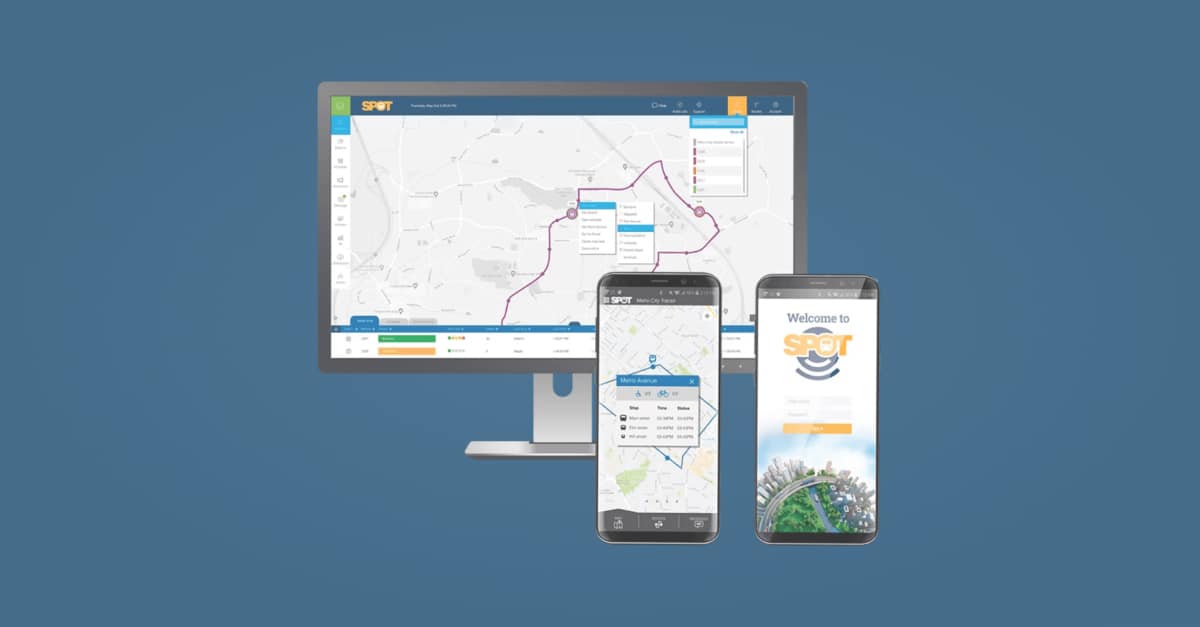
 SPOT: ETA’s Core Platform The SPOT™ ecosystem offers transit management solutions by providing a flexible, modular platform.
 SPOT: ETA’s Core Platform
  All Solutions
 CAD / AVL / GPS tracking
 Business intelligence
 Digital signs and kiosks
 Infotainment
 Automatic passenger counting
 Tally NTD Survey Software
 Tracking websites and apps
 Vehicle announcements
 All Integrations
 Demand-response and microtransit
 Fare collection
 Mobile video surveillance
 Pre-trip inspection
 Solar e-paper signage
 Vehicle health monitoring (AVM)
 Voice communication
 Transit
  All Industries
 Airport
 Campus
 Medical center
 Rail, streetcar & trolley
 Rental car
 Tourism & theme park
 Transit
 Case Studies
  Blog
Blog eBooks
 Wall of Love
 Careers
 Press
Press Events
 Support