The communication center is slowly changing from a reservations and complaint center to a reservations and education center.
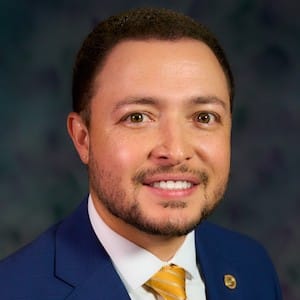
Stop Requested. This is Stop Requested. by ETA Transit. I’m Christian. And I’m Levi. These are real conversations with the innovators, operators, and advocates driving improvements in public transportation. Today, we’re continuing our series on ABQ Ride, looking at how customer experience, technology, and operations come together in paratransit service. Our guest is Robert Romero, transit. manager at ABQ Ride, overseeing Sun Van paratransit service and ABQ Ride, Connect microtransit.
We talk about how his background in call center operations shaped his approach to transit, and how ABQ Ride, transformed its customer service model from reactive complaints to proactive communication and education. Here’s our conversation with
Robert Romero. Welcome back to Stop Requested. Today, we’re continuing the series with ABQ Ride in Albuquerque, New Mexico. Uh, today we’re joined by a fantastic leader for ABQ
Ride, Mr. Robert Romero. He is the transit manager for the paratransit operations that covers, uh, the Sun Van service, uh, and ABQ Ride, uh, Connect, which is their microtransit.
service. So you’re in for a treat. We’re gonna hear, uh, some powerful insights from Robert. Robert, welcome to Stop Requested. Hi, how are you today? Great, and very excited about our conversation. I know part of our conversation is going to be about customer service, uh, and that’s something I have a lot of passion about, so I’m looking forward for, to this conversation.
So let me kick you off with this question, Robert. Uh, you know, for our listeners, people that, that are listening to this podcast, uh, that might not know you yet and, and your role, what you do at ABQ
Ride, how would you describe what you do at ABQ Ride and how your work connects customer service, Sun Van, rider technology? Could you tell us a little bit about that? Um, yeah, absolutely. So I am the, uh, operations manager for paratransit services, so I oversee everything Sun Van related.
And, uh, you know, Sun Van is the service that provides, uh, help for folks with disabilities that cannot use the fixed route to get the transportation to all of their vital needs.
Um, so it, it, it, ties directly into customer service, uh, i-in, in the way that we have to provide an excellent experience for that customer or client from the time they call in to make the reservation all the way through the ride process to and from their locations and, um, just do that very seamlessly, um, achieving, you know, their on-time expectations, et cetera. Yeah, that, that’s a, a, a part of the service that is very important. It’s a mandate, you know, the, the ADA, uh, service. And, and then you’re transporting the most valuable or, or, you know, fragile cargo, right? Like, you have elderly folks, you have folks with disabilities, you have folks that go to life-sustaining treatment, so certainly, uh, very important, uh, what you’re doing for ABQ
Ride. If you could take us back, uh, to how you started into transit, uh, what brought you to ABQ Ride? How did you end up at ABQ Ride? So, um, uh, it’s kind of a long story. Um, s- I, I spent about 20-plus years in the contact center industry, um, doing, uh, business process outsourcing and, um, really running other people’s businesses for them at a, at a cost savings. So, um,
I, I was, uh, a global operations leader f-for a company that, uh, carried clients like AT&T, Tom Shoes, Dow Jones, New York Post, and so those are some of my top clients. And I was actually the strategist and operational expert on, um, ensuring that that relationship with the client was successful, um, and that our employees were providing the utmost in customer service in every interaction with every one of the customers that our clients had.
Um, and then along came COVID, and most of my business was offshore, so I ended up, um, getting laid off at the beginning of COVID.
Um, went to school thinking everything was gonna be okay, even though I, I had seen the closures in Asia, um, and got to America and it hadn’t happened yet.
And, uh, went back, got my real estate, uh, certificate, and then all the federal agencies were closed with extensive wait lists. And so, um, I ended up homeschooling my kids, well, you know, doing the ho- the school at home with them, and, uh, decided I was gonna take on a government position, um, for the, for the sake of stability a-and everything else and make a difference somewhere else in the world than, than call centers. And, um, so I gave myself a two-year goal to get back to, um, where I was, except in, in the city of
Albuquerque. And, um, right at that two-year goal, I started on a job hunt, and ironically enough, um, there was a position open with transit for a customer service manager in the contact center for dispatch and the customer service call center. And, um, I applied for the position because that’s where my expertise was at the time. And, um, I got that position, and, um,
I, I, I’m not trying to toot my own horn, but my peers and, and colleagues have told me that I’ve moved mountains in that, in that area.
So, um, I, I really started the call center. We upgraded, um-Immediately, all of the phone technology, the call tree made it completely user-friendly. We reduced an average wait time to have your call answered from about ten to twenty minutes to under two minutes, and we’ve remained consistent with that with minimal staff. Um, we’ve increased customer satisfaction by implementing quality monitoring, best practices, um, employee development, and, uh, we really reduced, uh, any sort of attrition that doesn’t happen naturally. So we’ve had, you know, one retirement and, um, folks move or something like that, but it’s rare that we see any sort of behavior issues or people leaving because of dissatisfaction of the position.
So, um, really successful in that area and, um, yeah. So that, that’s how I got into the transit department. Um, after I worked with that, uh, last year, the position for Sun Van became available and, and, you know, ninety percent of the, the contact center is, uh, handling and helping people with reservations and concerns with Sun Van interactions. And so, you know, I have a really big passion for helping people, and that-that’s really why I do what I do. And so I decided to apply for the position and really take it to the next level a-a-and learn a different kind of operation, but at the same time, while learning it, inspire people to go above and beyond a-and really, um, I guess you could say polish the experience for all of our Sun Van clients, so that way from the phone call to the ride, everything’s linked together a-and this person is just being treated with the utmost in customer care. So, um, yeah, and then that’s when I started my journey here’ with, uh, transit as an operations manager for Paratransit
Sun Van. And, and you did bring a wealth of experience. I mean, from, from what you’re sharing with us, and it’s very important. I’ve seen those transitions from the private sector to the public sector and, and a lot of times that’s where you see those improvements, right? Like in the private sector, uh, um, especially when you’re big- working with big companies, you have a lot of these best practices established, right? So you came through customer service, but you brought that leadership and that experience to actually take the customer service, um, team to the next level. And, um, today, I hear a lot of agencies speaking about, um, the customer experience. There’s some of the large agencies, they even have a C-suite position for customer experience. And it’s all those, uh, opportunities or all those interactions where y-you’re interacting with that customer or the customer is interacting with the system, and how can you improve their experience? And it seems that, you know, with the whole time reduction, with, you know, a lot of these quality control practices, you’ve been able to do that. And then that, that helped you get to, uh, you know, your newest position, and, and congratulations by the way, uh, overseeing the entire operation for demand response. So congratulations for that. That’s, that’s quite an achievement.
Um, if you could tell me a little bit more about your day-to-day, uh, role. So how does it look like now that, that you’re over the Sun Van, you know, your, your paratransit service in New Mexico? What’s your day-to-day like? So, um, right now, my day-to-day is really navigating through, um, a-a-an enormous change model. Um, when I, when I first started, we were on an older software that, that just wasn’t, um, user, client, uh, just– O-overall just was, was just dated out, was not effective, we’re not accomplishing what we did. So, um, we, we moved into, uh, the RideCo software, um, which really automates more of the scheduling pieces and, uh, dispatch items.
Um, so my day-to-day role now is helping my operation through a paradigm shift of where everything was done manually. We didn’t have good visual on data to understand our, um, our ride, our, our, our ride flows or our business flow throughout the day, where our peaks, valleys are, even all the way down to our scheduling. Um, so
I’m helping folks to now process data, understand data, and make data-driven decisions. And also in that, we’re implementing quality monitoring for our drivers and increasing the amount of employee engagement we have. So I’m really working with folks on how to coach and develop, um, Sun Van chauffeurs on their ability to show, um, what we call CARING here, um, compassion, accuracy, respect, integrity, nobility, and grace in every one of our experiences with our clients.
Um, while in the background, making strategic decisions to make sure that we’re able to service the network in the most timely and efficient fashion possible.
So, um, not just to meet the expectations of our federal, uh, guidelines, but to really exceed the expectations of the client. So, um, you know, w-we’re, we’re doing everything with, with, uh, you could say a lo-lot of heart and a lot of meaning behind it, um, avoiding the whole thought process of, “Well, we just have to hit these numbers.” It’s, why do we have to hit these numbers and why are they important, um, at a people level? I think the people level is the most important, especially-
Right … when you’re on the paratransit side, right? You, you, you– And remember, I learned from a, a, a mentor of mine that when you’re in the customer service, um, business, you cannot just like people, you have to love people. You have to have a passion- Mm-hmm … for helping those people in the community.
Uh, uh, so, so tell me, how has-That experience interacting with the riders because y- you know, a lot of times you were on the phones, your team was on the phones speaking with them.
How has that shaped the way you think about the tran- the technology you’re now implementing to help them? Well, so, you know, the good news is, is getting to know, um, these, our, our, our clients in such a way as the customer service manager, um, you know, I, I know many of them by name call and request me, so, you know, I, w- we listen is, is what the big thing is, is they would speak, and we would listen, and our takeaways were, we need to know where our drivers are. We need to know when, where, where we’re gonna be. We need to know when we’re on our way. And so what we’ve really done is l- taken that feedback and implemented a process so they have all of the communication at the tip of their fingers, so they are able to listen to, y- you know, like we, we have one of our clients, and he’s blind, and h- he, the app actually lets him listen to where his driver is, gives him how many minutes it’s gonna be, who the driver is, when they’re outside, et cetera. A- and this person would often miss trips and, and that sort of thing because unaware of what’s going on, so really just improving that entire experience based on the feedback and what most of our, um, unsatisfactory feedback was from our clients over the phone. So I was able to take what I was hearing over the phone, the call center, which is kinda like the heart of the communications, bring that over to operations and say, “Here are the areas we need to improve with the people first mindset.”
Wow, that, that’s powerful. So pretty much all what you’ve heard from the customers, so really listening to what they’re saying is what helped you make a decision on the technology that you put in place. And, and now that you have all these different tools, uh, communication has improved, and then you give more independence to some of these folks that are, um, have some sort of a visual impairment, or they have a disability. They wanna be able to, you know, live their lives and, and, and be able to do what they need to do and, and being able to, you know, have these tools to get the information they need, uh, it helps in so many different ways, right? Like, they don’t have to be calling customer service.
You’re, you know, h- helping operationally by not missing trips, which if they miss a trip, then now you have to send another V, which just in- increases operational cost. I mean, overall i- is, is a great, uh, improvement. A- a- and with that, I mean, that sounds to be to be one of the biggest changes. But is there anything else in terms of, you know, a, a big change that has, uh, taken place since you started working at ABQ RIDE and, and applying some of these digital tools? Um, I would say the biggest change, so when we first rolled out, we were averaging a- around a mid-70s to high 60s, uh, on-time performance.
We’ve been able to improve that on-time performance to the high 80s, tipping into the 90% range, so that’s fantastic news.
Um, we have reduced the amount of complaint calls that come into customer service about lateness or anything like that because we’re communicating in advance if there is an issue, so folks are already aware of it. Um, and then in addition to that, I would say the other people first mechanism is our, our Sun Van chauffeurs. You know, they’re our front lines, and, um, by moving to this software, the stress level that these individuals had on an on-time performance or seeing a clock ticking down saying you’re gonna be late or you’re not gonna arrive in their window, just the ease of just get there, follow your route.
When you get there, your client’s already fully educated on what’s about to happen or what’s been happening, so any frustration’s not taken out on that driver if there is a late.
Um, we’ve seen a significant reduction in lates, so, um, the overall experience for the driver and the client has gotten better. So i- it’s really just, you know, im- improve morale overall for us and, um, also drivers now being able to understand what their statistics are and being recognized for a job well done and offered, you know, real-time coaching and development, um, to navigate the technology and, um, really have one-on-one time with supervisors and managers that’s all positive reinforcement has just kinda changed the overview of really the entire face of, of the operation. Wow, that, that, that’s powerful. And, and that’s the thing, like the technology has the ability to transform an organization. Like, when you choose the right technology that is addressing the specific pain points you’re having and, and it touches all your most important stakeholders, right? Like, this new round of technology, it touches your, uh, riders, which is one of the most important stakeholders you have, right?
The, the, the main purpose of delivering transit is for those customers. Without the customers, you know, nothing’s exist. But also your bus operators, right? They’re, they’re a significant stakeholder, and they’re given routes that are feasible. They’re, you know, kept in the loop. Routes are being updated proactively. You know, if people are, uh, uh, they’re gonna be late for some, some, uh, folks, they move them quickly to another trip that has more s- you know, slack, and then that way everybody’s more on time. And then one of the most important, of course, outcomes is that reduction of, of complaints. Like, people are really enjoying the service. Less people are having inconvenience, so good, good job for that. That, that’s great achievements for, uh, ABQ
RIDE. Uh, with your expertise in customer, uh, service, customer experience, I wanna ask you this question. If you could give one piece of advice to someone coming into transit customer service or, or the paratransit space, what would it be? So I, I would say coming into the customer service paratransit world, um, i-if you’re coming in externally, um, or even coming up, um, consider yourself in a China s-store where you are able to break all the dishes and go in and change the methods of this is how we’ve always done it. Listen to your customers and listen to your employees, and then take that feedback and start making changes, um, assertively, I would say i-is the biggest thing. Um, listen to the people and then say, “How do I solve this on, on a large scale?”
Because you might only be hearing from five or six people, but if you hear a trend of the same sort of feedback from those folks, that’s something for you to jump all over, because if there’s five people experiencing it, it’s likely your entire network. And, um, push through time constraints.
It can be done. You can, you can definitely move things along a lot faster, um, just by explaining the impacts of how this is going to improve the experience of the customer, how we’re going to improve safety, and how we’re going to reduce costs in the long run. So those are your big three, um, people first at the beginning. Yeah. That’s really good advice, Robert.
And, uh, you know, I, I, I… as you were s-explaining there, I, I was thinking, like, how do you balance the bull in a China shop type approach where, you know, you don’t wanna do things the same way over and over, um, especially if they’re not working, with some of the folks who in paratransit, your customers are going to be the, the most delicate, the maybe the most unaccepting of some changes. How do you balance that? So if we’re talking about breaking through to the clients and helping them understand why the changes are happening, um, you actually tell them the truth.
Let me tell you exactly what is happening right now, and here are the results that we see in the way we’re doing things, and why you might be comfortable with some of these processes. Here’s how we’re going to benefit you.
Um, it really took a lot of community outreach, a lot of preparing our, uh, our clients, um, well in advance before we started making changes. But r-the big thing was is actually taking those real-life stories that customers were telling us and using those to explain,
“Hey, you told us this, and as a result of saying this, we are now coming back to you with this solution. So we’re listening, and this is a result of actually what y-you’re needing from us.” Um, and then taking the time to make sure that that message is heard loud and clear, whether it’s written communication. Um, we have a great marketing and, uh, PI person. I-it, it’s just fantastic how much communication we’re able to get out to folks, um, and gain their buy-in going in, and just be prepared with, you know, what the questions are, and starting at a small scale, and then fanning out, so that way, um, you’re able to understand what you’re going into first, um, h-headfirst with some, some groundwork already in place, so you’re prepared to explain what’s most important to people by actually listening to them, if that makes sense. Absolutely. Yeah, and I think listening there is the key. I, I’m curious with this Ryco, um, implementation, is that something that y-you were able to get some feedback on from your customers and then come back to them with that solution of,
“Hey, this is, this is what we have planned”? And if you got positive and negative feedback, how you, h-how you work through that? Maybe the positive feedback is, is self-explanatory, but the negative feedback, I’m curious if, if there was something there that, you know, someone raised and said, y-you know, “This, this doesn’t work for me, and this is why,” and how you would approach that. So, so the thing here was is the benefits here were, were great because we weren’t taking anything away out of the normal process.
Uh, the client still had a way to contact us through phone, through email, um, a-and, and in any way they’re already comfortable. We were just adding in additional benefits, features and benefits that they could use in order to make it more efficient for them.
And then, um, w-we actually did have concerns, “Is this gonna work for me if I am vision impaired or if I’m hearing impaired?”
And so we were prepared to answer all of those questions. And I, I think another key piece to this was, again, having the scenarios ready that we’d already been stumped with, with the, uh, with the prior technology not working.
Um, and then actually taking the time to do the community outreach and go out and address lots of groups of folks that had concerns, you know. I, I, I worked with, um… we have a blind and, uh, blind deaf community that has ambassadors for them, and I worked with that ambassador group so we could come up with solutions in advance and work through items that they were concerned about and, you know, then the youth community and folks that maybe couldn’t afford a cell phone or don’t like the internet, um, that we could explain to them, “Hey, th-these are the things that we still have in place so that we’re, we’re fully inclusive.”
So I think theI, I guess that would, that would be the key was the inclusiveness, is really thinking about what was every opportunity, and then putting it out and asking for the feedback before we just made decisions, um, and taking that feedback to make the appropriate decisions. This episode is brought to you by ETA Transit. For decades, transit agencies have been locked into legacy CAD/AVL systems built for another era. Expensive upgrades, rigid architectures, and software that lives in server rooms instead of the browser.
ETA Transit is the modern replacement. Our web-based CAD/AVL delivers industrial-grade reliability with cloud-native speed and flexibility. It integrates with what you already have, replaces closed ecosystems, and gives your team a single real-time operational view without starting over. Replace legacy, move forward. The future of CAD/AVL is open. See it at etatransit.com.
Yeah, that seems like the best practice approach, uh, making sure that you’re involving the community early, and once those changes have been implemented, get-getting feedback afterward because, uh, you know, to your point, y-you, you don’t really know unless you’re being inclusive, unless you’re trying to think of all the edge cases that may arise, and talking with the folks who it may impact. So sounds like you’re, you’re doing everything right there. Um, y-you know, I’m, I’m curious about some of the other technology that you’ve, you’ve implemented over the, the last couple years. I, I know there, there are big waves that are happening at ABQ Ride. Could you speak to us a little bit more about some of the other technology that you’ve introduced and how that has impacted your, your service?
Yeah. So, um, some of the other technology we’ve introduced, well, obviously Microtransit has been really big for us.
Um, we took a look at Microtransit, and we added it in places where we had to maybe move or change service. But we also added Microtransit in places where, um… and that’s called our ABQ Connect, or ABQ Ride Connect,
I’m sorry. And we’ve added in places where we’re maybe not available, um, from a fixed route service, so that way all of our community can use it.
Uh, that has really helped and been a game changer for folks to get around in their general region where we don’t have as much fixed route service as that populated area needs.
Um, the other thing that we did, and I’ll go back to the call centers, is, um, we upgraded our phone, um, our, our telecommunication platform from desktop, uh, phones, very old school.
So everything’s digital, so it’s plug and play. Um, so if anything was to ever happen, our call center would never have to close. We can access it anywhere in the city, even from home if it was necessary in case of an emergency. Uh, we implemented, uh, a, a new call tree, and that actually gives folks a lot of options, so they’re routed appropriately and then a call back, an automated call back in the call center. So if you’re on the line, um, it tells you what number you are in line, and then at four minutes and thirty seconds into waiting in line, you’re offered a call back. And, um, we are able to return those calls if you select a call back at any point within, uh, thirteen to fifteen minutes on average.
So overall, just being able to contact us has, has definitely improved. I know there’s been a lot of other technology updates, uh, lots of surveillance around the city a-and that sort of stuff. So if there’s anything that’s happening, we are able to see it a little bit more real time, um, and respond more effectively.
Uh, but yeah, so those are some of the, the additional changes that we’ve made so far. Yeah. And some of the, the call center initiatives, they might sound small, but that’s, that’s a big deal whenever you are trying to get ahold of somebody, and maybe you don’t have the time to be able to, uh, stay on the, the phone immediate- you know, for that n-number of minutes, and you just need somebody to give you a call back.
So i-it sounds like you’re thinking holistically a-about some of the problems and, and challenges that your customers might ex- might experience, and then trying to provide those solutions.
Um, what about from a communications standpoint? I know you said you have a really strong marketing team, and, you know, they’re good about getting the word out.
What about other technologies or applications that, you know, allow, uh, customers to, to plan their trips or, you know, to see where the vehicles are? H-How are you, uh, able to, you know, maybe s-solve some of the customers’ problems or their, uh, you know, their questions before they even call a call center?
Right. No, perfect. G-Great question. And so, um, in my realm of things for Paratransit, uh, R-RideCo actually solves that problem.
So with the application for RideCo, it, it actually performs similar to a demand service like Uber or Lyft, where it’s telling you turn by turn and your estimated time of when your driver’s gonna be there. Um, it also generates a phone call, and it will explain, uh, thirty minutes in advance that your ride is anticipated the next thirty minutes. It gives you, um, an ETA, and it will also give the client the ability to see if that ETA changes and, um, will chime as soon as, uh, th-the driver’s getting close so that individual can start their exit process as they see fit to be outside waiting for the driver.
Um, a-and thenThey, it’s really nice too ’cause it answers questions for them in advance.
So the client can be on the Sun Van and see how many pickups are a- ahead of their next drop-off, so they’re not worried or panicked about, “Why aren’t we going to my location?
Where are you taking me?” It shows them the route that we’re going to take them in order to get them to their destination. Um, so yeah, that, that’s how we communicate. And then if we need to communicate proactively, we can communicate through that app as well. Um, and then our website, uh, it is just fantastic. Uh, it, it has so much information, and if you have questions, y- y- you can reach out that way as well. So with, with the technology you guys, uh, implemented, it seems that it addressed some issues, operational efficiencies, uh, you know, some of the communication on-time performance went up, uh, complaints went down.
So how has technology changed the kind of questions or issues your team is handling today? So technology has changed from,
“Where’s my ride?” Uh, you know, we, we’ve seen a, about a 20% decrease in people calling to schedule rides. We’re seeing more of a lift in people calling to get, um,
I don’t wanna call it technical support ’cause it’s not problems with the application, but more like technical training, right? So they’re calling and they’re saying, “Hey, how can I better use this?” Or, “Can you walk me through…” Um, sometimes they need help with password resets and those sorts of items. So, uh, those, the communication center is slowly changing from, um, I hate to call it this, but a reservations and complaint center to a reservations and education center.
And then what we’re also starting to see is, um, we have more efficiency in being able to process applications for Sun Van. Um, we do, our paratransit applications are available online, fax, or mail, and now primarily our applications come in online, and that’s processed through RideCo, um, as are many of our communication letters out to clients letting them know about, um, their no-show performance or if there’s been an issue or they’re about to expire.
So we have more proactive communication instead of reactive communication, so we’re ahead of the game. Wow. That, and that, that, that aspect, it, it’s very important, right? Like the eligibility, uh, portion and how you’re keeping your riders informed and, you know, making the service convenient or the process, but also making sure that the right people are, uh, being accepted to ride, uh, the service.
So there’s that balance of convenience and simplicity, uh, with the technology and, you know, having p- people that are not too tech-savvy to learn about the technology and, and do the, the educational piece, which is very important. Sometimes in customer service, we only focus on the customer service piece, and then we don’t take time when we’re with a person on the phone, and maybe they’re calling to make a reservation, like have you spoken with them about how they could do the self-service? They don’t have to wait on the line, and they can cr- you know, book their own trips. And, you know, making sure that you’re adding that educational component, it helps because it, it translates to a reduction of calls and improvement in customer experience.
So let me ask you this question. What does a customer, a successful customer experience look like to you at ABQ Ride? So a successful customer experience for us is an experience that exceeds the expectations of the customer. Um, so the ideal customer experience is whether you’re using the app or you’re using our, or, or you’re calling the call center for assistance or you need any help at all, that you have every tool necessary to get that help in the, uh, in the platform that you prefer. Um, you know, w- we wanna make sure that we are dependable, respectful, inclusive, we add value, and that we operate with excellence. Um, those are our values. And so every single interaction and experience, whether it be scheduling a ride or having a question, we should be delivering with those values and making sure that that customer is completely satisfied, problem’s resolved, um, on the first attempt to get anything, um, taken care of. Oh, wow, love that answer. A- and it’s so important, right? Like that the, all the employees are aligned with the values and with the missions o- o- of the organization, right? And that helps everybody delivers that high quality, uh, world-class customer service. Uh, so I wanna ask you, there’s our listeners, there’s people that work in your space, they’re in paratransit, maybe in customer, um, experience as well, and might be considering implementing new technologies at their agencies.
Are there any lessons learned from rolling these tools out that our agencies should hear? Like what, what advice or recommendations would you give them? Um, I would say our biggest lesson learned is don’t wait. If you can do it, get it on the table and start working towards it as soon as possible. Um, the future is already here, and our, your folks deserve so much more.
Um, th- gain buy-in by explaining the reality, even though your current reality might be kinda painful and fall on ears a little bit sharply. It’s okay to get that message out because there’s just so much, I, I guess, light at the end of the tunnel.Take a healthy risk is, I, I guess my advice
All right. So Robert, as we start to close, we have a few recurring items that we’d like to go through, some quick-fire questions and also some key takeaways. So first we’re gonna hit you with some quick-fire questions where we just ask short questions and, uh, we get y- what’s on the top of your mind. Sound good?
Sound good. Okay. All right. So your favorite ABQ RIDE tool or feature, what is it? All right. My favorite ABQ RIDE tool right now I would say is the RideCo app, and my favorite feature is, uh, the positive attitude of our frontline employees helping our customers. Excellent. That’s great.
What’s the most underrated part of customer service work? The most underrated part of customer service work is, uh, the fact that it’s called driving.
Uh, it is so much more than just driving, so it’s actually, you know, what the job description is, is probably the most underrated part because so much heart and soul goes into what we do in Sun Van more than just driving. 100% true. Completely agree with that. If you could improve one thing about ABQ
RIDE w- and you could just wave a wand and it would happen, what, what would it be? What’s on your mind? One thing I would improve is moving forward with, uh, a continuous improvement management structure that actually provides more data-driven performance management opportunities to help people be more successful and apply that to something actually measurable.
Excellent answer. I might know the answer to this one, but maybe not. That’s why we ask these rapid-fire questions. Uh, if, if you weren’t in transit, what would you be doing? Um, if I wasn’t in transit or was to retire soon, I think I would probably go into some sort of behavioral therapy helping, uh, either, uh, underprivileged or, or troubled youth or people with substance abuse problems. Wow, okay. All right. Um, well, I’m glad I asked the question because I did not know that answer.
Yeah. I, I was, uh, you know, ma- that’s what happens when you make assumptions, right, based on, uh, prior experience. Um- Yeah … yeah, yeah. Interesting. Thank you. Thanks for tho- those excellent answers. So I’ve got several, uh, key takeaways. I’ll try to keep this brief, and you let me know,
Robert, if I got any of these wrong or if I missed anything, okay? Okay. All right. So you and ABQ RIDE have clearly e- embraced technology, uh, but it’s not technology for technology’s sake from what I gather. It’s really tech to make improvements to your system, to your service, to the customer experience.
Uh, I, I think some agencies can take a lesson from that, right? Instead of just, you know, kinda looking over the neighbor’s fence and saying, “Hey, what do they got?” It’s, “No, we, we know what we need to do here because we’ve talked to the customers.” And that leads me to my, my second takeaway that I got, which is that you’re very inclusive. You involve the community before, during, and after, which I, I think is a tremendous practice that, that you all are taking on there. You have a lot of proactive, uh, communication with the, with the community.
And o- one thing that you said that I, I, I made a specific note of and I, I feel like it’s, uh, you know, one of those quotables that we can add to our list for Stop Requested, but it’s r- going f- your, your call center department or reservations department is going from reservation and complaints to reservation and education, and that is a fundamental shift, like a paradigm shift I would say for our industry. I don’t think that many, uh, of the agencies that we’ve spoken to or that I know of, uh, consider it an sort of educational center, and that’s what you’re trying to do, right? Is to inform them how they can better use the, the apps or the technology or the service. Lastly here you said take a healthy risk. I,
I love that. I, I think that is, it’s valuable to take risks. Sometimes you do have to take risk, and I, I know that there is some positive in being conservative, but when you, when you need to strike, you, you need to, uh, you know, take that next step and be informed about it. Did I miss anything?
No. Sounds like you captured it all. Okay. Excellent. All right. Well, this has been a wonderful conversation, Robert. Really appreciate your time today. I just wanna ask as we close out here, Robert, if you can tell our audience where they can go to follow, uh, you, maybe connect with you, or learn more about ABQ RIDE and all the a- amazing initiatives that you have going on.
Yeah. You can find us at abqride.com. Um, you can go to the City of Albuquerque, website and, uh, just simply search transit or transit Albuquerque on Google, um, or any other search engine, and, uh, we’ll pop right up there. Perfect. Well, Robert, again, thank you so much for your time today. It’s been a wonderful conversation. We’ really appreciate it. And thank you to our listeners for tuning in to another episode of Stop Requested. We’ll be back next Monday with another episode.

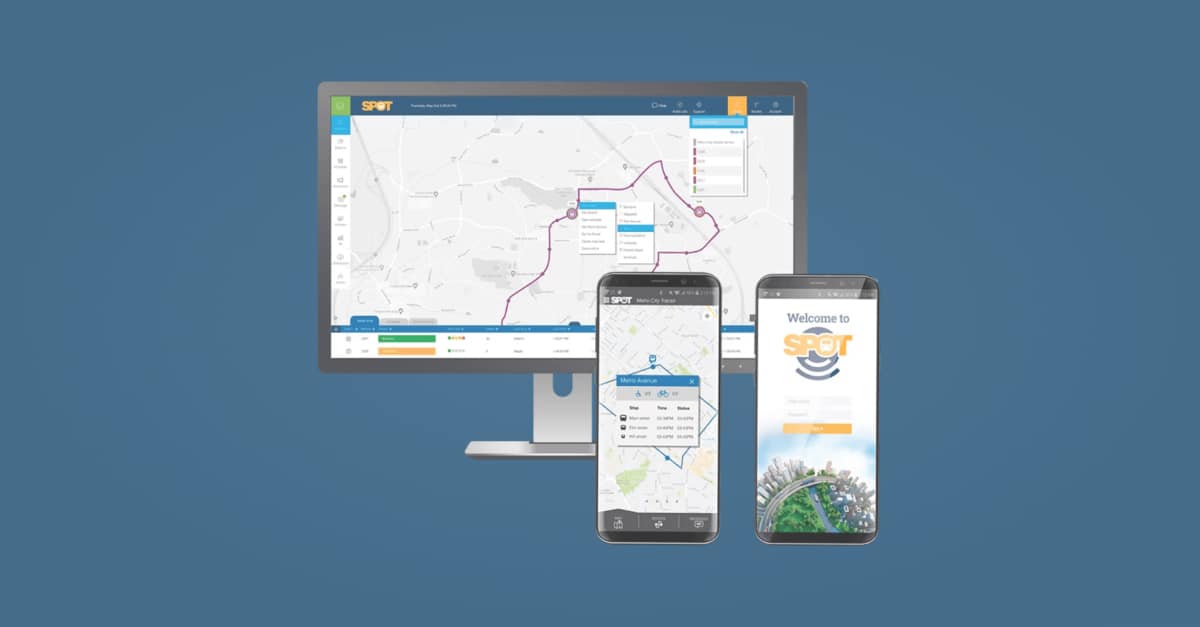
 SPOT: ETA’s Core Platform The SPOT™ ecosystem offers transit management solutions by providing a flexible, modular platform.
 SPOT: ETA’s Core Platform
  All Solutions
 CAD / AVL / GPS tracking
 Business intelligence
 Digital signs and kiosks
 Infotainment
 Automatic passenger counting
 Tally NTD Survey Software
 Tracking websites and apps
 Vehicle announcements
 All Integrations
 Demand-response and microtransit
 Fare collection
 Mobile video surveillance
 Pre-trip inspection
 Solar e-paper signage
 Vehicle health monitoring (AVM)
 Voice communication
 Transit
  All Industries
 Airport
 Campus
 Medical center
 Rail, streetcar & trolley
 Rental car
 Tourism & theme park
 Transit
 Case Studies
  Blog
Blog eBooks
 Wall of Love
 Careers
 Press
Press Events
 Support