I always tell the bus operators that they have the hardest job in transit, not the CEO. Stop requested. This is Stop Requested. by ETA Transit. I’m Christian. And I’m Levi. These are real conversations with the innovators, operators, and advocates driving improvements in public transportation.
Our guest is Schneider St. Preux, general superintendent of bus operations for Miami-Dade County. We talk about what it. takes to launch a fully electric
BRT corridor from an. operations perspective, including training operators, on. new vehicle technology, managing double-sided boarding, and adapting control center operations. Schneider also shares his path from bus operator to executive leadership, lessons from Leadership APTA, and how Miami-Dade is approaching electrification, safety technology, and operator development. Here’s our conversation with Schneider St. Preux. We have our guest, uh, Mr. Schneider Saint-Prud. He’s the general superintendent of bus operations at Miami-Dade County. DTPW, overseeing one of the largest US transit fleets with BRT expansions, operator training, and safety initiatives. Uh,
Schneider, how you doing this morning? I’m doing great, Christian. How about yourself? Very good. And, and we’re very excited to have you on the show, and you know, share with us a little bit about, you know, Broward, a little bit of Miami-Dade, and your just… your transit career, right?
You know, from Broward County promotions to now leading Miami-Dade’s bo- uh, bus rodeos, BRT route cuttings. Uh, it’s, it’s just, um, you know, really exciting. Let me start with, with this question. From your early roles in Broward, uh, County and now Miami-Dade superintendent, what key experiences shaped your leadership in high-volume bus operations like the one in Miami? Thank you again for having me on, uh, on this podcast. Some of the experience that kinda shaped up my leadership is pretty much starting from where I started at. Started off as a bus operator at DTPW in two thousand twelve.
Drove for a total of three years as a bus operator. I had an opportunity to grow within the agency, had several promotions, and I left one year to Broward County to be the director of bus operations, which was an exciting time and an opportunity for growth in understanding, uh, a different transit system. I was afforded an opportunity to come back here at Miami-Dade Transit, where it all started off, uh, as a bus operator, and I had an opportunity to work with some great, great bosses. Kinda took a little bit qua- leadership qualities from several of these, uh, leaders that I worked under, and I was able to kinda shape and mold, uh, my leadership style towards, uh, some of the successes that they had. It’s been a great, great, uh, career so far. Been in transportation for a total of thirteen years, and I hope to be here much, much longer. Uh, it’s just been great, great, uh, great opportunity. So thank you for sharing that. A-and I think one of the things you shared with me is you started as a bus operator. Could you tell me a little bit more of those early experiences when, when you first were driving the bus? Uh, did you ever, or did you always, uh, had in your mind that you were gonna become, you know, a leader within the transit industry?
Or, you know, what was the thought process back then? Everybody has a particular story how they got into transportation. My story is, uh, unique, but, you know, very different as well, uh, but kind of falls in line with what everybody else went through. Um, tried to get into the police department, believe it or not.
Wanted to be a police officer. Yeah, try to play cops and robbers in a sense. Things didn’t work out in that fashion, so just tried to get into the county and tried to find a segue into, uh, leading to the police department. After, um, listening to several testimonials, working with a lot of other bus operator employees, and also working closely alongside management,
I figured that this would be a good, good career path. I saw a lot of the success from my managers, my managers and the leadership positions that they had, and I said, “You know what? Why not me?” Sat and then was patient, extremely patient, and waited my turn and was afforded several opportunities to get promotions. My experience and my time as a bus operator was absolutely fun. I mean, we did have some challenging days like every other bus operator. Nonetheless, um, it was a good, good experience just to see how things worked out from the frontline perspective. And Schneider, you’re clearly making some moves in the industry.
I, I know that before Miami, you were at Broward. You were awarded the 40 Under 40 from Mass Transit Magazine, and my understanding is that you just completed the Leadership APTA 2025. You know, that, that’s a lot of recognition, and it’s because you’re putting in the hard work. I’m, I’m curious, how has that influenced your way in leading a team? Yeah.
So, um, you know, thank you to all my, uh, superiors ’cause, um, uh, my work, my hard work and my dedication that I put into the transportation industry didn’t go unnoticed. My bosses wanted to recognize me. Uh, they figured that I was a, a bright and shining star in a sense. They recommended, uh, that I participate in Leadership APTA as well. So Leadership APTA was a great, great program. I would suggest any individual that’s looking forward to being a CEO at some point to join that program,
’cause that program, how it’s designed, is designed for individuals that would have the mindset of a CEO, take them through different type of, uh, programs or skill sets, or even, um, have conversation with CEOs, general managers, and C-suite individuals just to have that engagement and understand what is the day-to-day operation at those levels.So, uh, nonetheless, you know, got an opportunity to also meet up with thirty-three other individuals within the transit industry, and which I can call them my brothers and sisters for life. It worked out, uh, learned a lot, um, had an opportunity to finish up a capstone project, which was based off of capital project delivery. I got outside of my comfort zone, participated in that. We got an opportunity to finish that up and present our capstone in front of several industry leaders.
So it was a great, great opportunity, and I truly appreciate it. And, you know, I’m, I’m thankful again for being recognized as top forty in, uh, under forty in twenty twenty-four. These are awards and recognitions that you earn, and you, you put in the hard work clearly. I, I’m curious when you say that you put yourself outside of your comfort zone, what was that in reference to? What, what was uncomfortable about those situations? And also, I’m, I’m sure rewarding at the end of it.
Everyone’s responsible for being a part of a capstone project in a leadership APTA. So, um, we are– we identify pretty much the topic that resonates within the transit industry or topics that would be appealing to the mass in transportation. I’d never dealt with capital project delivery. I never had these type of conversations. Well, I did have conversations, but didn’t know the intricacy of, of capital project delivery. My group was able to interview several CEOs and different industry leaders and to talk about some of their impacts and how effective these type of capital project deliveries are. So I know one of the, the subtopic of it is striking the balance between staffing. So want to ensure that you have the right people on board, on the team to deliver some of these projects. And once we were able to complete that,
I can now say that I understand how to deliver a capital project in being in a leadership role. That makes sense, you know, from, uh, from your perspective, more on the operation side, that the capital projects, uh, have a, have a different rhythm to them, I, I’m sure. And, you know, it sounds like you persevered, pushed through that along with your, your colleagues a-as a part of that APTA leadership program. I’d like to kind of drill into some of the bus operations in Miami-Dade County because you obviously play a really large part in that, and there’s, you know, so many projects that are happening, uh, including the South Dade BRT that just opened up. With any new route or service that you offer, there are kind of bumps in the road. There are some challenges.
You have some successes, and it can ebb and flow. I, I’m curious how, from an operations perspective, how, how have you a-adapted to this new service? So, um, so far the service have been, uh, pretty, pretty good. So, um, this is, um, an existing corridor. It’s a twenty-mile corridor in our most southern location in, in Miami, where it starts from Dadeland all the way down to Florida City. We always had this existing corridor. Uh, we were able to change it to a BRT corridor, and
I would say, and, you know, this relatively good information, uh, that this is the only, uh, fully electric corridor in the
United States. So, um, the transition has been quite a journey and a lot of learning curves for our bus operations staff. So our control center and our transit supervisor had to actually, uh, learn a different style of managing a type of, uh, service.
Uh, a lot of people don’t understand or don’t know that BRT is a different type of service compared to your regular service. For the most part, uh, people have been adapting, um, our staff, uh, and also the passengers have been adapting. So we’ve been getting a lot of initiatives done, um, as it relates to training support staff, training our actual frontline employees, so they could actually do great in providing, uh, this type of service. Can you provide some examples there of, uh, some of the, the training initiatives that you’ve had to undertake as an organization as a part of the South Dade
BRT? We purchased a hundred electric New Flyer buses. Uh, sixty of those electric New Flyer buses had double-sided doors. We never had double-sided door buses in our system before. So we had to, um, actually train our bus operators how to actually, uh, pull up two platforms and service it. We have fourteen BRT, dedicated BRT stations that are essentially like train stations. So they have a center platform where the buses pull up. Sometimes you could have up to two buses on one side going in opposite directions, and those bus operators have to service them and also have to remember, “Hey, look, I got doors on left side and I got doors on the right side.” The passengers have been benefiting based off of the trainings that we have provided to our bus operators. Also too, with some of our control– our controllers, we have a new SCADA system that was installed in BRT where they’re managing all of the traffic signal alarms as well as, um, signage, wayside signage in these actual stations. It took a lot to train these employees for them to understand this new type of services that we were providing. And one of the things you mentioned is, is fully electric, right?
So the way the drivers operate those electric buses have a great impact. Before this BRT services started, you already had electric buses running in Miami-Dade.
We have, um, sixty-nine total Proterra buses that we were running, so operators were relatively, uh, used to operating these buses. It’s definitely a different way to drive these buses. You train operators about regenerative braking, which actually feeds power back into the buses. It wasn’t too much of a learning curve for operators that already understood, uh, what e-electric buses were.
But now there was a new layer of, uh, training that we had to do where you have actually BRT, where you’re opening up two sides o-o-o-of a bus to service these BRT stations. That’s just remarkable, and it continues to grow the knowledge that these drivers have in, in how to operate service. Uh, and for the community has to be, you know, transformational, right? Because, you know, BRT is, is almost like having, you know, subway or, you know, like rail service, right? Like, it’s, it’s quicker, it’s direct. You have, you know, they’re controlling lights, uh, so, you know, travel time should be less and, and you have fewer stations. Uh, so far, have you seen a good response ridership-wise? Yeah. So that, that corridor normally has about ten thousand riders on a weekday. We have been seeing a actual increase on that corridor, so it’s about, like, twenty-five hundred more daily riders on the Metro
Express that we have. So we have two different routes, which one, one’s called Metro Express 601, and then we have a local route that’s called the 602. From the previous express service, we’re up about ninety-six percent on our, on our ridership, so which is fantastic. The Metro Express already met the exceeded, uh, expectation of the department system-wide. We’re doing relatively good. Our on-time performance has been doing well for that c-specific corridor, so we’re seeing a lot of good results, and the passengers are seeing good results. Based on the community engagement that we put forth, the strategic communications that we had launched pre, uh, launching of the BRT, passengers got that information out there, and they are reaping the benefits of it. A-and that’s a result. That’s not by chance. That, that is a result of having professional bus operators that are well-trained, that know how to do what they do because it, it depends largely on them doing their part. Uh, so, you know, I would say that on-time performance a-and, and service success so far, I would imagine a large degree comes from them and their skills driving their buses. Yeah. So I wanted to ask you about your Bus Rodeos. We know these are really good at testing driver skills, uh, building morale.
Could you tell us about Miami-Dade’s state finals push and what it means for operators’ excellence? We just recently had our Bus Rodeo a couple of weeks ago, January ninth and the tenth, where we were able to get some of our exceptional bus operators to compete. You know, the operators have to go through a formal criteria to ensure that they are meeting the standards so they can actually compete. And so on the ninth and the tenth, we had two days’ worth, so we had close to forty operators competing this year. We had some good, good results at the end. Our guy, Joseph Esquilin, he has won six times in our, our local Bus Rodeo down here at DTPW. Oh, wow. So he will be competing at the state this year, and I look forward for him to bring some hardware back home. I know that he had won state finals, uh, at least once. I think there’s always three of the top three guys that’s always jockeying for position at the top three in the state of Florida. So I know one guy’s from JTA. I think the other guy is from Lynx, and don’t quote me on that, but I think he’s from Lynx. And we have our guy, Joseph Esquilin. So those guys, um, they g- these guys are doing phenomenal work. You’re always picking up passengers, dealing with different type of people on a daily basis, and we’re… and they’re responsible for driving an equipment that costs over a million dollars. You know, doing all of that is hard enough. Now, we’re telling them to showcase their skills that they put forth on a daily basis, and you know,
I really appreciate them. I always tell the bus operators that they have the hardest job in transit, not the CEO, because we’re deal, they have to deal with a hundred and eighty thousand, uh, boardings a day. That’s, uh, almost a hundred and eight thousand different passengers on a regular basis. So to go out there and showcase your skills, parking your bus parallel to a curb, doing alley docks, backing the bus up, and going through barrels,
I mean, you know, that’s, that’s phenomenal. So I, I give kudos to all of the guys, the men and women that go out there and doing their work on a daily basis and coming out and showing their, uh, showcasing their skills.
Yeah. That, that’s definitely remarkable. And you know, it- it’s those complex trends that operations, right, like, where the drivers are challenged. I remember hearing from drivers sometimes that, uh, they will be assigned to drive an articulator bus, and they would say like, “Uh, no, I don’t drive that bus. Please give me a regular bus or switch me to another route.” Like, these drivers… A-and I remember, you know, o- of one of my former mentor, uh, mentors, uh, Mr. Clinton Forbes, he would say that’s what, uh, being a tr- a professional t- uh, bus operator means. That’s awesome. Yeah, yeah.
It means that you can just grab any of these e- you know, equipment, regardless what you’re given, if it’s an articulated bus, if it’s a small bus, a-and, and you’re able to professionally operate out there a-and, and perform these different maneuvers, which a lot of the times you have very sharp turns. I mean, it’s, it’s difficult.
The small distance they have from hitting an object, and these drivers have the, the surgical precision, uh, of being able to drive, and to be able to compete and get to, actually get to the finals, and you know, your bus operator that has won several times, I mean, that’s remarkable. I would imagine, let me ask you this question, you as a former bus operator, when you’ve seen them perform and do some of these things, you’re like, “Man, that was, that was… I would never do that. Like, that was crazy.”
You know what? I, I did compete in the bus rodeo, um, I think my third or second year here. I did not end up at the top, but nevertheless, uh, I find myself, uh, wishing that I could have another opportunity in competing again, so I’m so competitive. But nevertheless, man, these guys are fantastic. This is what they do.
This is their bread and butter. I commonly joke and say that these people could do this in their sleep. Driving a sixty-foot bus, um, which has a, a better turning radius than a forty-foot bus, and driving a forty-foot bus, driving it with passengers, driving it with different type of traffic, is a real good skill. It’s, it’s a, it’s a real, real skill. So being a professional bus operator is just, is more than just, you know, driving the bus, right? It’s operating the bus different, during different conditions, uh, dealing with passengers on a daily basis, and, um, also trying to maintain a schedule. So kudos to them. I wish I could compete again, but you know what? I, I let the other folks do it that deserves to do it.
This episode is brought to you by ETA Transit. Legacy CAD/AVL systems were designed when on-prem servers were the only option. Today, agencies need systems that leverage modern technology, that are faster to deploy, easier to use, and built for constant change. ETA Transit was built to replace the old model. ETA’s web-based CAD/AVL platform works in any modern browser, connects seamlessly to what you already have, and eliminates vendor lock-in. No server rooms, no fragile workarounds, just a modern command center that scales with your operation. The next generation of CAD/AVL is here.
Learn more at etatransit.com. So Schneider, in, in addition to leading men and women at your transit agency as a part of your, your operational organization, you’re also, you know, leading in the community and trying to inspire kids to know about transit. Can you explain to us, you know, some of the initiatives that Miami-Dade County, y- and you and your staff in particular take on to make sure that you’re evangelizing public transportation?
Well, some of the things that we do here in our d- department is, um, go to career fair events at, uh, local high schools, where we not only get to tell employees about, uh, jobs within transportation, but actually take a physical bus out there and telling, uh, children about the benefits of, uh, riding the bus. To get into the job aspect of the job, some people only think that when you talk about transit, that it’s about bus operator. No. There’s several different functions within transportation that would allow somebody to actually get a career. So you talk about engineer, you talk about, um, uh, financial officers, you talk about clerical staff, you talk about transit supervisors. I mean, all sorts of jobs, right? You talking about director, even position like mines, that is general superintendent of bus operation. So there’s different layers where imp- uh, students or kids can actually make a career out of, uh, transportation. We also, um, commonly do a, a showcase where COMTO, uh, also gets included when they have events where they bring out a lot of college students during these, uh, days where they show, show our metrorail system, our bus operation system, and talk to them about career opportunities within transportation as well. I know COMTO always, um, play a huge role in inspiring, um, students to, you know, focus on a career in transportation, and they also give out scholarships for those that have interest in transportation.
So we do a lot of community engagement with students and kids just to make sure that they understand the value in transportation and also the career path that they could, uh, also s- choose, um, if they would like to get into transportation.
And I can really appreciate that message too, because n-not many people think about a career in public transportation, and if they do, like you said, they might think of bus operator or train operator. Uh, I’ve shared this story on the podcast before, but I’ve spoken at my son’s school. I did a reading event there, and I happened to share that I worked in public transportation. They immediately asked, “Oh, so you’re a bus operator?” I’m like, “Mm, no n-not quite. I, I worked in planning, and here’s how planning, you know, helps operations.” Right. You’re right. A lot of people default to, uh, the operator role when there are so many other lanes to be able to go down. Absolutely. So even, like, you know, I,
I tend to tell people my testimonial, you know, talking about how I didn’t really wanna become a bus operator, but I landed on a great career that afforded me to, uh, get into the position that I’m in right now. So look to me as a person, uh, or a scale where you could move up within transportation and, uh, model what I have done, right? My testimonial alone is a good, good, uh, recruitment tool, uh, just to show people, hey, you could start off at the bottom and then work your way all the way to the top at some point. So we have several individuals within the transportation industry that have the similar, uh, stories as well. I have a lot of my cohorts in leadership, after, uh, had the same story where they started off as bus operators and are actually running se- uh, agencies right now. You know, it’s a great, great career, and I hope more students or kids could gravitate to transportation. Yeah. We, we hope the same. We need, you know, more transit professionals to come into, uh, our industry. There’s folks retiring, uh, leaving the workplace, and, and we need new people coming in and helping us, you know, transform, uh, transportation i-i-in
America. Asking about, uh, i-innovation projects in Miami, there’s, there’s always something happening, uh, in Miami. It’s a large metropolitan area. It’s only growing, and the demand to, you know, keep up the pace is, is there.We just discussed the BRT expansion. I know you’re constantly trying or piloting technologies. Let me ask you, what emerging transit technologies, like maybe autonomous shuttles or real-time analytics, you know, you’re implementing, uh, electrification. W-which of these technologies are you most excited about, a-and how are they helping improve operations? The, the electrification, is one of the, the biggest things that, uh,
Miami-Dade has been pushing on. I mean, we took an aggressive approach by purchasing over 169 buses, right? Because this is a new n-technology, but obviously we understand the impacts off of, uh, bus electrification, which is always a good thing. Obviously, we do also have a bus garage that’s getting ready to open up, and that’s going to be a fully electric garage. So we’re even going to be having the pool vehicles will be fully electric as well. That’s been a, a great, great, uh, project. Uh, right now I think we’re in line of schedule to open up sometime between mid this year, uh, late this year, so somewhere in that, uh, in that line.
But the electrification of the buses at Miami-Dade County has been pretty, pretty decent so far. I think that there still needs to be, uh, more, uh, I don’t wanna say study, but more of a experience in, um, electric, electrification on buses just so we could see better results, but nevertheless, it’s been, uh, uh, pretty decent so far. Got a couple of also, um, some new, uh, things that we’re trying out as well. Um, I know some transit agencies have been piloting some mirror cameras, uh, which would be phenomenal for the safety of our bus operators. We, we are piloting some of these, uh, mirrors as well. Hopefully, these go well. Um, we know that the state is trying to, uh, make a push in removing some of these big, bulky mirrors that’s outside of buses because, uh, everyone knows when you have mirror contact with a bus shelter or with a light pole, it disrupts service.
So that type of new technology, would not only be beneficial for our bus operators from having accidents, but it would also, uh, help the reliability of our service for our buses to keep moving. And, and you have to replace a bus, right? Like, if you have a mirror strike that knocks off or, or destroys the mirror, right? Yeah, you actually have to replace the bus in service, uh, have that bus to be either towed back or, uh, dri-driven back with, with an escort. But it would be great, great and beneficial if we don’t have to spend as much money to replace some of these mirrors. Now, some people may say, “Well, these mirrors doesn’t cost that much,” but over time, right, you will see that the cost of mirrors go up. Um, generally speaking, you know, uh, we have mirror strikes almost, you know, every other day or, you know, at least some, at some point, uh, throughout the year because you have new bus operators that you bring in. These operators are not, uh, relatively familiar with some of all of these bus stops, uh, along different corridors or what have you. You know, accidents are accidents, right? These are not things that happen intentionally, but if you advance and put technology in the bus stop, buses now where they could just depend on these mirrors, uh, cameras, that’d be beneficial to everyone. Yeah, and, and it’s less blind spots. And, and, and it…
One of the things I do recall, uh, from when I worked at Palm Tran and, and looking at the data, right, in our accident records, a-and to your point, like, m- uh, mirror clippings or, you know, mirror accidents are, are constant a-and it’s because they are, they’re bulky, and they kinda like stick outside of the body of the, uh, bus.
And you know, what’s a-also, uh, sometimes frustrating when you have a transit hub is that you have several of your buses, and sometimes it could be a bus-on-bus side, like kinda like sideswipe or, you know, where the mirrors, they clip each other’s mirrors, and now you have two buses that you have to replace. And to your point, it’s not the cost of the mirror, it’s the disruption to the, to, you know, the bus operator, to, uh, the riders in the bus or have to wait for the transit bus. Like, it could be very disrupting, and that could, you know, be, uh, very positive for transit operations just not having that issue anymore. Absolutely. And that’s what, you know, that’s what the focus is on. I know I’ve been talking to a lot of colleagues throughout the state. Well, I just started a quarterly meeting with individuals that’s at my level, uh, as director of operations or general superintendent of operations, and we have these conversations, and one of the topics is about what’s new at your agency, what are you guys doing that’s different, things that we should probably keep our eyes on or what have you. And I know the mirror technology is been a focus now in the state of Florida where we got a couple of transit agencies are piloting, uh, these mirrors. So hopefully, uh, things work out. We’re getting some real good feedback from our bus operators, and once we push that up, we’ll hopefully get a change throughout our state where, uh, we could rely on these new advanced technologies for the betterment of our system.
Let me ask you one more question about electrification, uh, just jumping back into that. Have you seen any, uh, benefits in terms of, uh, maintenance and, you know, energy consumption? And I ask that question for two reasons. I know, uh, when, uh, we were working on building the zero emissions transition plan at Palm Tran and assessing the benefits, one is less maintenance cost, so over the life of the bus, you should be saving a lot of money on like, you know, changing fluids because you don’t have to do any, and, you know, a lot of the other components, like the brakes and, and so on, uh, you’re not switching as much as, you know, with diesel buses.So ha-have you seen that with your experience thus far with electric buses, a reduction of maintenance cost? And then the second piece is energy consumption. One of the things that I learned is that diesel bus, the efficiency is about five miles per hour. That’s what you get on a diesel bus in average. And then with electric bus, of course, competitively or in comparison, it’s about 20-something miles per gallon that you will get an electric bus, making it more energy, uh, efficient. So with that, ha-have you seen any of those things to be true for Miami? Many transit agencies are kinda dealing with the same challenges, so we all, all have sort of the same experience when it comes to electrification or these electric buses. So it’s still new technology, and there’s not enough information that’s out there. So we’re kinda being like the, the test dummies. When we do have these buses in service, we are seeing a good return on the investment as it relates to buses. Again, too, we have to keep in mind that diesel, diesel buses and, uh, hybrid buses lasts l- a lot more longer, even CNG, ’cause most of our fleets now are CNG.
These buses could actually stay out a lot m- much longer, uh, than a, an electric bus, and these buses break down less than a electric bus. So again, you know, don’t wanna sit on a soapbox and talk bad about electric buses. A-again, it’s a new technology. Everybody’s still testing it to try to ensure that they could get the most out of them, and when those buses are running, they are great. We see great results.
We see, uh, less usage on, um, uh, the actual power supply. Um, our operators are learning how to drive these buses, where they’re not draining the whole entire battery system. When you was driving a diesel bus, right, it’s straight gas, and you would burn through a lot of the fuel. We’re still trying. We’re still testing. Uh, we s- we’re still, you know, driving these buses on a regular basis. We have 100 new electric articulated buses, and those buses our operators are getting used to. We get good reviews from our passengers as it relates to the comfort, the ride of these buses. So that’s pretty much it, and again, I’m not trying to get a, a- … you know, get on my soapbox about how poor electric buses are, are operating. Yeah, it, it’s a trade-off, a- and I know a, a lot of bus operators do like them because they’re quieter, and they have power.
Like, you have to learn when you’re hitting that go pedal, right? Like, there’s no gas pedal no more, but you know, that go pedal, not to hit it too hard because it will go. Yeah. Yeah. Compared to, like, a diesel bus, a combustion engine, it, it just, it, it slightly starts, you know, gaining that, uh, acceleration, versus e- electric buses, they really go quicker. But it’s just have to be careful and learn the, the, the braking. So that, that’s very interesting.
Let me ask you just another question. Beyond the BRT service, uh, what other, uh, innovative projects or partnerships is the DPW pursuing, uh, that could inspire other agencies? What’s some of the biggest impact do you foresee? I know that the department is working with co-locating counties to roll out our northeast corridor, where we’re going to be having a community services. I know that the department heads, uh, the, uh, the leadership team has been constantly working on that. Once we get that up and rolling, I think that would be a huge impact for our residents on the northeast part of Miami-Dade County, as well as individuals that’s on the northeast portion of Broward County and Palm Beach. So that’s one of the biggest initiatives and innovative steps that the department is pushing for, and can’t wait to see that roll out. All right, Schneider, we’re rounding out the end of our podcast here, and again, really appreciate your time. One of our recurring segments on Stop Requested is a rapid fire. So I’ve got a few questions that I’m just going to throw your way, and, and let’s see how you do. Sound good?
All right. Not a problem. Let’s get it done. Uh, so what’s the project that you’re most proud of, and why? Right now, the proudest project is the rollout of the BRT system. Um, it’s actually a new mode, and I, the operations had an opportunity to be in depth and involved in. So it’s been great so far, the training aspect, just seeing the passengers are happy about it. That’s probably been the proudest project that I’ve been a part of. Do you have any advice for young transit professionals? Could be folks in operations or in other areas that, that you could share with them, maybe would help them along their journey. Yeah.
First, I always tell people this, you gotta love what you do. Once you love what you do, you have to understand what you do. Me being sort of a transit nerd, always understanding or try to get, gain more knowledge in the industry, has helped me, uh, be successful and move up within my, um, agency. And it also opens up the opportunity that, or it, it expands your horizons, where you get an opportunity to even go to different locations if you please to.
L- love what you do, uh, and know what you do, and that will take you a long, long way. What’s your favorite transit innovation? Right now, uh, there’s been several, you know, working through some of these artificial intelligence systems, um, like, uh, these drive cams, you know, these mirror, these mirrorless cameras. Uh, these have been some of my, the good innovation that I look forward to moving forward ’cause I think these will kinda make our transit system a lot more safer, and it would let, allow us to pro- provide better quality service to our passengers. And finally, what’s your favorite transit system, other than Miami-Dade?
I hope nobody takes this personal at all. But yes, Miami-Dade is one of my favorite, right? But I, I love WMATA and New York
City Transit ’cause, uh, New York City Transit, you know, I got an opportunity to go there, uh, this last past July, and, and got, you know, to ride the whole subway system. It was very, very pleasant. Although, you know, you got a lot going on on the transit system in New York City, it’s, uh, very, very reliable.
Um, you see a bus on every corner, you see a train on, uh, at every stop, so, uh, that has been, uh, very, very good. And also WMATA, right? WMATA also has a large transit system. You know, using the applications, using their transit system has been good. Obviously, both of these transit system has been around forever and a day, right? Those have been good transit system that I really, really like, and it’s been very, very reliable to me. So another recurring segment that we have, Schneider, on the podcast is some takeaways. Um, as you were speaking, we were having our conversation, I wrote down a few notes here. You feel free to give me some feedback on the notes if I got them wrong, or if there’s anything that you would add. Starting at the bottom doesn’t mean that’s where you’re going to end up. You can work yourself up to a higher position than where you start if you set your sights high and participate in leadership training. Take advantage of all those trainings that are put in front of you.
You have to ha- first have the mindset. Moving up into, um, uh, taking advantage of these leadership programs will allow you to educate yourself on a industry that’s ever-growing. That is the, some of the key things that you need to do to be successful in leadership. Schneider, thank you, uh, for joining us today for Stop Requested, and sharing your transit experience and journey with our audience. C- how could our audience be in touch with you?
So they could always find me on LinkedIn. Um, I’m, I’m very active on LinkedIn. Uh, it’s a professional website. Just look me up, Schneider St. Proulx. Just hit the connect button, and I’ll definitely accept. You know, I’m always showcasing what we’re doing here’ within operations, always highlighting some of our, our best employees or things that we’re doing to impact our community. So folks could always find me on, um, LinkedIn and just watch, uh, watch us grow, and, uh, watch, you know, watch me grow. And also, we can connect if you ever need any information or need some advice or, you know, just want, you know, a, a mentor. I’m always open. Thank you for offering that to our audience, uh, Schneider, and, and thank you for joining us today for Stop Requested. And for our listeners, uh, please join us next Monday for another episode on Stop Requested. I hope you enjoyed today’s episode.

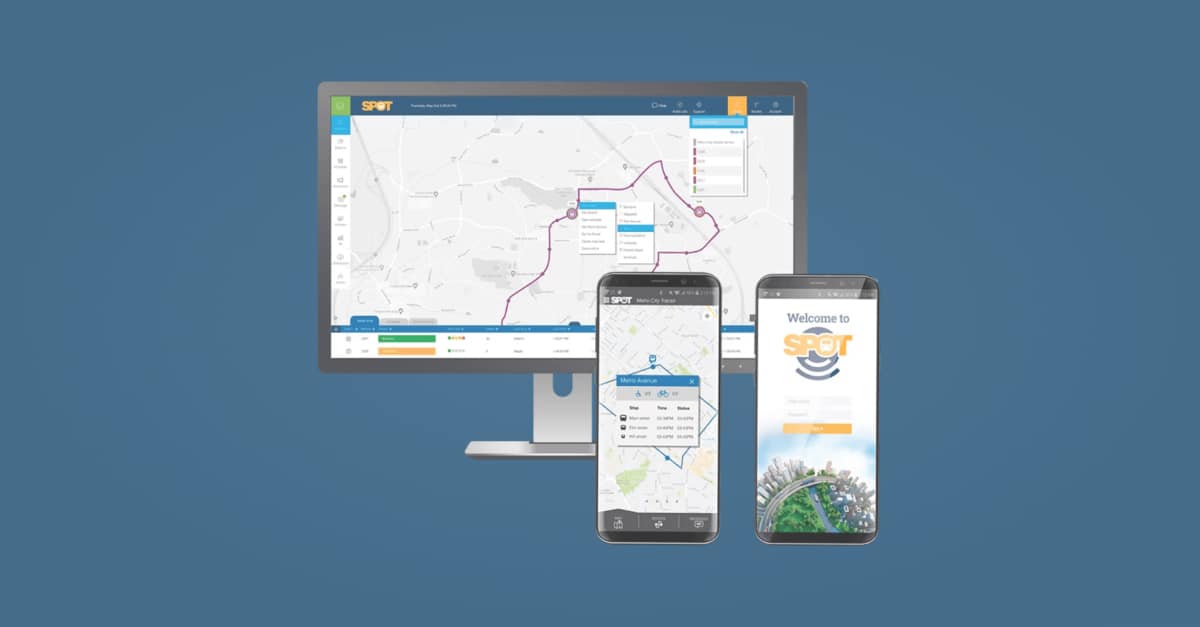
 SPOT: ETA’s Core Platform The SPOT™ ecosystem offers transit management solutions by providing a flexible, modular platform.
 SPOT: ETA’s Core Platform
  All Solutions
 CAD / AVL / GPS tracking
 Business intelligence
 Digital signs and kiosks
 Infotainment
 Automatic passenger counting
 Tally NTD Survey Software
 Tracking websites and apps
 Vehicle announcements
 All Integrations
 Demand-response and microtransit
 Fare collection
 Mobile video surveillance
 Pre-trip inspection
 Solar e-paper signage
 Vehicle health monitoring (AVM)
 Voice communication
 Transit
  All Industries
 Airport
 Campus
 Medical center
 Rail, streetcar & trolley
 Rental car
 Tourism & theme park
 Transit
 Case Studies
  Blog
Blog eBooks
 Wall of Love
 Careers
 Press
Press Events
 Support