Stop Requested. Welcome to Stop Requested, the podcast where we discuss everything transit. I’m your co-host, Levi McCollum, Director of Operations at ETA Transit.
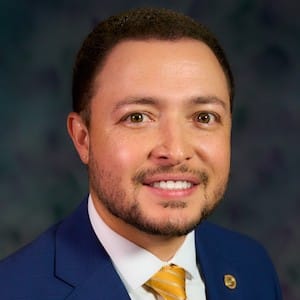
And I’m your co-host, Christian Londono, Senior Customer Success Manager at ETA Transit. Welcome back to Stop Requested. Christian, how are you doing? I’m doing great, Levi. How about yourself? Man, I’m doing really well, and I’m very excited for our special guest today. We’re gonna be speaking with Shriram Ramaratnam, who is the vice president, Transit and Rail Engineer at WSP. Shriram, how are you? I’m doing great, uh, thank you, Levi and Christian. How are you guys doing? Yeah, excellent, now that we’re having this conversation. It’s been a while in the making, and- Yes. … schedules just haven’t been able to align. But the stars have aligned today, and we got you on the podcast, Shriram. We’re really excited to have this conversation, and for you to share some of your 20-plus years experience in working in public transportation. Uh, I, at first, just wanna get s- some background on you for our listeners, just so they know who you are. Can you give us, uh, you know, some insight into how you got into this vice president role at WSP and what led you there? Oh, for sure, for sure. First, um, I would like to, uh, take a minute to thank you both for having me as a, as your guest speaker on the podcast. It is a real pleasure to be here. I know, uh, we’ve known each other for quite some time, and, um, I’m really excited to be on the, on the podcast. And, uh, let me go, uh, into a little bit about myself. Um, I actually did my undergraduate degree in civil engineering and, uh, moved here for my master’s in transportation engineering at University of South
Florida, Tampa. And, uh, my first job, um, was in New York City, and I spent early years of my career performing congestion management studies and large-scale traffic modeling for highly con- congested urban areas. And I was really blessed to have, um, had the opportunity, worked to work on some great projects, including New York City’s, uh, congestion pricing study, Atlanta radial highways microsimulation model for actually the entire, um, 20-county region, Manhattan traffic model, which was actually, uh, which was developed originally to assess, uh, crosstown bus travel, and also several other large-scale traffic models for cities across the country. And, uh, between 2012 and 2016, um, I actually had the opportunity to do two things that I’m really passionate about, traveling and, uh, working on transit projects. I actually, uh, worked on multiple, uh, multimodal projects and bus rapid transit feasibility studies across the world. And, uh, back in 2016, again, I moved, um,
I’ve been, uh, uh, moved back to the US and I’ve been with, uh, WSP as vice president, Transit and Rail, and I also, um, uh, lead the South Florida BRT practice and, uh, I’m continuing to do what I’m passionate about, assisting transit agencies here in South Florida implement public transportation infrastructure projects. Oh, excellent. Thank you for providing that background, Shriram. Uh, just curious about your role at WSP. Can you kinda walk us through a, a day-to-day? W- what’s it like overseeing some of these major projects that are happening in South Florida? Oh, definitely, definitely. I’ve, um, uh, pretty much assisted, um, on multiple projects here in South Florida as well, uh, projects for Miami-Dade County, uh, Transit Pro- in particular, uh, Broward County Transit, and as well there’s a number of projects for Palm Tran. Uh, to highlight, uh, some major ones, I worked on the east-west, uh, uh, rapid transit corridor in Miami-Dade, uh, County.
Uh, it’s, uh, it’s almost, uh, looking at a BRT, uh, feasibility study along Dolphin Expressway and, um, uh, uh, as a part of the Palm Tran GPC contract, worked on several task work orders, assisting Palm Tran look at, uh, mobility on-demand services, uh, performing, uh, going after federal, uh, grants, uh, to procure, uh, new buses, uh, TSP implementation and whatnot. And, uh, for Broward County more recently, I, um, I’m the project manager for, um,
Oakland Park, uh, Boulevard BRT. That is, uh, the first corridor out of their entire PRIMO program, um, that BCT is looking to get, uh, implemented. And I’m really, I’m a resident of Broward County and I’m really excited to be working as a part of the project.
That sounds very exciting, uh, Shriram. And, you know, just listening to your experience, em, that’s so impressive, right? Like, it is a very robust, uh, you know, uh, transit professional experience from everything you’ve done, you know, starting, uh, you know with S- uh, USF, and then being able to have an impact that you have in the public transit in, in South
Florida. And, and you’re talking about different transit agencies, you’re talking about different transformational projects, uh, so, you know, thank you for your contribution. And I wanna ask you, uh, out of all those projects, what would you say, uh, was a project that, that most shape how you think about regional transit delivery?
Sure, that, that’s a, a great question. I mean, uh, uh, I’ve worked, again, uh, like you mentioned, I’ve worked on a number of regional transit programs, but one project that’s like very close to me is, um, Broward County’s, uh, Premium Mobility Program. I had the opportunity to, uh, work on, uh, developing this from the initial stages and
I’m currently assisting deliver, uh, one of the corridors, uh, um, that was, uh, identified in the, in the entire PRIMO program. Eh, actually, planning for regional transit involves a comprehensive process that includes setting a vision, collecting data, engaging stakeholders, and developing long-range plans. I mean, and, um, this is to address, uh, growing travel demands and also future needs, and, uh, and, uh, um, uh, the, the collaboration that we had with the various, uh, stakeholders and also public meetings, uh, spanning across the entire county, going through a visioning process, eh, all of this defines…… and, uh, and help us understand what the, uh, people really want. And coming up with corridors that address, uh, the stakeholder needs is, um, uh, was a game changer. And I think, uh, uh, we did a good job in coming up, uh… or, uh, working, uh, closely with BCT and coming up with the PRIMO program. And, uh, and, uh, again, like I said, since I’m, I’m a resident of Broward County, it is really close to me and I almost feel the… as involved that it’s my own personal, uh, uh, uh, uh, baby or, uh, my own project.
Yeah. It’s for your own benefit, right? Like, you’re a resident. Yeah, yeah. Yeah, definitely. You’re benefiting, uh, directly and indirectly, right? Because there’s- Definitely. … there’s people that benefit, uh, by improving transit even though they don’t ride it, right?
Like- Yeah. … at least the, the, the roads are less congested. And if there are business owner, uh, goods and services within the community are able to move faster and quicker, uh, meaning, you know, that’s, that’s better for business. Um, so l- let me ask you, uh, this other question that has to do with your definition of a successful transit.
Has that changed over your career, uh, in, in the projects you’ve worked on of what the transformation you’ve seen at transit agencies? Like, what would you… Uh, how would you define successful transit? Oh, a successful transit has definitely evolved significantly over the years. I mean, in the past, um, I would say transit agencies, uh, uh, uh, revolved around, uh, providing, uh, services or fixed-route or paratransit services connecting major attractions and destinations, right? And, uh, but with ever-changing needs of, uh, the customers as well as, uh, strong competition from, uh, companies like Uber and Lyft, agencies had to quickly adapt. And now, uh, I think successful… Providing successful transit goes beyond just, uh, providing the traditional transit services, right? It needs to be reliable, frequent, accessible, and, uh, look at a big-picture perspective in providing door-to-door service. And, um, and, uh, this ne- really needs to be like a multi-solution approach. You can’t just, uh, stick with, uh, uh, fixed-routes and paratransit services. Um, this needs to also address, include strategies to address first-mile/last-mile, uh, solutions, including options such as, uh, micro-mobility, mobility on-demand services, and multi-modal s- street, uh, improvements. And, uh, at the end of the day, it is about how you get people to leave their personal vehicles behind and attract not just the transit-dependent riders but also choice riders.
Yeah. And, and back to w- uh, what you mentioned about PRIMO in, um, you know, being, uh, such a, uh, complete project particularly for you from the infancy stage to where it’s now, uh, is because it’s also looking holistically, right? Like, so your definition of successful transit is approaching mobility holistically, looking at all the different aspects. First, last, uh, mile. You’re looking at different modes, right, that you can provide. You’re looking at the different corridors, the community, origin and destination, where people wanna go, and then approaching, uh, that advancement for the, uh, transit system looking through that lens almost from every single angle and, and putting all the pieces together, which, uh, also seems to be very challenging, right? Different stakeholders, different jurisdictions, and then everybody… Getting everybody aligned to get… Uh, to move these projects, um, forward, they, they can be quite challenging. So, um, let me ask you this other question, uh, just now asking about the planning piece of it. Uh, what’s one planning principle that holds true everywhere you’ve worked when it comes to, you know, planning for, for these projects? Sure. Um,
I would actually say there are a number of transportation principles that hold true irrespective of the regions, uh, uh, uh, that I’ve worked in. Uh, uh, let me quote some of my favorite ones. Um, I would say, uh, integrating land use pol- uh, uh, policies with transportation planning is, um, uh, super critical. It can, uh, reduce the need for travel, uh, decrease car dependency, and create more livable communities. And, uh, also focusing on a mix of, uh, complementary, well-integrated land use, uh, uh, has proven to be very efficient. And the second one, uh, that I really, uh, like, is, um, having a multi-modal… Um, uh, taking a multi-modal approach. It’s not just one mode, right? Ju- just focus on cars, or transit, or bikes, or, uh, rideshare, right? It needs to be integrated seamlessly so there is, um, uh, connectivity between all modes. A successful deci- Again, going back to our conversation of successful transit, um, uh, uh, for a transit system or a transportation network to be, uh, successful in a region, it depends on how all of the pieces connect with each other, right? And, um, uh, there’s… It needs to be seamless and efficient and, uh, a no-brainer for most people so they, they could, uh, give up their cars and, um, and, uh, take public transit options or, uh, make it convenient depending on what their purpose of travel is.
Thank you for, for giving those principles and, and, uh, yeah. It, it goes back… I, I would summarize it, uh, those two ri- One is, uh, having policies that in, in support of public transit or better mobility, uh, and then the, the, the, the second one, like you said, is, is looking, uh, multi-modal, right? Like, holistically, all different ways that people might wanna get around and make them, um, an option, right? Like if public transit or, let’s say, a, a fixed-route system or, or whatever transit system is not competitive when it comes to travel time, uh, then by design most people are gonna try to choose the mode that is gonna get them quicker to the destination, which could be- … um, you know, the private vehicles or, or taking Uber and Lyft.
But if you make your network, uh, interconnected in where different modes can still be an option, you know, you have some, uh, really good, uh, bike lanes, protected, connected, and then if people want to bike, they could bike.
Like, it makes more different ways to get around, uh, a true option, uh, for the community. So thank you for sharing those, those principles. I think those, uh, were really, were really good. So, Sharam, you’ve touched on this earlier, uh, when, you know, you were speaking about those individual projects that the, that three counties, uh, Miami-Dade, Broward, and Palm Beach County have. Uh, can you give me some insight into something that a, an, an average person from this tri-county area, what, what they might not see that, that you as a, an expert in this, you, you know, in the planning field, in transportation, what, what you see? What sticks out to you? We have actually several cross-county, um, uh, mass transit options, uh, primarily on the east side of, uh, uh, all the south … Entire South Florida, right? Um, we have options such as Tri-Rail, Brightline, and also the future Northeast, uh, Corridor and Broward Commuter Rail. But one cross-county project that I would really, uh, like to see happen, uh, is, uh, uh, a premium transit option along the western portions of Southeast Florida. I mean, we currently have, uh, express bus service that captures some of this market, but a premium transit option running along Lake
Palmetto Expressway, I-75, Sawgrass Expressway, and turnpike can, can significantly change the way people travel. And, uh, and, uh, this is, um, uh, working more and more on transit. I kind of see like where are the gaps and how can, uh, uh, how can we improve it, right? And, uh, providing an alternative, uh, uh, mobility option that cr- uh, that runs cross-county, um, can go a long way.
I see. That, uh, I mean, that’s, that’s excellent that you, you, you spent so much time in the region looking at all these plans and seeing the bigger picture, which, you know, if you’re working in one of those particular counties, you might not see, but you being a consultant that helps all of those different counties, uh, you see something and can kind of thread the needle there that maybe others, uh, wouldn’t have noticed. So I, I appreciate that response. Um, so
Sharam, what do you think is a regional challenge that might not be visible to the rider? If I’m a, a Palm Tran rider, if I’m Miami-Dade County rider, you know, I see my transit journey. I see what I experience every day, and, you know, that’s completely valid for them. But they m- might not be able to see the regional picture.What, what would you say is that regional challenge that might escape someone that’s really localized? Oh, that’s a really interesting question. Um, so, uh, I would say that most riders only see the surface of, uh, uh, transit maintenance. I wouldn’t say this is a regional problem, but, um, uh, this is, um, uh, true with all agencies. Um, people or riders could see a broken seat or a leaky ceiling, but, uh, not necessarily the operations and maintenance costs involved in maintaining existing and new infrastructure, right?
Usually, those are, um, uh, tend to be, uh, overlooked or no- not the most visible items when you, when you look at a transit service in a region, right?
But they involve a lot of capital costs and operations and maintenance costs to keep them, um, uh, up-to-date and, uh, running in an, uh, a seamless, uh, fashion. Many transit actually also face, uh, budget deficits, uh, because of low ridership and also limited funding and, uh, rising operations costs due to inflation. And, um, and, uh, I think as a result of, uh, lack of funding, this has resulted in deferred maintenance and upgrades, and a number of agencies are currently using their capital funds to cover operational shortfalls.
Uh, that’s really insightful. I, I like that challenge a lot. Not necessarily the, the, the sexiest of challenges, right? It’s not the one that people are going to, uh, come to the, uh, board meeting and scream about necessarily, but it’s- Mm-hmm. … kind of this simmering, low-lying, underneath-the-surface-type challenge, uh, that, that affects a lot of transit agencies outside of, uh, you know, Southeast Florida, of course. But, um, you know, most, most certainly, it does affect those, those three or more agencies that are here. Uh, how would you define a, a thriving Southeast Florida ecosystem? A transit ecosystem? Uh, what, what would that look like, you know, maybe five or 10 years into the future? Wh- where do you think we are as a region? I think as a region, we are, we are in a very good position. All three transit agencies here, or actually, uh, uh, four, uh, major transit agencies in
Florida have a robust program of projects, right? And, um, uh, building a thriving transit system across, uh, uh, the entire metropolitan region will, will depend on a number of, um, factors. And some of, uh, some of these, uh
… Some transit agencies are really advanced and as they’ve, uh, as they’ve moved through their plans, and some are just starting out. Um, but these depend on identifying a, a sustainable funding mechanism. I think that’s the first challenge. Miami-Dade and Broward County, for example, have, they’ve, uh, already passed their surtax or penny sales tax, and, uh, they’ve been accumulating funds towards specifically-allocated or -dedicated funding for, uh, uh, transit projects. And Palm Tran is, um, uh, following along, uh, or Palm Beach County is following along to, um, get that worked out. But, uh, a sustainable funding mechanism is, uh, super cri- critical. And, uh, also, another piece is designing land use policies that promote, uh, dense housing and commercial development along, around transit hub is essential as well…. and also creating a multimodal network where different transport modes like buses, trains, bikes, and walking are all integrated is, um, uh, essential too. And, uh, several of these projects, uh, depending on the agency that we’re talking about, are either in planning or preliminary design stages, and some are already being constructed. But I think, uh, uh, uh, uh, five years from, uh, uh, now, I think, uh, several of these projects would have, uh, advanced into, like, design and construction. And, um, I, I think we’re going in the right way and, uh, in, in five years from now, we would see a lot more premium transit options, uh, in the region.
That sounds very exciting. Um, I think that particularly for South Florida. So y- you mentioned Palm Beach County. I’m a resident of Palm Beach
County, uh, and, you know, I look forward to see, uh, that premium transit coming together that is more multimodal, um, have the opportunity to look at the
Primo Plan and, and it’s very ambitious and, and it’s also very promising, uh, that there will be many more options and that system will grow. And, and I think th- that when you’re looking at those things and, you know, Miami, of course, is way bigger than Broward, and then Broward is, is more, you know, dense in, in, in, in many aspects, advanced for public transit than, than Palm Beach County. And then
Pomtran is, is kind of like coming along or follow- following along. Um, so it’s very promising to see this, this, uh, premium, um, services being planned and hopefully, uh, implemented soon. Now, uh, I want to ask you about the technology, right? The, the… What are the technologies that are powering some of these, eh, projects and initiatives? But overall, for, eh, the transit industry, um, what would you say is one technology that’s underrated or overrated, uh, in today’s transit world?
Uh, that’s a great question, uh, Christian. Um, there are actually several technologies. I wouldn’t, I wouldn’t, um, call out just one, but, uh, technology covers a broad spectrum of services, um, that drive innovation and, uh, efficiencies across almost every industry, right? Not just transit. And, um, keeping up with technology has become the need of the hour, and, uh, failure to keep up with new tools and trends can, uh, lead to decreased efficiency, and you also end up losing competitiveness and, uh, also in today’s world, it leads to increased security, uh, risk. And, uh, um, in today’s transit world, uh, providing enhanced passenger experience is critical and, uh, it heavily relies on, uh, technologies such as card avial systems, contactless payments, automatic passenger counting systems, on-demand services, and also, um, uh, vehicle to infrastructure communication, right? And, um, one underrated, uh, technology, according to me, I would say, is, um, uh, autonomous vehicles, and especially, uh, with respect to application in public transportation industry. And, uh, I, I primarily say that because of its, uh, uh, high cost associated and the difficulty to scale… Uh, difficulty of sc- like scaling it for ma- mass transit. So autonomous vehicles so- sounds very exciting and I think that, um, you know, we, um… In Florida we take pride of different projects that are taking place, uh, that are very promising, right? Because we know that, uh, one of the major costs for a transit agency is, uh, people. And being able to provide some, uh, transportation that is autonomous and, and maybe doesn’t require an operator, um, you know, could be something beneficial. But like you said, it’s expensive and it’s still kinda like being tested and, and hard to scale. So that’s, that’s a little overrated. Now w- what’s one that is underrated? Like one technology that you think that could be very transformational for a transit agency that maybe a lot of people don’t talk about or they’re not as focused as much, but that, that could yield, um, good results? Um, when it comes to… I wouldn’t say it is underrated, but agencies are trying to, uh, uh, address this, um, uh, uh, feature, um, uh, that technology is like providing real time passenger information system. Actually, that goes a long way, primarily because it helps you, uh, provide a reliable service.
And when it comes to transit, people don’t really care about like, um, uh, uh, uh… I mean, they do care about the frequency, but, um, uh, rain or shine, if the bus comes on time, uh, it becomes more dependable. And dependability is what matters the most, right? And, um, and, uh, investing in technologies that will help, uh, relay, uh, uh, the real time information, arrival, departure information of, uh, the transit system will go a long way. I mean, the… I, I see that being applied to premium transit, but, um, extending that to even like local buses and, uh, shuttle services, paratransit services, uh, would, would, um, really help, uh, day-to-day passengers or riders. And, and you know what? I would agree with that. I- in my experience working with different transit agencies and, and speak with, with them, uh, sometimes that comes kind of like in the last, uh, um, slot in the, in the priorities list. Eh, you know, there’s so many other technologies that they feel that they have to have. Uh, but sometimes the passenger information displays, it seems to be, um, a nice to have, uh, but it could be transformational. It could… You know, it really, em, makes the rider’s experience better. And like you said, it eases with the anxiety and, you know, “Where’s my bus?”
The more, uh, informed riders are, then the, the better the experiences while riding the system. So, um, I think that I would agree with that one.
And, and then also to ta- to just add to that, I mean, it, it not just helps you about, um, uh, the arrival/departure information, right? This also helps you go to an additional extent of, uh, making your system more efficient, right? The, the, uh, the, uh, the automatic pa- passenger counting systems give you information on the number of people board and the like. It provides you additional information on low ridership routes, high ridership routes. So, uh, it, it provides key essential information in better- making your system better and, um, uh, making your system optimal, uh, if I can say.
Uh, thanks for, you know, sharing all those insights there on the, the technology front. Just to start wrapping up, uh, got a few rapid fire questions for you, Sharam. Uh, what’s some of the best advice that you can give emerging planners or transportation practitioners in the field? Oh, this is my favorite part. Uh, the best advice I have for emerging planners is to, um, uh, develop strong analytical skills and, um, embrace continuous learning of technologies and policies. And, uh, the most important quality that I’ve, uh, learned the hard way is being patient and adaptable. We are in the industry of, uh, transportation and transit. The field involves working amidst, uh, constantly shifting political, economical, and social landscapes. So, being prepared, uh, to compromise and take incremental step towards, uh, while staying true to what you wanna get implemented goes, uh, really helps.
Yeah, that is excellent advice. I really love that. Um, wha- what about a story that makes it all concrete for you? Why, why do this? Why spend so much of your time and energy, your mental energy, on studying and practicing public transportation? Uh, do you have a story that really encapsulates all that? I mean, I would, uh, uh, I would like to talk about a, a, a, a project that, um, I worked, uh, back in when I was based in New York. And this was not directly related to transit, but, um, back in 2007, uh, I worked in New York City and, uh, the, uh, their congestion pricing pilot program, and it was an extensive effort. We actually inventoried and analyzed the parking, uh, utilization and, uh, the parking across all six boroughs of Manhattan, uh, I mean, New York City. And we held several rounds of public meetings and to understand public concerns and over-parking, and also perceived impacts of congestion pricing on current regulations. But the, the, uh, the entire proposal didn’t even make it to the assembly. It got watered down, uh, because of the potential impacts, uh, it can have on, uh, uh, the suburban commuters. And, uh, the plan was to actually cho- ta- charge a toll of $8 for cars and, uh, $21 for trucks entering, uh, Manhattan, uh, like Midtown Manhattan, any- an- anywhere below 60th Street. And, um, I was disappointed that it didn’t, uh, make it, and this being my first project after I finished my master’s, uh, and, um, but I’m really happy to say that after almost 20 years, uh, um, I got to know that New York City, uh, rolled out, uh, the toll program earlier this year and, uh, has been, uh, really successful in reducing traffic congestion. And the best part is all of the revenues that is generated, uh, from the toll is, uh, dedicated to, for transit improvements. And, um, I also read an article that, uh, MTA reported, uh, strong financial results from the program and that the congestion pricing, um, has been, uh, a, a really major source of funding for transit systems’, uh, ongoing capital projects. Wow.
Yeah, I mean, it sounds like it took a while, but it is in place now, at least for the time being. Well, and I know that there’s, there are some folks who are um, trying to combat that, but- Yeah. … uh, that- Yeah. That’s an excellent story. I, I- And they’re- … really love that one. They usually, uh, go through a number of legal battles and conflicts, right? And, um, but at the end of the day, um, uh, if it helps, uh, fund future transit projects, I’m all in for it.
Absolutely. Yeah, I think Christian and I would say the same. For sure. Let, let me, let me end with this one, uh, on the rapid fire. What excites you the about the future of transit in Florida? It could be beyond, but, you know, we, we spend a lot of most time in Florida. You’ve, you’ve worked in Florida now for a number of years. You have a particular focus, I think, with your professional work here. So, curious what you think. I mean, um, uh,
I could talk about specifically in South Florida. I mean, um, I, I personally feel that we have outstanding visionary leadership here in the region, and they collaborate across all jurisdictions to, uh, solve transportation challenges, uh, that affect the entire region. And, uh, like we discussed before, all agencies have a robust premium transit program, right? I mean, the
Miami-Dade has ha- ha- has its Smart Plan program, Broward County has, uh, the PRIMO program, and Palm Beach has its 561 plan. And, um, uh, uh, Miami-Dade recently opened, uh, South Dade BRT and, uh, Broward County is, uh, working really hard to deliver their first BRT corridor and also, uh, a commuter rail service is in the pipeline. And Palm
Beach is also similarly advancing the 561 plan and, uh, is going through, currently going through the implementation of, uh, transit signal priority along, uh, US 1 and Okeechobee Boulevard corridors. And, uh,
I think with all of these ongoing progress, uh, a thriving transit system in Southeast Florida is not a distant reality.
Yeah, that is so good to hear, that there’s this much activity e- you know, in a positive direction for public transportation in the region. It is very exciting,
I agree with you. So, I’m gonna wrap up here with some of my key takeaways based on, you know, what you shared with us, some of just the questions that Christian asked, his responses. What I think is most important for transit agencies is to think about the whole transit journey. Uh, a lot of agencies are moving this way, uh, but it is important that if you are a transit provider, that you’re thinking about whole mobility trip, right? It’s the not just one leg of it, like you mentioned before, like from major destination to major destination. It is really from the very beginning of the trip at someone’s house, all the way to their final destination of work or grocery store or wherever they may be going. Uh, sustainable funding is obviously crucial for having successful transit. You need to make sure that you’ve got that part sorted out first. And oftentimes, that is a sort of revolving door, right? You try one way and maybe it doesn’t quite work out the way you thought, in other ways, you know, you get, uh, you know, something like that, what happened at MTA, where you try something and it fails, and then 20 years later, you get that sustainable, uh, sustainable revenue coming in. So, that is obviously one very important piece to all this. You have to be able to find a way to pay for it. Uh, another thing that you mentioned, Shriram, uh, that I really like is aligning your transit services that you’re providing as an agency with the local land uses. That means, you know, the urban planners, the transit planners, uh, are working together to make sure that those two things are not too far apart. Uh, another, yeah, I have so many of these key takeaways because you ha- you gave us a lot here, but, uh, bear with me.
The dependability is what matters most for transit riders, and that’s all in an effort to build the trust with your commuters, right? It’s a social contract, uh, to borrow a phrase from Yash Nagal and from Christian Londono, who I think maybe got it from Clinton Forbes. Um, but, you know, that trust in the system is extremely important. If you break the trust with the public, then you’re going to lose some of your ridership. Uh, there’s really little doubt in that. And finally, this should be on a shirt, and if I had a verbal way of like underlining these two things,
I would, because if you work in government of any kind, it doesn’t have to be just for a transit agency, but if you work in government, incrementalism and compromise. Uh, those are two things that you just said, Shriram, and it just sums it up perfectly. For someone with very little patience and working in government for, you know, 10 years like I did, it will drive you crazy, right? You’ve got to be okay with slow movement sometimes, because the slow movement can become fast movement.
You just don’t know when. Right, right. Did I miss anything, Shriram? No, I think, uh, you summed it up pretty well, and, uh, um, this was really a pleasure to be on this call and, uh, on the podcast, and, uh,
I think that’s great. Excellent. Well, Shriram, thank you so much for coming on. This has been a great pleasure. You know, always a good conversation when the three of us are together. Yes. I would like to leave our audience with a way to be able to get in touch with you if they wanted to.
If you have a LinkedIn, maybe you want to share or something else that you’d like for our listeners? Sure. I mean, uh, your listeners could reach out to me via email or hit me up on LinkedIn. Um, uh, my, uh, you can find me at Shriram
Ramaratnam. That’s S-H-R-I-R-A-M R-A-M-A-R-A-T-N-A-M on LinkedIn. And, uh, my email is my first name.Ram@wsp.com. Shriram.Ram@wsp.com. Well, Shriram, this has been a really delightful conversation and it’s been a pleasure to have you on. And to our listeners, we will be back next
Monday with another episode. Thanks for listening. Thank you. Thank you.

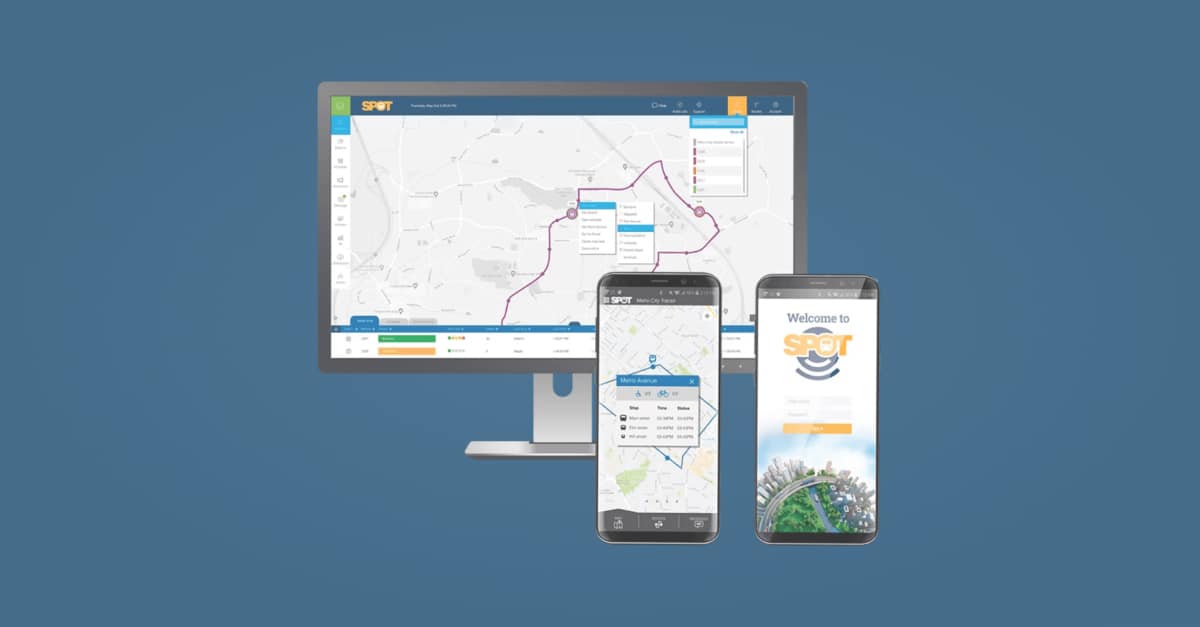
 SPOT: ETA’s Core Platform The SPOT™ ecosystem offers transit management solutions by providing a flexible, modular platform.
 SPOT: ETA’s Core Platform
  All Solutions
 CAD / AVL / GPS tracking
 Business intelligence
 Digital signs and kiosks
 Infotainment
 Automatic passenger counting
 Tally NTD Survey Software
 Tracking websites and apps
 Vehicle announcements
 All Integrations
 Demand-response and microtransit
 Fare collection
 Mobile video surveillance
 Pre-trip inspection
 Solar e-paper signage
 Vehicle health monitoring (AVM)
 Voice communication
 Transit
  All Industries
 Airport
 Campus
 Medical center
 Rail, streetcar & trolley
 Rental car
 Tourism & theme park
 Transit
 Case Studies
  Blog
Blog eBooks
 Wall of Love
 Careers
 FAQs
FAQs Press
Press Events
 Support