Stop Requested. Welcome to Stop Requested, the podcast where we discuss everything transit. I’m your co-host, Levi McCollum, Director of Operations at ETA Transit. And I’m your co-host, Christian Londono, Senior Customer Success Manager at ETA
Transit. On today’s episode of Stop Requested, we’re joined by Stephen Kuban, President and CEO of Kuban Transit Solutions. Stephen brings a decade of experience at the intersection of transit operations and technology, and now he’s helping agencies rethink how work actually gets done. We talk about why AI isn’t just about automation, but a shift in decision-making, planning, and leadership, and how transit agencies can use it to do more with limited resources.
If you’re curious what AI really means for public transportation, beyond the buzzwords, this conversation is for you. We hope you enjoy it. Welcome back to Stop Requested. Christian, how are you today? Good morning, Levi. Uh, doing great. How about yourself? Man, I’m doing superb and
I am just really anxious and, uh, raring to go to get into this conversation with Stephen Kuban, who we got on the podcast today. He’s the president and CEO of Kuban Transit Solutions.
Stephen, hopefully I got your last name right there, but correct me if I’m wrong. How are you today? Yeah. Uh, I’m doing great. I’m doing great. Yeah, it’s a funny story. I’ve grown up calling myself
Stephen Cuban, and so when I’m not thinking about it, I just go Stephen Kuban. Uh, but I think it’s, like, Slavic or Russian, and so they would certainly pronounce it
Kuban. And a few years ago, my dad started calling himself Kuban. And growing up on my soccer team, what they would call me, they would just call me Kuban. So it was like, I actually have no idea how to pronounce my name, so Stephen Kuban is good. Um, I kinda call the business Kuban Transit Solutions so it doesn’t sound like it’s from Cuba, but, uh, you can’t be wrong with the last name.
Oh, okay. So several options there, and I, I at least landed one of those, so glad to hear it. Uh, Stephen- You got the right one. … I, I know we-
. Yeah, right. Uh, we’ve, we’ve got a lot to talk about, and, uh, you know, not to give any spoilers early on, but AI is the, the big thing right now, and I know you have a lot to say about that. But before we get into those juicy parts, I really wanna learn about your background. Uh, y- you know, just doing some research on you online, I, I know that you’ve worked in a, a, at a variety of companies in the transit space, so
I’ll just turn it over to you. You know, what was your background? Can you share a little bit so the audience gets to know you? Yeah. Well, I mean, first of all, just to set the stage, you’re right that AI is a massive shift, and just because of my background, I think that I can really see that.
Um, but just to, like, the audience listeners, you know, you know what to expect. Like, we’re under… We’re at the very start of a complete shift in how work is performed, and, like, it’s all about to change and we can all be really embracing it right now. Um, and, and so I’ve been on the front lines of it, I guess, for over a decade. Um, Levi, you’re right, I’ve worked… I spent six years at RideCo. I stumbled my way into transit. So I was supposed to go off and do a master’s degree in Belgium, um, for applied statistics, and
I just needed a summer job, so I got a summer job testing out this brand new app that never been launched before. Uh, back in 2015, that app was RideCo’s. That was the first microtransit launch in
North America, and now I’ve been in transit for 10 years. It’s a good thing because I actually don’t like math.
I didn’t realize until late. Um, so that’s sort of how I stumbled into it, but over the last 10 years, I was six years at RideCo,
I was three years with the routing company, and so I’ve been really front and center in how technology is changing transit operationally, how microtransit’s changing, how paratransit’s changing. And, and I’ve had the privilege of being up close and personal in these operations with different operations managers, executive directors, schedulers, dispatchers, and to really see the challenges in the transit environment. Um, and the good news is, like, with what AI is capable of doing, all these folks are, are just… They can do so much more. Um, and yeah, I started KTS, uh, earlier, earlier this year.
All right, so it’s, it’s brand new then. You have, uh- … just gone out on your own. H- how was that? What, what gave you- Oh. … that sort of confidence and momentum to, uh, head out and do this thing independently?
It’s been something I’ve been preparing for, I would say, for four years. Um, before I joined, um, TRC, people I respected in the industry had told me, “You know, Stephen, like, people could use you as… In, like, consulting and helping with microtransit and whatnot.” So ever, ever since I heard that, I filed that away as, like, what I would ultimately like to do. Like, Levi, my, my goal, my, my mission in life is to help people shatter their own glass ceilings.
For me, it was important to find the right means by which to do that. It was very fulfilling working in the technology side and providing technologies where I could see folks doing more in providing services to riders, especially riders with disabilities and riders, um, from, um, in disadvantaged populations, being able to access economic opportunity and mobility and shatter their glass ceilings.Six months ago, I had the conviction that now was the time to go and provide support beyond just technology. And so that was the spark for KTS.
Um, and the courage and conviction I got was actually, AI tools could help me do the job of three or four people, triple my productivity. And in building my organization with AI, kind of as my co-founder, I’ve been uncovering all these amazing techniques that apply to anybody, and especially apply to transit leaders. Yeah, thinking about bridging the- the two spaces that you’ve- you’ve been in, you know, on- on this apps building side with Ryco and then, you know, later with the- the routing company and now starting your- your own business, were there any gaps in there that were so obvious that you thought, “Hmm, I- I- I could find a solution to that. I- I know how agencies could solve that problem”? And that was directly informed by your experience at those, uh, earlier companies? I guess, like, what I- what I see is that, working in technology companies, I’ve seen, like, a very opinionated belief that, hey, technology knows best and technology is going to make us all better, this technology is the best and smart. But the dissonance I’ve seen is that actually it’s humans who do best. It’s us, it’s our humanity that makes the best decisions, and that we can all be enabled and empowered by technology. But my core belief is that as humans, it’s up to us to make effective decisions, and technology is there to support us, not to get rid of us. And so, like, to answer your question,
I’ve seen so many leaders in transit agencies, staff in transit agencies, being stuck and being put into these little boxes that technology has put them into. “You have to operate this way specifically.” Now, what I’m seeing is a shift where, actually, technology can work for us. The way computers are changing, the way AI is changing things, actually, it’ll work to fit us. So I’m not giving you a specific operational question- um, answer to your question,
Levi. It’s more of a philosophical thing I’m seeing, where I’m seeing people stuck in these little boxes with these glass ceilings because they’ve been stuck operating under the confines of what technology is capable of. But the new AI paradigm shift means, actually, technology is going to morph to fit our needs as humans, and that is so exciting for me. That sounds very interesting. Uh, Stephen, I- I want to fol- follow along, uh, with that, uh, piece that you mentioned about AI, um, and, you know, what is doing in terms of disruption, but then not necessarily, like people say, like replacing humans, right? Like, the- the technology is- is for us to utilize in the way that will make the most sense, um, you know, for our communities and- and for our lives and, you know, it’s- it’s just how we can maximize that potential, uh, to actually live better lives, right? So, you- you said that AI played a direct role in launching KTS earlier this year. Uh, how did AI influence the company’s formation?
I have been building my business and my business operations around the capabilities of AI. The real unlock in artificial intelligence is not in writing better emails. Mm-hmm. It’s not in writing better documents. It’s in… It’s what it unlocks in how we actually manage and perform work. It’s how we organize work. It’s how we organize our business systems and our, like, our data systems to enable faster and more effective decision-making. I have been building all of my operations around centralizing my da- my business intelligence into, like, one centralized, um, business tool, where I can then just go into, like, an AI tool like Claude or Gemini and ask a business question. So, like, a- a good concrete example is maybe I’m, like, working a deal and I’ve put some emails out there and people aren’t responding. I’m now, like, at a place where I can just open up Claude and ask,
“Hey, what should I strategically do next for such and such a deal?” And Claude will be able to go to my centralized business hub, it’ll be able to look at my emails and the docs I’ve formulated, see- Right.
… what email exchanges have I made, what notes have I taken, what transcripts from the meeting have I have, what deliverables have I given, and then come back and tell me, “You never actually pitched a deal and people are confused, and here’s what I suggest doing next.” So, for me, everything that I’m doing,
I’m building an infrastructure to see, A, what is AI capable of doing, and B, how can I build all my data systems, my structures, my templates, my processes to make faster and more effective decisions around it? And so that’s the opportunity I’ve had starting KTS from the ground up in this AI world, is
I’m essentially putting myself on the cutting edge of what AI is capable of, and- and I’m experimenting, and I’m seeing some amazing results that transit is going to thrive in. Yeah, I mean, tho- those are amazing, uh, examples, and- and it’s interesting, right?
Like, because, eh, when you started from the ground up and you’re applying cutting edge technology as AI and the capabilities it has to automate things, to speed up the process and the decision-making and make sure that you actually are doing things holistically. That’s the sort of thing I was reflecting on- Mm-hmm. … rightly because, eh…Uh, even today, most companies across industries, they, uh, I would say they spend, you know, like, their 80% of the time data mining, collecting facts- Mm-hmm. … looking into things, and sometimes- Mm-hmm. … making decisions based on some of the information and some assumptions. Like, they don’t have that 20% of data inference right away for them to make a decision because that’s w- the reason why we look at things, right? We look at data, we look at reports, is to be able to understand what’s happening, and based on that, you make a decision. And the way you’re describing- Mm-hmm. … it using Claude and the way it talks to, uh, pretty much your centralized business location where you have all the information, right? Like, it’s that, um, you know, database of everything that is happening that is important, and then it’s helping you get that data inference and also consider out there a, you know, a, based on different business techniques and everything that exists almost in the universe, uh, w- what’s the best path forward. So that’s, that’s definitely- Mm-hmm. … uh, really interesting, uh, especially because a lot of businesses today, they’re not starting there.
They’re starting with all these manual traditional processes, and they’re considering maybe do AI. And like you, you explained earlier, like, uh, some of those people might be just at the stage where they’re, uh, having AI writing emails for them. Um, which I guess is, is, is also pretty good, but it’s, it’s also, um- I mean, we all start there.
… not the full… Yeah. We all started it, yeah, but it’s not the full potential, uh, to your point. Well, the full potential of like a crazy paradigm shift in how work is done, which I’m already starting to taste.
Um, but look. AI, AI can feel scary. Like, I completely understand that. And there are many folks listening who, who will be afraid of, of what’s changing, and, and what might happen to their jobs and, and their work. The, the reassurance that I can, I can offer is that there is just going to be more work coming, coming out of this as we go through these shifts. Like, we’re all going to be way more productive, and when in history has more productivity ever led to less work? Yeah.
It, i- i- i- It doesn’t happen. But… Doesn’t happen. You know, I, I wanna say something, a- a- and I see that, and I wanna just get, get your opinion on kinda going a little bit off script here. Um, but I feel that our brains today, they get a little bit more overloaded, uh, because yeah, it, it seems that e- everything is moving faster. Like, you get that efficiency.
You can work on more projects. You can get more done. But like you as the person who was actually coordinating everything that has happened and, and at the end of the day, you’re involved in a way, right? Like, you have some mental capacity occupied with all these different things. Uh,
I don’t know. Like, does it feel like at some point it’s, it’s gonna be too much or, or it’s just like the way things will go? Uh, uh, I think, um, you’re touching on something important, but like what’s underlying what you’ve stated is that the, the nature of work is what’s shifting. What it means to do a quote unquote good job is changing.
And the expectations of any type of role are changing. You’ve already touched on it, but I’ll be explicit. We’ve all spent our careers spending the majority of our time doing technical work. Mm-hmm. Whether that’s writing up documents, writing up policy or a proposal, crunching a spreadsheet, writing the formulas, making sure things are linked up, writing the code to build the websites, to integrate the systems. Those technical skills are what are shifting because since those are now faster to do, the importance in work comes from how well it’s done. And the time
I’m finding freeing up from doing all that, like basic writing up paragraphs, is now shifting into planning strategically how do I maximize the success of this initiative? How can I actually do research and see what is the academic literature saying? Like, so for example,
I’m considering bringing in microtransit to my community. Mm-hmm. Instead of spending all my time just writing an RFP and writing specs that I’m guessing about, which could have taken me weeks to do, I can now spend a lot of time doing deep research and understanding what do all the TCRP reports say? What are… what is APTA saying? What is CTAA saying? What are the case studies that are out there?
What are the generalized best practices of how to do microtransit? And then I can learn about that in the way that’s best for me. I can watch a video on it that AI generates. I can listen to a podcast of people talking. I can do a read a slide deck. I can just read the raw reports. It’s up to me. But I can now spend all that time learning about this, and then I can use AI to plan the middle layer of, okay, how would it look like in my community? I can a- and I can upload my bus route data and say, “Where am I least productive?” I can upload a map and say,
“What are the zones that are not covered effectively?” I then get to spend my time actually starting to do a little bit of service planning, but I can free up all my time to actually plan strategically what is going to make microtransit successful for me.
And then writing the RFP can be much faster, and I can, like…… evaluate the quality of that RFP against other RFPS that have been successful and make sure I’m putting something out there that is going to succeed.
And transit has been, and a thing I think we’ll all agree, where often we’re all just moving so quickly and spinning our wheels trying to keep our head above water, that new initiatives often might not end up succeeding, and maybe it’s because it wasn’t planned effectively or designed effectively. And it’s not due to a lack of skill, but it’s been do- due to a lack of resources.
And then when we think about smaller transit agencies, they are, it’s often very scary to start a new initiative because of that fear of failure. What AI allows us to do is to invest our time making things successful because now the actual doing of things is faster, and we can spend our energy planning and strategizing. And this is how the nature of work is shifting because we’re moving away from the need to- to just do technical skills that has no typos and shifting into building a platform and a strategy that is going to be long term successful and sustainable. It is a shift from doing to managing. That’s the shift that is underway. And exactly how that’ll look like, Christian, you- you talked about, “Oh, is it, uh, hard to manage and keep it all track?” Yes, of course, but those are the skills that are starting to be developed is the importance of management and organization, and AI absolutely help us all unlock that. Yeah, a- and it’s speeding things up li- like you said, so i- i- i- it’s interesting because more than technical skills, things like, uh, critical thinking, right? That- that capacity for analysis- Mm-hmm. … becomes a more desirable skill because it’s not us spending the time crunching the numbers and, you know, writing up, you know, a- a proposal or something like that. It’s really having all the, um, all those tasks, like, kinda like manual tasks completed and then having the time to just think, right? Like, okay, what if- Exactly.
… right? Like with all this information at hand. A- a- and- and to do more in terms of research, right? Because when the research and those things are so tedious, you’re only gonna do so much, and you’re gonna say, “Well, you- you have to call it a day, and then let’s make a decision based on what we have,” uh, because we just cannot get all, everything that is out there, read all the papers, extract all the, you know, best practices. But when now you have the capability of doing all that piece, so it’s- it’s two things. It’s really thinking what else should I consider and how else can I, uh, utilize the tools to, uh, uh, plan for success, so like you said, it’s like how can my project or my initiative, uh, be successful?
And then the other piece is- is, you know, after you have the- uh, all that information is- is, um, you know, making decisions and- and like you said, that time management, right? Like, and then start, uh, planning for implementation of- of whatever direction are you thinking in- in taking. So I- I wanna ask you this question, um, in this segment is, how do you balance that AI as a strategy, so having AI tools helping you, you know, your own intuition because we’re, right now, eh, we’re just adopting
AI, right? Like, we said how people don’t even- even maximize their potential, so there’s this, eh, you know, newness with the technology and- and a lot of it from, uh, learning from you and- and listening to what you have to say, you know, there’s a lot of intuition in you that is telling you where these things are heading and how it’s transforming the way people work, uh, and also your industry experience, particularly in the transit realm.
So- so how do you balance all those different things? AI is a tool to amplify strengths. What are your you good at? Where do you thrive? And how do we make you even, like, shine in those areas? Yes, there is a lot of fear about, like, “Oh, I can’t have ChatGPT write this for me because it might hallucinate. It’s not accurate.” That’s correct. The most important thing, the thing that will never go away and the thing that becomes even more important in an AI world is our ability to make decisions. So I never take what AI writes for me as my gospel and my truth. The- I use it to stimulate and accelerate my own critical thinking. So w- when I run my AI workshops, the- the thing I get across, I love to say this,
I’ll develop a strategy or I’ll do a research or maybe I’ll write a document, and then I ship it to a different AI and I ask, “Why does this suck?”
And I want it to tell me why it sucks, um, and then I’ll refine it and I’ll was like, “Oh, this sucks for this reason or- or- or not.” I’ll ship it to a different AI and ask it, “Why does this suck?” But it’s the critical thinking becomes the most important skill, actually, that we develop because AI is a tool to surface information and to package and communicate information, but we are now shifting away from good work being accurate to good work being effective. So it’s up to me, my humanity, my confidence, and my intuition, my expertise to ask, “Is what I’ve put together effective?” And that’s a very different mental way of thinking of approaching work than simply, “Is this accurate? Does it check the boxes?” So Stephen, you mentioned the AI workshops that you’ve been holding with some agencies. Uh, yeah, I’m really curious and want to dive into that a little bit deeper. Uh, what do you- what do you see agencies kind of leaning into whenever you’re speaking to them at these engagements? Wh- what are they really interested in? Well, I was having a conversation a couple days ago with a training manager. He was asking, “How do I change my training program?”… and just being able to talk about, well, localize the training program into their native language. Then you get less churn on people who just don’t know what a transistor is in English.
The nature of work, that’s like one big shift, but that’s very philosophical. A lot of my workshops are actually very tactical, very practical, and so it can be anywhere from an hour to four hours. And where I’m seeing people just like get stunned is walking through the mental model I just described of not just doing a thing, not just writing a document, writing an email, but people’s eyes are opening and their jaws are dropping when they see how AI can help you build all the successful foundation before you even get to the execution. So the deep research that Gemini is capable of, the deep research that Cloud or ChatGPT is capable of, getting these like 30-page reports packaged in a way that works for me.
It’s like, “Whoa! You can read all the sources and see that from just like a quick prompt?” Or when I upload raw documents into Notebook LM, and together we generate like a video and we make a six-minute video explaining all these documents. And one of my last workshops, I was like, “Okay.
Together, we’ve developed a strategy for how we’re going to apply for this grant and shift, um, a staff role from being a scheduler into a mobility manager, and this is gonna open up operations funding,” right? So that was a strategy we developed by, by reading the literature and thinking critically, but then we just like shipped it to
Notebook and said, “Generate a six-minute video so I can communicate to my staff why we’re making this change and how it’ll affect their work.” And then in five minutes, we had that video made, and people are like realizing, “Oh my god, like we’ve just developed a grants funding application strategy, an operational strategy shift, and we’ve communicated it to our staff in an afternoon.”
Like, like… And that’s where people are… Uh, the main feedback I’m getting, ’cause I like to collect feedback after these workshops, is that people are telling me they are leaving inspired to try AI. They are thinking about using AI in ways they never imagined they could, and their world is shifting in front of them. They’re seeing how they get their time back. Like I’ve sat with a couple folks who, um, they’ve had their boards on their back for months or years. They’re doing really well, but the board is really pushing them, and they’re reading these 50-page financial reports and nitpicking a single line. Like together we sit down in workshop, we like upload the financial report. We explain using like a little voice recorder, “I wanna communicate to my board that I’m actually doing really great and explain exactly how this line item works.” And then we make… It, it makes like a little infographic that explains it.
And people are like, “Oh my gosh. Explaining this would have taken me weeks, and now I actually have this platform to build on that I can finish in a couple hours and get all my time back to go invest in my community.”
That’s where peoples’ jaws are dropping, because in real time people are downloading these tools. They’re, we’re using these tools together. They’re realizing the actual potential of adopting this into their work process. Uh, so to follow up on that, what do you think is the part that they may have misunderstood about AI before? Like, “Oh, maybe that’s not for me, that’s not for transit, that’s for the- the tech guys,” or, uh, you know, anything that sticks out to you that they may have communicated that, “I just didn’t know it could do that.” Yeah. Well, the most common one is, “Oh, I’ve only ever used it to write my email or to write my policy,” and so only using it on the underlying execution. It’s like a one-to-one replacement of what they were doing before. Instead of writing this email manually, I write it with AI. That is the tip of the iceberg, and that’s the biggest misconception is that, “Oh well, now that’s taking away that job from my writer,” or, “It’s taken away that analysis from my analyst.” That’s the biggest misconception because the real unlock of AI is in how we think, how we organize our work, and working through even these- these workshops, even if it’s only an hour-long workshop, people are coming away with their world view like fundamentally shifted and, I’m seeing, inspired to go and bring it to their, to their, uh, to their agencies.
Yeah, and I think before this conversation, my mind naturally goes to my world in- in planning. Uh, you know, being a director or manager of planning, you- you think about transit development plans, right? Every few years you’re trying to churn out these plans and make sure that you- you have a strategic vision, but a lot of times it becomes just checking a box, you know? And that’s- that’s the worst case scenario, I think, for a lot of agencies, but, uh, you know, you’re under so many other deadlines. You have so many other pressures that you just try to get it out. So my thinking was, well, I mean, y- you know, obviously these
AI tools are- are very good at being able to write lengthy documents. What- what about using it for just the generation of the text for a transit de- development plan? But I see where you’re coming from that this is much larger than that, right?
You- you’re talking about using it for grant applications and for reorganizing the work that’s done and by whom, uh, what position it is. Uh, are- are there any, um, any thoughts about, uh, you know, the procurement side of this as well, like being able to issue RFPs? Uh, have you heard that in any of the workshops?
For, for the software or just, uh, changing how we do procurement generally? Y- yeah, changing how the agencies would solicit for proposals. Changing the nature of procurements, that’s, that’s a huge thing. I mean, you guys are in the private sector. I’ve been in the private sector. How many times have you seen an RFP that comes out where you’re just shaking your head like, “Ugh, that’s a terribly written RFP. We can’t bid on this. No one’s gonna bid on this.” Yeah, it happens, it happens more often than we would like.
Yes, and as vendors, we don’t like that, but as an agency, you would hate that even more. Think about how many hours, how many days went into putting that together. Right. From the agency side, it’s, uh, i- it is countless hours from a lot of different professionals in the organization. I know Christian and I have been a part of those. And so, the mental model that I have for how to use AI and how to think is, it’s got three layers. The first layer is, I call it the what and why. What are we doing?
Why does it matter? What are others doing that’s successful that we can learn from, and why does that matter? The research is the understanding. The second level then is, how do I do it myself? How do I do what I need to do against those best practices?
And only whence I then have a successful structure of what matters and why and how I’m gonna do it myself, and only after I’ve run that through and critically analyzed the potential failure points and success points through a bunch of different AI tools, only then do I go to actually writing the RFP or writing the document. So you can think and ask yourself, okay, well, why have these RFPs failed in the past? Well, I’ve gone out, and I’ve quickly written this thing down even though others have successfully procured this and others have failed in procuring this. I’ve not had the time to see what makes these work and what makes these fail. I’ve not had the time to go through and critically analyze, well, is it the right move to ask for 1,000 features as a checklist, or is the right move to ask for
50 features as a checklist? What’s the trade-off? The, the time to, like, think through these decisions is not happening, or it, it has not been available. It’s not been available easily. The only way to do it has been either to invest a whole lot of money in consultants or invest a whole lot of time in talking to, like, your peers but not quite knowing how to apply that yourself. And so the result is RFPs that can be hit or miss. Um, many times they’re a hit. Many times they’re a miss. So how do you change procurement? Well, with this mental model is I would start by doing a deep research learning and understanding
I am procuring for micro- transit software, or I am procuring for para-transit software upgrade, or I am procuring a CAD ADL. What does the academic literature say about best practices of why this would work or not? What are examples of successful RFPs that have led to really good case studies? What are examples of RFPs that have been withdrawn and unsuccessful? I would ship that off. Research in 15 to 20 minutes is gonna come back with a bunch of stuff. I can upload that into Notebook or another tool and critically analyze and say, “Summarize the key takeaways of what makes an RFP successful versus not successful.” That then generates a strategy document for me. Oh, this is what a successful RFP looks like. It has maximum 100 spec lists. It’s very clear about the scope of work, and it’s clear about how many vehicles are going to be in use so that they can properly price their hardware and their installation and their licensing services. Then I would build my RFP or build my strategy plan and ask it to critically analyze, how is this structure of my RFP advancing the best practices versus how is it falling into traps? I would ask it, “Why does this plan suck? Why is nobody going to respond to this RFP?” I would ask those questions and come up with a good structure, and only then do I go and actually write the RFP. But remember, writing the actual document now, you could probably do that focused in a day compared to, like, weeks and weeks and weeks. And you’re much more likely for it to be effective when you’ve done all of that pre-work, understanding what makes things successful, what are the patterns we’ve seen in the world, and am I matching up to those patterns or not?
Yeah, I could see that being much more beneficial than just leaving up to hope and prayer and saying, “I hope somebody replies to this RFP.” Uh, so I, I get where you’re coming from there, and I, I think that’s a, a fundamental difference from how work is done now versus how it will be done or, in some cases, is currently being done, uh, by some of these more forward-looking agencies that you’ve been working with. Uh, y- you know, are, are you receiving any pushback at all in any of these workshops that you’ve held thus far where you’re saying, “Hey, this is what you could do”? Uh, I know a lot of jaws are dropping, but
I would imagine that there’s someone in the audience there that’s saying, like, “I don’t know if my agency would allow us to do such and such.” Are, are you seeing that at all or… Not really. I think we’re too early for there to be institutional, um, opposition to AI. Everyone’s still in the discovery and learning and exploration phase.
The pushback I do see though is from the individuals who self-select out due to either a fear of, “Oh, I don’t know how this works,” or,
I mean, I’ve heard people say, “Oh, I’m too old for this.” What I say to these folks is, “These AI tools are… it’s the easiest software in the world to learn.” It’s, like, so different than learning Microsoft Excel or Microsoft Word where there are all these, like, rules about where things glo- go and how to click what and when to click when.AI works like our brains. The only thing you need to successfully use AI is the willingness to ask. And, and, guess what?
We’ve, we’ve all been asking questions since we were two years old. Yeah, curious mind. Yeah, I- A curious mind. That’s what I tell people is, “Be brave, be curious, have fun.” We keep increasing, right? Kinda almost like exponentially, uh, our abilities using AI, right? Like, when you first use it, the first couple of times, then… And, and, you try different things, right? Like, maybe even with the prompts, right? Like, how much you tell them or you give them, and then later on you even realize that you don’t have to give all these prompts. Like, it understood, i- understands, you know, everything that you’re coming from, what you’re trying to do based on everything you fed him, and then he can do all these other things for you. So, it’s just, you know, being curious and, and keep exercising, uh, that muscle. And then, i- i- and like you said, it’s not as structured as some o- uh, so many other tools that we use that, uh, have to be th- used in a very specific manner and everything goes to a certain place. Like, with AI, I mean, the, the capabilities and where you can take it is almost as far as, you know, your curiosity and, and, and your mind will take you to. Uh, I know, I do know of some, uh- And- Oh, go ahead, sorry. I was gonna say, like, what I say when I run these workshops is, “I’m not here to train you.
There’s no right or wrong way to use AI. I’m here to facilitate discovery.” I’m here to show you, whoa, here’s what’s possible, and here’s how you ask questions. Go explore. Go have fun. For the first time, we’re in a world where we don’t have to adhere to what the software tells us. We don’t have to adhere to click this, then click that, then do this. All these, like, hard, rigid rules. We’re in a world where software is going to meet us where we are at. It’ll communicate to me at my level, and I just have to explain that. And it makes it so easy to explore and experiment. So, I’m not here to train you and tell you how to use it. I’m here to say, “Here’s what’s possible. Here’s what’s worked for me. Go find what works for you.” And that’s what really motivates people. So, h- how can agencies safely begin experimenting with AI today without really, like, disrupting service or overextending the resources? Well, I always just say, “Start using it. Start, start applying it.” Um, when I do, like, my, um, workshops with my clients, we speak to apply it against a specific use case or a specific challenge they’re solving. So, whether it’s in a workshop or in, like, a, a client engagement, we’ll say, “What do you wanna solve? Okay, you wanna solve applying to this grant. Great. Well, here’s how we use all these different AI tools to do that.” So, like, for me, the way I’ve learned it over the last, I’ve been using it for a year and a half, two years? The way I used it is, okay, I have a challenge to solve.
Can AI help me solve this? Maybe I, in the past, I’ve had to fill out a spec matrix. I’m like, “Okay, can AI help me fill this out or should I just do it the old way?” Or, I’m, um, like, another example, I’m, like, building maybe a financial, a pricing or financial business model for, like, even like a grants application.
Put it together, and then I’ll ask AI, “Well, evaluate this. Is this effective or not?” And sometimes the AI is great at it. Sometimes it’s not.
But what I, the only thing I can say certainly is that it’s changing so quickly, that something it might have been bad at six months ago, it might be really good at now. And the only way to really understand its capabilities and see how it fits into your structure is to try applying it to your structure. And naturally, you’ll see what feels good
’cause again, there’s no wrong way to use it, and it’s up to you as the human to understand, how does this empower me as a human? Yeah. And, and, and, you know, like you said, it’s using it, and what maybe, maybe a year ago was not capable, you know, i- you’ll be- you’ll be surprised, um, you know, that it is today or that, that it could be today. And, and it’s also, like, trying it out and, and if it doesn’t do much for you, like, if you don’t get your end result or it wasn’t driving that efficiency you were looking for, then, then, you know, you can go back to your traditional way if you want to. Uh- Exactly. … but, but give it a shot. And, and, and what’s interesting is very often, and I do use, uh, AI quite a lot, uh, for a lot of business analysis, right? In- in- in gathering information and getting insights, that more often you find that is, like, badass. Like, it’s like, “Oh, great. Like, this is gives me everything that I needed and it, it saved me all this time.” Uh, so it’s kinda like- Yeah. … it’s evolving, right? Like, it’s not as static, it’s not, like, something that is just static, and this is what it is, this is what it can do, and that’s the end of it. It’s like, it’s dynamic. So I cannot really define even the capabilities, right? Because I don’t even know how- Mm-hmm. …
you would think about it, how you would implement it. Uh, let me ask you, looking ahead, right? Um, uh, what AI capabilities or shift do you believe will have the greatest impact on the transit industry, uh, over the next decade? Okay, so there are a few different things I- I’ve been thinking about here.
I’ll try to touch on each of them. One is the nature of IT itself. One is the structure of our teams and, like, our backend teams.And, um, and the other is the values and how we evaluate success across all of our staff, including our operations and how we enable them to be successful.
That’s three, like, really big things that all have the potential to shift. So let’s start with the last one, and I hope you wrote those down so I don’t forget them. All right.
Um, so the nature of what good work looks like, right, that last one-
Mm-hmm. … is that we’re shifting away from measuring people on how well they check the boxes to actually how well they deliver on outcomes. So two examples. Let’s take, like, a business analyst, and let’s pick an operator, a driver. And a business analyst, I am no longer going to expect that you made a Excel book that has no bugs in it and the formulas are all working. That is now minimum baseline. I’m expecting you to have structured this in a way that is easy for me to use, easy for me to make business decisions, and is, like, scalable. It’s a totally different way of thinking.
And with AI, junior staff can do that. For an operator, I’ve heard a lot of stories about operator retention struggling because, you know, they do all this training, 40 hours of classroom on, like, how to start an engine and all of this technical stuff. But the real reason operators churn is because of the feeling on board, the feeling of safety, um, when a passenger is doing something unthinkable in the vehicle, when there are drugs on the vehicle. Training hasn’t effectively equipped operators to manage the very human side of their jobs. And yet, that very human side is very often the reason that they’re churning. At the same time, they are not passing because they’re not passing on technical evaluation that doesn’t matter to how effectively they can safely operate and safely manage their riders.
So I see a nature shifting to an outcome-based evaluation of are you being successful, are you being on time, and are you feeling confident in how you navigate the world and the people around you? That’s training that gets away from checking boxes, or that’s training that gets into human dynamics, improv classes, interactions with other people, teaching deescalation, shifting our classroom time away from, from reading hundred page PDFs and checking boxes in LMS to scenario-based. Oftentimes, I as a manager, I, I can feel, I can feel if you’re gonna be a successful operator or not.
And yet, our training programs are not testing on that. They’re testing on things that maybe don’t drive the needle so much on that. So that’s one, is, like, the nature of what good work’s like, work looks like is changing, and it’s going to be much more about the human side, the empathy side, the critical decision-making side. Mm-hmm.
And so now that we’ve redefined what success looks like in the job, think about how you actually organize your teams now. Right? Think about, like, how are you organizing backend staff, administrative staff, analysts, um, service planners, and what are the expectations on them? And as the expectations become actually we want to make better decisions as a group, you actually see, let’s call them the junior staff who spend years crunching numbers, being promoted into more areas of management where you can actually have more managers who are working together to build effective plans and strategies, and you have fewer people on staff who are simply crunching the numbers. Now, technical skills will always matter. Uh, an effective service planning, knowing the details of how run cutting and layovering works and all that stuff, that is always super critical. You’ll always need talented people on staff who are specialists there. But as AI lets them do that work faster, you’ll need to move people from that more into the strategy side.
And so we have, we kind of have this triangle shape now where you have executive and then a wider layer under them of manager and then a wider layer of that under staff and then the widest layer with a bunch of jun- uh, let’s call them junior staff, new grads crunching numbers. I see us shifting more into a diamond shape where the middle management and the strategizers and the planners is wider and the executors are fewer. And that means faster leveling up.
So through HR, we wanna think more how do we actually start inverting that pyramid and promote people from getting out of the technical things if they don’t wanna be into that into making effective decisions? How do I train them on management? How do I train them on keeping track of lots of things? It’s a nature of where, like, the value of technical skills is going to be less than the value of the soft human skills of management, empathy, critical thinking, and organization.
And so that’s where I think the nature of structure of business is going to be going in the next 15 years. So then finally, what is the nature of IT? Well, we’ve talked about, as a business, we just need to make good business decisions. This organizational structure and this way of evaluating things has been organized to make, to help us make good business decisions. We collect data in these different silos. They go into their little databases.
We have a bunch of people trained on how to use Trapeze or Swiftly or, you know, whatever you have to get the data. There’s a lot of time spent getting the data, organizing it, trying to get systems, like, to talk to each other, like your
EAM versus your HR. Oh my gosh.Lots of time lost there. But it’s all in the goal of making good business decisions. But now, like, a good business decision is we just need to understand at a high enough level what is happening.
You have the h- top layer of, like, executives have to make good decisions based on what’s happening, and you have the bottom layer of I need to know exactly how this formula is calculated. To date, those have been fully connected, but we’re in, we’re emerging into a world where those can actually, we can now move to inference-based decision-making, where just like I was describing earlier, I went and asked my Claude, I said, “What should I do to move the needle on this deal?” As a executive or as a training manager, you might want to ask, “What is my most dangerous route that I need to be training people more effectively on? What are the routes that I should consider replacing with microtransit?” Those questions could be touching so many things. Those could be touching your Paratransit ridership numbers, that could be touching your CAD/AVL data system, that could be touching your EAM to see if it’s a vehicle thing, that could be touching your
HR to see which drivers are working on them and who to ask. The nature of IT is going to shift to, like, this middle type of database where all those siloed systems that don’t talk to each other get migrated into this centralized system that is secure, safe, firewalled. But that’s where I, as an executive, go to ask that question I just asked,
“What route should I train? What route is my most dangerous and who should I talk to about it?” The nature of IT then shifts from managing these segregated systems and making sure everyone has logins to actually facilitating those business questions to make sure my executives can ask that, that the right data systems are living in there.
The data systems don’t have to talk to each other anymore. They just all have to live here. And when I ask that question, the AI system is gonna be able to know where to look and how to look for it and how to package that into my business decision. And so we don’t need the centralized database where all of these tables are connected, even though, you know, the CAD/AVL and the Paratransit and the EAM don’t talk to each other, even though they kind of do, but not really. Hey, none of that matters anymore. What just matters is they’re all kind of end up in the same place, and the AI tools are gonna be able to ask and know where to look for what information to surface the executive level decisions to executives to make faster decisions. So the nature of IT is shifting to enabling that.
Those are the three things, that I’m seeing changing in the world right now. We’re just at the start of all of it. Yeah, I, I think that last one is still, uh… I mean, and, and change general and change management and being able to, um, get there, it, it takes time. And
I feel that particularly for the public sector, um, I’ve honestly heard of, um, agencies or, you know, different local governments that, uh, have come up with policies related to AI, uh, that in a way limits its capability. Like, they don’t want employees to be, uh, putting information or prompting, like, information or proprietary information or information about their agency, certain information into the tool because, you know, that could be, like, a security threat or, like, the, the information might go out.
Um, you know, e- a lot of agencies have in their, in policies, in these policies that I’ve read that says that you cannot make any decision based on information you get from AI. Like, there’s… I, I, I do think that there might be a little bit of a resistance out there and, and also the nature of systems and how we, um, gather the data at agencies. I mean, I, I see it and, and I hear about it from, uh, different transit professionals that I talk to around the country. I mean, you, you don’t have one source of truth, right? Like, you know, people from finance have to pull some information from some systems and that gives them certain insights, right? Like, they don’t, they don’t get, uh, they don’t look holistically at everything. They just look at the, the money, right? They get… And then the money tells them certain things that are happening to the business, right? And then some other folks in, in other areas, they only look at some other, other aspects of the information and that’s as much as they can see, right? Like if, if you were looking holistically, like you said, like, give me all the… Like, the most dangerous route, eh, that I need to train people on, then you need to look at, like, all the accidents, right? Then you have to look at the ridership. You have to look at, you know, all these different things, uh, that live somewhere in a certain database for the tool to be effective, right? Like, if it’s only using a few data points and that’s as much as it can, uh, you know, provide you some inference from, then, then th- that’s the answer you’re gonna get, right? I guess, how do you get that IT to get to that point and, and those policy changes and change of thinking, uh, to allow
A- AI tools to be connected and, and feel, you know, that, that there’s no cybersecurity threats and you can allow that, that conversion? But it’s certainly something that is gonna happen that regardless if there’s some initial resistance or not, uh, the efficiency of the tools and, and allow you to focus on that outcome versus just, like, the way things are input, like, the hours and, like, the manually doing the work versus the outcome which is, you know, being more successful when it comes to implementing an initiative. So that, that’s c- certainly, uh, very interesting.
Well, well, that’s why I think it’s so important too, is, like, to… I, I’ve been very clear, this is a paradigm shift in how data talks and how decisions are made. It’s a paradigm shift. This isn’t a marginal improvement on what we’ve done. And so what I would advise to folks developing these policies…… is to imagine what is- where this can go in the next 10 years and doubling down on processes that work and restricting AI use to just these ways that data is connected. That is going to hurt in the, in the long run. And there is fear around this, but the other thing is AI is moving so fast.
Like, okay, right now, Claude, Gemini, ChatGPT, it’s all web-based, right? But, like, things are already being started to, like, you can start having local hosts and you can, like, start bringing your own versions of LLMs internally. Like, the firewall and data securities are a real thing, but those are only today’s challenges. Tomorrow’s opportunity is what I’ve just described in how decisions are- are made. So how, when we’re building these policies and we’re telling people how to use or not use AI, how are we starting on this path towards the change? That’s the question I would be posing to anybody in this position to develop policies and future-facing vision, is how are- is what you’re doing taking you to the future where you can- your executives can make decisions from all your data in minutes? Yeah. I- I r- really love the way that you’re thinking about this, and I think it’s gonna be beneficial for our audience. So, Stephen, as we start to close here, I’ve got a few rapid fire questions for you. Do you have any career advice for individuals who are starting to, uh, explore public transportation? Maybe they’re- they’re more on the technical side and- and they want to learn more about AI, uh, do you have any advice for them? Uh, anyone starting right now, yeah,
I encourage be brave, have fun, and find what feels good to yourself.
Um, for me, like, I’ve had to navigate many situations and really just find what makes me- what is my underlying value, what makes me feel good? For me, it’s helping others to succeed. Um, and I’ve made sure to have fun while doing it. That’s why I worked- I worked at fun places. And when it was no longer fun anymore, it was time to- to- to move on. And then I say be brave
’cause you wanna be brave and put yourself into positions that are uncomfortable, put yourself into positions where you don’t feel qualified. Um, I put myself in a position to be director of business development at the routing company when I never thought that I would be in a sales leadership role, but I was brave, I had fun, and I stayed true to myself in that role, and that’s taken me to where I am today. So trust yourself, be brave, and have fun. Excellent. Yeah. Great advice for anybody out there. Uh, so before we started recording, Stephen, you mentioned that you spend a lot of time in Montreal and also Mexico City. I- I’m curious, what’s your favorite transit city? Is it one of those two? Is it something different? It sounds like you travel a lot.
I do. Um, I like Montreal’s transit. The STM is great. The metro’s nice. I like the bike share too. Um, I love the multimodal elements that they have there. Uh, Mexico City’s is pretty cool. They have, like, these BRTs that come, like, every three minutes all sorts of places. They have these metros. It’s- it’s such a transit city even though there’s a lot of traffic congestion, um, heaping on people and cars. Um, I- I would say, like, my favorite is- is Montreal. It’s- it’s a lot of fun. Um, yeah. Uh, but, you know what’ll always hold a c- close place in my heart is Grand River Transit in
Waterloo. It’s where I went to school, um, they’ve always been ahead of the curve in Canada, and Canada’s ahead of the curve in North America. Yeah. Uh, just what they’ve done with their LRT, when- wh- when I first went there, they had BRT even before it was really a thing, express buses way before anywhere else I had growing up. I think they’re really ahead of the curve there, and, uh, for a small city, they operate like a large system. And so kudos to the folks there. Uh, and throughout this conversation, we’ve mentioned several tools. Uh, so rather than have them scattered, I- I thought we would include it here. Yes. What are- what are those tools that you rely on so our audience can make note of them? Yes. My number one advice, and it’s too bad this is at the end, but my number one advice is use many. It’s like having multiple advisors. You want multiple opinions. So
I use all of Gemini, Claude, ChatGPT, NotebookLM. Those are my core. And just so everyone knows, I started, like many of us do, using ChatGPT a whole lot, exclusively actually, for, like, a year, year and a half. Now I hardly touch it. Claude and Gemini,
I’ve found, are working best for my needs. And, um, when I was brave enough to start experimenting and breaking my comfort zone, that’s when I realized what things were really capable of.
Um, so use many. And I’m of- often asked this question. Yes, I do pay for each of them. The main reason is we’ve talked about, um, the main value I’m finding in AI is its ability to support critical thinking. The thinking models are typically the ones that are behind the $20 a month paywall. Um, without the thinking models, you may not experience much of what I’ve described in terms of critical thinking, capturing insights, capturing errors, seeing things you might not see. Um, so the free tools are great to experiment with writing emails. The paid tools are great for the shifting nature of the workforce. Yeah. I’ve used a lot of those tools myself, and, uh, I can attest to that. Those are- those are all great, and paying for it usually turns out to be worth it. So, uh, yeah, I think you’re right on the money there. Uh, and for our audience, we always like to do some key takeaways. Stephen, uh, I’ve got a few here that I’ve written down. Feel free to fill in the gaps for me if I miss anything or if I get anything wrong.
But the ones that I took note of while we were talking, uh, there’s a paradigm shift that’s underway.Uh, transit agencies can participate in this. There, there is a way to be able to incorporate AI into your, your strategic thinking for your organization. Can I just jump in right there? Absolutely. No one’s, no one stands to benefit more from what AI can do, than small, publicly funded entities that are really low in resources and really big in mission.
Because for the first time, crazy opportunity is available at a really, really affordable rate, and all you have to invest is your time and your process thinking and your critical thinking. You don’t need crazy $100,000 VC dollars to take advantage of this.
You just need the courage, the curiosity, and it’s gonna multiply you. It- AI really unlocks our industry to do way more with less. So you don’t just participate, but you thrive. Yeah. Well said. Uh, a couple of the other takeaways that I’ve got. Uh, technical work is going to be offloaded to AI, which gives us more time to think critically, uh, to think about, uh, our strategy, and it’s shifting from the doing of the work to managing the doing of the work. Mm-hmm. Just start experimenting with AI. Uh, there’s, there’s no wrong way to try to incorporate it into your workflows or into your, your strategies. There’s just, uh, trying, trying it out, right? And trying many models to see which is the best fit for what you’re doing. Uh, y- you said something that I thought was great, be brave, be curious, and have fun, and don’t be married to one tool. Uh, a- anything else that you want to add there? You talked about offloading technical work.
As a word of caution to everyone listening, I would never trust AI to generate an output at any more than 80 or 90%. Every single thing you do that matters, you have to be involved. You have to edit it. Your skills now come in the editing and the refining and making sure it’s living up to your goals. Um, and that’s where the, the role of, like, technical analysts, that’s where that’s going to shift as well, is making sure the platform it gives you is built to succeed. So, do not fully offload it. Instead, do fully embrace it and use it as a tool to express your perspective and fulfill your needs.
Uh, Stephen, this has been a really wonderful conversation. Uh, I know I’ve learned a lot. Pretty sure Christian has. I hope our, our listeners have as well. Uh, how can listeners get in touch with you, learn more about your work, and perhaps participate in one of your workshops? Where do they go? Yeah. Well, um, I guess this is going out on Monday, so, um, until the, uh, the 20th of December, I have a pilot program open to do these, uh, to do a workshop, a two-day workshop like what we’ve described and six months of ongoing advisory, um, at, at a very affordable rate. I’ll put a link into the show notes. I guess it’s kubantransit.com/ai-pilot.
Um, but you can just reach out to me at Stephen@kubantransit.com. Uh, go to my website, kubantransit.com. I have, uh, a few speaking engagements coming up, or they should be coming up. Um, they’ll be finalized in the coming weeks, I think, but I should be able to be in Texas in the spring. Um, and, uh, once I have full details, I’ll be able to, to, to tell everyone on that. Oh, that’s, that’s excellent, and glad to hear that, you know, agencies can listen to one of these workshops, one of your speaking engagements, because, uh, uh, as you have said, this is going to change our industry, is actively changing our industry. So, better to be in the know rather than to, uh, you know, p- put your head in the sand. So, love where you’re coming from. Yeah. Thank you so much, Stephen, for being a guest on the podcast today. Really appreciate your time. Well,
I appreciate you guys having me, and it’s been fun and I hope that it was an engaging, uh, engaging discussion and a good listen for all of you listening out there. Yeah. It certainly was. And to our listeners, thank you, again, uh, uh, for listening to the podcast. We really appreciate your support. We’ll be back next Monday with another episode of Stop Requested.

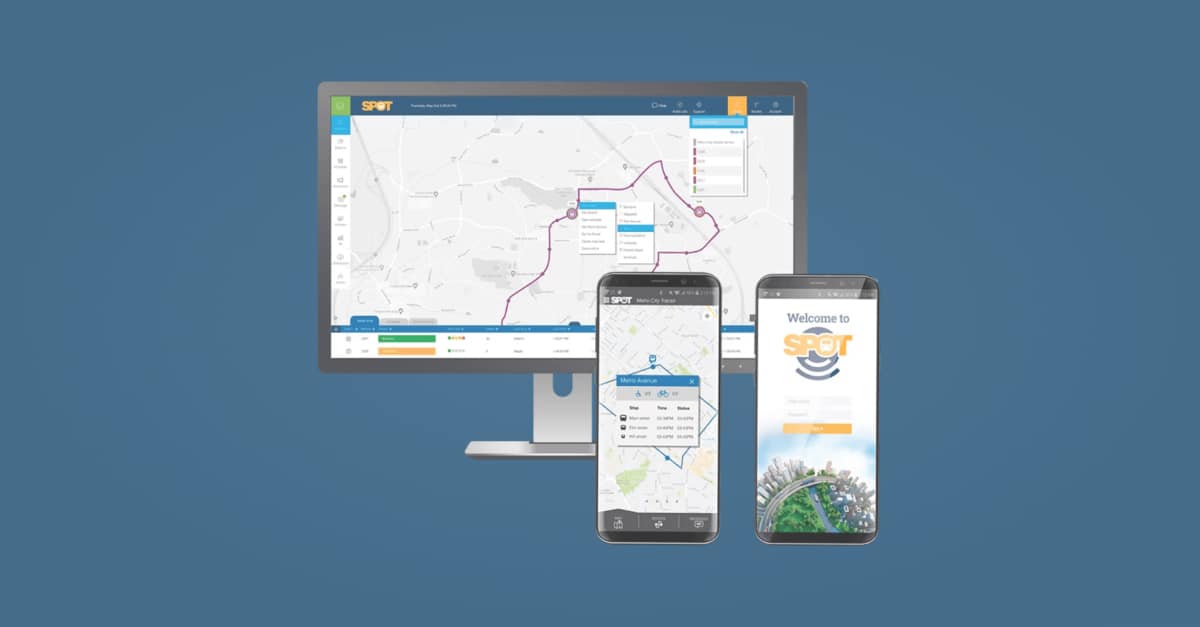
 SPOT: ETA’s Core Platform The SPOT™ ecosystem offers transit management solutions by providing a flexible, modular platform.
 SPOT: ETA’s Core Platform
  All Solutions
 CAD / AVL / GPS tracking
 Business intelligence
 Digital signs and kiosks
 Infotainment
 Automatic passenger counting
 Tally NTD Survey Software
 Tracking websites and apps
 Vehicle announcements
 All Integrations
 Demand-response and microtransit
 Fare collection
 Mobile video surveillance
 Pre-trip inspection
 Solar e-paper signage
 Vehicle health monitoring (AVM)
 Voice communication
 Transit
  All Industries
 Airport
 Campus
 Medical center
 Rail, streetcar & trolley
 Rental car
 Tourism & theme park
 Transit
 Case Studies
  Blog
Blog eBooks
 Wall of Love
 Careers
 Press
Press Events
 Support