
Blogs, news, case studies, templates, podcasts and more; all right at your fingertips. Browse our comprehensive transit resources database to find information your agency needs to improve operations, grow your knowledge base, and expand your understanding of the industry at-large.

Tale of Two Surveys: Understanding APC Certification and APTL Survey Part 2
Accurate data collection is critical for transit agencies, especially when reporting to the National Transit Database (NTD). One essential measure is the Average Passenger Trip Length (APTL), which helps agencies calculate the distance passengers travel on average for each unlinked trip. Reporting APTL is a key part of ensuring compliance and maximizing funding from the Federal Transit Administration (FTA).
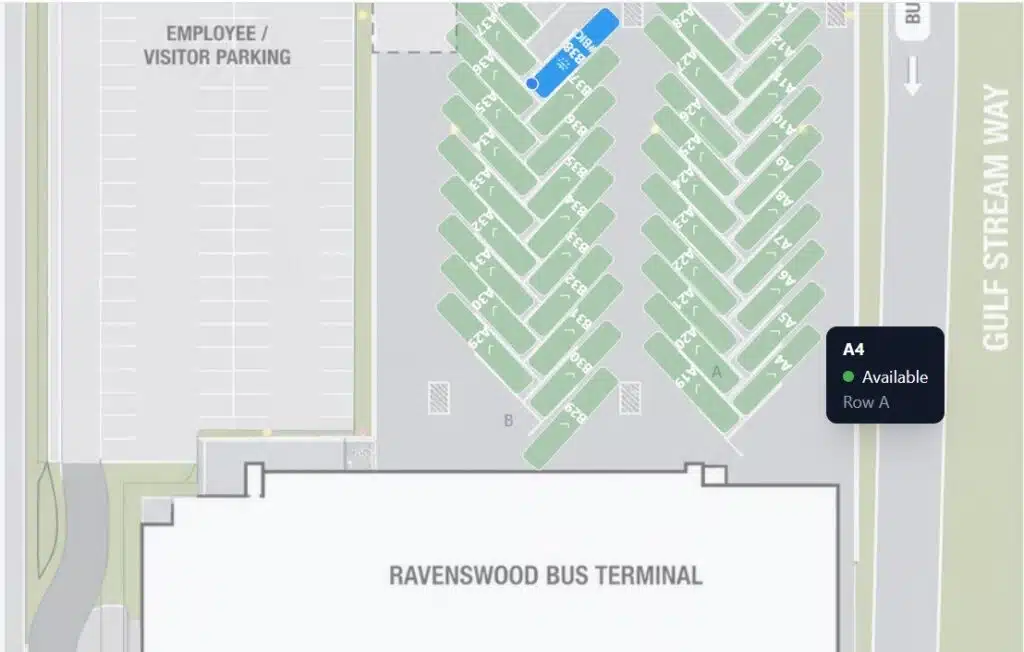
Stop Hunting for Buses. Start Running Your Yard.
Every transit agency knows the drill. It’s 5:45 AM. Pull-out starts in fifteen minutes. A dispatcher is on the radio asking where Bus 412 is parked. A utility worker is walking the lot with a flashlight. Maintenance thinks it’s in the back row. Nobody’s sure.

3 tips to build a right-sized transit tech spec.
See if this sounds like you… You work at a transit agency, and you wear a lot of hats. And not only are you overworked, but your staff is too. Most days, success is defined by just keeping your buses moving smoothly. You desperately need an upgrade to your Intelligent Transit System (or perhaps you just NEED an ITS), and after years of lobbying and cajoling your agency’s administrators you finally have both the approval and funding needed to begin the procurement process. But there’s a catch (there’s always a catch) … YOU must be the one to write the RFP.

Binghamton University Bus System Runs Smarter with ETA
Binghamton University has partnered with ETA for over a decade to support its uniquely student-run transit system with CAD/AVL, automated passenger counters, and campus ID card integration.
Designing Safer Streets for Walking, Biking, and Transit with Dr. Nick Ferenchak
In this episode of Stop Requested, Levi McCollum and Cristian Londono talk with Dr. Nick Ferenchak, Center Director for the Center for Pedestrian and Bicyclist Safety, Chair of the TRB Pedestrian Committee, and Associate Professor at the University of New Mexico. Nick explains why relying only on crash data misses many of the most dangerous corridors and how “latent demand” can help identify streets that are unsafe precisely because people avoid them. The conversation covers proactive tools like pedestrian level of traffic stress, the equity implications of unsafe infrastructure, and why arterials require more than incremental fixes. Nick also shares findings from Albuquerque’s BRT corridor, including major reductions in serious injuries and fatalities, and what it will take to design streets that work for walking, biking, and transit.

Vendor selection: Find that forever friend.
The bond between agency and ITS vendor should last long after the sale. By Matt Schroeder Director of Marketing, ETAs What makes for a good partnership when it comes to vendor selection? I mean, you’re spending hundreds of thousands—maybe millions—of dollars on a new intelligent transit system. You have sales reps from at least a half dozen vendors whispering in your ear about what you should do, what you shouldn’t do, which competing vendor has a poor reputation for service, which provider has unreliable hardware … in the end, it’s a lot of noise that you have to sift through. What benchmarks and criteria do you set for your selection? Now, before we go too far into the woods on this topic, let’s get a few things out of the way first: Every vendor says they excel at customer service. Every vendor says they have next generation technology. Every vendor says they’ll have your back; that they’re in this for the relationship, not the sale. Every vendor says those things—and so does ETA for that matter. We mean it, and I have no doubt our competition means it as well. But in the end, all those promises, all those claims, merely add up to background noise easily forgotten among pages of technical details and product offerings. In the end, you know what agencies most often cite as the deciding factor? Price. And that’s a shame, because there are some truly substantive differences between transit technology providers; differences which can make for a ho-hum addition to your operations, and life-changing, supercharged ‘holy crap can life get any better than this’ miracles. We know this, because it’s our job to research our competition and know their systems and capabilities, just as well as they do. If you’re selecting on price, it’s because you haven’t really done your homework—or your prospective vendors haven’t done an adequate job differentiating their solution from the competition. Either way, both outcomes do a disservice to you and your aspirations for this new technology you’re pursuing. In the spirit of both irony and complete candor, there’s a reason why vendors hype customer service, technology, and relationships as the key differentiators. They’re the areas where you’re going to feel the impact of your ITS purchase the most. So how do you select the right vendor? Step 1: Define your expectation for an ideal vendor partnership Before you really dive into the technical requirements, sit down with your key stakeholders and map out the qualities you want in a potential vendor. No, we’re not talking about the features of the system, but in the staff, culture, and approach to the personal side of business. You define the criteria for how you judge the people you’ll be working with, because in most cases, you’ll be stuck with them for the next 3-5 years. Do they listen to you when you speak, or are they simply waiting to make the next pitch? Do they follow up your messages and questions in a timely fashion, or do you have to chase them down for answers? Do they possess an eye for detail, or do they need reminding of key situational needs? Do you feel a personal rapport with them and look forward to conversations, or do you cringe whenever answering a call or sitting through another webinar? Whatever criteria you’re looking for in a partnership, start with the personal side. If you’re not comfortable in the short run, it’s not going to get any better one, two, or three years down the road. Step 2: Does their reputation live up with their references? References are a tricky thing. When I hire new staff, I seldom ask for references because I know they individuals they provide are certain to give glowing reviews. It’s not rocket science, so don’t take a glowing recommendation from a vendor-provided resource at face value. Instead, see if you can get a full list of their customers—especially those clients who either have long-term relationships with the vendor (customers longer than 5 years), or those who no longer use the vendor. You’ll get the straight scoop from those references. Step 3: Collaboration or dictation? How much effort does a potential vendor put into truly understanding your agency’s situation. Do they ask exploratory questions designed to uncover truth, or leading questions designed to steer you down a specific path? Is the exchange of ideas two-sided? Does the vendor tell you what you need, or do they listen before offering up suggestion and recommendations to better identify all possible solutions? Collaboration is a good method to understand the nature of a future working relationship. Ideally any interaction should be positive, open, and honest; you should walk away feeling energized and optimistic about the future of the procurement. Step 4: Warning signs. There’s a reason why in step 1 we recommended setting expectations. A vendor that fails to meet your non-technology criteria isn’t likely to be a long-term ally when it comes to diving deep into technical application. Look closely at the issues that just don’t align with your expectations for a vendor relationship.When you get into the technology, be sure to ask real questions; hard questions; situational questions. If you’ve done your research, push for answers to any concerns about their reputation and the reliability of their product. See if they give you the straight scoop, or if they try an evade providing a clean reply. Step 6: System offerings. Examine their solution carefully and make sure that the features and capabilities serve to directly address the challenges your agency is looking to solve? Is their system too high-powered? Under-powered? Do you find yourself reassessing and compromising beyond your comfort level? What level of control does their solution provide—can you self-manage most aspects of system performance, or do you have to rely on them for changes you’d rather handle yourself? Short of having unrealistic expectations (e.g. cost vs. features), be sure to take note of how far you’re moving off your desired solution while researching systems. Don’t place all your hopes on personality or bottom-line cost; ultimately, it’s your job and reputation on the line, so make a sound investment based on real issues and solutions. Make the wise call and hold out for the items that really matter. Step 5: Intangibles. These are hard to detail because they vary from client to client. It’s a good thing you set your expectations early on because the intangibles a vendor provides, whether it be personality or responsiveness or product knowledge, will become more apparent as your exploration into your ITS solution advances.Many people like to state that it was logic, reasoning, and research that resulted in a decision, but that’s never 100 percent true. Emotion, or a gut instinct, is often the deciding factor. On paper two technology solutions may line up favorably, but in the end, it will be the intangibles that help you feel confident in your selection. Final thoughts Relationships are the key to any successful endeavor. You must trust the people you work with, and you need feel respected, valued, and part of the solution. Selecting a low-price vendor because of the cost is a terrible way to decide, and more times than not, it’s a choice that leads to greater stress and disappointment. Not necessarily because the technology was inferior, but because the alignment of personality, service, and technology didn’t perfectly align. Make choices based on all available information and with an eye toward the future, because it’s that long-term relationship based on trust and mutual respect that will ultimately deliver results.
ETA completes 34 bus CAD/AVL project with University of Southern California in just three weeks
Boca Raton, FL. August 15, 2023. ETA, a leading provider of advanced transit technology solutions, is thrilled to announce that it has been awarded a CAD/AVL project with the esteemed University of Southern California (USC).
QLine Completes Implementation of ETA Technology to Enhance Operations and Rider Experience
Boca Raton, FL. September 17, 2025. QLine has completed the implementation of ETAs’ Automatic Vehicle Location (AVL), Automatic Voice Announcements (AVA), and Automatic Passenger Counting (APC) technologies across its fleet of six modern streetcars serving the Woodward Corridor in Downtown Detroit.
What We Learned at the 2025 Transit Bus Summit
In this episode of Stop Requested, hosts Levi McCollum and Christian Londono explore the unique experience of the Transit Bus Summit, an event that goes beyond traditional transit conferences by fostering direct, meaningful connections between agencies and vendors. Christian shares key takeaways from this year’s summit, including discussions on integration challenges, open data standards, and the growing demand for infotainment and hardware reliability. Hear firsthand how this tailored approach to networking and knowledge-sharing is shaping the future of transit technology—and why it’s a must-attend event for industry professionals.
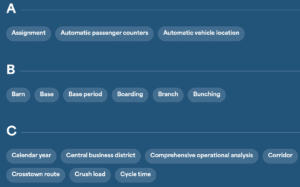
The Ultimate Transit Industry Glossary: Your Go-To Source for Industry Terms
In the world of public transit, understanding industry language is critical. Whether you’re evaluating new technology, reading procurement documents, or coordinating with vendors, transit acronyms and technical terms are everywhere. That’s why we built the ETA Glossary—a helpful resource to support transit professionals like you to quickly decode industry jargon.
How Long Does It Take to Deploy a New CAD/AVL System?
In the past, deploying a new Computer-Aided Dispatch/Automatic Vehicle Location (CAD/AVL) system could take many months or even years. Today, however, modern technologies and advanced implementation techniques have dramatically shortened deployment times, allowing for faster and more efficient system installations.
Joel Rey, Benesch’s Transit Services Director, Reveals the People, Projects, and Purpose Fueling His Success (Replay)
In this episode of Stop Requested, hosts Levi McCollum and Christian Londono sit down with Joel Rey, Director of Transit Services and Principal Associate at Benesch, to explore his 36-year journey in transit planning and consulting. Joel shares how a single university course sparked his passion for transit, leading to a career that has shaped mobility across Florida and beyond. From launching new transit systems from the ground up to navigating mergers and fostering a culture of mentorship, Joel offers candid insights into the challenges and triumphs of the industry. The conversation unfolds as Joel reflects on the evolution of transit planning, describing how his early hands-on research experiences grew into leading large-scale projects. He recounts key lessons from implementing transformative transit services such as LakeXpress and the SunRunner BRT, highlighting the importance of balancing community aspirations with financial realities and the critical role of stakeholder education. The discussion then turns to the impact of emerging technologies like microtransit, autonomous vehicles, and AI, and how these innovations are poised to disrupt and enhance the future of public transportation. Joel also shares practical advice for young professionals entering the field, emphasizing the value of soft skills, mentorship, and perseverance, and underscores that meaningful impact in transit often takes time and a willingness to engage with a broad range of projects and people.
Looking for a specific type of resource?

Blog
ETA created content on topics of interest across the transit industry. Expert insight, opinion pieces, and the latest in transit innovation.

Podcast
Conversations with the foremost experts across the transit industry to discuss lessons learned, technological innovation, community needs, and so much more.

Case Studies
See the results ETA’s clients have received through replacing legacy CAD/AVL systems, installing new functionality, and doing it all without full hardware replacements.

Press
New awarded contracts and the launch of innovative technologies are just the start of the latest ETA news.

Glossary
From general transit feed specification (GTFS) to ghost bus, the ETA curated glossary is a reference to better understand industry terminology.
Ready to see our Unified Operational Health software on your routes?
Whether your agency is modernizing an existing system, improving rider information, strengthening reporting, or working through a more connected operational approach, ETA can help make the next step clearer.