
Blogs, news, case studies, templates, podcasts and more; all right at your fingertips. Browse our comprehensive transit resources database to find information your agency needs to improve operations, grow your knowledge base, and expand your understanding of the industry at-large.
Mountain Line Selects ETAs to Replace Legacy Platform with Full CAD/AVL Suite
Boca Raton, Florida April 16, 2026 – Mountain Line, Missoula's public transit system, has selected ETAs to replace its legacy CAD/AVL solution with ETA's cloud based Intelligent Transportation System platform. The deployment will equip all 30 fixed-route buses with a fully integrated suite, including CAD/AVL, Mobile Data Terminals (MDTs), Automatic Passenger Counting (APC), Onboard Announcements (OBA/AVA), passenger infotainment screens, and Digital Pre-Trip Inspection (DVIR), giving operators a complete view of fleet operations while improving the rider experience across Missoula
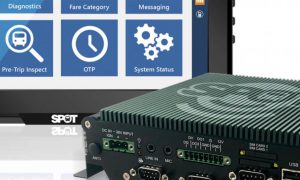
The Need for Rugged Transit-Grade Computers in Harsh Transit Environments
Introduction All-in-one tablets are unreliable and unsuitable for public transit applications. Instead, transit agencies must consider investing in transit-grade computers to record and display mission-critical information. Functioning onboard digital devices are essential to: improve operating efficiencies. automate NTD data collection. and enhance the rider experience. Though consumer-grade tablets and all-in-one Mobile Data Terminals (MDTs) with built-in touchscreen displays have become popular choices for transit agencies, these devices are not durable enough for harsh transit environments. In fact, 8 out of 10 transit agencies interviewed in 2023 have cited unreliable hardware as their primary challenge. Malfunctioning hardware is unacceptable for modern transit systems. In this blog, we will explore the reasons why tablets do not work for transit applications and discuss the advantages of using transit-grade computers with separate touchscreen MDTs. Consumer-grade tablets and all-in-one computers are designed for everyday use, but they fall short in the demanding conditions of transit environments. There are a few key reasons for this: Unreliable: Consumer-grade devices are not built to withstand the continuous vibrations, extreme temperatures, and harsh conditions common in public transportation systems. Over time, these factors lead to system failures and downtime. Consequently, agencies grow extremely frustrated with missed onboard announcements, loss of APC data, inaccurate NTD reporting data, and irritated riders due to incorrect bus arrival predictions. Unprotected: Transit agencies need to ensure the security of their systems and data. All-in-one solutions that combine processing and the touchscreen display are installed in exposed locations since the bus operator needs to interact with the system. This placement is more susceptible to theft and tampering, causing decreased system reliability and increased service disruptions. Upkeep: When these all-in-one devices fail during revenue service, it is inconvenient, time-consuming, and costly for transit agencies to manage. In this era of staffing shortages, transit agencies cannot afford to spend their time troubleshooting malfunctioning equipment as essential as MDTs. The Benefits of transit-grade computers with separate touch screen devices To address these challenges, transit agencies should consider using transit-grade computers with separate MDTs that do not have any processing responsibilities or complex operating systems. This design offers several advantages: Durability: Transit-grade computers are specifically designed to withstand the harsh conditions of transit environments. They are built with dependable connectors and housed in protective enclosures, ensuring reliability and longevity. Simple, functionally limited MDTs provide the bus operator with an intuitive driver interface and touch screen to interact with the system but do not impact bus operation or data collection. Security: By separating the touch screen display from the computer, a "dumb" terminal eliminates the risk of system failure or theft affecting the entire system. If the touch screen is damaged or stolen, the system can continue to operate without disruption. Simplified Maintenance: With a "dumb" terminal, updates and maintenance are managed centrally, reducing the burden on transit agencies and ensuring consistent performance across all devices. Cost-effectiveness: While the initial investment in transit-grade computers and touch screen MDTs may be higher than consumer-grade devices, the long-term benefits of reduced maintenance, increased reliability, and improved security make them a more cost-effective solution. Conclusion As transit agencies continue to embrace technology to enhance their operations, it is crucial to select devices that can withstand the harsh environments they will encounter. Consumer-grade tablets and all-in-one computers may seem like an appealing choice, but they are ultimately unsuitable for the demands of public transportation systems. Eventually, the bargain all-in-one solution will cost the transit agency unexpected time and money. By investing in transit-grade computers and touch screen MDTs, transit agencies can ensure the reliability, security, and longevity of their systems, ultimately providing a better experience for both operators and passengers.
Valley Regional Transit signs up for ETA’s Infotainment solution
Boca Raton, FL – January 10, 2024 — ETAs (ETA), a trailblazing provider of innovative transit solutions, proudly announces the successful deployment of its state-of-the-art onboard infotainment system for Valley Regional Transit in Boise, Idaho. This achievement signifies a major advancement in elevating the passenger experience and ushering in a new era of intelligent transit technology. Valley Regional Transit (VRT) has long been dedicated to delivering efficient and enjoyable public transportation services to the community. With the integration of ETAs' onboard infotainment system, passengers can now enjoy a seamless journey with access to real-time transit information, multimedia options, and real-time rider alerts. Key features of the onboard infotainment system include: Real-Time Transit Information: Passengers can stay informed about bus schedules, routes, and arrival times in real-time, ensuring a more predictable and convenient travel experience." Infotainment Content: The system offers a variety of real-time data feeds, including RSS feeds, weather, and news, providing passengers with an engaging journey. Interactive Maps: Geolocation-enabled interactive maps help passengers track their journey progress, making navigation through the transit system more intuitive. Emergency Alerts and Notifications: In case of emergencies or important announcements, the system delivers instant alerts and notifications to keep passengers informed and safe. Integrated Next Stop Announcements: The infotainment system seamlessly integrates with the existing onboard announcements system. Accessibility Features: Designed with accessibility in mind, the system includes integrated onboard announcements that synchronize next stop information by aligning onboard audio and display text. Enhance Data Accessibility: The project aims to increase data availability to the City's operations, thereby improving transit management, service planning, and reporting. ETAs proudly upholds its commitment to innovation and the continuous enhancement of public transportation. The deployment of the onboard infotainment system in partnership with Valley Regional Transit exemplifies this dedication. "We are thrilled to commemorate our 3-year anniversary with VRT. Our collaboration underscores our ongoing commitment to enhancing the passenger experience and transforming public transportation into a more connected and enjoyable journey," said John Maglio, President at ETAs. "Our latest onboard infotainment system, in synergy with ETA’s innovative CAD/AVL system, revolutionizes the way our riders receive information,” said VRT’s CEO, Elaine Clegg. “It offers our customers the convenience of real-time bus tracking, schedule updates, and essential announcements.” Nick Moran, IT Manager at VRT, states “ETA has skillfully overseen the project's execution, and we eagerly anticipate extending this enhanced capability throughout our entire fleet," added Nick Moran, IT Manager at VRT. For more information about ETAs and its pioneering Infotainment project with the Valley Regional Transit (VRT), please visit etatransit.com/solutions/infotainment/ or contact: Jose Mostajo Sales Manager jmostajo@etatransit.com (954) 778-1783 Facebook: @ETATransit Twitter: @ETATransit LinkedIn: linkedin.com/company/etatransit #ETATransit #MeetSPOT #RideVRT About ETA ETAs specializes in CAD/AVL technology to include: automatic passenger counting (APC), GTFS and GTFS-RT, Infotainment, traveler information systems, and digital display systems, for public transit agencies, universities, and other shuttle bus operations across the United States. For more information, visit etatransit.com, email sales@etatransit.com, or call (800) 382-0917. About Valley Regional Transit Valley Regional Transit (VRT) has been connecting people to the community they love to live in for over 20 years and is the regional public transportation authority for Ada and Canyon counties. VRT services include 22 bus routes, on-demand bus service in Eagle and Canyon County, and numerous specialized transportation options. For more information, please visit rideVRT.org.

Vendor selection: Find that forever friend.
The bond between agency and ITS vendor should last long after the sale. By Matt Schroeder Director of Marketing, ETAs What makes for a good partnership when it comes to vendor selection? I mean, you’re spending hundreds of thousands—maybe millions—of dollars on a new intelligent transit system. You have sales reps from at least a half dozen vendors whispering in your ear about what you should do, what you shouldn’t do, which competing vendor has a poor reputation for service, which provider has unreliable hardware … in the end, it’s a lot of noise that you have to sift through. What benchmarks and criteria do you set for your selection? Now, before we go too far into the woods on this topic, let’s get a few things out of the way first: Every vendor says they excel at customer service. Every vendor says they have next generation technology. Every vendor says they’ll have your back; that they’re in this for the relationship, not the sale. Every vendor says those things—and so does ETA for that matter. We mean it, and I have no doubt our competition means it as well. But in the end, all those promises, all those claims, merely add up to background noise easily forgotten among pages of technical details and product offerings. In the end, you know what agencies most often cite as the deciding factor? Price. And that’s a shame, because there are some truly substantive differences between transit technology providers; differences which can make for a ho-hum addition to your operations, and life-changing, supercharged ‘holy crap can life get any better than this’ miracles. We know this, because it’s our job to research our competition and know their systems and capabilities, just as well as they do. If you’re selecting on price, it’s because you haven’t really done your homework—or your prospective vendors haven’t done an adequate job differentiating their solution from the competition. Either way, both outcomes do a disservice to you and your aspirations for this new technology you’re pursuing. In the spirit of both irony and complete candor, there’s a reason why vendors hype customer service, technology, and relationships as the key differentiators. They’re the areas where you’re going to feel the impact of your ITS purchase the most. So how do you select the right vendor? Step 1: Define your expectation for an ideal vendor partnership Before you really dive into the technical requirements, sit down with your key stakeholders and map out the qualities you want in a potential vendor. No, we’re not talking about the features of the system, but in the staff, culture, and approach to the personal side of business. You define the criteria for how you judge the people you’ll be working with, because in most cases, you’ll be stuck with them for the next 3-5 years. Do they listen to you when you speak, or are they simply waiting to make the next pitch? Do they follow up your messages and questions in a timely fashion, or do you have to chase them down for answers? Do they possess an eye for detail, or do they need reminding of key situational needs? Do you feel a personal rapport with them and look forward to conversations, or do you cringe whenever answering a call or sitting through another webinar? Whatever criteria you’re looking for in a partnership, start with the personal side. If you’re not comfortable in the short run, it’s not going to get any better one, two, or three years down the road. Step 2: Does their reputation live up with their references? References are a tricky thing. When I hire new staff, I seldom ask for references because I know they individuals they provide are certain to give glowing reviews. It’s not rocket science, so don’t take a glowing recommendation from a vendor-provided resource at face value. Instead, see if you can get a full list of their customers—especially those clients who either have long-term relationships with the vendor (customers longer than 5 years), or those who no longer use the vendor. You’ll get the straight scoop from those references. Step 3: Collaboration or dictation? How much effort does a potential vendor put into truly understanding your agency’s situation. Do they ask exploratory questions designed to uncover truth, or leading questions designed to steer you down a specific path? Is the exchange of ideas two-sided? Does the vendor tell you what you need, or do they listen before offering up suggestion and recommendations to better identify all possible solutions? Collaboration is a good method to understand the nature of a future working relationship. Ideally any interaction should be positive, open, and honest; you should walk away feeling energized and optimistic about the future of the procurement. Step 4: Warning signs. There’s a reason why in step 1 we recommended setting expectations. A vendor that fails to meet your non-technology criteria isn’t likely to be a long-term ally when it comes to diving deep into technical application. Look closely at the issues that just don’t align with your expectations for a vendor relationship.When you get into the technology, be sure to ask real questions; hard questions; situational questions. If you’ve done your research, push for answers to any concerns about their reputation and the reliability of their product. See if they give you the straight scoop, or if they try an evade providing a clean reply. Step 6: System offerings. Examine their solution carefully and make sure that the features and capabilities serve to directly address the challenges your agency is looking to solve? Is their system too high-powered? Under-powered? Do you find yourself reassessing and compromising beyond your comfort level? What level of control does their solution provide—can you self-manage most aspects of system performance, or do you have to rely on them for changes you’d rather handle yourself? Short of having unrealistic expectations (e.g. cost vs. features), be sure to take note of how far you’re moving off your desired solution while researching systems. Don’t place all your hopes on personality or bottom-line cost; ultimately, it’s your job and reputation on the line, so make a sound investment based on real issues and solutions. Make the wise call and hold out for the items that really matter. Step 5: Intangibles. These are hard to detail because they vary from client to client. It’s a good thing you set your expectations early on because the intangibles a vendor provides, whether it be personality or responsiveness or product knowledge, will become more apparent as your exploration into your ITS solution advances.Many people like to state that it was logic, reasoning, and research that resulted in a decision, but that’s never 100 percent true. Emotion, or a gut instinct, is often the deciding factor. On paper two technology solutions may line up favorably, but in the end, it will be the intangibles that help you feel confident in your selection. Final thoughts Relationships are the key to any successful endeavor. You must trust the people you work with, and you need feel respected, valued, and part of the solution. Selecting a low-price vendor because of the cost is a terrible way to decide, and more times than not, it’s a choice that leads to greater stress and disappointment. Not necessarily because the technology was inferior, but because the alignment of personality, service, and technology didn’t perfectly align. Make choices based on all available information and with an eye toward the future, because it’s that long-term relationship based on trust and mutual respect that will ultimately deliver results.
Leading the Charge to Zero-Emission Transit
What does it take to electrify a transit fleet? In this episode of Stop Requested, Levi McCollum and Christian Londono explain the challenges and benefits of zero-emission buses. Learn about the key technologies — from battery-electric to hydrogen fuel cells — and why transit agencies are racing to secure funding and develop Zero Emission Transition Plans. They also cover practical tips for agencies looking to start the shift, including infrastructure planning, working with power providers, and understanding the true costs of going electric.

Forget text-to-speech for your on-board announcements, pre-recorded audio is better.
Turn up the volume on pre-recorded audio. By John Maglio, President ETAs Full disclosure: I’ve always disliked text-to-speech (TTS). It’s a wholly impersonal means of conveying critical information to passengers. From the sanitary, robotic pronunciation to the complete lack of support for local multi-lingual dialects. TTS is a poor way to connect with your riders and fails to measure up to the benefits of pre-recorded audio. I do understand the arguments for the use of TTS: Convenient: You can quickly input a message and it’ll be annunciated Real-time announcements: just type and go. Economical: No need to invest in high-capacity hard drives And truth be told, I’d rather have a text-to-speech announcement system as opposed to having nothing at all. It sure beats asking my drivers to take their eyes of the road to make a manual announcement over the loudspeaker. Safety, after all, is job one. But here’s the rub. Text-to-speech systems do nothing to build your agency’s brand or convey to riders the nuance of local life. Poor quality: No synthesized voice ever sounds a clear as genuine human words Added maintenance: It takes a lot of effort to tweak pronunciation engines to correctly enunciate words and phrases It’s part of my job to ride public transit systems, and I sometimes must stifle a laugh when I hear the text-to-speech audio botch the pronunciation of a stop. What is not funny is to see the passengers cringe at the error. It’s not hard to see that it bothers them, or to strain to understand what the message says. That’s a disconnect of brand, value, and sense of community, and ultimately that hurts the relationship between agency and customer. Pre-recorded audio enhances the agency’s relationship with its customers Your riders are just as important to the lifeblood of your operations as your agency is to their ability to get from points A to B. It’s a co-dependent partnership worthy of effort to ensure the highest possible transit experience. Adding value to the transit experience is straightforward and can be as simple as getting the pronunciation of key streets and landmarks correct. It’s a matter of local pride; it shows investment in the community. Pre-recorded audio is a solution to the shortfalls of text-to-speech systems, and it’s one I firmly believe provides transit agencies with greater options to engage customers and deliver a highly localized experience. Pre-recorded audio is more economical than you’ve been led to believe The knock on pre-recorded audio has long centered around two issues: Expensive: Audio generates large file sizes and requires high-capacity hard drives Long turnaround/production time: Audio recordings are manually processed and require coordination between voice talent and production studios The cost issue is never one to be taken lightly, however in the specific case of the file size of custom audio is rooted in decade-old thinking. The truth is that modern high-capacity hard drives are cheap. Pre-recorded is faster to implement that you may think The other argument, the turnaround time remains a valid concern. However, I would offer that it is not as large an obstacle as you may think. Agencies with an established relationship with an audio production facility often turn around high priority recordings by the next business day—sometimes sooner. When you think about it, how often do you really need to generate a real-time on-board message? The truth is that it’s a rare occurrence, often relating to a temporary traffic delay or situational emergency. By the next day, or even an hour later, that situation is no longer an issue. In most cases, your traveler information systems (i.e. bus-tracking websites, mobile apps, station and on-board signage), have already pushed out the notifications to your passengers and solved the immediate need for any TTS solution. Your typical use for text-to-speech is for long-standing purposes. Permanent stops, or repetitive alerts. Any changes to routes or stations is going to come with a significant amount of planning and forethought, so why not make the effort to do it right? I’ve been in the transit space since the early aughts. In all my time delivering transit technology to agencies across the country, I am hard pressed to recall many instances that truly merited real-time text to speech capabilities. With the right partnership between agency, recording studio, and thoughtful selection of local talent, custom audio production can easily be turned same day. Use pre-recorded audio to span geographic and ethnic boundaries Pre-recorded audio provides a chance to truly deliver precisely the tone and personality you seek to strike when communicating with your passengers. Barriers exclusive to TTS engines—gender, dialect, multilingual, emotion—all disappear with custom recorded audio. Recently, we implemented a custom-audio solution for South Florida’s Tri-Rail system which provided not one, but three distinct custom recordings—English, Spanish, and Creole—to better appeal to regular customers and tourists, alike. The customer chose his vocal talents, directed the proper enunciation, and approved the final audio before deployment; a process that proved to be very popular with their riders, visitors to the region, and employees alike. But what about voice talent? What if the person who recorded your initial audio moves or is no longer available? It’s not an unreasonable question, and a persistent challenge to maintaining a consistent audio library. In the nearly 20 years that I’ve advocated custom audio, this issue has cropped up from time to time. Our solution to this issue has been to re-record all audio for our transit customers at no additional charge. It’s not a sales pitch, nor is it a questionable business decision—not if maintaining the dedication to providing the best available product for our clients is the end goal. Lifetime recording is factored into the initial budget, and truthfully, we plan on changing out audio every couple of years as routes are added, dropped, and altered. Still, delivering the highest quality experience for passengers is the driving factor behind the decision, and when quality of engagement and an enhanced ridership experience is the goal, it’s worth it to us to provide this level of service. Isn’t custom audio more expensive? The answer truly depends on how one views the cost of a product or service. There’s the up-front cost of doing something, and then there’s the long-term cost; there’s the cost of having something done right, and the cost of having to repeatedly redo something because the effort to quality was sacrificed in favor of a lower initial investment. What is the cost of having 100 audio files produced correctly over the span of a day or two, versus the cost of having to pay an employee to manually adjust and tweak the pronunciation of 100 text-to-speech files? How much time does that take when you factor in employee costs and lost productivity toward other critical job functions? Consider a more real-world analogy: Have you ever bought the cheaper paper towels because you wanted to cut costs at the grocery store? Have you noticed that those cheaper towels weren’t as absorbent and you used twice as many to clean up that glass of spilled milk—or that because of the cheaper towels it took twice as long to clean up the mess? Is the up-front cheaper cost really a savings if it takes more time to complete, or results in a less efficient solution? Pre-recorded audio delivers on its potential. Pre-recorded audio delivers a better end-product in terms of clarity, quality, and options to transit agencies looking to build long-term brand value and deliver a heightened ridership experience. Many of the factors that initially contributed to the rise of TTS (cost, turnaround) simple aren’t as relevant as they once were. It’s not that text-to-speech is a bad solution, it’s just that it’s not as good a solution as custom audio. When the value impact of its production are factored in, including the boost to rider satisfaction and improved overall experience, doesn’t it make sense to give pre-recorded audio another listen? — For a demonstration of ETA's SPOT® Intelligent Transit System, please click here or call 1-800-382-0917.
How Palm Tran Drives Ridership Growth with Planning Director, Yash Nagal
In this special episode of Stop Requested, hosts Levi McCollum and Christian Londono welcome their first-ever guest, Yash Nagal, Director of Transit Planning at Palm Tran. Together, they dive into the nationwide surge in transit ridership, explore innovative strategies like Palm Tran's Buslink program, and discuss how frequency and integration can transform public transportation. Yash shares key insights on tailoring services to community needs, the role of land use in transit success, and why storytelling is essential for the future of public transit. Tune in to hear expert advice, inspiring examples, and actionable takeaways for agencies everywhere.

Don’t get your buses in a bunch.
Modern transit agencies are continually challenged to improve the efficiency of their operations. It is often a challenging balancing act to minimize passenger wait times while maintaining an efficient passenger load. If vehicles run too closely together, passenger wait times and the efficiency of passenger loads will suffer. (This is when a bus tracker or real time GPS comes in to smooth this problem out, as we'll explain more.) Despite the best intentions of transit operators, the bunching of vehicles (buses or shuttles) occurs when two or more vehicles operate on a route, in the same location, at the same time. Also known as clumping, platooning, or convoying, there are numerous contributing factors in bunching—many of which are unavoidable, such as: Traffic congestion Construction delays and detours Varying passenger loads Driver behavior Rather than arriving at a destination at regularly spaced intervals, vehicles on the same assigned route arrive at the same time (or very close together). This has the effect of providing unreliable service for riders in the form of longer wait times and overcrowded vehicles than would normally be present had the schedule been followed. From an operational standpoint, the impacts of bunching can be just as inconvenient to the agency as it is to the rider: More inbound calls Less than stellar performance schedule Customers complaining Overbalanced, increased loads To solve this, real-time ITS uses GPS solutions (a.k.a. bus tracker) to ensure bunching doesn't happen. Specifically, bus trackers give visual cues so that potential bunching scenarios can be spotted and then proactive steps can be taken to mitigate that. Overall, GPS increases operational awareness so that transit agencies are informed of any possible issues and that operators can make informed decisions to decrease the chances of bunching. Because of this technology, riders have a better riding experience—with fewer delays and no overcrowding.
ETAs deploys digital signage project at Hampton Roads Transit
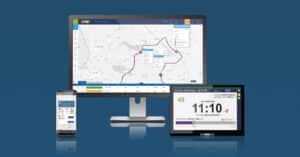
Boca Raton, FL October 3, 2024 — ETAs, a leading provider of advanced transit technology solutions, is thrilled to announce that it has deployed a digital signage project with Hampton Roads Transit (HRT). The system includes ETA’s content management system to drive real-time passenger information, infotainment content, and rider alerts to digital LCD displays strategically placed at multiple transit centers. “HRT’s selection of ETAs to provide its infotainment system highlights how standards such as GTFS/GTFS-RT allow agencies to deploy cutting-edge technologies such as ETA’s content management system using their existing CAD/AVL system,” says ETA’s Director of Business Development, Jariel Adler. HRT awarded this project to ETA in May 2023. The infotainment system has been deployed across 12 LCD screens at 4 transit centers. ETA’s digital signage system is web-based, full-featured, easy-to-use, and uses hybrid cloud strategy with single sign-on capabilities. About Hampton Roads Transit Hampton Roads Transit (HRT) serves the Hampton Roads region of Southeastern Virginia with transportation solutions that are reliable, safe, efficient and sustainable. Last year HRT boarded nearly 8.6 million passengers in the six cities it serves with local and express bus routes, the Tide light rail, Elizabeth River Ferry, VB Wave trolley and paratransit services. About ETAs ETAs is a leading provider of innovative transit solutions, committed to revolutionizing public transportation for agencies and passengers alike. Our state-of-the-art technology is designed to enhance efficiency, safety, and the overall transit experience. ETA specializes in CAD/AVL technology to include automatic passenger counting (APC), GTFS and GTFS-RT, traveler information systems, and digital display systems for public transit agencies, universities, and other shuttle bus operations across the United States. For more information, visit etatransit.com, email sales@etatransit.com, or call (800) 382-0917. Facebook: @ETATransit Twitter: @ETATransit LinkedIn: linkedin.com/company/etatransit #ETATransit #MeetSPOT
QLine Completes Implementation of ETAs Technology to Enhance Operations and Rider Experience
Boca Raton, Florida September 17, 2025 – QLine has completed the implementation of ETAs’ Automatic Vehicle Location (AVL), Automatic Voice Announcements (AVA), and Automatic Passenger Counting (APC) technologies across its fleet of six modern streetcars serving the Woodward Corridor in Downtown Detroit.
SPOT™ CAD/AVL System Deployed in Florence County, SC
Boca Raton, Florida – September 9, 2024 – ETAs, a leading provider of intelligent transportation system (ITS) solutions, today announced the successful implementation of a new Computer-Aided Dispatch/Automatic Vehicle Location (CAD/AVL) system for the Pee Dee Regional Transportation Authority (PDRTA). Awarded in April 2024 and deployed within two months, the project equips PDRTA with cutting-edge technology to enhance fleet management, real-time data access, and passenger experience. PDRTA sought a reliable and modern CAD/AVL system to ensure accurate data collection, improve operational efficiency, and provide real-time information to riders. After evaluating proposals from multiple vendors, PDRTA selected ETAs for its proven track record, including a remarkable 97% customer retention rate, and its comprehensive SPOT® solution. “PDRTA has been a fantastic partner throughout this project,” said Jariel Adler, Director of Business Development and Partnerships at ETAs. “The new SPOT® system will significantly improve service for the Pee Dee community by streamlining operations and making public transportation more accessible for everyone.” SPOT® Delivers Enhanced Efficiency and Rider Experience On-bus systems: Rugged and user-friendly, these computers streamline operations for bus operators with single sign-on functionality, eliminating the need to log in to multiple systems. Cloud-based software: Web-based software provides modules for planning, managing detours, dispatching, generating reports, viewing live dashboards, and more. This simplifies NTD reporting and streamlines management of headways and on-time performance. Real-time passenger information systems: Passengers can leverage web, mobile app, and digital signage tools to plan trips, track bus arrival times, and receive real-time alerts. “Jordan D’Angelo, Program Manager at PDRTA, praised ETAs for their professionalism and impressive speed of execution. Their high customer retention rate initially drew us in, but their expertise throughout the project solidified our decision. We were particularly impressed by how quickly ETA deployed the new system – within just two months! I wouldn't hesitate to recommend them to any agency seeking a smooth and efficient CAD/AVL upgrade.” About PDRTA The Pee Dee Regional Transportation Authority (PDRTA) is a vital public transit agency serving the Pee Dee region – Chesterfield, Darlington, Dillon, Florence, Marion, and Marlboro. PDRTA offers a variety of services to keep the community mobile, including fixed-routes, paratransit services, deviated-fixed-routes, commuters, and demand response services. PDRTA plays a significant role in connecting people to jobs, schools, and essential services across the region. Their dedicated team of approximately 100 people ensures the smooth operation of its fleet, providing residents with a reliable and accessible transportation option. Facebook: https://www.facebook.com/thebuswillgetyouthere/ Instagram: https://www.instagram.com/pdrta/ LinkedIn: https://www.linkedin.com/company/pee-dee-regional-transportation-authority/ About ETAs ETAs is a leading provider of innovative transit solutions, committed to revolutionizing public transportation for agencies and passengers alike. Our state-of-the-art technology is designed to enhance efficiency, safety, and the overall transit experience. ETA specializes in CAD/AVL technology to include automatic passenger counting (APC), GTFS and GTFS-RT, traveler information systems, and digital display systems for public transit agencies, universities, and other shuttle bus operations across the United States. For more information, visit etatransit.com, email sales@etatransit.com, or call (800) 382-0917. Facebook: @ETATransit Twitter: @ETATransit LinkedIn: linkedin.com/company/etatransit #ETATransit #MeetSPOT
ETAs Secures Contract with Via to Enhance Sioux Area Metro Public Transit Network in Sioux Falls, S.D.
Sioux Falls, SD – March 18, 2024 – ETAs, a leading CAD/AVL bus technology provider, and Via, the global leader in TransitTech, have partnered to upgrade the Sioux Area Metro (SAM) public transit network in Sioux Falls, South Dakota. In a mere four weeks, ETA deployed a state of the art 26 bus fixed route ITS project. More impressively, ETA demonstrated their dedication by completing the bus installation in one week during the December 2023 holiday season. The benefits of the new CAD/AVL System include: Enhanced Reliability: Real-time bus tracking through the CAD/AVL system allows riders to see exactly when the next bus will arrive, improving trip planning and reducing wait times. Improved Operational Efficiency: Dispatchers can optimize routes, manage detours, and respond faster to delays or incidents with real-time data on bus locations. Data-Driven Decision Making: The system gathers valuable data on operational patterns, which can be used to improve service and resource allocation. This collaboration between two leading public transit technology providers is allowing the City of Sioux Falls to achieve its vision of creating a stronger public transportation ecosystem. Since the partnership commenced in early January, the SAM bus network has already seen steady ridership growth, and passengers have enjoyed disruption-free service – a feat in the face of South Dakota’s often challenging winter weather. "ETAs is thrilled to partner with Via and the City of Sioux Falls to modernize the SAM system," said Jariel Adler, Director of Business Development and Partnerships of ETAs. "Our goal is to provide residents and visitors with a more convenient, reliable, and user-friendly transit experience. Through this partnership, we are leveraging cutting-edge technologies to optimize operations and improve the quality of life for the community." "Via is excited to collaborate with ETAs, a team that shares our vision for using intelligent technology to transform public transit networks to create more efficient service and better rider experiences. We're proud of the results we've delivered for the community and we look forward to continued success in 2024," said Emily Shapiro, Via's General Manager for Sioux Falls. Together, ETAs, Via, and the City of Sioux Falls are reshaping urban mobility and creating a more connected community. About ETAs ETAs specializes in CAD/AVL technology to include automatic passenger counting (APC), GTFS and GTFS-RT, traveler information systems, and digital display systems for public transit agencies, universities, and other shuttle bus operations across the United States. For more information, visit etatransit.com, email sales@etatransit.com, or call (800) 382-0917. About Via Founded in 2012, Via pioneered the TransitTech category by using new technologies to develop public mobility systems — optimizing networks of buses, shuttles, wheelchair accessible vehicles, school buses, autonomous vehicles, and electric vehicles around the globe. Building the world’s most efficient, equitable, and sustainable transportation network for all riders — including those with limited mobility, those without smartphones, and unbanked populations — Via works with its partners to lower the costs of public transit while providing transportation options that rival the convenience of a personal car while reducing the environmental impact. At the intersection of transportation and technology, Via is a visionary market leader that combines software innovation with sophisticated service design and operational expertise to fundamentally improve the way the world moves, providing technology in 700 communities and more than 35 countries and counting. #ETATransit #MeetSPOT #RideWithVia #TransitTech
Looking for a specific type of resource?

Blog
ETA created content on topics of interest across the transit industry. Expert insight, opinion pieces, and the latest in transit innovation.

Podcast
Conversations with the foremost experts across the transit industry to discuss lessons learned, technological innovation, community needs, and so much more.

Case Studies
See the results ETA’s clients have received through replacing legacy CAD/AVL systems, installing new functionality, and doing it all without full hardware replacements.

Press
New awarded contracts and the launch of innovative technologies are just the start of the latest ETA news.

Glossary
From general transit feed specification (GTFS) to ghost bus, the ETA curated glossary is a reference to better understand industry terminology.
Ready to see our Unified Operational Health software on your routes?
Whether your agency is modernizing an existing system, improving rider information, strengthening reporting, or working through a more connected operational approach, ETA can help make the next step clearer.