
Blogs, news, case studies, templates, podcasts and more; all right at your fingertips. Browse our comprehensive transit resources database to find information your agency needs to improve operations, grow your knowledge base, and expand your understanding of the industry at-large.
ETA Expands Partnership with PDRTA, Completing APC Deployment
Boca Raton, FL. May 19, 2026. Pee Dee Regional Transportation Authority (PDRTA) has expanded its partnership with ETA with an APC deployment, building on a relationship that began with ETA’s CAD/AVL implementation and a successful 10-vehicle APC pilot program.
Why Good Transit Planning Starts with Observation at SacRT with James Drake
In this episode of Stop Requested, Levi McCollum and Christian Londono talk with James Drake, Senior Manager of Service Planning at Sacramento Regional Transit (SacRT). With over 20 years at one agency, James shares how transit service actually comes together, from data and analysis to the service riders experience every day. The conversation explores how planners think about networks instead of individual routes, how service changes are developed and implemented, and why balancing ridership and coverage isn’t as simple as it seems. James also discusses the role of data, the importance of observation and operator input, and how microtransit fits into a broader transit system.
Mass Transit Magazine Editor-in-Chief, Megan Perrero, on the Power of Transit Storytelling (Replay)
This week, Stop Requested replays our conversation with Megan Perrero, Editor-in-Chief of Mass Transit Magazine. Levi McCollum and Christian Londono revisit a discussion about how transit stories are reported and how coverage shapes agency credibility and rider understanding. Megan reflects on how her experience as a daily Chicago rider informed her journalism, the role of trade publications in the industry, and why transparency and clear communication matter for public buy-in. The episode also covers sector trends, the 40 Under 40 program, and advice for new journalists. If you missed it the first time, this episode offers a useful perspective on the connection between media, messaging, and public transit.
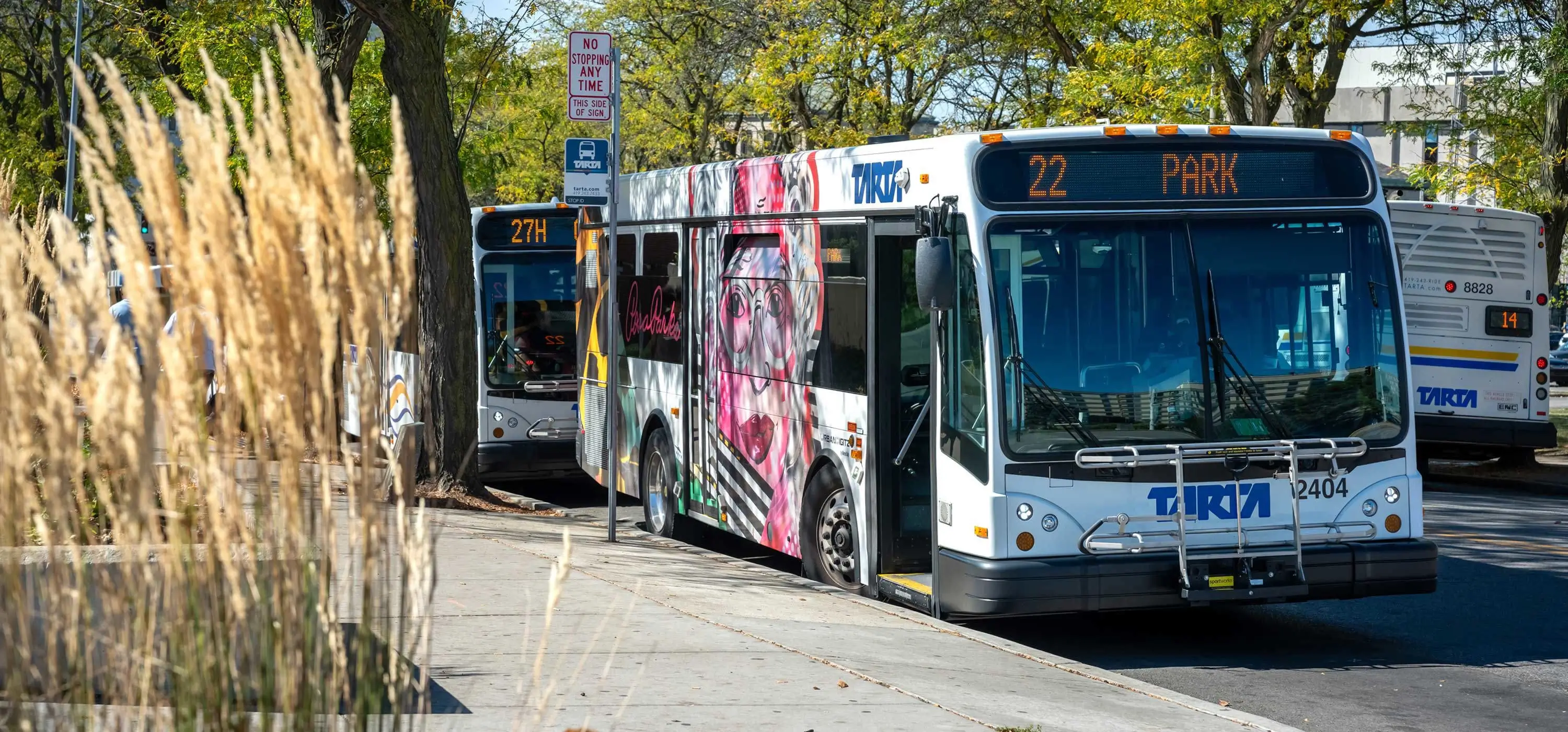
TARTA Achieves APC Certification Using ETA’s Tally Solution
TARTA achieves APC certification using ETA’s Tally solution enabling automated, FTA-compliant ridership reporting to streamline operations and unlock new funding opportunities.

Why Universities Are Upgrading from legacy solutions to ETA’s CAD/AVL System
Universities face unique pressures: student and faculty ridership satisfaction, limited budgets, and the need for accurate data to secure funding. Outdated systems, consumer-grade tablets, and unreliable reporting only make things worse.
ETA Delivers Innovative Solution, Exceeds Expectations at Boise State University
Boca Raton, FL. October 9, 2024. ETA is proud to announce the successful implementation of a custom-built CAD/AVL system for Boise State University. Boise State University operates without a traditional dispatcher, necessitating a self-dispatching capability within the CAD/AVL system. Recognizing this unique requirement, ETA quickly developed a live mapping module that empowers bus operators to efficiently manage their routes by visualizing the locations of other buses in real-time, enabling them to better serve riders by making more informed travel decisions. “We are thrilled with the outcome of this partnership,” said Gabe Finkelstein, Assistant Director of Transportation at Boise State University. “ETA’s ability to quickly adapt to our specific needs and deliver a solution that exceeds our expectations is commendable. The live mapping module has significantly improved our bus operations and contributed to a smooth start to the school year.” ETA is committed to providing tailored transportation solutions that address the unique challenges faced by its clients. The successful implementation at Boise State University exemplifies the company’s dedication to customer satisfaction and technological innovation. “I vividly remember my initial conversation with Boise State University,” said John Maglio, President of ETAs. “It was clear that their needs were atypical, and we would need to devise a solution to meet the university’s needs before the start of the fall semester. I assured them that we would develop a solution that would completely transform their operations. This project is a testament to our team’s ingenuity and our commitment to exceeding customer expectations.” About ETA ETA is a leading provider of innovative transit solutions, committed to revolutionizing public transportation for agencies and passengers alike. Our state-of-the-art technology is designed to enhance efficiency, safety, and the overall transit experience. ETA specializes in CAD/AVL technology to include automatic passenger counting (APC), GTFS and GTFS-RT, traveler information systems, and digital display systems for public transit agencies, universities, and other shuttle bus operations across the United States. For more information, visit etatransit.com, email sales@etatransit.com, or call (800) 382-0917. About Boise State University Boise State University is a public research university located in Boise, Idaho. Founded in 1932, it has grown from its beginnings as a junior college to a comprehensive university offering bachelor’s and master’s degrees, as well as some doctoral programs. With a focus on student success and innovation, Boise State has a large student body and is known for its vibrant campus life. Facebook: @ETATransit Twitter: @ETATransit LinkedIn: linkedin.com/company/etatransit #ETA #MeetSPOT
Fighting to Win Better Transit with Author & Advocate Carter Lavin
Transportation advocate and author Carter Lavin joins Levi McCollum and Christian Londono to unpack why “being right isn’t enough” in transit and how to actually win. We explore how to shift what’s possible, organize riders where they are, and build coalitions that move from local fights to statewide wins. Carter shares lessons from the Bay Bridge bus-lane campaign, explains why every bench, bulb-out, and bus lane is a political choice, and lays out actionable steps for advocates and agencies to turn good ideas into real improvements. Carter’s book: If You Want to Win, You’ve Got to Fight: A Guide to Effective Transportation Advocacy. Available at Island Press: www.islandpress.org/fight Use code FIGHT at checkout for 20% off.
What We Learned at the 2025 Transit Bus Summit
In this episode of Stop Requested, hosts Levi McCollum and Christian Londono explore the unique experience of the Transit Bus Summit, an event that goes beyond traditional transit conferences by fostering direct, meaningful connections between agencies and vendors. Christian shares key takeaways from this year’s summit, including discussions on integration challenges, open data standards, and the growing demand for infotainment and hardware reliability. Hear firsthand how this tailored approach to networking and knowledge-sharing is shaping the future of transit technology—and why it’s a must-attend event for industry professionals.

EV vs. Hydrogen Buses: How U.S. Public Transit Agencies Are Navigating the Zero-Emission Transition
As American cities race toward cleaner, greener transportation, public transit agencies are at the forefront of adopting zero-emission buses. The two leading technologies-battery-electric (EV) and hydrogen fuel cell buses-each offer unique benefits and challenges. Drawing on robust data from the U.S. Department of Energy, agency case studies, and international trends, this post explores how agencies are charting the future of zero-emission transit.

What factors influence customer satisfaction?
Communication, not technology, determines the satisfaction with transit systems It is a rarity in the mass transit technology market when we strike up a conversation with a potential customer, and they sing the praises of their current ITS vendor. Let me say it another way—transit operators aren’t happy with their tech partners. According to our annual transit agency surveys, more than two-thirds are less than thrilled. The oddest part of this conversation is just how seldom their complaints don’t center on the technology itself but rather the quality of the after-sales support they receive—or lack thereof. You read that right; their issues are seldom with the product. The technology, for the most part, works fine. It’s the relationship with their vendor that has them pursuing new systems. So, what have transit operators so chaffed with the quality of their support? In general, the complaints we here typically fall into one of the following three categories: Responsiveness Time to resolution Frequency of interaction It’s a shame when the reason for severing a relationship and introducing tumult to their operations, staff, and riders has nothing to do with the performance of the technology itself. After all, technology IS supposed to highlight the vendor/client relationship. Right? Right? What are the elements of a quality support experience? Just as the technology on vehicles is a science, so is the art of supporting the client and product. ITS systems are complicated, with many moving parts, including hardware, software, configuration, and data components. As rigorously tested as these systems are, one errant setting or faulty component can kick off an intensive troubleshooting effort to narrow down the cause. So how does one turn complexity into a recipe for success? —A spirit of partnership The first consideration we address is that both vendor and customer must dedicate themselves to the support process. It’s a two-way street, and the client needs to understand their role in the performance of their technology; this includes: Performing routine maintenance Providing detailed information for troubleshooting Being proactive and vocal about the issues they experience Without that level of client-side participation, the support process can drag out far longer than anticipated and lead to frustration on both sides. Similarly, the vendor must actively support their product, providing routine progress updates, delivering on all promises made, and keeping their customers well-educated and informed. When something goes wrong, customers want to know that their concern has been addressed. They don’t want to submit a support request or question only to have days or weeks pass before any sort of reply is received—or worse yet, no response at all. Both sides must understand that the ownership experience requires that they join at the hip, with each entity supporting the other in as diligent and thorough a manner as possible. —Training and education ITS systems, like ETA’s SPOT™ platform, are complex. Though much of the intricacy takes place behind the scenes and is never exposed directly to the customer, the need for formalized and ritual training is essential. Too often, the only training that a customer receives is at the launch of a new transit system. As the system evolves or employees transition to new opportunities, a gap between what was and what is forms, and the relevancy of that initial instruction become less relevant. Vendors must bake supplemental education into every technology deployment, including identifying the right cadence for “booster” training or situational instruction for new hires or when new features join the ITS solution. An online, self-service database is helpful for self-guided learning, and a guided program must be part of the process to ensure effective instruction. An additional consideration is to ensure that the training focuses on the systems relevant to the individual role or group function. To train the entire staff of a transit operation is pure folly if one expects employees to be able to identify which information is critical to the performance of their jobs. It’s normal for people to become inattentive, tired, and distracted when they feel disconnected from the source material. Role-based instruction is hyper-focused, relevant education based on the needs of a specific subset of transit staffers, e.g., drivers, dispatchers, planners, etc. This education approach delivers only the materials needed for that group to perform their tasks effectively. The staff learns high-level concepts about how their role fits into the larger picture and takes a deep dive into the technology and features they will use in their day-to-day tasks. The result is a more relevant, more precise training that encourages participation and retention. —Responsive input and feedback The answer to this question is far more nuanced than one would think. Transit technology—especially software—are complicated. It can take time to research an issue before a solution presents itself. Responsiveness by the client can go a long way to speeding up the process, but it isn’t the only factor. From a client’s standpoint, they want the system to work as designed. The “what and how” of the situation is often of little concern. They are, after all, transportation professionals—not software engineers. A client wants their vendor to be a partner in not only the performance of the system but the success it delivers to their operation. From a vendor standpoint, a responsive customer takes an active interest in providing timely feedback to the original inquiry. Have they performed the troubleshooting steps? Is the information they provide to the original or follow-up communications detailed and complete—or is it highly generalized, like “the mobile data terminal doesn’t work.” Both sides want a timely answer to the questions asked in most cases. It’s an observation that hardly falls within the realm of rocket science, but one that seems to be a common tripping point and trigger for a great deal of angst between agency and supplier. This reality is often the source of a great deal of friction between customer and vendor, which makes responsiveness even more critical to communicating the status of the concern and setting realistic expectations for a resolution. —Frequency of interaction The human factor is an essential and often overlooked aspect of the client/customer relationship. Consider for a moment the procurement process. In the beginning, contact is frequent. Sales representatives are attentive and in constant contact while negotiating the sale. Once signed contracts exist, the communication escalates further as the implementation teams coordinate with agency teams to finalize system design, schedule implementation, and conduct training. Once the vendor turns over the golden keys to the new technology, the vendor turns their attention to the next opportunity, and the shock of silence settles in. The transit operator is left to use the system. Speaking from the vendor viewpoint, this is the natural evolution of procurement. From the customer standpoint, however, the abrupt cessation of activity following the completion of a project can leave agencies feeling adrift; a “you got my money, and now you’re leaving?” situation. It’s not uncommon for technology vendors to see “no news” as “good news” when past projects are concerned. A neglected customer risks becoming an unhappy client, so it is of little surprise that they pursue higher-quality relationships at the contract end. Keeping those relationships strong and proactive with customer communication long after that initial flurry of activity becomes vital. Closing thoughts Providing quality customer service isn’t some uncrackable mystery. It’s rooted in common sense. If you are a client unhappy with your vendor, it’s probably time to pick up that phone and let your vendor know. If you’re a supplier, you had better take that call—or better yet, run through your list of accounts and touch base with those customers you haven’t spoken to in a while. Run through the list of concerns. Clear the air. Compare expectations to performance and set goals for measurement. At some point, both sides were ecstatic about this joint project—and it’s possible to reclaim that excitement. Try again to find common ground where communication becomes the norm; not the exception that only happens when conflict drives the discussion. It changes the tone from “this isn’t working” to “how can we resolve this together.”
ETA Successfully Deploys CAD/AVL System at Stony Brook University
Boca Raton, FL. March 26, 2025. ETAs, a leading provider of innovative transit technology solutions, proudly announces the successful deployment of a CAD/AVL project in collaboration with Stony Brook University. Awarded in January 2025, the project was implemented just one month from the kickoff call, ensuring a seamless transition after the university’s previous vendor discontinued service at the end of 2024.
ETA Awarded Five-Year APC Contract with Island Transit
Boca Raton, FL. May 19, 2026. Island Transit has selected ETA as its automated passenger counting (APC) partner, awarding a five-year contract in April 2026. Installation across the agency’s 54-vehicle fleet is scheduled to begin in early June.
Looking for a specific type of resource?

Blog
ETA created content on topics of interest across the transit industry. Expert insight, opinion pieces, and the latest in transit innovation.

Podcast
Conversations with the foremost experts across the transit industry to discuss lessons learned, technological innovation, community needs, and so much more.

Case Studies
See the results ETA’s clients have received through replacing legacy CAD/AVL systems, installing new functionality, and doing it all without full hardware replacements.

Press
New awarded contracts and the launch of innovative technologies are just the start of the latest ETA news.

Glossary
From general transit feed specification (GTFS) to ghost bus, the ETA curated glossary is a reference to better understand industry terminology.
Ready to see our Unified Operational Health software on your routes?
Whether your agency is modernizing an existing system, improving rider information, strengthening reporting, or working through a more connected operational approach, ETA can help make the next step clearer.