
Blogs, news, case studies, templates, podcasts and more; all right at your fingertips. Browse our comprehensive transit resources database to find information your agency needs to improve operations, grow your knowledge base, and expand your understanding of the industry at-large.
Top Moments from the 2025 TTA State Conference and Expo
In this episode of Stop Requested, Levi and Christian recap the Texas Transit Association Conference, Expo, and Roadeo held in McAllen, Texas. Christian shares firsthand insights on the event’s highlights, from industry-leading sessions and vendor showcases to the competitive energy of the roadeo. They also discuss the role of APC certification in 2025, the power of networking at transit conferences, and a surprising fact about McAllen that might just put it on your travel list. Tune in for a full breakdown of one of the year’s most engaging state transit conferences!
Turning Around the Culture at ABQ RIDE with Leslie Keener
In this episode of Stop Requested, Levi McCollum and Christian Londono talk with Leslie Keener, Transit Director at ABQ RIDE, wrapping up a four part series on transit in Albuquerque. Leslie leads a multimodal system that includes fixed route service, the ART BRT line, Sun Van paratransit, and ABQ RIDE Connect microtransit. The conversation explores Leslie’s path from freight rail into transit leadership and what it was like stepping into an agency facing missed service, staffing shortages, safety concerns, and internal silos. Leslie shares how ABQ RIDE focused on culture, frontline engagement, and team alignment to begin rebuilding the organization from the inside out. The episode also covers ABQ RIDE’s focus on safe, clean, and reliable service, the role of technology in modernizing the rider experience, and why people first leadership is central to lasting operational change.
From Transit Advocacy to Real-World Action with Carter Lavin
In this follow-up episode of Stop Requested, Levi McCollum and Christian Londono welcome back Carter Lavin, author of If You Want to Win, You’ve Got to Fight. Carter reflects on the response to the book since its release and digs deeper into what effective transit advocacy really looks like in practice. The conversation covers inside and outside collaboration, common mistakes agencies make when engaging advocates, the importance of having a clear ask, and why advocacy is ultimately a team sport. It’s a practical discussion for transit professionals, advocates, and anyone trying to turn good ideas into real-world change. Pick up a copy of Carter’s book here: https://a.co/d/io7mqpv
ETA deploys digital signage project at Hampton Roads Transit
Boca Raton, FL. October 3, 2024. ETA, a leading provider of advanced transit technology solutions, is thrilled to announce that it has deployed a digital signage project with Hampton Roads Transit (HRT). The system includes ETA’s content management system to drive real-time passenger information, infotainment content, and rider alerts to digital LCD displays strategically placed at multiple transit centers.
Turning Transit Performance Metrics into Action with Laura Moeini
In this episode of Stop Requested, Levi McCollum and Christian Londono talk with Laura Moeini, Senior Director of the Performance Analysis Unit in Subways at New York City MTA. Laura shares how her path through consulting, WMATA, and MTA shaped the way she thinks about performance management, data storytelling, and continuous improvement. The conversation explores how agencies can move beyond reporting numbers and use data to drive action. Laura also discusses building useful KPIs, designing dashboards people actually use, connecting metrics to frontline needs, and turning complex transit data into clearer decisions for operations, managers, and executives.
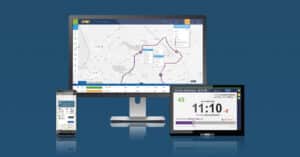
How an Easy-to-Use CAD/AVL System Reduces Disruption During Transit Staff Turnover
Transit operations depend on people, from dispatchers and operators to supervisors and administrators. But when turnover hits, even the most experienced agency can struggle to keep service running smoothly. Without an easy-to-use CAD/AVL system, service disruptions, delayed responses, and training gaps become the norm. That’s why ETA designed SPOT, a browser-based platform built to keep service on track, no matter who’s at the controls.

Staff Engagement: Turn staff doubters into doers
Staff engagement is a critical, yet often overlooked component to new system adoption. As advanced and capable as the current generation of intelligent transit technology is, its performance will always be hampered by incorrect or inconsistent use. For all the time and resources spent in securing these solutions, it’s important to also invest in those people charged with using the system most frequently. A staff that sees technology as a benefit to their responsibilities, and not an obstacle, will outperform those who cannot make the association between technology and performance.
Cracking the Code to CDL Shortages in Transit Operations
In this episode of Stop Requested, Christian and Levi tackle the critical issue of CDL driver shortages in the transit industry. They explore the challenges agencies face, including workforce gaps exacerbated by macroeconomic conditions, and discuss innovative strategies such as in-house CDL training, vocational partnerships, and creative recruitment campaigns. With insights on the importance of treating bus operations as a career, competitive pay, and addressing safety concerns, they emphasize how a multifaceted approach can help agencies build a sustainable pipeline of transit operators. Join the conversation to learn how transit agencies can navigate these challenges and strengthen their workforce.

Are you ready to erase paper inspections?
One of the more popular feature requests we receive for our SPOT™ ITS platform is digital pre-and post-trip inspection, also known as driver vehicle inspection reports (DVIR). It certainly seems that transit operators are eager to transition from manual or paper processes to connected digital logging and report solutions. Historically trip inspection involves four things: A driver A clipboard A pre-printed paper form A pencil or pen It’s a wonderfully simple process: a driver walks around a vehicle, looking for signs of damage, maintenance concerns, or any number of issues mandated by transit management. He documents his findings and turns the form over to a supervisor for followup. There are concerns, of course. A driver, late to start his route, may not give the inspection process the time it requires (pencil-whipping) and will miss some important safety items. An administrative assistant may not notice that she transposed some numbers when she use the inspection report to create a work order for the maintenance team. The documents themselves are easily lost or subject to the perils of office life, like spilled coffee or misfiling. And let’s not get started with how poor handwriting can impact an inspection report. These are among the many issues that digital inspection aims to solve: Eliminate transcription errors Minimize “pencil whipped” inspections Improve the ability of the maintenance teams to manage repairs and engage in proactive maintenance Improve vehicle safety Eliminate the expense of printing/reprinting maintenance forms Automatic notifications to maintence or fleet supervisors of potential issues The move from manual processes to digital inspections isn’t a concern among transit operations. They welcome it and all the benefits it brings to their agency. The software for implementing these inspections exists and is transit-tested. Making the switch to digital Deciding to make the switch is the easy part, now comes the hard part—which DVIR technology to choose? And this can be tricky because due to the current limitations of transit technology, there are some nuanced approaches to solving the trip inspection question. On the surface, it would seem obvious that every inspection solution would involve a portable device that a driver or maintenance team member would use to log the inspection. In truth, when ETA began exploring the creation of a DVIR solution, that’s exactly where we started—with a removable mobile data terminal (MDT). We quickly found out that a removable MDT ran into connectivity issues. No matter how securely that MDT was mounted on the bus or shuttle, the act of removing and reseating the device wore down the pin connector and charging cables over time. In just a matter of months, the removable MDT option became unusable and could no longer be counted on to provide data to the ITS or charge reliably. What about Qi chargers you ask? We explored that as well and found very few transit-tested ruggedized wireless charging options—an example of where the technology hasn’t matured to the point where its ready for prime time mass transportation. We explored a mounted MDT solution as well. This approach solved the communication and power issues, however it introduced other drawbacks to the solution. Inspections took longer, accuracy suffered, it was impossible to take photos of areas of concern, and drivers became more likely to “pencil whip” through the process which negated any benefit as a solution for safety or maintenance issues. We also took a deep dive into Bluetooth™ technology to see if strategically places switches on the vehicle would present drivers with a simpler inspection tool—each button would represent an inspection item. If an item was okay, set the switch to “yes,” if there was an issue, select “no.” It was an interesting approach, but lacked the detail necessary for meaningful followup by maintenance teams. Limitations of accurate Bluetooth™ communication over distance also proved a challenging obstacle to overcome. Our journey forced us to take a step back and consider the factors that would influence the choice of DVIR solutions—not from a place of technology, but of real-world considerations. Understanding what a driver or maintenance team needed was a more important driver of choice than conquering the limitations of technology. We identified the following factors that are critical to address before a trip inspection is implemented: Device security: Do they store the inspection device in the vehicle or secure them elsewhere? Can they afford to replace trip inspection devices if they are damaged or stolen? How long is the replacement cycle for damaged or stolen devices? Data management: How will they manage the data collected? Will this data import require additional software development? What is the criticality of this data to other areas of the operation? Are there costs associated with processing and storing data? How long is data stored/accessible? Driver safety: Is there room on the vehicle to install the device? Would installation block driver access to other vehicle systems? Will installation obscure driver view of the road, doors, exits, etc.? Technology adoption: Is the solution easy to use? Does the solution present a significant learning curve for drivers, dispatchers, and maintenance teams? What will be the level of resistance toward the adoption of this feature? How might the system be exploited or subverted? Have all parties been consulted and included in the decision-making process? Our recommended solution Our path to DVIR discovery let us to a path that we hadn’t originally considered—the use of a rugged smartphone to handle inspections. The solution checks all the boxes: Puts an affordable portable device in the hands of drivers to log potential issues Protects data collection integrity by keeping MDTs secure and locked down Requires very little real estate within the driver cockpit to install a charging dock (or can reside in a driver’s pocket) Delivers hours of battery life Provides a secure platform from which to operate and allows the same device to be used elsewhere—such as VoIP It’s a simple, yet elegant solution that simplifies trip inspection and improves the safety and reliability of a transit fleet. It’s a solution that we our are proud to introduce to the market. If you’d like to learn more, please visit etatransit.com/pre-trip-inspection or call a member of our sales team at (800) 382-0917. Closing thoughts A pre-trip inspection solution can provide numerous advantages to transit operation and contribute to the overall safety and reliability of the fleet. Sometimes there is a gap between what software can do and the availability of hardware to support it. Nowhere is this more evident than the current state of driver vehicle inspection technology. Still, a transit agency may have to weigh the adoption of a DVIR solution against potential shortcomings that may not lead to a “right-fit” adoption. Our advice is to speak with your ITS provider and solicit outside vendors to take full stock of your available options before making that transition from paper to digital inspection. Once you find that ideal blend of technology and features, you’ll be amazed at how much your fleet will benefit from cost savings, reliability, and performance.
Networking, Innovation, and Recognition at 2024 FPTA Annual Conference
In the premier episode of Stop Requested, Christian and Levi reflect on their experience at the Florida Public Transportation Association (FPTA) conference, held from September 22-24 in West Palm Beach. They explore the value of networking with industry professionals, discovering the latest transit innovations, and celebrating outstanding achievements through industry awards. Listen in as they share key takeaways from conversations with vendors, including discussions on cybersecurity for transit agencies, and the importance of connecting with peers to drive the future of public transportation.
Ace Your Transit Agency’s 2025 APC Recertification with Tally
In this episode of Stop Requested, Levi and Christian dive deep into the significance of Automatic Passenger Counting (APC) technology for public transit agencies. They explore the crucial 2025 APC recertification deadline set by the FTA, outlining why agencies need to prepare now and the operational advantages of APC certification. The hosts also introduce ETA’s latest innovation, a powerful tool designed to simplify the APC data collection process, saving agencies time and resources while ensuring compliance with NTD reporting requirements.
Looking for a specific type of resource?

Blog
ETA created content on topics of interest across the transit industry. Expert insight, opinion pieces, and the latest in transit innovation.

Podcast
Conversations with the foremost experts across the transit industry to discuss lessons learned, technological innovation, community needs, and so much more.

Case Studies
See the results ETA’s clients have received through replacing legacy CAD/AVL systems, installing new functionality, and doing it all without full hardware replacements.

Press
New awarded contracts and the launch of innovative technologies are just the start of the latest ETA news.

Glossary
From general transit feed specification (GTFS) to ghost bus, the ETA curated glossary is a reference to better understand industry terminology.
Ready to see our Unified Operational Health software on your routes?
Whether your agency is modernizing an existing system, improving rider information, strengthening reporting, or working through a more connected operational approach, ETA can help make the next step clearer.