
Blogs, news, case studies, templates, podcasts and more; all right at your fingertips. Browse our comprehensive transit resources database to find information your agency needs to improve operations, grow your knowledge base, and expand your understanding of the industry at-large.

It’s time to bury your printed schedules six feet deep.
By Matt SchroederDirector of Marketing, ETAs
Universal Design and the Future of Paratransit with Jarice Rodriguez
In this episode of Stop Requested, Levi McCollum and Christian Londono talk with Jarice Rodriguez, Chief of Paratransit Operations and Services for Miami-Dade County. As part of the ongoing Miami-Dade series, Jarice shares how her team is rethinking accessibility across one of the nation’s largest ADA paratransit programs. The conversation explores universal design, accessible journeys, and why accessibility must extend beyond the vehicle to every part of a rider’s trip. Jarice also discusses Miami-Dade’s work to modernize paratransit through integrated technology, real-time information, and NaviLens wayfinding tools that can help riders navigate complex transit facilities more independently.
ETA partners with University of South Alabama for innovative CAD/AVL project
Boca Raton, FL. February 23, 2024. ETA is proud to announce its selection for the Computer-Aided Dispatch and Automatic Vehicle Location (CAD/AVL) project by the University of South Alabama. This selection underscores our deep commitment to delivering high-quality, reliable transportation solutions, tailored to the specific needs of our clients. The decision by the University of South Alabama to collaborate with ETA on this project reflects our strong track record and expertise in the transportation sector, enhancing our footprint in Alabama and building upon our prior success with Auburn University.
Shaping Accessible Transit Systems with ADA Leader David Rishel
Levi and Christian are joined by David Rishel, former Executive Director of Pennsylvania’s CATA and Principal of Delta Services Group, to unpack a career spent shaping accessible transit from the ground up. David recounts launching New Jersey Transit’s statewide ADA paratransit network in the early 1990s, what it took to forecast demand and build eligibility systems when the rules were brand new, and how those decisions still echo today. The conversation dives into the real-world complexity of paratransit operations, the promise and pitfalls of co-mingling microtransit with ADA service, and why fixed-route accessibility and rider education must lead the way. David closes with a grounded look at where ADA mobility is headed next, including on-demand services, evolving software expectations, and the long-term impact of emerging technology.
Safeguarding Transit Workers and Strengthening Public Transportation (Replay)
We’re bringing back an important conversation in this re-run episode of Stop Requested. Christian and Levi address the pressing issue of assaults on transit workers, highlighting alarming trends that show a rise in incidents over the past 15 years. They discuss the lasting effects on bus operators from PTSD to workforce shortages and examine the societal factors driving these challenges. The episode explores strategies like operator barriers, panic alarms, and public awareness campaigns, along with new federal directives aimed at improving safety. Join us as we reflect on how agencies, unions, and communities can work together to protect the people who keep public transit running.
Exploring the Human Side of Transit Data with CUTR’s Dr Victoria Perk, Transit Research Program Director
What happens when an economics student looking to make some extra money accidentally discovers a lifelong passion for transit research? In this episode, hosts Levi McCollum and Christian Londono sit down with Dr. Victoria Perk, Transit Research Program Director at the Center for Urban Transportation Research (CUTR) at the University of South Florida, to explore her remarkable three-decade journey from reluctant graduate student to Florida’s leading expert on National Transit Database (NTD) reporting and training. Dr. Perk shares the story of how a simple job opportunity at CUTR in the early 1990s—back when NTD data was collected via phone calls and handwritten forms—evolved into a career dedicated to bridging the gap between academic research and practical transit applications. As the principal investigator for Florida’s longest-running NTD support contract with FDOT, she reveals the critical role accurate data plays in transit funding formulas and why her viewer access to agency NTD accounts is so crucial (hint: don’t remove her!). Beyond the numbers, this conversation dives deep into the human elements that drive Dr. Perk’s work: her passion for understanding how people make transportation choices, her innovative approach to recruiting students through semester-long “interviews” disguised as economics classes, and her commitment to developing the next generation of transit professionals. She discusses current research on the economic impacts of public transportation, the challenges of measuring success in emerging microtransit services, and why “perfect is the enemy of good” when it comes to research publication.

Pre-plan your RFP evaluation
Tools to help your RFP to set realistic expectations and deliver a focused review. Over our history, ETA has submitted hundreds of proposals for mass transit technology RFPs. We’ve won some, we’ve lost some, and we’ve seen RFPs pulled without warning. Win, lose, or draw our practice is to reach out to transit agencies and ask for feedback about the RFP—our proposal, where we excelled, where we came up short, and what struggles the agency had during the process. That’s the nature of our industry. This last point serves as the subject for this article; what are the common challenges for proposal evaluation? Our 2018 transit agency survey discovered that comparing offerings was the “biggest source of stress” for those on proposal decision committees, followed by “determining value versus price” and “determining the importance of features.” These are all valid concerns—but easily fixed. The key to solving these issues starts with preparing the RFP itself. The same 2018 survey revealed that “preparation,” “creating technical requirements,” and “determining desired outcomes” were the top three headache-inducing tasks. For the most part, an RFP includes the following components: Cover letter or statement of interest Vendor information Proposed solution Strategy for implementation Warranty & support information Cost proposal Required forms Each section should ultimately contribute to the decision-making process. It’s not uncommon for an evaluation structure included in the RFP which looks something like this: Technical response: 20 points Price: 40 points Vendor qualifications: 20 points Organization of the proposal: 10 points Situational understanding: 10 points And that’s about it in terms of the breakdown and weighting of the proposal response. That’s all a decision committee relies on to score and rank their evaluation. The highest score wins, and to the victor goes the spoils. But what if the evaluation criteria are wrong? What if it’s weighted incorrectly? Why does price weigh more than the solution itself (40% of transit agencies use it as their primary decision factor) than the vendor’s track record (vendor experience is the primary factor for just 11% of transit agencies)? What mechanisms exist in your RFP for establishing value versus performance? Our 2019 survey revealed long-term performance (70.2%) must be part of the evaluation process. That certainly isn’t listed in the standard scoring criteria? Just 52 percent of transit agencies say that the intelligent transit system (ITS) they purchased lived up to expectations in our 2020 agency poll. The picture I’m painting here is that the defined evaluation criteria baked into RFP documentation are inherently flawed; they are not up to the task and are highly subjective. Why do so many agencies value long-term performance, but fail to include any sort of measurement tool within their evaluation structure? Why are nearly half dissatisfied with their ITS purchase? How do we change the evaluation so that it most accurately reflects the needs of the transit agency and delivers on the expected outcomes? Here are a few ideas to consider before you put together your RFP: Pre-proposal polling: Conduct an anonymous internal poll of your transit agency. If possible, include everybody. Everybody is drivers, mechanics, dispatchers, planners, customer support, and administration. Use this effort to discover hidden truths about your agency and potential issues. Look for potential areas of resistance. Find pain points in potential solutions. Include the ability for respondents to rank their answers to gauge priority and level of severity. We recommend Survey Monkey, DooPoll, or even use Microsoft Sharepoint to create your surveys and leverage these tools automatically tally the results. Conduct pre-RFP pricing research: We know that transit agencies (ETA included) keep a tight lid on their pricing structure. It’s a competitive industry, after all, and any advantage helps. This practice doesn’t mean they won’t provide you with ballpark figures for planning purposes. Use this information to A) understand the approximate cost for each component (ITS, APC, AVA, etc.), and B) evaluate cost against the amount of funding you have available. If possible, ask for an estimated ‘per vehicle cost’ to help account for hardware, installation, and recurring fees. This effort will help you set expectations before writing your RFP. It is better to know what you’re asking for and compare it to the final pricing. With this baseline pricing in mind, it will help establish expectations for what your agency cannot afford. It will also help you derive a better sense of value from your proposals. It may even cause you to think about how much weight you place on pricing in the overall evaluation hierarchy. Create a compliance matrix with priority values We’ve written before about the importance of including a compliance matrix as part of your RFP documentation. This approach is an excellent way to get answers about what a proposed system can and cannot deliver. What’s missing from the matrix is a correlation between features and their importance to the final solution. A compliance matrix evens the value across all items but does nothing to tell your evaluation committee how to weigh capabilities against price and competition. Including this information will help the vendor present prioritized solutions based on needs. For example, if your internal survey efforts reveal the following priorities: Cloud-based ITS Route and schedule management NTP reporting Automatic passenger counters Onboard Wi-Fi Then assign value to those features within your matrix (a scale of 1–10, perhaps?). The vendors responding to your proposal will understand what you value the most. They can also construct their proposal to prioritize some aspects over others and deliver more up-front value. A well-constructed spreadsheet may even include auto-calculation to help score each entry in advance. An entry in a compliance matrix theoretically might look like this, where “yes” answers to compliance earn full marks, where “no” responses don’t earn points, and “extra cost” applies a multiplier value to adjust the score to account for additional charges: Provide this spreadsheet as part of the RFP and ask vendors to complete it as part of their submission. Lock and hide those columns, cells, and worksheets from the file submitted to vendors. Reveal those fields after submission to see how a vendor stacks up based on their responses. Include in your calculations weighted penalties for unsupported systems. Proposal creation Now that you are adequately armed with priority preferences by role (via the internal survey), you will have more insight into how each business unit will react to your final choice. Additionally, you’ll have a sense of what you can afford and what systems to prioritize (using the ITS Price Estimator) and, ultimately, a point-by-point accounting of each vendor’s capabilities (courtesy of the weighted compliance matrix). With this information, you can create an RFP document that better captures the actual deliverables for your project and have the background data needed to conduct a proper evaluation. With this data in hand, you can quickly rule out submissions below a capability threshold that you identify before evaluating. The goal, after all, is to narrow down proposals quickly. This approach: Greatly assists in the preparation of the RFP Clearly defines the technical requirements It helps determine an agreed-upon, prioritized outcome Reduces internal debate process The process helps build a right-sized transit spec while avoiding common pitfalls and finding that vendor who will be your forever friend. Now that you’re ready to construct your RFP, you can focus on telling a precise story—your story—so that any vendor responding has a full grasp of everything your system needs to accomplish. Construct your RFP to follow a logical progression and use clearly-defined topics and industry-standard terminology. Avoid copying and pasting from other sources, which typically results in a messy, contradictory document. We recommend a sequence that follows this general approach: Introduction (overview of your agency and history) Objectives (description of the challenges you seek to resolve) Resources (provide details about your agency, e.g., number of vehicles, makes and model, installed hardware, contact points, who has the final say, etc. Scope (define every deliverable, feature, and intended use—a good place to include your compliance matrix) Submission requirements (we recommend the following:) Statement of interest About the vendor Technical proposal Implementation plan Warranty & support Price proposal Required forms A significant consideration in this process is to allow enough time for vendors to create a thoughtful response to your solution. A good rule of thumb is six to 12 weeks from the RFP’s issue (or street) date. We also encourage you not to put page limits on the proposal. These highly technical and complex systems allow the vendor the necessary time to explain the system and benefits thoroughly. Yes, this can lead to some lengthy proposals. Consider the amount of money you are about to spend and the consequences of selecting poorly. In this decision, we highly stress that you should err on the side of information. Short summaries could cause a potential vendor to omit details that could otherwise influence your decision one way or another—all to satisfy an arbitrary page count. The added information serves as a handy reference to answer any questions you may have. Proposal evaluation You’ve now laid the groundwork for your evaluation with all your pre-proposal work. The tools and concepts presented above provide your transit agency with enough background information to help identify potential vendors to look for before the issuance of the RFP—and then compare their response against the pre-RFP evaluation. More importantly, you have established a list of criteria based on priority gathered by stakeholders at all levels of your organization. Take your time to evaluate the results. Ask questions. Conduct pilot programs. Take the necessary steps to ensure that you’re making a comprehensive decision in your agency, taxpayers, and riders’ best interest.
Building Transit Networks That Reflect Community Values with Ricky Angueira, Principal at Jarrett Walker & Associates
In this episode of Stop Requested, hosts Levi McCollum and Christian Londono sit down with Ricky Angueira, Principal at Jarrett Walker & Associates, to discuss the ridership versus coverage framework that’s changing how cities think about transit planning. From his background studying civil engineering in Puerto Rico to urban planning in Spain, Ricky shares his approach to full network redesigns in cities from Miami to Des Moines. Learn why successful transit planning starts with community values, not just data. Ricky explains why there’s no “one right answer” when designing transit networks—the choice between maximizing ridership or providing broad coverage depends entirely on what communities want to achieve. He walks through real examples from Knoxville, St. Pete, and Miami, showing how proper public engagement can unite regions around shared transit goals. The conversation covers the role of microtransit as a coverage tool, the importance of scalable transit plans during budget challenges, and why transparent community conversations are essential for successful network redesigns. Ricky also discusses emerging trends in travel patterns and offers practical advice for agencies considering system redesigns.
How Long Does It Take to Deploy a New CAD/AVL System?
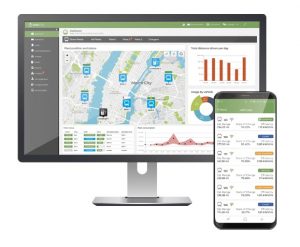
In the past, deploying a new Computer-Aided Dispatch/Automatic Vehicle Location (CAD/AVL) system could take many months or even years. Today, however, modern technologies and advanced implementation techniques have dramatically shortened deployment times, allowing for faster and more efficient system installations.

Are your RFPs getting you the responses you want?
The RFP creation and evaluation process can be troublesome, but if a logical approach and sound strategies inform the type of responses you seek, then it need not be such a cumbersome effort.
Indiana University Upgrades Shuttle Bus Technology with ETA
Boca Raton, FL. June 17, 2024. Indiana University (IU) has partnered with ETAs, a leader in innovative transit solutions, to enhance its campus shuttle bus service. This collaboration strengthens IU’s commitment to providing a diverse range of sustainable transportation options for students and staff. IU selected ETA after a rigorous evaluation process involving eight vendors.
ETA helps Coral Gables Trolley improve rider experience
Boca Raton, FL. July 26, 2023. ETA is pleased to announce that its longtime transit partner, the City of Coral Gables, FL has added automatic passenger counting (APC) and onboard Wi-Fi Internet access to its fleet of trolleys.
Looking for a specific type of resource?

Blog
ETA created content on topics of interest across the transit industry. Expert insight, opinion pieces, and the latest in transit innovation.

Podcast
Conversations with the foremost experts across the transit industry to discuss lessons learned, technological innovation, community needs, and so much more.

Case Studies
See the results ETA’s clients have received through replacing legacy CAD/AVL systems, installing new functionality, and doing it all without full hardware replacements.

Press
New awarded contracts and the launch of innovative technologies are just the start of the latest ETA news.

Glossary
From general transit feed specification (GTFS) to ghost bus, the ETA curated glossary is a reference to better understand industry terminology.
Ready to see our Unified Operational Health software on your routes?
Whether your agency is modernizing an existing system, improving rider information, strengthening reporting, or working through a more connected operational approach, ETA can help make the next step clearer.