
Blogs, news, case studies, templates, podcasts and more; all right at your fingertips. Browse our comprehensive transit resources database to find information your agency needs to improve operations, grow your knowledge base, and expand your understanding of the industry at-large.
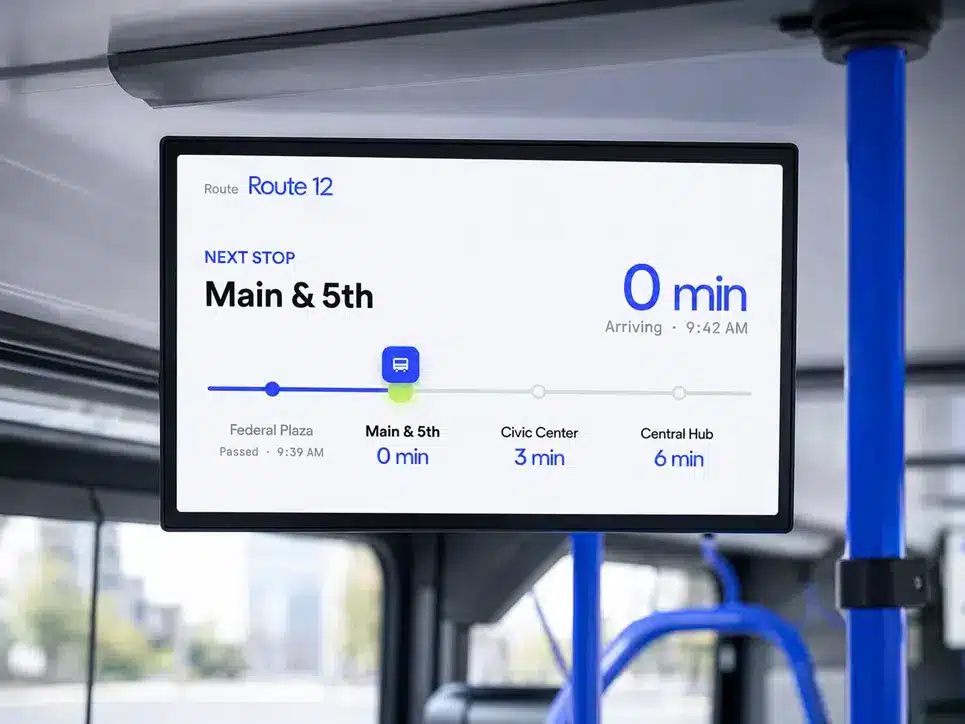
Beyond the Next Stop. Modern Ways to Use Onboard Infotainment Screens
For many transit agencies, onboard screens are a standard part of the rider experience. From next-stop information, route maps, and the occasional service alert, they display the info that reminds riders they are being taken care of. As someone relatively new to the transit technology space, I believe these screens have the potential to do much more as our tech continues to evolve. When paired with the right technology foundation, onboard infotainment can become a powerful operational and communication tool— one that improves service delivery, reduces operator workload, and creates measurable value for agencies.
How Cincinnati Metro Turned Crisis into Comeback with Steve Anderson, Sr. Director of Development and Innovation (Replay)
After years of declining ridership, service cuts, and aging infrastructure, Cincinnati Metro found itself in a classic "death spiral." But thanks to bold leadership, a game-changing public vote, and a relentless focus on the rider experience, the agency has staged an inspiring turnaround. In this replay of Stop Requested, hosts Levi McCollum and Christian Londono sit down with Steve Anderson, Senior Director of Development and Innovation at SORTA, to unpack the story behind this remarkable comeback. Steve shares his personal journey—from sketching imaginary cities as a kid to leading transformative transit projects in Cincinnati and beyond. Discover how Metro overcame decades of underinvestment, leveraged new funding, and launched ambitious initiatives like Metro Rapid, a cutting-edge Bus Rapid Transit (BRT) system designed for speed, comfort, and local character. Hear how the agency is rethinking station design, collaborating with neighborhoods, and making data-driven decisions to deliver a rider-first experience. Learn how Cincinnati Metro is building a future-focused transit system that’s reshaping mobility and revitalizing the city for the next generation.

Staff experience
Don’t overlook the “employee factor” when adopting new technology. See if this sounds familiar. You and a select group of co-workers have spent time researching, interviewing, and demoing a new technology or process to be implemented at your company. You’re certain that you have been thorough in your efforts. The solution checks every box and satisfies every need. It’s expensive, but the ROI is worth it. You sign the paperwork, establish a schedule, and when the day comes to flip the switch, your staff greets the new system with a collective shrug. Undeterred, you’re confident that once your employees will see the benefits and welcome this change into their work lives. Only that doesn’t happen. Months into deployment, the new technology isn’t being used as intended. The system isn’t generating the expected benefits. The staff are actively developing workarounds, or worse yet, trying to get the new system to perform like the old system. Tempers are flaring. Upper management is demanding answers. Did you buy a lemon? Or did you forget to include your staff in the procurement process? Did you forget to build anticipation and educate how this new system would improve their job satisfaction, make their lives easier, or address lingering performance issues? According to our annual survey to transit agencies, 80 percent of transit operations experience resistance from their staff or customers when adopting new technology or practices. When polled further, about this resistance, transit agencies believed that the quality of the vendor-provided training materials (56%) played a factor in poor adoption, and the inclusion of cheat sheets and user guides (42%) and options for supplemental training (38%) would be helpful in changing employee perceptions. While a well-trained staff can be important in wringing the best performance out of new technology investments, it’s not the only variable. In truth, there are three critical areas of technology adoption that must be addressed: The requirements of the technology (which problems will it solve) Generating excitement among riders (get transit customers excited about the change) Generating excitement among employees Transit agencies excel in the first two areas. In fact, our customers routinely ask us for marketing materials and strategies to engage with their riders and let them know what’s coming. When we include internal marketing materials for their staff, it’s a common response to hear “hmmm, I didn’t think about marketing to our employees. What a great idea.” The assumption, as we see it, is that whatever change is decided upon by leadership is that it will be readily embraced by employees. After all, change is coming, and they have little-to-no say in the matter. If they want a job, they’ll use the tools provided. The assumption is that employees understand what doesn’t work well, so any initiative that solves those concerns will be embraced. Except that’s not reality, and truth be told, your staff has their own ideas on how to solve challenges—which by default creates obstacles and roadblocks that need to be overcome. In our view, pre-marketing the change to staff is every bit as important as the quality of training and resources. Why? Because pre-marketing helps build anticipation by extolling more intimate benefits to the staff. It includes them in the conversation. It extolls more intimate benefits, provides ways of seeking more information, and begins that emotional transition from what is to what will be. Change is intimidating. We can’t just plop a new system or service in the laps of our employees and expect that they will be excited about it and embrace it without question. Take steps to bring your staff along in the process. Provide updates, answer questions, listen to concerns and feedback. If they feel involved, they will be more likely to embrace this new solution willingly rather than begrudgingly. And when the staff is onboard, that’s when meaningful change can really take off.
Behind NYC Ferry’s Recent Route Changes with Nina Verzosa
What does it actually take to plan ferry service in New York City? In this episode of Stop Requested, Levi and Christian talk with Nina Verzosa, Assistant Vice President of NYC Ferry at NYCEDC, about how ferry routes are designed, evaluated, and changed over time. Nina explains how ferry planning compares to buses and rail, how customer feedback shapes decisions, and what the recent systemwide NYC Ferry route changes were designed to accomplish.

E-paper displays are ready for prime-time transit
New sign technology is poised to remake transit stop communication By Matt Schroeder Director of Marketing, ETAs Join me for a brief trip down memory lane. From 2006-2009, I served as the Creative Director for a group of 13 regional newspapers spanning the Front Range of Colorado. My tenure at the paper marked the beginning and the end of the Great Recession. If you remember your not-too-distant history, you will recall that the bulk of the newspaper industry largely collapsed during this time, with hundreds of the media outlets shuttering their operations across the country. The reasons for their failure was … layered and I will not go into any of the details—save one. At our newspaper group the single biggest cause of our demise was not a decrease in ad revenue. It was not an attack on credibility that is seen in today’s political arena. It was the cost of paper. Newsprint—if you have never seen it—comes in giant rolls that weighed around one ton each at our operation. Each roll could print the weekly distribution of one of our newspapers, so each week we had roughly 13 tons of newsprint delivered to our presses. As fuel prices rose during the Great Recession, so did the cost of transporting the newspaper—on average our cost doubled every six months over the course of three years. What does any of this have to do with public transportation? During this time, we caught wind of a new technology called ‘e-paper.’ As it was pitched to us, this was a light, flexible LCD screen upon which information could be displayed, deleted, and reloaded. I saw a demo. It was amazing. The idea was that everyone would have this thin roll of ‘digital ink’ that could would read like a newspaper, but people would swipe left or right to navigate; linkable text on the page could pull up websites, give more information about an ad—the sky was the limit. It would save the newspaper industry. Or so we hoped. Right around that time, Apple® introduced a little product called the iPad™ that relegated the ‘e-paper’ concept for newspapers to the recycle bin. The re-emergence of e-paper technology … for transit communications Communicating with passengers at stations has largely been limited to large LED-based signs—with large amber letters, a lot of scrolling, and very little curb appeal. Agencies with deeper pockets could afford to place high-definition color LED or LCD displays at select signs and drive rich-media infotainment via some sort of Internet or physical connection to a computer or device. Very cool, but very pricey and delicate, often requiring some sort of bulky protective enclosure to protect against the elements, vandalism, and theft. But now, the technology we only got a taste of back in 2009 is fully developed and back in play in a major way with ramifications for the public transit market. The e-paper solution has emerged in the transit space as a happy medium between the old-school LED signs and the colorful, yet expensive HD LCD screens. Often available as a black-and-white display (though some options do exist for color deployments), e-paper screens can largely solve the portability problem that plagues the deployment of traditional connected sign technology. Making e-paper more attractive is the cost of the technology itself. On balance, they are less expensive* than either LED or HD LCD screens, which makes the process of deploying these screens across more stops and stations more palatable to frugal budgets. The long-term cost savings are further realized in the following areas: They do not require substantial infrastructure for installation. Screens are wireless and can be mounted to an existing pole or shelter. They do not require wired connection to the Internet. E-paper displays have cellular, Wi-Fi, and Bluetooth connectivity options. They do not require wired power. They are incredibly efficient. Easily powered using a small solar panel and/or a rechargeable battery. *Depending upon selected options and configurations Currently, the e-paper technology accounts for roughly 12 percent of all transit stop signage in use. The implementation rate is expected to jump to as many as 78 percent within the next five years, with 41 percent of transit agencies reporting e-paper as their preferred solution for bus stop signage.** **Source: Papercast infographic, The Digital Bus Stop Market—Past, Present and Future (2019) At ETA, we have seen and tested multiple offerings from various sign manufacturers. Hands-down the best solution we have found are the screens from Papercast®. These powerful screens: Support real-time arrival predictions Offer superior readability in all lighting conditions Are triggered by motion and light sensors Require no battery replacement Leverage ultra-low power LED technology Are virtually maintenance free Support multiple sign configurations, pages, and layouts Include online content management, health, and status monitoring Are easily updated in real time Support push-button text-to-speech for ADA compliance Offer custom branding options such as logo placement and colored enclosures Operate efficiently in any weather condition or temperature; are waterproof Available in a variety of sizes and orientations from 13” to 57” The next evolution of station signage is here The potential of e-paper technology was apparent to me as early as 2008. It did not become available in time to become a reliable option for the newspaper industry, but with a few years of seasoning and additional development the idea has been born anew. It represents a significant advancement in closing the communication loop between transit operators and their passengers. It is exciting to see the many ways this technology can be applied. We have seen firsthand how well it works at our deployments at the Miami International Airport and Long Beach Transit. We see how our customers’ eyes light up when we demo the technology, and they start to imagine the impact it would have on their riders. If you have not heard of this technology before, download this information sheet to learn more or visit etatransit.com/solar-e-paper-signage/ What do you think? Does e-paper represent a viable communication solution within the transit industry? In what unique ways might you want to apply this technology to meet your specific needs?
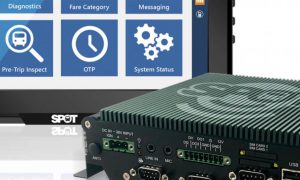
The Need for Rugged Transit-Grade Computers in Harsh Transit Environments
Introduction All-in-one tablets are unreliable and unsuitable for public transit applications. Instead, transit agencies must consider investing in transit-grade computers to record and display mission-critical information. Functioning onboard digital devices are essential to: improve operating efficiencies. automate NTD data collection. and enhance the rider experience. Though consumer-grade tablets and all-in-one Mobile Data Terminals (MDTs) with built-in touchscreen displays have become popular choices for transit agencies, these devices are not durable enough for harsh transit environments. In fact, 8 out of 10 transit agencies interviewed in 2023 have cited unreliable hardware as their primary challenge. Malfunctioning hardware is unacceptable for modern transit systems. In this blog, we will explore the reasons why tablets do not work for transit applications and discuss the advantages of using transit-grade computers with separate touchscreen MDTs. Consumer-grade tablets and all-in-one computers are designed for everyday use, but they fall short in the demanding conditions of transit environments. There are a few key reasons for this: Unreliable: Consumer-grade devices are not built to withstand the continuous vibrations, extreme temperatures, and harsh conditions common in public transportation systems. Over time, these factors lead to system failures and downtime. Consequently, agencies grow extremely frustrated with missed onboard announcements, loss of APC data, inaccurate NTD reporting data, and irritated riders due to incorrect bus arrival predictions. Unprotected: Transit agencies need to ensure the security of their systems and data. All-in-one solutions that combine processing and the touchscreen display are installed in exposed locations since the bus operator needs to interact with the system. This placement is more susceptible to theft and tampering, causing decreased system reliability and increased service disruptions. Upkeep: When these all-in-one devices fail during revenue service, it is inconvenient, time-consuming, and costly for transit agencies to manage. In this era of staffing shortages, transit agencies cannot afford to spend their time troubleshooting malfunctioning equipment as essential as MDTs. The Benefits of transit-grade computers with separate touch screen devices To address these challenges, transit agencies should consider using transit-grade computers with separate MDTs that do not have any processing responsibilities or complex operating systems. This design offers several advantages: Durability: Transit-grade computers are specifically designed to withstand the harsh conditions of transit environments. They are built with dependable connectors and housed in protective enclosures, ensuring reliability and longevity. Simple, functionally limited MDTs provide the bus operator with an intuitive driver interface and touch screen to interact with the system but do not impact bus operation or data collection. Security: By separating the touch screen display from the computer, a "dumb" terminal eliminates the risk of system failure or theft affecting the entire system. If the touch screen is damaged or stolen, the system can continue to operate without disruption. Simplified Maintenance: With a "dumb" terminal, updates and maintenance are managed centrally, reducing the burden on transit agencies and ensuring consistent performance across all devices. Cost-effectiveness: While the initial investment in transit-grade computers and touch screen MDTs may be higher than consumer-grade devices, the long-term benefits of reduced maintenance, increased reliability, and improved security make them a more cost-effective solution. Conclusion As transit agencies continue to embrace technology to enhance their operations, it is crucial to select devices that can withstand the harsh environments they will encounter. Consumer-grade tablets and all-in-one computers may seem like an appealing choice, but they are ultimately unsuitable for the demands of public transportation systems. Eventually, the bargain all-in-one solution will cost the transit agency unexpected time and money. By investing in transit-grade computers and touch screen MDTs, transit agencies can ensure the reliability, security, and longevity of their systems, ultimately providing a better experience for both operators and passengers.
Driving the Global Transition to Battery Electric Buses
In this episode of Stop Requested, Christian Londono and Levi McCollum explore the global landscape of battery electric bus adoption. From Shenzhen's fully electrified fleet to the ambitious goals in Latin America and Europe, they examine the challenges, successes, and trends shaping zero-emission transit worldwide. Tune in as they discuss the impact of policies like Buy America, the role of global manufacturers, and the environmental implications of electric vehicle batteries. Don't miss this insightful continuation of their series on zero-emission vehicles!
How Palm Tran Drives Ridership Growth with Planning Director, Yash Nagal (Replay)
We're bringing back one of our most insightful episodes of Stop Requested! Hosts Levi McCollum and Christian Londono sit down with their very first guest, Yash Nagal, Director of Transit Planning at Palm Tran. In this conversation, we explore the nationwide rise in transit ridership, dive into innovative approaches like Palm Tran's Buslink program, and discuss how service frequency and system integration can reshape public transportation. Yash offers expert insights on aligning services with community needs, the impact of land use, and the power of storytelling in advocating for better transit.
How Cincinnati Metro Turned Crisis into Comeback with Steve Anderson, Sr. Director of Development and Innovation
After years of declining ridership, service cuts, and aging infrastructure, Cincinnati Metro found itself in a classic "death spiral." But thanks to bold leadership, a game-changing public vote, and a relentless focus on the rider experience, the agency has staged an inspiring turnaround. In this episode of Stop Requested, hosts Levi McCollum and Christian Londono sit down with Steve Anderson, Senior Director of Development and Innovation at SORTA, to unpack the story behind this remarkable comeback. Steve shares his personal journey—from sketching imaginary cities as a kid to leading transformative transit projects in Cincinnati and beyond. Discover how Metro overcame decades of underinvestment, leveraged new funding, and launched ambitious initiatives like Metro Rapid, a cutting-edge Bus Rapid Transit (BRT) system designed for speed, comfort, and local character. Hear how the agency is rethinking station design, collaborating with neighborhoods, and making data-driven decisions to deliver a rider-first experience. Learn how Cincinnati Metro is building a future-focused transit system that’s reshaping mobility and revitalizing the city for the next generation.
AI and the Future of Public Transit with Stephen Kuban
In this episode of Stop Requested, Levi McCollum and Christian Londono talk with Stephen Kuban, President and CEO of Kuban Transit Solutions, about how AI is actively changing the way transit agencies plan, decide, and operate. Stephen explains why AI is more than automation, how it supports better strategic thinking, and how agencies can use it to do more with limited resources while staying focused on outcomes. Stephen also shares how he is working directly with transit agencies through hands-on AI workshops and advisory programs, helping leaders move from experimentation to real-world application. Listeners interested in learning more about his AI pilot program and upcoming engagements can visit: https://kubantransit.com/ai-pilot
Making Transit Technology Work for People with Kristin Taylor
In this episode of Stop Requested, Levi McCollum and Christian Londono talk with Kristin Taylor, Senior Director of UX at the MBTA and Chief Experience Officer for TransitOPSTM. Kristin shares how UX research, service design, and civic technology can help transit agencies build tools that work for riders, frontline teams, and agency staff. The conversation explores why trip planning depends on more than an app, how accurate data and real-time communication shape rider trust, and why agencies should define the problem before buying or building technology. Kristin also discusses GTFS, service alerts, open-source tools, cross-functional ownership, and the practical work of making transit technology easier to use and sustain.
ETA Successfully Implements CAD/AVL Project for the City of Hialeah, Florida
Boca Raton, FL – November 17, 2023 — ETA, a prominent provider of cutting-edge transit technology solutions, is pleased to announce the successful deployment of a CAD/AVL project in collaboration with the City of Hialeah, Florida. The City's decision to entrust ETA with this critical project stems from our consistent track record of on-time project delivery and the high levels of customer satisfaction we have maintained for the past two decades. The primary objectives of this transformative project are as follows: Enhance Data Accessibility: The project aims to increase data availability to the City's operations, thereby improving transit management, service planning, and reporting. Elevate Passenger Experience: Passengers will enjoy enhanced services such as onboard Internet access, automatic onboard announcements, and infotainment screens offering real-time passenger information. Utilize Automatic Passenger Counters (APCs): The project will implement automatic passenger counters to assist in service planning and reporting. "We are deeply honored to have been selected by the City of Hialeah for this CAD/AVL project, which marks a significant milestone for our company," stated John Maglio, President of ETA. "Working with agencies in our home state is always a special privilege, and this project is a thrilling addition to our expanding list of transit projects in Florida." Justo Espinosa, Transit Manager at the City of Hialeah, echoed the sentiment, saying, "ETA earned our business through their impressive track record with other Florida agencies. After experiencing their services firsthand, I concur with the high ratings they've received. In my assessment, ETA's hardware, software, project management, and customer support all deserve a 5-star rating." This collaboration signifies a significant achievement for ETA as we continue to lead the transit technology industry in innovation and reliability. Our unwavering commitment to pushing the boundaries of transit technology sets a new standard for transit agencies across the nation. For more information about ETA and its pioneering CAD/AVL project with the City of Hialeah, please visit etatransit.com or contact: Jose Mostajo Sales Manager jmostajo@etatransit.com (954) 778-1783 Facebook: @ETATransit Twitter: @ETATransit LinkedIn: linkedin.com/company/etatransit #ETATransit #MeetSPOT #CityofHialeah About ETA ETA specializes in CAD/AVL technology to include: automatic passenger counting (APC), GTFS and GTFS-RT, traveler information systems, and digital display systems, for public transit agencies, universities, and other shuttle bus operations across the United States. For more information, visit etatransit.com, email sales@etatransit.com, or call (800) 382-0917.
Looking for a specific type of resource?

Blog
ETA created content on topics of interest across the transit industry. Expert insight, opinion pieces, and the latest in transit innovation.

Podcast
Conversations with the foremost experts across the transit industry to discuss lessons learned, technological innovation, community needs, and so much more.

Case Studies
See the results ETA’s clients have received through replacing legacy CAD/AVL systems, installing new functionality, and doing it all without full hardware replacements.

Press
New awarded contracts and the launch of innovative technologies are just the start of the latest ETA news.

Glossary
From general transit feed specification (GTFS) to ghost bus, the ETA curated glossary is a reference to better understand industry terminology.
Ready to see our Unified Operational Health software on your routes?
Whether your agency is modernizing an existing system, improving rider information, strengthening reporting, or working through a more connected operational approach, ETA can help make the next step clearer.