Blogs, news, case studies, templates, podcasts and more; all right at your fingertips. Browse our comprehensive transit resources database to find information your agency needs to improve operations, grow your knowledge base, and expand your understanding of the industry at-large.
Transit Is More Than KPIs with Nicholas Sofoul
In this episode of Stop Requested, Levi McCollum and Christian Londono talk with Nicholas Sofoul, Executive Director of the North Central Regional Transit District (Blue Bus), about the challenges of providing public transportation across 10,000 square miles of northern New Mexico, where transit often provides the only connection to healthcare, employment, groceries, and other essential services.
How Cincinnati Metro Turned Crisis into Comeback with Steve Anderson, Sr. Director of Development and Innovation (Replay)
After years of declining ridership, service cuts, and aging infrastructure, Cincinnati Metro found itself in a classic “death spiral.” But thanks to bold leadership, a game-changing public vote, and a relentless focus on the rider experience, the agency has staged an inspiring turnaround. In this replay of Stop Requested, hosts Levi McCollum and Christian Londono sit down with Steve Anderson, Senior Director of Development and Innovation at SORTA, to unpack the story behind this remarkable comeback. Steve shares his personal journey—from sketching imaginary cities as a kid to leading transformative transit projects in Cincinnati and beyond. Discover how Metro overcame decades of underinvestment, leveraged new funding, and launched ambitious initiatives like Metro Rapid, a cutting-edge Bus Rapid Transit (BRT) system designed for speed, comfort, and local character. Hear how the agency is rethinking station design, collaborating with neighborhoods, and making data-driven decisions to deliver a rider-first experience. Learn how Cincinnati Metro is building a future-focused transit system that’s reshaping mobility and revitalizing the city for the next generation.
Why American Transit Declined with Nicholas Dagen Bloom
In this episode of Stop Requested, Levi McCollum and Christian Londono talk with Nicholas Dagen Bloom, professor and chair of the Department of Urban Policy and Planning at Hunter College and author of The Great American Transit Disaster, about how American transit systems declined and why some cities fared better than others.
Designing Safer Streets for Walking, Biking, and Transit with Dr. Nick Ferenchak
In this episode of Stop Requested, Levi McCollum and Cristian Londono talk with Dr. Nick Ferenchak, Center Director for the Center for Pedestrian and Bicyclist Safety, Chair of the TRB Pedestrian Committee, and Associate Professor at the University of New Mexico. Nick explains why relying only on crash data misses many of the most dangerous corridors and how “latent demand” can help identify streets that are unsafe precisely because people avoid them. The conversation covers proactive tools like pedestrian level of traffic stress, the equity implications of unsafe infrastructure, and why arterials require more than incremental fixes. Nick also shares findings from Albuquerque’s BRT corridor, including major reductions in serious injuries and fatalities, and what it will take to design streets that work for walking, biking, and transit.

E-paper displays are ready for prime-time transit
New sign technology is poised to remake transit stop communication
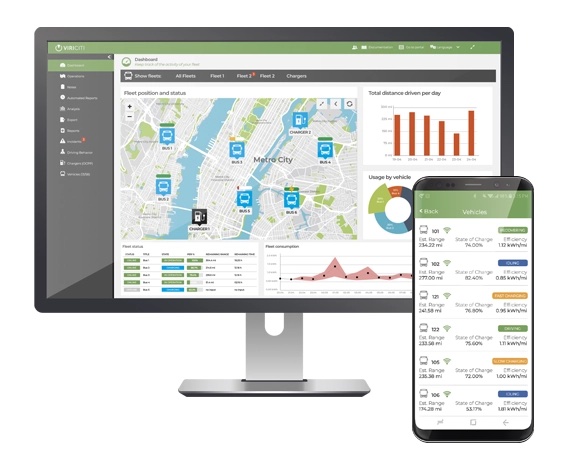
How Long Does It Take to Deploy a New CAD/AVL System?
In the past, deploying a new Computer-Aided Dispatch/Automatic Vehicle Location (CAD/AVL) system could take many months or even years. Today, however, modern technologies and advanced implementation techniques have dramatically shortened deployment times, allowing for faster and more efficient system installations.
ETA partners with University of South Alabama for innovative CAD/AVL project
Boca Raton, FL. February 23, 2024. ETA is proud to announce its selection for the Computer-Aided Dispatch and Automatic Vehicle Location (CAD/AVL) project by the University of South Alabama. This selection underscores our deep commitment to delivering high-quality, reliable transportation solutions, tailored to the specific needs of our clients. The decision by the University of South Alabama to collaborate with ETA on this project reflects our strong track record and expertise in the transportation sector, enhancing our footprint in Alabama and building upon our prior success with Auburn University.
TARTA and ETA Recognized with Metro Magazine’s Innovative Solutions Award
Boca Raton, FL. August 21, 2025. The Toledo Area Regional Transit Authority (TARTA) has been named a recipient of Metro Magazine’s Innovative Solutions Award for its collaboration with ETA on a project that dramatically improved communications and operational efficiency.
Leading a Transit Agency with Passion with TARTA’s CEO Laura Koprowski
In this episode of Stop Requested, Levi McCollum and Christian Londono talk with Laura Koprowski, CEO of the Toledo Area Regional Transit Authority (TARTA). Laura shares her path into the transit industry, from communications and government relations to leading a regional transit system serving communities across northwest Ohio. The conversation covers leadership in public transportation, the importance of mentorship and professional development, and how passion for the work can shape a career in transit. Laura also discusses TARTA’s system redesign, expansion of microtransit service, and how data and technology are helping guide decisions as the agency works to improve mobility across the region.
How Miami-Dade Keeps Evolving the Rider Experience with Doug Bermudez
In the final episode of their Miami-Dade series, Levi McCollum and Christian Londono talk with Doug Bermudez, Chief of the EASY Card Fare Programs and Customer Experience Division at Miami-Dade County Transportation and Public Works. Doug shares how his path from frontline customer service and marketing led to overseeing the fare programs, contact center, and rider communications that shape how people experience the system. The conversation explores Miami-Dade’s evolution from paper transfers and smart cards to contactless payments, fare capping, third-party apps, and account-based ticketing. Doug also discusses why technology only works when it removes friction for riders, how agencies can use feedback to find gaps, and what it takes to prepare a regional transit system for the World Cup.
Ace Your Transit Agency’s 2025 APC Recertification with Tally (Replay)
In this special replay episode of Stop Requested, Levi and Christian revisit an essential conversation about Automatic Passenger Counting (APC) technology and its impact on public transit agencies. With the 2025 APC recertification deadline set by the FTA fast approaching, they break down why agencies need to act now and the operational benefits of certification. They also highlight ETA’s innovative tool, Tally, designed to streamline APC data collection, saving agencies time, reducing costs, and ensuring compliance with NTD reporting requirements. If you missed this episode the first time, now’s the perfect time to catch up!
How APTA’s 2025 Mobility Conference Spotlights Training, Tech, and Talent
In this episode of Stop Requested, hosts Levi McCollum and Christian Londono break down their top takeaways from the 2025 APTA Mobility Conference in Austin. Christian shares how the increased need for more hands-on training technology is giving agencies a competitive edge, especially as electric buses and new systems become the norm. The conversation highlights the debut of a 100% battery-electric bus rodeo, the growing impact of artificial intelligence and automation in public transit, and innovative workforce strategies like TARTA’s “Day in the Life” campaign. Discover how agencies of all sizes are using training, tech, and talent to shape the future of public transportation.
Inside MARTA’s 1,000 Amenity Program That Transforms Bus Stops for Everyone with Corentin Auguin, Manager of Special Projects and Analysis
In this episode of Stop Requested, hosts Levi McCollum and Christian Londono speak with Corentin Auguin, Manager of Special Projects and Analysis at MARTA, about the complexities of managing 8,600 bus stops across three counties and ensuring ADA compliance 35 years after the landmark legislation. Corentin shares his journey from France to Georgia Tech to becoming MARTA’s bus stop expert, and breaks down the three-step ADA assessment process: access (curb ramps and walkways), waiting areas (landing pads and shelter clearances), and signage placement. Learn how MARTA completed their ambitious 1,000 amenities program, adding benches and shelters while navigating space constraints in urban, suburban, and rural environments.

Has your transit agency embraced digital communications?
You know that shiny new Intelligent Transit System (ITS) your agency just invested hundreds of thousands of dollars to deploy? Well, odds are, you’ve only scratched the surface of one the most powerful and impactful features—its digital communication capabilities. We’re talking automatic voice announcements, automatic stop announcements, and passenger information display system—the whole shebang. Digital communications, in its simplest terms, is the means of quickly transferring data from one place to another though the use of a technological medium—cellular, Wi-Fi, networking, hard drive, etc. When an agency upgrades to a CAD/AVL system, it does so with the aim of collecting the data regarding vehicle speed and location and transmitting it to centralized source such as a web server, which then applies an algorithm that calculates the arrival time of the vehicle in relation to its next stop. This information is then automatically transferred to the agency and the rider via a communication platform such as a website or smartphone application. Voila! The agency has just communicated digitally. But what else can one do with this information beyond simple transfer and calculation of arrival times? As it turns out, a lot more can be done. An effective digital communication strategy using key features such as automatic voice announcements, automatic stop announcements and a passenger information display system can leverage your Intelligent Transit System (ITS) to impact the entirety of an agency’s operations, including: Streamline operations: A properly equipped ITS includes the capabilities to automatically transmit updated information to any number of connected sources, ranging from the agency website, social media pages, station signage, and more. Reduce error: Rather than individually update the many communication platforms an agency might use to inform its riders, drivers, and employees, use ITS to automatically transmit the same information to all desired systems. This ensures that all affected parties have access to the same information and eliminates input errors. This includes riders, who would greatly benefit from digital communication features like automatic voice announcements and automatic stop announcements. Engage riders with rich content: Perhaps the most interesting application of digital communication is the ability to leverage the passenger information display system as a means of generating additional revenue and entertain passengers. Generate playlists with local advertisements, points-of-interest, weather reports, system updates, and more. This content can be triggered by any number of events, ranging from simple triggers such as arriving at a stop, to more specific instances like a specific GPS coordinate or time of day. Content via the passenger information display system is a great way to keep passengers informed and offers the opportunity to realize a new revenue stream. But are digital communication capabilities critical to an agency’s operations? As it turns out, yes. Per a 2016 survey conducted by ETAs, only half of transit agencies incorporate a digital platform—such as a mobile website or smartphone app—as part of their rider communication strategy[1]. A related survey indicated that only 15.79% of riders utilized traditional means, such as printed schedules or station signage, to inform their travel itinerary[2]. Further bolstering these observations is a 2015 Pew Research Center study that revealed that 68% of all adults in the United States currently use a smartphone—up from 35% in 2011[3]. What those statistics reveal is that there is a rapid, widespread adoption of technology among the population. When one considers that 83.5% of surveyed agencies utilize paper schedules as a component of their rider communication efforts1 yet only 10.53% of riders utilize printed schedules,2 it becomes apparent that there exists a significant disconnect between the way agencies are communicating critical rider information, and the methods by which passengers prefer to receive this data. The means of accessing and assimilating information through technology is changing quickly, and transit agencies are at the risk of falling behind and alienating potential customers. Digital communication capabilities — in the form of automatic voice announcements, automatic stop announcements and passenger information display system to name a few — provides transit operators with a means to bridge that gap and re-connect with passengers by providing a wealth of informational, educational, and entertainment content that will help improve customer satisfaction, improve operational performance, and boost the ever important bottom line. [1] ETAs Agency Survey, 2016 [2] ETA Rider Attitude Survey, 2016 [3] Pew Research Center, 2015
Supporting the Mental Health of Frontline Transit Workers with Foursquare ITP’s VP, Sandy Brennan
Sandy Brennan, Vice President at Foursquare Integrated Transportation Planning and Mass Transit Magazine’s 40 Under 40 awardee, joins hosts Levi McCollum and Christian Londono to discuss her TCRP Report 245 on transit worker mental health. Content Warning: This episode discusses mental health challenges, workplace trauma, and violence that some listeners may find distressing. Sandy reveals that over one-third of frontline transit workers show signs of anxiety or depression, exploring how COVID-19 intensified isolation and mistrust in the industry. The conversation covers practical solutions from agencies like VTA, TriMet, and IndyGo, including crisis response teams, mentorship programs, and innovative support systems. Key topics include the unique stresses facing bus operators and mechanics, the importance of building trust between workers and management, and how agencies can implement effective mental health programs regardless of size or budget. TCRP Report 245: Mental Health, Wellness, and Resilience for Transit System Workers https://nap.nationalacademies.org/catalog/27592/mental-health-wellness-and-resilience-for-transit-system-workers

Bridge the revenue gap with on-board infotainment systems
Public transit is ready for some screen time. Advancements in mobile data delivery has opened a substantial opportunity for transit agencies to improve the overall transit experience, attract riders, and create a new revenue stream to help supplement operations, improve service to core constituents, and support area business. It’s no secret that revenue and funding represent two persistent issues for transit agencies across the country. Ridership is down in most major cities[1] and fares are on the rise. Mass transit operators are caught in a difficult position. They know the demographics of their riders skew toward lower income households with 65.7 percent earning under 50,000 per year.[2] Rising costs seem at odds with an industry whose primary users are those of limited financial means. Modern intelligent transit systems (ITS) help optimize operations and efficiency of mass transportation operations. They can streamline routes. Data collected from these systems can help identify obsolete stops, save on fuel expenses, and identify passenger behavior. While these systems can help skinny up the bottom line, they don’t provide a new pathway to increased revenue. For that, you need advertising. On-board advertising The placement of ads on mass transit vehicles isn’t a new concept. We’re all familiar with big printed signs plastered on the sides of the local bus, or larger-than-life posters displayed at stops. Print is very 20th century, and our society is very high-tech—and very connected. That’s where on-board and at-station infotainment systems come into play. Infotainment provides a multimedia platform that delivers information to travelers via existing or new-installs of high-definition digital displays. The implementation of an infotainment system can help agencies leverage captive “eyeballs” in ways that improve the rider experience—and can generate a potentially huge revenue stream. For example, the Metro in Washington, D.C. will earn over $20 million in advertising revenue this year. Its high definition displays outperform its static, printed ads by 400% (Klein, 2017). In the Minneapolis/St. Paul, Minnesota, Metro Transit operations see 65 percent of its revenue come from just 38 displays at two stations (Klein, 2017). Digital displays mean more inventory The presence of digital displays provides greater inventory than traditional static, printed placards. This means that more ads are be sold on vehicles and transit stations, which translates into a greater opportunity for higher advertising revenue. Leverage existing on-board GPS-features to trigger ads that run at specific locations or times. Clearly an ad that runs at the same time a the bus passes next to a participating store or restaurant represents a significant value to the advertiser. The size of a transit agency is of little concern. Even small, five- to 10-bus operations can benefit from incorporating these systems on their vehicles. A common concern is bandwidth; large transit agencies have larger budgets and devote resources to selling space on their vehicles. Smaller agencies however, have minimal staffing with fewer resources to dedicate to advertising sales. “Partnerships are extremely important, especially for the smaller agencies,” adds Maglio. “Many billboard companies such as Comcast or Lamar are ideal candidates to sell into your available inventory, as will local advertising agencies. Making these places aware of the existence of these systems makes generating revenue easier.” Infotainment systems can inject critical new funding into any transit operation while increasing brand value and improving the overall ridership experience. “It certainly makes for a more enjoyable ride and affords the transit agencies the resources to make significant investments into other areas of their operations,” concludes Maglio. Boca Raton, FL-based ETAs provides complete intelligent transit systems, including infotainment solutions. For sales and information, please call 800-382-0917 or visit etatransit.com [1] (Klein, 2017) [2] (American Public Transportation Association, 2007)
Overcoming Transit’s Information Silos with Walter Jenkins, Transit Chat Founder
What happens when the person who’s worked at your transit agency for 20 years retires—and takes decades of institutional knowledge with them? Walter Jenkins, founder of Transit Chat, knows this problem all too well. In this episode, we dive deep into the communication breakdowns plaguing transit agencies of all sizes. From managers drowning in 65 emails by noon to critical information getting lost in endless reply-all threads, Walter shares real stories from over a dozen agencies about what’s not working—and what can be done about it. You’ll discover why traditional communication methods fail in transit environments, how geographical data adds complexity to documentation, and the surprising power of skip-level meetings between CEOs and frontline employees. Walter also reveals how Transit Chat is working to become the centralized platform for communications, files, and assignments that agencies desperately need. This episode offers practical solutions for building better communication culture in your agency.
Turning Initiative into Influence with the Transit Guy, Hayden Clarkin
In this episode of Stop Requested, Levi McCollum and Christian Londono talk with Hayden Clarkin, known online as the Transit Guy. Hayden explains how consistently sharing clear, digestible takes on transit led to TransitCon, consulting work, and a career built in public. The conversation covers using initiative to create opportunities, developing a credible online voice, and why making complex systems understandable can translate into real influence inside the industry.

Navigating the Transit Revolution: Part IV—A Gateway to Historical Transit Operation Data
Transit ITS Data Exchange Specification (TIDES) is a remarkable GTFS extension that delves into the realm of historical transit operation data. This repository provides data schemas and tools to support the access, management, and improvement of historical transit operations data, including vehicle operations, passenger activity, fare collection, and other similar data. TIDES bridges the gap between the past and present, allowing transit agencies to store and exchange historical data in a structured and standardized format. This opens a world of possibilities for transit providers, researchers, and developers.
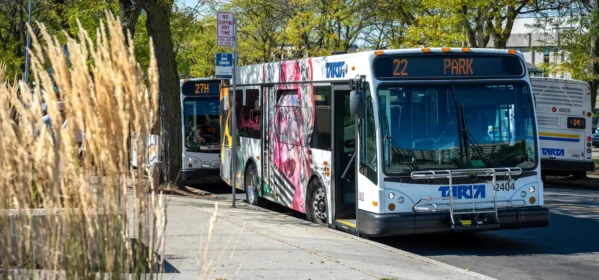
TARTA Achieves APC Certification Using ETA’s Tally Solution
TARTA achieves APC certification using ETA’s Tally solution enabling automated, FTA-compliant ridership reporting to streamline operations and unlock new funding opportunities.
ETA Awarded National Cooperative Purchasing Contract for Transit Technology Solutions
ETA announced today that it has been awarded a national cooperative purchasing contract through the 791 Purchasing Cooperative for Transit Services and Technology Solutions.
What We Learned at the 2025 Transit Bus Summit
In this episode of Stop Requested, hosts Levi McCollum and Christian Londono explore the unique experience of the Transit Bus Summit, an event that goes beyond traditional transit conferences by fostering direct, meaningful connections between agencies and vendors. Christian shares key takeaways from this year’s summit, including discussions on integration challenges, open data standards, and the growing demand for infotainment and hardware reliability. Hear firsthand how this tailored approach to networking and knowledge-sharing is shaping the future of transit technology—and why it’s a must-attend event for industry professionals.
Brownsville Metro Selects ETA for 22-Bus Technology Upgrade
Boca Raton, FL, October 19, 2026. Brownsville Metro, the City of Brownsville’s public transportation system, has selected ETA to upgrade technology across 22 buses. The project includes TransitOps™ for computer-aided dispatch and automatic vehicle location (CAD/AVL), automatic passenger counters, and Tally for trip surveying and reporting support.
AI and the Future of Public Transit with Stephen Kuban
In this episode of Stop Requested, Levi McCollum and Christian Londono talk with Stephen Kuban, President and CEO of Kuban Transit Solutions, about how AI is actively changing the way transit agencies plan, decide, and operate. Stephen explains why AI is more than automation, how it supports better strategic thinking, and how agencies can use it to do more with limited resources while staying focused on outcomes. Stephen also shares how he is working directly with transit agencies through hands-on AI workshops and advisory programs, helping leaders move from experimentation to real-world application. Listeners interested in learning more about his AI pilot program and upcoming engagements can visit: https://kubantransit.com/ai-pilot
ETA deploys a new CAD/AVL system at AppalCART in Boone, North Carolina
Boca Raton, FL. November 1, 2023. ETA, a leading provider of advanced transit technology solutions, is thrilled to announce that it has been awarded a CAD/AVL project with the AppalCART, a transit system servicing the Appalachian State University and the town of Boone, North Carolina.
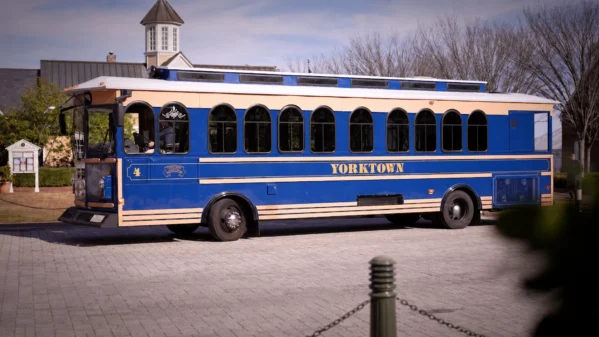
City of Yorktown, Virginia Small System, Big Vision: How Yorktown Keeps Raising the Bar
The City of Yorktown operates a trolley service at the intersection of public transit and tourism. Visitors rely on the trolley to move between designated parking areas and Yorktown’s historic waterfront district, making dependability and real-time communication essential, not optional.
Reimagining the Bus Stop as a Transit Gateway
In this episode of Stop Requested, Levi McCollum and Christian Londono discuss the significance of bus stop amenities in enhancing the transit experience. They explore how features like shelters, seating, and real-time displays impact rider comfort, perceived wait times, and overall satisfaction. Learn how transit planners prioritize amenities based on demand, right-of-way considerations, and cost-effectiveness. Whether you’re a transit enthusiast or a transit professional, this episode provides key insights into transforming ordinary stops into appealing and functional parts of the transit network.
Engineering a Regional Transit Ecosystem in South Florida with WSP’s Shriram Ramaratnam
Levi and Christian are joined by Shriram Ramaratnam, Vice President, Transit & Rail at WSP, to explore how Miami-Dade, Broward, and Palm Beach counties are piecing together a truly regional, multimodal transit network. Shriram shares what he’s learned from two decades of congestion modeling and BRT planning, why land use and sustainable funding are non-negotiables, and how agencies can think beyond fixed routes to serve the full door-to-door journey. They also dig into underrated technologies like real-time passenger information, the invisible challenges of maintenance and budgets, and Shriram’s advice for emerging planners learning to embrace incrementalism and compromise.
Addressing Transit Insecurity and Its Impact on Communities
In this episode of Stop Requested, Christian and Levi focus on the issue of transit insecurity, examining how unreliable transportation impacts individuals and communities. Inspired by a recent Mass Transit Magazine article and national studies, they discuss challenges like poverty, access to opportunities, and the trade-offs between ridership and coverage. The conversation highlights innovative solutions such as on-demand systems, improved frequency, and increased public transit investment to create more equitable and accessible transportation networks. Join the discussion on how transit shapes lives and communities.

Part II: Marketing transit on the cheap.
We’re continuing our look at what local public transit agencies can do to market the technological investments they’ve made in their operations. If you haven’t done so yet, take a few minutes to Read part 1: Changing the perception about public transit to get some background information about the challenges public transit operations face when promoting their services. Part two deals with specific tactics that can be employed—even on the tightest of budgets. Skinny budget tactics Tactics, in support of a defined strategy, are the specific efforts used to perform on strategic objectives. This does require a set budget—both a comprehensive number, as well as specific allocations to each initiative. How you break down these numbers is largely due to the priority and expected impact of each within the overarching strategy. How are transit agencies marketing themselves? According to ETA’s 2016 transit agency survey: 1% of agencies use vehicle/station signage 6% of agencies use print advertising 6% of agencies use social media 8% use radio 4% use television 7% use billboards Except for vehicle/station signage and social media, these media channels are all high-dollar expenses and might not be the best use of limited resources for all situations—especially for those agencies with less than $30,000 in their marketing coffers. What other options are there? Social media Social media is an extremely cost-efficient way to interact with the public—both riders and non-riders. With so many available social media options, it’s important to know which ones are most likely to be used by your audience. This becomes especially important when considering the time involvement necessary to maintain a social media presence. Use it to conduct surveys and polls, communicate service disruptions, provide insights into community events, or even use it to engage followers with fun facts, trivia, memes, and other ‘sharable’ information that is likely to increase the perception of your agency within your market. Use paid placement to reach potential new customers within your service area. Social media platforms, such as Facebook and Instagram, have powerful—yet easy to use—demographic targeting capabilities that allow you to zero in on specific geographic, ethnographic, and economic considerations and reach precisely the type of individuals or groups who would be a good fit for public transit. What’s more is that these paid placement tools are extremely cost-effective, with $50-$100 easily placing your message on thousands of newsfeeds over a period of weeks. Leverage available space The no-brainer in marketing tactics is to utilize the open space on-board vehicles and at-stations to provide important marketing messaging. The good news is that 73.1 percent of agencies do this already, so the question is ‘what gives’ for the remaining 26.9 percent who aren’t using this space? It’s the lowest-hanging fruit in the marketing landscape and should be exploited to help target more people. As vehicles travel through town, a solid messaging campaign can bring awareness to passers-by on the streets and other vehicles on the roadways; new, untapped customers who may be searching for a way to simplify their transit needs for financial, lifestyle, convenience, or environmental reasons. Granted, 82.5 percent of agencies already use on-board space in a revenue-generating capacity, so perhaps the use of these opportunities is limited more by inventory availability that lack of desire to extend your marketing message. But… …you can extend your inventory by investing in on-board digital infotainment systems, something only 5 percent of agencies have embraced. It’s a relatively affordable expense to drastically increase your available inventory to advertisers by an order of magnitude, plus enhance your agency’s promotional efforts and brand value by mixing in specific, graphic- and video-rich promotions to run at set schedules. It’s not a bad idea, especially if you can leverage it as part of a technology procurement budget. Plus, 76.9 percent of riders want on-board infotainment systems according to our 2017 Transit Survey, so it’s a path to greater revenue, marketing reach, and improved ridership experience—sounds like a can’t-lose proposition. Marketing to existing customers Word-of-mouth (WOM) is a powerful (and free) means of getting the word out about new service improvements and ridership benefits. Take advantage of people who are already a fan of your agency and encourage them to spread the good word. In the Journal of Public Transportation article, An Evaluation of the Role of Marketing in Public Transit Organizations, word-of-mouth is the primary marketing option for a whopping 83 percent of agencies. WOM influences up to 50% of all purchasing decisions WOM generates more than twice the sales of paid advertising WOM influences every stage of a customer’s journey WOM can increase a market share by as much as 10% But… WOM is the most disruptive to consumer decisions WOM can vary wildly in its effectiveness There is a danger in only marketing to your current customers. It may be the easiest audience to reach, but you’re also at the mercy of their perception of you and your service. While referrals can be a powerful marketing tool (according to Nielsen Global Trust in Advertising Survey a whopping 92 percent of people trust the recommendation of a friend), you also sacrifice control over the message and you can find yourself at the mercy of the mood and perception of a specific messenger. If that individual is unhappy with your service, then the message is 50 percent more likely to be shared than a positive interaction. This means you need sure that the message you’re sending aligns with what your service can deliver. Media partnerships and sponsorships Be sure to engage local media and provide them with press releases and information about new services, improvements, detours, and special interest stories about your employees and riders. Local media is almost always starved for content—especially feature pieces—and can easily turn your news tip into an article or video clip in their pages, on their nightly broadcast, or on their websites. These opportunities provide a valuable means of getting the word out to the community and help to introduce your services to potential customers who may not have given public transit a second look. A savvy marketing person may even be able to leverage a news feature in trade for on-vehicle promotion for a local event or initiative that is sponsored by/close to the heart of the media outlet. This quid-pro-quo arrangement can further enhance the perceived standing of your agency within the community and result in both corporate and non-profit engagement down the road, as civic-minded entities look to partner with other area resources. Time is a resource As a final consideration, be sure to include the valuable resource of ‘time’ when choosing which tactic to implement. Labor-intensive projects—such as newsletters—can take dozens of man hours spread across the entirety of your organization to produce. These costs are often not considered when determining budget, and while ‘hidden’ from the balance sheet, the impacts of these efforts do extend to the other functions of your operations as people must dedicate time from core functions to write articles, print, fold, and address mailings, etc. Weigh the use and involvement of internal personnel carefully when determining if a tactic is worthwhile. Look for marketing solutions that can be ‘scheduled’ over extended periods or whose time expense require an up-front effort. For example: Instead of making social media posts or sending emails every day, use a management tool like Hootsuite or MailChimp so schedule all posts for the month (or quarter, or year). A couple of hours spent to draft and schedule all efforts is going to pay off in the long run as it’s easier to set aside a few hours once a month on a given day, than it is to find half an hour every day to draft a post. If you have your strategy and timeline mapped out, this should be a very easy, and straightforward production process. Plus, both options have free plans that lets you manage up a certain number of channels or contacts at no cost—for the budget-sensitive agency, that’s an effortless way to stretch the bottom line. Develop any print or direct mail campaigns at once. Not only can you provide the files in advance to media outlets and mail houses up-front, you can schedule specific drops to coincide with your strategic timeline. Plus, printing these efforts at once (called a ‘gang-run’) can significantly reduce your printing expense. Be mindful of the hidden resources required for any marketing effort and include those as part of your budget. The time of your staff and key stakeholders may not always show up on your balance sheet, but they can impact your operations in a way that undermines the very message and value you wish to communicate as a benefit. Final word Both quantitatively and anecdotally we understand that there are certain perceptions that surround public transit that aren’t entirely positive. As an industry, we can either accept these broad generalizations and choose to live with them, or we can opt to change the discussion and work to provide a different narrative which highlights the importance of public transit. The heavy lifting is being done by organizations like APTA on a national level, and that’s good for policy and the funding of grants and infrastructure project. But what is also needed is engagement on the local level, and in an era where agencies are struggling simply to keep their operations running, the marketing and budgets required to encourage greater use and advocacy is incredibly scarce. Transit agencies are continuing a trend of investing in modern technologies to improve the quality of their service. It is critical that the benefits of these investments are communicated communities they serve. These efforts become increasingly important in changing the dialog and perceptions surrounding public transit and its related experience—especially if gains in ridership or growth in service area are required. Despite low levels of funding, transit agencies aren’t without a voice in determining when and how to engage with their communities and riders. While an influx of funding in support of marketing efforts isn’t likely to be forthcoming, an agency doesn’t have to take a passive role in advocating for its existence and benefit to its passengers. There are low-cost, high-impact solutions available that—with a bit of foresight and planning—can be of immense value to the idea that public transit isn’t necessarily like the cliched ideas that seem to keep its reputation stuck in the past. —— Works Cited Bierman, M. (2015, 9 5). Intelligent technology will change how we use mass transit. Retrieved from www.miamiherald.com: http://www.miamiherald.com/news/business/biz-monday/article34127022.html Binet, L. (2009, February 2). Marketing in a Recession: 10 Things to Remember. Retrieved from www.adweek.com: http://www.adweek.com/brand-marketing/marketing-recession-10-things-remember-98256/ Brady, S. (2017). What Percent of Revenue Do Publicly Traded Companies Spend on Marketing and Sales? Retrieved from www.vtldesign.com: https://vtldesign.com/digital-marketing/content-marketing-strategy/percent-of-revenue-spent-on-marketing-sales/ Federal Transit Administration. (2018). Budget – US Department of Transportation. Retrieved from cms.dot.gov: https://cms.dot.gov/sites/dot.gov/files/…/budget/…/fy-2018-cj-budget-final52417.pdf Howard, M. R. (2018, 2 27). Yesterday’s Solutions for Florida’s Transportation Problems. Retrieved from www.floridatrend.com: http://www.floridatrend.com/article/24004/yesterdays-solutions-for-floridas-transportation-problems Joseph Cronin, J., & Roscoe Hightower, J. (2004). An Evaluation of the Role of Marketing in Public Transit Organizations. Journal of Public Transportation, 23-26, 32-34. Johnson, S. (2017, May 30). Transit Fares Only Partially Cover Public Transportation Costs. Retrieved from www.govtech.com: http://www.govtech.com/fs/Transit-Fares-Only-Partially-Cover-Public-Transportation-Costs.html Marketing Charts. (2013, 4 15). Bad Customer Service Interactions More Likely to be Shared Than Good Ones. Retrieved from www.marketingcharts.com: https://www.marketingcharts.com/digital-28628 Results. (2018, February). Retrieved from www.cmosurvey.org: https://cmosurvey.org/results/february-2018/ The Nielsen Company. (2012, 4 10). Global trust in advertising and brand messages. Retrieved from www.nielsen.com: http://www.nielsen.com/us/en/insights/reports/2012/global-trust-in-advertising-and-brand-messages.html Wikipedia. (2018, February 10). Farebox Recovery Ratio. Retrieved from www.wikipedia.com: https://en.wikipedia.org/wiki/Farebox_recovery_ratio#cite_note-:11-28
Countdown to Transport Ticketing North America 2025 with Portfolio Director, Stuart Barker
Join hosts Levi McCollum and Christian Londono for a special episode of Stop Requested as they welcome their first overseas guest, Stuart Barker, Portfolio Director at Clarion Events, the world’s third-largest event organizer. Dive into the story behind the Transport Ticketing Global event in London and its fast-growing North American counterpart, both of which have become essential hubs for transit professionals exploring the latest in fare collection and ticketing technology. Stuart shares how these events evolved from a small gathering in a London hotel basement to international forums drawing attendees from over 65 countries, and why agencies at every stage of technology adoption, from cash-only to cutting-edge mobile payments, are finding value in attending. Get an inside look at what makes the North American event unique, with focused content tailored to the region’s diverse needs and opportunities for agencies to network and learn from both industry leaders and peers. Exclusive Offer: Transport Ticketing North America in Chicago on June 24th and 25th is free to attend for transit operators, transit agencies, and government representatives. If you’re a vendor, be sure to listen for a special discount code just for our listeners. Register now for Transport Ticketing North America
Agencies Roll Out TransitGPT™ as ETA Advances TransitOS™ Architecture
Boca Raton, FL – September 3, 2026 – ETA today announced that several transit agencies are rolling out TransitGPT™, its conversational AI application designed to help transit professionals ask questions across connected agency data in plain language.

Tale of Two Surveys: Understanding APC Certification and APTL Survey Part 2
Accurate data collection is critical for transit agencies, especially when reporting to the National Transit Database (NTD). One essential measure is the Average Passenger Trip Length (APTL), which helps agencies calculate the distance passengers travel on average for each unlinked trip. Reporting APTL is a key part of ensuring compliance and maximizing funding from the Federal Transit Administration (FTA).
Steering CDTA’s Next Chapter with CEO Frank Annicaro
In this episode of Stop Requested, Levi McCollum and Christian Londono talk with Frank Annicaro, CEO of the Capital District Transportation Authority (CDTA). Frank shares his journey into transit, starting as a diesel mechanic and working his way through leadership roles at New York City Transit before stepping into the CEO role in New York’s Capital Region. The conversation explores the transition from the largest bus system in North America to a high-performing regional agency, the importance of culture and workforce development, and how training and employee engagement are shaping CDTA’s future. Frank also discusses funding stability, mobility on demand, transit-oriented development, and how CDTA is positioning itself to support continued growth across the Capital Region.

Balancing the Art and Science of Transit Planning with Brian McCollom
In this episode of Stop Requested, Levi McCollum and Christian Londono talk with Brian McCollom, a transit management consultant with more than 50 years of experience in planning, operations, performance management, and the National Transit Database. Brian shares why good transit planning requires more than technical skill, combining data and standards with judgment, observation, and a clear understanding of the market a service is meant to serve. The conversation explores how planners can make better use of limited resources, what performance audits reveal beyond the headline metrics, and why getting out into the field still matters. Brian also discusses service costing, fare policy, NTD reporting, and the value of learning from operators, maintenance teams, riders, and peers across the industry.
Looking for a specific type of resource?

Blog
ETA created content on topics of interest across the transit industry. Expert insight, opinion pieces, and the latest in transit innovation.

Podcast
Conversations with the foremost experts across the transit industry to discuss lessons learned, technological innovation, community needs, and so much more.

Case Studies
See the results ETA’s clients have received through replacing legacy CAD/AVL systems, installing new functionality, and doing it all without full hardware replacements.

Press
New awarded contracts and the launch of innovative technologies are just the start of the latest ETA news.

Glossary
From general transit feed specification (GTFS) to ghost bus, the ETA curated glossary is a reference to better understand industry terminology.
Ready to see our Unified Operational Health software on your routes?
Whether your agency is modernizing an existing system, improving rider information, strengthening reporting, or working through a more connected operational approach, ETA can help make the next step clearer.