Blogs, news, case studies, templates, podcasts and more; all right at your fingertips. Browse our comprehensive transit resources database to find information your agency needs to improve operations, grow your knowledge base, and expand your understanding of the industry at-large.
Reflecting on the Leadership and Legacy of Clinton B. Forbes
In this heartfelt episode of Stop Requested, Christian and Levi reflect on the life and legacy of Clinton B. Forbes, marking one year since his passing. They share personal memories of working with Clinton, recalling his charisma, dedication to customer service, and transformative leadership in public transit. From his ambitious projects like the Route Performance Maximization plan to his commitment to community service through United Way, Clinton’s impact was profound. Join them in honoring his contributions to transit and the invaluable lessons he imparted to those who had the privilege of knowing him.
Why American Transit Declined with Nicholas Dagen Bloom
In this episode of Stop Requested, Levi McCollum and Christian Londono talk with Nicholas Dagen Bloom, professor and chair of the Department of Urban Policy and Planning at Hunter College and author of The Great American Transit Disaster, about how American transit systems declined and why some cities fared better than others.
Balancing the Art and Science of Transit Planning with Brian McCollom
In this episode of Stop Requested, Levi McCollum and Christian Londono talk with Brian McCollom, a transit management consultant with more than 50 years of experience in planning, operations, performance management, and the National Transit Database. Brian shares why good transit planning requires more than technical skill, combining data and standards with judgment, observation, and a clear understanding of the market a service is meant to serve. The conversation explores how planners can make better use of limited resources, what performance audits reveal beyond the headline metrics, and why getting out into the field still matters. Brian also discusses service costing, fare policy, NTD reporting, and the value of learning from operators, maintenance teams, riders, and peers across the industry.
Your First Stop on the Road to Transit Innovation
In this trailer for Stop Requested, co-hosts Christian Londono and Levi McCollum introduce their new podcast, where they dive into the latest trends, technologies, and stories shaping public transit. As Senior Customer Success Manager and Product Manager at ETA, Christian and Levi bring expert insights and industry perspectives to help listeners understand how transit innovations are creating more efficient and user-friendly systems. Tune in every Monday for a fresh take on the future of public transportation!
Safeguarding Transit Workers and Strengthening Public Transportation
In this episode of Stop Requested, Christian and Levi tackle the urgent issue of assaults on transit workers, exploring alarming statistics that reveal a troubling rise in incidents over the past 15 years. They discuss the profound impact on bus operators, from PTSD to workforce shortages, and examine the societal factors contributing to these challenges. The conversation highlights strategies such as operator barriers, panic alarms, and public awareness campaigns, alongside new federal directives aimed at reducing assaults and improving safety culture. Join the discussion on how agencies, unions, and communities can work together to safeguard the backbone of public transit.

Why Transit Agencies Are Switching Their Legacy CAD/AVL Providers
Transit agencies aren’t just looking for new software—they’re looking for stability, transparency, and a partner that understands the realities of running a public transportation system. Too often, legacy CAD/AVL vendors sell a product and disappear until it’s time for renewal. Agencies are left dealing with downtime, unreliable hardware, and limited visibility into what’s really happening on the street.

3 key preparations to consider before autonomous transit arrives.
Autonomous vehicles are more of a novelty at this point, available in a few select areas. However, 52 percent anticipate that within 3-5 years, they’ll be in the market. That’s not a long time to develop, test, and procure solutions to satisfy the ancillary considerations related to self-driving vehicles.
How Modern Fare Technology Improves the Rider Experience with Masabi’s Jeff Nullmeyer, Sr. Business Development Manager
In this episode recorded live from Transport Ticketing North America 2025, hosts Levi McCollum and Christian Londono talk with Jeff Nullmeyer, Senior Business Development Manager at Masabi, about how modern fare technology is improving transit for both riders and agencies. Jeff explains Masabi’s platform approach to fare collection, giving riders multiple payment options—mobile ticketing, contactless cards, or traditional smart cards—without forcing them into a single method. He discusses fare capping, which helps unbanked riders earn passes as they travel, ensuring equitable access to discounts. Learn about real implementations at Los Angeles World Airports, Madison, and cash-free systems in Dayton. Jeff covers why flexibility and open architecture matter, how SaaS solutions keep agencies current without costly hardware upgrades, and common RFP mistakes that limit options. The conversation also touches on reducing cash handling burdens, eliminating mechanical failures from outdated systems, and emerging technology trends.
Looking Back on 2025 Through 40 Conversations Advancing Transit
Join us for a reflective episode of Stop Requested, as we revisit our journey through 2025, our first full year as podcast hosts. Co-hosts Levi McCollum and Christian Londono delve into their favorite moments and standout guests, discussing over 40 captivating interviews that shaped the podcast. From conversations about community involvement in public transit to innovative technologies like zero-emission solutions and the significance of mental health for frontline workers, we explore the evolving landscape of the transit industry. As we set our sights on 2026, we share our goals for weekly episodes and exciting plans to record on transit vehicles. Tune in to celebrate the progress made and anticipate future insights in the world of transit.
Ace Your Transit Agency’s 2025 APC Recertification with Tally (Replay)
In this special replay episode of Stop Requested, Levi and Christian revisit an essential conversation about Automatic Passenger Counting (APC) technology and its impact on public transit agencies. With the 2025 APC recertification deadline set by the FTA fast approaching, they break down why agencies need to act now and the operational benefits of certification. They also highlight ETA’s innovative tool, Tally, designed to streamline APC data collection, saving agencies time, reducing costs, and ensuring compliance with NTD reporting requirements. If you missed this episode the first time, now’s the perfect time to catch up!
Designing for the Human Side of Transit with Mark Hughes
In this episode of Stop Requested, Levi McCollum and Christian Londono talk with Mark Hughes, founder and Principal Transit Experience Lead at Transit Experience Group and Chief Design Officer at Mark Hughes Creative. With a background in product design, digital experience, and customer experience, Mark brings a private sector design perspective into the transit industry. The conversation explores how riders experience transit through human interaction, why frontline employees shape trust in the system, and how training can better prepare operators for real world conditions. Mark also discusses wayfinding, communication during disruptions, rider confusion, and why customer experience is not separate from operations.
How Cincinnati Metro Turned Crisis into Comeback with Steve Anderson, Sr. Director of Development and Innovation (Replay)
After years of declining ridership, service cuts, and aging infrastructure, Cincinnati Metro found itself in a classic “death spiral.” But thanks to bold leadership, a game-changing public vote, and a relentless focus on the rider experience, the agency has staged an inspiring turnaround. In this replay of Stop Requested, hosts Levi McCollum and Christian Londono sit down with Steve Anderson, Senior Director of Development and Innovation at SORTA, to unpack the story behind this remarkable comeback. Steve shares his personal journey—from sketching imaginary cities as a kid to leading transformative transit projects in Cincinnati and beyond. Discover how Metro overcame decades of underinvestment, leveraged new funding, and launched ambitious initiatives like Metro Rapid, a cutting-edge Bus Rapid Transit (BRT) system designed for speed, comfort, and local character. Hear how the agency is rethinking station design, collaborating with neighborhoods, and making data-driven decisions to deliver a rider-first experience. Learn how Cincinnati Metro is building a future-focused transit system that’s reshaping mobility and revitalizing the city for the next generation.
Ace Your Transit Agency’s 2025 APC Recertification with Tally
In this episode of Stop Requested, Levi and Christian dive deep into the significance of Automatic Passenger Counting (APC) technology for public transit agencies. They explore the crucial 2025 APC recertification deadline set by the FTA, outlining why agencies need to prepare now and the operational advantages of APC certification. The hosts also introduce ETA’s latest innovation, a powerful tool designed to simplify the APC data collection process, saving agencies time and resources while ensuring compliance with NTD reporting requirements.
Binghamton University Celebrates Over a Decade with ETA: A Longtime Partnership Powering a Student-Led System
Boca Raton, FL. August 15, 2025. At Binghamton University in upstate New York, a student-run bus system is delivering professional-grade transit service to thousands of students every day and it’s all made possible by a longtime partner, ETAs.
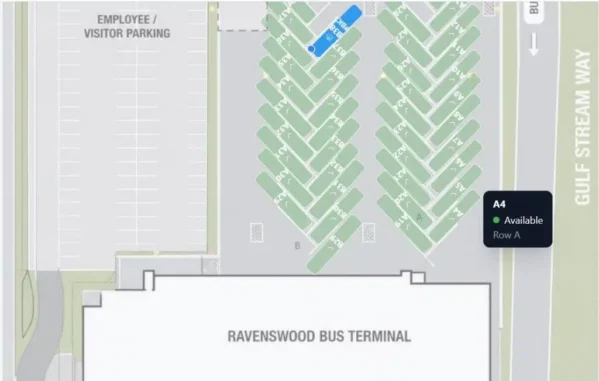
Stop Hunting for Buses. Start Running Your Yard.
Every transit agency knows the drill. It’s 5:45 AM. Pull-out starts in fifteen minutes. A dispatcher is on the radio asking where Bus 412 is parked. A utility worker is walking the lot with a flashlight. Maintenance thinks it’s in the back row. Nobody’s sure.

The Rise of Data-Driven Decision Making: How Automated Passenger Counting Transforms Transit Planning
Public transportation agencies face a constant challenge: optimizing service provision to meet the evolving needs of ridership. Traditionally, planning decisions relied on estimates and historical trends. However, the emergence of Automated Passenger Counting (APC) technology has ushered in a new era of data-driven decision making.

Level up driver performance
Driver monitoring technologies exist to identify ineffective behaviors that could impact overall performance, increase rider satisfaction, and contribute to unsafe vehicle operation. Among the more popular solutions on the market include: speed tracking, excessive idle monitoring, schedule performance tracking, and collision avoidance.
ETA deploys a new CAD/AVL system at AppalCART in Boone, North Carolina
Boca Raton, FL. November 1, 2023. ETA, a leading provider of advanced transit technology solutions, is thrilled to announce that it has been awarded a CAD/AVL project with the AppalCART, a transit system servicing the Appalachian State University and the town of Boone, North Carolina.

E-paper displays are ready for prime-time transit
New sign technology is poised to remake transit stop communication

It’s time to bury your printed schedules six feet deep.
By Matt SchroederDirector of Marketing, ETAs
QLine Completes Implementation of ETA Technology to Enhance Operations and Rider Experience
Boca Raton, FL. September 17, 2025. QLine has completed the implementation of ETAs’ Automatic Vehicle Location (AVL), Automatic Voice Announcements (AVA), and Automatic Passenger Counting (APC) technologies across its fleet of six modern streetcars serving the Woodward Corridor in Downtown Detroit.

How an Easy-to-Use CAD/AVL System Reduces Disruption During Transit Staff Turnover
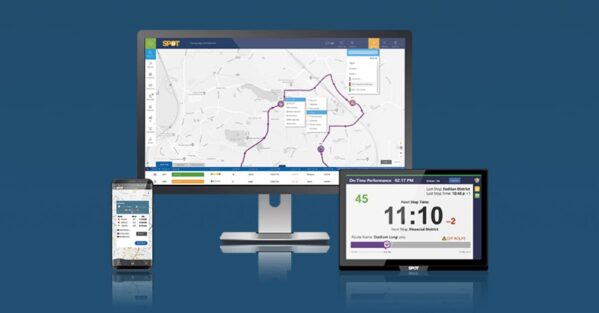
Transit operations depend on people, from dispatchers and operators to supervisors and administrators. But when turnover hits, even the most experienced agency can struggle to keep service running smoothly. Without an easy-to-use CAD/AVL system, service disruptions, delayed responses, and training gaps become the norm. That’s why ETA designed SPOT, a browser-based platform built to keep service on track, no matter who’s at the controls.
Matching Transit Service to Real Needs with Hunter Abel
In this episode of Stop Requested, Levi McCollum and Christian Londono talk with Hunter Abel, Project Manager and Transit Lead at Modern Mobility Partners. Hunter shares how his experience at LeeTran, MARTA, and now in consulting has shaped the way he approaches transit planning and project delivery. The conversation explores why plans often stall between planning and implementation, how agencies can define clearer goals, and why public input should focus on how people actually travel rather than which mode looks most appealing. Hunter also discusses data, tradeoffs, post-COVID service changes, and the value consultants can bring when agencies need additional capacity or a fresh perspective.
AI and the Future of Public Transit with Stephen Kuban
In this episode of Stop Requested, Levi McCollum and Christian Londono talk with Stephen Kuban, President and CEO of Kuban Transit Solutions, about how AI is actively changing the way transit agencies plan, decide, and operate. Stephen explains why AI is more than automation, how it supports better strategic thinking, and how agencies can use it to do more with limited resources while staying focused on outcomes. Stephen also shares how he is working directly with transit agencies through hands-on AI workshops and advisory programs, helping leaders move from experimentation to real-world application. Listeners interested in learning more about his AI pilot program and upcoming engagements can visit: https://kubantransit.com/ai-pilot
Solving Pass-Ups at the Bus Stop with Nirit Glazer
In this episode of Stop Requested, Christian Londono and Levi McCollum talk with Nirit Glazer, co-founder and CEO of LookingBus, about one of the most persistent and overlooked problems in public transit: bus pass-ups. Nirit shares how real rider experiences, especially those of riders with disabilities, led her team to build technology that helps ensure buses stop when riders are waiting. The conversation explores reliability, accessibility, equity, and what it takes to introduce meaningful innovation inside complex transit systems, all with a focus on rebuilding rider trust and improving the everyday transit experience.
Behind NYC Ferry’s Recent Route Changes with Nina Verzosa
What does it actually take to plan ferry service in New York City? In this episode of Stop Requested, Levi and Christian talk with Nina Verzosa, Assistant Vice President of NYC Ferry at NYCEDC, about how ferry routes are designed, evaluated, and changed over time. Nina explains how ferry planning compares to buses and rail, how customer feedback shapes decisions, and what the recent systemwide NYC Ferry route changes were designed to accomplish.
CapMetro’s Road to Electrification with Zero Emissions Director, David Carr
David Carr, Director of Zero Emissions Bus Programs at CapMetro, shares how Austin’s transit agency is driving toward a fully zero-emission fleet. Hear about the rollout of battery-electric buses, the groundbreaking solar-powered charging infrastructure, and the real-world challenges of electrifying public transit-from workforce training to integrating new technologies. Get an inside look at one of the nation’s most ambitious sustainable transit transformations and what it means for the future of Austin’s mobility.
ETA helps Coral Gables Trolley improve rider experience
Boca Raton, FL. July 26, 2023. ETA is pleased to announce that its longtime transit partner, the City of Coral Gables, FL has added automatic passenger counting (APC) and onboard Wi-Fi Internet access to its fleet of trolleys.
SPOT™ brings real-time intelligent transit to Manteca, CA
Boca Raton, FL. June 22, 2023. ETA is pleased to announce that the City of Manteca, California, has selected its SPOT™ CAD/AVL system to improve operational efficiencies and to enhance the rider experience with real-time arrival predictions through mobile and web applications.
Transit Technology Vendors: The Days of Closed Systems Are Over
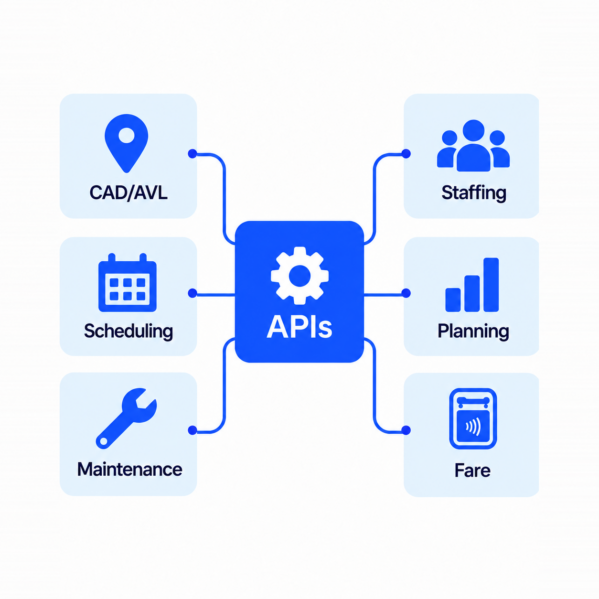
I’ve spent much of my career in this industry, and I’m still surprised by the state of transit technology APIs. Some provide limited functionality, some companies don’t offer APIs at all, and others have APIs but won’t make them available to their customers. For an industry that talks so much about integration and interoperability, we have a lot of work to do.

Pre-plan your RFP evaluation
Tools to help your RFP to set realistic expectations and deliver a focused review. Over our history, ETA has submitted hundreds of proposals for mass transit technology RFPs. We’ve won some, we’ve lost some, and we’ve seen RFPs pulled without warning. Win, lose, or draw our practice is to reach out to transit agencies and ask for feedback about the RFP—our proposal, where we excelled, where we came up short, and what struggles the agency had during the process. That’s the nature of our industry. This last point serves as the subject for this article; what are the common challenges for proposal evaluation? Our 2018 transit agency survey discovered that comparing offerings was the “biggest source of stress” for those on proposal decision committees, followed by “determining value versus price” and “determining the importance of features.” These are all valid concerns—but easily fixed. The key to solving these issues starts with preparing the RFP itself. The same 2018 survey revealed that “preparation,” “creating technical requirements,” and “determining desired outcomes” were the top three headache-inducing tasks. For the most part, an RFP includes the following components: Cover letter or statement of interest Vendor information Proposed solution Strategy for implementation Warranty & support information Cost proposal Required forms Each section should ultimately contribute to the decision-making process. It’s not uncommon for an evaluation structure included in the RFP which looks something like this: Technical response: 20 points Price: 40 points Vendor qualifications: 20 points Organization of the proposal: 10 points Situational understanding: 10 points And that’s about it in terms of the breakdown and weighting of the proposal response. That’s all a decision committee relies on to score and rank their evaluation. The highest score wins, and to the victor goes the spoils. But what if the evaluation criteria are wrong? What if it’s weighted incorrectly? Why does price weigh more than the solution itself (40% of transit agencies use it as their primary decision factor) than the vendor’s track record (vendor experience is the primary factor for just 11% of transit agencies)? What mechanisms exist in your RFP for establishing value versus performance? Our 2019 survey revealed long-term performance (70.2%) must be part of the evaluation process. That certainly isn’t listed in the standard scoring criteria? Just 52 percent of transit agencies say that the intelligent transit system (ITS) they purchased lived up to expectations in our 2020 agency poll. The picture I’m painting here is that the defined evaluation criteria baked into RFP documentation are inherently flawed; they are not up to the task and are highly subjective. Why do so many agencies value long-term performance, but fail to include any sort of measurement tool within their evaluation structure? Why are nearly half dissatisfied with their ITS purchase? How do we change the evaluation so that it most accurately reflects the needs of the transit agency and delivers on the expected outcomes? Here are a few ideas to consider before you put together your RFP: Pre-proposal polling: Conduct an anonymous internal poll of your transit agency. If possible, include everybody. Everybody is drivers, mechanics, dispatchers, planners, customer support, and administration. Use this effort to discover hidden truths about your agency and potential issues. Look for potential areas of resistance. Find pain points in potential solutions. Include the ability for respondents to rank their answers to gauge priority and level of severity. We recommend Survey Monkey, DooPoll, or even use Microsoft Sharepoint to create your surveys and leverage these tools automatically tally the results. Conduct pre-RFP pricing research: We know that transit agencies (ETA included) keep a tight lid on their pricing structure. It’s a competitive industry, after all, and any advantage helps. This practice doesn’t mean they won’t provide you with ballpark figures for planning purposes. Use this information to A) understand the approximate cost for each component (ITS, APC, AVA, etc.), and B) evaluate cost against the amount of funding you have available. If possible, ask for an estimated ‘per vehicle cost’ to help account for hardware, installation, and recurring fees. This effort will help you set expectations before writing your RFP. It is better to know what you’re asking for and compare it to the final pricing. With this baseline pricing in mind, it will help establish expectations for what your agency cannot afford. It will also help you derive a better sense of value from your proposals. It may even cause you to think about how much weight you place on pricing in the overall evaluation hierarchy. Create a compliance matrix with priority values We’ve written before about the importance of including a compliance matrix as part of your RFP documentation. This approach is an excellent way to get answers about what a proposed system can and cannot deliver. What’s missing from the matrix is a correlation between features and their importance to the final solution. A compliance matrix evens the value across all items but does nothing to tell your evaluation committee how to weigh capabilities against price and competition. Including this information will help the vendor present prioritized solutions based on needs. For example, if your internal survey efforts reveal the following priorities: Cloud-based ITS Route and schedule management NTP reporting Automatic passenger counters Onboard Wi-Fi Then assign value to those features within your matrix (a scale of 1–10, perhaps?). The vendors responding to your proposal will understand what you value the most. They can also construct their proposal to prioritize some aspects over others and deliver more up-front value. A well-constructed spreadsheet may even include auto-calculation to help score each entry in advance. An entry in a compliance matrix theoretically might look like this, where “yes” answers to compliance earn full marks, where “no” responses don’t earn points, and “extra cost” applies a multiplier value to adjust the score to account for additional charges: Provide this spreadsheet as part of the RFP and ask vendors to complete it as part of their submission. Lock and hide those columns, cells, and worksheets from the file submitted to vendors. Reveal those fields after submission to see how a vendor stacks up based on their responses. Include in your calculations weighted penalties for unsupported systems. Proposal creation Now that you are adequately armed with priority preferences by role (via the internal survey), you will have more insight into how each business unit will react to your final choice. Additionally, you’ll have a sense of what you can afford and what systems to prioritize (using the ITS Price Estimator) and, ultimately, a point-by-point accounting of each vendor’s capabilities (courtesy of the weighted compliance matrix). With this information, you can create an RFP document that better captures the actual deliverables for your project and have the background data needed to conduct a proper evaluation. With this data in hand, you can quickly rule out submissions below a capability threshold that you identify before evaluating. The goal, after all, is to narrow down proposals quickly. This approach: Greatly assists in the preparation of the RFP Clearly defines the technical requirements It helps determine an agreed-upon, prioritized outcome Reduces internal debate process The process helps build a right-sized transit spec while avoiding common pitfalls and finding that vendor who will be your forever friend. Now that you’re ready to construct your RFP, you can focus on telling a precise story—your story—so that any vendor responding has a full grasp of everything your system needs to accomplish. Construct your RFP to follow a logical progression and use clearly-defined topics and industry-standard terminology. Avoid copying and pasting from other sources, which typically results in a messy, contradictory document. We recommend a sequence that follows this general approach: Introduction (overview of your agency and history) Objectives (description of the challenges you seek to resolve) Resources (provide details about your agency, e.g., number of vehicles, makes and model, installed hardware, contact points, who has the final say, etc. Scope (define every deliverable, feature, and intended use—a good place to include your compliance matrix) Submission requirements (we recommend the following:) Statement of interest About the vendor Technical proposal Implementation plan Warranty & support Price proposal Required forms A significant consideration in this process is to allow enough time for vendors to create a thoughtful response to your solution. A good rule of thumb is six to 12 weeks from the RFP’s issue (or street) date. We also encourage you not to put page limits on the proposal. These highly technical and complex systems allow the vendor the necessary time to explain the system and benefits thoroughly. Yes, this can lead to some lengthy proposals. Consider the amount of money you are about to spend and the consequences of selecting poorly. In this decision, we highly stress that you should err on the side of information. Short summaries could cause a potential vendor to omit details that could otherwise influence your decision one way or another—all to satisfy an arbitrary page count. The added information serves as a handy reference to answer any questions you may have. Proposal evaluation You’ve now laid the groundwork for your evaluation with all your pre-proposal work. The tools and concepts presented above provide your transit agency with enough background information to help identify potential vendors to look for before the issuance of the RFP—and then compare their response against the pre-RFP evaluation. More importantly, you have established a list of criteria based on priority gathered by stakeholders at all levels of your organization. Take your time to evaluate the results. Ask questions. Conduct pilot programs. Take the necessary steps to ensure that you’re making a comprehensive decision in your agency, taxpayers, and riders’ best interest.
Countdown to Transport Ticketing North America 2025 with Portfolio Director, Stuart Barker
Join hosts Levi McCollum and Christian Londono for a special episode of Stop Requested as they welcome their first overseas guest, Stuart Barker, Portfolio Director at Clarion Events, the world’s third-largest event organizer. Dive into the story behind the Transport Ticketing Global event in London and its fast-growing North American counterpart, both of which have become essential hubs for transit professionals exploring the latest in fare collection and ticketing technology. Stuart shares how these events evolved from a small gathering in a London hotel basement to international forums drawing attendees from over 65 countries, and why agencies at every stage of technology adoption, from cash-only to cutting-edge mobile payments, are finding value in attending. Get an inside look at what makes the North American event unique, with focused content tailored to the region’s diverse needs and opportunities for agencies to network and learn from both industry leaders and peers. Exclusive Offer: Transport Ticketing North America in Chicago on June 24th and 25th is free to attend for transit operators, transit agencies, and government representatives. If you’re a vendor, be sure to listen for a special discount code just for our listeners. Register now for Transport Ticketing North America
Why Good Transit Planning Starts with Observation at SacRT with James Drake
In this episode of Stop Requested, Levi McCollum and Christian Londono talk with James Drake, Senior Manager of Service Planning at Sacramento Regional Transit (SacRT). With over 20 years at one agency, James shares how transit service actually comes together, from data and analysis to the service riders experience every day. The conversation explores how planners think about networks instead of individual routes, how service changes are developed and implemented, and why balancing ridership and coverage isn’t as simple as it seems. James also discusses the role of data, the importance of observation and operator input, and how microtransit fits into a broader transit system.
Steering CDTA’s Next Chapter with CEO Frank Annicaro
In this episode of Stop Requested, Levi McCollum and Christian Londono talk with Frank Annicaro, CEO of the Capital District Transportation Authority (CDTA). Frank shares his journey into transit, starting as a diesel mechanic and working his way through leadership roles at New York City Transit before stepping into the CEO role in New York’s Capital Region. The conversation explores the transition from the largest bus system in North America to a high-performing regional agency, the importance of culture and workforce development, and how training and employee engagement are shaping CDTA’s future. Frank also discusses funding stability, mobility on demand, transit-oriented development, and how CDTA is positioning itself to support continued growth across the Capital Region.
Proven Public Transit Marketing Strategies with Evan Henderson, Sr. Account Manager at Garth Solutions
How do you market public transit in a world where everyone defaults to driving? Our guest, Evan Henderson, has the answers. In this episode, we sit down with Evan to discuss battle-tested strategies from his time at Palm Tran, where he worked as Marketing Manager and later Senior Public Relations Manager, and his current role as Sr. Account Manager at Garth Solutions. From launching viral campaigns that reach millions to converting skeptical elected officials into transit champions, Evan reveals the unique challenges of marketing public transportation—and exactly how to overcome them. You’ll discover the inside story of Palm Tran’s “Let’s Get on the Bus Challenge” campaign that helped push ridership past pre-COVID levels, why consistency beats perfection in community outreach, and how to turn everyday riders into your most powerful advocates. Whether you’re a one-person marketing team or leading a larger effort, this episode delivers actionable strategies for building trust, changing perceptions, and getting butts in bus seats.
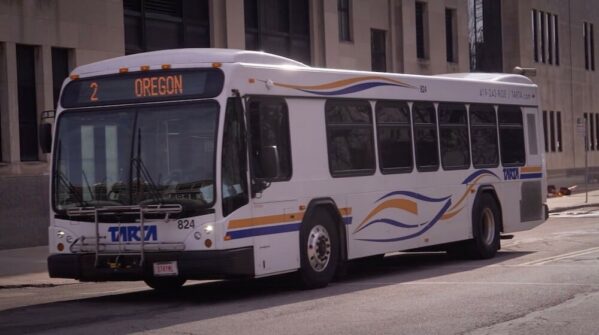
TARTA Transforms Transit Operations with ETA’s Integrated System
TARTA partners with ETA to streamline communication, improve efficiency, and deliver a more reliable transit experience for Lucas County riders.
ETA Awarded Five-Year APC Contract with Island Transit
Boca Raton, FL. May 19, 2026. Island Transit has selected ETA as its automated passenger counting (APC) partner, awarding a five-year contract in April 2026. Installation across the agency’s 54-vehicle fleet is scheduled to begin in early June.

What factors influence customer satisfaction?
Communication, not technology, determines the satisfaction with transit systems It is a rarity in the mass transit technology market when we strike up a conversation with a potential customer, and they sing the praises of their current ITS vendor. Let me say it another way—transit operators aren’t happy with their tech partners. According to our annual transit agency surveys, more than two-thirds are less than thrilled. The oddest part of this conversation is just how seldom their complaints don’t center on the technology itself but rather the quality of the after-sales support they receive—or lack thereof. You read that right; their issues are seldom with the product. The technology, for the most part, works fine. It’s the relationship with their vendor that has them pursuing new systems. So, what have transit operators so chaffed with the quality of their support? In general, the complaints we here typically fall into one of the following three categories: Responsiveness Time to resolution Frequency of interaction It’s a shame when the reason for severing a relationship and introducing tumult to their operations, staff, and riders has nothing to do with the performance of the technology itself. After all, technology IS supposed to highlight the vendor/client relationship. Right? Right? What are the elements of a quality support experience? Just as the technology on vehicles is a science, so is the art of supporting the client and product. ITS systems are complicated, with many moving parts, including hardware, software, configuration, and data components. As rigorously tested as these systems are, one errant setting or faulty component can kick off an intensive troubleshooting effort to narrow down the cause. So how does one turn complexity into a recipe for success? —A spirit of partnership The first consideration we address is that both vendor and customer must dedicate themselves to the support process. It’s a two-way street, and the client needs to understand their role in the performance of their technology; this includes: Performing routine maintenance Providing detailed information for troubleshooting Being proactive and vocal about the issues they experience Without that level of client-side participation, the support process can drag out far longer than anticipated and lead to frustration on both sides. Similarly, the vendor must actively support their product, providing routine progress updates, delivering on all promises made, and keeping their customers well-educated and informed. When something goes wrong, customers want to know that their concern has been addressed. They don’t want to submit a support request or question only to have days or weeks pass before any sort of reply is received—or worse yet, no response at all. Both sides must understand that the ownership experience requires that they join at the hip, with each entity supporting the other in as diligent and thorough a manner as possible. —Training and education ITS systems, like ETA’s SPOT™ platform, are complex. Though much of the intricacy takes place behind the scenes and is never exposed directly to the customer, the need for formalized and ritual training is essential. Too often, the only training that a customer receives is at the launch of a new transit system. As the system evolves or employees transition to new opportunities, a gap between what was and what is forms, and the relevancy of that initial instruction become less relevant. Vendors must bake supplemental education into every technology deployment, including identifying the right cadence for “booster” training or situational instruction for new hires or when new features join the ITS solution. An online, self-service database is helpful for self-guided learning, and a guided program must be part of the process to ensure effective instruction. An additional consideration is to ensure that the training focuses on the systems relevant to the individual role or group function. To train the entire staff of a transit operation is pure folly if one expects employees to be able to identify which information is critical to the performance of their jobs. It’s normal for people to become inattentive, tired, and distracted when they feel disconnected from the source material. Role-based instruction is hyper-focused, relevant education based on the needs of a specific subset of transit staffers, e.g., drivers, dispatchers, planners, etc. This education approach delivers only the materials needed for that group to perform their tasks effectively. The staff learns high-level concepts about how their role fits into the larger picture and takes a deep dive into the technology and features they will use in their day-to-day tasks. The result is a more relevant, more precise training that encourages participation and retention. —Responsive input and feedback The answer to this question is far more nuanced than one would think. Transit technology—especially software—are complicated. It can take time to research an issue before a solution presents itself. Responsiveness by the client can go a long way to speeding up the process, but it isn’t the only factor. From a client’s standpoint, they want the system to work as designed. The “what and how” of the situation is often of little concern. They are, after all, transportation professionals—not software engineers. A client wants their vendor to be a partner in not only the performance of the system but the success it delivers to their operation. From a vendor standpoint, a responsive customer takes an active interest in providing timely feedback to the original inquiry. Have they performed the troubleshooting steps? Is the information they provide to the original or follow-up communications detailed and complete—or is it highly generalized, like “the mobile data terminal doesn’t work.” Both sides want a timely answer to the questions asked in most cases. It’s an observation that hardly falls within the realm of rocket science, but one that seems to be a common tripping point and trigger for a great deal of angst between agency and supplier. This reality is often the source of a great deal of friction between customer and vendor, which makes responsiveness even more critical to communicating the status of the concern and setting realistic expectations for a resolution. —Frequency of interaction The human factor is an essential and often overlooked aspect of the client/customer relationship. Consider for a moment the procurement process. In the beginning, contact is frequent. Sales representatives are attentive and in constant contact while negotiating the sale. Once signed contracts exist, the communication escalates further as the implementation teams coordinate with agency teams to finalize system design, schedule implementation, and conduct training. Once the vendor turns over the golden keys to the new technology, the vendor turns their attention to the next opportunity, and the shock of silence settles in. The transit operator is left to use the system. Speaking from the vendor viewpoint, this is the natural evolution of procurement. From the customer standpoint, however, the abrupt cessation of activity following the completion of a project can leave agencies feeling adrift; a “you got my money, and now you’re leaving?” situation. It’s not uncommon for technology vendors to see “no news” as “good news” when past projects are concerned. A neglected customer risks becoming an unhappy client, so it is of little surprise that they pursue higher-quality relationships at the contract end. Keeping those relationships strong and proactive with customer communication long after that initial flurry of activity becomes vital. Closing thoughts Providing quality customer service isn’t some uncrackable mystery. It’s rooted in common sense. If you are a client unhappy with your vendor, it’s probably time to pick up that phone and let your vendor know. If you’re a supplier, you had better take that call—or better yet, run through your list of accounts and touch base with those customers you haven’t spoken to in a while. Run through the list of concerns. Clear the air. Compare expectations to performance and set goals for measurement. At some point, both sides were ecstatic about this joint project—and it’s possible to reclaim that excitement. Try again to find common ground where communication becomes the norm; not the exception that only happens when conflict drives the discussion. It changes the tone from “this isn’t working” to “how can we resolve this together.”

A cash-free future begs you to take my money.
Versatile payment collection capabilities simplify payment and meets the preference of the rider. While regular transit riders will likely stick to a single form of payment for their transit fares, periodic or impromptu riders will require flexibility in their fare transactions.
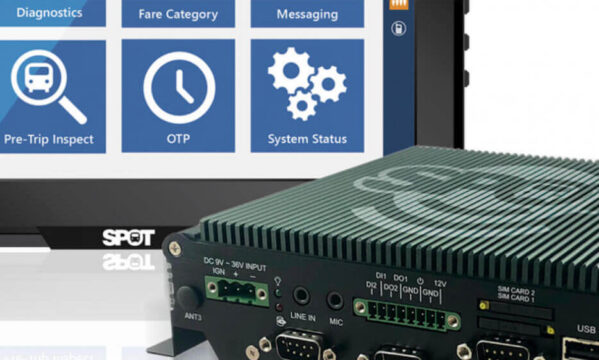
The Need for Rugged Transit-Grade Computers in Harsh Transit Environments
Introduction All-in-one tablets are unreliable and unsuitable for public transit applications. Instead, transit agencies must consider investing in transit-grade computers to record and display mission-critical information. Functioning onboard digital devices are essential to: improve operating efficiencies. automate NTD data collection. and enhance the rider experience. Though consumer-grade tablets and all-in-one Mobile Data Terminals (MDTs) with built-in touchscreen displays have become popular choices for transit agencies, these devices are not durable enough for harsh transit environments. In fact, 8 out of 10 transit agencies interviewed in 2023 have cited unreliable hardware as their primary challenge. Malfunctioning hardware is unacceptable for modern transit systems. In this blog, we will explore the reasons why tablets do not work for transit applications and discuss the advantages of using transit-grade computers with separate touchscreen MDTs. Consumer-grade tablets and all-in-one computers are designed for everyday use, but they fall short in the demanding conditions of transit environments. There are a few key reasons for this: Unreliable: Consumer-grade devices are not built to withstand the continuous vibrations, extreme temperatures, and harsh conditions common in public transportation systems. Over time, these factors lead to system failures and downtime. Consequently, agencies grow extremely frustrated with missed onboard announcements, loss of APC data, inaccurate NTD reporting data, and irritated riders due to incorrect bus arrival predictions. Unprotected: Transit agencies need to ensure the security of their systems and data. All-in-one solutions that combine processing and the touchscreen display are installed in exposed locations since the bus operator needs to interact with the system. This placement is more susceptible to theft and tampering, causing decreased system reliability and increased service disruptions. Upkeep: When these all-in-one devices fail during revenue service, it is inconvenient, time-consuming, and costly for transit agencies to manage. In this era of staffing shortages, transit agencies cannot afford to spend their time troubleshooting malfunctioning equipment as essential as MDTs. The Benefits of transit-grade computers with separate touch screen devices To address these challenges, transit agencies should consider using transit-grade computers with separate MDTs that do not have any processing responsibilities or complex operating systems. This design offers several advantages: Durability: Transit-grade computers are specifically designed to withstand the harsh conditions of transit environments. They are built with dependable connectors and housed in protective enclosures, ensuring reliability and longevity. Simple, functionally limited MDTs provide the bus operator with an intuitive driver interface and touch screen to interact with the system but do not impact bus operation or data collection. Security: By separating the touch screen display from the computer, a “dumb” terminal eliminates the risk of system failure or theft affecting the entire system. If the touch screen is damaged or stolen, the system can continue to operate without disruption. Simplified Maintenance: With a “dumb” terminal, updates and maintenance are managed centrally, reducing the burden on transit agencies and ensuring consistent performance across all devices. Cost-effectiveness: While the initial investment in transit-grade computers and touch screen MDTs may be higher than consumer-grade devices, the long-term benefits of reduced maintenance, increased reliability, and improved security make them a more cost-effective solution. Conclusion As transit agencies continue to embrace technology to enhance their operations, it is crucial to select devices that can withstand the harsh environments they will encounter. Consumer-grade tablets and all-in-one computers may seem like an appealing choice, but they are ultimately unsuitable for the demands of public transportation systems. Eventually, the bargain all-in-one solution will cost the transit agency unexpected time and money. By investing in transit-grade computers and touch screen MDTs, transit agencies can ensure the reliability, security, and longevity of their systems, ultimately providing a better experience for both operators and passengers.
Leading Rail Safety Through Collaboration with Jolene Molitoris
In this episode of Stop Requested, John Maglio, Levi McCollum and Christian Londono talk with Jolene Molitoris, former Administrator of the Federal Railroad Administration and former Director of the Ohio Department of Transportation. As the first woman to lead the FRA, Jolene shares how her career grew from Ohio rail advocacy to national transportation leadership. The conversation explores rail safety, collaborative rulemaking, the creation of the Railroad Safety Advisory Committee, and why lasting progress in transportation depends on teamwork across government, labor, industry, and the private sector.

Turn your bus into a cashmobile.
Digital advertising on vehicles is coming. It’s already been adopted heavily in Europe, and the United States is gradually warming to the idea. there is a strong case to be made that the technology can add a new, profitable revenue stream to any advertising agency, and that there is a public demand for such a system. Digital advertising (also known as infotainment) leverage onboard displays (typically LCD) or public address systems to provide riders with route updates, news, weather, sports, local events, and local advertising. Unlike the traditional printed advertising, digital advertising doesn’t have an inventory problem. A transit agency can sell multiple ads on to any screen. Digital advertising is being looked at as a way for agencies to enhance their offerings, improve reputation, build brand value, and of course, create a new revenue channel they can use to help cover operating costs and invest more proactively in their service.
AI Roundtable, Part 3: From Transit Data to Better Predictions
In the third installment of Stop Requested’s AI Roundtable series, ETA CEO John Maglio joins hosts Levi McCollum and Christian Londono, along with Derrick VanGennep of Voloridge Investment Management, to explore how machine learning can help transit agencies move from understanding what happened to predicting what might happen next.
How Palm Tran Drives Ridership Growth with Planning Director, Yash Nagal
In this special episode of Stop Requested, hosts Levi McCollum and Christian Londono welcome their first-ever guest, Yash Nagal, Director of Transit Planning at Palm Tran. Together, they dive into the nationwide surge in transit ridership, explore innovative strategies like Palm Tran’s Buslink program, and discuss how frequency and integration can transform public transportation. Yash shares key insights on tailoring services to community needs, the role of land use in transit success, and why storytelling is essential for the future of public transit. Tune in to hear expert advice, inspiring examples, and actionable takeaways for agencies everywhere.
SPOT™ CAD/AVL System Deployed at Greenville Area Transit (GREAT)
Boca Raton, FL. May 1, 2025. ETAs, a prominent provider of cutting-edge transit technology solutions, is pleased to announce the successful deployment of a CAD/AVL project in collaboration with Greenville Area Transit (GREAT). The project was kicked off in October 2024 and was installed within 4 months.
Mass Transit Magazine Editor-in-Chief, Megan Perrero, on the Power of Transit Storytelling
In this episode of Stop Requested, hosts Levi McCollum and Christian Londono speak with Megan Perrero, Editor-in-Chief at Mass Transit Magazine, about her unique journey from transit-dependent Chicago resident to leading voice in transit journalism. Megan shares how her decade of car-free living in Chicago shaped her perspective on transit coverage and her path from yearbook enthusiast to B2B journalism expert. Learn about her time at the Shared-Use Mobility Center and how transparency and storytelling shape public perception of transit systems. The conversation explores Mass Transit Magazine’s role as a trusted industry resource, the balance between technical coverage and accessibility, and emerging trends like transit-oriented development and alternative fuels. Megan discusses the magazine’s flagship 40 Under 40 program and offers advice for emerging journalists about approaching stories with curiosity and avoiding premature conclusions. This episode reveals how thoughtful storytelling can drive positive change and community buy-in for transit systems nationwide.
Looking for a specific type of resource?

Blog
ETA created content on topics of interest across the transit industry. Expert insight, opinion pieces, and the latest in transit innovation.

Podcast
Conversations with the foremost experts across the transit industry to discuss lessons learned, technological innovation, community needs, and so much more.

Case Studies
See the results ETA’s clients have received through replacing legacy CAD/AVL systems, installing new functionality, and doing it all without full hardware replacements.

Press
New awarded contracts and the launch of innovative technologies are just the start of the latest ETA news.

Glossary
From general transit feed specification (GTFS) to ghost bus, the ETA curated glossary is a reference to better understand industry terminology.
Ready to see our Unified Operational Health software on your routes?
Whether your agency is modernizing an existing system, improving rider information, strengthening reporting, or working through a more connected operational approach, ETA can help make the next step clearer.