
Blogs, news, case studies, templates, podcasts and more; all right at your fingertips. Browse our comprehensive transit resources database to find information your agency needs to improve operations, grow your knowledge base, and expand your understanding of the industry at-large.
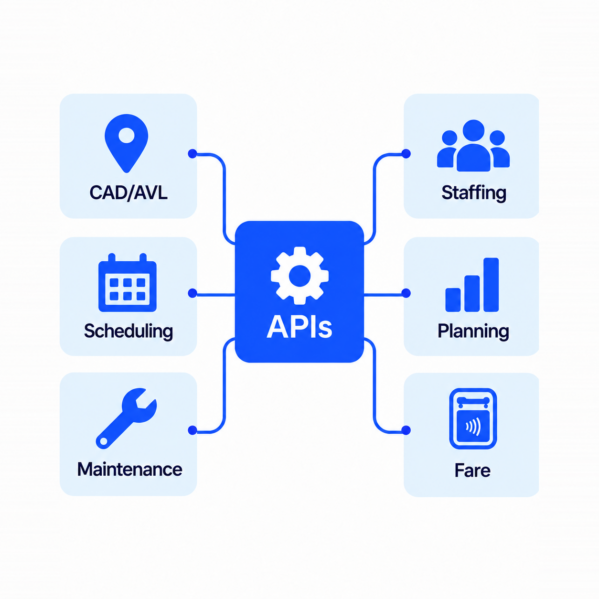
Transit Technology Vendors: The Days of Closed Systems Are Over
I’ve spent much of my career in this industry, and I’m still surprised by the state of transit technology APIs. Some provide limited functionality, some companies don’t offer APIs at all, and others have APIs but won’t make them available to their customers. For an industry that talks so much about integration and interoperability, we have a lot of work to do.
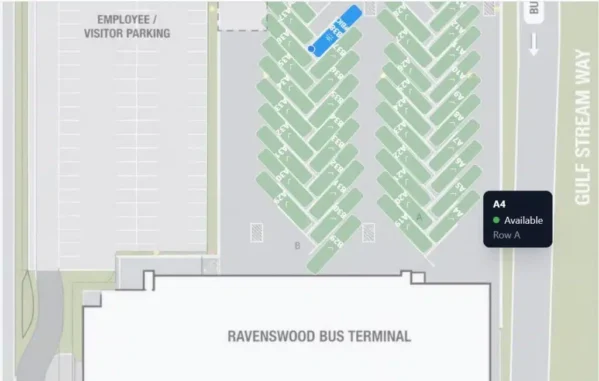
Stop Hunting for Buses. Start Running Your Yard.
Every transit agency knows the drill. It’s 5:45 AM. Pull-out starts in fifteen minutes. A dispatcher is on the radio asking where Bus 412 is parked. A utility worker is walking the lot with a flashlight. Maintenance thinks it’s in the back row. Nobody’s sure.
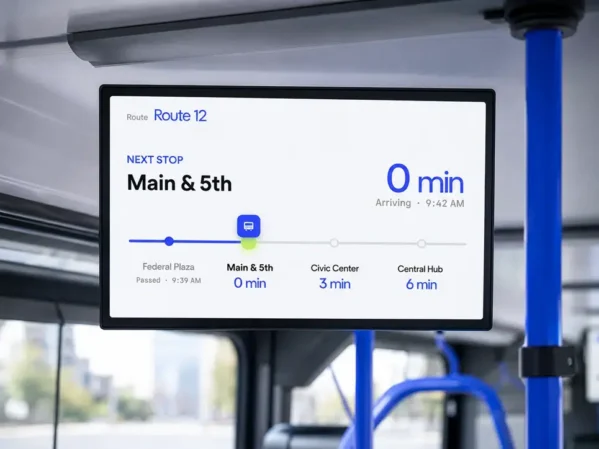
Beyond the Next Stop. Modern Ways to Use Onboard Infotainment Screens
For many transit agencies, onboard screens are a standard part of the rider experience. From next-stop information, route maps, and the occasional service alert, they display the info that reminds riders they are being taken care of. As someone relatively new to the transit technology space, I believe these screens have the potential to do much more as our tech continues to evolve. When paired with the right technology foundation, onboard infotainment can become a powerful operational and communication tool— one that improves service delivery, reduces operator workload, and creates measurable value for agencies.
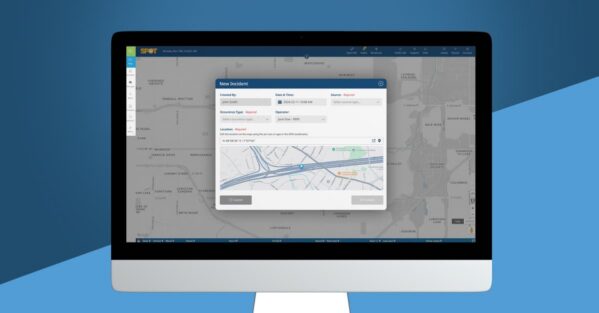
Transit Incident Management Made Simple with SPOT
Transit operations rarely go exactly as planned. Mechanical failures, farebox issues, vehicle accidents, or even a minor passenger injury can disrupt service and create stress for your entire operations team. That’s why ETA built a dedicated Transit Incident Management module inside our SPOT CAD/AVL platform.
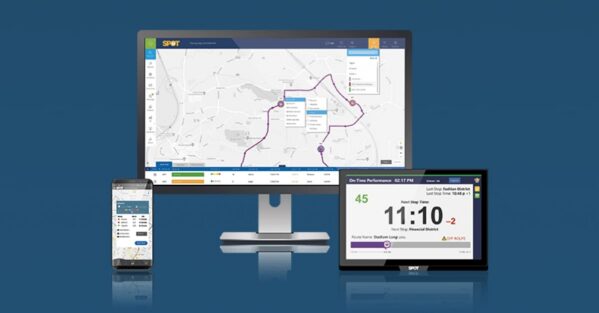
How an Easy-to-Use CAD/AVL System Reduces Disruption During Transit Staff Turnover
Transit operations depend on people, from dispatchers and operators to supervisors and administrators. But when turnover hits, even the most experienced agency can struggle to keep service running smoothly. Without an easy-to-use CAD/AVL system, service disruptions, delayed responses, and training gaps become the norm. That’s why ETA designed SPOT, a browser-based platform built to keep service on track, no matter who’s at the controls.

Why Universities Are Upgrading from legacy solutions to ETA’s CAD/AVL System
Universities face unique pressures: student and faculty ridership satisfaction, limited budgets, and the need for accurate data to secure funding. Outdated systems, consumer-grade tablets, and unreliable reporting only make things worse.

Why Transit Agencies Are Switching Their Legacy CAD/AVL Providers
Transit agencies aren’t just looking for new software—they’re looking for stability, transparency, and a partner that understands the realities of running a public transportation system. Too often, legacy CAD/AVL vendors sell a product and disappear until it’s time for renewal. Agencies are left dealing with downtime, unreliable hardware, and limited visibility into what’s really happening on the street.

How CAD/AVL Technology Is Powering the Future of Transit Operations
Computer-Aided Dispatch Automatic Vehicle Location (CAD/AVL) is the backbone of modern transit management. The solution provides the tools to deliver safer, more reliable, and more efficient service. It powers digital tools to assign and manage vehicles, replacing traditional radio-based dispatch with a data-driven future-facing solution.

EV vs. Hydrogen Buses: How U.S. Public Transit Agencies Are Navigating the Zero-Emission Transition
As American cities race toward cleaner, greener transportation, public transit agencies are at the forefront of adopting zero-emission buses. The two leading technologies-battery-electric (EV) and hydrogen fuel cell buses-each offer unique benefits and challenges. Drawing on robust data from the U.S. Department of Energy, agency case studies, and international trends, this post explores how agencies are charting the future of zero-emission transit.
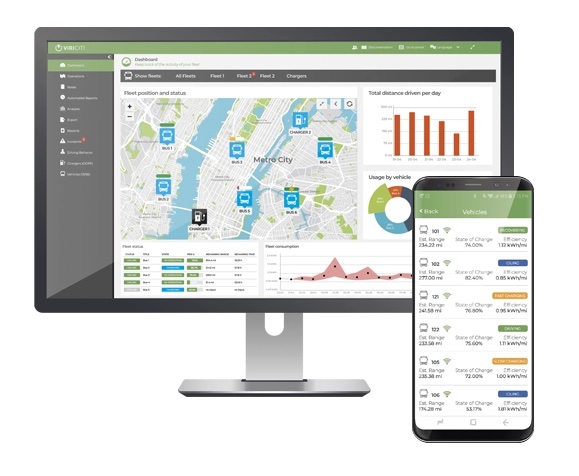
How Long Does It Take to Deploy a New CAD/AVL System?
In the past, deploying a new Computer-Aided Dispatch/Automatic Vehicle Location (CAD/AVL) system could take many months or even years. Today, however, modern technologies and advanced implementation techniques have dramatically shortened deployment times, allowing for faster and more efficient system installations.
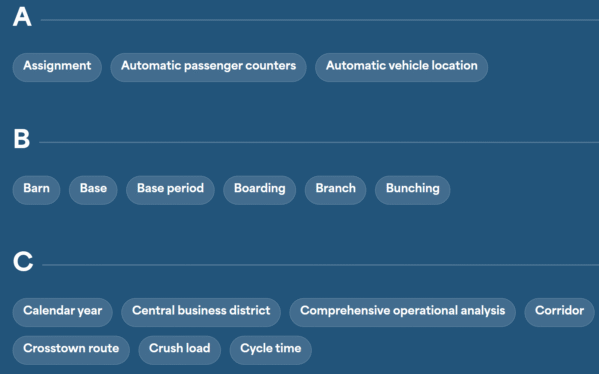
The Ultimate Transit Industry Glossary: Your Go-To Source for Industry Terms
In the world of public transit, understanding industry language is critical. Whether you’re evaluating new technology, reading procurement documents, or coordinating with vendors, transit acronyms and technical terms are everywhere. That’s why we built the ETA Glossary—a helpful resource to support transit professionals like you to quickly decode industry jargon.
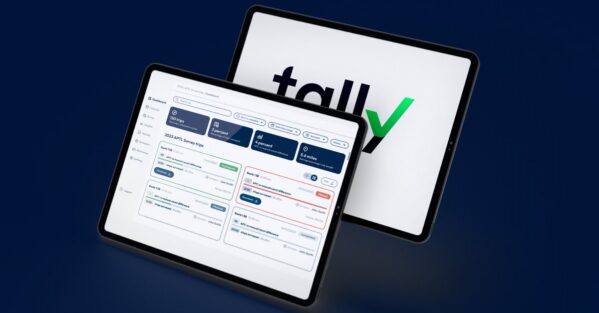
Automating the Repetitive: The Story Behind Tally
Tally was inspired by my experience as a transit planner at LeeTran in Fort Myers, Florida. A year in as a transit planner, I was tasked with overseeing the average passenger trip length surveys for the fiscal year 2016-2017. At that time, LeeTran’s Automatic Passenger Counters (APCs) were not certified for National Transit Database (NTD) reporting, which forced us to use manual methods for collecting data on boardings and alightings. This labor-intensive process involved generating random trip selections, calculating distances between stops, and manually entering data into spreadsheets for analysis.

Tale of Two Surveys: Understanding APC Certification and APTL Survey Part 2
Accurate data collection is critical for transit agencies, especially when reporting to the National Transit Database (NTD). One essential measure is the Average Passenger Trip Length (APTL), which helps agencies calculate the distance passengers travel on average for each unlinked trip. Reporting APTL is a key part of ensuring compliance and maximizing funding from the Federal Transit Administration (FTA).

Unveiling the Truth: Why You Need ALL Customer References in Your CAD/AVL RFP
Customer references can make or break a transit agency’s choice for a Computer-Aided Dispatch (CAD) and Automatic Vehicle Location (AVL) system. These complex systems influence everything from service efficiency to rider satisfaction. Sifting through stacks of Request for Proposal (RFP) documents can be daunting, and agencies often think a handful of references will suffice. This blog post reveals why it’s crucial for transit agencies to request all of the vendors’ references, not just the standard three.

Understanding the Federal Transit Administration’s 2025 Requirement: Certifying Automated Passenger Counters
As the public transit industry continues to evolve, so do the regulatory requirements designed to ensure that transit agencies provide accurate and reliable data. One such development is the Federal Transit Administration’s (FTA) mandate for Automated Passenger Counters (APCs) certification by report year 2025. This change is poised to have a significant impact on how transit agencies manage and report ridership data. Let’s explore what this requirement entails, why it’s important, and how transit agencies can prepare for it.

Tale of Two Surveys: Understanding APC Certification and APTL Survey Part 1
Healthy public transportation services rely on sound data collection to secure the maximum funding from the federal government. Automatic Passenger Counter (APC) certification and Average Passenger Trip Length (APTL) survey are two distinct, yet related, processes that agencies employ to ensure they are accurately reporting the unlinked passenger trips (UPT) and passenger miles traveled (PMT) to the federal government.

The Rise of Data-Driven Decision Making: How Automated Passenger Counting Transforms Transit Planning
Public transportation agencies face a constant challenge: optimizing service provision to meet the evolving needs of ridership. Traditionally, planning decisions relied on estimates and historical trends. However, the emergence of Automated Passenger Counting (APC) technology has ushered in a new era of data-driven decision making.

Navigating the Transit Revolution: Part V—The Future
As technology continues its rapid advancement, the future of GTFS development is marked by a commitment to addressing real-world challenges and embracing emerging innovations. Recent contributions and pull requests to the GTFS repository demonstrate an ongoing effort to refine and enhance the specification.

Navigating the Transit Revolution: Part IV—A Gateway to Historical Transit Operation Data
Transit ITS Data Exchange Specification (TIDES) is a remarkable GTFS extension that delves into the realm of historical transit operation data. This repository provides data schemas and tools to support the access, management, and improvement of historical transit operations data, including vehicle operations, passenger activity, fare collection, and other similar data. TIDES bridges the gap between the past and present, allowing transit agencies to store and exchange historical data in a structured and standardized format. This opens a world of possibilities for transit providers, researchers, and developers.

Navigating the Transit Revolution: Part III—A New Standard in Transit
Transit operators require their scheduling and operational systems to seamlessly work together. This synergy is most effectively attained through the adoption of open standards. Although GTFS has proven highly successful as an open standard, its primary purpose is to disseminate information to transit passengers, which means it lacks vital elements essential for transit providers.

Navigating the Transit Revolution: Part II—The History of GTFS
GTFS has a rich history that reflects the evolution of public transportation data sharing. It emerged as a response to the challenges posed by fragmented and proprietary data formats, aiming to create a standardized way for transit agencies to share their information with developers and users.

Navigating the Transit Revolution: Part I—Unveiling the Power of GTFS
The world of public transportation is undergoing a transformation, and at the heart of this evolution lie s the General Transit Feed Specification, or GTFS. As we kick off this multi-part blog series, we’ll embark on a journey to explore the depths of GTFS, uncover its significance, and reveal how it’s reshaping the landscape of public transit.

The key to transit technology satisfaction—effective communication, reliable hardware
In the realm of mass transit technology, it is a rare occurrence to encounter a potential customer who enthusiastically praises their current CAD/AVL (Computer-Aided Dispatch/Automatic Vehicle Location) vendor. To put it simply, transit operators are often dissatisfied with their CAD/AVL vendor. According to our annual surveys of transit agencies, more than two-thirds express their discontent.
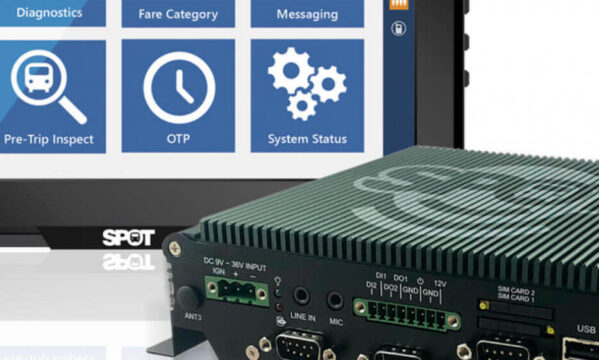
The Need for Rugged Transit-Grade Computers in Harsh Transit Environments
Introduction All-in-one tablets are unreliable and unsuitable for public transit applications. Instead, transit agencies must consider investing in transit-grade computers to record and display mission-critical information. Functioning onboard digital devices are essential to: improve operating efficiencies. automate NTD data collection. and enhance the rider experience. Though consumer-grade tablets and all-in-one Mobile Data Terminals (MDTs) with built-in touchscreen displays have become popular choices for transit agencies, these devices are not durable enough for harsh transit environments. In fact, 8 out of 10 transit agencies interviewed in 2023 have cited unreliable hardware as their primary challenge. Malfunctioning hardware is unacceptable for modern transit systems. In this blog, we will explore the reasons why tablets do not work for transit applications and discuss the advantages of using transit-grade computers with separate touchscreen MDTs. Consumer-grade tablets and all-in-one computers are designed for everyday use, but they fall short in the demanding conditions of transit environments. There are a few key reasons for this: Unreliable: Consumer-grade devices are not built to withstand the continuous vibrations, extreme temperatures, and harsh conditions common in public transportation systems. Over time, these factors lead to system failures and downtime. Consequently, agencies grow extremely frustrated with missed onboard announcements, loss of APC data, inaccurate NTD reporting data, and irritated riders due to incorrect bus arrival predictions. Unprotected: Transit agencies need to ensure the security of their systems and data. All-in-one solutions that combine processing and the touchscreen display are installed in exposed locations since the bus operator needs to interact with the system. This placement is more susceptible to theft and tampering, causing decreased system reliability and increased service disruptions. Upkeep: When these all-in-one devices fail during revenue service, it is inconvenient, time-consuming, and costly for transit agencies to manage. In this era of staffing shortages, transit agencies cannot afford to spend their time troubleshooting malfunctioning equipment as essential as MDTs. The Benefits of transit-grade computers with separate touch screen devices To address these challenges, transit agencies should consider using transit-grade computers with separate MDTs that do not have any processing responsibilities or complex operating systems. This design offers several advantages: Durability: Transit-grade computers are specifically designed to withstand the harsh conditions of transit environments. They are built with dependable connectors and housed in protective enclosures, ensuring reliability and longevity. Simple, functionally limited MDTs provide the bus operator with an intuitive driver interface and touch screen to interact with the system but do not impact bus operation or data collection. Security: By separating the touch screen display from the computer, a “dumb” terminal eliminates the risk of system failure or theft affecting the entire system. If the touch screen is damaged or stolen, the system can continue to operate without disruption. Simplified Maintenance: With a “dumb” terminal, updates and maintenance are managed centrally, reducing the burden on transit agencies and ensuring consistent performance across all devices. Cost-effectiveness: While the initial investment in transit-grade computers and touch screen MDTs may be higher than consumer-grade devices, the long-term benefits of reduced maintenance, increased reliability, and improved security make them a more cost-effective solution. Conclusion As transit agencies continue to embrace technology to enhance their operations, it is crucial to select devices that can withstand the harsh environments they will encounter. Consumer-grade tablets and all-in-one computers may seem like an appealing choice, but they are ultimately unsuitable for the demands of public transportation systems. Eventually, the bargain all-in-one solution will cost the transit agency unexpected time and money. By investing in transit-grade computers and touch screen MDTs, transit agencies can ensure the reliability, security, and longevity of their systems, ultimately providing a better experience for both operators and passengers.

Pre-plan your RFP evaluation
Tools to help your RFP to set realistic expectations and deliver a focused review. Over our history, ETA has submitted hundreds of proposals for mass transit technology RFPs. We’ve won some, we’ve lost some, and we’ve seen RFPs pulled without warning. Win, lose, or draw our practice is to reach out to transit agencies and ask for feedback about the RFP—our proposal, where we excelled, where we came up short, and what struggles the agency had during the process. That’s the nature of our industry. This last point serves as the subject for this article; what are the common challenges for proposal evaluation? Our 2018 transit agency survey discovered that comparing offerings was the “biggest source of stress” for those on proposal decision committees, followed by “determining value versus price” and “determining the importance of features.” These are all valid concerns—but easily fixed. The key to solving these issues starts with preparing the RFP itself. The same 2018 survey revealed that “preparation,” “creating technical requirements,” and “determining desired outcomes” were the top three headache-inducing tasks. For the most part, an RFP includes the following components: Cover letter or statement of interest Vendor information Proposed solution Strategy for implementation Warranty & support information Cost proposal Required forms Each section should ultimately contribute to the decision-making process. It’s not uncommon for an evaluation structure included in the RFP which looks something like this: Technical response: 20 points Price: 40 points Vendor qualifications: 20 points Organization of the proposal: 10 points Situational understanding: 10 points And that’s about it in terms of the breakdown and weighting of the proposal response. That’s all a decision committee relies on to score and rank their evaluation. The highest score wins, and to the victor goes the spoils. But what if the evaluation criteria are wrong? What if it’s weighted incorrectly? Why does price weigh more than the solution itself (40% of transit agencies use it as their primary decision factor) than the vendor’s track record (vendor experience is the primary factor for just 11% of transit agencies)? What mechanisms exist in your RFP for establishing value versus performance? Our 2019 survey revealed long-term performance (70.2%) must be part of the evaluation process. That certainly isn’t listed in the standard scoring criteria? Just 52 percent of transit agencies say that the intelligent transit system (ITS) they purchased lived up to expectations in our 2020 agency poll. The picture I’m painting here is that the defined evaluation criteria baked into RFP documentation are inherently flawed; they are not up to the task and are highly subjective. Why do so many agencies value long-term performance, but fail to include any sort of measurement tool within their evaluation structure? Why are nearly half dissatisfied with their ITS purchase? How do we change the evaluation so that it most accurately reflects the needs of the transit agency and delivers on the expected outcomes? Here are a few ideas to consider before you put together your RFP: Pre-proposal polling: Conduct an anonymous internal poll of your transit agency. If possible, include everybody. Everybody is drivers, mechanics, dispatchers, planners, customer support, and administration. Use this effort to discover hidden truths about your agency and potential issues. Look for potential areas of resistance. Find pain points in potential solutions. Include the ability for respondents to rank their answers to gauge priority and level of severity. We recommend Survey Monkey, DooPoll, or even use Microsoft Sharepoint to create your surveys and leverage these tools automatically tally the results. Conduct pre-RFP pricing research: We know that transit agencies (ETA included) keep a tight lid on their pricing structure. It’s a competitive industry, after all, and any advantage helps. This practice doesn’t mean they won’t provide you with ballpark figures for planning purposes. Use this information to A) understand the approximate cost for each component (ITS, APC, AVA, etc.), and B) evaluate cost against the amount of funding you have available. If possible, ask for an estimated ‘per vehicle cost’ to help account for hardware, installation, and recurring fees. This effort will help you set expectations before writing your RFP. It is better to know what you’re asking for and compare it to the final pricing. With this baseline pricing in mind, it will help establish expectations for what your agency cannot afford. It will also help you derive a better sense of value from your proposals. It may even cause you to think about how much weight you place on pricing in the overall evaluation hierarchy. Create a compliance matrix with priority values We’ve written before about the importance of including a compliance matrix as part of your RFP documentation. This approach is an excellent way to get answers about what a proposed system can and cannot deliver. What’s missing from the matrix is a correlation between features and their importance to the final solution. A compliance matrix evens the value across all items but does nothing to tell your evaluation committee how to weigh capabilities against price and competition. Including this information will help the vendor present prioritized solutions based on needs. For example, if your internal survey efforts reveal the following priorities: Cloud-based ITS Route and schedule management NTP reporting Automatic passenger counters Onboard Wi-Fi Then assign value to those features within your matrix (a scale of 1–10, perhaps?). The vendors responding to your proposal will understand what you value the most. They can also construct their proposal to prioritize some aspects over others and deliver more up-front value. A well-constructed spreadsheet may even include auto-calculation to help score each entry in advance. An entry in a compliance matrix theoretically might look like this, where “yes” answers to compliance earn full marks, where “no” responses don’t earn points, and “extra cost” applies a multiplier value to adjust the score to account for additional charges: Provide this spreadsheet as part of the RFP and ask vendors to complete it as part of their submission. Lock and hide those columns, cells, and worksheets from the file submitted to vendors. Reveal those fields after submission to see how a vendor stacks up based on their responses. Include in your calculations weighted penalties for unsupported systems. Proposal creation Now that you are adequately armed with priority preferences by role (via the internal survey), you will have more insight into how each business unit will react to your final choice. Additionally, you’ll have a sense of what you can afford and what systems to prioritize (using the ITS Price Estimator) and, ultimately, a point-by-point accounting of each vendor’s capabilities (courtesy of the weighted compliance matrix). With this information, you can create an RFP document that better captures the actual deliverables for your project and have the background data needed to conduct a proper evaluation. With this data in hand, you can quickly rule out submissions below a capability threshold that you identify before evaluating. The goal, after all, is to narrow down proposals quickly. This approach: Greatly assists in the preparation of the RFP Clearly defines the technical requirements It helps determine an agreed-upon, prioritized outcome Reduces internal debate process The process helps build a right-sized transit spec while avoiding common pitfalls and finding that vendor who will be your forever friend. Now that you’re ready to construct your RFP, you can focus on telling a precise story—your story—so that any vendor responding has a full grasp of everything your system needs to accomplish. Construct your RFP to follow a logical progression and use clearly-defined topics and industry-standard terminology. Avoid copying and pasting from other sources, which typically results in a messy, contradictory document. We recommend a sequence that follows this general approach: Introduction (overview of your agency and history) Objectives (description of the challenges you seek to resolve) Resources (provide details about your agency, e.g., number of vehicles, makes and model, installed hardware, contact points, who has the final say, etc. Scope (define every deliverable, feature, and intended use—a good place to include your compliance matrix) Submission requirements (we recommend the following:) Statement of interest About the vendor Technical proposal Implementation plan Warranty & support Price proposal Required forms A significant consideration in this process is to allow enough time for vendors to create a thoughtful response to your solution. A good rule of thumb is six to 12 weeks from the RFP’s issue (or street) date. We also encourage you not to put page limits on the proposal. These highly technical and complex systems allow the vendor the necessary time to explain the system and benefits thoroughly. Yes, this can lead to some lengthy proposals. Consider the amount of money you are about to spend and the consequences of selecting poorly. In this decision, we highly stress that you should err on the side of information. Short summaries could cause a potential vendor to omit details that could otherwise influence your decision one way or another—all to satisfy an arbitrary page count. The added information serves as a handy reference to answer any questions you may have. Proposal evaluation You’ve now laid the groundwork for your evaluation with all your pre-proposal work. The tools and concepts presented above provide your transit agency with enough background information to help identify potential vendors to look for before the issuance of the RFP—and then compare their response against the pre-RFP evaluation. More importantly, you have established a list of criteria based on priority gathered by stakeholders at all levels of your organization. Take your time to evaluate the results. Ask questions. Conduct pilot programs. Take the necessary steps to ensure that you’re making a comprehensive decision in your agency, taxpayers, and riders’ best interest.

What factors influence customer satisfaction?
Communication, not technology, determines the satisfaction with transit systems It is a rarity in the mass transit technology market when we strike up a conversation with a potential customer, and they sing the praises of their current ITS vendor. Let me say it another way—transit operators aren’t happy with their tech partners. According to our annual transit agency surveys, more than two-thirds are less than thrilled. The oddest part of this conversation is just how seldom their complaints don’t center on the technology itself but rather the quality of the after-sales support they receive—or lack thereof. You read that right; their issues are seldom with the product. The technology, for the most part, works fine. It’s the relationship with their vendor that has them pursuing new systems. So, what have transit operators so chaffed with the quality of their support? In general, the complaints we here typically fall into one of the following three categories: Responsiveness Time to resolution Frequency of interaction It’s a shame when the reason for severing a relationship and introducing tumult to their operations, staff, and riders has nothing to do with the performance of the technology itself. After all, technology IS supposed to highlight the vendor/client relationship. Right? Right? What are the elements of a quality support experience? Just as the technology on vehicles is a science, so is the art of supporting the client and product. ITS systems are complicated, with many moving parts, including hardware, software, configuration, and data components. As rigorously tested as these systems are, one errant setting or faulty component can kick off an intensive troubleshooting effort to narrow down the cause. So how does one turn complexity into a recipe for success? —A spirit of partnership The first consideration we address is that both vendor and customer must dedicate themselves to the support process. It’s a two-way street, and the client needs to understand their role in the performance of their technology; this includes: Performing routine maintenance Providing detailed information for troubleshooting Being proactive and vocal about the issues they experience Without that level of client-side participation, the support process can drag out far longer than anticipated and lead to frustration on both sides. Similarly, the vendor must actively support their product, providing routine progress updates, delivering on all promises made, and keeping their customers well-educated and informed. When something goes wrong, customers want to know that their concern has been addressed. They don’t want to submit a support request or question only to have days or weeks pass before any sort of reply is received—or worse yet, no response at all. Both sides must understand that the ownership experience requires that they join at the hip, with each entity supporting the other in as diligent and thorough a manner as possible. —Training and education ITS systems, like ETA’s SPOT™ platform, are complex. Though much of the intricacy takes place behind the scenes and is never exposed directly to the customer, the need for formalized and ritual training is essential. Too often, the only training that a customer receives is at the launch of a new transit system. As the system evolves or employees transition to new opportunities, a gap between what was and what is forms, and the relevancy of that initial instruction become less relevant. Vendors must bake supplemental education into every technology deployment, including identifying the right cadence for “booster” training or situational instruction for new hires or when new features join the ITS solution. An online, self-service database is helpful for self-guided learning, and a guided program must be part of the process to ensure effective instruction. An additional consideration is to ensure that the training focuses on the systems relevant to the individual role or group function. To train the entire staff of a transit operation is pure folly if one expects employees to be able to identify which information is critical to the performance of their jobs. It’s normal for people to become inattentive, tired, and distracted when they feel disconnected from the source material. Role-based instruction is hyper-focused, relevant education based on the needs of a specific subset of transit staffers, e.g., drivers, dispatchers, planners, etc. This education approach delivers only the materials needed for that group to perform their tasks effectively. The staff learns high-level concepts about how their role fits into the larger picture and takes a deep dive into the technology and features they will use in their day-to-day tasks. The result is a more relevant, more precise training that encourages participation and retention. —Responsive input and feedback The answer to this question is far more nuanced than one would think. Transit technology—especially software—are complicated. It can take time to research an issue before a solution presents itself. Responsiveness by the client can go a long way to speeding up the process, but it isn’t the only factor. From a client’s standpoint, they want the system to work as designed. The “what and how” of the situation is often of little concern. They are, after all, transportation professionals—not software engineers. A client wants their vendor to be a partner in not only the performance of the system but the success it delivers to their operation. From a vendor standpoint, a responsive customer takes an active interest in providing timely feedback to the original inquiry. Have they performed the troubleshooting steps? Is the information they provide to the original or follow-up communications detailed and complete—or is it highly generalized, like “the mobile data terminal doesn’t work.” Both sides want a timely answer to the questions asked in most cases. It’s an observation that hardly falls within the realm of rocket science, but one that seems to be a common tripping point and trigger for a great deal of angst between agency and supplier. This reality is often the source of a great deal of friction between customer and vendor, which makes responsiveness even more critical to communicating the status of the concern and setting realistic expectations for a resolution. —Frequency of interaction The human factor is an essential and often overlooked aspect of the client/customer relationship. Consider for a moment the procurement process. In the beginning, contact is frequent. Sales representatives are attentive and in constant contact while negotiating the sale. Once signed contracts exist, the communication escalates further as the implementation teams coordinate with agency teams to finalize system design, schedule implementation, and conduct training. Once the vendor turns over the golden keys to the new technology, the vendor turns their attention to the next opportunity, and the shock of silence settles in. The transit operator is left to use the system. Speaking from the vendor viewpoint, this is the natural evolution of procurement. From the customer standpoint, however, the abrupt cessation of activity following the completion of a project can leave agencies feeling adrift; a “you got my money, and now you’re leaving?” situation. It’s not uncommon for technology vendors to see “no news” as “good news” when past projects are concerned. A neglected customer risks becoming an unhappy client, so it is of little surprise that they pursue higher-quality relationships at the contract end. Keeping those relationships strong and proactive with customer communication long after that initial flurry of activity becomes vital. Closing thoughts Providing quality customer service isn’t some uncrackable mystery. It’s rooted in common sense. If you are a client unhappy with your vendor, it’s probably time to pick up that phone and let your vendor know. If you’re a supplier, you had better take that call—or better yet, run through your list of accounts and touch base with those customers you haven’t spoken to in a while. Run through the list of concerns. Clear the air. Compare expectations to performance and set goals for measurement. At some point, both sides were ecstatic about this joint project—and it’s possible to reclaim that excitement. Try again to find common ground where communication becomes the norm; not the exception that only happens when conflict drives the discussion. It changes the tone from “this isn’t working” to “how can we resolve this together.”

Staff experience
Don’t overlook the “employee factor” when adopting new technology. See if this sounds familiar. You and a select group of co-workers have spent time researching, interviewing, and demoing a new technology or process to be implemented at your company. You’re certain that you have been thorough in your efforts. The solution checks every box and satisfies every need. It’s expensive, but the ROI is worth it. You sign the paperwork, establish a schedule, and when the day comes to flip the switch, your staff greets the new system with a collective shrug. Undeterred, you’re confident that once your employees will see the benefits and welcome this change into their work lives. Only that doesn’t happen. Months into deployment, the new technology isn’t being used as intended. The system isn’t generating the expected benefits. The staff are actively developing workarounds, or worse yet, trying to get the new system to perform like the old system. Tempers are flaring. Upper management is demanding answers. Did you buy a lemon? Or did you forget to include your staff in the procurement process? Did you forget to build anticipation and educate how this new system would improve their job satisfaction, make their lives easier, or address lingering performance issues? According to our annual survey to transit agencies, 80 percent of transit operations experience resistance from their staff or customers when adopting new technology or practices. When polled further, about this resistance, transit agencies believed that the quality of the vendor-provided training materials (56%) played a factor in poor adoption, and the inclusion of cheat sheets and user guides (42%) and options for supplemental training (38%) would be helpful in changing employee perceptions. While a well-trained staff can be important in wringing the best performance out of new technology investments, it’s not the only variable. In truth, there are three critical areas of technology adoption that must be addressed: The requirements of the technology (which problems will it solve) Generating excitement among riders (get transit customers excited about the change) Generating excitement among employees Transit agencies excel in the first two areas. In fact, our customers routinely ask us for marketing materials and strategies to engage with their riders and let them know what’s coming. When we include internal marketing materials for their staff, it’s a common response to hear “hmmm, I didn’t think about marketing to our employees. What a great idea.” The assumption, as we see it, is that whatever change is decided upon by leadership is that it will be readily embraced by employees. After all, change is coming, and they have little-to-no say in the matter. If they want a job, they’ll use the tools provided. The assumption is that employees understand what doesn’t work well, so any initiative that solves those concerns will be embraced. Except that’s not reality, and truth be told, your staff has their own ideas on how to solve challenges—which by default creates obstacles and roadblocks that need to be overcome. In our view, pre-marketing the change to staff is every bit as important as the quality of training and resources. Why? Because pre-marketing helps build anticipation by extolling more intimate benefits to the staff. It includes them in the conversation. It extolls more intimate benefits, provides ways of seeking more information, and begins that emotional transition from what is to what will be. Change is intimidating. We can’t just plop a new system or service in the laps of our employees and expect that they will be excited about it and embrace it without question. Take steps to bring your staff along in the process. Provide updates, answer questions, listen to concerns and feedback. If they feel involved, they will be more likely to embrace this new solution willingly rather than begrudgingly. And when the staff is onboard, that’s when meaningful change can really take off.

Are you ready to erase paper inspections?
One of the more popular feature requests we receive for our SPOT™ ITS platform is digital pre-and post-trip inspection, also known as driver vehicle inspection reports (DVIR). It certainly seems that transit operators are eager to transition from manual or paper processes to connected digital logging and report solutions. Historically trip inspection involves four things: A driver A clipboard A pre-printed paper form A pencil or pen It’s a wonderfully simple process: a driver walks around a vehicle, looking for signs of damage, maintenance concerns, or any number of issues mandated by transit management. He documents his findings and turns the form over to a supervisor for followup. There are concerns, of course. A driver, late to start his route, may not give the inspection process the time it requires (pencil-whipping) and will miss some important safety items. An administrative assistant may not notice that she transposed some numbers when she use the inspection report to create a work order for the maintenance team. The documents themselves are easily lost or subject to the perils of office life, like spilled coffee or misfiling. And let’s not get started with how poor handwriting can impact an inspection report. These are among the many issues that digital inspection aims to solve: Eliminate transcription errors Minimize “pencil whipped” inspections Improve the ability of the maintenance teams to manage repairs and engage in proactive maintenance Improve vehicle safety Eliminate the expense of printing/reprinting maintenance forms Automatic notifications to maintence or fleet supervisors of potential issues The move from manual processes to digital inspections isn’t a concern among transit operations. They welcome it and all the benefits it brings to their agency. The software for implementing these inspections exists and is transit-tested. Making the switch to digital Deciding to make the switch is the easy part, now comes the hard part—which DVIR technology to choose? And this can be tricky because due to the current limitations of transit technology, there are some nuanced approaches to solving the trip inspection question. On the surface, it would seem obvious that every inspection solution would involve a portable device that a driver or maintenance team member would use to log the inspection. In truth, when ETA began exploring the creation of a DVIR solution, that’s exactly where we started—with a removable mobile data terminal (MDT). We quickly found out that a removable MDT ran into connectivity issues. No matter how securely that MDT was mounted on the bus or shuttle, the act of removing and reseating the device wore down the pin connector and charging cables over time. In just a matter of months, the removable MDT option became unusable and could no longer be counted on to provide data to the ITS or charge reliably. What about Qi chargers you ask? We explored that as well and found very few transit-tested ruggedized wireless charging options—an example of where the technology hasn’t matured to the point where its ready for prime time mass transportation. We explored a mounted MDT solution as well. This approach solved the communication and power issues, however it introduced other drawbacks to the solution. Inspections took longer, accuracy suffered, it was impossible to take photos of areas of concern, and drivers became more likely to “pencil whip” through the process which negated any benefit as a solution for safety or maintenance issues. We also took a deep dive into Bluetooth™ technology to see if strategically places switches on the vehicle would present drivers with a simpler inspection tool—each button would represent an inspection item. If an item was okay, set the switch to “yes,” if there was an issue, select “no.” It was an interesting approach, but lacked the detail necessary for meaningful followup by maintenance teams. Limitations of accurate Bluetooth™ communication over distance also proved a challenging obstacle to overcome. Our journey forced us to take a step back and consider the factors that would influence the choice of DVIR solutions—not from a place of technology, but of real-world considerations. Understanding what a driver or maintenance team needed was a more important driver of choice than conquering the limitations of technology. We identified the following factors that are critical to address before a trip inspection is implemented: Device security: Do they store the inspection device in the vehicle or secure them elsewhere? Can they afford to replace trip inspection devices if they are damaged or stolen? How long is the replacement cycle for damaged or stolen devices? Data management: How will they manage the data collected? Will this data import require additional software development? What is the criticality of this data to other areas of the operation? Are there costs associated with processing and storing data? How long is data stored/accessible? Driver safety: Is there room on the vehicle to install the device? Would installation block driver access to other vehicle systems? Will installation obscure driver view of the road, doors, exits, etc.? Technology adoption: Is the solution easy to use? Does the solution present a significant learning curve for drivers, dispatchers, and maintenance teams? What will be the level of resistance toward the adoption of this feature? How might the system be exploited or subverted? Have all parties been consulted and included in the decision-making process? Our recommended solution Our path to DVIR discovery let us to a path that we hadn’t originally considered—the use of a rugged smartphone to handle inspections. The solution checks all the boxes: Puts an affordable portable device in the hands of drivers to log potential issues Protects data collection integrity by keeping MDTs secure and locked down Requires very little real estate within the driver cockpit to install a charging dock (or can reside in a driver’s pocket) Delivers hours of battery life Provides a secure platform from which to operate and allows the same device to be used elsewhere—such as VoIP It’s a simple, yet elegant solution that simplifies trip inspection and improves the safety and reliability of a transit fleet. It’s a solution that we our are proud to introduce to the market. Closing thoughts A pre-trip inspection solution can provide numerous advantages to transit operation and contribute to the overall safety and reliability of the fleet. Sometimes there is a gap between what software can do and the availability of hardware to support it. Nowhere is this more evident than the current state of driver vehicle inspection technology. Still, a transit agency may have to weigh the adoption of a DVIR solution against potential shortcomings that may not lead to a “right-fit” adoption. Our advice is to speak with your ITS provider and solicit outside vendors to take full stock of your available options before making that transition from paper to digital inspection. Once you find that ideal blend of technology and features, you’ll be amazed at how much your fleet will benefit from cost savings, reliability, and performance.

Are your APCs ‘down’ for the count?
Maximize the efficiency of your automatic passenger counters for NTD certification-worthy results. By Matt Schroeder Director of Marketing, ETAs I am going to dispel a myth for your right off the bat. The FTA (Federal Transit Association) does not provide certifications for APC hardware. Never have, never will. Anyone that tells you that their brand of APCs has been certified is straight-up lying. It’s amazing to us just how many transit operators are under the misconception that there are specific brands of APC hardware blessed with a governmental seal of approval. APC suppliers may provide you with a process for certifying the counts generated by your automatic passenger counters, but that’s it. Certification of counts is a whole different beast. In general, the certification process entails two things: An APC benchmarking plan for the first year An APC maintenance plan for every three years You can read all about it here: NTD Policy Reporting Manual What defines a benchmarking plan? Benchmarking requires validation for unlinked passenger trips (UPT), and passenger miles traveled (PMT) data against a manual sample to prove the APC system’s accuracy. The process for reconciling this data includes: For agencies with fewer than 30 vehicles, the sample size must include at least 15 trips on APC-equipped vehicles. For agencies with 30 or more vehicles, the criteria changes to the larger of 15 trips or half the number of APC-equipped vehicles (up to 50 trips). In both instances, the trips do not need to be randomly selected and may spread over a year. We recommend that these samples include times of heavy ridership and the inclusion of at least one trip per vehicle type and APC model. A description of the agency’s APC systems and sampling procedures is also required. Should a trip be excluded or rejected from a provided sample, an explanation is required. Also to be included is documentation that accounts for the percentage of trips made that do not have valid APC data due to equipment malfunction, data corruption, failed verification checks, or any other reason. For manual counts that use data collection staff or onboard cameras, the FTA strongly recommends a data collector at each door during heavily loaded trips. It is appropriate to process APC data to correct for anomalies, just as it is reasonable to adjust for reporter data during the collection process. The goal is to compare manual and automatic counts to demonstrate equivalency or that any differences are justifiable. PMT calculations should utilize the same set of distances for all analyses. Should any differences exist (i.e., interstop), an explanation must be included with the provided data. Acceptable deviations in data are less than five percent for: Difference between manual vs. APC UPT counts Difference between manual vs. APC PMT counts If a transit agency uses APCs for both directly operated and purchased transportation services, a requirement for separate samples of each type of service exists. Verifying counts Automatic counting hardware is exceptionally precise, with most manufacturers boasting 95 to 98 percent accuracy. Despite this precision, errors can creep into the system, which is why the FTA does not certify the hardware itself. Simply put, nothing is going to deliver optimal accuracy out of the box. Configuration, tweaking, and adjustments are typical to account for environmental variables unique to every transit operation. The process of verifying your counts is quite simple. Option 1: Manual counts Your agency can have an employee ride every route and take manual counts to compare to those generated by the APC. This process quite literally involves a person with a clipboard taking note of who boards and alights at every stop, the pencil and paper method. Option 2:Digital counts If a vehicle has a mobile data terminal (MDT), the driver can use a built-in digital passenger counter to log passenger boardings and alightings. The data automatically uploads to the intelligent transit system for future review. Of the two, we recommend the MDT-based approach. It’s less prone to data entry errors, and the information is easily reviewable in any reporting or analytics software for side-by-side comparison against the APC-generated counts. Adjusting counts Once the necessary amount of historical count data is collected, you will work with your transit technology provider to develop a reporting algorithm that accounts for recurring variations in the information. This final step refines the configuration of your APC and subsequent analysis and allows for the consistent benchmarking required by the FTA for certification. It also serves as a diagnostic resource to evaluate the consistent performance of your hardware; a sharp increase or drop-off in counts could be an indication of a hardware error or mounting issue. Final words Adding automatic passenger counters is a great way to reduce manual processes and gather the critical data you need to understand passenger travel behavior. The process is not straightforward and requires a few essential steps to ensure that the counts you collect provide your agency with the reliable counts you need to make informed decisions and submit accurate reports to the National Transportation Database (NTD). It is essential to understand that the hardware is not certified by the FTA but rather the methodology for collecting, analyzing, and reporting the data that receive certification. This process takes time, but when working with a reliable transit technology provider, your new APCs will provide trustworthy information you can use to make informed operational decisions for years to come.


E-paper displays are ready for prime-time transit
New sign technology is poised to remake transit stop communication

The screen generation will transform transit tech.
What’s also not a secret is that Millennials (and their younger Gen Z counterparts) are among the fastest-growing adopters of transit and the first generation not to view vehicle ownership as a status symbol. However, like car ownership is driven by the latest bells and whistles, public transit will be pushed by these younger generations who are used to having the latest technology and are comfortable with always being ‘connected’ to whatever they need, whenever they want it.

Are your RFPs getting you the responses you want?
The RFP creation and evaluation process can be troublesome, but if a logical approach and sound strategies inform the type of responses you seek, then it need not be such a cumbersome effort.

A cash-free future begs you to take my money.
Versatile payment collection capabilities simplify payment and meets the preference of the rider. While regular transit riders will likely stick to a single form of payment for their transit fares, periodic or impromptu riders will require flexibility in their fare transactions.

It’s time to bury your printed schedules six feet deep.
By Matt SchroederDirector of Marketing, ETAs

Level up driver performance
Driver monitoring technologies exist to identify ineffective behaviors that could impact overall performance, increase rider satisfaction, and contribute to unsafe vehicle operation. Among the more popular solutions on the market include: speed tracking, excessive idle monitoring, schedule performance tracking, and collision avoidance.


Next-generation route management expands options for efficiency.
By Matt Schroeder Director of Marketing, ETAs As a marketer, I’m constantly exposed to new and interesting facts. Did you know that a transit agency on average spends between two and six months researching new routes? Or how about this one: 44 percent of dispatchers spend at least 30 minutes inputting route changes into the system (30 percent require more than one hour to complete the task). Or this: 69 percent of agencies make seasonal changes to their routes. Or perhaps this little nugget of awesomeness: Only 49 percent of agencies use the data collected from their operations to inform their route changes. I look at this information and the story it tells me is that route planning and management takes up a lot of time. It makes sense that over the past few years, we’ve seen a flurry of new ideas and solutions hit the market with the specific purpose to simplify, streamline, and improve route creation. Most of these solutions are straightforward WYSIWYG (What You See Is What You Get) route editors. Click on a map to add a stop, then another, then another. Click save and essentially, you’re done. All the GPS locations of these stops are saved in a database and uploaded to various software and hardware systems. Boom. Done. And on the surface, that’s exactly how the process should perform. But the last fact listed is the one to really focus on—only 49 percent of agencies use the data collected from their operations—to inform route changes or creation. Less than half. Ouch. Transit agencies invest hundreds of thousands—sometimes millions—of dollars into equipping their vehicles with equipment that gathers data about every facet of their operations. From driver behavior, to passenger counts, to stop performance, to automated performance creation. Millions upon millions of data points collected every day. Yet less than half of agencies make use of this information. 81 percent of transit agencies cite improving operational efficiency as their primary reason for making route changes … …but half are doing it with one arm tied behind their backs by not utilizing all the data and resources that is readily available. And there lies the potential for next evolution of route management systems. Currently WYSIWYG editors are in vogue because they’re a huge step up from the prior solution of manually entering in GPS coordinates one-by-one into a table or editor in order to define a route. No real visual component. Just rows and rows of numbers. Do it correctly and you have a route. Transpose a number or two and your 3:30 pm route ends up in Tibet. Next-generation route management tools will incorporate artificial intelligence (AI); smart systems that proactively scan and analyze route performance and create recommendations for improvements. Believe me, that future isn’t very far off. Think about the benefits available with these new systems: Route changes become greatly simplified and faster to implement Service additions or changes become easier to sell to governing bodies/boards because they’re backed up by data Drivers can be held accountable in greater measure for running routes correctly Route analysis takes in all factors, from time of day to passenger load to traffic and weather conditions Less time is spent on debating routes, and more time is freed up to improve passenger experience, expand business operations, and train drivers to minimize churn A key component to the implementation of any route management system is the inclusion of the General Transit Feed Specification (GTFS). Now, GTFS has been around since 2006 and its adoption is growing. As of 2017, 73.3 percent of transit agencies use GTFS, but our 2019 survey revealed that just under 39 percent of agencies fail to share this information. By not sharing this information, transit agencies are quite literally missing the bus. The sharing of GTFS data becomes a critical component in creating local, regional, and national multimodal transportation networks. Route data shouldn’t be proprietary, there’s no reason for it. A driving principle behind public transit is to help people make connections; to get from A to B in the most efficient means possible. GTFS is the gateway to making this happen. Using GTFS technology, a rider should be able to step on a bus, make a connection to a train, that helps him arrive at an airport in time to make his flight. GTFS data allows software to ingest this information and help plan trips in whatever manner is most appropriate for the user. Think about the possibilities that are created when GTFS data meets the AI in next-gen route management systems. We’re looking at the potential to deliver far reaching impacts at every stop of every journey. Less pollution. Less traffic. Shorter travel time. Improved financial performance. Rest assured, these new route management systems are closer to reality than you think, and in our view, they’ll be worth the investment. What features in next-generation route management systems are on your wish list? What impact would this type of solution have on your operations?

Staff Engagement: Turn staff doubters into doers
Staff engagement is a critical, yet often overlooked component to new system adoption. As advanced and capable as the current generation of intelligent transit technology is, its performance will always be hampered by incorrect or inconsistent use. For all the time and resources spent in securing these solutions, it’s important to also invest in those people charged with using the system most frequently. A staff that sees technology as a benefit to their responsibilities, and not an obstacle, will outperform those who cannot make the association between technology and performance.

Vendor selection: Find that forever friend.
The bond between agency and ITS vendor should last long after the sale. By Matt Schroeder Director of Marketing, ETAs What makes for a good partnership when it comes to vendor selection? I mean, you’re spending hundreds of thousands—maybe millions—of dollars on a new intelligent transit system. You have sales reps from at least a half dozen vendors whispering in your ear about what you should do, what you shouldn’t do, which competing vendor has a poor reputation for service, which provider has unreliable hardware … in the end, it’s a lot of noise that you have to sift through. What benchmarks and criteria do you set for your selection? Now, before we go too far into the woods on this topic, let’s get a few things out of the way first: Every vendor says they excel at customer service. Every vendor says they have next generation technology. Every vendor says they’ll have your back; that they’re in this for the relationship, not the sale. Every vendor says those things—and so does ETA for that matter. We mean it, and I have no doubt our competition means it as well. But in the end, all those promises, all those claims, merely add up to background noise easily forgotten among pages of technical details and product offerings. In the end, you know what agencies most often cite as the deciding factor? Price. And that’s a shame, because there are some truly substantive differences between transit technology providers; differences which can make for a ho-hum addition to your operations, and life-changing, supercharged ‘holy crap can life get any better than this’ miracles. We know this, because it’s our job to research our competition and know their systems and capabilities, just as well as they do. If you’re selecting on price, it’s because you haven’t really done your homework—or your prospective vendors haven’t done an adequate job differentiating their solution from the competition. Either way, both outcomes do a disservice to you and your aspirations for this new technology you’re pursuing. In the spirit of both irony and complete candor, there’s a reason why vendors hype customer service, technology, and relationships as the key differentiators. They’re the areas where you’re going to feel the impact of your ITS purchase the most. So how do you select the right vendor? Step 1: Define your expectation for an ideal vendor partnership Before you really dive into the technical requirements, sit down with your key stakeholders and map out the qualities you want in a potential vendor. No, we’re not talking about the features of the system, but in the staff, culture, and approach to the personal side of business. You define the criteria for how you judge the people you’ll be working with, because in most cases, you’ll be stuck with them for the next 3-5 years. Do they listen to you when you speak, or are they simply waiting to make the next pitch? Do they follow up your messages and questions in a timely fashion, or do you have to chase them down for answers? Do they possess an eye for detail, or do they need reminding of key situational needs? Do you feel a personal rapport with them and look forward to conversations, or do you cringe whenever answering a call or sitting through another webinar? Whatever criteria you’re looking for in a partnership, start with the personal side. If you’re not comfortable in the short run, it’s not going to get any better one, two, or three years down the road. Step 2: Does their reputation live up with their references? References are a tricky thing. When I hire new staff, I seldom ask for references because I know they individuals they provide are certain to give glowing reviews. It’s not rocket science, so don’t take a glowing recommendation from a vendor-provided resource at face value. Instead, see if you can get a full list of their customers—especially those clients who either have long-term relationships with the vendor (customers longer than 5 years), or those who no longer use the vendor. You’ll get the straight scoop from those references. Step 3: Collaboration or dictation? How much effort does a potential vendor put into truly understanding your agency’s situation. Do they ask exploratory questions designed to uncover truth, or leading questions designed to steer you down a specific path? Is the exchange of ideas two-sided? Does the vendor tell you what you need, or do they listen before offering up suggestion and recommendations to better identify all possible solutions? Collaboration is a good method to understand the nature of a future working relationship. Ideally any interaction should be positive, open, and honest; you should walk away feeling energized and optimistic about the future of the procurement. Step 4: Warning signs. There’s a reason why in step 1 we recommended setting expectations. A vendor that fails to meet your non-technology criteria isn’t likely to be a long-term ally when it comes to diving deep into technical application. Look closely at the issues that just don’t align with your expectations for a vendor relationship.When you get into the technology, be sure to ask real questions; hard questions; situational questions. If you’ve done your research, push for answers to any concerns about their reputation and the reliability of their product. See if they give you the straight scoop, or if they try an evade providing a clean reply. Step 6: System offerings. Examine their solution carefully and make sure that the features and capabilities serve to directly address the challenges your agency is looking to solve? Is their system too high-powered? Under-powered? Do you find yourself reassessing and compromising beyond your comfort level? What level of control does their solution provide—can you self-manage most aspects of system performance, or do you have to rely on them for changes you’d rather handle yourself? Short of having unrealistic expectations (e.g. cost vs. features), be sure to take note of how far you’re moving off your desired solution while researching systems. Don’t place all your hopes on personality or bottom-line cost; ultimately, it’s your job and reputation on the line, so make a sound investment based on real issues and solutions. Make the wise call and hold out for the items that really matter. Step 5: Intangibles. These are hard to detail because they vary from client to client. It’s a good thing you set your expectations early on because the intangibles a vendor provides, whether it be personality or responsiveness or product knowledge, will become more apparent as your exploration into your ITS solution advances.Many people like to state that it was logic, reasoning, and research that resulted in a decision, but that’s never 100 percent true. Emotion, or a gut instinct, is often the deciding factor. On paper two technology solutions may line up favorably, but in the end, it will be the intangibles that help you feel confident in your selection. Final thoughts Relationships are the key to any successful endeavor. You must trust the people you work with, and you need feel respected, valued, and part of the solution. Selecting a low-price vendor because of the cost is a terrible way to decide, and more times than not, it’s a choice that leads to greater stress and disappointment. Not necessarily because the technology was inferior, but because the alignment of personality, service, and technology didn’t perfectly align. Make choices based on all available information and with an eye toward the future, because it’s that long-term relationship based on trust and mutual respect that will ultimately deliver results.

3 key preparations to consider before autonomous transit arrives.
Autonomous vehicles are more of a novelty at this point, available in a few select areas. However, 52 percent anticipate that within 3-5 years, they’ll be in the market. That’s not a long time to develop, test, and procure solutions to satisfy the ancillary considerations related to self-driving vehicles.
Turn your bus into a cashmobile.
Digital advertising on vehicles is coming. It’s already been adopted heavily in Europe, and the United States is gradually warming to the idea. there is a strong case to be made that the technology can add a new, profitable revenue stream to any advertising agency, and that there is a public demand for such a system. Digital advertising (also known as infotainment) leverage onboard displays (typically LCD) or public address systems to provide riders with route updates, news, weather, sports, local events, and local advertising. Unlike the traditional printed advertising, digital advertising doesn’t have an inventory problem. A transit agency can sell multiple ads on to any screen. Digital advertising is being looked at as a way for agencies to enhance their offerings, improve reputation, build brand value, and of course, create a new revenue channel they can use to help cover operating costs and invest more proactively in their service.

Part II: Marketing transit on the cheap.
We’re continuing our look at what local public transit agencies can do to market the technological investments they’ve made in their operations. If you haven’t done so yet, take a few minutes to Read part 1: Changing the perception about public transit to get some background information about the challenges public transit operations face when promoting their services. Part two deals with specific tactics that can be employed—even on the tightest of budgets. Skinny budget tactics Tactics, in support of a defined strategy, are the specific efforts used to perform on strategic objectives. This does require a set budget—both a comprehensive number, as well as specific allocations to each initiative. How you break down these numbers is largely due to the priority and expected impact of each within the overarching strategy. How are transit agencies marketing themselves? According to ETA’s 2016 transit agency survey: 1% of agencies use vehicle/station signage 6% of agencies use print advertising 6% of agencies use social media 8% use radio 4% use television 7% use billboards Except for vehicle/station signage and social media, these media channels are all high-dollar expenses and might not be the best use of limited resources for all situations—especially for those agencies with less than $30,000 in their marketing coffers. What other options are there? Social media Social media is an extremely cost-efficient way to interact with the public—both riders and non-riders. With so many available social media options, it’s important to know which ones are most likely to be used by your audience. This becomes especially important when considering the time involvement necessary to maintain a social media presence. Use it to conduct surveys and polls, communicate service disruptions, provide insights into community events, or even use it to engage followers with fun facts, trivia, memes, and other ‘sharable’ information that is likely to increase the perception of your agency within your market. Use paid placement to reach potential new customers within your service area. Social media platforms, such as Facebook and Instagram, have powerful—yet easy to use—demographic targeting capabilities that allow you to zero in on specific geographic, ethnographic, and economic considerations and reach precisely the type of individuals or groups who would be a good fit for public transit. What’s more is that these paid placement tools are extremely cost-effective, with $50-$100 easily placing your message on thousands of newsfeeds over a period of weeks. Leverage available space The no-brainer in marketing tactics is to utilize the open space on-board vehicles and at-stations to provide important marketing messaging. The good news is that 73.1 percent of agencies do this already, so the question is ‘what gives’ for the remaining 26.9 percent who aren’t using this space? It’s the lowest-hanging fruit in the marketing landscape and should be exploited to help target more people. As vehicles travel through town, a solid messaging campaign can bring awareness to passers-by on the streets and other vehicles on the roadways; new, untapped customers who may be searching for a way to simplify their transit needs for financial, lifestyle, convenience, or environmental reasons. Granted, 82.5 percent of agencies already use on-board space in a revenue-generating capacity, so perhaps the use of these opportunities is limited more by inventory availability that lack of desire to extend your marketing message. But… …you can extend your inventory by investing in on-board digital infotainment systems, something only 5 percent of agencies have embraced. It’s a relatively affordable expense to drastically increase your available inventory to advertisers by an order of magnitude, plus enhance your agency’s promotional efforts and brand value by mixing in specific, graphic- and video-rich promotions to run at set schedules. It’s not a bad idea, especially if you can leverage it as part of a technology procurement budget. Plus, 76.9 percent of riders want on-board infotainment systems according to our 2017 Transit Survey, so it’s a path to greater revenue, marketing reach, and improved ridership experience—sounds like a can’t-lose proposition. Marketing to existing customers Word-of-mouth (WOM) is a powerful (and free) means of getting the word out about new service improvements and ridership benefits. Take advantage of people who are already a fan of your agency and encourage them to spread the good word. In the Journal of Public Transportation article, An Evaluation of the Role of Marketing in Public Transit Organizations, word-of-mouth is the primary marketing option for a whopping 83 percent of agencies. WOM influences up to 50% of all purchasing decisions WOM generates more than twice the sales of paid advertising WOM influences every stage of a customer’s journey WOM can increase a market share by as much as 10% But… WOM is the most disruptive to consumer decisions WOM can vary wildly in its effectiveness There is a danger in only marketing to your current customers. It may be the easiest audience to reach, but you’re also at the mercy of their perception of you and your service. While referrals can be a powerful marketing tool (according to Nielsen Global Trust in Advertising Survey a whopping 92 percent of people trust the recommendation of a friend), you also sacrifice control over the message and you can find yourself at the mercy of the mood and perception of a specific messenger. If that individual is unhappy with your service, then the message is 50 percent more likely to be shared than a positive interaction. This means you need sure that the message you’re sending aligns with what your service can deliver. Media partnerships and sponsorships Be sure to engage local media and provide them with press releases and information about new services, improvements, detours, and special interest stories about your employees and riders. Local media is almost always starved for content—especially feature pieces—and can easily turn your news tip into an article or video clip in their pages, on their nightly broadcast, or on their websites. These opportunities provide a valuable means of getting the word out to the community and help to introduce your services to potential customers who may not have given public transit a second look. A savvy marketing person may even be able to leverage a news feature in trade for on-vehicle promotion for a local event or initiative that is sponsored by/close to the heart of the media outlet. This quid-pro-quo arrangement can further enhance the perceived standing of your agency within the community and result in both corporate and non-profit engagement down the road, as civic-minded entities look to partner with other area resources. Time is a resource As a final consideration, be sure to include the valuable resource of ‘time’ when choosing which tactic to implement. Labor-intensive projects—such as newsletters—can take dozens of man hours spread across the entirety of your organization to produce. These costs are often not considered when determining budget, and while ‘hidden’ from the balance sheet, the impacts of these efforts do extend to the other functions of your operations as people must dedicate time from core functions to write articles, print, fold, and address mailings, etc. Weigh the use and involvement of internal personnel carefully when determining if a tactic is worthwhile. Look for marketing solutions that can be ‘scheduled’ over extended periods or whose time expense require an up-front effort. For example: Instead of making social media posts or sending emails every day, use a management tool like Hootsuite or MailChimp so schedule all posts for the month (or quarter, or year). A couple of hours spent to draft and schedule all efforts is going to pay off in the long run as it’s easier to set aside a few hours once a month on a given day, than it is to find half an hour every day to draft a post. If you have your strategy and timeline mapped out, this should be a very easy, and straightforward production process. Plus, both options have free plans that lets you manage up a certain number of channels or contacts at no cost—for the budget-sensitive agency, that’s an effortless way to stretch the bottom line. Develop any print or direct mail campaigns at once. Not only can you provide the files in advance to media outlets and mail houses up-front, you can schedule specific drops to coincide with your strategic timeline. Plus, printing these efforts at once (called a ‘gang-run’) can significantly reduce your printing expense. Be mindful of the hidden resources required for any marketing effort and include those as part of your budget. The time of your staff and key stakeholders may not always show up on your balance sheet, but they can impact your operations in a way that undermines the very message and value you wish to communicate as a benefit. Final word Both quantitatively and anecdotally we understand that there are certain perceptions that surround public transit that aren’t entirely positive. As an industry, we can either accept these broad generalizations and choose to live with them, or we can opt to change the discussion and work to provide a different narrative which highlights the importance of public transit. The heavy lifting is being done by organizations like APTA on a national level, and that’s good for policy and the funding of grants and infrastructure project. But what is also needed is engagement on the local level, and in an era where agencies are struggling simply to keep their operations running, the marketing and budgets required to encourage greater use and advocacy is incredibly scarce. Transit agencies are continuing a trend of investing in modern technologies to improve the quality of their service. It is critical that the benefits of these investments are communicated communities they serve. These efforts become increasingly important in changing the dialog and perceptions surrounding public transit and its related experience—especially if gains in ridership or growth in service area are required. Despite low levels of funding, transit agencies aren’t without a voice in determining when and how to engage with their communities and riders. While an influx of funding in support of marketing efforts isn’t likely to be forthcoming, an agency doesn’t have to take a passive role in advocating for its existence and benefit to its passengers. There are low-cost, high-impact solutions available that—with a bit of foresight and planning—can be of immense value to the idea that public transit isn’t necessarily like the cliched ideas that seem to keep its reputation stuck in the past. —— Works Cited Bierman, M. (2015, 9 5). Intelligent technology will change how we use mass transit. Retrieved from www.miamiherald.com: http://www.miamiherald.com/news/business/biz-monday/article34127022.html Binet, L. (2009, February 2). Marketing in a Recession: 10 Things to Remember. Retrieved from www.adweek.com: http://www.adweek.com/brand-marketing/marketing-recession-10-things-remember-98256/ Brady, S. (2017). What Percent of Revenue Do Publicly Traded Companies Spend on Marketing and Sales? Retrieved from www.vtldesign.com: https://vtldesign.com/digital-marketing/content-marketing-strategy/percent-of-revenue-spent-on-marketing-sales/ Federal Transit Administration. (2018). Budget – US Department of Transportation. Retrieved from cms.dot.gov: https://cms.dot.gov/sites/dot.gov/files/…/budget/…/fy-2018-cj-budget-final52417.pdf Howard, M. R. (2018, 2 27). Yesterday’s Solutions for Florida’s Transportation Problems. Retrieved from www.floridatrend.com: http://www.floridatrend.com/article/24004/yesterdays-solutions-for-floridas-transportation-problems Joseph Cronin, J., & Roscoe Hightower, J. (2004). An Evaluation of the Role of Marketing in Public Transit Organizations. Journal of Public Transportation, 23-26, 32-34. Johnson, S. (2017, May 30). Transit Fares Only Partially Cover Public Transportation Costs. Retrieved from www.govtech.com: http://www.govtech.com/fs/Transit-Fares-Only-Partially-Cover-Public-Transportation-Costs.html Marketing Charts. (2013, 4 15). Bad Customer Service Interactions More Likely to be Shared Than Good Ones. Retrieved from www.marketingcharts.com: https://www.marketingcharts.com/digital-28628 Results. (2018, February). Retrieved from www.cmosurvey.org: https://cmosurvey.org/results/february-2018/ The Nielsen Company. (2012, 4 10). Global trust in advertising and brand messages. Retrieved from www.nielsen.com: http://www.nielsen.com/us/en/insights/reports/2012/global-trust-in-advertising-and-brand-messages.html Wikipedia. (2018, February 10). Farebox Recovery Ratio. Retrieved from www.wikipedia.com: https://en.wikipedia.org/wiki/Farebox_recovery_ratio#cite_note-:11-28

Part 1: Marketing transit on the cheap.
Is it a fair assumption to say that public transit has a perception problem? When we poll riders and non-riders alike, adjectives like dirty, slow, uncomfortable, inefficient, and unsafe appear with regularity. A look into pop-culture reflects the industry much the same way; dirty taxis, buses that belch smoke, trains that are loud and crusted in soot—and of course, they’re always running late or leaving stops too early. The inspiration for this blog comes from a Florida Trend editorial from Mark R. Howard entitled “Yesterday’s Solutions for Florida’s Transportation Problems” in which he calls out the all-too-familiar shortcomings of public transit “the ride … took about twice as long as it takes me to drive,” and “it didn’t save me any money” or my personal favorite, “the bus was clean, but so spartan, so colorless, that the rides while utilitarian, could never really be pleasant.” There was “nothing …” Howard states, “to entice casual riders like me to make the bus a real transportation option … or to make regular users of the bus feel like customers rather than cargo.” Ouch. There’s a reason why clichés are clichés—they’re based in observations gathered over an extended period. But are they always true? And more specifically to this situation, how accurate are these perceptions when weighed against modern transit environments? Is it even appropriate to paint with such a wide brush? After all, as a provider of intelligent transit solutions—technology-based systems designed to increase operational performance, reduce travel times, and improve the ridership experience—we know that transit agencies across the country are investing heavily in hardware and software with the purpose of changing how we use mass transit. Changing the perception of public transit has its advocates on both regional and national levels. Entities such as the American Public Transportation Association, spend significant resources lobbying for legislation and promoting public transit interests. But what about the local levels? Importance of marketing in changing the conversation While transit agencies have been increasingly investing financial resources to procure technology to make routes more efficient and to make rides more comfortable, what is also obvious is that transit agencies are woefully understaffed and underfunded when it comes to engaging the public on what these investments mean to their riders and overall experience. This becomes an important consideration as it closes the communication loop. If the public is unaware of the changes made to improve on-time performance or enhance the rider experience, how can anyone expect a shift in long-held opinions regarding the quality of any agency’s transit service? Marketing provides anyone—including transit agencies—the chance to clue people in on what’s really going on with their transportation provider. A strategic marketing initiative: Builds awareness Guides the conversation Encourages engagement Influences decisions Drives action In the absence of marketing efforts leaves people to draw their own conclusions and opinions based on incomplete or one-sided information. What good is it to invest in technology that improves the experience of public transit when the only people who know about it are the ones already on the bus (or shuttle, train, etc.)? That’s a case of marketing to the converted; preaching to the choir. It does little to encourage potential new customers to rethink their position on the use of public transit and incorporating its benefit into their lives. This is common sense and not likely to serve as a revelation to anyone who serves in the public transit industry. A few tidbits of information from AdWeek which tend to catch people by surprise is just how much the act of marketing impacts the bottom line. For example: Cuts to the marketing budget typically result a 20-30 percent reduction to income Cuts to marketing affect long-term sales for up to five years after budgets have been restored Cutting to marketing jeopardizes your brand and reduce market share by shifting future reductions to areas where it really hurts like staffing, pricing, and service Companies who consistently engage customers can leverage the conversation around their value proposition better than those that don’t Historically-speaking, companies that continue to dedicate resources to marketing outperform those who do not. The financial reality of transit marketing While it makes sense that marketing can play a critical role in changing this perception, it’s also important when exploring this idea is to understand just how underfunded public transit systems are in the United States. The Federal Transit Administration has requested $11.2 billion in funding for public transit funds in 2018—a figure that represents a $521 million reduction from the 2017 budget. That reduction becomes even more painful when one considers that only 2 percent of transit agencies can cover their operating costs through fare collection alone, with an average revenue equaling just 39 percent. These reductions lead to an obvious conundrum where the need to market the agency and the improvements made to the overall experience falls down the priority list. Consider that while a recommended marketing budget for transportation-related markets in 2018 should fall between 10-12% of revenue, the public transit as an industry as a whole only allocates 8.5 percent (down from 11.2 percent in 2017). According to the Journal of Public Transportation, this percentage is largely buoyed by the 20 percent of large transit agencies in large metro markets with marketing budgets more than $500,000. Fully one-third of all transit agencies have annual marketing budgets less than $30,000; leading to a marketing budgets that hover closer to 2 percent of revenue. As if marketing budgets weren’t the only roadblock toward successful ridership engagement, staffing for the purpose adds another wrinkle into the equation. The responsibility of marketing often falls to multiple people, with 44 percent of agencies tasking multiple people within the agency with the responsibility. Only 20 percent of transit agencies have someone who serves in the role of marketing director, with only 35 percent of these individuals have a college degree in marketing. Furthering the complexity of the situation, 47 percent of transit agencies report that the person in this role only does so as a secondary responsibility. With these numbers in mind, it makes sense that a considerable number—36 percent—of transit agencies do not have a documented marketing plan. The lack of a written strategy combined with most individuals lacking education in marketing tactics, and multiple individuals charged with performing the function, it’s not hard to understand why agencies fail at adequately reaching its market with valuable, perception-changing information about the public transit experience. So, the answer is simple: increase the marketing budget, right? Sure, if the agency has the budgetary resources available. At that point, it’s only a matter of re-allocating funding to support a better mix of marketing efforts through strategic planning, staffing, and outreach tactics. Of course, that approach assumes the idea that funding marketing efforts was a budgetary oversight, and not the result of a lack of available funds. But the reality—as just about any one in a transit leadership role will tell you—is that the funds simply don’t exist; that any person who tells you to simply ‘spend more on marketing’ doesn’t understand the operational realities of running a public transit agency. They’ll tell you that they run with skeleton crews. They’ll tell you how hard it is to find qualified employees—much less retain them. They’ll share with you just how many hats each staff member must wear just to keep the vehicles running on time. They’ll tell you that the investments they’ve made had more to do with improving operational performance and simplifying daily responsibilities than improving customer relations. So, it’s not simply a budget issue. It’s a time issue, and there are too many responsibilities and too many fires to put out, to even think about marketing—and when they do, it’s a spot effort; an act of necessity to announce a new route or update schedules. Define a deliverable marketing strategy At this point, we understand why marketing is important, and why it is so difficult for public transit agencies to do so. Engaging with customers will always be critical to future growth and success, so simply NOT advertising isn’t an option, and at this point we all understand why that’s the case. What can be done, and what options exist? Before we dive into the tactics of marketing on a small budget, it’s important to define the strategy that drives your effort and provides a clear blueprint for how the organization approaches the communication of its value proposition to all stakeholders—both internal, such as administrator and staff; and external, such as the public and local leadership. In short, it will help make sure that everyone is on the same page. Your strategy should define: The goals you wish to achieve The message you wish to convey The timing and duration you will deploy The responsibilities of staff and stakeholders to achieve the stated goals The measurement criteria for how your efforts will be evaluated Your strategy isn’t going to define how much you spend on television or on printed schedules. It will set the tone and establish the desired message that is to be conveyed and guides the intent of all efforts that follow. Consistent messaging is critical at every touchpoint, which means that your entire staff needs to be well-versed in the role they play in promoting your agency to the public. A disconnect in any area can diminish gains made in another. For example. If your agency is promoting clean vehicles and stations, it becomes important that the operator is well-dressed and takes care in between stops to police the bus and stops for trash, and the garage staff makes sure the vehicles aren’t belching smoke due to poor maintenance. If your agency wishes to position itself as a family-friendly transit resource, then the staff should conduct itself appropriately, possess on-board safety features like as security cameras and vehicle tracking, and have special fare categories for school-aged children. If your agency is promoting quick rides and improved efficiency, then on-time performance is critical as are service notification to detours and delays. The point made here is that a marketing strategy isn’t limited to a media buy or clever logo or tagline; it’s not defined by a print at or television spot. The strategy is the packaging; the wrapper that guides how the performance of every contributing factor will be evaluated. As such, the entirety of your staff must be familiar with the messaging you’re trying to convey, and their individual role to support it. Having a defined strategy for the outcome and messaging is a critical factor in identifying realistic tactics and the resources needed to deliver. Only then can you have a chance to work within the available budget to identify what’s feasible and what’s not; don’t just shoot from the hip. Understand your audience First consider the low-cost, high impact tactics; those channels that are more likely to directly reach your audience. For example, ETA’s 2016 Transit Survey, revealed that 78.9 percent of transit users utilized the transit agency’s website or mobile app to view transit schedules versus just 10.5 percent who referenced printed schedules. If you were weighing where to allocate limited funds, it sure seems like a better idea to emphasize promoting your website and mobile apps, than printing a costlier (and disposable) schedule. ETA’s 2017 Transit Survey revealed that Facebook (92.6%), Instagram and Twitter (48.2%) were the most popular social platforms, while others like Google+ (7.4%), Snapchat (14.8%), and Pinterest (18.5%) were on the lower end of the social media popularity spectrum. It would make sense to focus on the popular channels and not worry about less-used options. Understanding your audience and how they consume information are critical steps toward maximizing your limited funds and still delivering a compelling value proposition. NEXT WEEK: Part 2—Skinny budget tactics —— Works Cited Bierman, M. (2015, 9 5). Intelligent technology will change how we use mass transit. Retrieved from www.miamiherald.com: http://www.miamiherald.com/news/business/biz-monday/article34127022.html Binet, L. (2009, February 2). Marketing in a Recession: 10 Things to Remember. Retrieved from www.adweek.com: http://www.adweek.com/brand-marketing/marketing-recession-10-things-remember-98256/ Brady, S. (2017). What Percent of Revenue Do Publicly Traded Companies Spend on Marketing and Sales? Retrieved from www.vtldesign.com: https://vtldesign.com/digital-marketing/content-marketing-strategy/percent-of-revenue-spent-on-marketing-sales/ Federal Transit Administration. (2018). Budget – US Department of Transportation. Retrieved from cms.dot.gov: https://cms.dot.gov/sites/dot.gov/files/…/budget/…/fy-2018-cj-budget-final52417.pdf Howard, M. R. (2018, 2 27). Yesterday’s Solutions for Florida’s Transportation Problems. Retrieved from www.floridatrend.com: http://www.floridatrend.com/article/24004/yesterdays-solutions-for-floridas-transportation-problems Joseph Cronin, J., & Roscoe Hightower, J. (2004). An Evaluation of the Role of Marketing in Public Transit Organizations. Journal of Public Transportation, 23-26, 32-34. Johnson, S. (2017, May 30). Transit Fares Only Partially Cover Public Transportation Costs. Retrieved from www.govtech.com: http://www.govtech.com/fs/Transit-Fares-Only-Partially-Cover-Public-Transportation-Costs.html Marketing Charts. (2013, 4 15). Bad Customer Service Interactions More Likely to be Shared Than Good Ones. Retrieved from www.marketingcharts.com: https://www.marketingcharts.com/digital-28628 Results. (2018, February). Retrieved from www.cmosurvey.org: https://cmosurvey.org/results/february-2018/ The Nielsen Company. (2012, 4 10). Global trust in advertising and brand messages. Retrieved from www.nielsen.com: http://www.nielsen.com/us/en/insights/reports/2012/global-trust-in-advertising-and-brand-messages.html Wikipedia. (2018, February 10). Farebox Recovery Ratio. Retrieved from www.wikipedia.com: https://en.wikipedia.org/wiki/Farebox_recovery_ratio#cite_note-:11-28

Bridge the revenue gap with on-board infotainment systems
Public transit is ready for some screen time. Advancements in mobile data delivery has opened a substantial opportunity for transit agencies to improve the overall transit experience, attract riders, and create a new revenue stream to help supplement operations, improve service to core constituents, and support area business. It’s no secret that revenue and funding represent two persistent issues for transit agencies across the country. Ridership is down in most major cities[1] and fares are on the rise. Mass transit operators are caught in a difficult position. They know the demographics of their riders skew toward lower income households with 65.7 percent earning under 50,000 per year.[2] Rising costs seem at odds with an industry whose primary users are those of limited financial means. Modern intelligent transit systems (ITS) help optimize operations and efficiency of mass transportation operations. They can streamline routes. Data collected from these systems can help identify obsolete stops, save on fuel expenses, and identify passenger behavior. While these systems can help skinny up the bottom line, they don’t provide a new pathway to increased revenue. For that, you need advertising. On-board advertising The placement of ads on mass transit vehicles isn’t a new concept. We’re all familiar with big printed signs plastered on the sides of the local bus, or larger-than-life posters displayed at stops. Print is very 20th century, and our society is very high-tech—and very connected. That’s where on-board and at-station infotainment systems come into play. Infotainment provides a multimedia platform that delivers information to travelers via existing or new-installs of high-definition digital displays. The implementation of an infotainment system can help agencies leverage captive “eyeballs” in ways that improve the rider experience—and can generate a potentially huge revenue stream. For example, the Metro in Washington, D.C. will earn over $20 million in advertising revenue this year. Its high definition displays outperform its static, printed ads by 400% (Klein, 2017). In the Minneapolis/St. Paul, Minnesota, Metro Transit operations see 65 percent of its revenue come from just 38 displays at two stations (Klein, 2017). Digital displays mean more inventory The presence of digital displays provides greater inventory than traditional static, printed placards. This means that more ads are be sold on vehicles and transit stations, which translates into a greater opportunity for higher advertising revenue. Leverage existing on-board GPS-features to trigger ads that run at specific locations or times. Clearly an ad that runs at the same time a the bus passes next to a participating store or restaurant represents a significant value to the advertiser. The size of a transit agency is of little concern. Even small, five- to 10-bus operations can benefit from incorporating these systems on their vehicles. A common concern is bandwidth; large transit agencies have larger budgets and devote resources to selling space on their vehicles. Smaller agencies however, have minimal staffing with fewer resources to dedicate to advertising sales. “Partnerships are extremely important, especially for the smaller agencies,” adds Maglio. “Many billboard companies such as Comcast or Lamar are ideal candidates to sell into your available inventory, as will local advertising agencies. Making these places aware of the existence of these systems makes generating revenue easier.” Infotainment systems can inject critical new funding into any transit operation while increasing brand value and improving the overall ridership experience. “It certainly makes for a more enjoyable ride and affords the transit agencies the resources to make significant investments into other areas of their operations,” concludes Maglio. Boca Raton, FL-based ETAs provides complete intelligent transit systems, including infotainment solutions. For sales and information, please call 800-382-0917 or visit etatransit.com [1] (Klein, 2017) [2] (American Public Transportation Association, 2007)

3 tips to build a right-sized transit tech spec.
See if this sounds like you… You work at a transit agency, and you wear a lot of hats. And not only are you overworked, but your staff is too. Most days, success is defined by just keeping your buses moving smoothly. You desperately need an upgrade to your Intelligent Transit System (or perhaps you just NEED an ITS), and after years of lobbying and cajoling your agency’s administrators you finally have both the approval and funding needed to begin the procurement process. But there’s a catch (there’s always a catch) … YOU must be the one to write the RFP.

Forget text-to-speech for your on-board announcements, pre-recorded audio is better.
Turn up the volume on pre-recorded audio. By John Maglio, President ETAs Full disclosure: I’ve always disliked text-to-speech (TTS). It’s a wholly impersonal means of conveying critical information to passengers. From the sanitary, robotic pronunciation to the complete lack of support for local multi-lingual dialects. TTS is a poor way to connect with your riders and fails to measure up to the benefits of pre-recorded audio. I do understand the arguments for the use of TTS: Convenient: You can quickly input a message and it’ll be annunciated Real-time announcements: just type and go. Economical: No need to invest in high-capacity hard drives And truth be told, I’d rather have a text-to-speech announcement system as opposed to having nothing at all. It sure beats asking my drivers to take their eyes of the road to make a manual announcement over the loudspeaker. Safety, after all, is job one. But here’s the rub. Text-to-speech systems do nothing to build your agency’s brand or convey to riders the nuance of local life. Poor quality: No synthesized voice ever sounds a clear as genuine human words Added maintenance: It takes a lot of effort to tweak pronunciation engines to correctly enunciate words and phrases It’s part of my job to ride public transit systems, and I sometimes must stifle a laugh when I hear the text-to-speech audio botch the pronunciation of a stop. What is not funny is to see the passengers cringe at the error. It’s not hard to see that it bothers them, or to strain to understand what the message says. That’s a disconnect of brand, value, and sense of community, and ultimately that hurts the relationship between agency and customer. Pre-recorded audio enhances the agency’s relationship with its customers Your riders are just as important to the lifeblood of your operations as your agency is to their ability to get from points A to B. It’s a co-dependent partnership worthy of effort to ensure the highest possible transit experience. Adding value to the transit experience is straightforward and can be as simple as getting the pronunciation of key streets and landmarks correct. It’s a matter of local pride; it shows investment in the community. Pre-recorded audio is a solution to the shortfalls of text-to-speech systems, and it’s one I firmly believe provides transit agencies with greater options to engage customers and deliver a highly localized experience. Pre-recorded audio is more economical than you’ve been led to believe The knock on pre-recorded audio has long centered around two issues: Expensive: Audio generates large file sizes and requires high-capacity hard drives Long turnaround/production time: Audio recordings are manually processed and require coordination between voice talent and production studios The cost issue is never one to be taken lightly, however in the specific case of the file size of custom audio is rooted in decade-old thinking. The truth is that modern high-capacity hard drives are cheap. Pre-recorded is faster to implement that you may think The other argument, the turnaround time remains a valid concern. However, I would offer that it is not as large an obstacle as you may think. Agencies with an established relationship with an audio production facility often turn around high priority recordings by the next business day—sometimes sooner. When you think about it, how often do you really need to generate a real-time on-board message? The truth is that it’s a rare occurrence, often relating to a temporary traffic delay or situational emergency. By the next day, or even an hour later, that situation is no longer an issue. In most cases, your traveler information systems (i.e. bus-tracking websites, mobile apps, station and on-board signage), have already pushed out the notifications to your passengers and solved the immediate need for any TTS solution. Your typical use for text-to-speech is for long-standing purposes. Permanent stops, or repetitive alerts. Any changes to routes or stations is going to come with a significant amount of planning and forethought, so why not make the effort to do it right? I’ve been in the transit space since the early aughts. In all my time delivering transit technology to agencies across the country, I am hard pressed to recall many instances that truly merited real-time text to speech capabilities. With the right partnership between agency, recording studio, and thoughtful selection of local talent, custom audio production can easily be turned same day. Use pre-recorded audio to span geographic and ethnic boundaries Pre-recorded audio provides a chance to truly deliver precisely the tone and personality you seek to strike when communicating with your passengers. Barriers exclusive to TTS engines—gender, dialect, multilingual, emotion—all disappear with custom recorded audio. Recently, we implemented a custom-audio solution for South Florida’s Tri-Rail system which provided not one, but three distinct custom recordings—English, Spanish, and Creole—to better appeal to regular customers and tourists, alike. The customer chose his vocal talents, directed the proper enunciation, and approved the final audio before deployment; a process that proved to be very popular with their riders, visitors to the region, and employees alike. But what about voice talent? What if the person who recorded your initial audio moves or is no longer available? It’s not an unreasonable question, and a persistent challenge to maintaining a consistent audio library. In the nearly 20 years that I’ve advocated custom audio, this issue has cropped up from time to time. Our solution to this issue has been to re-record all audio for our transit customers at no additional charge. It’s not a sales pitch, nor is it a questionable business decision—not if maintaining the dedication to providing the best available product for our clients is the end goal. Lifetime recording is factored into the initial budget, and truthfully, we plan on changing out audio every couple of years as routes are added, dropped, and altered. Still, delivering the highest quality experience for passengers is the driving factor behind the decision, and when quality of engagement and an enhanced ridership experience is the goal, it’s worth it to us to provide this level of service. Isn’t custom audio more expensive? The answer truly depends on how one views the cost of a product or service. There’s the up-front cost of doing something, and then there’s the long-term cost; there’s the cost of having something done right, and the cost of having to repeatedly redo something because the effort to quality was sacrificed in favor of a lower initial investment. What is the cost of having 100 audio files produced correctly over the span of a day or two, versus the cost of having to pay an employee to manually adjust and tweak the pronunciation of 100 text-to-speech files? How much time does that take when you factor in employee costs and lost productivity toward other critical job functions? Consider a more real-world analogy: Have you ever bought the cheaper paper towels because you wanted to cut costs at the grocery store? Have you noticed that those cheaper towels weren’t as absorbent and you used twice as many to clean up that glass of spilled milk—or that because of the cheaper towels it took twice as long to clean up the mess? Is the up-front cheaper cost really a savings if it takes more time to complete, or results in a less efficient solution? Pre-recorded audio delivers on its potential. Pre-recorded audio delivers a better end-product in terms of clarity, quality, and options to transit agencies looking to build long-term brand value and deliver a heightened ridership experience. Many of the factors that initially contributed to the rise of TTS (cost, turnaround) simple aren’t as relevant as they once were. It’s not that text-to-speech is a bad solution, it’s just that it’s not as good a solution as custom audio. When the value impact of its production are factored in, including the boost to rider satisfaction and improved overall experience, doesn’t it make sense to give pre-recorded audio another listen? — For a demonstration of ETA’s SPOT® Intelligent Transit System, please click here or call 1-800-382-0917.

Has your transit agency embraced digital communications?
You know that shiny new Intelligent Transit System (ITS) your agency just invested hundreds of thousands of dollars to deploy? Well, odds are, you’ve only scratched the surface of one the most powerful and impactful features—its digital communication capabilities. We’re talking automatic voice announcements, automatic stop announcements, and passenger information display system—the whole shebang. Digital communications, in its simplest terms, is the means of quickly transferring data from one place to another though the use of a technological medium—cellular, Wi-Fi, networking, hard drive, etc. When an agency upgrades to a CAD/AVL system, it does so with the aim of collecting the data regarding vehicle speed and location and transmitting it to centralized source such as a web server, which then applies an algorithm that calculates the arrival time of the vehicle in relation to its next stop. This information is then automatically transferred to the agency and the rider via a communication platform such as a website or smartphone application. Voila! The agency has just communicated digitally. But what else can one do with this information beyond simple transfer and calculation of arrival times? As it turns out, a lot more can be done. An effective digital communication strategy using key features such as automatic voice announcements, automatic stop announcements and a passenger information display system can leverage your Intelligent Transit System (ITS) to impact the entirety of an agency’s operations, including: Streamline operations: A properly equipped ITS includes the capabilities to automatically transmit updated information to any number of connected sources, ranging from the agency website, social media pages, station signage, and more. Reduce error: Rather than individually update the many communication platforms an agency might use to inform its riders, drivers, and employees, use ITS to automatically transmit the same information to all desired systems. This ensures that all affected parties have access to the same information and eliminates input errors. This includes riders, who would greatly benefit from digital communication features like automatic voice announcements and automatic stop announcements. Engage riders with rich content: Perhaps the most interesting application of digital communication is the ability to leverage the passenger information display system as a means of generating additional revenue and entertain passengers. Generate playlists with local advertisements, points-of-interest, weather reports, system updates, and more. This content can be triggered by any number of events, ranging from simple triggers such as arriving at a stop, to more specific instances like a specific GPS coordinate or time of day. Content via the passenger information display system is a great way to keep passengers informed and offers the opportunity to realize a new revenue stream. But are digital communication capabilities critical to an agency’s operations? As it turns out, yes. Per a 2016 survey conducted by ETAs, only half of transit agencies incorporate a digital platform—such as a mobile website or smartphone app—as part of their rider communication strategy[1]. A related survey indicated that only 15.79% of riders utilized traditional means, such as printed schedules or station signage, to inform their travel itinerary[2]. Further bolstering these observations is a 2015 Pew Research Center study that revealed that 68% of all adults in the United States currently use a smartphone—up from 35% in 2011[3]. What those statistics reveal is that there is a rapid, widespread adoption of technology among the population. When one considers that 83.5% of surveyed agencies utilize paper schedules as a component of their rider communication efforts1 yet only 10.53% of riders utilize printed schedules,2 it becomes apparent that there exists a significant disconnect between the way agencies are communicating critical rider information, and the methods by which passengers prefer to receive this data. The means of accessing and assimilating information through technology is changing quickly, and transit agencies are at the risk of falling behind and alienating potential customers. Digital communication capabilities — in the form of automatic voice announcements, automatic stop announcements and passenger information display system to name a few — provides transit operators with a means to bridge that gap and re-connect with passengers by providing a wealth of informational, educational, and entertainment content that will help improve customer satisfaction, improve operational performance, and boost the ever important bottom line. [1] ETAs Agency Survey, 2016 [2] ETA Rider Attitude Survey, 2016 [3] Pew Research Center, 2015
Looking for a specific type of resource?

Blog
ETA created content on topics of interest across the transit industry. Expert insight, opinion pieces, and the latest in transit innovation.

Podcast
Conversations with the foremost experts across the transit industry to discuss lessons learned, technological innovation, community needs, and so much more.

Case Studies
See the results ETA’s clients have received through replacing legacy CAD/AVL systems, installing new functionality, and doing it all without full hardware replacements.

Press
New awarded contracts and the launch of innovative technologies are just the start of the latest ETA news.

Glossary
From general transit feed specification (GTFS) to ghost bus, the ETA curated glossary is a reference to better understand industry terminology.
Ready to see our Unified Operational Health software on your routes?
Whether your agency is modernizing an existing system, improving rider information, strengthening reporting, or working through a more connected operational approach, ETA can help make the next step clearer.